Trichomoniasis and HIV Risk: What Happens When You Leave It Untreated
At first, she thought it was just another yeast infection. The itching wasn’t unbearable, just annoying. Some weird-smelling discharge. A little irritation during sex. Nothing she hadn’t Googled before at 2AM. But weeks turned into months, the symptoms didn’t go away, and when Maya finally got tested, the diagnosis hit harder than she expected. It wasn’t just trichomoniasis. She was also HIV positive.
18 August 2025
14 min read
2261
Quick Answer: Trichomoniasis increases HIV risk by causing genital inflammation that makes the body more vulnerable to infection. When untreated, it can persist for years without symptoms, silently raising the risk of HIV transmission and acquisition.
This Isn’t Just an Itch: What Trichomoniasis Actually Feels Like
If you’re here, maybe something feels a little off. Maybe you’ve got a discharge that smells fishy, but no pain. Or maybe it’s the opposite, burning during sex, irritation after peeing, but no visible signs. That’s the thing about trich: it shapeshifts. Around 70% of infected people have no symptoms at all, but the infection is still active in the body. And it’s still causing damage.
For those who do notice something, it usually shows up like this:
People with vaginas often report greenish or yellowish frothy discharge. There may be itching inside the vagina, a burning sensation during urination, or discomfort during penetrative sex. Some say it feels like a UTI and a yeast infection rolled into one. People with penises may notice nothing at all, or might feel a slight tingling after ejaculation, some urethral discharge, or a sense that something’s not quite right during urination.
These symptoms are subtle enough that many people brush them off. But they’re signs of an active parasitic infection, one that’s disrupting the delicate tissue of your genitals in a way that directly increases the risk of HIV.
“I Didn't Know I Was Infectious”, A Story We Hear Too Often
Ty, 26, had no symptoms when he tested positive for trich during a routine STD screening. His last relationship had ended months earlier, and he hadn’t used protection with his new partner because “everything seemed normal.” When that partner later tested HIV positive and told him, Ty was in shock. “I thought you had to have cuts or sores or something,” he said. “I didn’t know an STD I’d never even heard of could make it easier to get HIV.”
“It was humbling. I’d been so focused on the big stuff, HIV, herpes, I didn’t even think about trich. Now I know that just having it untreated made us both more vulnerable.”
Ty’s story isn’t rare. Trichomoniasis inflames the genital tract, disrupts the mucosal lining, and attracts immune cells that HIV can easily infect. In other words: trich doesn’t just coexist with HIV, it sets the stage for it.
The Biological Setup: How Trich Increases HIV Risk
This isn’t just theoretical. According to a peer-reviewed study in the journal *Sexually Transmitted Diseases*, people with trichomoniasis are two to three times more likely to acquire or transmit HIV. The reason? Trich causes microabrasions in genital tissue and boosts the concentration of HIV target cells (CD4+ T cells) in the vaginal or penile mucosa. These immune cells are the exact entry points HIV exploits.
On top of that, trich increases the presence of inflammatory cytokines, molecules that signal the body to respond to infection. This ramps up your immune response, but it also makes it easier for HIV to take hold. It’s like turning on all the lights and opening all the doors when a virus is trying to get in.
The CDC explicitly states that untreated trichomoniasis increases both susceptibility to HIV and the likelihood of transmitting it to a partner. And yet, this connection is rarely discussed outside of academic circles and sexual health clinics. In the real world? It’s mostly crickets, and confused Reddit threads from people asking, “Is this just BV?”
Stigma, Silence, and the STD No One Talks About
Part of the problem is that no one’s really talking about trichomoniasis. Not doctors, not partners, not sex ed curriculums. If you’ve heard of it at all, chances are it was buried at the bottom of a Google result, somewhere below “vaginal odor causes” and “yeast infection that won’t go away.”
This silence isn’t just ignorance, it’s stigma. Many people still feel embarrassed about discharge, smell, or anything that might suggest an “unclean” body. It’s even worse if you’re queer, trans, or part of a community that’s already navigating medical gaslighting. When symptoms are brushed off as “just BV” or blamed on lifestyle choices, people stop asking. They stop testing. And they stop trusting their own instincts.
Women, especially, are misdiagnosed or dismissed. One report from SELF describes how patients were repeatedly told they had yeast infections, sometimes for months, before someone finally ran a proper trich test. Meanwhile, the inflammation continued, and the risk of STI transmission grew. If you’ve ever felt like you were overreacting for seeking answers about your sexual health, this isn’t paranoia. It’s a systemic pattern.
Check Your STD Status in Minutes
Test at Home with Remedium Trichomoniasis Test Kit
Trichomoniasis doesn’t just disappear. Studies show the infection can last for months, even years, without proper treatment. And while it’s smoldering quietly in your system, it’s doing more than just creating uncomfortable symptoms.
In people with vaginas, untreated trich can lead to cervicitis (inflammation of the cervix), pelvic inflammatory disease, and complications during pregnancy such as preterm birth or low birth weight. One study in PMC found that trichomoniasis was independently associated with adverse pregnancy outcomes, and that the longer it went untreated, the more severe the consequences.
In people with penises, the effects are quieter but still real. Long-term trich infections have been linked to prostatitis, urethritis, and possibly even male infertility. It’s not flashy, and that’s what makes it so easy to ignore. But that silence doesn’t mean safety. It means exposure, especially to viruses like HIV that thrive in inflamed, vulnerable mucous tissue.
The Backdoor to HIV: When Inflammation Becomes a Highway
The HIV-trich connection isn’t about promiscuity, shame, or irresponsibility. It’s about biology. Trich inflames the genitals and causes changes in vaginal flora that make it easier for HIV to replicate and establish infection. This is especially dangerous for people living in communities where HIV is already more prevalent, Black and Latina women, queer men, and trans individuals face disproportionately higher rates of both trich and HIV, according to the CDC’s latest STD Surveillance Report.
And it’s not just about acquiring HIV, it’s also about passing it on. People living with HIV who also have trich are more likely to shed the virus in their genital secretions, even if their viral load is otherwise suppressed. This creates a dangerous feedback loop that increases community-level transmission. The most insidious part? Most people don’t even know they’re infected. That’s why early detection and treatment matter, because by the time you feel something’s wrong, the damage may already be underway.
Sex Doesn’t Have to Be Scary, But It Should Be Smart
This is not a call to fear sex. It’s a call to respect your body, and your partners’, enough to get clarity. Knowing your status isn’t about shame. It’s about power. You deserve to feel confident in your body, to enjoy intimacy without the nagging question, “What if I have something?” That starts with making testing normal, not reactive. Not something you only do when something’s wrong, but part of the routine, like brushing your damn teeth.
And if you do have something? That doesn’t make you dirty. It makes you human. The shame spiral around STDs is outdated and dangerous. What’s sexy? Someone who cares enough to get tested, get treated, and talk honestly about their health. What’s strong? Recognizing that silence is not protection, and that the real flex is knowing your status before it knows you.
Testing for trichomoniasis is simple and available, even from home. You can swab yourself, mail it in, and get results discreetly and quickly. No awkward clinic. No waiting room stares. Just answers.
Testing for Trich: The Hard Part Shouldn’t Be the Swab
Trich is often left off standard STD panels, even in clinics. You have to specifically ask for it. That’s partly because testing looks a little different, it may require a vaginal swab, urethral swab, or a urine sample, depending on your anatomy and the lab being used. But none of that is as hard as the mental gymnastics people go through to avoid asking.
Ellie, 21, described the moment she finally ordered an at-home kit after months of assuming her symptoms were “just hormonal.” She’d googled everything from “why does my vagina smell like metal” to “STD with no itching or discharge,” and trich had popped up again and again. “I didn’t want it to be that,” she said, “but I also couldn’t stand not knowing anymore.” When the results came back positive, she cried, not because she was scared, but because she was relieved. She finally had a name for it. A next step.
“The test didn’t feel invasive,” Ellie said. “The silence did.”
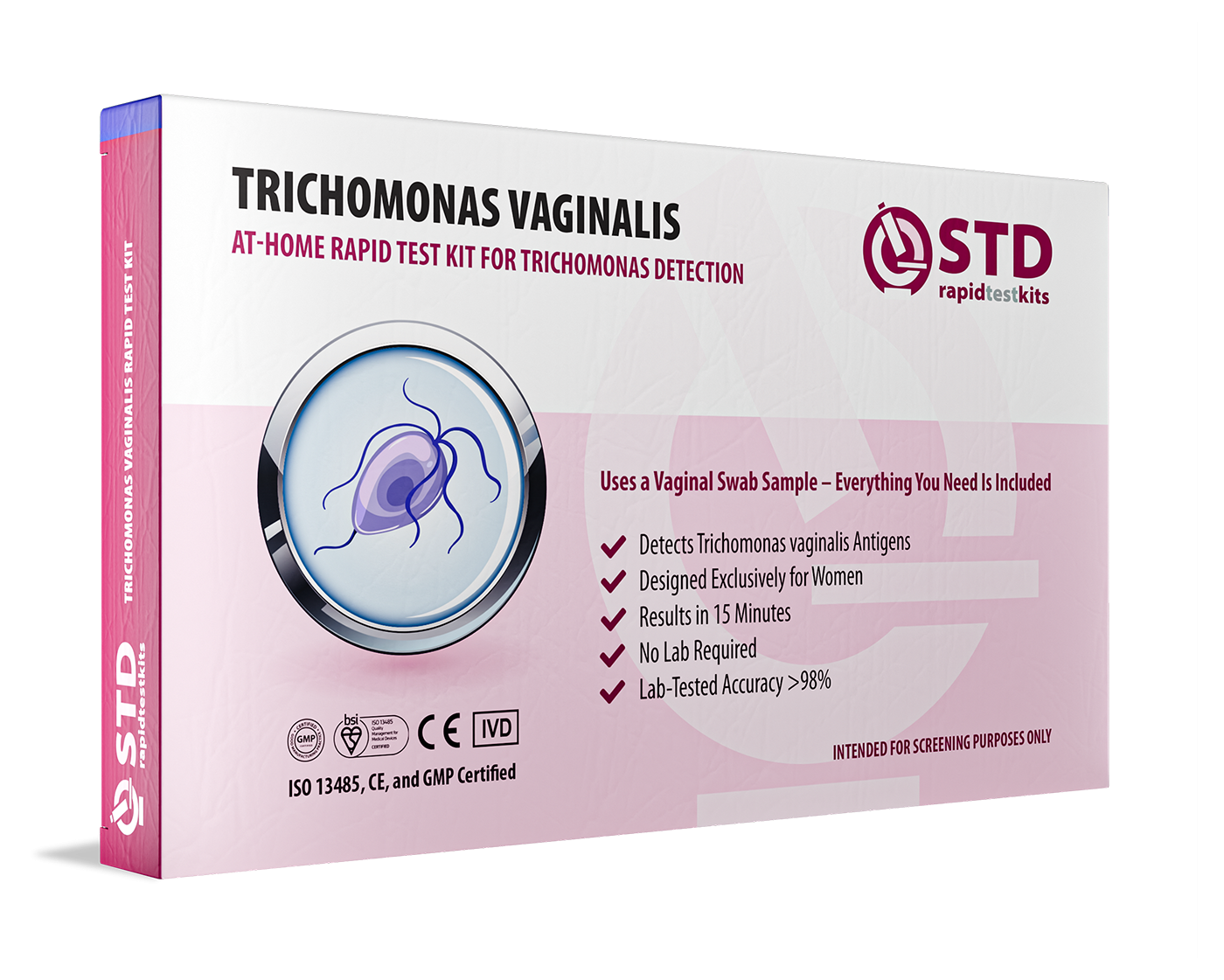
trichomoniasis home test or a combo STD kit that checks for multiple infections at once. These are FDA-approved and lab-certified. They're also shipped in discreet packaging, so your health stays your business, unless you choose to share.
What Treatment Actually Looks Like
If you test positive for trichomoniasis, the good news is this: it’s one of the most treatable STDs. A single dose of antibiotics, typically metronidazole or tinidazole, can clear the infection. But here’s the kicker: you and your partner(s) have to be treated at the same time. Otherwise, you’ll just keep passing it back and forth like a cursed volleyball.
Doctors usually recommend abstaining from sex for at least 7 days after treatment, and until all partners are treated. That includes oral sex. That includes sex with toys. That includes the “but I feel fine” people who think no symptoms means no infection. Reinfection is common with trich, and it's often preventable with simple communication and coordination.
This is where stigma tries to sneak back in. It tells you it’s “too awkward” to tell a partner. It whispers that you’ll be judged, ghosted, dumped. But the truth is, anyone who shames you for getting tested, or for getting treated, doesn’t deserve a front-row seat to your body. Period. The right people respect honesty. The right people want to be safe, too.
It’s Not Just About You (But It Also Totally Is)
Look, getting treated for trichomoniasis protects more than just your own body. It protects your community. Your partners. The person you haven’t met yet who’ll one day trust you with their naked vulnerability. It breaks the chain of transmission. It slams the door shut before HIV can walk through it.
But more than that, it gives you your power back. Because when you name what’s going on, you control the next move. Not the parasite. Not the shame. Not the silence. You.
And maybe you’re reading this with a knot in your stomach right now, wondering if that strange symptom you brushed off last month could be something more. Maybe you’re thinking about a partner who never got tested. Or a clinic visit you canceled because you were too afraid of what they'd find. That’s okay. You’re not too late. There’s still time to find out, and to do something about it.
Start with yourself. Swab. Pee. Spit. Whatever your anatomy requires. Do the test. Get the clarity. And when you get the results, remember this: You’re not dirty. You’re informed. And that’s a win, no matter what the paper says.
Yeah, and not in a vague “everything is risky” kind of way. Trich irritates the lining of your genitals, making it easier for HIV to get in, or get out, if you’re already positive. It literally creates microscopic entry points and immune chaos. That’s not fear-mongering, that’s biology. Multiple studies back it up.
2. How long can I have trich without knowing?
Way longer than you’d think. Months. Even years. It’s a master of disguise, especially in men. You might not notice a single thing. Meanwhile, it’s inflaming your tissues, upping your STD risk, and potentially affecting your fertility. Silent doesn’t mean safe.
3. Does it just go away eventually?
No. It’s not like a cold. Trich needs antibiotics to clear, and until you treat it, it sticks around causing low-key chaos. Even if your symptoms fade, the infection is still active. And still contagious. Don’t wait it out, wipe it out.
4. I’m a guy. Could I have trich and not even know it?
Absolutely. Most men don’t have symptoms, or they ignore mild ones like “weird pee tingle” or post-ejaculation discomfort. If you’ve had unprotected sex and never tested for trich specifically, it’s worth checking. Especially if your partner has symptoms.
5. What’s it feel like, for real?
In people with vaginas, think itchy, burning, funky discharge with a smell that doesn’t feel normal. Sometimes it’s fishy. Sometimes it’s metallic. Sometimes it’s just… off. In people with penises, it might be a slight burning during urination or a drop of discharge in the morning. And sometimes? Nothing. Zip.
6. Why wasn’t I tested for this when I got my last STD screen?
Because trich is often left off standard panels unless you ask for it, yep, even in clinics. It's not always included unless there’s a specific reason. At-home combo kits that include trich are your friend here.
7. Is it really that easy to treat?
Yes. One dose of metronidazole or tinidazole usually does the trick. But, and this is crucial, you and all your sexual partners have to take it. Otherwise, you’re just swapping it back and forth like a bad group text.
8. Do I have to tell my partner?
Look, you don’t legally have to in most places. But ethically? Sex is a team sport. The respectful move is to let them know so they can get treated too. You might be surprised how chill people are when you come at it from a “just want us both to be safe” angle.
9. Could this be why I keep getting “yeast infections” that don’t go away?
Very possible. Trich is misdiagnosed all the time. If you’ve been doing all the things, probiotics, creams, pH rinses, and nothing’s fixing it? Get tested for trich. It mimics yeast and BV but needs a totally different treatment.
10. Can I test for it from home without anyone knowing?
Hell yes. There are discreet, FDA-approved at-home test kits that include trich. Swab, send, get your results. No awkward clinic convos, no side-eyes in waiting rooms. Just clarity.
You Deserve Answers, Not Assumptions
If you’ve made it this far, it’s probably because something didn’t sit right, whether it was a symptom, a story, or a search result you couldn’t shake. That instinct matters. When it comes to STDs, especially ones like trichomoniasis, silence is the real danger, not the diagnosis.
Your body deserves your attention. Your sex life deserves your clarity. And your future deserves to be built on truth, not fear. Whether it’s a discharge that didn’t feel normal, a partner who didn’t test, or just a gut feeling, you’re not wrong to want answers. You’re strong for seeking them.
Don’t wait and wonder, get the clarity you deserve.








 For Women
 Results in Minutes
 No Lab Needed
 Private & Discreet