

Published: August 2025 | Last updated: April 2026 | Editorial review and quality control: Martina N.
Can hepatitis cause liver cancer?
Yes. Both hepatitis B and hepatitis C can lead to liver cancer when chronic infection is left untreated. The viruses cause persistent low-level liver inflammation that scars over years, and most cases of hepatocellular carcinoma (the most common form of liver cancer) worldwide trace back to one of the two. Early testing matters because hepatitis C is now curable in most people, and hepatitis B can be effectively suppressed before serious damage develops.
Key Takeaways
- Most people with chronic hepatitis B or C have no symptoms until significant liver damage has already occurred, which is why the CDC now recommends universal screening for all adults regardless of risk factors.
- Hepatitis C is curable in over 95% of cases with 8 to 12 weeks of direct-acting antiviral therapy, and hepatitis B can be suppressed long-term, both dramatically reducing the risk of liver cancer when caught early.
The liver works quietly. It filters toxins, stores nutrients, manages cholesterol, and rebuilds itself when injured. But two viruses, hepatitis B and hepatitis C, can hide inside it for years without warning, slowly turning that resilient organ into scar tissue and, in some people, into cancer.
Millions of people in the United States are living with chronic hepatitis C, according to CDC surveillance data, and the World Health Organization estimates around 254 million people worldwide carry chronic hepatitis B. Many do not know. Transmission does not always match what people expect. Birth from an infected parent, a shared razor in childhood, a tattoo done before infection-control standards tightened, a single medical procedure in a setting with imperfect sterilization, all can introduce the virus to someone who never recognized the moment of exposure.
This guide is for anyone who has ever skipped a test because they felt fine, anyone who was told they had hepatitis once and never followed up, and anyone who simply does not know their status. The sections below explain how that damage accumulates, who the CDC says should test, and what acting early changes about the outcome.
How Hepatitis Attacks the Liver in Silence
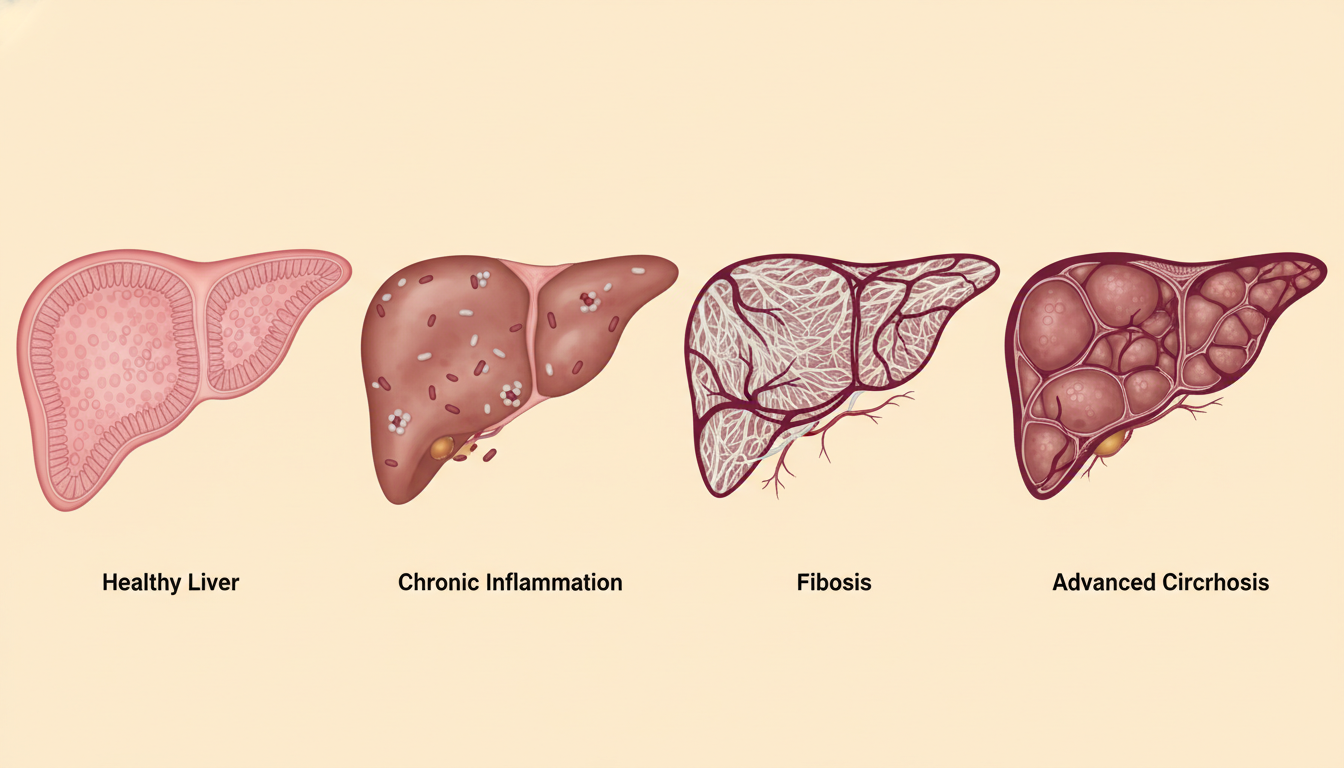
The liver keeps working quietly until it cannot. It filters blood, stores nutrients, and produces the proteins that hold the body together. When hepatitis B or hepatitis C invades, the immune system mounts a response that often becomes chronic: low-level inflammation that persists for years or decades. The person feels nothing. Underneath, the liver begins to scar.
This scarring is called fibrosis. As fibrosis advances, healthy liver tissue is replaced by fibrous bands. When the scarring becomes extensive enough to disrupt how the liver works, it is called cirrhosis. According to the National Cancer Institute, chronic hepatitis B and chronic hepatitis C are leading causes of liver cancer worldwide, and people with chronic infection face a substantially elevated risk compared to uninfected people.
Symptoms, when they appear, are easy to misread. Persistent fatigue, a dull ache under the right ribcage, joint stiffness, dark urine, and itchy skin all get attributed to stress, age, or diet. By the time the clearer signs arrive, jaundice (yellowing of the skin and eyes), unexplained weight loss, swelling in the abdomen, the underlying damage is often advanced.
Hepatitis B vs Hepatitis C: How the Cancer Risk Differs
Both viruses can cause liver cancer, but the path differs based on how chronic infection sets in, how long the virus has been present, and what treatment options exist. The differences shape what a positive test result actually means for the person holding it.
| Hepatitis Type | Chronic Infection Rate | Cancer Pathway | Treatment Today |
|---|---|---|---|
| Hepatitis B | Around 90% of infants infected at birth, 5 to 10% of adults | Can cause liver cancer even without cirrhosis (virus integrates into liver cell DNA) | No outright cure; daily antiviral suppression keeps the virus undetectable |
| Hepatitis C | Roughly 75 to 85% of acute infections become chronic | Cancer typically follows fibrosis to cirrhosis to malignancy progression | Curable in over 95% of cases with 8 to 12 weeks of direct-acting antivirals |
Why the Difference Matters for Testing
The contrast between the two viruses shapes what a positive result actually triggers. A positive hepatitis B result starts a long-term management conversation: regular liver imaging, viral load monitoring, and (in many cases) daily suppression therapy. A positive hepatitis C result starts a treatment conversation, one that can end with the virus gone within a few months.
Hepatitis B integrating directly into the liver cell genome is the reason it can drive cancer even in people who never develop cirrhosis. People infected at birth or with sustained high viral loads carry the highest cancer risk, which is why screening and lifelong follow-up matter for anyone who tests positive, even when liver enzymes look normal on bloodwork.
Hepatitis C, by contrast, takes a more linear path: chronic infection causes inflammation, inflammation causes fibrosis, fibrosis becomes cirrhosis, and cirrhosis becomes the soil in which liver cancer grows.
Hepatitis B can drive liver cancer even without prior cirrhosis, because the virus inserts its DNA directly into liver cell genomes. Hepatitis C follows a more linear path from inflammation to fibrosis to cirrhosis to cancer, which means clearing the virus early breaks the chain before the most dangerous stage.
What Hepatitis Testing Actually Tells You
Hepatitis testing is not one test. Different tests detect different things: antibodies (which show past or current exposure), antigens (which indicate active infection), and viral load (which measures how much virus is circulating). For hepatitis B specifically, surface antigen testing, core antibody screening, and e-antigen monitoring each answer different questions about whether the infection is active, dormant, or resolved.
That layered structure makes sense once you understand it. It tells you where you sit on the spectrum: never exposed, immune from vaccination, exposed but cleared, chronically infected, or actively viremic (meaning the virus is replicating at detectable levels in the blood). Each answer points to a different next step.
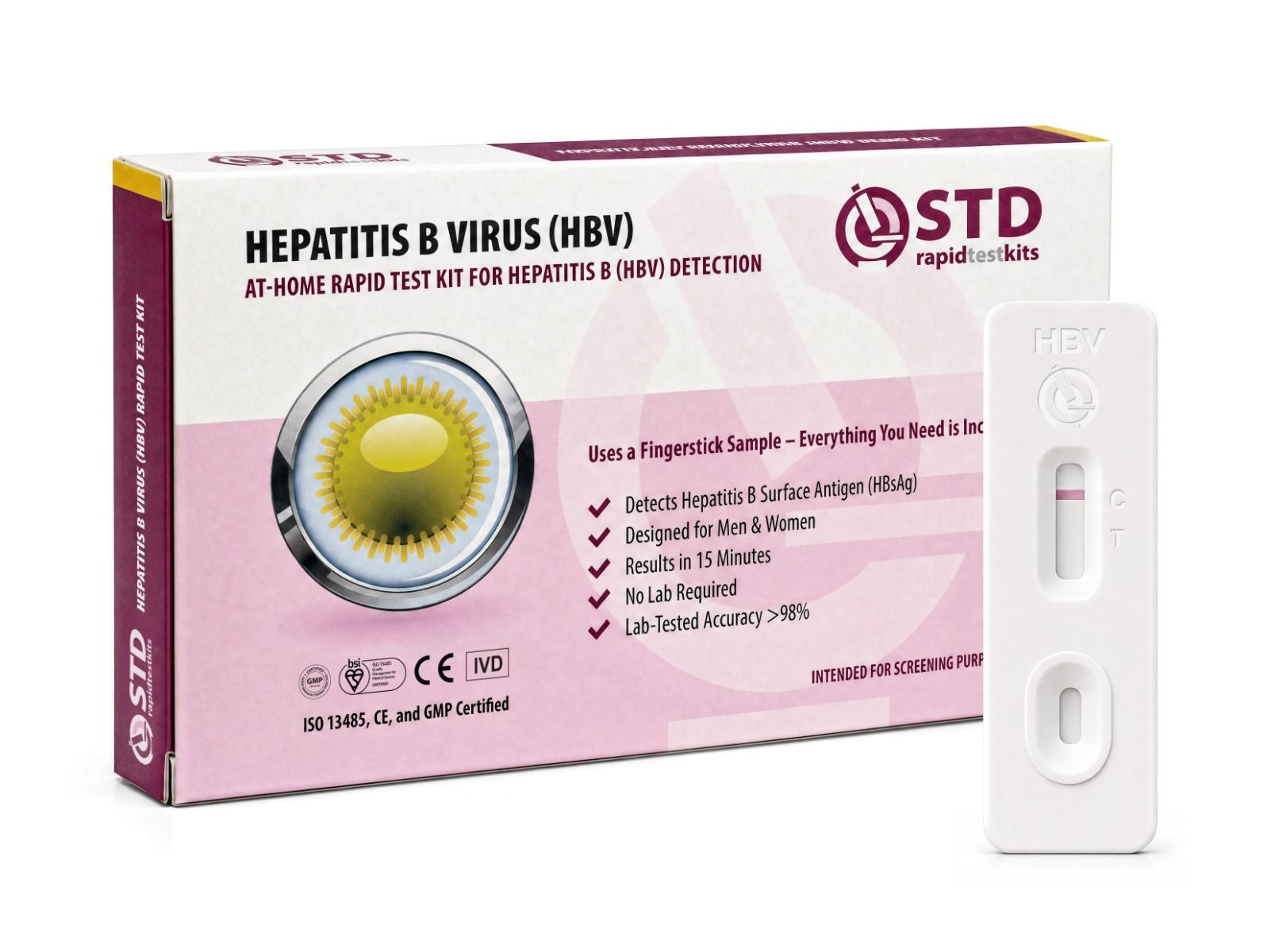
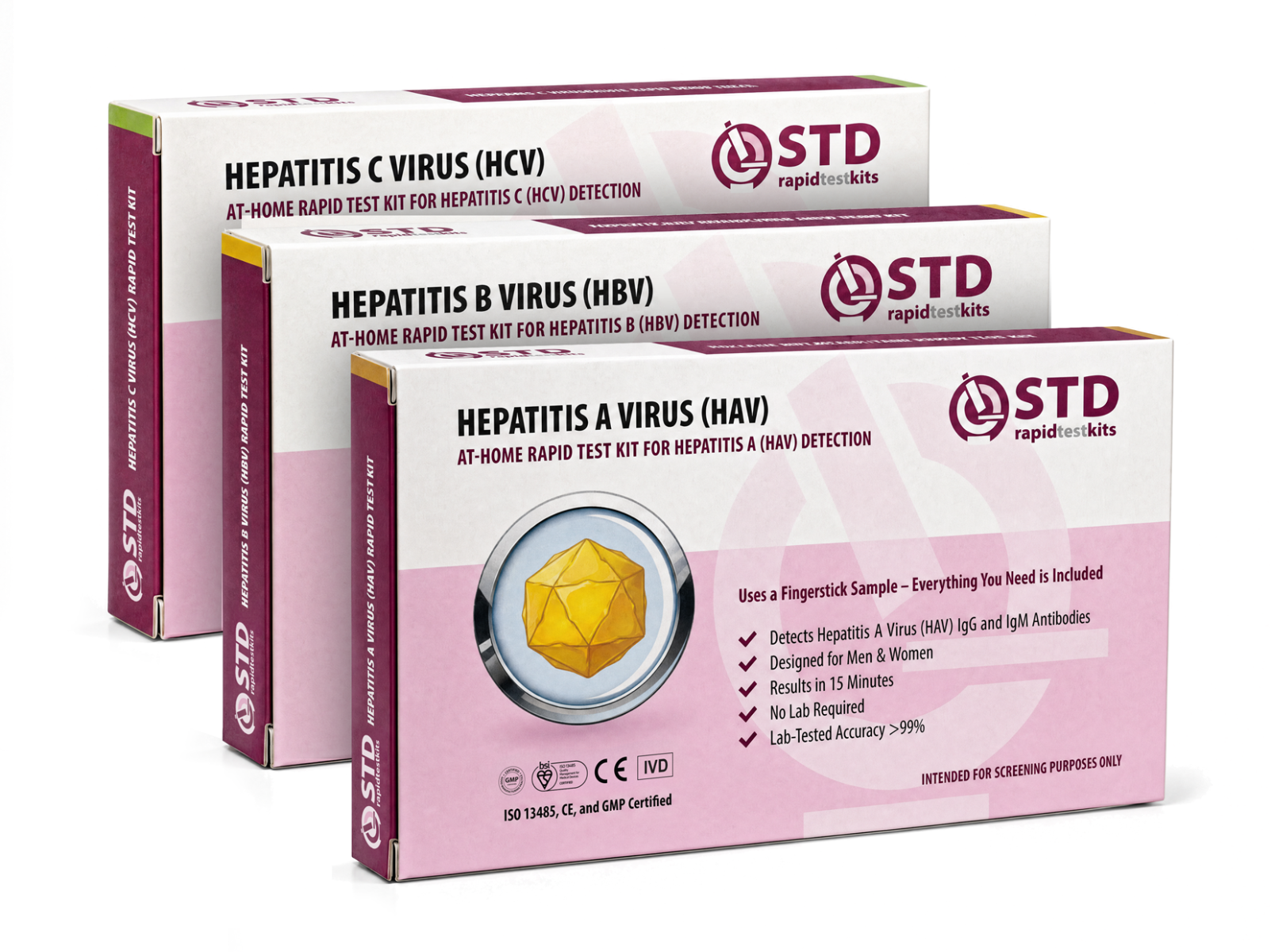
Many of these tests are now available as rapid at-home kits. A positive result from a home test should always be confirmed with a clinical lab, because rapid lateral-flow assays are screening tools rather than diagnostic ones. A clear negative on a properly timed test is genuinely reassuring, and a positive flags a clear next move: get to a clinic for confirmation and a treatment plan.
The CDC currently recommends a one-time hepatitis C test for all adults aged 18 and older, and at least once during every pregnancy. Hepatitis B screening is recommended for all adults at least once in their lifetime, with repeat testing for people in higher-risk groups. The screening guidance shifted to universal precisely because risk-based screening was missing too many cases.
This article is published by stdrapidtestkits.com, which sells at-home hepatitis testing kits. We recommend products based on fit-for-purpose for the reader's concern, not commercial benefit.
The Timeline from Infection to Liver Cancer
One of the most dangerous myths about hepatitis is that it will reveal itself when things get bad. The opposite tends to be true. Many people with chronic hepatitis B or C never feel obvious signs until the liver is already damaged, and by then the risks are no longer hypothetical, they are measurable.
Here is how the progression typically unfolds when infection is left untreated:
| Stage | What Is Happening | Can It Still Be Reversed? |
|---|---|---|
| Acute infection | Body mounts an immune response. May feel like flu, or no symptoms at all. | Yes, especially if caught early. About 95% of adults clear acute hepatitis B; only a minority clear hepatitis C without treatment. |
| Chronic infection | Virus persists beyond 6 months. Ongoing low-level liver inflammation begins. | Often. Treatment can clear hepatitis C and suppress hepatitis B before significant damage occurs. |
| Fibrosis | Scar tissue starts replacing healthy liver cells. Usually still asymptomatic. | Partially. Fibrosis can be slowed or halted with treatment; some early fibrosis can regress. |
| Cirrhosis | Severe scarring disrupts liver function. Risk of liver failure rises. | Structural damage is largely permanent, but cancer surveillance and viral suppression still meaningfully reduce risk. |
| Liver cancer | Hepatocellular carcinoma develops. Often detected late due to vague symptoms. | Needs urgent intervention. Prognosis varies sharply by stage at diagnosis, which is why surveillance after a hepatitis diagnosis matters. |
Where Intervention Actually Helps
Every stage on that timeline is a point where intervention works. The earlier the intervention, the more options remain.
Antiviral treatment for hepatitis C clears the virus completely in over 95% of cases when used appropriately, according to CDC clinical guidance. Treatment is typically a once-daily oral pill; WHO guidelines set the duration at 12 to 24 weeks depending on cirrhosis status and other patient factors, with certain approved regimens completing in as little as 8 weeks for uncomplicated cases. For hepatitis B, suppression therapy can drive the viral load to undetectable levels, dramatically reducing inflammation and the long-term cancer risk. Many people on hepatitis B suppression take a single daily pill with very low side effects.
Testing at the chronic-infection or fibrosis stage gives the most flexibility. Even at cirrhosis, treatment plus surveillance still meaningfully reduces the chance that the next chapter is liver cancer.
Direct-acting antivirals introduced in the past decade clear hepatitis C in over 95% of treated patients. WHO guidelines set the standard course at 12 to 24 weeks of a once-daily oral pill depending on cirrhosis status and other factors, with some approved regimens completing in as little as 8 weeks for uncomplicated cases. There is no equivalent cure for hepatitis B, but suppression therapy can reduce the virus to undetectable levels and protect the liver long-term.
Who Should Get Tested, and Why It Is Probably You
Many people assume routine hepatitis testing is for someone else. The data suggest otherwise. The CDC moved hepatitis C screening to a universal one-time test for all adults precisely because risk-based screening missed too many cases. The list below covers the groups with the highest documented prevalence in the United States, but a one-off test is worth doing even if you cannot identify a specific risk event in your past, because many people with chronic hepatitis fall outside any of these categories. A negative result settles the question. A positive result starts a manageable plan.
Higher-risk groups for hepatitis testing
- You were born to a parent from a region with high hepatitis B prevalence (much of East Asia, sub-Saharan Africa, parts of Eastern Europe and the Pacific Islands).
- You received a blood transfusion or organ transplant before 1992, when routine hepatitis C screening of the U.S. blood supply began.
- You ever shared injection equipment, even once, even decades ago.
- You got a tattoo or piercing in a setting with weak infection-control standards.
- You worked in healthcare with potential needlestick exposure.
- You have a sexual partner with chronic hepatitis B or C.
- You were born between 1945 and 1965, the demographic with the highest hepatitis C prevalence in the U.S.
Can Liver Cancer Develop Without Warning Signs?
Yes. Hepatitis-driven liver cancer rarely announces itself early. People with chronic hepatitis B or C, especially those with cirrhosis or other risk factors, are typically monitored with abdominal ultrasound every 6 to 12 months and sometimes with blood tests for alpha-fetoprotein, a tumor marker that can rise as liver cancer develops.
Early signs of the disease, when they appear, are easy to dismiss. Loss of appetite, a few pounds lost without trying, a dull ache under the right ribcage that comes and goes, tiredness that does not resolve with sleep. Many people attribute these to age, work pressure, or general stress. By the time clearer signs arrive, jaundice, fluid build-up in the abdomen (called ascites), unexplained bruising, the cancer is often advanced.
The strongest tool against this pattern is proactive monitoring after a hepatitis diagnosis. Surveillance is available to anyone who has a diagnosis on file, and a current blood test is the prerequisite for accessing it.
Abdominal ultrasound every 6 to 12 months, sometimes paired with an alpha-fetoprotein blood test. Surveillance is available to anyone with a hepatitis diagnosis; a current blood test is the prerequisite for accessing it.
Is Hepatitis-Related Liver Cancer Preventable?
In many cases, yes. The chain runs: infection, chronic inflammation, fibrosis, cirrhosis, cancer. Breaking the chain at any point reduces the risk for the next stage.
Hepatitis C is now curable for most people. Direct-acting antiviral medications taken for 8 to 24 weeks (depending on cirrhosis status and regimen) achieve sustained virological response (effectively a cure) in over 95% of cases. Once the virus is cleared, the liver stops being attacked. Cancer risk drops sharply, though it does not return all the way to baseline if cirrhosis was already present at the time of treatment, which is why ongoing imaging surveillance continues for that group.
Hepatitis B works differently. There is no outright cure, but there is highly effective long-term suppression. Antiviral therapy can drive the virus to undetectable levels and halt most of the ongoing liver injury. For many people, this is a once-daily pill with very low side effects.
Vaccination is the most powerful tool against hepatitis B. The hepatitis B vaccine has been available since 1981, is part of the routine childhood immunization schedule in most countries, and provides long-lasting (likely lifetime) protection in most recipients. The CDC recommends the three-dose vaccine series for all adults who were never vaccinated, especially those with potential exposure risk. If you test negative for hepatitis B and were never vaccinated, the series is straightforward, well-tolerated, and almost completely protective against future infection.
There is currently no vaccine for hepatitis C. Prevention rests on harm reduction (safe injection practices, sterile tattoo and piercing equipment, screening of the blood supply, which is now standard in the U.S. and most high-income countries) and on early testing so treatment can begin before significant damage accumulates.
Stigma, Stories, and Why None of This Is Your Fault
If the idea of testing positive for hepatitis B or C carries shame, that is not yours to carry. Most people who acquire viral hepatitis did not do anything wrong by any reasonable measure. Common exposure routes include birth from an infected parent who was never told, a medical procedure in a setting with imperfect sterilization, a transfusion done before the blood supply was reliably screened, or trust placed in a partner whose own status was unknown.
Stigma is the operative reason hepatitis stays hidden. It stops people from testing, from disclosing to partners, from accessing the treatment they qualify for. It convinces some people the damage is already done so why bother. None of those conclusions hold up against the evidence.
A diagnosis is a piece of information you can act on. With current treatment, hepatitis C can usually be cleared. Hepatitis B can be suppressed and lived with safely, including in long-term sexual relationships, with vaccination of partners and standard precautions. Testing takes 15 minutes. Treatment, when needed, usually runs a few months. Neither requires an emergency, just a decision to act on what you already know.
Most people with chronic viral hepatitis are unaware of their infection and do not have access to the testing and treatment they need. Without expanded testing, treatment, and prevention, hepatitis-related deaths will continue to rise.
A Common Pattern: Diagnosed Decades After Exposure
Clinicians frequently see one variation of a familiar story. Someone in their 40s discovers chronic hepatitis B during a routine screening, often as part of life insurance underwriting, a pre-employment physical, or pregnancy bloodwork. The patient is stunned, has no symptoms, and cannot identify any obvious risk factors. Then a clinician asks where their parents were born, and the picture comes into focus.
Mother-to-child transmission of hepatitis B during birth is the dominant route in much of the world. Babies who acquire the virus this way have a roughly 90% chance of developing chronic infection, compared to 5 to 10% in adults, often without ever being aware. Decades later, that quiet infection has begun to scar the liver.
The story has a hopeful arc. Once identified, the patient starts antiviral therapy, begins routine ultrasound surveillance every 6 to 12 months, and avoids the trajectory their grandparents may have followed in the era before treatment existed. The hardest part, as many people in this situation describe it, is realizing the diagnosis could have been caught with a single blood test years earlier.
This pattern is one reason the CDC and WHO have shifted toward universal screening. Risk-based screening relied on people understanding their own risk, and many people never had any reason to recognize theirs.
It is not too late. Treatment options have improved enormously over the past decade. Hepatitis C antivirals introduced after 2013 cure the great majority of patients, including those who failed older treatments. Hepatitis B suppression therapy is well-tolerated and effective at protecting the liver going forward. Whatever stage you are at, there is a meaningful next step. Start with a current blood test to establish where you actually stand today.
Frequently Asked Questions
- Can hepatitis really cause liver cancer?
- Yes. Chronic hepatitis B or C creates persistent low-level inflammation in the liver. Over years, that inflammation drives scarring (fibrosis), and in many people it eventually advances to cirrhosis or cancer. Hepatitis B can lead to liver cancer even without cirrhosis because the virus integrates directly into liver cell DNA. According to the National Cancer Institute, chronic hepatitis B and C are leading global causes of hepatocellular carcinoma.
- I feel completely fine. Why would I test for hepatitis?
- Because feeling fine does not rule out infection. Most people with chronic hepatitis B or C have no symptoms until significant liver damage has already occurred. Many were exposed in childhood or before screening of the blood supply began in the early 1990s. The CDC now recommends a one-time hepatitis C test for all adults and at least one hepatitis B screening for every adult, regardless of whether risk factors are present.
- Which is more serious, hepatitis B or hepatitis C?
- Different challenges, both serious. Hepatitis C is curable in over 95% of cases with current antivirals, but it often goes undiagnosed for years and quietly damages the liver in the meantime. Hepatitis B is not curable but is well-controlled with daily suppression therapy, and it can lead to liver cancer even without prior cirrhosis. The right answer for any specific person depends on which virus is involved and what stage of liver health they are at when they get tested.
- If I am cured of hepatitis C, am I in the clear?
- Largely, yes. Once the virus is cleared, your cancer risk drops substantially. If you already had cirrhosis or advanced fibrosis at the time of treatment, you will still need ongoing imaging surveillance because the structural damage to the liver remains a risk factor. If you cleared the virus before significant scarring developed, your long-term outlook is close to that of someone who was never infected.
- Can I test for hepatitis at home?
- Yes. Rapid at-home hepatitis B and hepatitis C tests use a fingerstick blood sample and deliver a result in about 15 minutes. They are screening tools, so a positive result should always be confirmed with a clinical lab test. A clear negative on a properly timed test is reliable. At-home testing removes the barrier of needing to schedule a clinic visit, which is the reason many people delay testing for years.
- Does having hepatitis mean I cannot have sex or be in a relationship?
- No. Hepatitis B can be transmitted sexually, but vaccination of partners is highly effective at preventing transmission, and many couples manage it without incident over decades. Hepatitis C is rarely transmitted sexually in low-risk monogamous relationships; the main route is blood-to-blood. Disclosing to partners is the right thing to do and is also a normal medical conversation many people navigate.
- I tested positive years ago and never followed up. Is it too late?
- Start with a current blood test to find out exactly where you stand. Hepatitis C antivirals introduced after 2013 achieve cure in most patients, including many who failed older interferon-based treatments. For hepatitis B, suppression therapy has a strong safety record and measurably slows liver damage. Neither virus is a closed case just because years have passed.
- What if I am scared to know the result?
- That fear is normal. Plenty of people sit with a sealed test kit on the bathroom shelf for weeks before opening it. The thing to remember is that the result does not change your underlying situation, it only changes whether you can act on it. A positive opens treatment options that work. A negative settles the question. The unknown, by contrast, removes both possibilities and leaves the worry intact.
Testing for Hepatitis Alongside Other STIs
Hepatitis B and hepatitis C share transmission routes (blood-to-blood, sometimes sexual) with several other infections that warrant routine screening at the same time. If you are testing for hepatitis because of a specific exposure, the same exposure event often calls for HIV, syphilis, and bacterial STI screening. Combining those into a single panel saves a separate decision and a separate shipment.

- U.S. Centers for Disease Control and Prevention. Hepatitis C overview, universal adult screening recommendation, and treatment cure rate guidance.
- World Health Organization. Hepatitis B fact sheet covering global prevalence, transmission routes, chronic infection rates by age of exposure, and link to liver cancer.
- World Health Organization. Hepatitis C fact sheet covering global burden, treatment courses (12 to 24 weeks depending on cirrhosis status and other factors), and screening recommendations.
- U.S. Centers for Disease Control and Prevention. Hepatitis B basics and adult vaccination guidance.
- National Cancer Institute. Liver cancer causes, risk factors, and the role of chronic viral hepatitis as a leading global cause of hepatocellular carcinoma.
- U.S. Centers for Disease Control and Prevention. Liver cancer basics, including the role of cirrhosis and viral hepatitis as primary risk factors.
- NHS. Hepatitis B condition page covering symptoms, transmission, vaccination, and long-term complications.
- NHS. Hepatitis C condition page covering symptoms, transmission, treatment, and long-term complications.
