
Published: August 2025 | Last updated: May 2026 | Editorial review and quality control: Martina N.
A persistent ache under the right ribs, fatigue that does not lift with rest, and urine that looks darker than it should are small signals easy to dismiss for months or years, and sometimes the liver beneath them is being damaged from two directions at once.
Hepatitis C and chronic alcohol use are the two most common drivers of progressive liver disease in U.S. adults, and they affect the organ through completely different mechanisms. Many people carry one without realizing it. Some carry both. The combination is meaningfully more damaging than either condition alone, and the symptoms that finally prompt a clinic visit often arrive when underlying scarring is already advanced.
This guide walks through how each condition harms the liver, why so many people remain undiagnosed for decades, what current screening guidance recommends, and what at-home and clinical testing options can offer.
Key Takeaways
- Hepatitis C and alcohol harm the liver through different mechanisms, but when they coexist, alcohol can roughly double or triple the rate at which scarring progresses.
- The CDC recommends one-time hepatitis C screening for every adult age 18 or older, regardless of perceived risk, because most people have no symptoms until damage is advanced.
How Each Condition Damages the Liver
The liver handles roughly 500 jobs at once, from filtering bloodborne toxins to producing clotting factors and storing glucose. It is also one of the most regenerative organs in the body, which is exactly what makes liver disease so easy to miss. By the time symptoms become obvious, scarring is often well underway.
Hepatitis C is a bloodborne viral infection. Once hepatitis C virus (HCV) enters the body, it replicates inside hepatocytes (liver cells) and provokes ongoing immune-mediated inflammation. About half of people who contract HCV develop chronic infection that lasts years or decades. That chronic inflammation drives fibrosis, the slow replacement of healthy tissue with scar tissue, and eventually cirrhosis in roughly 15 to 30 percent of untreated cases within 20 years, according to natural-history data summarized by the U.S. Centers for Disease Control and Prevention.
Alcohol injures the liver through a separate pathway. When hepatocytes metabolize ethanol, they produce acetaldehyde, a reactive compound that damages cell membranes, DNA, and proteins. Chronic heavy drinking also disrupts how the liver handles fat, causing triglycerides to accumulate inside hepatocytes. That accumulation is called steatosis, commonly known as fatty liver. For many heavy drinkers, fatty liver progresses to alcoholic hepatitis (active inflammation) and then in some cases to alcohol-related cirrhosis. The National Institute on Alcohol Abuse and Alcoholism describes alcohol-related liver disease as progressing from fatty liver through alcoholic hepatitis and potentially to cirrhosis, with the risk rising in proportion to the duration and intensity of harmful drinking.
Three differences are worth highlighting:
- Timeline. Alcohol-related disease can progress in months to a few years of sustained heavy drinking. Hepatitis C usually takes 10 to 30 years to produce cirrhosis without treatment.
- Reversibility. Early alcohol damage often regresses substantially with abstinence. Hepatitis C damage stops accumulating only once the virus itself is cleared.
- Visibility. Both conditions are usually silent until late. Hepatitis C is more likely to remain entirely asymptomatic for years; alcohol-related disease more often produces vague digestive complaints earlier.
Despite the different mechanisms, the endpoints converge into a scarred liver that struggles to do its job.
Hepatitis C or alcohol: which one is damaging your liver?
You cannot tell from symptoms alone. Both produce vague upper-right abdominal discomfort, fatigue, and sometimes mild jaundice. A hepatitis C antibody blood test combined with a standard liver enzyme panel (ALT, AST, GGT) distinguishes them in a single clinic visit, or with one at-home fingerstick test plus a primary-care lab order. If both hepatitis C and alcohol are present, alcohol typically accelerates hepatitis C-related scarring roughly two- to three-fold, so testing for both is more useful than guessing.
When Hepatitis C and Alcohol Happen Together
Co-occurrence is more common than most people realize. A meaningful share of adults with chronic hepatitis C also drink at levels harmful for the liver, and the combination is multiplicative rather than additive.
Several biological mechanisms explain the synergy. Alcohol suppresses the immune response that normally restrains HCV replication, letting viral load climb. Acetaldehyde and HCV proteins both drive oxidative stress on liver cells, and their effects stack. Alcohol also accelerates iron deposition in the liver, which itself worsens HCV-related fibrosis. Cohort studies summarized by the CDC's hepatitis C resources have documented that heavy drinking substantially accelerates fibrosis progression in people coinfected with HCV, with multiple analyses reporting two- to three-fold increases in scarring compared to HCV alone. National guidance from the National Institute on Alcohol Abuse and Alcoholism identifies alcohol as one of the most important modifiable factors in any chronic liver disease, including viral hepatitis.
Practically, this means a person who would have developed cirrhosis at age 65 from hepatitis C alone can present with it in their late 40s if they also drink heavily through their 30s and 40s. The earlier presentation often catches people off guard, particularly if they were never tested for HCV during their 20s or 30s.
Even moderate drinking matters in this context. The dose at which alcohol becomes dangerous for someone with HCV is meaningfully lower than for someone without the virus. Most hepatology specialists recommend complete abstinence for people with active or recently cured hepatitis C, at least during the window of liver healing.
The combination also complicates treatment decisions. Direct-acting antivirals remain highly effective for people who drink, though achieving a sustained virologic response (the technical term for cure) does not stop alcohol-related damage. Stopping alcohol is the other half of the equation, and addressing both is what reduces the long-term risk of cirrhosis and liver cancer.

Symptoms the Liver Sends Up, and Why So Many Are Missed
Both chronic hepatitis C and early alcohol-related liver disease tend to whisper rather than shout. The CDC estimates that a substantial portion of adults living with chronic hepatitis C in the United States do not know they are infected. When symptoms do appear, they are general enough that most people attribute them to stress, aging, poor sleep, or a passing illness.
The symptoms most commonly reported in early and middle stages include:
- Persistent fatigue that does not improve with adequate sleep
- A dull or sharp ache under the right rib cage, sometimes radiating to the back or right shoulder
- Nausea, especially after eating fatty foods
- Loss of appetite or unexplained weight changes
- Itchy skin without a clear dermatological cause
- Dark-amber urine and unusually pale stools
- Mild jaundice (yellowing of the skin or the whites of the eyes), often noticed first by a partner or family member
- Trouble concentrating, sometimes described as brain fog
In advanced liver disease, additional and more serious signs appear: swelling in the legs and abdomen (ascites), easy bruising or bleeding, small red vascular marks on the chest called spider angiomas, and episodes of confusion (hepatic encephalopathy). Hepatic encephalopathy and rapid jaundice with weight loss should prompt same-day medical evaluation.
Many people experience no symptoms at all until the liver is already significantly scarred. This is why clinical guidelines have shifted from risk-based screening to universal screening for hepatitis C. Waiting for symptoms is, in practice, waiting too long.
Medical bias also affects how quickly people get diagnosed. Patients who disclose any substance-use history sometimes have new symptoms attributed to alcohol or drugs without screening for viral hepatitis, even though dual diagnosis is common. Multiple studies show that women and patients from racial-minority backgrounds receive hepatitis C screening at lower rates than guidelines recommend. If a clinician has not offered hepatitis C testing, patients are well within their rights to ask for it directly; the universal-screening recommendation makes it a routine, evidence-based request.

Who Should Be Tested, and When
The CDC currently recommends one-time hepatitis C screening for all adults age 18 or older, regardless of perceived risk. This guidance was updated in 2020 and reflects two realities: most new infections now occur in younger adults through injection drug use, and many older adults were exposed decades ago without ever being tested.
Beyond the one-time baseline, the CDC recommends ongoing periodic testing for people with elevated risk. That group includes:
- Anyone who currently injects drugs or has done so in the past, even once
- People on long-term hemodialysis
- People who received clotting factor concentrates before 1987
- People who received blood transfusions or solid-organ transplants before July 1992
- Healthcare workers after a needlestick injury or other occupational exposure
- Infants born to people who are HCV-positive
- Sexual partners of HCV-positive individuals
- People living with HIV
Pregnancy guidelines added hepatitis C screening to routine prenatal testing in 2020, because untreated infection during pregnancy carries a small risk of vertical transmission, and the period after delivery is one of the few windows in which a new diagnosis can be acted on quickly with curative treatment.
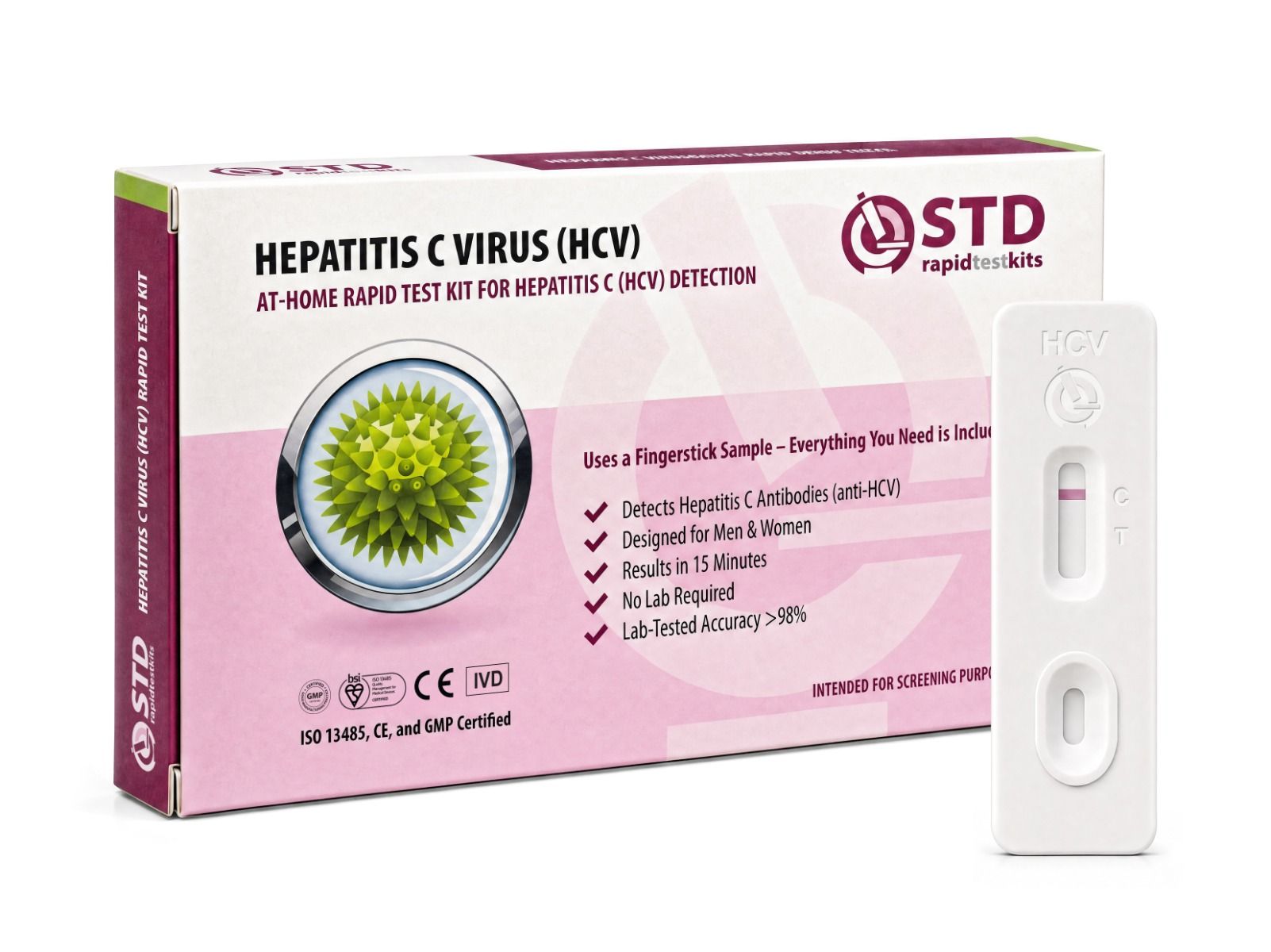
For someone who has never been tested and wonders where to start, the easiest entry point is a hepatitis C antibody test. An antibody test detects whether the immune system has ever responded to HCV. A positive antibody result is then followed by an HCV RNA (PCR) test to confirm whether the virus is still actively replicating, because some people clear the infection spontaneously and retain detectable antibodies for life. Antibody-only screening, including a lateral-flow rapid test performed at home, is an appropriate first step for most adults who simply want to know whether HCV has ever been part of their body's history.
For alcohol-related liver concerns, no single one-shot screening test exists. Liver enzyme panels (ALT, AST, GGT) ordered at a primary-care visit are the typical starting point, sometimes combined with a validated drinking-screening tool such as the AUDIT-C.
All adults aged 18 years and older should be screened for HCV infection at least once in their lifetime, except in settings where the prevalence of HCV infection is less than 0.1%.
What Modern Hepatitis C Treatment Looks Like
For most of the 20th century, hepatitis C treatment was long, miserable, and only partially effective. That changed in 2013 with the introduction of direct-acting antivirals (DAAs), and again with subsequent pan-genotypic combinations that work across virtually all HCV strains.
Current DAA regimens such as sofosbuvir/velpatasvir and glecaprevir/pibrentasvir are oral pills taken for 8 to 12 weeks, with cure rates above 95 percent across most patient populations and HCV genotypes, according to the National Institute of Diabetes and Digestive and Kidney Diseases. Side effects are mild for most people, typically limited to headache, fatigue, or occasional nausea during the treatment course. Insurance coverage has expanded substantially since 2018, and patient-assistance programs through manufacturers and state Medicaid offices help close gaps for uninsured patients.
A cure (technically a sustained virologic response, defined as undetectable HCV RNA 12 weeks after finishing treatment) eliminates the virus from the body. The liver damage already present does not reverse on its own. Inflammation no longer drives new fibrosis, and the rates of liver cancer and other complications drop sharply. People with cirrhosis still need ongoing monitoring after cure, including imaging for hepatocellular carcinoma every six months.
The implication for someone newly diagnosed: treatment is no longer something to fear or postpone. In the United States, reaching a diagnosis remains the main bottleneck, since treatment is widely accessible once it arrives. That is exactly why universal screening guidance now exists.
For alcohol-related liver disease, the foundation of treatment is reducing or stopping alcohol intake. Medications can help. Naltrexone, acamprosate, and gabapentin are FDA-approved or widely used off-label for alcohol-use disorder, and brief interventions delivered in primary care are well-studied and effective for many patients. Nutritional support, vaccination against hepatitis A and hepatitis B, and management of related conditions like diabetes round out the standard approach.
Can the Liver Recover?
The liver is one of the only solid organs in the body capable of meaningful regeneration. Whether and how much it recovers depends on the type and amount of damage.
For early alcohol-related liver disease (fatty liver and mild alcoholic hepatitis without significant fibrosis), abstinence from alcohol can produce substantial improvement within weeks to months. Steatosis frequently reverses entirely after several months of complete abstinence. Even some degree of fibrosis can soften and partially regress if drinking stops before scarring becomes structural.
Cirrhosis, however, is generally not fully reversible. Once the architecture of the liver has been replaced by scar tissue and regenerative nodules, function does not return to baseline. What stopping alcohol and curing hepatitis C can do is halt further progression and dramatically reduce the rate of complications like variceal bleeding, ascites, and hepatocellular carcinoma. People with compensated cirrhosis who eliminate the driver of damage can often live for decades with stable liver function.
For someone who has both chronic hepatitis C and a heavy drinking pattern, the most protective sequence is usually to address both at the same time. Pursue HCV treatment as soon as it is offered, and reduce or stop drinking. Stopping drinking alone, while life-extending, does not stop HCV-related fibrosis. Curing HCV alone, while transformative, does not stop alcohol-related damage if drinking continues at harmful levels.
Several adjustments support recovery alongside medical treatment:
- Maintain a healthy weight; obesity-related fatty liver compounds existing damage.
- Avoid acetaminophen (Tylenol) doses above the recommended daily limit, particularly with any alcohol intake.
- Get vaccinated against hepatitis A and hepatitis B if not already immune; these additional viral infections worsen outcomes for an already-stressed liver.
- Address diabetes and elevated triglycerides if present, since both contribute to fatty liver.
- Discuss any herbal supplements with a clinician; some over-the-counter products (notably certain bodybuilding and weight-loss supplements) carry hepatotoxic risk.

Practical Next Steps
For anyone who has read this far and is wondering what to do next, a few concrete options exist depending on where you are starting from.
If hepatitis C testing has never been part of your medical history, an antibody test is the right entry point. This can be ordered through a primary-care visit, requested at an urgent-care clinic, picked up at most public-health departments at low or no cost, or performed at home with a lateral-flow rapid test kit using a fingerstick blood sample.
If a hepatitis C antibody result is positive, the next step is confirmatory HCV RNA testing through a primary-care provider or directly with a gastroenterologist or hepatologist. Treatment can be initiated by primary-care providers in most states; specialist referral is reserved for patients with cirrhosis or other complicating factors.
For drinking patterns that may be harmful, the simplest first step is an honest self-assessment using a validated screener like the AUDIT-C. A primary-care visit can include this conversation, and brief interventions plus medication options are increasingly accessible. The SAMHSA National Helpline is free, confidential, and available 24/7 at 1-800-662-4357 for treatment referrals.
Liver health monitoring through standard blood panels (ALT, AST, GGT, platelet count, INR) and, when indicated, transient elastography (commonly known as FibroScan) can establish a baseline and track progression over time. None of these tests require disclosing more than is medically relevant.
Readers who want to start with a free public-health option can use the CDC's hepatitis C testing-locator and the SAMHSA helpline above to find local clinics offering both viral and alcohol-related liver screening, often at no cost.

Frequently Asked Questions
- Can you have hepatitis C and not know it?
- Yes. The CDC estimates that a substantial portion of adults with chronic hepatitis C in the United States are unaware of the infection, often for 20 years or more. Most people have no symptoms in the early and middle stages of the disease, which is why universal one-time screening is now recommended for every adult age 18 or older.
- Is hepatitis C considered a sexually transmitted infection?
- Hepatitis C is classified as a bloodborne infection rather than a traditional STI. Sexual transmission still happens when blood contact is involved. Anal sex, sex during menstruation, and rough sexual contact carry low but real transmission risk. Sexual partners of HCV-positive individuals fall into the CDC's elevated-risk testing group.
- How long does it take for hepatitis C to damage the liver?
- Chronic hepatitis C typically takes 10 to 30 years to produce cirrhosis without treatment. Roughly 15 to 30 percent of untreated chronic infections progress to cirrhosis within 20 years, according to CDC natural-history data. Heavy alcohol use can substantially shorten that timeline.
- Will quitting alcohol reverse my liver damage?
- It depends on the stage. Fatty liver and mild alcoholic hepatitis usually improve significantly within weeks to months of abstinence. Some early fibrosis can also partially regress. Established cirrhosis is generally not reversible, although stopping alcohol still reduces the rate of further damage and the rate of complications.
- Can the liver fully heal from cirrhosis?
- No. Structural scarring does not reverse, even after the underlying driver is treated. People who stop drinking and cure hepatitis C before decompensation can often maintain steady liver function for decades, with markedly lower risk of variceal bleeding, ascites, and liver cancer than those who continue with the underlying damage untreated.
- How is hepatitis C treated today?
- Modern hepatitis C treatment uses direct-acting antivirals (DAAs) such as sofosbuvir/velpatasvir or glecaprevir/pibrentasvir. These are oral pills taken for 8 to 12 weeks with cure rates above 95 percent across most genotypes. Side effects are usually mild, and many primary-care providers can prescribe treatment directly without specialist referral.
- What is the first sign of liver failure?
- Early signs of progressing liver failure include jaundice (yellowing of the skin or the whites of the eyes), unexplained bruising or bleeding, swelling in the legs or abdomen, and episodes of confusion. These warrant urgent medical evaluation. Earlier liver disease typically produces only fatigue, vague upper-right discomfort, or no symptoms at all.
- Can I test for hepatitis C at home?
- Yes. At-home hepatitis C antibody tests use a small fingerstick blood sample and produce a lateral-flow result in about 15 minutes. Antibody testing is appropriate as a first screening step for any adult. A positive antibody result should be followed by a lab HCV RNA (PCR) test through a primary-care provider to confirm whether the virus is currently active.
- U.S. Centers for Disease Control and Prevention. Clinical screening and diagnosis for hepatitis C, including the universal adult screening recommendation.
- U.S. Centers for Disease Control and Prevention. Hepatitis C overview, risk factors, transmission, and the role of co-factors such as alcohol in disease progression.
- National Institute on Alcohol Abuse and Alcoholism. Alcohol's effects on the body, including alcohol-related liver disease and its progression from fatty liver to alcoholic hepatitis and cirrhosis.
- National Institute of Diabetes and Digestive and Kidney Diseases. Hepatitis C information, testing recommendations, and direct-acting antiviral treatment overview.
- Substance Abuse and Mental Health Services Administration. National Helpline for substance use treatment referrals.
