
Hepatitis C is one of the most common chronic bloodborne infections in the United States, and most people who have it do not know it. The virus often produces no clear symptoms for years, sometimes decades, while quietly scarring the liver. Here are the seven warning signs worth knowing, the higher-risk groups who should test now, and what to expect from modern treatment that cures more than 95 percent of cases.
Published: October 2025 | Last updated: April 2026 | Editorial review and quality control: Martina N.
Hepatitis C is unusual among serious infections. It spreads silently, hides for years, and often only announces itself once the liver is in real trouble. The U.S. Centers for Disease Control and Prevention estimates more than 2.4 million Americans (and possibly as many as 4 million) were living with hepatitis C between 2017 and 2020 (CDC, About Hepatitis C). A large share had no idea, because most people with the virus feel completely fine until damage shows up on liver scans or routine blood work, sometimes ten or twenty years after the original exposure.
This guide walks through the seven symptoms most commonly linked to hepatitis C, the difference between acute and chronic infection, who should test even without symptoms, and what modern treatment can do. The short version: today's antiviral pills cure more than 95 percent of people in 8 to 12 weeks. The earlier you find the infection, the more straightforward that path looks.
What are the 7 key symptoms of hepatitis C?
The seven most commonly reported symptoms are fatigue, fever or flu-like aches, jaundice (yellowing of skin or the whites of the eyes), dark urine paired with pale or clay-colored stool, upper-right abdominal discomfort, nausea or loss of appetite, and joint pain. The crucial caveat: most people with hepatitis C have NO symptoms for years. When symptoms do appear, they typically show up 2 to 12 weeks after exposure for acute infection, or much later as a sign that chronic infection has begun damaging the liver. The CDC recommends one-time hepatitis C screening for every adult 18 and older, with or without symptoms.
Key takeaways
- Roughly 70 percent of people who acquire hepatitis C develop chronic, lifelong infection if untreated, and most feel fine for years (WHO).
- Modern direct-acting antiviral pills cure more than 95 percent of hepatitis C cases in 8 to 12 weeks per CDC, but you have to know you have it first.
What hepatitis C actually is
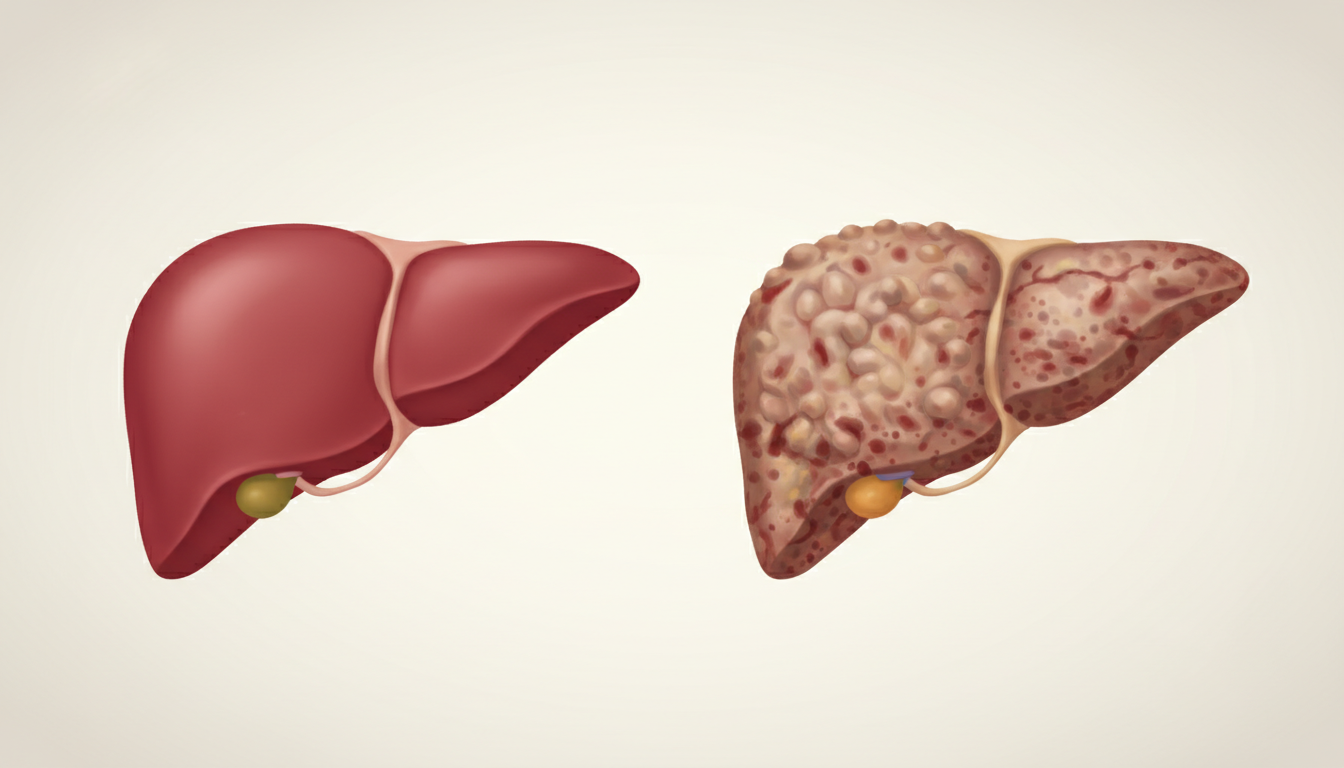
Hepatitis C is a bloodborne viral infection that targets the liver. The virus, known as HCV, spreads almost exclusively through direct blood-to-blood contact: shared injection equipment, transfusions before donor screening began in 1992, needlestick injuries, unsterile tattoo or piercing tools, and (less commonly) sexual contact involving blood. The CDC is explicit that HCV does not spread through casual contact, food, kissing, sneezing, or shared utensils.
There are two clinical phases. Acute hepatitis C covers the first six months after infection. Chronic hepatitis C means the virus is still detectable after that window. According to the World Health Organization, roughly 30 percent of people clear the virus on their own within those first six months; the other 70 percent develop chronic infection (WHO, Hepatitis C fact sheet). Untreated chronic hepatitis C drives 15 to 30 percent of those cases to cirrhosis within two decades, and contributes to liver cancer.
That long quiet period is the central problem. By the time symptoms force someone to a clinic, real liver scarring has often already happened. The good news: blood testing detects HCV long before any of that, and treatment now reverses the trajectory in most cases.
The 7 hepatitis C symptoms in plain terms
When acute hepatitis C does produce symptoms, they typically appear 2 to 12 weeks after exposure and resemble a generic viral illness. CDC and WHO list the following as the most common manifestations across both acute and progressing chronic infection.
1. Persistent fatigue. Persistent fatigue here means an unshakeable heaviness that sleep does not relieve. It is different in quality from the tiredness that follows a long week, and many people describe it as cognitive slowness as much as physical exhaustion. Hepatic fatigue is one of the earliest and most universal complaints, and it persists into chronic infection.
2. Fever and flu-like aches. Acute hepatitis C often produces a low-grade fever, muscle aches, and a general unwell feeling that mimics a viral cold. This phase usually lasts a few weeks and resolves on its own, which is why most people never associate it with anything more serious.
3. Jaundice (yellow skin or eyes). The yellowing first shows in the sclera (whites of the eyes) and on lighter areas of skin. It is caused by bilirubin building up because the inflamed liver cannot process it normally. Jaundice occurs in a minority of acute hepatitis C cases (CDC, NHS); when it appears in chronic disease, it usually signals advanced damage.
4. Dark urine and pale or clay-colored stool. The same bilirubin disturbance that causes yellow skin also turns urine the color of strong tea or cola, while stool can lose its normal brown pigment and look pale or putty-colored. The combination is one of the more specific signals of liver trouble.
5. Upper-right abdominal discomfort. The liver sits beneath the right rib cage. Inflammation produces a dull ache or pressure on that side, sometimes radiating to the right shoulder. It is not usually sharp, and it can be mistaken for muscle strain or gallbladder issues.
6. Nausea, vomiting, and loss of appetite. Many people with active hepatitis C lose interest in food, especially fatty foods, and may feel queasy through the day. Weight loss can follow, particularly in chronic disease where the body's metabolism shifts.
7. Joint and muscle pain. HCV can produce diffuse joint pain (arthralgia) without obvious swelling, sometimes accompanied by muscle pain. This is partly a direct viral effect and partly an immune-system response, and it is one of the symptoms most often mistaken for a mild flu or arthritis.
If several of these appear together (especially fatigue plus jaundice plus dark urine), do not wait. Test promptly and see a clinician.
Why most people miss it: acute vs. chronic infection
The symptoms above are the textbook list. The clinical reality is that most people with hepatitis C never go through that classic presentation. The NHS notes that "most people with hepatitis C do not have any symptoms" (NHS, Hepatitis C overview), and the CDC describes a similar pattern: most acute cases are asymptomatic.
When acute hepatitis C does produce symptoms, they are usually mild and indistinguishable from any other viral illness. People feel run-down for a few weeks, attribute it to a bug going around, and recover. About 30 percent then clear the virus naturally, per WHO. The remaining 70 percent move into chronic infection without ever knowing they were sick in the first place.
Chronic hepatitis C is even quieter. The virus continues to replicate in liver cells and provoke a low-grade inflammatory response, but the person feels fine for years. Subtle symptoms (mild fatigue, occasional joint stiffness, brain fog) creep in slowly enough that most people simply chalk them up to aging or stress.
By the time obvious signs appear (persistent jaundice, swollen abdomen, easy bruising), liver scarring is usually already substantial. This is why screening matters even for people who feel completely well. The CDC recommends every adult 18 and older test at least once in their lifetime, regardless of symptoms or apparent risk (CDC, Hepatitis C testing).
Most people with chronic hepatitis C have no symptoms until liver damage is advanced. The CDC's universal one-time screening recommendation for every adult 18 and over exists because risk-factor-based testing alone misses too many infections acquired decades earlier from a single brief exposure. A one-time blood test is enough to rule it out for life if you remain low-risk.
Late-stage warning signs that mean liver damage has progressed
If hepatitis C has been quietly active for ten or twenty years without treatment, the symptoms shift. They are no longer signs of viral inflammation; they are signs of a liver that can no longer keep up with its work. WHO data shows 15 to 30 percent of chronic cases reach cirrhosis within two decades, and these late-stage signs reflect that progression.
Ascites (abdominal swelling from fluid buildup). When liver scarring blocks normal blood flow, fluid leaks into the abdominal cavity and the belly distends. Ascites is uncomfortable and a serious clinical sign that warrants urgent care.
Easy bruising and prolonged bleeding. The liver makes most of the body's clotting factors. As liver function falls, the blood takes longer to clot and small bumps produce visible bruises that linger for weeks.
Spider angiomas. Small red spider-web-shaped vessels under the skin (typically on the chest, neck, or face) appear when liver disease disrupts hormone metabolism. They are not dangerous in themselves; they are a flag.
Itchy skin without a rash. Bile salts that the liver can no longer process accumulate in the skin and trigger persistent, sometimes severe itching.
Cognitive changes (hepatic encephalopathy). When the liver cannot filter toxins like ammonia from the blood, those toxins reach the brain. The result can range from mild confusion and slowed thinking to disorientation and personality changes.
Any one of these in isolation deserves a clinician visit. Two or more together, especially in someone who has never been screened for hepatitis, is a strong signal to test now.
Yellow skin or eye whites, swollen abdomen, or vomiting blood mean liver function is significantly impaired. Do not wait for a home-test result; go to urgent care or an emergency department. Hepatitis C is treatable, but acute liver decompensation needs in-person evaluation.
Who is at higher risk for hepatitis C
Hepatitis C transmission is specific. The virus needs blood-to-blood contact to spread. The CDC's risk-factor profile centers on a few well-defined groups, and being in any of them is reason to test now even without symptoms.
- People who ever injected drugs, even one time, even decades ago. Shared needles or shared preparation equipment are the dominant transmission route in the United States.
- Anyone who received a blood transfusion or organ transplant before 1992, when routine donor screening for HCV began. Older adults sometimes carry hepatitis C from a transfusion in the 1970s or 1980s with no other risk history.
- People born between 1945 and 1965 (the so-called "baby-boomer cohort"). CDC analysis showed this group had unusually high prevalence, attributed mainly to medical exposures before bloodborne pathogen precautions tightened.
- People with HIV. Co-infection rates are meaningfully higher because the two viruses share several transmission routes.
- Healthcare and emergency workers who have had a needlestick injury or mucous-membrane exposure to blood.
- People who have had unsterile tattoos, piercings, or medical or dental procedures in settings without strict equipment sterilization, including in some countries before universal blood-screening protocols were adopted.
- Children born to mothers with hepatitis C, who can acquire HCV during birth.
- People on long-term hemodialysis.
Sexual transmission of hepatitis C is uncommon in monogamous heterosexual partnerships but occurs more often in contexts that involve blood exposure (sex during menstruation, traumatic sexual practices, or men who have sex with men with HIV). It is real but lower-incidence than the routes above.
If you are not in any of those groups but have never been screened, the CDC recommendation still applies: every adult 18 and over should test at least once. The screening rule was adopted because risk factors miss too many people who turn out to have the virus from a low-attention exposure decades earlier.
This article is published by stdrapidtestkits.com, which sells the at-home rapid hepatitis C tests linked below. We recommend products based on fit-for-purpose for the reader's concern, not commercial benefit.
When and how to test for hepatitis C
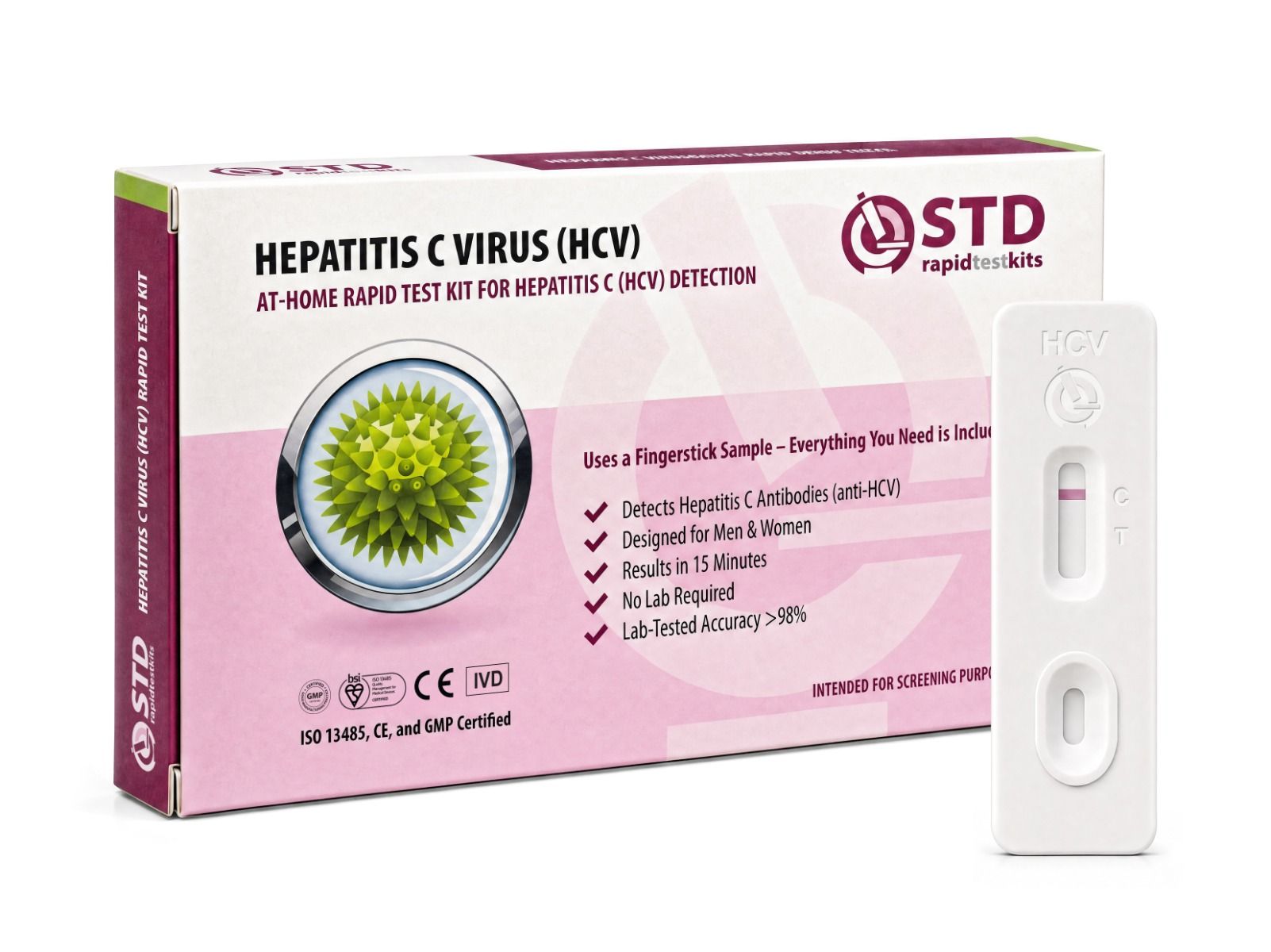
Hepatitis C testing has two layers. The first layer (and the one most home tests perform) is an antibody test that detects the antibodies your immune system produces in response to HCV. The second layer, ordered when the antibody test is reactive, is a NAT for HCV RNA that detects the virus itself in the blood and confirms active infection.
Antibodies typically take several weeks to develop. The CDC notes that for any exposure within the past six months, a NAT for HCV RNA is preferred over an antibody test because antibodies may not yet be detectable. For exposures more than six months old, an antibody test is appropriate as the screening step.
Practical testing scenarios:
- Routine one-time screening (no specific exposure): An antibody test, including an at-home rapid test, is appropriate. CDC recommends this once for every adult 18 and over.
- Recent possible exposure (less than 6 months ago): Ask a clinician for an HCV RNA NAT. An at-home antibody test taken too early in this window can return a false negative.
- Pregnant: CDC recommends testing during each pregnancy.
- Ongoing risk (active drug injection, dialysis, occupational exposure): Periodic testing rather than one-time screening.
- Reactive (positive) home antibody result: See a clinician for HCV RNA confirmation. Antibodies remain detectable even after the virus has been cleared, so a positive antibody alone does not mean active infection.
Lab antibody tests and at-home rapid antibody tests use the same biological signal: HCV antibodies in the blood. Lab tests use enzyme immunoassay chemistry; at-home rapid tests use lateral-flow chemistry. Both detect antibody. Lab confirmation tests use NAT (PCR-based) chemistry, which is a different technology and the gold standard for confirming active infection. The home rapid test is screening; the lab NAT is confirmation. They work together, not as substitutes.
Hepatitis C is a curable disease. Direct-acting antiviral medicines can cure more than 95% of persons with hepatitis C infection, but access to diagnosis and treatment is low.
What treatment looks like in 2026
The treatment picture for hepatitis C has changed dramatically over the past decade. Direct-acting antivirals (DAAs), which came into routine use in the mid-2010s, are short-course oral regimens that cure more than 95 percent of treated patients. The CDC and WHO both report cure rates above 95 percent in 8 to 12 weeks of pills, with the longer course usually reserved for people who already have cirrhosis.
The drugs come as fixed-dose combination tablets (one pill a day in most regimens) and target the virus directly rather than relying on interferon, the older treatment that produced harsh side effects. Most patients on modern DAAs report no significant side effects beyond mild fatigue or headache during therapy. Blood testing 12 weeks after the end of treatment confirms cure (called sustained virologic response, or SVR).
What treatment cannot do: it cannot fully reverse cirrhosis that has already formed, though it stops the inflammation that drives further scarring and reduces the long-term risk of liver cancer. This is why early detection is the single highest-leverage step. Curing hepatitis C in someone with mild liver damage usually means a normal life expectancy. Curing the same infection after decades of untreated disease still helps, but the liver damage already in place is harder to undo.
Reinfection is possible after cure if the original exposure route is still active (injection drug use being the clearest example), so post-cure prevention matters. Reinfection produces the same picture as a first infection and is treated the same way.
Cure rate: more than 95 percent of treated patients reach sustained virologic response (SVR) per CDC and WHO. Treatment length: 8 to 12 weeks of one daily pill in most modern regimens. Side effects: usually limited to mild fatigue or headache. Confirmation of cure: undetectable HCV RNA on a blood test 12 weeks after the end of therapy.
Choosing the right test for your situation
Most readers asking about hepatitis C symptoms fall into one of three groups. The right test depends on which group describes you.
| Your situation | What to use first |
|---|---|
| Routine one-time screening, no specific exposure | At-home HCV antibody rapid test, or ask your primary care for the antibody test at your next visit |
| Concerned about hepatitis exposure broadly (B and C) | Combined Hepatitis B + C at-home test panel |
| Possible STI exposure event in the past few months | Multi-infection panel (HIV, syphilis, hepatitis B, hepatitis C, plus genital swabs); follow up with clinician for window-period planning |
| Known recent exposure (less than 6 months ago) | See a clinician; antibody tests can read negative this early. Request an HCV RNA NAT |
If you are buying a single-infection home test for hepatitis C alone, the rapid antibody kit above is the most direct option. Combination panels are more cost-effective when more than one infection is genuinely on the table.

Frequently asked questions
- How long after exposure can hepatitis C be detected?
- HCV RNA can usually be detected in the blood within 1 to 3 weeks of infection, while antibodies take longer. Most people develop detectable antibodies within a few weeks to several months of exposure, and CDC guidance is to use a 6-month outer window when ruling out exposure with an antibody test alone. For any suspected exposure within the past 6 months, an HCV RNA NAT through a clinician is more reliable than an antibody test.
- Can hepatitis C go away on its own?
- For most people the virus will not clear on its own. Roughly 70 percent of acute infections progress to chronic, lifelong hepatitis C that requires treatment to clear (WHO). About 30 percent of acute cases do clear spontaneously within six months, but there is no reliable way to predict in advance which group you will fall into, which is why testing and access to treatment matter regardless of how you feel.
- Is hepatitis C curable?
- Yes. Direct-acting antiviral pills cure more than 95 percent of people in 8 to 12 weeks of treatment, per CDC and WHO. Cure is defined as undetectable HCV RNA 12 weeks after the end of therapy (sustained virologic response, or SVR).
- Is the at-home hepatitis C test as accurate as a lab test?
- At-home rapid antibody tests use lateral-flow chemistry; lab antibody tests use enzyme immunoassay chemistry. Both detect HCV antibodies and have high sensitivity and specificity when used correctly after the antibody window has closed. The gold-standard confirmation test, HCV RNA NAT (PCR-based), is a different technology used to confirm active infection. A reactive home result should always be confirmed with a clinician-ordered NAT.
- Can hepatitis C spread through sex?
- Sexual transmission of hepatitis C is possible but uncommon in monogamous heterosexual partnerships. Risk rises in contexts that involve blood exposure: sex during menstruation, traumatic sexual practices, and men who have sex with men, particularly those with HIV co-infection. The dominant transmission route remains shared injection equipment.
- What happens after a positive home hepatitis C test?
- A reactive home antibody test means your immune system has at some point responded to HCV. It does not by itself confirm active infection because antibodies remain detectable after spontaneous or treated clearance. Bring the result to a clinician, who will order an HCV RNA NAT to confirm whether the virus is currently active. If active, modern oral antiviral treatment is short, well-tolerated, and curative in over 95 percent of cases.
- How is hepatitis C different from hepatitis A and B?
- All three are viral infections that target the liver, but they spread differently and have different outcomes. Hepatitis A spreads through contaminated food and water and almost always resolves without chronic infection. Hepatitis B and C are bloodborne; hepatitis B has an effective vaccine and many adults clear it spontaneously, while hepatitis C has no vaccine and most adults develop chronic infection if untreated. Modern antivirals cure hepatitis C; hepatitis B is generally suppressed long-term rather than cured.
- Do I need to test if I feel completely fine?
- Yes. The CDC recommends every adult 18 and older be screened at least once, regardless of symptoms or apparent risk. The recommendation exists precisely because most people with hepatitis C feel completely fine for years and would never identify a risk factor on their own. One-time screening catches infections that decades-old transfusions, brief past drug use, or unsterile tattoos can otherwise hide indefinitely.

- U.S. Centers for Disease Control and Prevention. About Hepatitis C: U.S. prevalence (2.4 to 4 million Americans, 2017-2020), transmission routes, symptom timing 2 to 12 weeks post-exposure, and >95% DAA cure rate.
- U.S. Centers for Disease Control and Prevention. Hepatitis C testing recommendations: one-time screening for all adults 18+, NAT for HCV RNA preferred for exposures within 6 months, and rapid point-of-care antibody test characteristics.
- World Health Organization. Hepatitis C fact sheet: 50 million chronic infections globally, 30% spontaneously clear, 70% develop chronic infection, 15-30% reach cirrhosis within 20 years, 242,000 deaths in 2022.
- UK National Health Service. Hepatitis C overview: most people have no symptoms, antiviral tablets taken for 8 to 12 weeks cure most cases, free home finger-prick tests available for adults 18+.
- U.S. Centers for Disease Control and Prevention. Hepatitis C clinical overview for healthcare providers: acute vs chronic case definitions, asymptomatic majority of acute infections, and transmission risk groups.
