Published: November 2025 | Last updated: May 2026 | Editorial review and quality control: Martina N.
A rash that shows up after sex sends most people straight to a search bar. Two of the answers most likely to come back are heat rash and syphilis. Both can produce reddish spots. Both can show up on the chest. Both can feel like almost nothing. They behave very differently though, and those differences are how you decide whether to test or wait it out.
Most rashes are not sexually transmitted infections. Most are heat, friction, soap reactions, stress flares, or eczema responding to a humid week. Reported syphilis cases in the United States have trended upward in recent years according to CDC STI surveillance data, so more people are now encountering symptoms they did not expect, and many brush off the first signs.
The clinically meaningful differences come down to four things: when the rash showed up, where it is on the body, whether it itches, and what else your body is doing alongside it. This guide walks through each clue, then explains when testing is the safer next step.
Key Takeaways
- Heat rash appears within hours of heavy sweating in friction zones and clears within days when skin cools and dries. A secondary syphilis rash typically appears several weeks after exposure, often involves the palms and soles, and rarely itches strongly.
- If a rash follows a recent sexual exposure, involves palms or soles, or comes with fatigue, swollen lymph nodes, or a sore throat, get tested. Syphilis is straightforward to treat when caught early.
What a Heat Rash Actually Looks and Feels Like
Heat rash, called miliaria in clinical writing and prickly heat in everyday talk, happens when sweat ducts get blocked and trap moisture under the skin. It thrives in friction-heavy, sweaty environments: tight gym clothes, summer festivals, long road trips, humid climates, and any skin fold that does not get to breathe.
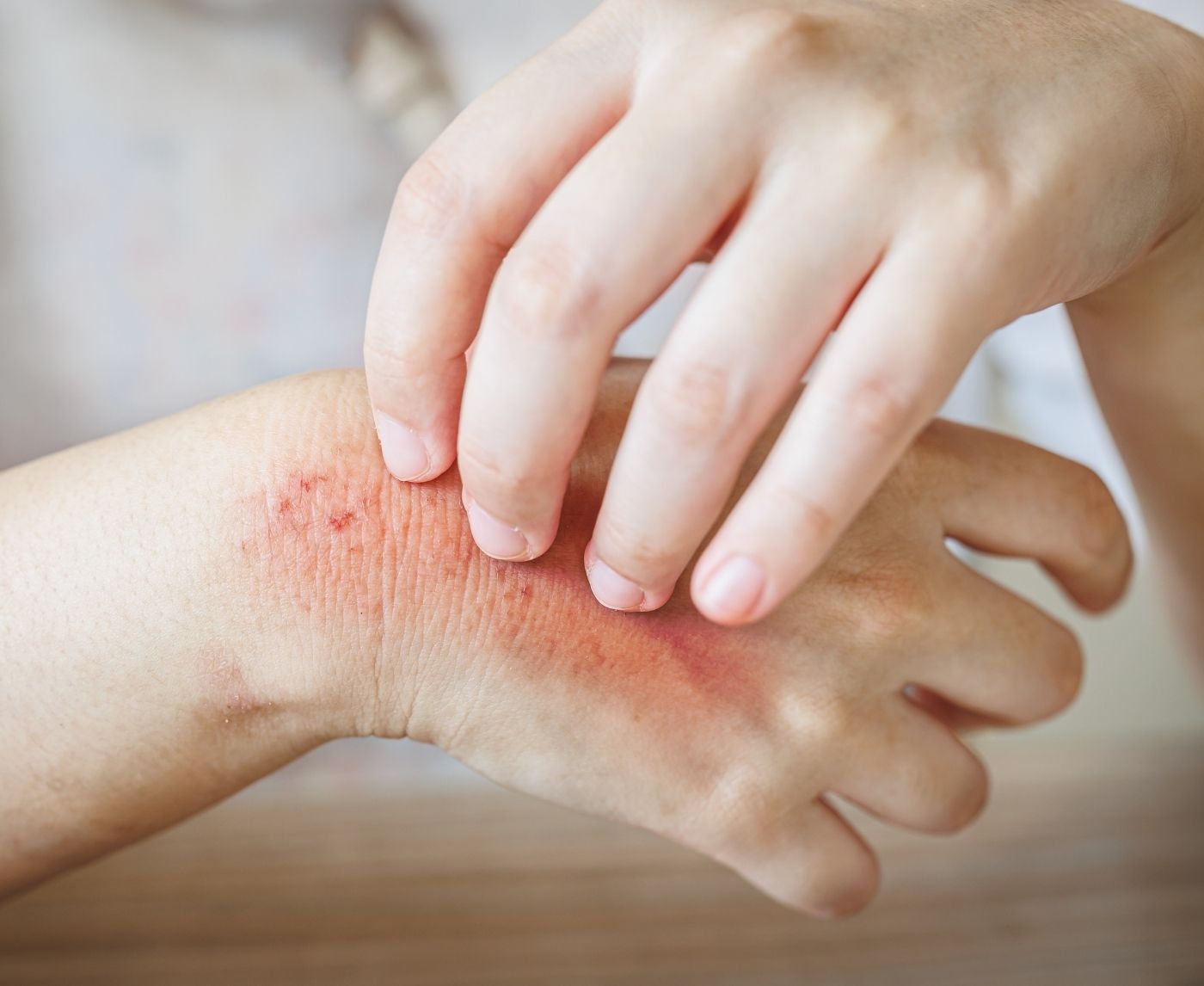
It usually feels itchy or prickly. Some people describe a light burning sensation when they shower or start sweating again. The bumps are small and clustered. They can be tiny and clear (miliaria crystallina), red and inflamed (miliaria rubra), or deeper and more pustular (miliaria profunda). They cluster where sweat pools: under breasts, along waistbands, inner thighs, neck folds, the upper chest, and the upper back.
The NHS guidance on prickly heat describes a rash that worsens with heat and friction and clears within a few days once the skin cools down.
Three signals together strongly point at heat rash: the rash appeared in a sweat or friction zone (chest, thighs, waistband, neck), it itches or stings, especially when you sweat again, and it improves within a few days of cool showers and loose cotton clothing. If all three fit, you almost never need an STI test for it.
What a Secondary Syphilis Rash Usually Looks Like
A syphilis rash most often appears during what clinicians call secondary syphilis. That stage develops weeks to a few months after the original infection, after the primary sore (a chancre) has healed, according to CDC guidance on syphilis stages. By that point the bacteria have spread beyond the original site through the bloodstream.
The rash itself can look surprisingly subtle. Flat or slightly raised spots, copper-pink to reddish-brown, sometimes faint and sometimes more noticeable. What makes clinicians take it seriously is the distribution.
The CDC guidance above notes that secondary syphilis frequently involves the palms of the hands and the soles of the feet, an unusual pattern for everyday skin irritations. It can also appear on the trunk, back, and inside the mouth as small grayish patches called mucous patches. Often it does not itch, or itches only mildly. Some people with secondary syphilis report no itch at all, while others describe a faint sensitivity that is easy to overlook as dry skin.
Side-by-Side: Heat Rash vs Syphilis Rash
Looking at any single rash in isolation rarely tells the whole story. Looking at how each pattern behaves across timing, location, sensation, and what else is going on is much more useful. The table below summarizes the differences clinicians actually rely on.
| Feature | Heat Rash | Secondary Syphilis Rash |
|---|---|---|
| Trigger | Heavy sweating, heat, friction, occluded skin | Bacterial infection weeks earlier |
| Timing | Hours to 1 or 2 days after heavy sweat | Weeks to months after exposure, after the chancre heals |
| Common locations | Skin folds, chest, thighs, waistband, neck | Palms, soles, trunk, back, sometimes mouth |
| Itch | Common, often prickly or burning | Often mild or absent |
| Response to cool, dry skin | Improves within days | Persists despite skin care alone |
| Systemic symptoms | None | Fatigue, swollen lymph nodes, low-grade fever, patchy hair loss |
How do I tell a syphilis rash from a heat rash?
A syphilis rash usually appears weeks to months after a sexual exposure, often involves the palms and soles, rarely itches strongly, and persists despite cooling or moisturizing. A heat rash appears within hours of heavy sweating in friction zones (chest, thighs, waistband, neck), often itches or stings, and improves within days when the skin cools and dries. If your rash matches the syphilis pattern, or you are unsure, a blood test gives you an answer.
Can a Syphilis Rash Itch?
Many online summaries say flatly that a syphilis rash does not itch. That is shorthand. Clinically, the rash is most often described as non-pruritic, meaning not itchy. Real bodies vary. Some people with secondary syphilis report mild itching. Others describe a vague skin sensitivity rather than a true itch. A syphilis rash is rarely intensely itchy in the way heat rash, an allergic reaction, or eczema typically is.
So the honest answer is yes, sometimes, slightly. Severity, placement, and timing together give a clearer picture than itch alone.
A mild itch by itself does not rule out syphilis. A strong, prickly itch concentrated in a sweat zone that calms down when the skin cools is much more consistent with heat rash. Pair the sensation with timing and location before drawing a conclusion.
The Timeline Clue Most People Miss
Picture this. You had a new partner three weeks ago. No obvious sores, no pain at the time, everything felt normal. Now a rash shows up on your torso and palms. You assume laundry detergent. But nothing changed at home.
That three-week gap matters. Secondary syphilis appears after the initial sore (chancre) heals. According to CDC guidance, the chancre usually lasts 3 to 6 weeks, often without much pain, and it can hide internally (vagina, anus, mouth, under the foreskin). Many people never see theirs.
So the rash often arrives weeks after the perceived risk has passed, on someone who never saw a sore in the first place. Heat rash works on a much shorter clock and reacts immediately to environment. A rash that shows up without recent heat exposure, or one that involves the palms and soles, points the suspicion elsewhere.
Skin rashes during the secondary stage of syphilis usually do not cause itching, and can appear as rough, red, or reddish brown spots both on the palms of the hands and the bottoms of the feet.
stdrapidtestkits.com sells at-home rapid tests, and product links on this page are how this article is funded. We recommend tests based on fit for the article topic, not on commercial benefit.
When the Rash Is Not the Only Thing
Secondary syphilis is a systemic stage of the infection, which means the bacteria are in the bloodstream. The rash is often the visible part, but it travels with company. According to CDC guidance on secondary-stage syphilis, common symptoms include fatigue, swollen lymph nodes (especially in the neck, armpits, and groin), low-grade fever, sore throat, muscle aches, headaches, weight loss, and patchy hair loss.
These symptoms can be subtle. Easy to chalk up to stress, allergies, or a lingering cold. Heat rash, by contrast, causes none of these. It is a strictly local skin reaction. A rash alongside any of the systemic symptoms above shifts the suspicion toward infection.
One pattern clinicians watch for is the combination of a faint truncal rash with painless swollen lymph nodes in the neck, armpits, or groin.
A faint truncal or palm-and-sole rash plus painless swollen lymph nodes plus low-grade fever or fatigue is the combination clinicians actively screen for. Friction and heat do not produce that cluster. A blood test gives a definitive answer.
When a Syphilis Rash Fades on Its Own
This is one of the most dangerous misunderstandings about syphilis. The secondary rash can fade by itself, with or without treatment. It can look like it resolved. That does not mean the infection is gone. The disease is moving into what doctors call the latent stage, where visible symptoms disappear but the bacteria remain in the body, sometimes for years.
With syphilis, the bacteria remain active in the body even after the rash clears. Without antibiotics, the infection can progress to late-stage complications affecting the heart, brain, nerves, and other organs. According to the World Health Organization syphilis fact sheet, syphilis is curable with appropriate antibiotics at any stage, with earlier treatment preventing the more serious complications.
A blood test taken after the rash fades will still detect antibodies for months to years afterward, which is how latent syphilis is most often identified.
Untreated syphilis can progress silently for years and damage the heart, brain, eyes, and nerves. The fading rash signals a shift into the latent stage. A blood test is the only way to confirm whether the bacteria are still active.
Testing: What Works, and When
Syphilis testing is a blood test. Most screening tests detect antibodies your immune system makes in response to the bacteria, which takes time to develop. The window period (how long after exposure a test becomes reliable) is generally 3 to 6 weeks, with most antibody tests becoming highly reliable by 12 weeks.
If a rash has already appeared, you are usually past the antibody-development window. The rash itself is a sign your immune system has had time to respond. A blood test taken at the time of the rash is generally reliable.
If you tested very early after exposure (less than 3 weeks) and got a negative result, repeat testing at 6 to 12 weeks is standard practice per CDC screening guidance.
| Time since possible exposure | Test reliability | What to do |
|---|---|---|
| Less than 3 weeks | May be too early; antibodies still developing | Consider waiting; talk to a clinician about any current symptoms |
| 3 to 6 weeks | Increasingly reliable | Test now; retest at 12 weeks if symptoms persist or first result was negative |
| 6 to 12 weeks | Highly reliable for most antibody tests | A negative result is reassuring; positive results need lab confirmation |
| 12 weeks or more | Reliable | Single test usually sufficient unless ongoing risk |
When You Should Think About Testing
Some clues raise the suspicion enough that testing makes more sense than waiting. A rash on your palms or soles is unusual on its own. Few common skin irritations involve those areas symmetrically. A rash that appears weeks after a new sexual partner, even with condoms (which lower but do not eliminate syphilis transmission risk), shifts the picture.
If you also feel swollen lymph nodes, mild fever, fatigue, sore throat, or unexplained hair thinning, that cluster moves the suspicion firmly away from heat rash. A painless sore in the weeks before the rash appeared, even one that healed quickly, completes the picture.
The reverse is also worth knowing. A rash that appeared right after a sweaty weekend in tight clothing, sits in friction zones (under the bra line, waistband, inner thighs), itches or stings when you sweat again, and clears within a few days of cool showers and loose cotton clothing fits the heat-rash pattern.
A rash on the palms or soles. A rash that follows a sexual exposure in the past few months. Swollen lymph nodes, fatigue, sore throat, or unexplained hair thinning alongside the rash. A painless sore in the weeks before the rash appeared, even one that healed quickly.
Why So Many People Misread a Syphilis Rash
When a rash shows up after sex, the brain does not jump to logic. It jumps to damage control. You search “heat rash vs STD rash.” You zoom in on photos. You compare lighting. You convince yourself the color looks more pink than brown. You search for reassurance rather than pattern.
Syphilis is particularly easy to misread because the rash is often faint. It can look like mild irritation. It can show up on the chest or back and resemble a reaction to soap, sweat, or detergent. Without pain and without intense itching, people assume it cannot be serious.
Heat rash, by contrast, feels reactive. It stings when you sweat again. It flares in hot environments. It calms when you cool down. Detergent swaps and looser jeans calm a heat rash within days.
Three quick heat-rash self-check clues
- Heat rash appears in a sweat zone (chest, thighs, neck, waistband) within hours of heavy sweating, not weeks later.
- Heat rash itches or stings, especially when you start sweating again.
- Heat rash improves within a few days of cool showers, dry skin, and loose cotton clothing.
The Part Nobody Talks About
Rashes after sex carry a specific kind of fear. It runs deeper than the health question itself. There is shame in it, worry about what it could mean, and dread of conversations you would rather avoid. That fear is the reason many people delay testing even when the clues point one way.
Testing replaces guesswork with information. It is an act of care for you, your partners, and your future self. Syphilis is treatable. Early-stage cases are treated with penicillin G per stage-specific CDC dosing guidance, with longer courses for later stages. The long-term complications people fear come from infection that goes untreated for years. Early detection changes that trajectory completely.
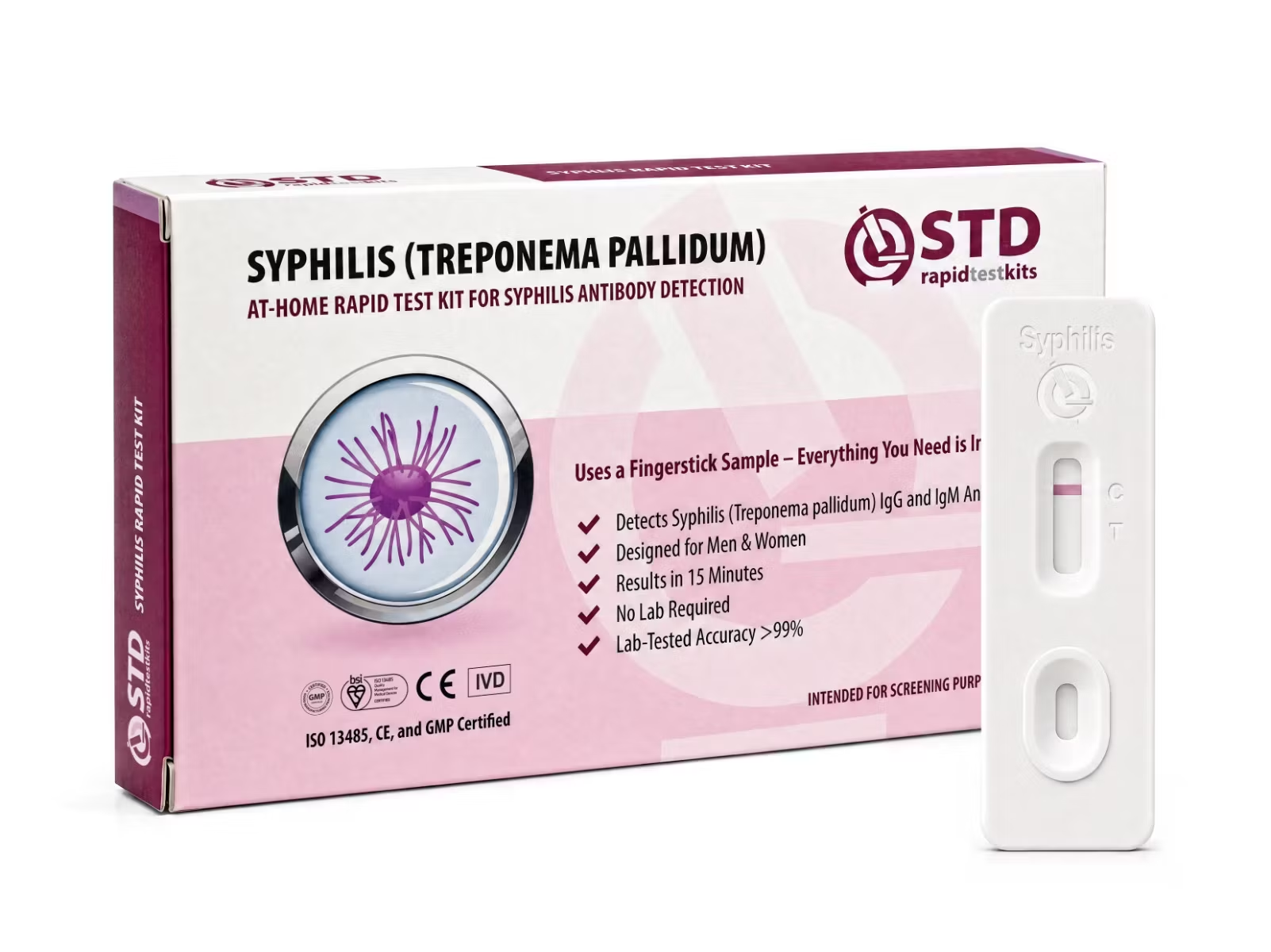
If clinic access feels overwhelming or inconvenient, a discreet at-home syphilis rapid test can give you a first answer in 15 minutes. A positive result should be confirmed by a healthcare provider with a follow-up lab test. A negative result, especially once you are past the window period, is strong reassurance.
The Bottom Line
Heat rash reacts to heat. Syphilis follows a biological timeline. Palms and soles matter. Timing after sexual exposure matters. Systemic symptoms matter. And when there is real doubt, a blood test gives you an answer.
If something about your rash does not sit right, do not wait it out for weeks. The earlier syphilis is caught, the simpler the treatment, and the more peace of mind you get back.
Per CDC treatment guidance, early-stage syphilis is treated with penicillin G, with the regimen calibrated to the stage of infection. The serious long-term complications people worry about come from infection left untreated for years, not from a case caught and treated early.
FAQs
- Can a syphilis rash itch at all?
- Yes, sometimes, mildly. The rash is most often described as non-pruritic (not itchy), but some people report a mild itch or vague skin sensitivity. It is rarely intensely itchy the way heat rash, eczema, or an allergic reaction usually is. Read severity, placement, and timing together rather than relying on itch as the only clue.
- If the rash showed up after a sweaty weekend, is it probably just heat rash?
- If you were in tight clothes or high humidity, and the rash is in classic sweat zones like the bra line, waistband, or inner thighs, heat rash is a strong fit. The test: does it improve when you cool down and let the skin breathe? Heat rash usually responds within days. A syphilis rash continues on its own timeline regardless of your clothing change.
- Why do palms and soles matter so much?
- Because most everyday rashes avoid them. The palms and soles have thick skin with different sweat-gland patterns, and they rarely host friction or contact rashes the way thinner skin does. When a rash appears symmetrically on the palms or soles, clinicians narrow the field fast. Secondary syphilis is one of the few things that classically goes there.
- What if the rash already faded?
- A secondary syphilis rash can fade on its own, but the bacteria can stay in the body for years afterwards. That is the latent stage, and it is dangerous precisely because nothing shows on the surface. Heat rash fading means recovery; syphilis fading means it is time to test.
- I never saw a sore. Does syphilis not start with one?
- It does, but the sore (chancre) is typically painless and can hide internally in the vagina, anus, mouth, or under the foreskin. It heals on its own in roughly 3 to 6 weeks even without treatment. Many people with secondary syphilis never saw their primary sore. That is common, not unusual.
- Could this be eczema or an allergic reaction instead?
- It could be. New detergents, body washes, stress, and weather changes all trigger skin irritation. Eczema usually has a pattern you recognize from past flares. If the rash is new for you, appears in unusual locations like palms, and follows a sexual exposure in the past few months, testing is the more informed move than continuing to guess.
- How accurate is at-home syphilis testing?
- At-home rapid syphilis tests are lateral-flow blood antibody tests. They are screening tools, not lab confirmation. Sensitivity increases from around 3 to 6 weeks after exposure and reaches peak reliability by 12 weeks. A test taken at 6 or more weeks is usually sufficient for a clear result; if you tested under 3 weeks after exposure, a repeat test at 6 to 12 weeks is recommended. Reported sensitivity varies by product, so check the instructions included with the specific test you purchase for the manufacturer-stated figures. Any positive result should be confirmed with a lab test, which is standard practice for any syphilis screen.
- If I test negative, can I relax?
- If you are past the window period and the test is negative, that is strong reassurance. If you tested very early after exposure (less than 3 weeks), a repeat test at 6 to 12 weeks is recommended. Either way, testing replaces guessing, which lowers anxiety more than staring at your skin ever will.
How We Sourced This Article: This article draws from current public-health guidance from the U.S. Centers for Disease Control and Prevention, the World Health Organization, and the UK's National Health Service. Clinical descriptions of secondary syphilis presentation and heat rash patterns are based on CDC clinical guidance and dermatology reference material. Funding disclosure: stdrapidtestkits.com sells at-home rapid tests; product links on this page are how this content is funded. We recommend tests based on fit for the article topic, not on commercial benefit.
- U.S. Centers for Disease Control and Prevention. About Syphilis: stages, signs and symptoms, testing, and treatment.
- U.S. Centers for Disease Control and Prevention. STI treatment guidelines for syphilis (clinician reference; stage-specific dosing).
- U.S. Centers for Disease Control and Prevention. STI statistics and surveillance reports landing page (trend data on syphilis cases in the United States).
- World Health Organization. Syphilis fact sheet covering transmission, stages, and treatment.
- National Health Service (UK). Heat rash (prickly heat): causes, symptoms, and self-care.
