
Published: November 2025 | Last updated: May 2026 | Editorial review and quality control: Martina N.
Is it the flu or could it be HIV or herpes?
If symptoms started within 48 hours of contact and follow a typical respiratory virus pattern, it is almost certainly viral illness. If fever, fatigue, and swollen lymph nodes appeared 2 to 4 weeks after a new sexual exposure, especially without a cough or runny nose, acute HIV and primary herpes both belong on the rule-out list. The fastest way to know is a 4th-generation HIV antigen/antibody test from about three weeks after exposure, plus a PCR swab if any sores or blisters appear.
A sore throat and body aches. A low-grade fever, swollen glands, and the kind of bone-deep tiredness that makes you want to cancel everything and sleep for two days. Most of the time, that pattern is a respiratory virus doing exactly what respiratory viruses do.
Sometimes it isn't. Early HIV and a first herpes outbreak can both look almost identical to the flu in the first two to four weeks after exposure: similar fever, similar fatigue, similar swollen lymph nodes. Early syphilis can join the lineup a few weeks later, usually with a non-itchy rash on the palms or soles. What's different across these conditions is what is happening underneath the symptoms, how soon a test can confirm it, and which test actually fits the timing.
This guide walks through how to tell when flu-like symptoms might be something else, what the symptom timeline looks like for HIV and herpes specifically, when each kind of test will (and won't) give you a useful answer, and how to think about retesting if your first result came back negative but your gut keeps telling you to keep looking.
Key Takeaways
- Early HIV and a first herpes outbreak can both feel like the flu in the first 2 to 4 weeks. If fever and fatigue followed a recent sexual exposure, both belong on the rule-out list alongside the usual respiratory viruses.
- Test timing matters more than test brand. HIV becomes reliably detectable from about day 18 to day 45 depending on the test type, and herpes IgG antibodies usually take several weeks to a few months to develop. Testing too early returns a false negative, not a clean bill.
When the Flu Doesn't Quite Fit
Flu-like illness is one of the most common reasons people end up searching their symptoms online, and most of the time the answer is exactly what you'd expect: a cold, seasonal flu, COVID, or another respiratory virus. The body aches, the fatigue, the low fever map to an infection your immune system will clear on its own in about a week.
What changes the picture is timing relative to a sexual exposure. Acute HIV infection, sometimes called acute retroviral syndrome, typically appears two to four weeks after exposure. The CDC describes the presentation as flu-like: fever, sore throat, fatigue, swollen lymph nodes, sometimes a fine pink rash on the trunk. HIV.gov puts the figure at about two thirds of people who develop acute HIV; the rest pass through the acute phase with no symptoms at all.
A first genital herpes outbreak follows a slightly different timeline. Primary HSV-2 infection often produces a prodrome of fever, headache, malaise, and tender groin lymph nodes within two to twelve days after exposure, sometimes before any sores are visible. Many people never develop classic blisters and only learn about the infection later through a blood test. The WHO herpes simplex fact sheet notes that most herpes infections are asymptomatic or only mildly symptomatic, which is why so many cases go undiagnosed for years.
Syphilis runs on its own clock. The primary stage usually shows up as a single painless ulcer (a chancre) about three weeks after exposure, often missed because it doesn't hurt. Weeks later, untreated cases can develop secondary syphilis: a non-itchy rash often on the palms and soles, alongside fatigue, sore throat, and swollen glands that can absolutely look flu-like. Chlamydia and gonorrhea, by contrast, rarely cause systemic illness unless they advance to pelvic inflammatory disease or epididymitis.
Your immune system reacts to many invading pathogens with the same starter pack: inflammation, cytokine release, lymph-node recruitment, rising body temperature, and exhaustion. That response is essentially identical whether the body is fighting influenza A or fighting a virus newly introduced through sexual contact. A positive flu test also doesn't rule out a concurrent STI, so when a higher-risk sexual contact sits in the same recent timeline, plan to test for HIV and herpes regardless of how the respiratory illness resolves.
Fever, fatigue, and swollen lymph nodes that appear 2 to 4 weeks after sexual contact (not within the first 48 hours) shift the differential toward acute HIV or a primary herpes outbreak, even when respiratory symptoms like cough or runny nose are absent.
The Timeline That Matters
Most flu-like viruses run their course in five to seven days. Symptoms that started within forty-eight hours of contact, peaked around day three or four, and faded by the end of the week look like a textbook respiratory virus and almost certainly are.
HIV and herpes don't follow that curve. Their symptoms appear later, after the virus has had time to replicate. They tend to last longer (one to three weeks for acute HIV, two to four weeks for primary herpes). And their presentation often includes signs that respiratory viruses don't, like firm tender lymph nodes in the groin or, eventually, genital lesions. The table below gives rough timing for each condition. Use it to sort the differential rather than as a diagnostic tool on its own.
| Condition | Earliest symptom onset | Typical key symptoms | When a test becomes useful |
|---|---|---|---|
| Common cold or flu | 1 to 4 days after contact | Runny nose, cough, fever, fatigue, sore throat | Symptom-based; no STI test needed |
| Acute HIV | 2 to 4 weeks after exposure | Fever, sore throat, fatigue, rash, swollen lymph nodes | HIV NAAT from ~day 10 through day 33; 4th-gen Ag/Ab test from ~day 18 through day 45 |
| Primary herpes outbreak | 2 to 12 days after exposure | Fever, headache, body aches, tender lymph nodes, then sores (sometimes) | PCR swab while sores are open; type-specific IgG blood test once antibodies develop (often 12 weeks) |
| Secondary syphilis | Weeks after the initial painless chancre | Non-itchy rash on palms/soles, fatigue, sore throat, swollen glands | Treponemal and non-treponemal blood tests, reliable from a few weeks after infection |
| Mononucleosis (for context) | 4 to 6 weeks after exposure | Fever, severe sore throat, swollen lymph nodes, fatigue | Heterophile antibody (monospot) or EBV-specific antibodies |
Where the Symptoms Overlap, and Where They Don't
Early HIV and herpes get mistaken for the flu because the body's immune response looks similar to the outside. Your immune system releases a wave of cytokines (signaling proteins that tell the rest of the body to ramp up an antiviral response). Cytokine release is what produces fever, aches, malaise, and the wiped-out feeling, regardless of which virus triggered it.
The symptom mix is rarely identical, though. A respiratory virus usually announces itself in the upper airway: cough, runny nose, post-nasal drip. Acute HIV and primary herpes are quieter in the airway and louder in the lymph nodes and skin. The table below compares the presence of each symptom across the three conditions.
Flu vs. Acute HIV vs. Primary Herpes Symptoms
| Symptom | Common in flu / cold | Common in acute HIV | Common in primary herpes |
|---|---|---|---|
| Fever | Yes | Yes | Yes |
| Fatigue | Yes | Yes | Yes |
| Body aches | Yes | Yes | Yes |
| Cough or runny nose | Yes | Uncommon | Uncommon |
| Sore throat | Yes | Yes (often) | Sometimes (oral HSV) |
| Swollen lymph nodes | Sometimes (mild, localized) | Common (neck, armpit, groin together) | Common (groin, sometimes neck) |
| Rash | Rare | Common (fine, pink, on trunk) | Uncommon (skin lesions are local, not generalized) |
| Genital sores or blisters | No | No | Common but not always |
| Painful urination or unusual discharge | No | Sometimes (concurrent STI) | Sometimes |
Lymph Nodes: What the Pattern Means
Swollen lymph nodes are among the most searched symptoms in STI anxiety spirals. They are also one of the least specific findings in clinical medicine. Lymph nodes swell whenever the immune system is responding to anything, which includes seasonal flu, strep throat, dental infections, ear infections, and even prolonged stress.
What does carry diagnostic weight is the pattern of swelling. In acute HIV infection, lymph nodes often enlarge in multiple regions at once, including the neck, the armpits, and the groin, rather than a single tender node under the jaw. The clinical term is generalized lymphadenopathy, and it tends to appear 2 to 4 weeks after exposure alongside fever and sore throat, per the CDC About HIV page. In primary herpes, the nearby lymph nodes may swell close to the outbreak site, for example tender inguinal nodes alongside genital sores or tender cervical nodes alongside oral sores.
One swollen, tender node on one side of the neck during a head cold is overwhelmingly likely to be a reactive node responding to a local infection. Persistent swelling in multiple regions, especially with fever and other systemic symptoms a few weeks after a possible sexual exposure, deserves clinical evaluation.
Symptom Patterns That Shift the Differential Toward STI
These patterns raise the possibility of an STI as the cause of flu-like illness. Testing at the correct window, not continued symptom analysis, is the next step.
- Flu-like symptoms appearing 2 to 4 weeks after unprotected sex, especially alongside a non-itchy rash, sore throat without congestion, or night sweats. Common
- Painful blisters, ulcers, or genital discomfort showing up within 2 to 12 days of exposure, alone or alongside fever. Common
- A non-itchy rash on the palms or soles weeks after a painless sore that may have been dismissed at the time. Common
How Anxiety Amplifies Symptom Perception
Once the thought "is this HIV?" enters someone's mind, the body becomes louder. Every ache feels new, every swallow feels swollen, every bead of sweat feels diagnostic. Normal physical fluctuations that would otherwise pass unnoticed suddenly read like evidence.
This pattern is recurring and predictable in clinical practice. A mild viral illness lands in someone who had a recent sexual encounter, and the symptoms get filtered through a fear lens. That filter amplifies sensory awareness in ways that are physiologically real, not imagined, but that often run far ahead of the underlying infection's actual severity.
The fever, the sore throat, and the fatigue can all be perfectly genuine. What shifts under anxiety is how the brain interprets them, and that interpretive load compounds the longer uncertainty drags on. Body scanning becomes hourly, late-night searches become obsessive, and sleep gets shredded, which itself amplifies symptom perception by lowering pain thresholds and worsening fatigue the next day.
The amplification cycle is self-reinforcing: anxiety triggers hourly body-scanning, body-scanning disrupts sleep, lost sleep lowers pain thresholds, and the next day's perceived symptoms feel worse. The cleanest exit is a planned test at the right window for the infection of concern. Even a single negative test taken during the wrong window produces useful information, because it sets up the correct retest at the correct time.
Why Doctors Sometimes Miss Early HIV and Herpes
Walk into urgent care during cold and flu season with a fever, sore throat, and swollen glands, and the working diagnosis will almost always be a respiratory virus. That is statistically the right starting point. The challenge is that acute HIV and primary herpes overlap with that exact picture, and unless someone asks about recent sexual exposure, the conversation tends not to go there.
Acute HIV in particular is easy to miss because the textbook signs (rash, mucocutaneous ulcers, generalized lymphadenopathy) only show up in a fraction of cases, and a standard rapid HIV antibody test taken in week one or two will likely return a false negative. Patients are reassured, sent home with hydration advice, and only diagnosed months later when chronic-phase signs appear. Acute HIV is also clinically important to catch early because antiretroviral therapy started during the acute phase yields better long-term immune outcomes than treatment started later.
Herpes is similarly easy to miss when the first outbreak is internal (cervical lesions, urethral lesions) or when systemic symptoms come and go before sores appear. Many providers wait for visible lesions to test, but a type-specific IgG blood test taken once enough time has passed for antibodies to develop can confirm infection even when no sores ever showed up.
If recent sexual contact is part of the story, raise it directly during the visit. Mentioning the exposure lets the clinician add a 4th-generation HIV antigen/antibody test or a herpes PCR to the same workup, instead of stopping at the respiratory-virus differential.

Testing While You're Still in the Gray Zone
Testing for HIV or herpes while you still have flu-like symptoms is all about timing. Test too early and the result will be falsely negative because your body has not yet produced detectable antibodies or enough virus for the assay to flag. Test at the right window and the result is reliable. Knowing roughly when each window opens turns the gray zone into a plan.
For HIV, the CDC's testing overview describes three windows that matter:
- HIV NAAT (nucleic acid test): detects the virus itself, usually positive 10 to 33 days after exposure. Most useful when acute HIV is strongly suspected.
- 4th-generation antigen/antibody lab test: detects p24 antigen plus HIV-1/2 antibodies, usually positive 18 to 45 days after exposure.
- Rapid antibody-only fingerstick (including most home rapid tests): positive 23 to 90 days after exposure, with most cases detectable by day 45.
For herpes, the timeline depends on whether sores are present. CDC genital herpes guidance recommends taking a sample from an active lesion as the most accurate option while sores are open, and the NHS describes the same swab approach at a sexual-health clinic. With no visible sores, a type-specific IgG blood test is the route, but IgG antibodies can take several weeks to a few months to develop reliably; many assay labels recommend waiting at least 12 weeks after exposure before treating a negative IgG result as definitive. A negative herpes blood test in week two does not mean you are in the clear; it usually means you tested too early.
If your symptoms started 10 to 14 days ago, an HIV NAAT or a 4th-generation lab test at the three-week mark is the most useful next step. If a sore appears, swab it within the first 48 hours for a PCR test. If you are testing primarily because of a possible exposure with no symptoms, plan for a follow-up test at 6 weeks (HIV) and 12 weeks (herpes) regardless of what the early result shows.
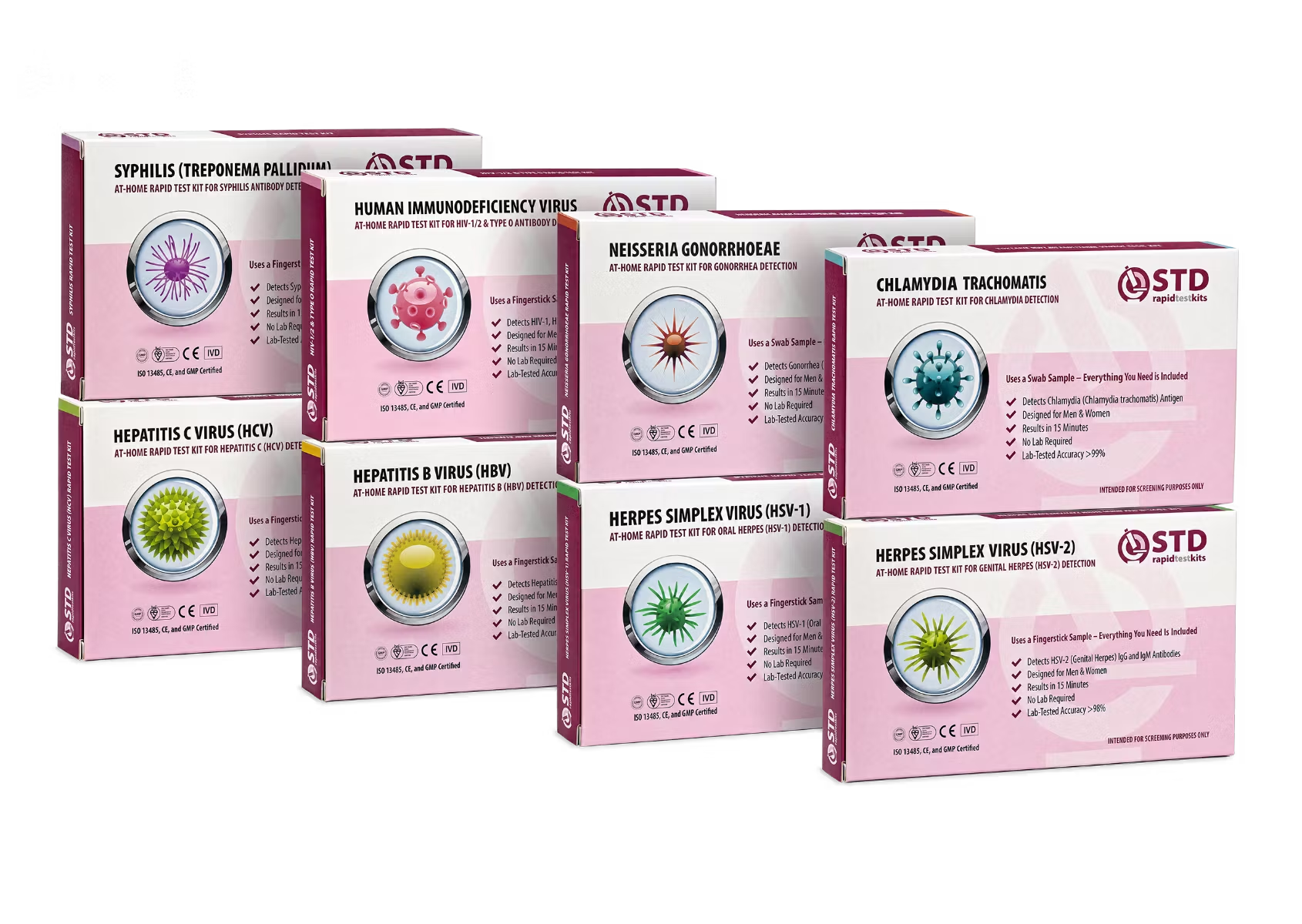
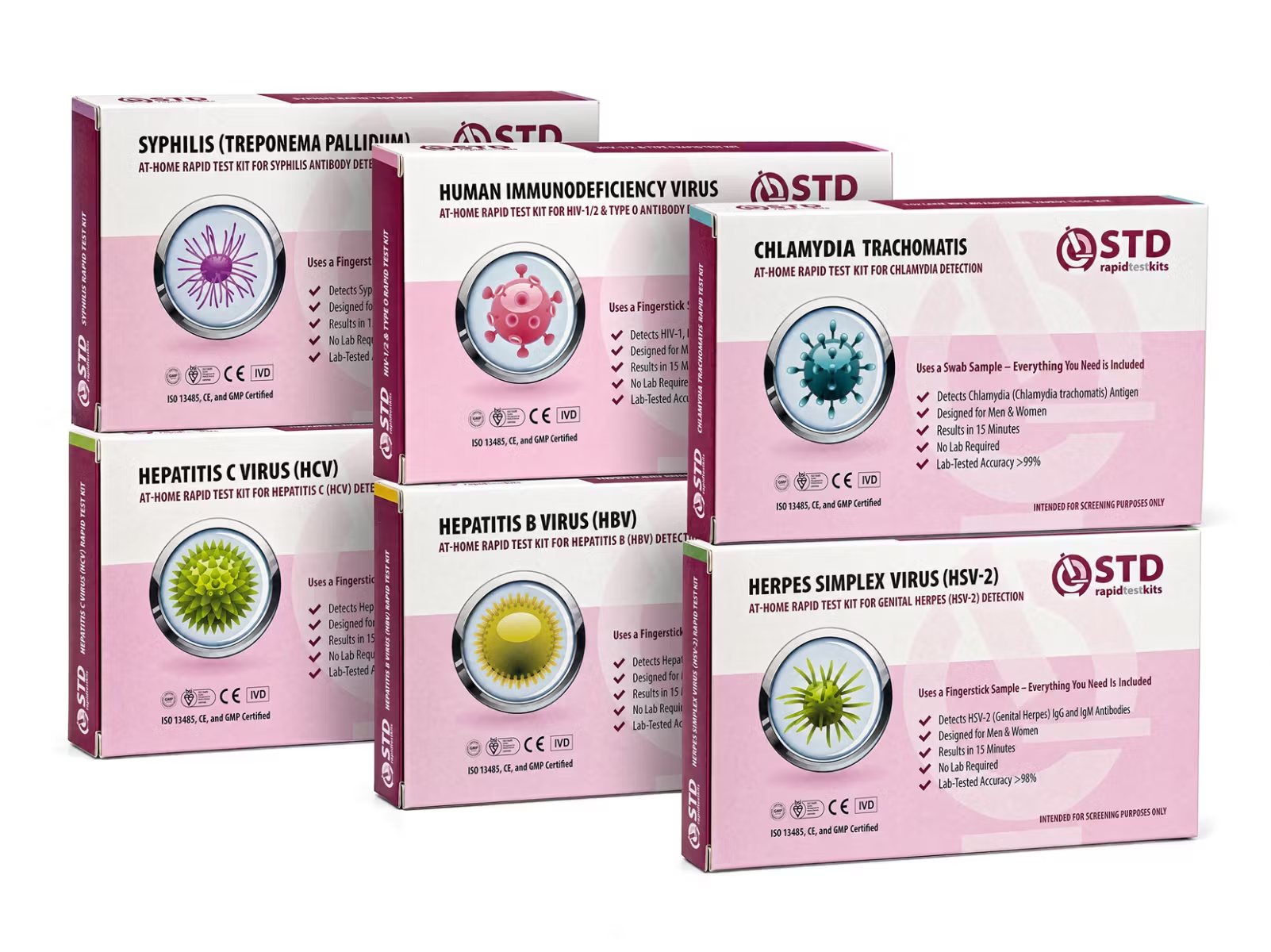
This site is published by stdrapidtestkits.com, which sells at-home rapid lateral-flow STI panels. The kit below is included as a fit-for-purpose option for the bloodborne and bacterial infections discussed above, not as a substitute for clinic NAAT/PCR when timing or sample type calls for one.
What At-Home Rapid Tests Can and Can't Do
The kits we sell are lateral-flow immunoassays. They use the same antibody-based chemistry as the rapid tests in many clinic and pharmacy settings. They are not the same technology as a laboratory NAAT or PCR test, and the difference matters in a few specific situations.
Where each test type fits
- Strong: rapid lateral-flow tests reliably screen for established infection once you are inside the antibody window. For HIV, that is roughly day 23 to day 90 after exposure; for herpes IgG, generally from about 12 weeks onward. A positive rapid result inside the window should be confirmed with a lab test.
- Weaker: lateral-flow tests are not the most sensitive option in the first two to three weeks after exposure. A clinic-ordered HIV NAAT detects viral RNA before antibodies form and is the better choice when acute HIV is strongly suspected.
- Out of scope: rapid home tests cannot confirm an active oral or pharyngeal HSV lesion (that needs a clinic-administered PCR swab of the sore) or screen sample types we do not carry, such as urine NAAT or rectal swabs. For those situations, see a clinic for the specific test, and use a home panel afterwards as a complementary screen for the bloodborne infections the same exposure could have introduced.
If Symptoms Fade, You're Not Automatically in the Clear
Acute HIV symptoms usually last one to three weeks and then disappear, often completely. People feel better, assume the bug has passed, and stop thinking about testing. Inside the body, the virus is still replicating; it has just moved from the loud acute phase to the quiet chronic phase. Without antiretroviral therapy, that quiet phase can last years before clinical signs of immune decline appear, and viral load remains transmissible the entire time.
Primary herpes works in a related but distinct way. After the first outbreak resolves, HSV retreats to a sensory ganglion and stays there for life. Most people experience fewer and milder recurrences over time, and a sizeable minority never have a clinically obvious second outbreak. None of that means the virus is gone; it means the immune system is keeping it suppressed.
Feeling better, in other words, is not a stand-in for testing. If your timeline included a higher-risk exposure and a flu-like illness ten to twenty days later, plan to test at the appropriate window even if you feel completely fine by the time the window opens. Catching acute HIV early improves long-term outcomes with treatment and reduces the chance of passing the infection to a partner who does not yet know about it.
Without antiretroviral therapy, the chronic phase of HIV can last years while viral load remains transmissible. Starting ART during or right after the acute phase yields better long-term immune outcomes than waiting until later signs appear, and reduces the chance of unknowingly passing the infection to a partner.
How Retesting Works (and When You Should)
Retesting is not a sign you did something wrong. It is the standard way to handle window-period uncertainty. There are three common scenarios.
Scenario 1: You tested early and got a negative. If you tested within two weeks of a possible exposure and the result was negative, the test was almost certainly too early to detect anything. Plan a follow-up at the relevant window: about 45 days for a 4th-generation HIV test, 90 days for a rapid HIV antibody test, 12 weeks for a herpes IgG blood test. The earlier negative is not wrong; it is just incomplete. This is also why CDC and most national guidelines recommend a final HIV test at three months after a known exposure, even if earlier tests have all been negative.
Scenario 2: You had symptoms, the early test was negative, and the symptoms continued or worsened. Treat that as a signal to test again with a more sensitive method. If the first test was a rapid antibody-only test and you are within the first month, ask a clinic for a 4th-generation lab test or HIV NAAT. If your concern is herpes and a sore appeared after the first test, get a PCR swab while it is open.
Scenario 3: Routine periodic screening. If you are sexually active, the CDC's screening recommendations call for at least annual screening across the major STIs, with more frequent screening (every three to six months) for higher-risk situations like multiple partners or condomless sex with new partners. Routine screening is not driven by symptoms; you do it on a schedule.
If a Test Comes Back Positive: What Now?
A positive screening result on any home rapid test is not a final diagnosis; it is a preliminary signal that needs lab confirmation. The next step is the same for both HIV and herpes: contact a clinic, your primary care provider, or a sexual health service and ask for confirmatory testing. For HIV, that usually means a 4th-generation antigen/antibody lab test plus an HIV-1/HIV-2 differentiation test, and an HIV RNA viral load test if the antibody result is unclear. For herpes, lab IgG type-specific testing or a PCR of any active lesion confirms the result.
If confirmation is positive for HIV, modern antiretroviral therapy is highly effective. People who start ART promptly and remain adherent can reach an undetectable viral load and live a normal lifespan. HIV.gov and the CDC have current treatment overviews and clinic locators. Undetectable equals untransmittable (often written U=U) is the well-established finding that people on effective ART with a sustained undetectable viral load do not transmit HIV sexually.
If confirmation is positive for herpes, antivirals (acyclovir, valacyclovir, famciclovir) shorten outbreaks and reduce asymptomatic shedding. Daily suppressive therapy is an option for people with frequent recurrences or who want to lower the chance of transmission to a partner. Most people with herpes continue dating, having sex, and forming relationships normally; honest conversation with partners is part of the picture, and so is realistic information about how common HSV is. The WHO estimates hundreds of millions of adults globally are living with HSV-2.
Confirmation pathway after a positive rapid result
- For HIV: ask the clinic for a 4th-generation antigen/antibody lab test plus an HIV-1/HIV-2 differentiation assay; add an HIV RNA viral load test if the antibody result is equivocal.
- For herpes: confirm with a type-specific IgG lab antibody panel, or, if any sore is still open, a PCR swab of the lesion (which is more sensitive than blood testing during an active outbreak).
- Don't start treatment off a single rapid result. The confirmatory step exists to protect you from false positives and to set the right starting baseline (HIV viral load, herpes type) for whatever therapy follows.
When to Seek Immediate Medical Care
Most flu-like illnesses can be safely monitored at home with rest, hydration, and over-the-counter fever management. A small set of warning signs warrants prompt medical evaluation regardless of cause: severe headache with stiff neck, mental confusion, difficulty breathing, chest pain, persistent fever above 103°F (39.4°C), seizures, or a new rash that spreads rapidly. These belong in an emergency department, not in a search-engine tab.
There is also a specific time-sensitive window for HIV. If a known or strongly suspected high-risk HIV exposure happened within the last 72 hours, post-exposure prophylaxis (PEP) may be available through an emergency department, an urgent-care clinic, or an HIV-specialty service. PEP is a 28-day course of antiretroviral medication that is most effective when started within hours of exposure and loses efficacy quickly after the 72-hour mark. If the exposure clock is still inside that window, treat it as urgent.
Anxiety can amplify how symptoms feel, but it does not stop a real infection from causing them. See a clinician promptly if you have fever above 103°F (39.4°C) for more than a day, a stiff neck with headache, trouble breathing, confusion, or a new rash that spreads rapidly. The right next step is medical evaluation, not more self-monitoring.
Most people who have HIV will experience flu-like symptoms within 2 to 4 weeks after infection. These symptoms can last for a few days or several weeks. Some people don't have any symptoms at all.
Your Next Steps: From Symptoms to a Clear Plan
Are you 2 to 4 weeks past a sexual encounter and experiencing flu-like symptoms (fever, fatigue, swollen lymph nodes) without a cough or congestion?
Yes: Plan an HIV test now: a 4th-generation antigen/antibody lab test from day 18, or an at-home rapid test from day 23. If any sores are present, swab them within 48 hours for herpes PCR. Otherwise, schedule an IgG blood test at 12 weeks for herpes.
Did you already test negative but your symptoms or history still worry you?
Yes: Your test may have been too early. Retest at the recommended window: HIV at 45 days (4th-gen) or 90 days (antibody-only), herpes IgG at 12 weeks. If symptoms worsen, see a clinician for NAAT or PCR testing.
No: If you're outside the window and symptom-free, consider routine screening. Annual STI checks are recommended for sexually active people.
These questions guide you to the right test and timing, not a diagnosis. Always confirm a positive rapid result with a clinic visit.
Frequently Asked Questions
- Can early HIV really feel exactly like the flu?
- About two-thirds of people with new HIV infection develop a flu-like illness somewhere in the 2-to-4-week window after exposure, per HIV.gov. The symptom cluster is specific enough to have its own name, acute retroviral syndrome, and typically includes some combination of fever, swollen lymph nodes, headache, mouth ulcers, and a faint trunk rash. The remaining third pass through the acute phase without noticeable symptoms, which is part of why routine screening matters even when nothing feels off.
- I got sick three days after sex. Is that acute HIV?
- Almost certainly not. The biological timeline for new HIV infection does not produce systemic symptoms within 72 hours; acute HIV symptoms appear two to four weeks later. Symptoms within the first few days after sex are far more likely to be a coincidental respiratory virus picked up around the same time. If you are still concerned, mark your calendar for a 4th-generation HIV test at the 3 to 4 week mark, when detection becomes reliable.
- Does a first herpes outbreak always include sores?
- No. A primary herpes outbreak can produce systemic symptoms (fever, body aches, swollen groin lymph nodes, headache) without any visible sores, especially when the initial lesions are internal. Many people only learn they have HSV later through a type-specific IgG blood test. Waiting for visible sores before testing means missing a real diagnostic window for some cases.
- How soon after sex can I get a meaningful HIV test result?
- The earliest reliable option in a clinic is a 4th-generation antigen/antibody lab test, which becomes useful from around day 18 after exposure. If acute HIV is strongly suspected, a clinic-ordered NAAT can flag infection from about day 10. Standard rapid home antibody tests are most reliable from around day 45 onward; testing earlier than each test's window risks a false negative, so the test type drives the timing more than the brand.
- How soon can I test for herpes after a possible exposure?
- For an active sore, a PCR swab taken within the first 48 hours of the lesion appearing is the highest-sensitivity option. For blood testing, herpes IgG antibodies develop slowly, and most assay labels put the reliable detection window at roughly 12 weeks post-exposure. A blood test at week two typically reflects the antibody-development window rather than a genuine negative result, so plan a retest if early. If a sore appears later, swab it then regardless of the earlier blood result.
- My lymph nodes feel swollen. Should I panic?
- No. Lymph nodes swell whenever the immune system is responding to anything, which includes seasonal flu, strep throat, dental infections, ear infections, and even significant emotional stress. The pattern that carries more weight for acute HIV is widespread swelling in multiple regions at once (neck, armpits, and groin together) two to four weeks after a possible exposure. A single tender node under the jaw during a head cold is overwhelmingly more likely to be a reactive node responding to a local infection.
- What if my doctor told me it's just stress or a virus and sent me home?
- If the consultation did not include questions about recent sexual contact and you have reason to think exposure is possible, raise it directly. Acute HIV in particular is easy to miss without that history; symptoms overlap heavily with common viral illnesses, and the early antibody-only tests most clinics use first will often be negative in the first two weeks. Ask specifically for a 4th-generation HIV antigen/antibody test or an HIV NAAT if timing fits, and request a herpes test plan based on whether sores are present.
- Are at-home rapid tests reliable enough to act on?
- Used inside their window period, a quality at-home lateral-flow rapid test is a meaningful screening tool. A positive result should always be followed by a confirmatory lab test through a clinic before treatment decisions are made. A negative result inside the window is reassuring against an established infection but does not rule out very recent exposure, which is why retesting at the full window endpoint is part of the plan.
This article was built from current public health guidance from the U.S. Centers for Disease Control and Prevention, the World Health Organization, and HIV.gov, supplemented by clinical references from the NHS. Where the article gives a specific time window (for example, HIV test windows or herpes IgG seroconversion timing), the source is linked inline. We do not provide individual clinical advice; if symptoms concern you, contact a licensed clinician.
- U.S. Centers for Disease Control and Prevention. About HIV, signs and symptoms of acute and chronic infection, including the 2-to-4-week flu-like illness window after exposure.
- U.S. Centers for Disease Control and Prevention. HIV testing overview, including window periods for NAAT (10–33 days), 4th-generation antigen/antibody (18–45 days), and antibody-only rapid tests (23–90 days).
- U.S. Centers for Disease Control and Prevention. STI screening recommendations and cadence by population.
- World Health Organization. Herpes simplex virus fact sheet, HSV-1 and HSV-2 epidemiology and clinical course.
- U.S. Department of Health and Human Services, HIV.gov. Symptoms of HIV and acute retroviral syndrome, including the about-two-thirds figure for flu-like symptoms during acute infection.
- NHS. Genital herpes symptoms and swab-based diagnosis at sexual-health clinics.
