
Published: July 2025 | Last updated: May 2026 | Editorial review and quality control: Martina N.
Queer women's sexual health rarely shows up in waiting-room pamphlets or default screening scripts. The myth that sex between women is somehow risk-free has shaped clinical practice for decades, and the cost falls on real people who needed a barrier method, a swab, or an honest conversation that never happened. Whether you identify as lesbian, bisexual, pansexual, queer, trans, or nonbinary, your sex life carries real, manageable risk, and the right tools exist. This guide covers what infections to screen for, which barriers fit which kinds of sex, how to handle shared toys, when to test, and how to find providers who treat your body and identity with respect.
Key Takeaways
- Queer women face the same infection risks as everyone else, just through different routes: skin-to-skin contact, oral sex, and shared toys top the list.
- The biggest gap in queer women's sexual health is screening, not biology. Knowing what to ask for, and when, closes most of that gap on your own terms.
Yes, Queer Women Can Get STDs. Here's How
Sex between people with vulvas counts as sex, and it transmits infections. The route is what changes, not the biology. According to the CDC's clinical guidance for women who have sex with women (WSW), the same pathogens that move through other sexual contact (HPV, HSV, trichomoniasis, gonorrhea, chlamydia, syphilis) move through queer sex too.
If genital skin is touching, fluids are exchanging, or a toy is moving between partners, infection transmission is on the table. The lack of a penis does not zero out risk. The table below maps the most common transmission routes against the pathogens each one carries.
| Route | Pathogens commonly transmitted | Notes |
|---|---|---|
| Oral sex (cunnilingus, anilingus) | HSV-1, HSV-2, HPV, gonorrhea, chlamydia, syphilis | Throat and oropharynx are common infection sites; often missed without targeted swabs |
| Genital-to-genital (tribadism, scissoring) | HPV, HSV, trichomoniasis | Skin and mucous-membrane contact; no penetration required |
| Shared sex toys | HPV, HSV, trichomoniasis, gonorrhea, chlamydia | Risk depends on toy material and whether cleaning happens between uses or body openings |
| Manual sex (fingering, fisting) | HPV, HSV | Highest risk with hangnails, eczema, or fresh cuts on the hand |
| Skin-to-skin contact in the genital area | HSV, HPV | Asymptomatic shedding is common; barriers reduce but do not eliminate risk |
Why Screening Gaps Exist for WSW
The silence around queer women's STI risk is not an accident. For decades, sexual health research excluded women who have sex with women, and clinical screening protocols followed suit. The result is a system where a queer woman walking into a clinic still routinely encounters intake forms that ask about "birth control" and "male partners" but skip every question that would surface real exposure history; providers who skip swabs because "you're not at risk"; refusal of dental dams or barrier supplies because the clinic does not stock them for non-heterosexual sex; and dismissal when a queer patient describes symptoms that do not fit the provider's mental model.
The CDC WSW guidance notes that bacterial vaginosis (BV), HPV, and trichomoniasis spread efficiently between female partners, and that under-screening drives later-stage diagnoses for cervical and other infections. Closing this gap starts with knowing what to ask for and being willing to push back when a provider hedges. Disclosure: stdrapidtestkits.com sells the at-home test kits linked throughout this guide. We recommend products that fit the reader's actual exposure context, not based on commercial benefit. Below you will find the screening list, the barriers, the toy-hygiene rules, and the partner-conversation patterns that make those decisions concrete. Infections like HPV, herpes, and trichomoniasis often go untreated for years in queer women whose providers never screened them.
Bacterial vaginosis appears in WSW couples at higher rates than in the general population, and it tends to recur unless both partners are evaluated and treated together. Skipped screenings let outbreaks of HPV, herpes, and trichomoniasis spread silently across queer social and sexual networks for years before anyone catches them.
Which Infections Should Be on Your Test List
Even if you are monogamous. Even if you have only had oral sex. Even if no one has ever offered you testing. Full sexual-health screening is appropriate for every sexually active adult, and it should reflect the kinds of sex you actually have. Bring the table below to a clinic visit or use it to choose what to order at home. Testing is not paranoia, it is how outbreaks stop spreading and how you protect partners you care about.
| Infection | Sample type | Key note |
|---|---|---|
| Chlamydia | Vaginal swab; throat or rectal as indicated | Many providers skip extragenital sites unless asked directly |
| Gonorrhea | Vaginal swab; throat or rectal as indicated | Order alongside chlamydia; co-infection is common |
| Syphilis | Blood test (RPR or treponemal antibody) | Especially important if a painless ulcer or palm/sole rash is present |
| Herpes (HSV-1, HSV-2) | Swab from active sore; blood antibody test as alternative | Asymptomatic seroprevalence interpretation is nuanced; talk through it with a provider |
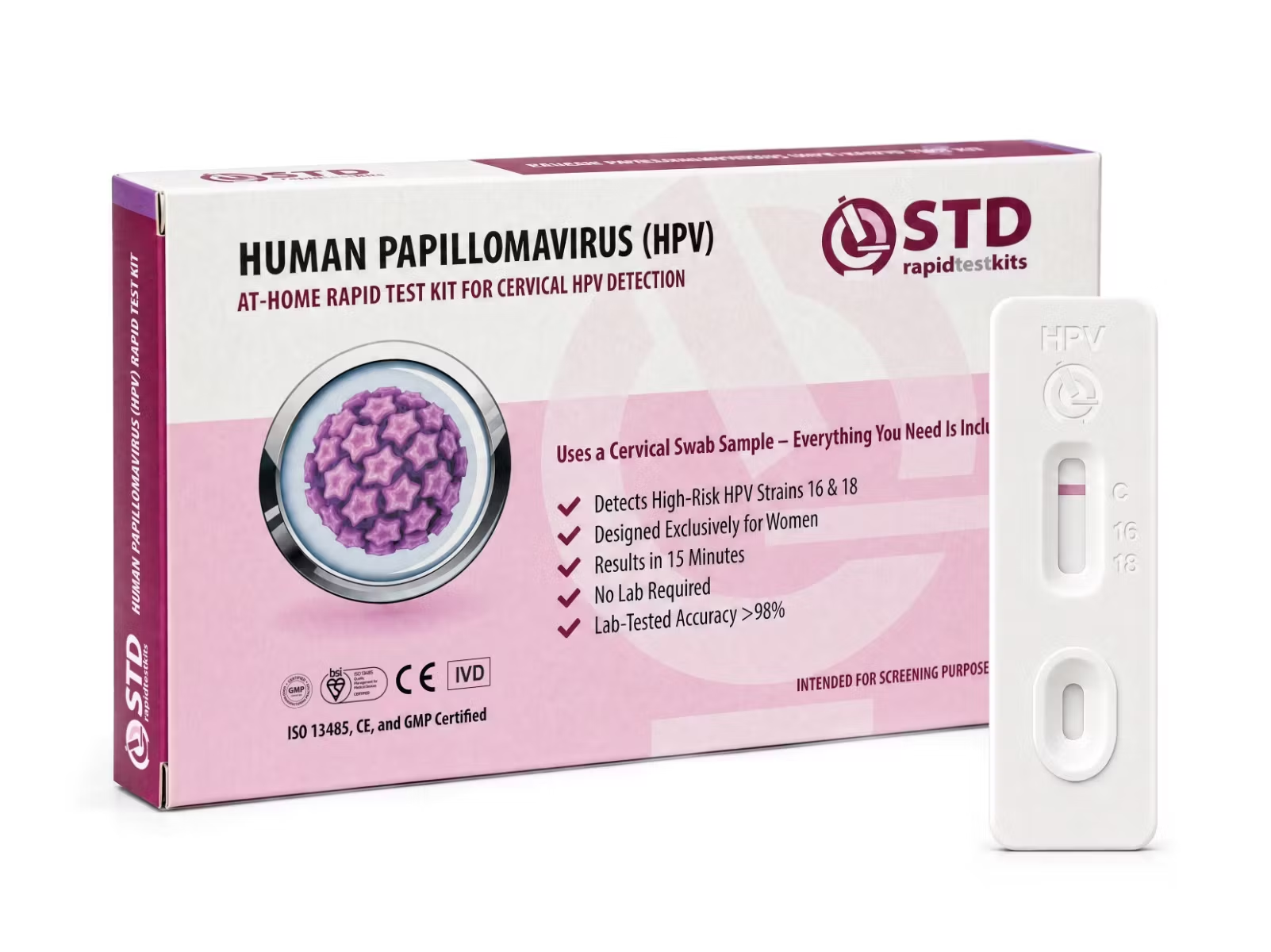
| HPV | Cervical Pap plus HPV test, per the CDC's HPV guidance at cdc.gov/hpv | Visible lesions on genitals, mouth, or throat warrant a separate clinical exam |
| HIV | Blood test (rapid antibody or 4th-generation lab test) | WSW genital-only contact is a low-but-not-zero route; risk rises with shared injection equipment, blood-to-blood contact, or open STI lesions during sex. Test at least once and more often with new or multiple partners. |
| Hepatitis B and C | Blood test | Worth catching during a routine sexual-health visit |
| Trichomoniasis | Vaginal swab | Often missed in WSW; symptomatic discharge is a clear indication |
Dental Dams, Gloves, and Tools That Actually Fit Your Sex Life
Most people will never see a dental dam in person. When queer women are handed one, it usually arrives without explanation, training, or any acknowledgment that the supply chain barely caters to their sex lives. Here is the practical version.
A dental dam is a thin square of latex or polyurethane placed over the vulva or anus during oral sex. It blocks fluid exchange and reduces transmission risk for herpes, HPV, gonorrhea, syphilis, and theoretically HIV, per NHS guidance for lesbian and bisexual women.
If your local pharmacy doesn't stock dams (most do not), you have workable substitutes. A non-lubricated condom cut lengthwise opens flat into a usable barrier. So does a non-powdered latex glove, with the thumb and fingers cut to leave a single sheet plus a tongue access if you want one.
Other useful barriers include latex or nitrile gloves, which reduce skin-to-skin transmission during fingering or fisting and protect both partners from cuts or hangnails introducing pathogens; finger cots, which are single-finger sleeves for targeted protection during manual stimulation; and condoms on penetrative toys, which are mandatory when toys move between partners or between vaginal and anal contact. Flavored, lubricated, and textured options all exist; pick the one that does not interrupt what you actually like doing.

Toy Hygiene: The Conversation That Doesn't Happen
Sex toys are central to a lot of queer intimacy and almost entirely absent from mainstream prevention guides. Porous toy materials (jelly rubber, TPR, cyberskin, novelty PVC) trap microbes in surface micro-pores that no amount of soap can fully reach. HPV, HSV, trichomoniasis, and bacteria like gonorrhea and chlamydia can survive on these surfaces long enough to transfer between users.
Practical toy hygiene rules:
- Cover toys with a fresh condom before use, and change the condom between partners and between body openings (vaginal to anal in particular).
- Wash non-porous toys (medical-grade silicone, glass, stainless steel) with warm soapy water after every use; some can be boiled or run through the dishwasher per manufacturer instructions.
- Replace porous toys regularly. They cannot be fully sanitized, only surface-cleaned.
- Skip sharing entirely if either partner has an active outbreak, unexplained discharge, or open lesions.
Bisexual and Pansexual Women Face the Highest Numbers
Bisexual women, pansexual women, and folks with fluid identities sit at a particular intersection: routinely treated as too queer for mainstream care and too straight for queer-specific resources. That gap shows up in the numbers. The CDC's WSW clinical guidance notes elevated chlamydia, gonorrhea, and HPV rates in bisexual women compared to lesbian or exclusively heterosexual women.
The reason is structural, not behavioral. Bisexual women often lack targeted education about barrier methods that fit both same-gender and different-gender sex; providers who ask about the actual mix of partners rather than assuming one orientation; support negotiating condom or dam use across different relationship configurations; and community spaces where mixed-partner sexual health gets discussed openly. Ask the same intake questions you would ask a heterosexual patient, plus the questions that surface female-partner exposures, and the rest of the screening flow falls into place.
The CDC's WSW guidance describes women who have sex with both women and men (sometimes shorthanded WSWM) as carrying STI rates comparable to women who have sex with men only, plus the partner-route exposures specific to female partners. The screening panel for this group should include both sets: extragenital swabs for chlamydia and gonorrhea, plus full HPV and bacterial-vaginosis attention.
Trans, Nonbinary, and Gender-Expansive Folks Belong in This Guide
Sexual health is not one-size-fits-all, and trans and nonbinary people often hit additional barriers on the way to it: medical trauma at clinics, intake forms that misgender on sight, exam-room language that triggers dysphoria, and a research base that under-represents gender-diverse populations.
The risk of infection is not lower in these populations. In several CDC summaries, it tracks at or above the cisgender comparison group, in large part because stigma and prior negative experiences delay or prevent care.
What helps:
- Gender-affirming providers who ask about anatomy and behavior rather than assuming based on identity.
- Self-collection options for swabs (including at-home test kits) that bypass clinical exam rooms entirely.
- Clinics on queer-health directories like GLMA, Plume, or Folx Health, which vet for affirming practice.
- Telehealth options that allow conversations about prevention and screening without an in-person visit.

How Often to Test, and What That Looks Like
You cannot protect what you do not check. Routine screening is one of the most empowering practices in queer sexual health, and it is also the one most likely to be skipped because no provider ever offered it. Here is a practical cadence to anchor on.
- Every 3 to 6 months: Multiple partners, non-monogamous arrangements, or recent exposure events.
- After each new partner: Independent of symptoms or barrier use during the encounter.
- Annually: Long-term monogamous couples (both partners), as a baseline check.
- Immediately: Sores, unusual discharge, pelvic pain, itching, swollen lymph nodes, or any new symptom that is not clearly something else.
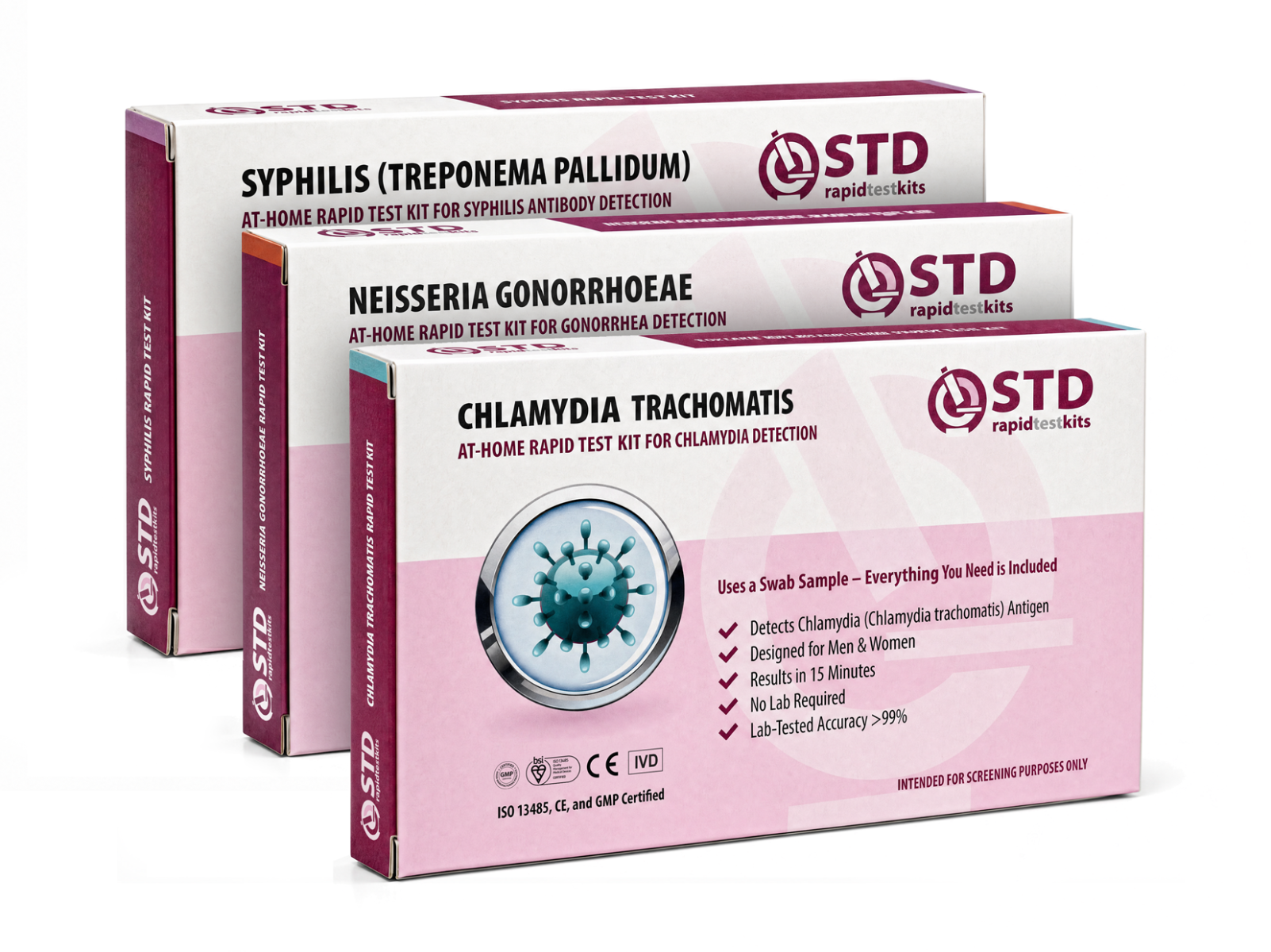
Confirmatory testing matters too. At-home rapid lateral-flow tests are excellent screening tools (private, fast, no clinic visit), and a positive result is worth following up with a clinic-administered NAAT or culture for the most precise treatment. The two technologies are complementary, not interchangeable.
How often should queer women get tested for STDs?
Every 3 to 6 months for anyone with multiple partners or new exposures, after every new partner regardless of symptoms or barrier use, and at least once a year for long-term monogamous couples. Test immediately if symptoms appear: sores, unusual discharge, pelvic pain, or swollen glands. The same cadence applies whether your partners are women, men, nonbinary, or some mix; partner gender does not change the screening schedule.
Talking About Safer Sex Without Killing the Mood
The conversation feels awkward in every relationship, queer or otherwise. The script is what changes the outcome. Bringing up testing and barriers does not flag distrust. It signals that you take the sex you are about to have seriously enough to make it sustainable.
Practical patterns that work:
- Bring it up before clothes come off. Mid-undressing is the worst time to introduce new information. A coffee, a walk, a text earlier in the day all work better.
- Frame it collaboratively. "How do we want to stay safe together?" lands very differently than "I need you to wear this."
- Use the word that fits your dynamic. "Barriers," "protection," "dams," or "gloves" all work. Pick the language that does not feel clinical to either of you.
- Test together when it makes sense. "Let's both get tested before things go further" is a normal request, not an accusation.
Although the rate of STI transmission between female partners is poorly studied, all WSW should be considered to be at risk for STIs based upon their individual risk factors and reported sexual behaviors.
Bacterial Vaginosis and Yeast: The Edge Cases
BV and yeast infections are not classified as STIs, and they sit in an awkward middle space in queer sexual health. They can transmit between partners through shared fluids, fingers, or toys; they often appear after a new sexual encounter; and they tend to recur in WSW couples without partner-level treatment per the CDC's WSW guidance.
BV is an imbalance in the vaginal microbiome (typically a shift away from Lactobacillus dominance). Yeast infections are an overgrowth of Candida species. Both can cause discharge, odor, itching, and irritation, and both can ping-pong between partners if only one person is treated.
Reasonable prevention practices:
- Change condoms or dams between partners and between body openings.
- Wash hands and toys thoroughly between use, with separate cloths if possible.
- Avoid douching; it disrupts the protective vaginal flora that keeps both BV and yeast in check.
- Choose breathable underwear (cotton) and avoid scented soaps or sprays in the genital area.
If your partner is symptomatic, get checked too, even if you feel fine. Treating one partner without evaluating the other is the most common reason BV cycles recur.
BV in WSW couples often returns within weeks of a single-partner course of metronidazole. Bring your partner to the appointment, ask about concurrent treatment, and discuss probiotic or boric-acid maintenance options if recurrence has already happened more than twice in a year.
Finding a Queer-Affirming Provider
Many queer women have a story about being misgendered, dismissed, or talked over in a clinic. The fear that follows leads to skipped screenings, and skipped screenings lead to later diagnoses. Breaking that cycle starts with finding a provider who is not going to make the visit harder than it needs to be.
Practical strategies:
- Call ahead. Ask whether the practice has experience with LGBTQ+ patients. The receptionist's answer (and tone) tells you a lot.
- Use queer-health directories. GLMA's provider directory, Plume, Folx Health, and local LGBTQ+ community health centers all maintain vetted lists.
- Bring an advocate. A friend or partner in the room can change the dynamic for gynecological exams or first visits at a new clinic.
- Ask for self-collection. Many clinics offer self-swab options for chlamydia and gonorrhea testing, which is less invasive and reduces dysphoria.
- Speak up about language. You have the right to correct pronouns, request anatomy-neutral language, and ask for a different provider if the visit is not working.

Symptoms That Get Missed in Queer Women
When the medical system assumes you are low-risk, your symptoms get filtered through that assumption. Vaginal discharge becomes "probably just yeast." Pelvic discomfort becomes "period stuff." Throat pain after oral sex becomes "a virus going around." Each of those framings can be right, and each of them can also miss a real infection.
If something feels off, trust that signal. Ask for specific tests. Be precise about what kinds of sex you have and where contact happened. You know your body better than a 12-minute appointment can capture, and pushing for the right swab is informed self-advocacy.
- Persistent or unusual vaginal discharge that is not your normal pattern.
- Small genital bumps or lesions that are not painful (HPV warts and primary syphilis chancres can both be painless).
- Throat pain, white patches in the mouth, or cold-sore-like blisters after oral sex.
- Pelvic discomfort during sex or between cycles.
- Unusual rashes on the palms or soles, a classic secondary syphilis pattern.
Trauma-Informed Sexual Health
Sexual health does not exist in a vacuum. A meaningful share of queer women carry trauma from prior relationships, sexual assault, family rejection, religious harm, or medical mistreatment. That history can make routine acts (asking for a swab, requesting a barrier, bringing up STI testing with a partner) feel disproportionately hard.
If trauma is part of the picture, look for providers who specifically describe their practice as trauma-informed, and ask what that means in concrete terms during the first visit. Use at-home testing options when clinic exam rooms feel unsafe or dysregulating. Establish safe words or signals with partners so you can pause sex without explanation. Center pleasure and comfort alongside risk reduction; care that ignores how you feel is incomplete care. You deserve care that centers your safety and healing on terms that work for you.
At-home rapid tests skip the exam room, the intake form, and the small-talk. Self-collection takes a few minutes, results come back in roughly 15 minutes, and a positive can then be followed up with a clinic of your choosing on your timeline.
Frequently asked questions
- Can queer women get STDs from oral sex?
- Yes. Oral sex transmits herpes (HSV-1 and HSV-2), HPV, gonorrhea, chlamydia, and syphilis, especially without a barrier like a dental dam. The throat and mouth are common sites of infection that often go undetected without targeted swabs.
- Are dental dams really worth it, or am I being paranoid?
- They reduce STI risk by blocking fluid exchange during oral sex. Whether you use one is a judgment call based on your partner's recent testing, the kind of contact, and your own comfort. Asking about it is the same calculation any sexually active person makes.
- I've only had sex with women. Do I still need to test?
- Yes. HPV, herpes, trichomoniasis, BV, and several bacterial STIs transmit efficiently between women through skin contact, fluids, and shared toys. Lifetime sexual history matters; partner gender does not change whether you should screen.
- Can STIs be passed through shared sex toys?
- Yes. HPV, HSV, trichomoniasis, gonorrhea, and chlamydia can survive on toy surfaces, especially porous materials like jelly rubber or cyberskin. Cover penetrative toys with condoms and change them between partners and between body openings.
- How often should queer women get tested?
- After each new partner is the cleanest anchor: order a screen even if barriers were used. For ongoing schedules, every 3 to 6 months fits non-monogamous arrangements; once a year is the floor for stable monogamous couples. After a new partner of unknown status, a 3-in-1 chlamydia/gonorrhea/syphilis swab plus an HIV test covers most exposure scenarios; add HPV screening if a Pap is overdue.
- Are at-home rapid test kits reliable?
- Yes for screening. At-home rapid tests use lateral-flow chemistry, which is a different technology from laboratory NAAT or PCR, but they perform well as a first-line screen. A positive result is worth confirming at a clinic when possible; a negative result during the appropriate window period is meaningful.
- What symptoms do providers commonly miss in queer women?
- Persistent unusual discharge, painless genital bumps or lesions, throat pain or white patches after oral sex, pelvic discomfort, and palm or sole rashes. Providers often default to yeast or irritation explanations because they assume low STI risk; advocate for specific testing.
- How do I find a provider who won't dismiss me?
- Use queer-health directories like GLMA, Plume, Folx Health, or your local LGBTQ+ community health center. Call clinics in advance and ask about LGBTQ+ experience. At-home testing is a workaround when in-person care is not yet accessible or feels unsafe.
- U.S. Centers for Disease Control and Prevention. STI treatment guidelines for women who have sex with women (WSW), including transmission routes, BV recurrence patterns, and elevated rates of HPV and trichomoniasis.
- U.K. National Health Service. Sexual health resources for lesbian and bisexual women, including barrier methods and screening recommendations.
- U.S. Centers for Disease Control and Prevention. HPV information hub including transmission, vaccination, and Pap/HPV co-testing screening cadence.
- U.S. Centers for Disease Control and Prevention. HIV resource hub including transmission routes, risk factors, prevention, and recommended testing intervals for sexually active adults.
- World Health Organization. Sexually transmitted infections (STIs) fact sheet covering transmission, prevention, screening strategies, and global burden.
