Published: July 2025 | Last updated: May 2026 | Editorial review and quality control: Martina N.
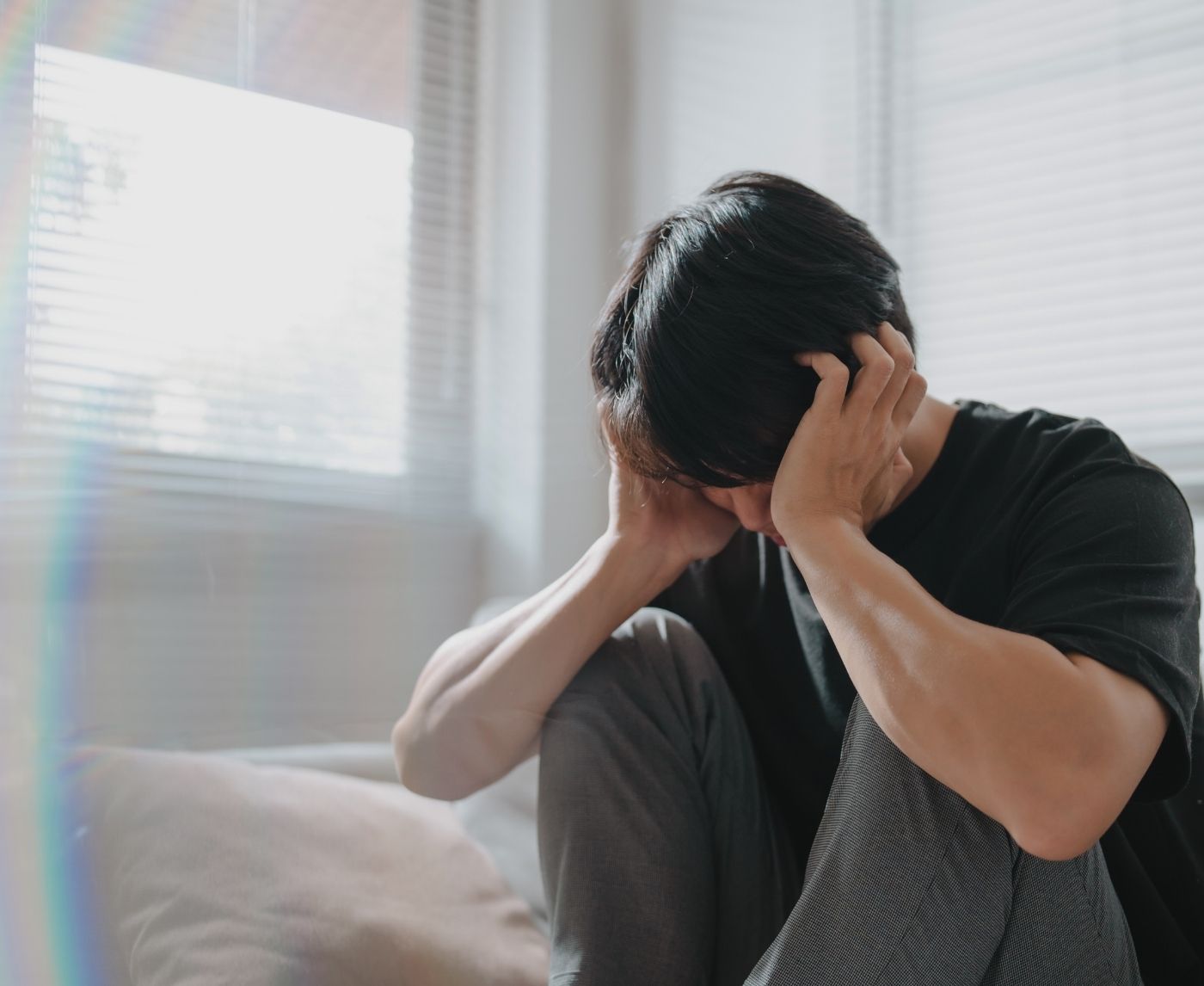
A negative STD test is supposed to feel like relief. For a lot of people it doesn't. The result lands, and the brain just keeps churning. New what-ifs. Phantom symptoms. Fresh panic at 3 AM. If that is where you are right now, you are not making it up, and you are not alone.
Health anxiety attached to sexual health has its own gravity. It pulls in shame, cultural messaging, and old experiences with bodies and trust. A clean result on a screen does not always reach the part of the brain doing the worrying. The next few sections walk through why that gap exists, what helps, and when a second test makes sense versus when it would only feed the loop.
Key takeaways
- Anxiety after a clean STI test is common. It reflects how the brain handles perceived threat, not whether you are actually sick.
- Repeat testing helps when your last test was inside the window period. It usually deepens the loop when used as a reassurance ritual.
Why a Clean Result Doesn't Always Calm the Brain
Health anxiety is its own pattern. The clinical name is illness anxiety disorder, and major medical references including the Mayo Clinic and the UK National Health Service describe it as preoccupation with having or developing a serious illness, with persistent worry that does not respond well to normal test results. STI anxiety is a specific flavor of that pattern, often layered with sexual shame and the cultural weight of having had sex in the first place.
Anxiety runs in older brain circuits than the ones that read lab reports. The worry and the result are processed in different systems, so you can know intellectually that a fourth-generation HIV test at the right window is reliable, and still wake at 4 AM convinced something was missed. That gap between knowing and feeling is the whole point of health anxiety, and it is a treatable pattern.
The NHS notes that people with health anxiety often spend hours checking their bodies for symptoms, looking up illnesses online, or asking doctors and partners for reassurance. Each of those behaviors brings short-term relief and long-term reinforcement.

The Test, Doubt, Spiral Loop
STI anxiety usually has the same shape, even when the trigger differs. Most people who describe this pattern walk through some version of the same five stages, looping back to the start each time something resembles a trigger:
- Trigger. A risky encounter, a missed condom, an ambiguous bump, a comment from a partner, or even a news headline.
- Fear spike. Panic centered on a specific feared infection, often HIV, herpes, or anything labeled "incurable."
- Testing. An initial test, then sometimes a second or third for reassurance.
- Doubt. The negative result feels suspicious. "What if the timing was off? What if they used the wrong panel? What if I am the rare false negative?"
- Spiral. Late-night searching, body checks, repeated scrolling through symptom lists, sleep loss.
The loop is reinforced by sex education that emphasized fear over information, by anonymous forum stories that read like worst-case fiction, and sometimes by clinicians who dismiss the worry without engaging with it. The result is people quietly suffering through this alone, especially if their identity, religion, or upbringing taught them that sex itself is something to be ashamed of.
What pulls people out is rarely a more reliable test. It is a different relationship with the urge to check.
- If you tested inside the relevant window period and have not retested past it, you are at the testing stage, and a correctly timed retest is reasonable.
- If you have already tested past the window and the urge to test again is rising, you are at the doubt stage, and another test will probably calm you for hours, then return you to the same place.
- If you are mid-search at 2 AM with no new exposure to test for, you are at the spiral stage, and the helpful next move is closing the tab, not refining the query.
Why Anxiety Can Mimic STI Symptoms
One of the most disorienting parts of this pattern is that the body actually produces sensations. Tingling, itching, stomach upset, dryness, low libido. None of those mean an STI; all of them are common in sustained anxiety and panic states. Hypervigilance also raises baseline awareness of normal sensations, so an itch that would have been ignored a month ago turns into a five-minute inspection now.
The clinical term for this is somatic amplification: heightened attention amplifies ordinary bodily sensations until they feel diagnostically significant. The U.S. National Institute of Mental Health notes that anxiety disorders can worsen over time and interfere significantly with daily life when left untreated.
- Tingling, prickling, or burning in the genitals or mouth, often from rapid breathing and muscle tension.
- Pink patches or dry, irritated skin from over-washing, friction, or harsh soap, not infection.
- Nausea, loose stools, and stomach pain that resolve when the spiral fades.
- Reduced libido or numbness during sex, which the body uses as a stress response.
The Late-Night Search Trap
Search engines are a lifeline for sexual health information, and a trap for sexual health anxiety. The same article that helps a calm reader make a smart decision about testing can convince an anxious one that the most catastrophic possibility is the most likely. Forums are worse. A thread titled "STD or pimple?" gets answered by hundreds of strangers, and the loudest replies are usually the most alarming ones.
This pattern has a name. Cyberchondria is the anxiety-driven escalation of health worry through repeated searches. It is reliably worse at night, on a phone, alone. The screen offers infinite information and no person to actually examine you, so the brain fills the gap with worst-case scenarios.
- You are comparing your sensation to a single dramatic case report instead of a typical presentation.
- You are reading "could be" lists that include infections you have no plausible exposure pathway to.
- You are revisiting the same forum threads or articles you have already read, looking for one phrase that calms you.
- You are running searches at hours you would not normally be awake, or your phone is the last thing you put down at night.
Why Some People Feel This More Intensely
STI anxiety does not hit everyone the same way. People who are queer, trans, non-monogamous, Black, brown, neurodivergent, or survivors of sexual trauma often carry more of this anxiety. The reason is structural. These groups have received measurably worse care from the health systems designed to serve them, and that experience does not get unlearned overnight.
Surveys of LGBTQ+ patients consistently show higher rates of medical mistrust, dismissive provider experiences, and avoidance of care after a negative encounter. When the system has already gaslit you about pain, identity, or risk, a clean test result does not automatically settle the brain. The default assumption becomes that the system missed something, because in plenty of past cases it did.
People who grew up with strict religious teaching about sex carry a different but parallel weight. The fear after a negative test is often less about "do I have an infection?" and more about "am I now a different kind of person?" That is a moral question dressed up as a medical one, and a test cannot answer it.
The UK National Health Service describes health anxiety as ongoing worry about being seriously ill. Common behaviors include frequently checking your body for signs of illness, asking people for reassurance, and avoiding anything that reminds you of the feared illness. Cognitive behavioral therapy targets these checking and reassurance behaviors because engaging in them feeds the anxiety loop rather than resolving it: short-term relief, long-term reinforcement. CBT focused on health anxiety is the evidence-based first-line treatment.
How to Interrupt the Spiral
You cannot positive-think your way out of an anxiety loop. You can interrupt it. The strategies below are pulled from cognitive behavioral therapy and trauma-informed practice for health anxiety, both well documented in clinical psychology and reflected in NHS and NIMH guidance:
- Set a search budget. Pick a daily window, ten or fifteen minutes, where you can look up STI questions. Outside that window, the rule is no searching, no symptom Googling. Most people find this both impossibly hard and dramatically effective.
- Trust the testing math. If your last test was past the relevant window period and from a reputable source, the negative result is the answer. If you are unsure of the window, see the table further down.
- Name the trigger. Write down what set the spiral off. Was it a bump, a memory, a partner's silence, a news story? Naming it pulls it out of the haze.
- Move the body. Anxiety is held physically. Cold water on the face, a brisk walk, slow paced exhales, or any kind of grounded movement helps the nervous system shift gears.
- Get a person. A therapist who works with health anxiety or OCD-spectrum patterns is the most direct fix. A peer support group is a strong second. Either way, you do not have to do this alone.
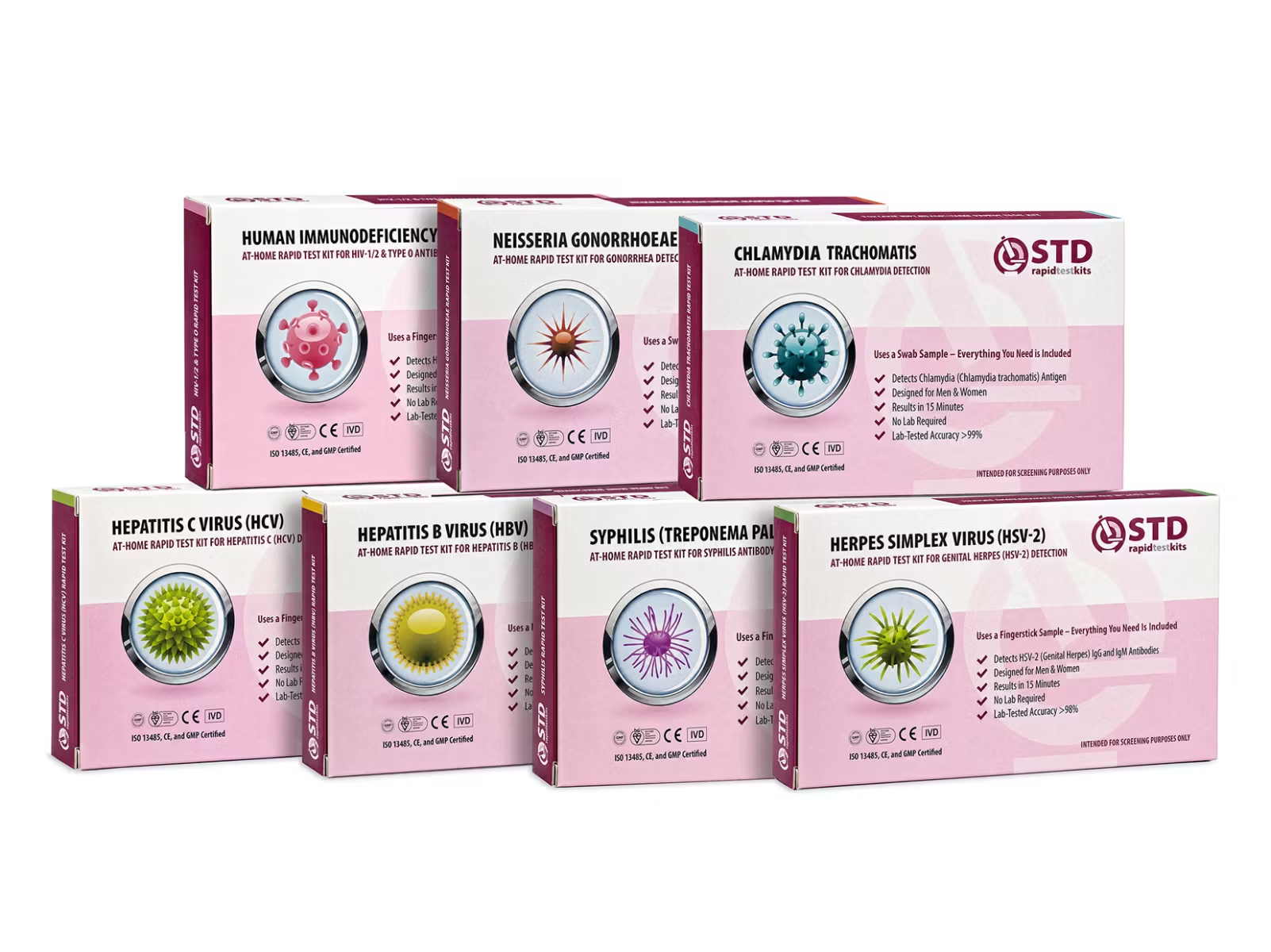
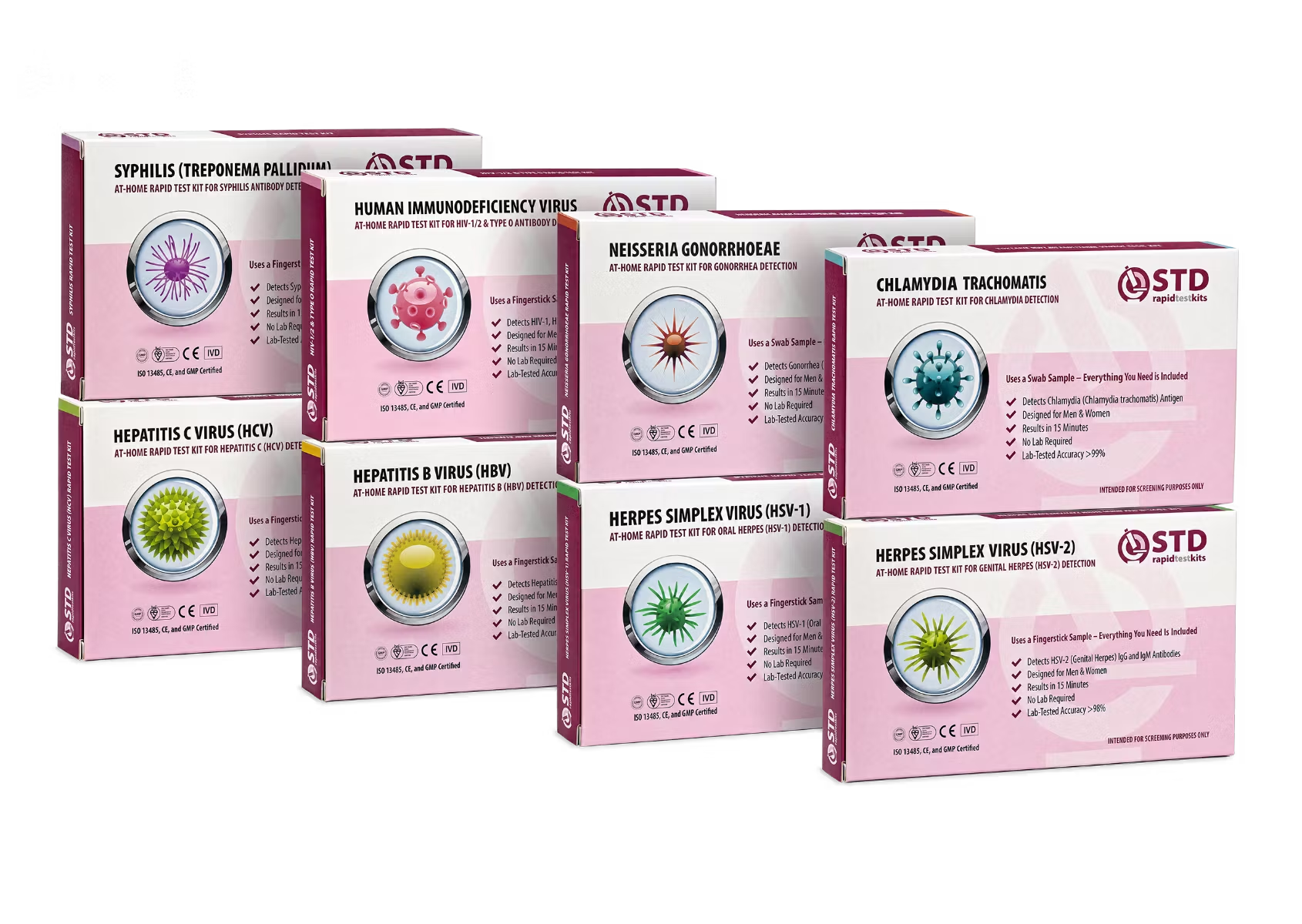
One note before the next section. stdrapidtestkits.com publishes this article and sells at-home rapid lateral-flow STI panels; where products are linked below, they fit the article's topic and serve as a screening option alongside clinical care, with results worth confirming in a lab if positive.
Why am I still panicking after a negative STD test?
Health anxiety is a brain pattern that does not switch off when results come back clean. Reassurance from a single test usually fades within hours, then the worry returns hunting for new evidence. The pattern is recognized in clinical psychology as illness anxiety disorder, and most people improve with cognitive behavioral therapy or therapy focused on health anxiety, often within a few months of structured work.
When Retesting Actually Makes Sense
Retesting is sensible in two situations. First, when your initial test was inside the window period for the infection you are worried about. Second, when the original panel did not include the infection on your mind, which is common for herpes since it is usually not part of routine STI screening unless you ask for it.
Outside those two situations, repeat testing tends to feed the loop. A third HIV test at twelve weeks after a six-week test that was already conclusive does not produce new information; it produces a fresh, briefly satisfying ritual. The U.S. Centers for Disease Control and Prevention publishes window periods for each test type, so you can match the test to the timing.
This quick reference shows reliable windows for the most common at-home or clinic tests, drawn from CDC guidance:
| Infection (test type) | Reliable window after exposure |
|---|---|
| Chlamydia (NAAT swab) | About 1 to 2 weeks |
| Gonorrhea (NAAT swab) | About 1 to 2 weeks |
| HIV (4th-generation lab antigen/antibody test) | About 18 to 45 days |
| Syphilis (antibody test) | About 3 to 6 weeks |
| Hepatitis B (HBsAg) | About 3 to 6 weeks |
| Hepatitis C (antibody test) | About 8 to 11 weeks |
| Herpes HSV-2 (antibody blood test) | About 12 to 16 weeks |
When STI Anxiety Shows Up in Your Relationship
STI anxiety does not always show up alone. For people in committed relationships, it often arrives in bed: avoiding sex, pulling away after intimacy, interrogating a partner about every past test, or compulsively checking for symptoms after consensual oral sex with someone you love and trust.
The pull to interrogate, avoid, or check is anxiety running its script in a new setting. The trigger has shifted; the underlying mechanism has not. Many people in this situation describe a gnawing sense of unsafety that does not match the actual relationship. Even monogamous, recently tested couples can run into it.
Try a short, low-stakes opener that does three things at once: names the anxiety, takes the partner off the hook, and bounds the conversation.
"My brain is doing an anxiety thing about STIs. It is not about you, and it is not about whether I trust you. Can we talk about it for ten minutes and then watch something stupid?"
Most partners respond better to that kind of disclosure than to silent withdrawal, and the time-box keeps the conversation from becoming the next loop.
When the Fear Is Older Than the Test
Sometimes STI anxiety is not really about STIs. For survivors of sexual assault, medical trauma, or shame-saturated upbringing, the fear of being "unclean" or "contaminated" comes from somewhere older and lands on this topic because sex is where the original wound lives.
Trauma-informed therapists describe this as the body remembering what the mind has tried to file away. Hypervigilance after trauma can turn any small bodily cue into a high-stakes event. A negative test does not undo that pattern. It cannot, because the test is answering a different question than the one the body is asking.
If your STI fear is unusually intense, sticks around for months past clean results, or comes with intrusive memories, dissociation, or numbness, that is worth bringing to a trauma-informed therapist or psychiatrist. The fix is usually slower than a single appointment, and it works for most people who do the work.
- The anxiety has lasted months past clean test results, with no new exposure to explain it.
- You experience intrusive memories, flashbacks, or dissociation alongside the STI worry.
- You feel numb, frozen, or detached during sex even with a partner you trust.
- The body sensations you keep checking on connect, even loosely, to a past experience of harm or boundary violation.
Any of these is a signal that a trauma-informed therapist or psychiatrist will be more helpful than another STI panel.
You Can Get Better at This
If you are reading this in the middle of a spiral, take a breath. You are not crazy. You are not broken. You are not the only person refreshing test results and whispering "please be okay." This pattern is common, recognized in clinical psychology, and people get better from it all the time.
Better does not always mean the worry disappears. It usually means the worry loses its grip. You notice it sooner. You let the urge to check pass without acting on it. You sleep again. You touch a partner without scanning their skin afterward. The peace you are looking for is downstream of small habit changes, plus, often, a good therapist.
- If you have not tested at the right window for the exposure on your mind: do that now. Match the test to the table above so the result actually answers the question.
- If you are past the window and mid-spiral: close the tab. Another search will not produce new evidence; it will produce a brief, fading hit of relief.
- If the pattern has lasted weeks or months past clean results: find a therapist who works with health anxiety, OCD, or trauma. That is the most direct lever you have left.
FAQs
- Why am I still anxious about STIs after a negative test?
- The brain registers uncertainty as ongoing threat, so the alarm persists even when the lab result is clean. This is illness anxiety disorder, a recognized clinical pattern. Cognitive behavioral therapy focused on health anxiety is the most evidence-based route, often producing meaningful improvement within a few months of structured work.
- How do I know if my test was actually reliable?
- Two things determine reliability: whether the test type matches what you were exposed to, and whether the timing fell within the window period for that test. The CDC publishes window periods by test type. If both boxes are checked and the result was negative, the test was reliable.
- Can anxiety actually cause physical symptoms that feel like an STI?
- Yes. Tingling, itching, dryness, stomach upset, low libido, and skin redness from over-washing are all common in sustained anxiety. None of those are diagnostic for an STI on their own, and they often resolve when the anxiety pattern eases.
- Should I test again if I am still worried but already past the window period?
- Usually no. Repeat testing past the window period rarely changes the medical picture and tends to deepen the loop. The exception is if your panel did not cover the specific infection on your mind, since herpes is often left off routine screens unless requested.
- Does standard STI screening include herpes testing?
- No, not by default. Herpes blood tests are usually only added if you ask for them or have visible symptoms. If herpes is the infection you are worried about, request the test specifically.
- What is illness anxiety disorder, and how is it different from regular worry?
- Illness anxiety disorder is a clinical pattern of preoccupation with having or developing a serious illness, usually with significant distress lasting six months or more. The defining feature is that it does not respond well to negative test results, which is what separates it from situational worry.
- Are at-home rapid STI test kits reliable?
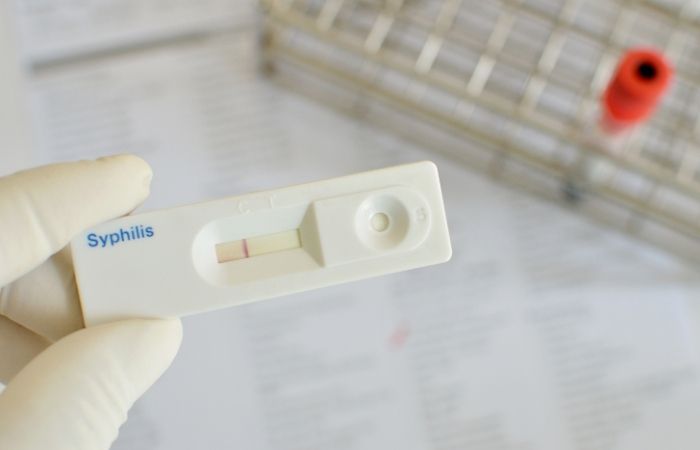
- At-home rapid lateral-flow kits from established brands are reliable when used after the relevant window period and according to instructions. They are screening tools, and a positive result is usually confirmed with a follow-up lab test. They do not match laboratory NAAT or PCR analytical sensitivity, which is normal for screening assays.
- When should I see a therapist about this?
- If your STI fear has lasted weeks or months past clean test results, is interfering with sleep, sex, or daily functioning, or comes with intrusive thoughts, repetitive checking, or compulsive searching, those are signs the pattern would benefit from professional support. A therapist who treats anxiety, OCD, or health anxiety is the most direct match.
- U.S. Centers for Disease Control and Prevention. Sexually transmitted infections, screening recommendations, and treatment guidelines.
- U.S. Centers for Disease Control and Prevention. HIV testing window periods and guidance on test type selection.
- UK National Health Service. Health anxiety: symptoms, behaviors, and treatment options including CBT.
- U.S. National Institute of Mental Health. Anxiety disorders overview, course, and treatment.
- Mayo Clinic. Patient information on illness anxiety disorder and related health anxiety presentations.
- World Health Organization. Sexually transmitted infections fact sheet, including epidemiology and screening guidance.
