Published: August 2025 | Last updated: May 2026 | Editorial review and quality control: Martina N.
Can telehealth actually diagnose an STD?
A video visit can triage your concern, take a sexual history, and prescribe treatment for confirmed infections. It cannot examine you, swab you, or run bloodwork. For most common STIs the laboratory step is the diagnosis; pairing the call with a home test gives you both guidance and a verified result.
Telehealth has reshaped how people handle STI concerns. A video visit, a self-collection kit in the mail, and a secure patient portal can replace the urgent-care drive for most common infections. The model works, and public-health agencies endorse it; it is also not a substitute for every situation.
If your concern is acute (a visible sore you want a clinician to examine, severe pelvic pain, or a known high-risk HIV exposure within the last 72 hours), see a clinician in person. For routine screening, post-exposure follow-up after the relevant window period, and most symptom checks, the telehealth-plus-home-test workflow is a private, legitimate, and increasingly mainstream path to an answer.
This article is published by stdrapidtestkits.com, which sells at-home STI test kits. We recommend products based on fit for the reader's concern, not commercial benefit.
Key Takeaways
- Telehealth covers most common STIs (chlamydia, gonorrhea, syphilis, HIV, hepatitis B and C, herpes antibody panels, HPV self-sampling) using mailed lab kits or at-home rapid assays, but a video call alone cannot confirm or rule out a silent infection.
- Three situations still need in-person care: a clinician evaluating a visible lesion, the intramuscular injections used to treat syphilis and gonorrhea, and Pap smears or pelvic exams.
What telehealth STD diagnosis actually means
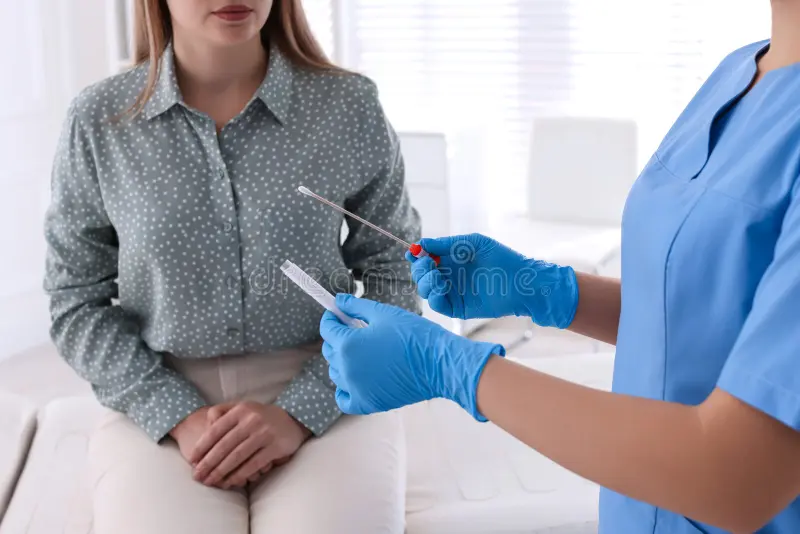
"Telehealth STD diagnosis" is not one app. It is a stack of three things working together: a virtual visit (video or asynchronous messaging) with a licensed clinician, a sample-collection kit (mailed lab kit, dried blood spot, or rapid at-home test cassette), and prescription or referral logistics after the result is read. The U.S. Department of Health and Human Services treats this workflow as standard medical care, with the same privacy protections and clinician-licensing rules that apply to any in-person visit (telehealth.hhs.gov).
Two test technologies dominate the home space, and the difference matters. Mail-in lab kits send your self-collected sample (vaginal or penile swab, fingerstick blood, or dried blood spot) to a CLIA-certified lab for nucleic acid amplification testing (NAAT) or immunoassays, the same chemistry a clinic uses. Rapid at-home tests use lateral-flow strips you read at home in about 15 minutes. Mail-in NAAT offers the highest analytical sensitivity; lateral-flow is faster and useful for screening, with positive results worth confirming through a lab when possible.
Every reputable service combines the same three pieces: (1) a virtual visit with a licensed clinician, (2) a sample-collection kit mailed to your home, and (3) treatment or referral logistics once the result is read. Missing any of the three is a sign you are looking at a thin storefront, not a real medical service.
The workflow, intake to treatment
Every reputable telehealth STI service follows roughly the same path, even if the branding varies. Knowing the steps removes anxiety about what happens next.
- Online intake. You complete a questionnaire covering symptoms, exposures, and which tests you want. Payment is collected up front or routed through insurance where supported.
- Provider review. A licensed clinician (physician, nurse practitioner, or physician assistant) reviews your intake through a video visit or secure messaging. Some services skip the live visit for routine screening orders.
- Kit shipped. The collection kit arrives in discreet packaging, typically in one to three days. It contains the swab, lancet, transport tube, and a prepaid return mailer (for lab kits) or a rapid cassette with a buffer dropper (for at-home strips).
- Sample collection. You follow the instructions: a vaginal or penile self-swab, a fingerstick blood draw onto a card, or both depending on the panel.
- Result returned. Lab kits go back in the prepaid mailer; results appear in a HIPAA-compliant portal in two to five days. Rapid at-home tests are read at home in about 15 minutes.
- Treatment, if needed. If a result is positive, the provider sends a prescription to your pharmacy, ships medication directly, or arranges a referral for in-person care when an injection or further workup is required.
Contamination or insufficient sample volume causes more failed home tests than any other factor. Follow the collection instructions exactly, store the kit at room temperature before use, and read the cassette inside the timing window the instructions specify. A botched first attempt costs you a few extra days and can mask a real positive that should be acted on quickly.
What a video call alone cannot see
Telehealth's biggest blind spot is the same one the patient has at home: the most common bacterial STIs are silent for the majority of carriers. Per the CDC's chlamydia factsheet, chlamydia often produces no symptoms yet can still cause pelvic inflammatory disease and infertility. Many genital gonorrhea infections are equally silent, especially in women (CDC gonorrhea factsheet). The WHO estimates more than 1 million curable STIs are acquired every day worldwide, the majority asymptomatic. A clean-looking video exam does not rule out any of them.
Early herpes lesions can mimic razor burn or eczema; the CDC notes that most HSV-2 carriers do not know they are infected. About 70% of people with trichomoniasis have no symptoms (CDC trichomoniasis factsheet), and when symptoms appear they overlap with yeast infections and bacterial vaginosis closely enough that even an in-person clinician sometimes calls it wrong without a swab.
Disclosure barriers compound the problem. Many people downplay a new partner or an unprotected encounter when talking to a stranger on camera. Asynchronous intake forms tend to surface more accurate sexual histories because patients have time to phrase things on their own terms. If candor is difficult on video, filling out the platform's written intake before the appointment is a practical workaround.
This is why the CDC's STI screening recommendations are risk-based rather than symptom-based. Sexually active women under 25, men who have sex with men, and anyone with a new or multiple partners should screen on a schedule regardless of how they feel.
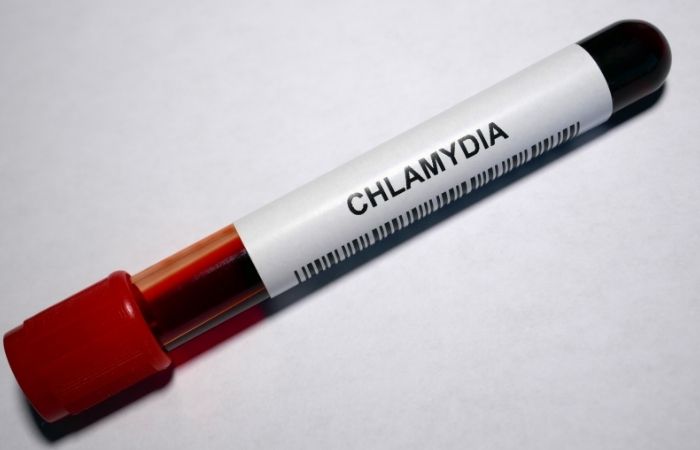
Chlamydia often has no symptoms, but it can cause serious health problems, even without symptoms.
What you can test for at home, and what still needs a clinic
The list of STIs that fit the at-home workflow has expanded steadily. The CDC's STI Treatment Guidelines support self-collected vaginal and penile samples for chlamydia and gonorrhea NAAT. For cervical HPV, vaginal self-sampling for primary screening has received FDA clearance; Pap smears, colposcopy, and abnormal-result follow-up still require in-person care. The NHS STI overview echoes the same principle: reliable diagnosis depends on the right sample reaching the right test, whether collected by a clinician or by the patient. The table below summarizes what is realistic from home and what still benefits from a visit.
| Infection | At-home sample | Reliability | When a clinic is better |
|---|---|---|---|
| Chlamydia | Self-swab or rapid swab | NAAT highly sensitive after the 14-day window; rapid strips are screening-grade | Pelvic or testicular pain, suspected PID |
| Gonorrhea | Self-swab or rapid swab | Same as chlamydia for genital sites | Throat or rectal exposure (site-specific NAAT not yet at-home) |
| Syphilis | Fingerstick blood (rapid antibody) or dried blood spot | Reliable after the 3- to 12-week window | Visible chancre; treatment is an intramuscular penicillin injection |
| HIV | Fingerstick blood (rapid antibody) or dried blood spot | Rapid antibody: reliable from 23 to 90 days post-exposure; lab-based Ag/Ab: 18 to 45 days | Suspected acute exposure within 72 hours (PEP needs the ER) |
| Hepatitis B and C | Fingerstick blood or dried blood spot | Good for antibody screening | Active hepatitis management needs a hepatologist |
| HSV-2 antibody | Fingerstick blood (rapid antibody) | Confirms past exposure, not active sores | Active outbreak (clinician swab for PCR) |
| HPV | Vaginal self-swab (women only) | FDA-cleared for primary cervical screening | Pap smear, colposcopy, biopsy |
| Trichomoniasis | Vaginal self-swab (women only) | Reliable rapid options for vaginal samples | Male patients (clinic NAAT required) |
How accurate are home tests, and how long do results take?
The accuracy question splits into two answers, and conflating them is how misleading marketing gets written.
Mail-in lab kits use the same NAAT and immunoassay chemistry a hospital lab runs. When the sample is collected correctly, performance is essentially equivalent to a clinic-collected sample. Multiple validation studies have shown that self-collected vaginal swabs match clinician-collected swabs for chlamydia and gonorrhea NAAT, which is why the CDC endorses self-collection (CDC STI Treatment Guidelines).
Rapid at-home lateral-flow tests trade a few percentage points of analytical sensitivity for speed. They are useful for screening, for confirming past exposure with antibody panels, and for repeat testing over time. A positive rapid result is worth confirming with a lab NAAT or a clinician visit; a negative result inside the window period does not rule out infection.
The timeline differs too. Mail-in kits take about five to seven days from order to result (one to three days shipping each way, plus one to three days of lab processing). Rapid at-home tests read in about 15 minutes once the kit arrives, putting total time at one to three days from order. Some hybrid services pair a same-day rapid kit with a follow-up video visit, delivering a clinician-supported result within 24 to 48 hours.
Neither format replaces a clinician's eyes on a visible lesion. If you have an active sore, a clinic swab for PCR is more informative than any antibody test, because antibody tests measure systemic seroconversion (whether the immune system has met the pathogen), not local infection.
Testing too soon after exposure returns false negatives, regardless of test format. Common windows: HIV rapid antibody 23 to 90 days (lab-based Ag/Ab 18 to 45 days), chlamydia and gonorrhea NAAT about 14 days, syphilis antibody 3 to 12 weeks, HSV-2 IgG antibody approximately 12 weeks. If you tested early and your concern is high, repeat at the end of the window before relying on a negative result. See the <a href="https://www.cdc.gov/std/treatment-guidelines/" target="_blank" rel="noopener noreferrer">CDC STI Treatment Guidelines</a> and the <a href="https://www.cdc.gov/hiv/testing/" target="_blank" rel="noopener noreferrer">CDC HIV testing page</a> for current guidance by infection.
At-home rapid tests alongside telehealth
If you want an answer before or alongside your telehealth visit, a rapid at-home panel lets you screen for multiple STIs in about 15 minutes. Self-collected swab and fingerstick blood samples cover the most common infections. A positive result gives your telehealth clinician concrete data to act on, and a negative provides baseline reassurance while you wait for the appropriate window period to pass.
When to pair a video call with a test
A telehealth visit alone is enough for some concerns: follow-up after a confirmed result, contraceptive consults, and general STI education. For any question where the answer depends on whether an infection is present, you need a laboratory step somewhere in the loop.
If you have symptoms a camera cannot show (internal itching, an unusual odor, mild pelvic discomfort), you want a swab. If you have no symptoms at all but had recent unprotected sex or a new partner, risk-based screening is more reliable than waiting for a sign that may never appear. If you have a past STI and want to confirm clearance after treatment, retesting is the only honest way to know.
Add a test to your telehealth visit whenever the outcome depends on whether an infection is present: new partner or unprotected sex in the past 3 to 6 months, symptoms a camera cannot capture (internal itch, unusual odor, mild pelvic discomfort), or confirmation that a prior infection cleared after treatment. A video visit provides context; the test provides the result.
Choosing a trustworthy telehealth provider
The market has expanded fast, and quality varies. A few features separate a real medical service from a thin storefront.
- CLIA-certified lab partner. This is the single most important credential to verify before ordering. Ask which lab actually runs your sample. If a service refuses to name its lab on its site or in customer-support replies, treat that refusal as disqualifying. CLIA certification means the lab meets U.S. federal standards for diagnostic accuracy, and every other quality signal is downstream of that.
- A licensed clinician reads results. Algorithmic "positive/negative" notifications without clinician review are not real medical care.
- Treatment pathway is transparent. You should know before ordering whether treatment is included, billed separately, or routed to a referral. For infections that need an injection (syphilis, most gonorrhea), the service should state how that referral happens.
- Insurance and self-pay clarity. The price you see should be the price you pay. Watch for surprise lab fees billed separately.
- Discreet shipping and HIPAA-compliant portals. Outer packaging should not name the contents. The patient portal should require two-factor authentication.
Privacy, billing, and what insurance sees
One of the practical reasons people turn to telehealth is privacy: from a partner, a parent's insurance plan, or a small-town clinic where everyone knows each other. Knowing how billing works avoids surprises.
Most telehealth STI services bill out-of-pocket. Pricing is often comparable to or lower than a clinic copay plus a separate lab fee; confirm current figures on the provider's site before ordering. Some accept HSA and FSA cards. Services that bill insurance typically appear on the explanation of benefits as "laboratory services" or "telehealth consultation" without specifying the indication. The line item shows up on whoever holds the policy, so if you are on a parent's or partner's plan and want full privacy, self-pay is the safer route.
By comparison, at-home rapid test kits ship with flat upfront pricing, no insurance claim, no copay, and no explanation of benefits. Patient portals for telehealth services are required to be HIPAA-compliant, and outer packaging on kits is plain.
Self-pay means flat upfront pricing, no explanation of benefits, and no line item on a parent's or partner's insurance statement. Insurance billing may lower your out-of-pocket cost, but the claim appears on the policyholder's statement as a generic lab or telehealth line. If privacy matters more than cost savings, self-pay or an at-home rapid kit with no insurance claim is the cleaner route.
What to expect if you test positive
A positive result is the part of the workflow where a real clinician matters most. What happens next depends on the infection.
Chlamydia. Oral doxycycline prescribed directly through telehealth. Gonorrhea. Current CDC guidance calls for intramuscular ceftriaxone plus oral doxycycline (CDC STI Treatment Guidelines); most telehealth services refer you to a local clinic for the injection. Syphilis. Intramuscular benzathine penicillin G at a clinic; telehealth alone is not sufficient. HIV. Linkage to in-person care for confirmatory testing and antiretroviral therapy initiation. Herpes (HSV-2 antibody positive). Counseling about what antibody positivity means, suppression therapy if outbreaks are recurrent, and partner-disclosure resources. Hepatitis B or C. Referral to a hepatologist for confirmatory viral load testing.
Chlamydia and gonorrhea retesting at three months is standard practice, because reinfection from an untreated partner is the most common source of recurrence. Many telehealth services offer anonymous partner notification (a generic text or email that says "a recent partner has tested positive and recommends you get tested" without naming you). In some states, clinicians can prescribe antibiotics for your partner without examining them through expedited partner therapy. Letting a partner know within a few days of your result lets them test and treat before complications develop.
| Infection | Treatment type | In-person visit required? |
|---|---|---|
| Chlamydia | Oral antibiotic (doxycycline) | No |
| Gonorrhea | Ceftriaxone IM + oral doxycycline | Yes (injection) |
| Syphilis | Intramuscular benzathine penicillin G | Yes (injection) |
| HIV | Antiretroviral therapy after confirmation | Yes (linkage to care) |
| Hepatitis B or C | Specialist-managed antivirals | Yes (hepatologist referral) |
| HSV-2 | Oral antiviral suppression | No |
| Trichomoniasis | Oral metronidazole or tinidazole | No |
Who benefits most from telehealth STI care
The clinical case for telehealth is access, and access is unequal in U.S. sexual-health care. Several groups consistently report better experiences with remote testing.
- Rural patients. The nearest sexual-health clinic can be a multi-hour drive. A mailed kit removes geography from the equation.
- LGBTQ+ patients. Telehealth platforms that specialize in queer and trans care use intake forms that ask about anatomy and partners directly, rather than routing every patient through gender-coded defaults.
- Uninsured and underinsured. Self-pay telehealth pricing is sometimes lower than a clinic copay plus a separate lab fee, especially for comprehensive panels.
- People with clinic anxiety. Whether the anxiety is about stigma, past medical trauma, or awkwardness, removing the in-person element makes care reachable for people who would otherwise postpone testing.
- People screening on a routine schedule. Screening every three to six months is standard for higher-exposure activity. Telehealth makes repeat screening logistically simple.
The CDC's Talk, Test, Treat initiative emphasizes that telehealth and at-home specimen collection can expand STI care access for people facing stigma, geographic barriers, or limited clinic hours (<a href="https://www.cdc.gov/sti-awareness/talktesttreat/providers.html" target="_blank" rel="noopener noreferrer">cdc.gov/sti-awareness/talktesttreat</a>). The same framing appears in HHS telehealth guidance, which treats remote STI workflows as standard care rather than a stopgap.
Broader coverage for routine screening
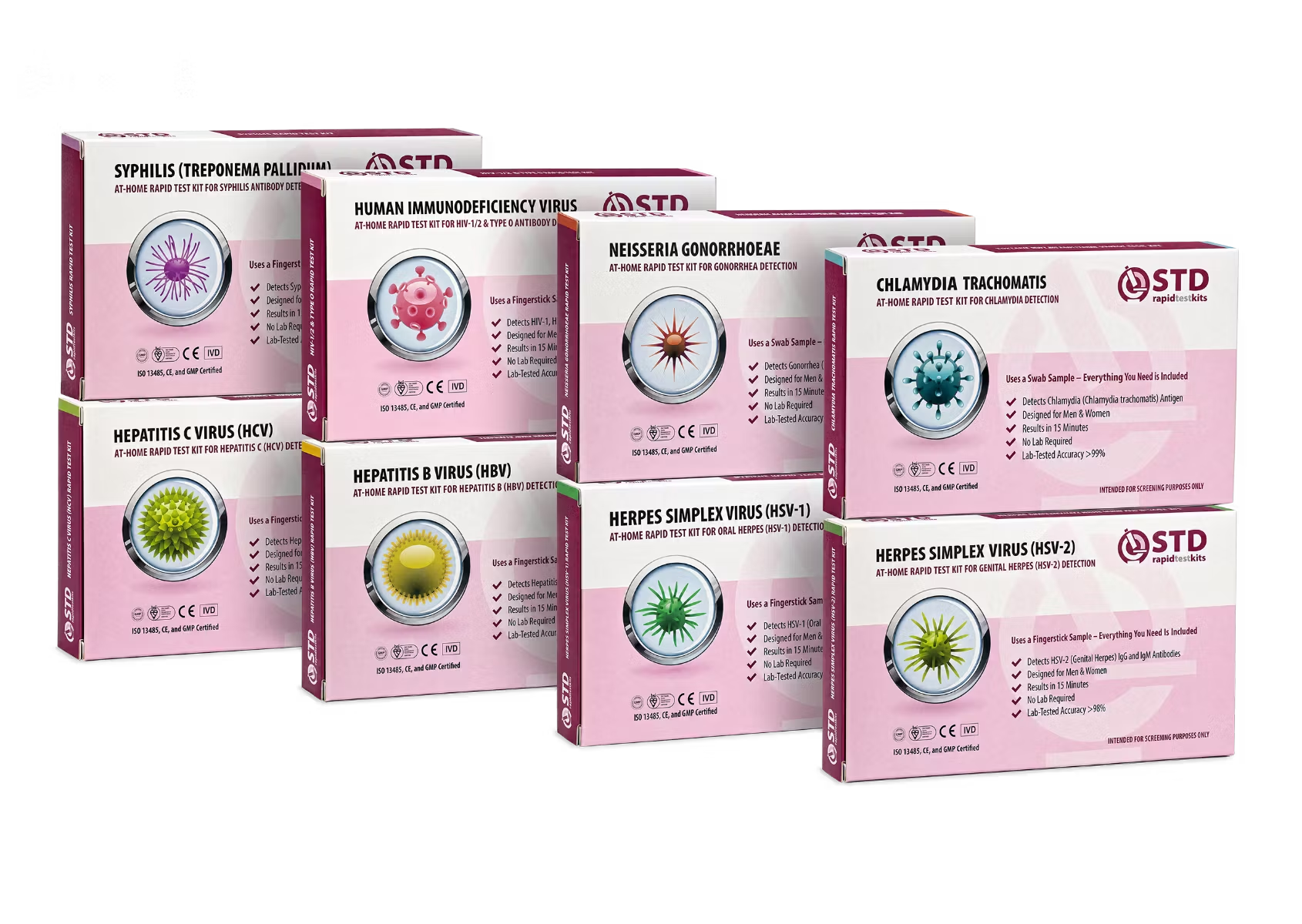
If your concern extends beyond a single infection, or if you screen on a regular schedule, a combination panel covers more ground in a single session. Combo kits bundle individual swab and fingerstick tests into one package, with results readable at home in about 15 minutes per strip.
When telehealth is not the right choice
Telehealth has real limits, and a good service tells you when to go elsewhere. Skip the video visit and go to a clinic, urgent care, or emergency department if any of the following apply.
- Possible HIV exposure within the last 72 hours. Post-exposure prophylaxis (PEP) must start immediately and requires in-person evaluation.
- Severe pelvic or testicular pain, fever, or vomiting. These can indicate pelvic inflammatory disease, epididymitis, or disseminated gonococcal infection.
- A visible lesion you want diagnosed. A same-visit swab for PCR gives a faster, more specific answer than any photo or antibody test.
- Pregnancy with possible STI exposure. Syphilis, herpes, HIV, and hepatitis B require specific obstetric management.
- Treatment-resistant gonorrhea concern. If a recent partner was diagnosed with resistant gonorrhea, you need clinic-grade workup and culture.
- Anyone under 18 in a state with restrictive minor consent laws. A federally funded Title X clinic often has broader options for confidential teen care.
Possible HIV exposure within the past 72 hours requires in-person evaluation for post-exposure prophylaxis (PEP) immediately. Do not wait for a kit to arrive. Go to an emergency department, urgent care, or a sexual-health clinic the same day. PEP loses effectiveness with every hour of delay and is no longer indicated after 72 hours.
Your next step
Telehealth STI care is real medicine for routine screening and most common infections. It cannot replace the swab, the blood draw, or the laboratory step that confirms what is happening in your body. Pair the call with a lab kit or a rapid cassette and you turn a hypothesis into a result. If you are putting off the answer because the clinic option feels heavy, the remote workflow exists for exactly that reason.
What Should You Do Next?
Was the possible exposure within the past 72 hours, and could it involve HIV?
Yes: Skip telehealth. Go to an emergency department or urgent care for post-exposure prophylaxis (PEP) the same day. PEP must start within 72 hours.
Do you have a visible sore, blister, or unusual rash you want identified?
Yes: See a clinician in person for a same-visit swab and PCR. Video calls are not reliable enough for lesion diagnosis.
Did you have unprotected sex, a new partner, or internal symptoms in the past 3 to 6 months?
Yes: Order an at-home rapid STI panel or mail-in lab kit now, then book a telehealth visit to discuss results.
No: A telehealth consultation alone may be sufficient for your current concern. Retest if your situation changes.
These are general guidelines. A clinician can help with specific situations.
Frequently Asked Questions
- Can a telehealth doctor actually diagnose an STD?
- A clinician on a video call can listen, take a history, and recommend next steps. Without a swab, blood test, or urine sample somewhere in the loop, the diagnosis is provisional. For many infections the laboratory step is the diagnosis. Treat a video visit as the start of an evaluation rather than the conclusion of one.
- Is a telehealth STI test as accurate as a clinic test?
- For mail-in NAAT kits, performance matches a clinic sample when collection instructions are followed. Rapid lateral-flow strips screen reliably but sit a step below on analytical sensitivity, so a positive is worth confirming through a lab or clinician. Most reputable services replace inconclusive kits for free; the usual culprits are insufficient sample volume, kit storage outside the right temperature range, or reading the cassette outside the timing window.
- Which STI symptoms tend not to show up on a video call?
- Internal itching, mild discharge, subtle skin changes, and early herpes lesions are the usual culprits. Phone-camera lighting is poor and most people are not willing to film themselves at close range. Even a careful clinician on video cannot palpate lymph nodes, swab a cervix, or compare a vesicle to a textbook lesion under a clinic light.
- Does insurance cover telehealth STI testing?
- Coverage varies. Some services bill insurance directly; many bill out-of-pocket with self-pay pricing often lower than a clinic copay plus lab fees. HSA and FSA cards are commonly accepted. If insurance is used, the explanation of benefits usually lists a generic "laboratory services" or "telehealth consultation" line rather than naming the indication. If full privacy from a policyholder matters, self-pay is the safer choice.
- Can I get treatment without ever seeing a doctor in person?
- For chlamydia, herpes suppression, trichomoniasis, and some routine follow-up, yes. Oral prescriptions are sent to a pharmacy. Syphilis treatment is an intramuscular injection that requires a clinic visit. Gonorrhea increasingly requires an injection too. HIV-positive results are linked to in-person care for confirmation and treatment initiation.
- I have no symptoms at all. Should I still test?
- Yes, if you are sexually active. The CDC's STI screening guidance is risk-based, not symptom-based, because most chlamydia, gonorrhea, herpes, and trichomoniasis infections are silent. If you have had a new partner or unprotected sex in the past three to six months, testing is more reliable than waiting for a sign that may never appear.
- Could what I assumed was a yeast infection actually be something else?
- Possibly. Trichomoniasis, bacterial vaginosis, and even early herpes can mimic yeast irritation. If antifungal creams are not helping, or if the itch feels different from your usual pattern, a swab is the fastest way to find out. Treating the wrong condition delays the right treatment and can leave a partner exposed.
- How do I spot a low-quality telehealth STD site?
- Red flags include refusal to name the lab partner, algorithmic positive/negative results without clinician review, surprise lab fees billed after the order, no clear treatment pathway for positive results, and patient portals that lack two-factor authentication. CLIA certification of the lab is the single most important credential to confirm.
- U.S. Centers for Disease Control and Prevention. Talk, Test, Treat: provider and patient resources for telehealth and at-home specimen collection as an STI care access-expansion strategy.
- U.S. Centers for Disease Control and Prevention. STI Treatment Guidelines, including current first-line therapy, self-collection endorsement for chlamydia and gonorrhea NAAT, window periods, and test-of-cure timing.
- U.S. Centers for Disease Control and Prevention. STI screening recommendations, including risk-based screening for asymptomatic patients across age, gender, and partner-history categories.
- U.S. Centers for Disease Control and Prevention. HIV testing guidance, fourth-generation antigen-antibody window periods for rapid and lab-based tests, PEP timing, and screening recommendations.
- U.S. Centers for Disease Control and Prevention. Chlamydia patient factsheet, including the asymptomatic nature of most infections and the risk of pelvic inflammatory disease and infertility.
- U.S. Department of Health and Human Services. Telehealth.gov resources covering federal privacy protections, prescribing rules, and clinician-licensing requirements for remote STI care.
- World Health Organization. Sexually transmitted infections fact sheet, including daily global incidence (more than 1 million curable STIs acquired per day), the asymptomatic majority, and laboratory confirmation as the diagnostic standard.
- NHS. Overview of sexually transmitted infections, including testing methods, sample types, clinic confidentiality, and treatment expectations in the UK.
