
Published: August 2025 | Last updated: May 2026 | Editorial review and quality control: Martina N.
Skipping the clinic visit is not new for young adults. The reasons have shifted.
Recent surveys of Gen Z and millennial adults have consistently found that a meaningful share have never been tested for an STI, with embarrassment, cost, parental insurance, and inconvenience cited most often. At the same time, at-home rapid STI test kits have moved from niche to mainstream. The result is a generation rebuilding sexual health around their phone and a discreet envelope, instead of a fluorescent waiting room.
This piece walks through what that shift looks like in practice: which infections have reliable home tests, when results count and when they do not, and where you still need a clinic for treatment, a sample type that cannot be self-collected, or a confirmatory lab. It also covers privacy, billing, and how to fold testing into a normal routine.
Key Takeaways
- At-home rapid STI tests are clinically valid for several common infections, but each has a window period. Testing too early misses recent exposures and produces false reassurance.
- Home rapid kits work as a screening layer. Confirm any positive with a clinician, and use a clinic for symptoms, treatment, or sample types we cannot collect at home such as throat or rectal swabs.
Why young adults are testing without a clinic visit
The shift has multiple drivers, and most of them are not about laziness or avoidance.
Cost is the most cited barrier. A typical urgent-care visit for STI screening can run from sixty dollars to several hundred before insurance, and many young adults are still on a parent's plan where the explanation of benefits arrives at home. That billing trail is a major reason for not testing in college and post-college populations.
Stigma is also a major factor. Surveys consistently show that LGBTQ+ respondents, in particular, report worse experiences in clinic settings, including misgendering, assumptions about partners, and questions phrased as judgments. Mainstream health systems are improving, but the pace is slower than the alternative options.
Digital fluency is the third driver. People in their late teens and twenties have grown up using mental health apps, period trackers, and telehealth visits for primary care concerns. A test that arrives in the mail, gets used at home, and reports results to a phone fits the same pattern as the rest of their healthcare experience.
None of this means the clinic is obsolete. A clinic still wins for symptoms, for treatment, for sample types you cannot collect at home, and for confirmatory testing after a positive screen. The shift is about which option becomes the first stop.

What an at-home rapid STD test actually is, and is not
Most home test kits sold for sexual health use one of two technologies, and the difference matters for understanding what a result means.
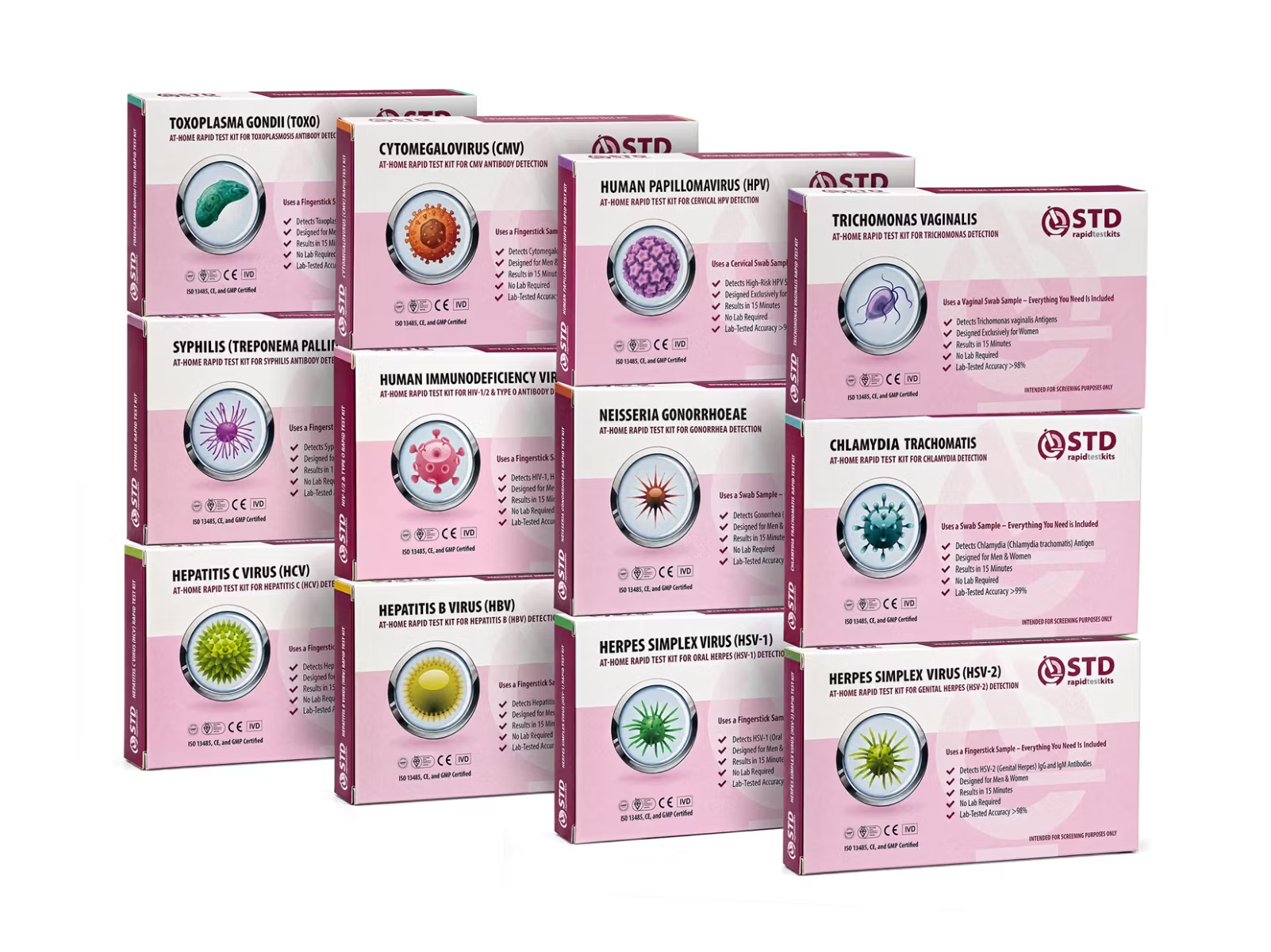
The first type is a lateral flow immunoassay, often called a rapid cassette. You collect a sample, apply it to a test strip, and read the result in roughly fifteen minutes by counting visible lines. Pregnancy tests work the same way. Lateral flow tests for STIs come in two sample formats: a self-collected vaginal or penile swab for chlamydia, gonorrhea, trichomoniasis, and HPV, or a fingerstick blood drop for HIV, syphilis, hepatitis B, hepatitis C, and herpes (HSV-1 and HSV-2).
The second type is a mail-in lab kit. You self-collect at home using urine, swab, or fingerstick blood, then ship the sample to an accredited lab for processing. The lab usually runs nucleic acid amplification testing (NAAT) or an antibody assay, and you get results through a portal in a few days. The technology is the same as a clinic draw, with the collection step moved to your bathroom.
Our kits are the first type: rapid lateral flow at home, results in about fifteen minutes, no shipping or wait. The CDC explicitly supports rapid HIV self-tests and home-collection options for people who would otherwise not test at all. Guidance on other infections supports both in-clinic and home-collection pathways depending on the individual's situation.
One distinction is worth keeping clear, because product marketing across the industry blurs it. A rapid lateral flow test is not a NAAT. NAAT is the laboratory standard for chlamydia and gonorrhea, with very high analytical sensitivity even on asymptomatic infections. Rapid lateral flow tests at home are useful for screening and fast answers, but a positive should be followed up with a clinic-administered NAAT before treatment, and a negative result on someone with persistent symptoms should also be confirmed in a lab. The two are complementary, not equivalent.
Being honest about the technology actually helps. You get a fast, private screen at home, which is genuinely valuable. You also know to follow up if the screen flags something, or if your symptoms persist past the result.
Our home test catalog covers genital swab tests for chlamydia, gonorrhea, trichomoniasis, and HPV, and rapid blood tests for HIV, syphilis, hepatitis B, hepatitis C, and both herpes types. We do not sell throat (pharyngeal) swab tests, rectal swab tests, or urine collection kits. If your exposure was oral or anal and you are concerned about infection at those sites, the right sample type is a clinic-administered swab. Our home kits cover genital and bloodwork-detectable infections from the same exposure event.
Our trichomoniasis and HPV swab kits are validated for vaginal self-swab and are sold as women-only products. Male readers seeking trich or HPV testing should plan a clinic visit.
Accuracy: what those percentages on the box actually mean
Marketing copy across the home-testing industry tends to say things like 99% accurate. That is not wrong, but it is not specific enough to make a decision with. Two numbers matter for any test, and they answer different questions.
Sensitivity is the test's ability to detect the infection when it is present. A test with 95% sensitivity will correctly flag 95 out of 100 truly infected samples, and miss 5. Specificity is the ability to correctly identify uninfected samples. A test with 99% specificity will correctly clear 99 out of 100 uninfected samples, and falsely flag 1.
For lateral flow STI tests, well-validated rapid kits for chlamydia, gonorrhea, syphilis, and herpes typically report sensitivity in the mid-90s percent range and specificity above 99% when used correctly and at the right time after exposure. HIV-specific rapid antibody home tests run somewhat lower. The FDA-authorised OraQuick In-Home HIV Test, for example, reports approximately 92% sensitivity, which is one reason the CDC recommends confirmatory testing after a positive home HIV result. All of these figures hold under three conditions: you are past the window period, you collected the sample correctly, and you are not testing during the very early phase of an infection where antibody or antigen levels are still building.
Most so-called inaccurate results trace back to timing rather than test chemistry. A negative result during a window period is not the same as a negative result after the window period closes. The next section walks through specific windows by infection.
The other significant source of error is sample collection. Vaginal swabs that miss the cervical area, fingersticks that produce too small a blood drop, or expired buffer solution can all reduce sensitivity. The instructions inside the kit are not generic packaging copy. Read them once before you start, and follow the timing for the result reading window. A line that appears at twenty minutes when the kit specifies a fifteen-minute read window indicates evaporation rather than a true positive.
Two numbers, two questions
- Sensitivity measures detection rate when an infection is present; specificity measures correct clearance when an infection is absent. Both matter, and a single 'accuracy' number hides which one a kit is strong on.
- A negative result inside the window period is not a true negative. Timing is the most common source of apparent inaccuracy in home rapid tests, ahead of test chemistry or sample-collection error.
Window periods: when each test actually starts to work
A window period is the interval between exposure and when the test can reliably detect the infection. Test before the window closes and a negative is not informative, even though it feels reassuring. Below are the windows that matter most for at-home testing decisions, drawn from CDC and NHS guidance.
HIV. Fourth-generation antigen-antibody tests used in clinics typically detect HIV roughly 18 to 45 days after exposure. Rapid antibody-only home tests have a longer window of about 23 to 90 days, with the CDC recommending a follow-up test at three months for definitive negatives. If you used post-exposure prophylaxis (PEP), the window can extend further, and your prescribing clinician should advise on timing.
Chlamydia and gonorrhea. Lab NAATs typically detect these reliably from about 7 to 14 days after exposure. Rapid lateral flow tests are most accurate at the longer end of that range. Testing on day three after a hookup will produce a high false-negative rate, so wait at least two weeks for a meaningful result, sooner only if you have current symptoms.
Syphilis. Antibody-based tests typically become positive 3 to 6 weeks after exposure, with most cases detectable by 6 weeks. The CDC recommends repeat testing at three months if the first test is negative and a known recent exposure occurred.
Hepatitis B. Surface antigen typically appears 4 to 10 weeks after exposure. Antibody-based home tests for HBsAg are most reliable from about 6 weeks onward.
Hepatitis C. Antibody appears 8 to 11 weeks after exposure on average, with most infections detectable by 6 months. Earlier negatives should be confirmed at three to six months for high-risk exposures.
Herpes (HSV-1 and HSV-2). Antibody-based blood tests are the technology used at home, and seroconversion typically takes 3 to 6 weeks after a primary infection but can extend to 16 weeks. CDC guidance specifically advises against routine asymptomatic herpes screening for the general population, since the test characteristics in low-prevalence groups produce a high rate of false positives. If you have lesions, a clinic-administered swab/PCR of the lesion is more accurate than any antibody test.
Two practical takeaways. First, a single early test is not enough to clear a recent exposure. Most clinicians recommend a baseline test plus a repeat test at the longer window for the relevant infection. Second, if you have current symptoms, do not wait the full window. Symptoms warrant evaluation now, even if a screening test would be more reliable in three weeks.
How long after exposure should you take an at-home STD test?
For the most common at-home tests: wait at least 14 days after exposure for chlamydia and gonorrhea, 3 to 6 weeks for syphilis, and 23 to 90 days for HIV antibody-based home tests, with a confirmation test at the three-month mark for definitive negatives. If you have current symptoms, do not wait the full window. See a clinician now.
Privacy, billing, and what your partners see
Confidentiality is one of the genuine strengths of home testing, and the picture has more nuance than it looks at first.
Shipping is discreet. Reputable home test sellers ship in plain packaging with no medical branding on the outside, and most charge to the card you use without a separate medical billing trail. If you are still on a parent's insurance plan, ordering directly through a home-test retailer keeps the test outside the insurance system entirely. There is no explanation of benefits sent to the policyholder, no claim filed, and no record in the insurer's database.
Lab-processed home tests are slightly different. The collection happens at home, but the lab is a regulated provider and is subject to public health reporting requirements for certain reportable conditions, including HIV, syphilis, gonorrhea, and chlamydia in most US jurisdictions. That report goes to the state health department, not to your parents or partners. State law also varies on partner notification, and most jurisdictions allow you to choose between named, anonymous, or third-party partner services.
Telehealth STD consultations are governed by HIPAA in the US, with the same privacy protections that apply to in-person appointments. The catch is that any visit billed to insurance creates an EOB. If you want fully confidential telehealth, choose a service that bills you directly without filing insurance, or ask the provider whether self-pay is an option.
Minors should know that most US states allow people under 18 to consent to STI testing and treatment without parental permission. The exact rules vary by state and by infection, so check your state's youth health rights resources if you are unsure. Clinics, telehealth services, and home test retailers generally honor those rights.

Where at-home tests genuinely fall short
Honest scope matters here. Home testing covers a meaningful slice of clinical care, and a clinic visit is still the right move for several scenarios.
If your exposure was oral and you are concerned about throat infections such as pharyngeal gonorrhea or chlamydia, the recommended sample is a pharyngeal swab collected in a clinic and processed by NAAT. We do not sell pharyngeal swab kits, and the antibody and genital-swab tests we do sell will not detect a throat infection. CDC screening guidance recommends pharyngeal screening at routine intervals for people whose practices include receptive oral sex, since pharyngeal infections are often asymptomatic.
If your exposure was anal and you are concerned about rectal chlamydia or gonorrhea, the recommended sample is a rectal swab collected in a clinic. Rectal infections are common, frequently asymptomatic, and not detectable through urine or vaginal swab tests. This is also a clinic-administered sample, not a home test.
If you have an active oral or genital lesion you suspect is herpes, a clinic-administered swab and PCR of the lesion is significantly more accurate than any antibody test. The home blood-based herpes tests detect antibodies, which take weeks to develop and which do not localize to anatomic site. Antibody tests are most useful for confirming exposure or ruling it out after the seroconversion window. They are not the right tool for diagnosing an active outbreak.
If you test positive on a home rapid test, the standard of care is to confirm with a clinic-administered NAAT or lab antibody test before starting treatment, and to obtain a prescription. Home rapid tests are excellent screens, but a small false-positive rate exists. A confirmation in a lab takes the uncertainty out of treatment decisions.
If you have symptoms that need a physical exam, including pelvic pain, urinary retention, severe lesions, or fever, a clinic visit is faster and more comprehensive than waiting on a screening result. Symptoms warrant clinician evaluation alongside any screening test.
HIV self-tests give people the option of taking an HIV test in private. Self-testing offers an option for people who may not get tested otherwise.
Building testing into your routine, not your panic plan
The biggest improvement most young adults could make to their sexual health has less to do with reactive testing after every nervous moment and more to do with regular testing on a schedule, with or without an exposure event.
The CDC recommends annual screening for sexually active people under 25, with more frequent screening for people who have multiple partners, condomless sex with new partners, or other elevated risk factors. Pregnant people, men who have sex with men, and people on PrEP have their own recommended screening intervals, generally every three to six months.
What that looks like in practice is straightforward. A baseline panel once a year covers most low-to-moderate risk situations. After a partner change, a screen at the appropriate window period catches anything new. Symptoms always warrant evaluation, regardless of when the last test was.
For people with active dating lives, a useful rhythm is a multi-infection panel every three to six months. The combo kits exist precisely because asking each STI individually means missing things that are often co-transmitted. Chlamydia and gonorrhea often co-occur, as do HIV and syphilis, and hepatitis C cases have risen alongside other infections in some young adult populations. Testing the whole bundle at once, on a predictable schedule, is the version of sexual health that takes the panic out.
If you are weighing routine versus reactive testing, the decision is mostly about ease. A test you take every six months on a calendar reminder is more useful than a test you take three days after every nervous moment. The first model finds infections you would not have known to test for. A test taken three days post-exposure cannot clear an HIV or syphilis exposure regardless of the result, since the biology is working on its own timetable.
When the test reads positive
A positive result on a home rapid test is a signal to act, and the right action is confirmatory testing through a clinical channel before any treatment begins. Skip over-the-counter or borrowed antibiotics and antivirals; STI medications require the right drug for the right infection at the right dose, and most treatment failures trace back to wrong-drug or wrong-dose choices.
Confirmation runs through a clinic, urgent care, or telehealth provider. For chlamydia and gonorrhea, the confirmatory test is a NAAT. For HIV, it is a fourth-generation antigen-antibody assay or RNA test. For syphilis, it is a treponemal-plus-non-treponemal antibody combination. The confirmatory test is what your treating clinician will rely on for prescribing decisions.
Once confirmation is in hand and treatment is underway, plan partner notification. State health departments offer free anonymous services for exactly this step, and telling current and recent partners is the single most effective way to prevent reinfection and onward transmission.

Choose the tool that matches your situation
The decision tree comes down to three questions.
If you have current symptoms, see a clinician. Symptoms warrant evaluation, treatment, and the right diagnostic sample type. Home tests are not the right starting point.
If you had a recent at-risk exposure but are asymptomatic, a home rapid test is a reasonable first step once the window period has closed for the infections you are concerned about. Confirm any positive in a lab. Plan a follow-up test at the longer window for definitive clearance.
If you are sexually active and want regular screening, a multi-infection home panel every three to six months covers most of what matters.
| Your situation | Recommended action |
|---|---|
| Current symptoms of any kind | See a clinician now. Skip the home test as a first step; you need a physical exam and a sample type matched to the symptom. |
| Recent at-risk exposure, no symptoms | Use a home rapid test once the relevant window period has closed. Confirm any positive in a clinical lab before treatment. |
| Sexually active, no specific exposure | Run a multi-infection home panel every three to six months as routine screening, in addition to the annual baseline the CDC recommends for under-25s. |
| Throat or rectal exposure concern | Book a clinic visit for a pharyngeal or rectal NAAT swab. Home rapid kits do not cover these anatomic sites. |
FAQs
- Are at-home STD tests as accurate as clinic tests?
- Rapid lateral flow tests are not equivalent to lab NAATs in analytical sensitivity. They are excellent screens with high specificity, and well-validated kits report sensitivity in the mid-90s percent range when used after the appropriate window period. A positive home test should be confirmed with a clinic-administered lab test before treatment.
- How long after a hookup should I wait to test?
- Gonorrhea and chlamydia: 14 days minimum. Syphilis: at least 3 weeks, with a second test at 6 weeks if the first is negative. HIV rapid antibody home tests: anywhere from 23 days to 3 months, so a three-month test is the most reliable single data point. Current symptoms always override the calendar; see a clinician rather than waiting for a window to close.
- Will my parents see if I order an at-home STD test?
- Test kits ship in plain unbranded packaging. Charges appear on your card statement under the seller's name, not as medical billing, and no insurance EOB is generated when you pay directly. Telehealth visits billed to insurance can create an EOB. Choose self-pay or direct-billing options for full discretion.
- Can I test for throat or anal infections with a home kit?
- Not with our kits or with most home test offerings. Throat (pharyngeal) and rectal infections require a clinic-administered swab and lab NAAT. If your exposure was oral or anal and you are concerned about gonorrhea or chlamydia at those sites, a clinic visit is the right step.
- Is the CDC okay with at-home testing?
- The CDC supports rapid HIV self-testing and lab-processed home collection for several STIs as legitimate options, particularly for people who would not otherwise be tested. The CDC also recommends following up positive home results with confirmatory clinic testing.
- What if I get a positive result?
- Confirm the result through a clinic, urgent care, or telehealth provider before starting any treatment. Most STIs we test for are curable with the right prescription. Plan partner notification once treatment starts. State health departments offer free anonymous partner-notification services if you prefer not to make the call yourself.
- Do home tests cover every STD?
- No. Home rapid kits cover the most common infections (HIV, syphilis, chlamydia, gonorrhea, hepatitis B, hepatitis C, herpes, HPV, trichomoniasis). Less common infections, throat or rectal infections, and active lesion swabs require clinic testing.
- Is at-home testing safe for queer and trans people?
- Home testing removes the risk of misgendering and judgmental questions that some LGBTQ+ patients report in clinic settings. The kits and chemistry are the same regardless of identity. The thing to know is that throat and rectal screening, which are particularly important for some sexual practices, are not covered by home rapid kits and still require a clinic-administered sample.
- U.S. Centers for Disease Control and Prevention. Sexually transmitted infections homepage with screening recommendations and incidence data.
- U.S. Centers for Disease Control and Prevention. HIV testing guidance, window periods for fourth-generation and antibody tests, and self-testing options.
- NHS. Chlamydia symptoms, testing, and screening recommendations for adults under 25.
- World Health Organization. Sexually transmitted infections fact sheet, including testing and treatment guidance.
- U.S. Centers for Disease Control and Prevention. Getting Tested for STIs, including in-office testing, at-home self-tests, and mail-in collection kits.
- MedlinePlus (U.S. National Library of Medicine). Sexually Transmitted Diseases overview: causes, symptoms, diagnosis, and prevention.
