Published: August 2025 | Last updated: May 2026 | Editorial review and quality control: Martina N.
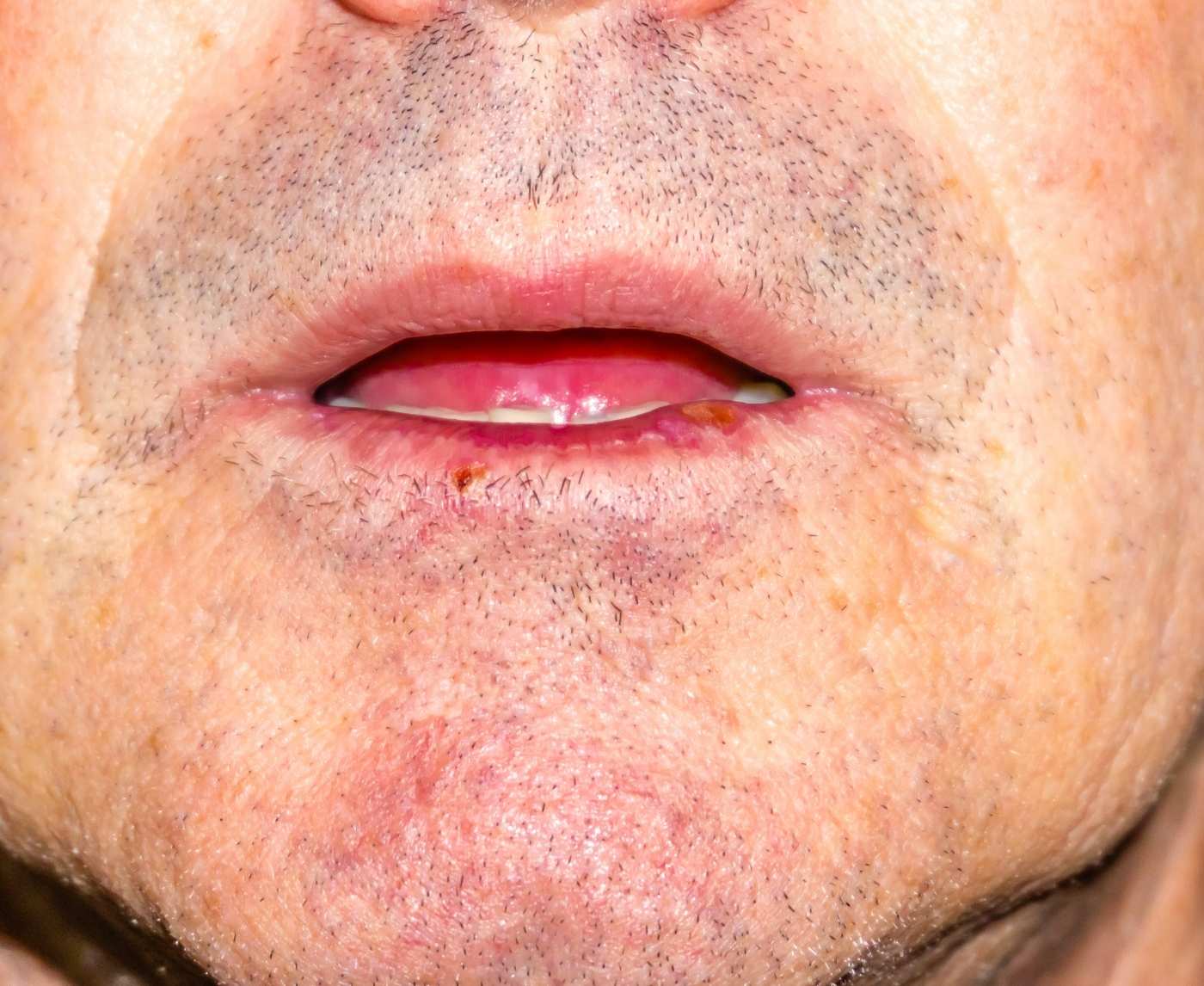
A cold sore on a man's lip is one of the most common viral signs in the world, and one of the most quietly distressing. The blister itself heals in a week or two. The mental noise around it can stretch for months: skipped dates, gym days at the back of the room, hoodie pulled high in the office. This guide walks through what oral herpes really means for men, why the emotional weight often outweighs the physical, and what a calm next step looks like once you know what you're dealing with.
Key Takeaways
- Most cold sores in men are caused by HSV-1, a virus the WHO estimates infects roughly two thirds of people under 50. An outbreak says little about your sexual history.
- The hardest part of oral herpes is usually emotional rather than medical. Outbreaks resolve in 7-14 days, antivirals shorten them, and long-term physical impact is minimal.
Why a Cold Sore Lands So Hard for Men
Oral herpes in men is almost always caused by herpes simplex virus type 1 (HSV-1), the virus most people pick up well before puberty. The World Health Organization estimates around 3.8 billion people under age 50 carry HSV-1 globally, which works out to roughly two thirds of that age group. Many men were already infected as toddlers from a relative's kiss, a shared cup, or a daycare playmate, long before sex was on the menu.
Jared, 28, had a date planned for Friday. He woke up Thursday morning with a cold sore blooming on his upper lip like a neon sign he couldn't turn off. He canceled with a quick excuse about work stress, then spent two hours on Google staring at images and trying to figure out if he had just become "that guy." The biology of his outbreak was identical to the one he had at age seven from his grandmother's kiss. The story he was telling himself about it had changed completely.
Men also absorb a specific cultural pressure: visible health problems read as weaknesses rather than facts. You can post a torn quad with a battle-scar caption. A cold sore lands differently. It sits on the most visible part of your face, sits in the middle of conversations, and carries a sexual association the average viewer almost never gets right. The result is a small medical event that produces a disproportionately large emotional response, and the gap between the two does most of the harm.
When Medicine Says Mild and Your Brain Says Disaster
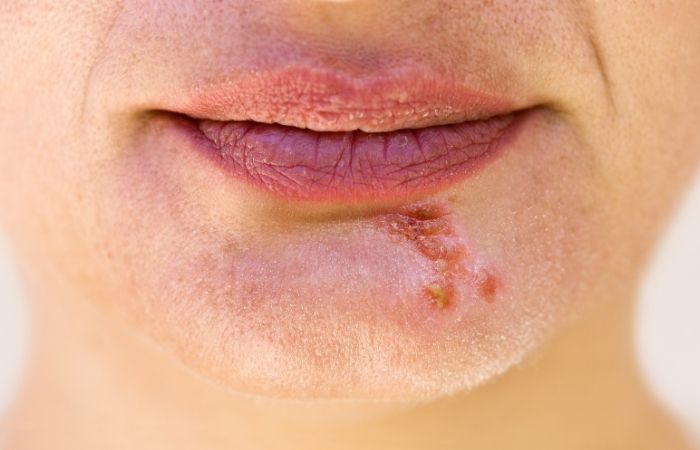
Medically, oral herpes in men is usually a minor inconvenience. Outbreaks clear in seven to fourteen days. CDC guidance on herpes describes prescription antivirals as helpful for shortening an outbreak and reducing the chance of passing the virus to someone else when taken as prescribed. The lesion does what lesions do: it crusts, it dries, it heals. The skin underneath returns to normal.
Emotionally, the picture often looks different. Men report isolation, dating anxiety, and a fear of judgment that lasts long after the blister has gone. The shame of being seen as "infected" collides with the pressure to look invincible, and the result is a loop with very little to do with the virus itself.
Picture a locker room after a workout. Towel over the shoulder, post-set glow, the small social rituals of nodding at people you only half-know. Someone glances at your lip. Your brain floods with panic: they saw it, they know, they think I'm dirty. The micro-moment loops in the male brain because the cultural script around herpes writes a story your reflection cannot argue with in the moment. The actual medical risk barely enters the calculation. Most of the men who notice your cold sore have either had one themselves or kissed someone who did, and almost none of them are running the alarmed inner monologue you're running.
Three prescription antivirals are commonly used for HSV outbreaks: acyclovir, valacyclovir, and famciclovir. Started at the first prodromal tingle, they can typically shorten an outbreak by one to two days. Daily suppressive therapy is an option worth discussing with a clinician for men with frequent recurrences. All three require a prescription in most countries.
The First Cold Sore Panic
The first time a man notices a visible cold sore as an adult can feel like a gut punch. You catch the tingle, you check the mirror, and a wave of questions crashes in: Who did I kiss? Is this forever? Will anyone ever want me again? The blister triggers something much larger than itself: a sudden crisis of identity. Every social plan suddenly feels like a spotlight you didn't sign up for.
Adrian, 32, remembers the day clearly. He was about to head to a friend's cookout when he caught his reflection. A raw, swollen sore on his lip made him freeze. "I didn't even leave my apartment," he said. "I ordered pizza, turned off my phone, and read about herpes for six hours straight. I thought my dating life was over."
The part that isn't on the pharmacy label is the emotional paralysis. Men often feel like they need to retreat until the cold sore fades, canceling dates, skipping the gym, avoiding social media. Some grow a beard or wear a mask. Others sink into a quiet shame loop, treating a tiny outbreak as a permanent verdict on their worth. Standard clinical guidance, including the Johns Hopkins Medicine health library on HSV, notes that the first outbreak is usually the most intense, both physically and emotionally, and tends to ease as your immune system adapts to the virus. Your second cold sore, if you ever notice another, will almost certainly feel less catastrophic, even though the biology is identical.
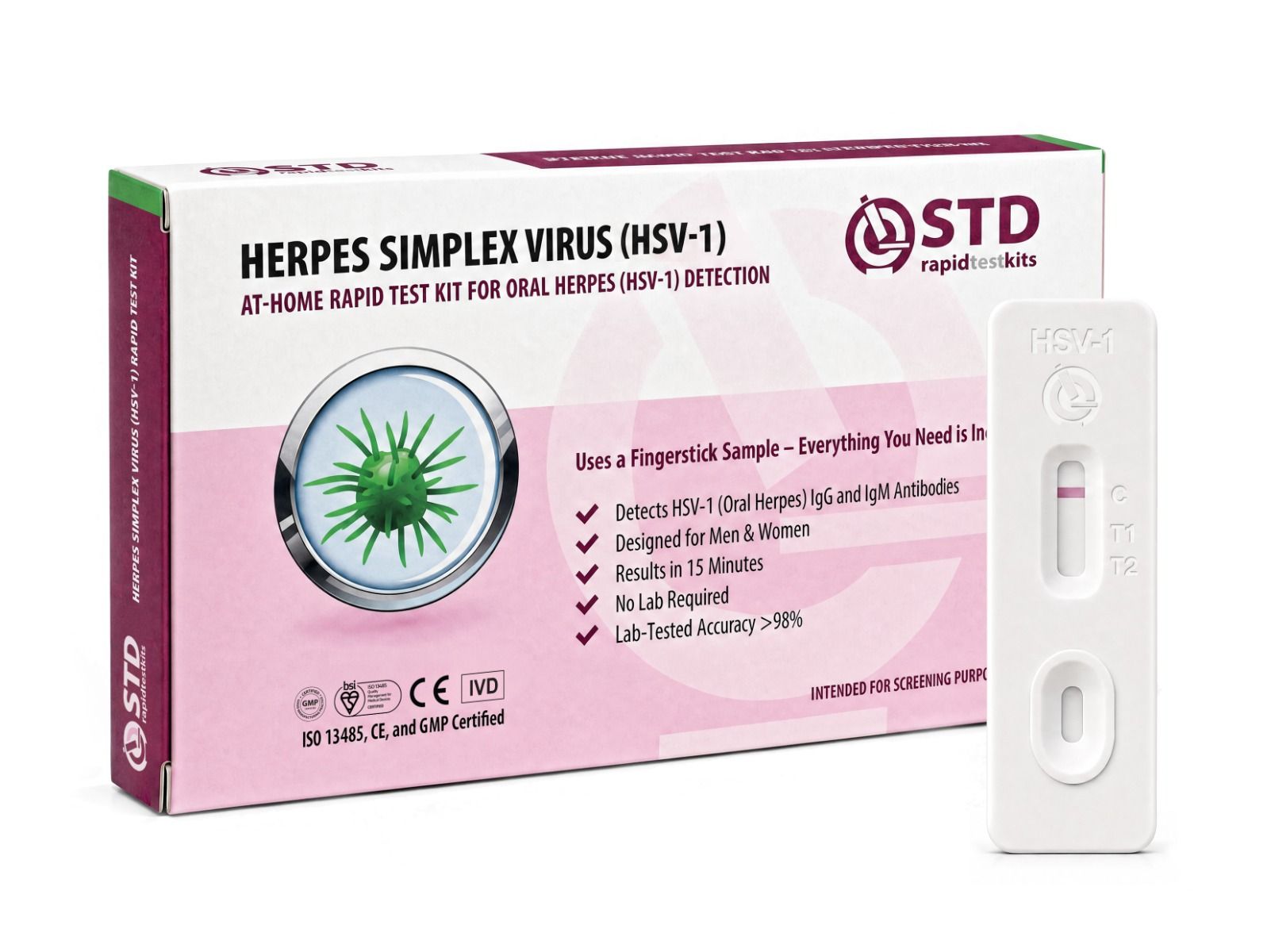
A note on this site: stdrapidtestkits.com sells rapid at-home test kits for HSV and other STIs. The kit shown below is one of those products, recommended here because it directly fits this article's topic.
Dating, Avoidance, and the Silent Loop
Cold sores don't just live on lips, they live in the head. Men describe a silent loop of fear and self-censorship that can sabotage their dating life long after the sore has healed. You meet someone, the spark hits, and your brain skips ahead to the inevitable conversation: "I get cold sores." The worry about being rejected often weighs more than the actual virus.
Marcus, 25, finally downloaded a dating app after a breakup. He matched with someone he genuinely liked, and after two great dates, he felt the prodromal tingle of an outbreak coming on. "I canceled the third date and ghosted her," he admits. "I couldn't handle the idea of her seeing it or asking about it. Looking back, the shame did most of the work."
The pattern is common: a flare triggers isolation, isolation feeds anxiety, and anxiety makes you hyperaware of every tingle, bump, or chapped patch that probably isn't anything. The longer the loop runs, the more it costs. Skipped dates compound. Cancelled plans compound. The story that started with one blister grows into a wider story about being undateable. Men carry this secret alone, often without realizing that their friends, brothers, or fathers have likely been through something similar.
The medical reality keeps disagreeing with the loop. Oral herpes does not make you infertile. It does not stop you from working, lifting, traveling, or building a life. With basic precautions during outbreaks, transmission risk to a partner is manageable, and asymptomatic shedding rates for HSV-1 in saliva are lower than what people imagine.
HSV-1 spreads most easily during a visible outbreak, from the first prodromal tingle through full healing. Asymptomatic shedding can also transmit the virus, though at lower rates. Skipping kissing and oral contact during outbreaks is the simplest precaution; barrier protection during oral sex covers the rest.
How Shame Bleeds Into the Rest of Your Week
Shame doesn't stay tidily on your lip. For men, it leaks into workouts, friendships, and career confidence. A visible sore during a presentation, a team meeting, or a night out can trigger the feeling that everyone is staring, even when no one is. Self-consciousness chips away at a man's sense of control over his own week.
The cycle is familiar to anyone who has lived through a flare during a busy stretch: you cancel a coffee meeting, you reschedule a workout, you decline the post-work drink, you tell your group chat you're "slammed," and three days later your social muscles feel weaker than they did before the cold sore appeared. The avoidance pattern, repeated even occasionally, teaches your nervous system that cold sores are bigger than they actually are.
The loop breaks once you change one input. Many men find that the first time they go to the gym, the office, or a friend's place during a small outbreak and nothing happens (no comments, no awkwardness, often no notice at all) the spell loosens. The next outbreak feels less like a crisis and more like a chapped-lip week. Confidence builds when you learn that the outbreak isn't the headline most people in your life would write about you. Acting like it doesn't exist isn't necessary, and it usually backfires anyway.

Breaking the Stigma With Facts You Can Use
Stigma is a shadow that shrinks when you turn on the light. For men living with oral herpes, that light usually comes from two sources: prevalence data, and small acts of normal living during a flare.
On prevalence, the WHO numbers cited above tell the story. Roughly two thirds of adults under 50 worldwide carry HSV-1, and U.S. seroprevalence sits in a similar range. When you absorb that, a cold sore stops feeling like a private catastrophe and starts feeling like an ordinary part of being human. Half the room you walk into has been through some version of what you're going through.
Ryan, 30, remembers his turning point. After hiding behind excuses for months, he decided to stop letting a small cold sore control his weekends. "I went to the bar with my friends even though I had a small outbreak. Nobody said a word. I realized the shame was mostly in my head. Once I stopped treating it like a dirty secret, I started dating again."
Confidence here looks like knowing the facts, managing outbreaks responsibly, and refusing to let a tiny blister decide who you are. According to NHS guidance, you are most contagious during a visible outbreak from the prodromal tingle through full healing, so the simplest rule is to skip kissing and oral contact during that window. Outside of an active outbreak, day-to-day risk to a partner drops considerably, though it never reaches zero.
HSV-1 is mainly transmitted by oral-to-oral contact to cause oral herpes (which can include symptoms known as 'cold sores'), but can also cause genital herpes.
The First Conversation With a Partner
For most men, the scariest part of oral herpes is telling someone you care about. The first disclosure can make your palms sweat and your stomach knot. You imagine the worst version: disgust, rejection, an instant block. Reality is usually softer than the version your fear writes.
Keep it simple, factual, and calm. You're not confessing a crime, you're sharing a fact about your health and showing that you respect theirs. Most adults already know someone who gets cold sores. Many of them get cold sores themselves.
Kevin, 34, described his first real disclosure: "I finally told a woman I was dating that I get cold sores. She just shrugged and said, 'Oh, like my brother. No big deal.' I felt stupid for hiding it for weeks." Stories like Kevin's repeat constantly in dating, and they stay private because most men assume their experience was the exception.
Two practical pointers help. First, time the conversation before any oral intimacy, not after, so it lands as care rather than confession. Second, frame it as your routine rather than a request for reassurance. "This is how I handle outbreaks" reads as confident and protective. "Are you still attracted to me?" reads as a question your partner cannot answer for you.
"Hey, I get cold sores sometimes. They're caused by a really common virus called HSV-1. When I feel one coming on or have one, I avoid kissing and oral contact so I'm not passing it along." Three sentences, factual, no apology required.
When and How to Test for Peace of Mind
Even if you already suspect you have oral herpes, formal testing can bring real relief. Knowing your HSV-1 status helps you understand triggers, manage outbreaks, and have honest conversations without the "what ifs" looping in the background.
There are two practical paths. A clinic visit works well if you have an active sore that can be swabbed for HSV PCR or culture, the most direct way to confirm an outbreak. If you're between outbreaks, or if you simply want to know whether you've ever been exposed, a blood antibody test is the more useful tool. Antibody tests detect IgG antibodies your immune system makes after exposure to HSV-1 or HSV-2, and they take time to develop. Most assay manufacturers indicate that detection becomes reliable several weeks to a few months after initial infection, so a blood test taken too soon after an exposure event may miss a fresh case.
A positive HSV-1 result usually confirms exposure at some point in your life rather than pinpointing a recent event. Because so many adults were exposed in childhood, the test cannot tell you when you became infected. The result is still useful information. It tells you the cold sores you've been getting are consistent with HSV-1, gives you a clean answer for partner conversations, and ends the loop of secret online searches.
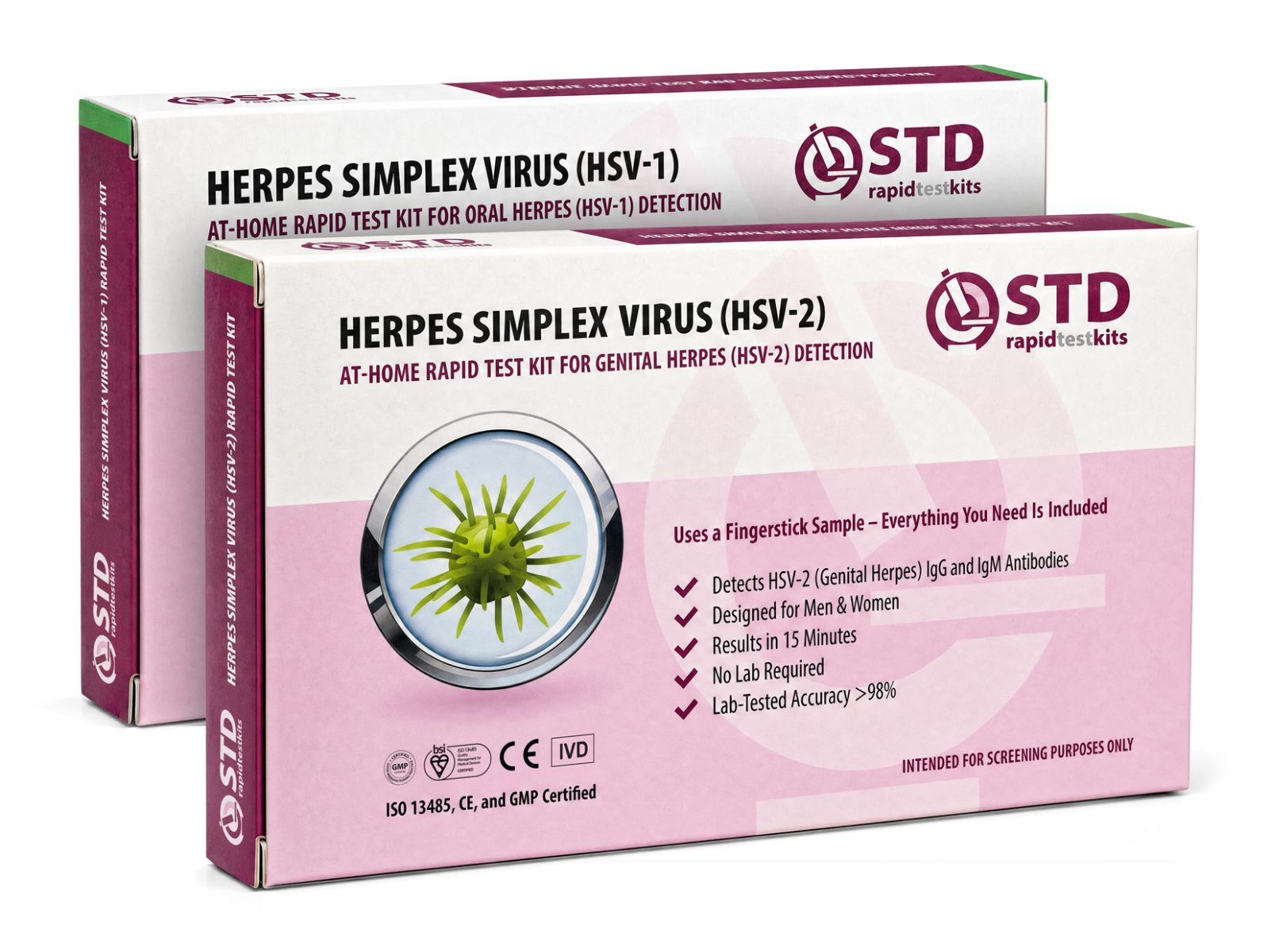
At-home rapid antibody kits cover the privacy side. They use a fingerstick blood sample and a lateral-flow strip to give a result in about 15 minutes. They are screening tools rather than lab-grade NAATs, and a positive should ideally be confirmed by a clinician for context. Frequent or severe outbreaks are a separate signal: those are worth bringing to a healthcare provider, who may suggest daily suppressive antiviral therapy to reduce outbreak frequency.
FAQs
- Can men get oral herpes without kissing?
- Yes. HSV-1 spreads through any direct contact with infectious saliva or skin, including shared utensils, cups, lip balm, or close family contact in childhood. Kissing is the most common route, though it isn't the only one.
- Are cold sores always herpes?
- Most cold sores on the lip are HSV-1. Other mouth issues like canker sores, angular cheilitis, or impetigo are not herpes and look different on close inspection. A clinician swab or an HSV antibody test is the only way to confirm cause if you're unsure.
- Will oral herpes go away on its own?
- An individual outbreak usually fades in 7-14 days even without treatment, but the virus stays in your nerve tissue for life and can reactivate later. Antiviral medication can shorten outbreaks and lower recurrence frequency for men who get them often.
- How do I avoid passing oral herpes to a partner?
- Avoid kissing and oral contact from the first prodromal tingle until the sore is fully healed. During oral sex, barrier protection (condoms or dental dams) reduces the risk of passing HSV-1 to your partner's genitals. Outside of outbreaks, day-to-day transmission risk drops significantly though it doesn't reach zero.
- Do I need to tell someone I get cold sores?
- Yes, especially before any oral intimacy. Honest, simple disclosure protects your partner and tends to land far better than men expect. Most adults already know someone who gets cold sores.
- Can oral herpes spread to my genitals?
- Yes. If oral sex occurs during an outbreak (or sometimes during asymptomatic shedding), HSV-1 can establish a genital infection in your partner. The reverse is also possible, which is why barrier protection matters.
- Does oral herpes affect my overall health?
- For the vast majority of men, oral herpes is a mild, manageable condition. Its main impact is emotional. Severe or unusually frequent outbreaks are worth discussing with a clinician, particularly if you have an immunocompromising condition.
- Should I get tested if I get cold sores?
- Testing isn't strictly required for a classic recurring cold sore, but a confirmed answer often reduces anxiety, helps with partner conversations, and rules out other causes. An at-home HSV blood antibody kit is a practical, private option.
- U.S. Centers for Disease Control and Prevention. About Genital Herpes - HSV-1 vs HSV-2 transmission overview and U.S. surveillance data.
- U.S. Centers for Disease Control and Prevention. Herpes (genital and oral) topic root - antiviral treatment and prevention guidance.
- World Health Organization. Herpes simplex virus fact sheet - global HSV-1 and HSV-2 prevalence estimates and transmission routes.
- NHS. Cold sores - contagiousness window, prodromal symptoms, and management.
- Johns Hopkins Medicine. Health library on herpes simplex virus - clinical overview of primary vs recurrent outbreaks.
