
Published: July 2025 | Last updated: May 2026 | Editorial review and quality control: Martina N.
Pregnancy is supposed to be a time of cautious excitement. A positive Hepatitis C result, whether you tested before you conceived or learned about it at a routine prenatal visit, can make that excitement feel impossible to hold. The questions land fast: will the virus pass to your baby, can you still breastfeed, do you need a C-section, is there anything you can do in the months ahead to lower the risk?
This guide walks through what current CDC and ACOG guidance say about mother-to-child Hepatitis C transmission. We cover the biology of how the virus crosses (and usually does not cross) the placenta, delivery planning that lowers blood-to-blood exposure, breastfeeding safety, the infant testing schedule, and the curative treatment options that open up once pregnancy and breastfeeding end. The numbers are more reassuring than most people fear, and the path forward is well mapped.
Key Takeaways
- Roughly 6 in 100 babies born to people with active Hepatitis C contract the virus during pregnancy or delivery, rising to about 10 to 11 percent when the mother also has HIV, per CDC perinatal transmission data.
- Direct-acting antivirals are not approved during pregnancy yet, but breastfeeding is considered safe under normal conditions, infant testing is straightforward, and post-pregnancy treatment cures more than 95 percent of cases in an 8 to 12 week oral course.
How Vertical Transmission of Hepatitis C Actually Works
Vertical transmission is the clinical term for a virus passing from a pregnant person to their baby during pregnancy, labor, or delivery. With Hepatitis C, the highest-risk moment is delivery itself, when maternal and fetal blood can mix. The virus does not easily cross an intact placenta, and the placental barrier provides natural separation between maternal circulation and fetal circulation for most of pregnancy.
That separation is real but not absolute. Three situations are known to raise transmission risk:
- High maternal viral load. The more Hep C virus circulating in your blood at the time of delivery, the higher the chance that the baby is exposed to enough virus to establish infection.
- HIV co-infection. People living with both HIV and Hepatitis C have roughly double the perinatal Hep C transmission rate, around 10 to 11 percent rather than 5 to 6 percent.
- Prolonged rupture of membranes and invasive monitoring. Internal fetal scalp electrodes, fetal scalp blood sampling, and prolonged labor after the water breaks can all increase blood-to-blood exposure during birth.
One important point that surprises many parents: the route of delivery itself (vaginal versus C-section) is not a primary risk factor for Hep C transmission. ACOG and CDC do not recommend cesarean delivery solely to prevent Hep C, which is different from HIV management, where planned C-section can be protective. If transmission does occur, the baby may have no detectable symptoms for months or years. That silent course is precisely why infant testing follows a defined timeline rather than waiting on symptoms.

Universal Prenatal Screening: Why Every Pregnant Person Should Be Tested
For decades, prenatal Hep C screening was reserved for people with known risk factors such as injection drug use, blood transfusions before 1992, or HIV co-infection. That risk-based approach missed too many cases. In 2020 the CDC updated its guidance to recommend universal screening, and the American College of Obstetricians and Gynecologists (ACOG) adopted the same position. Every pregnant person should be tested for Hepatitis C during each pregnancy, ideally at the first prenatal visit.
Why the shift? Several factors converged. Hepatitis C diagnoses among people of childbearing age have climbed sharply since the mid-2000s, partly driven by the opioid epidemic. Direct-acting antiviral treatment now offers a near-certain cure, so a diagnosis is no longer a clinical dead end. And large analyses showed that targeted testing was missing a substantial share of cases: a meaningful portion of pregnant people with Hep C had no identifiable risk factors at the time of screening, meaning a risk-based protocol would have left them undiagnosed.
Universal screening matters for two reasons. Diagnosis lets the obstetric team plan a delivery that minimizes blood-to-blood exposure, and it triggers infant follow-up testing so any vertical transmission is caught early. It also opens the door to curative treatment for the parent after pregnancy and breastfeeding end, which protects future pregnancies. If your provider has not offered Hep C testing during your prenatal care, ask for it. The recommendation is unambiguous, and most insurers cover the test as preventive care.
Risk-based prenatal Hep C screening was replaced with universal screening for all pregnant people during each pregnancy. If your provider has not offered you a Hep C test at your first prenatal visit, ask for one. Most insurers cover it as preventive care, and a positive result this early gives your team the most time to plan a delivery that lowers blood-to-blood exposure.
What to Do If You Just Got a Positive Result
Take a breath first. A positive Hep C screening result during pregnancy is unsettling, but it is not a medical emergency, and your obstetric team has time to build a delivery plan that lowers transmission risk to your baby.
Confirm the diagnosis. The first screening test is an antibody test (anti-HCV) that detects past or present exposure to the virus. A positive antibody result needs a follow-up HCV RNA (viral load) test to confirm active infection. Some people clear Hep C spontaneously after exposure and carry antibodies without active virus; the RNA test sorts that out.
If active infection is confirmed, your obstetrician will typically:
- Order baseline liver function tests to gauge how the virus is affecting your liver.
- Refer you to a hepatologist or maternal-fetal medicine (MFM) specialist for shared management.
- Document your status in your delivery record so the labor and delivery team can plan around it.
- Screen you for HIV, Hepatitis B, and other co-infections if those have not been checked recently, since co-infection changes risk and management.
Direct-acting antivirals (the curative oral medications used for Hep C) are not currently recommended during pregnancy. The FDA has not approved them for use in pregnant patients because data on fetal safety is still limited, though research is active. The standard approach is to monitor through pregnancy and breastfeeding, then begin treatment.
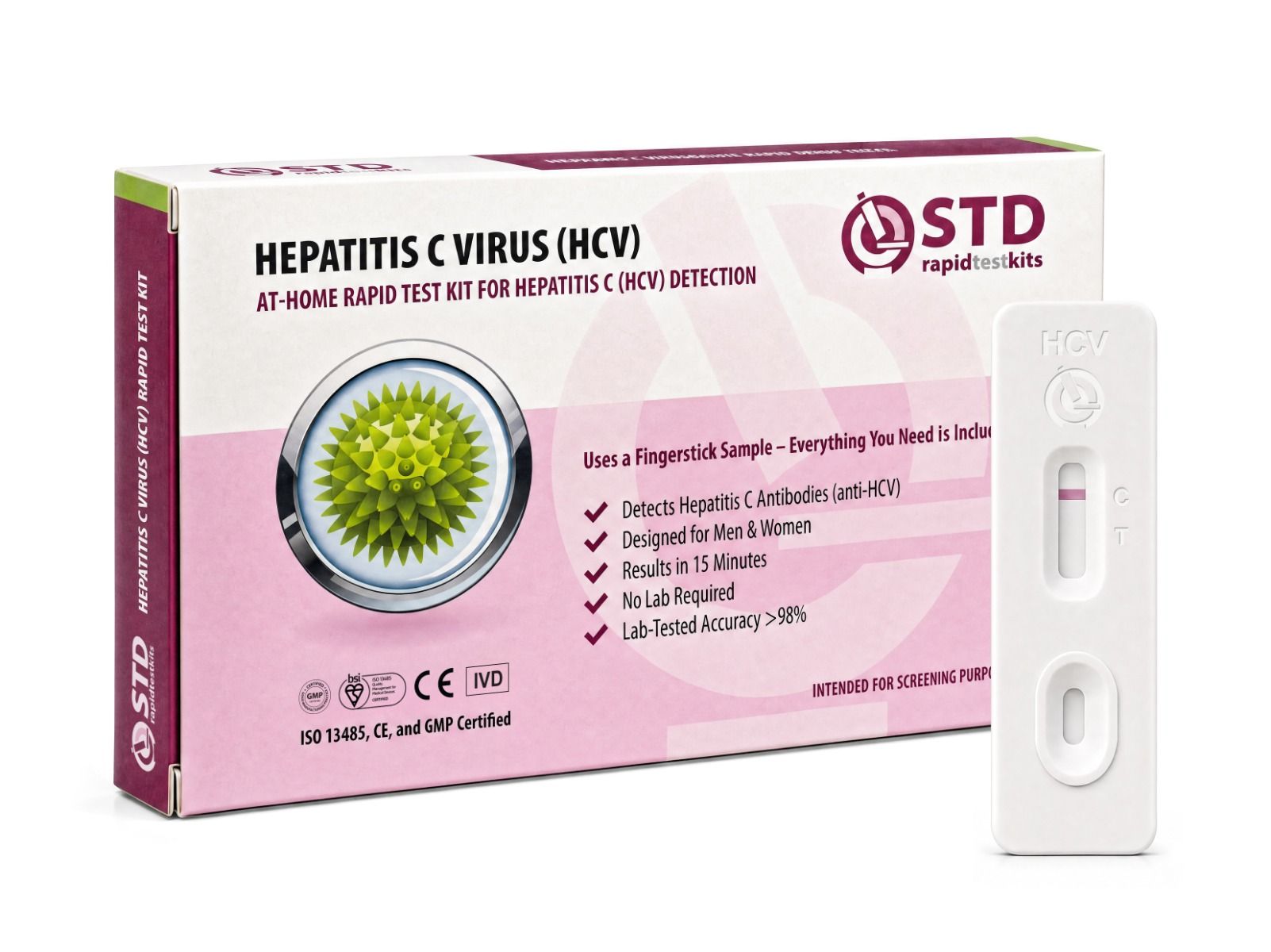
Disclosure: stdrapidtestkits.com sells the rapid lateral-flow Hep C antibody home screen described below as a useful private first check. Any reactive result must be confirmed with a lab HCV RNA viral load test before any clinical decision is made.
Labor and Delivery: What Reduces Transmission Risk
You and your team have some control over the conditions of delivery, and a few choices can lower the chance of blood-to-blood exposure at birth.
Things that may modestly reduce risk:
- Avoiding internal fetal monitoring (scalp electrodes) when external monitoring would be equally informative.
- Avoiding prolonged rupture of membranes when possible. If your water has broken, the team will typically aim to deliver within a reasonable window rather than waiting at length.
- Limiting fetal scalp blood sampling and instrumented deliveries where alternatives exist.
Things that do NOT meaningfully reduce risk for Hep C alone:
- Routine cesarean delivery. ACOG does not recommend C-section solely for Hep C prevention; the modest reduction in transmission risk does not outweigh the surgical risks of cesarean for the parent.
- Antiviral medication during pregnancy. As noted above, direct-acting antivirals are not approved during pregnancy.
- Avoiding breastfeeding. The virus is not transmitted in breast milk under normal conditions (more on that below).
If you have HIV and Hep C co-infection, your team will follow HIV-driven delivery planning, which is more aggressive about cesarean and antiretroviral therapy. Your MFM specialist will coordinate management for both infections.
Your Hep C status should be flagged clearly in your prenatal chart and verbally communicated to the labor and delivery nurses, anesthesiologist, and pediatrician on call. Standard universal precautions already protect staff regardless. The point of communicating clearly is to make sure decisions during labor (membrane rupture timing, monitoring choices, instrumented delivery) take your status into account.
Breastfeeding With Hep C: The Guidance Is Clear
This is one of the most consistent recommendations in Hep C maternal care: breastfeeding is considered safe for parents with Hepatitis C. The virus has not been shown to transmit through breast milk in clinical studies, and the CDC, WHO, and the American Academy of Pediatrics all support breastfeeding for Hep C-positive parents under normal conditions.
The one practical caveat is nipple trauma. If your nipples are cracked, bleeding, or actively wounded, blood from those wounds could theoretically expose the baby to virus. Standard guidance:
- Continue breastfeeding under normal conditions.
- If your nipples crack and bleed, pause feeding on the affected breast. Pump and discard milk from that side until healing, or supplement temporarily with formula or banked donor milk.
- Treat nipple trauma as a breastfeeding mechanics problem. Get help from a lactation consultant, correct the latch, and apply healing balm until the wound closes.
The takeaway: a Hep C diagnosis is not a reason to stop or avoid breastfeeding. The benefits of human milk for newborn immune development and bonding still apply, and the additional transmission risk from intact-nipple feeding has not been demonstrated in the published evidence.

Testing and Monitoring Your Baby After Birth
Babies born to Hep C-positive parents need follow-up testing on a defined schedule, because vertical transmission may not produce symptoms for years. Current AAP and CDC guidance has two stages.
Stage one: HCV RNA test between 2 and 6 months of age. This looks for viral particles directly, not antibodies. Every baby born to a Hep C-positive parent will carry maternal antibodies in their blood for the first 12 to 18 months regardless of whether they are infected, so an antibody test in infancy cannot tell you what you need to know. An RNA test cuts through that ambiguity and detects active infection in the baby.
Stage two: anti-HCV antibody test at 18 months or later. By 18 months, any maternal antibodies have cleared from the baby's blood. A positive antibody test at this point reflects the baby's own immune response and confirms infection. A negative test at this stage, on top of a negative RNA earlier, confirms the baby is uninfected.
If either test is positive, the baby will be referred to a pediatric hepatologist or pediatric infectious-disease specialist for ongoing monitoring. The outlook for affected children is significantly better than it was a generation ago. A meaningful share of perinatally infected infants clear the virus on their own in the first few years of life. For those who do not clear it, pediatric direct-acting antivirals are now approved starting at age 3, with cure rates comparable to adult treatment.
Infant testing schedule at a glance
- First test: HCV RNA between 2 and 6 months of age (detects viral particles directly, bypasses maternal antibodies).
- Confirmatory test: anti-HCV antibody at 18 months or later (after maternal antibodies have cleared).
- Outcome: two negative tests confirm no infection. A positive triggers pediatric specialty referral, and most affected children either clear the virus spontaneously or respond well to treatment starting at age 3.
The Emotional Reality of a Hep C Diagnosis in Pregnancy
A positive Hep C test during pregnancy can land like a moral verdict, especially because the public narrative around Hepatitis C still associates it heavily with injection drug use. That association is incomplete and unfair. Hep C transmits through blood-to-blood contact, which means transfusions before 1992 (when widespread donor screening began), occupational needlesticks, shared razors, shared tattoo or piercing equipment, certain medical procedures abroad, and yes, shared injection equipment. None of these routes are uniquely shameful, and most people with chronic Hep C did not knowingly take a risk that led to it.
The guilt that surfaces during pregnancy (the “did I cause this for my baby” question) is also misplaced. You did not infect your baby by being pregnant. You may have passed virus during delivery, and you may not have. Either way, the response is the same: test the baby, monitor on schedule, treat if needed, and treat yourself after delivery so a future pregnancy starts Hep C-free.
If your obstetric team is dismissive, judgmental, or unfamiliar with current Hep C guidance, you are within your rights to ask for a referral to a maternal-fetal medicine specialist or a hepatologist. You are entitled to clinical care that treats Hepatitis C as the manageable, curable infection that it is.
Hepatitis C virus can be transmitted from a pregnant person with HCV infection to their infant. Approximately 6 in 100 infants born to people with HCV become infected with the virus.
After Pregnancy: Hep C Can Be Cured
This is the single most important fact for parents living with Hep C: the virus is curable. Direct-acting antivirals (DAAs), introduced over the past decade, eliminate the virus completely in more than 95 percent of cases. Treatment is typically an 8 to 12 week course of oral pills, with minimal side effects compared to the older interferon-based regimens.
DAAs are not currently recommended during pregnancy or breastfeeding because fetal and infant safety data is still being established. The standard sequence is:
- During pregnancy: monitor liver function, plan delivery to minimize blood-to-blood exposure, document status for the pediatric team.
- Breastfeeding: continue without restriction (absent active nipple trauma).
- Post-breastfeeding: begin DAA treatment under a hepatologist's supervision. Most regimens run 8 to 12 weeks.
- Cure confirmation: a sustained virologic response (SVR) check 12 weeks after treatment ends. SVR is effectively cure, since the virus does not come back in the absence of new exposure.
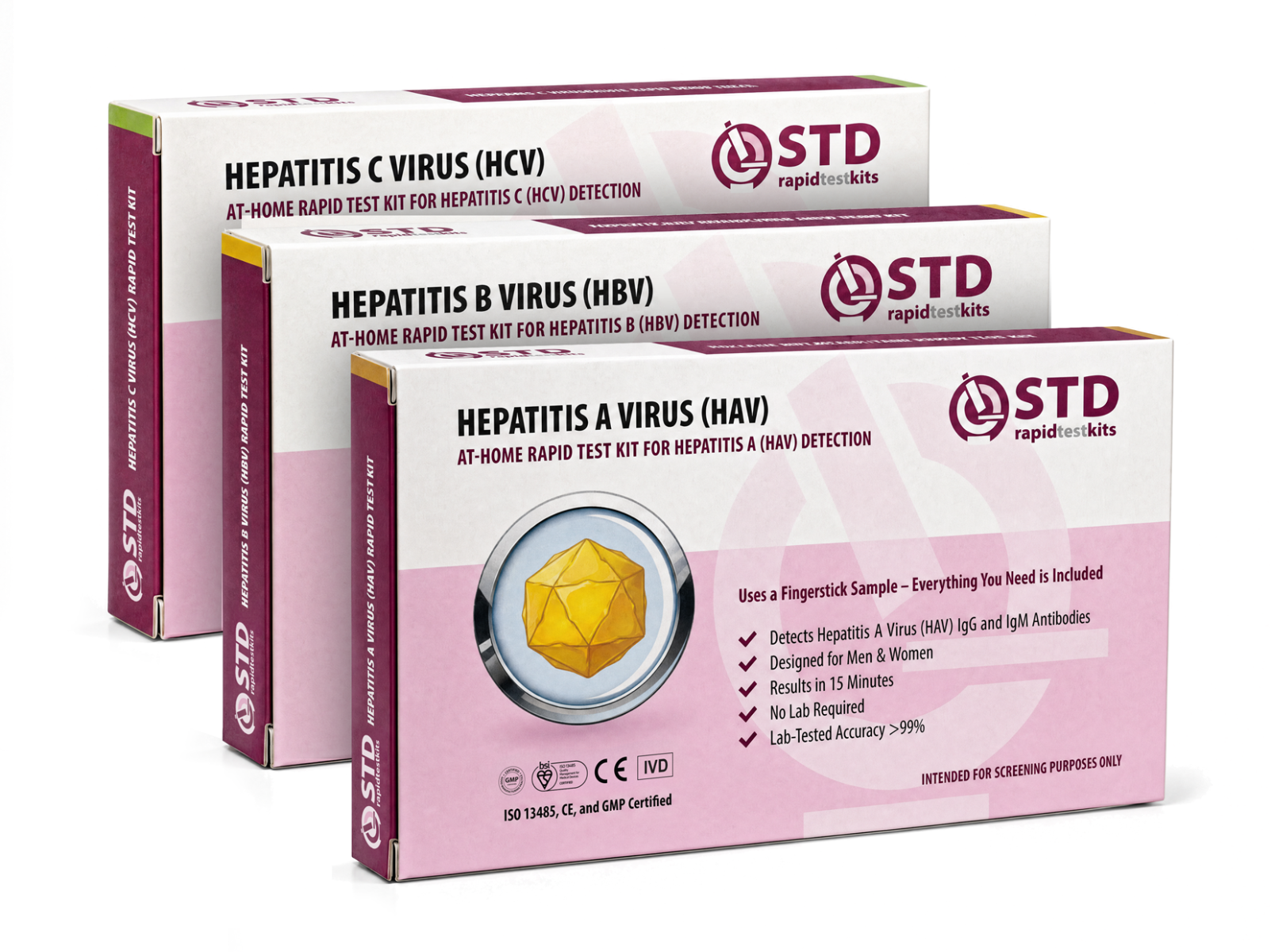
After cure, you cannot transmit Hep C in any future pregnancy, because the virus is no longer in your blood. Cure also reduces your long-term risk of cirrhosis and liver cancer, the two complications that drive most of Hep C's long-term mortality. For families who want to test for both Hep B and Hep C together (sometimes recommended after partner exposure, or for international travel), a combination home kit covers both in one fingerstick.
The Bottom Line: Test, Plan, Move Forward
A Hep C diagnosis during pregnancy changes your delivery plan, not your future. The math is reassuring: even without specific medical intervention during pregnancy, roughly 94 out of 100 babies born to Hep C-positive parents do not contract the virus. The ones who do are usually identified within the first six months, monitored carefully, and many clear the infection spontaneously. Treatment for those who do not clear it is highly effective and approved starting at age 3.
For you, the parent: pregnancy and breastfeeding are the window where treatment waits. Once that window closes, an 8 to 12 week course of direct-acting antivirals can clear the virus completely, with cure rates over 95 percent. Future pregnancies start Hep C-free.
The hardest part of a prenatal Hep C diagnosis is the uncertainty in the months between confirming your status and confirming your baby's. There is no medical action that shortens that wait. What you can do is build a delivery plan that respects the diagnosis, work with a team that treats Hep C as the manageable infection it is, and line up curative treatment for after delivery.

FAQs
- What is the chance my baby will be born with Hep C if I am positive?
- CDC perinatal data puts the transmission rate at roughly 6 percent when the mother has active Hep C at delivery. HIV co-infection roughly doubles that figure to 10 to 11 percent. Delivery route (vaginal versus cesarean) does not significantly change the odds on its own.
- Should I have a C-section to prevent Hep C transmission to my baby?
- No, not based on Hep C alone. ACOG and CDC do not recommend cesarean delivery solely for Hep C prevention, because the modest reduction in transmission risk does not outweigh the surgical risks of C-section. Cesarean is considered for other obstetric indications or for HIV co-infection.
- Can I breastfeed if I have Hep C?
- Yes. The CDC, WHO, and American Academy of Pediatrics all support breastfeeding for Hep C-positive parents under normal conditions. The virus does not transmit through breast milk. Pause and pump if your nipples crack and bleed, then resume breastfeeding once healed.
- When will my baby be tested for Hep C?
- Current AAP guidance is an HCV RNA test between 2 and 6 months of age (detects viral particles directly), followed by an anti-HCV antibody test at 18 months or later (after maternal antibodies clear). Two negative results confirm no infection.
- Is Hepatitis C curable after pregnancy?
- Yes. Direct-acting antivirals cure more than 95 percent of cases with an 8 to 12 week oral regimen. They are not currently approved during pregnancy or breastfeeding, so treatment typically begins once those windows close.
- I want another pregnancy after Hep C treatment. Is that safe?
- Once you have achieved sustained virologic response (SVR, the cure marker), the virus is no longer in your blood and there is no perinatal transmission risk in future pregnancies. Confirm SVR with your hepatologist before conceiving again.
- Is Hepatitis C a sexually transmitted infection?
- Not primarily. Hep C transmits through blood-to-blood contact, most often through shared injection equipment, transfusions before 1992, or occupational exposures. Sexual transmission can occur but is uncommon outside specific higher-risk scenarios (HIV co-infection, men who have sex with men, traumatic sexual practices).
- What if I had Hep C years ago and cleared it on my own?
- A small share of people clear Hep C spontaneously after exposure. If you are confirmed cleared (negative HCV RNA with positive antibodies), there is no perinatal transmission risk in pregnancy. Your provider will likely recheck the RNA test once during pregnancy to confirm continued clearance.
- U.S. Centers for Disease Control and Prevention. Hepatitis C overview, including perinatal transmission rate of approximately 6 percent and the elevated rate with HIV co-infection.
- U.S. Centers for Disease Control and Prevention. Recommendations for Hepatitis C Screening Among Adults, MMWR 2020. Source for the universal-screening shift away from risk-based testing.
- World Health Organization. Hepatitis C fact sheet. Source for global transmission routes, direct-acting antiviral cure rate above 95 percent, and treatment duration.
- National Institute of Diabetes and Digestive and Kidney Diseases (NIH NIDDK). Hepatitis C clinical overview, including liver function monitoring and treatment sequencing.
- Mayo Clinic. Hepatitis C symptoms, causes, transmission and treatment overview, including spontaneous clearance and the role of antibody versus RNA testing.
- U.S. Centers for Disease Control and Prevention. About STIs and Pregnancy. Source for prenatal infectious-disease screening framework.
