
Published: December 2025 | Last updated: May 2026 | Editorial review and quality control: Martina N.
Can chlamydia feel exactly like a UTI?
Yes. Chlamydia infects the urethra and cervix in people with vaginas, causing burning urination, urgency, and pelvic pressure that closely match a urinary tract infection. A standard urine dipstick or culture cannot detect it; chlamydia needs a NAAT or rapid swab test. If UTI antibiotics clear your symptoms within 48 to 72 hours, a UTI is the likely cause. If not, ask for a chlamydia test.
Burning urination, urgency, pelvic pressure: most people, and a lot of clinicians, label that pattern a urinary tract infection on sight. Sometimes it is. Often, especially after a new sexual partner or a stretch of more-frequent-than-usual sex, the same symptom pattern turns out to be chlamydia behaving like a UTI. And sometimes it is neither infection, just friction-related tissue irritation from intercourse itself. The three causes overlap heavily, but a standard urine dipstick or culture cannot detect chlamydia, and UTI antibiotics will not clear it. Most readers who land here genuinely have a UTI and will feel better on first-line antibiotics within a few days. This article is for the subset whose symptoms do not match that script. It explains when to suspect chlamydia (or friction), what to do when a UTI test is negative but symptoms persist, and how to test for chlamydia at home if the clinic loop has not given you answers.
Key takeaways
- Three causes of post-sex burning overlap on symptoms: a UTI, chlamydia, or friction-related tissue trauma. A urine dipstick catches the UTI but is silent on the STI, so if your UTI test is negative or antibiotics are not working, request a chlamydia test or run an at-home rapid swab.
- Untreated chlamydia raises the risk of pelvic inflammatory disease, fallopian tube scarring, and infertility. Caught early it clears with a short antibiotic course, so testing within days of symptoms protects long-term reproductive health.
The symptom overlap that fools providers (and patients)
Chlamydia and uncomplicated cystitis (a urinary tract infection) share a striking number of symptoms. Both produce dysuria, the clinical term for painful or burning urination. Both cause urinary frequency, that constant feeling of needing to go. Both produce pelvic or suprapubic (lower-belly) discomfort. Both can show cloudy urine. And in people with vaginas, both often present with no obvious external signs.
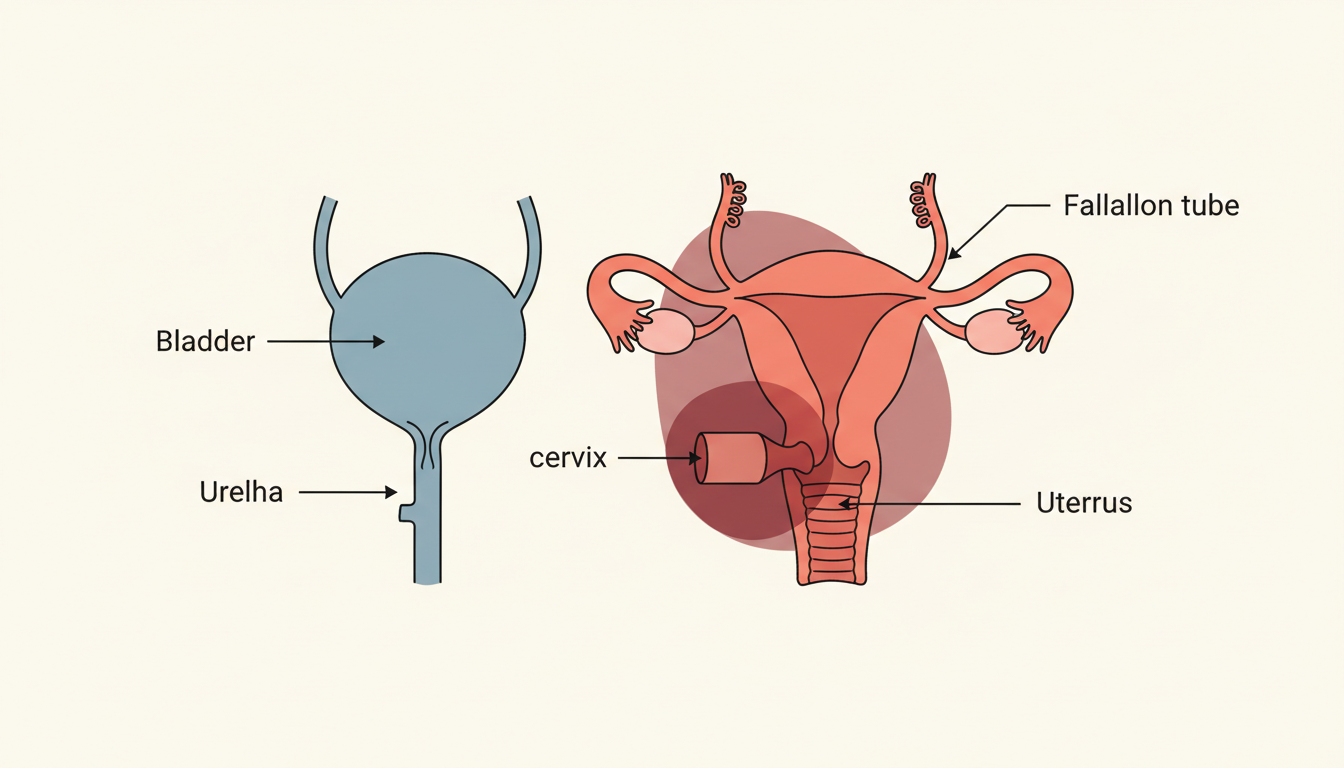
The difference sits one anatomical layer deeper. A UTI is a bacterial infection of the bladder, urethra, or kidneys, usually caused by Escherichia coli tracking up from the perineum. Chlamydia is a sexually transmitted infection caused by Chlamydia trachomatis, a bacterium that infects the cervix, urethra, and rectum after sexual contact. The two infections live in different tissues, but the urethra runs straight through both territories, which is why the symptoms overlap so completely.
The U.S. Centers for Disease Control and Prevention describes chlamydia as a common infection that often produces no symptoms, and notes that when symptoms do appear, they may not show up until several weeks after sex with an infected partner. It is also the most-reported bacterial STI in the country: the CDC's STI surveillance summary counted about 1.5 million reported cases in 2024 (roughly 1,516,000, provisional data). When symptoms do show up in women, they look almost identical to a UTI.
That overlap is not a quirk of biology, it is a clinical hazard. A provider running a urine dipstick to confirm a UTI will see a result, prescribe accordingly (or send the patient home reassured), and never test for the right pathogen. Neither path catches chlamydia, which needs a different sample and a different test, a nucleic acid amplification test (NAAT), to detect. The patient leaves with the wrong prescription, takes the wrong drug for a week, and returns with the same symptoms.
Why standard UTI testing misses chlamydia entirely
A urine dipstick reads chemical markers in urine: nitrites (made by certain UTI bacteria), leukocyte esterase (an enzyme from white blood cells), and a few others. A urine culture goes further, growing whatever bacteria are present. Both are good at finding the common UTI culprits like E. coli, Klebsiella, and Proteus.
Neither detects chlamydia. Chlamydia trachomatis is an intracellular pathogen, meaning it lives inside human cells rather than floating free in urine, so it does not grow on standard urine-culture plates. Even a NAAT, the gold-standard laboratory test for chlamydia, needs a specific specimen: a vaginal or cervical swab in women, or a first-catch urine sample. As MedlinePlus describes it, a chlamydia test uses a urine sample or a cotton swab from the vagina, not the chemistry panel a UTI test runs. A routine UTI urine sample is the wrong tool for this target.
That gap has two practical effects. A negative UTI test does not rule out a sexually transmitted infection, and the antibiotics commonly used for uncomplicated UTIs (nitrofurantoin, trimethoprim-sulfamethoxazole, fosfomycin) do not cover chlamydia. Per the CDC's STI Treatment Guidelines, chlamydia is treated with doxycycline 100 mg twice daily for seven days as the first-line regimen, with azithromycin as an alternative in specific situations such as pregnancy. UTI antibiotics leave a chlamydia infection untouched.
This is where the diagnostic loop closes badly. Symptoms persist after the UTI course, the patient assumes the UTI came back, another round of UTI antibiotics gets prescribed, and the underlying chlamydia keeps progressing. Each cycle adds weeks of untreated infection while the bacteria move up from the urethra toward the upper reproductive tract.
Uncomplicated UTI vs Chlamydia
| Feature | Uncomplicated UTI | Chlamydia |
|---|---|---|
| Most common cause | E. coli and other gut bacteria | Chlamydia trachomatis (sexual contact) |
| Symptom onset | Within 24 to 48 hours of bacteria reaching the bladder | Often several weeks after exposure, if symptoms appear at all |
| Sample needed to diagnose | Urine dipstick and culture | Vaginal or cervical swab, or first-catch urine NAAT |
| Detected by a UTI dipstick? | Yes (nitrites, leukocytes) | No |
| Discharge | Uncommon | Common (vaginal or urethral) |
| First-line treatment | Nitrofurantoin, TMP-SMX, or fosfomycin | Doxycycline 100 mg twice daily for 7 days |
| Sexually transmitted? | No | Yes |
| Worst case if untreated | Kidney infection (pyelonephritis) | PID, tubal scarring, infertility, ectopic pregnancy |
A UTI test reads urine chemistry; a chlamydia test needs a swab or urine NAAT. A negative result on one says nothing about the other.
Honeymoon cystitis, friction, and the third cause
A common cause of post-sex burning has nothing to do with infection. Friction during intercourse, especially without enough lubrication or after a stretch of less-frequent sex, can produce tiny tears (micro-fissures) in the vaginal and urethral tissue. The result feels like a burn or rawness, often sharpest when urine touches inflamed tissue. Pelvic-floor tension and nerves can tighten the muscles, making penetration tighter and amplifying the friction.
You are more likely dealing with pure tissue trauma if the burning is concentrated at the vaginal opening or external skin rather than during the urine stream, if it started during sex rather than hours later, and if there is no discharge, fever, or strong-smelling urine. Irritation like this usually settles within 24 to 72 hours with rest, gentle hygiene, and warm baths.
The catch is that tissue trauma also raises the short-term risk of a UTI. The micro-tears and inflammation make it easier for bacteria to colonize, so friction today and cystitis tomorrow is a common one-two pattern. That is the mechanism behind "honeymoon cystitis," a nickname (not a separate condition) for a UTI triggered by sexual activity, often after a stretch of less-frequent or no sex. Intercourse can push bacteria, usually E. coli that normally lives near the perineum, toward the urethral opening, where they travel the short distance up to the bladder. More frequent sex, travel-related dehydration, and disrupted bathroom routines all stack the deck, which is why it clusters around weddings and new relationships.
Anatomy explains why women and people with vaginas carry the higher post-sex UTI risk. As the NHS notes, women have a shorter urethra than men, so bacteria reach the bladder more easily. If the original raw feeling has faded but a sharper urinary burn has replaced it, the picture has shifted toward infection.
Tissue trauma (friction): burning concentrated at the vaginal opening or external skin, started during sex, no discharge or fever, eases within 24 to 72 hours.
UTI (cystitis): sharp burning at the end of the urine stream, urgency with little output, cloudy or strong-smelling urine, often starts within 24 hours of sex, resolves on antibiotics.
STI (chlamydia or gonorrhea): duller, more continuous burning, abnormal discharge, deep pelvic pain during sex, possible spotting between periods, persists past 48 to 72 hours and does not resolve on its own.
The infertility risk hiding behind a "recurrent UTI"
This is the part of chlamydia misdiagnosis that gets the least airtime and matters the most. Untreated chlamydia in women can spread upward from the cervix to the uterus, fallopian tubes, and ovaries, causing pelvic inflammatory disease (PID). Per the CDC, PID is a complication often caused by STIs like chlamydia and gonorrhea, and it can lead to long-term pelvic pain, tubal scarring, ectopic pregnancy, and infertility. The CDC reports that 1 in 8 women with a history of PID have difficulty getting pregnant. The World Health Organization makes the same point in its STI fact sheet, naming gonorrhea and chlamydia as major causes of pelvic inflammatory disease and infertility in women.
Scarring is the damage mechanism. Inflammation in the fallopian tubes leads to fibrosis, and even after antibiotics clear the infection, the scar tissue stays. A scarred tube cannot move an egg properly, which prevents fertilization. A partly scarred tube can let sperm through but trap a fertilized egg, producing an ectopic pregnancy that can rupture and become life-threatening.
What makes this insidious is that chlamydia is frequently silent. The CDC notes the infection often causes no symptoms, so the immune response and tissue damage can happen quietly while the person feels fine. By the time fertility problems or chronic pelvic pain appear, the bacteria may have been gone for years and the structural damage is already done.
Men are not exempt. Untreated chlamydia or gonorrhea can spread from the urethra to the epididymis, the coiled tube behind the testicle, causing epididymitis: a painful swelling that, left untreated, can affect fertility. If you have had recurrent UTI-like symptoms and never had a chlamydia or gonorrhea NAAT, ask your clinician for one at your next visit, even if the symptoms have settled.
If you have had three or more episodes of UTI-like symptoms in 12 months and have never been tested with a chlamydia or gonorrhea NAAT, that is the test gap to close. By the time tubal scarring shows up on a fertility workup, the infection is usually long-cleared and the damage cannot be reversed. Testing now, even if symptoms have already settled, gives you the answer while it still changes outcomes.
Burning when you pee but the UTI test is negative: what to do
If your urine culture comes back negative and you still have symptoms, or you finished a UTI antibiotic course and the burning has not improved within 48 to 72 hours, treat that as a signal. The most common explanations for this pattern are:
- A sexually transmitted infection (chlamydia, gonorrhea, or trichomoniasis) that the UTI panel cannot detect.
- A vaginal infection such as bacterial vaginosis (a shift in vaginal bacterial balance, sometimes triggered by semen changing vaginal pH) or candidiasis (a yeast overgrowth), causing irritation that mimics urinary symptoms.
- Mycoplasma genitalium, a less commonly tested STI bacterium that can cause urethritis, bleeding after sex, and pelvic discomfort. It is rarely on routine screens.
- Interstitial cystitis or pelvic-floor dysfunction, a chronic problem that mimics recurrent UTI but produces negative cultures.
- An allergic or contact reaction to latex condoms, lubricants, spermicides, or new soaps.
Of these, sexually transmitted infections top the list, because they are common in this symptom pattern and straightforward to test for. Ask your provider for a chlamydia and gonorrhea NAAT. The standard sample is a vaginal swab (self-collected in most clinics, no speculum needed) or a first-catch urine sample, with results in 1 to 3 days from a lab.
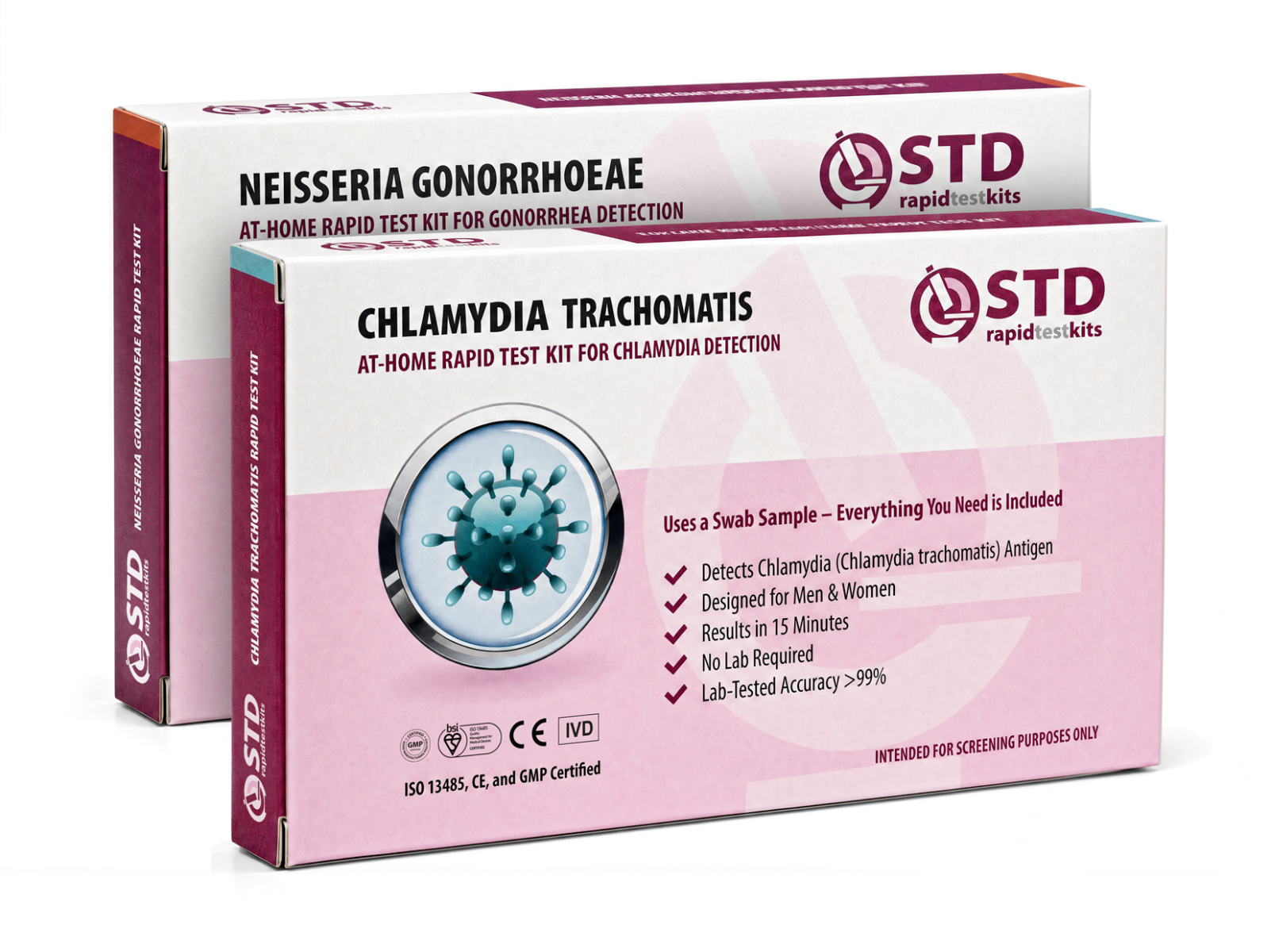
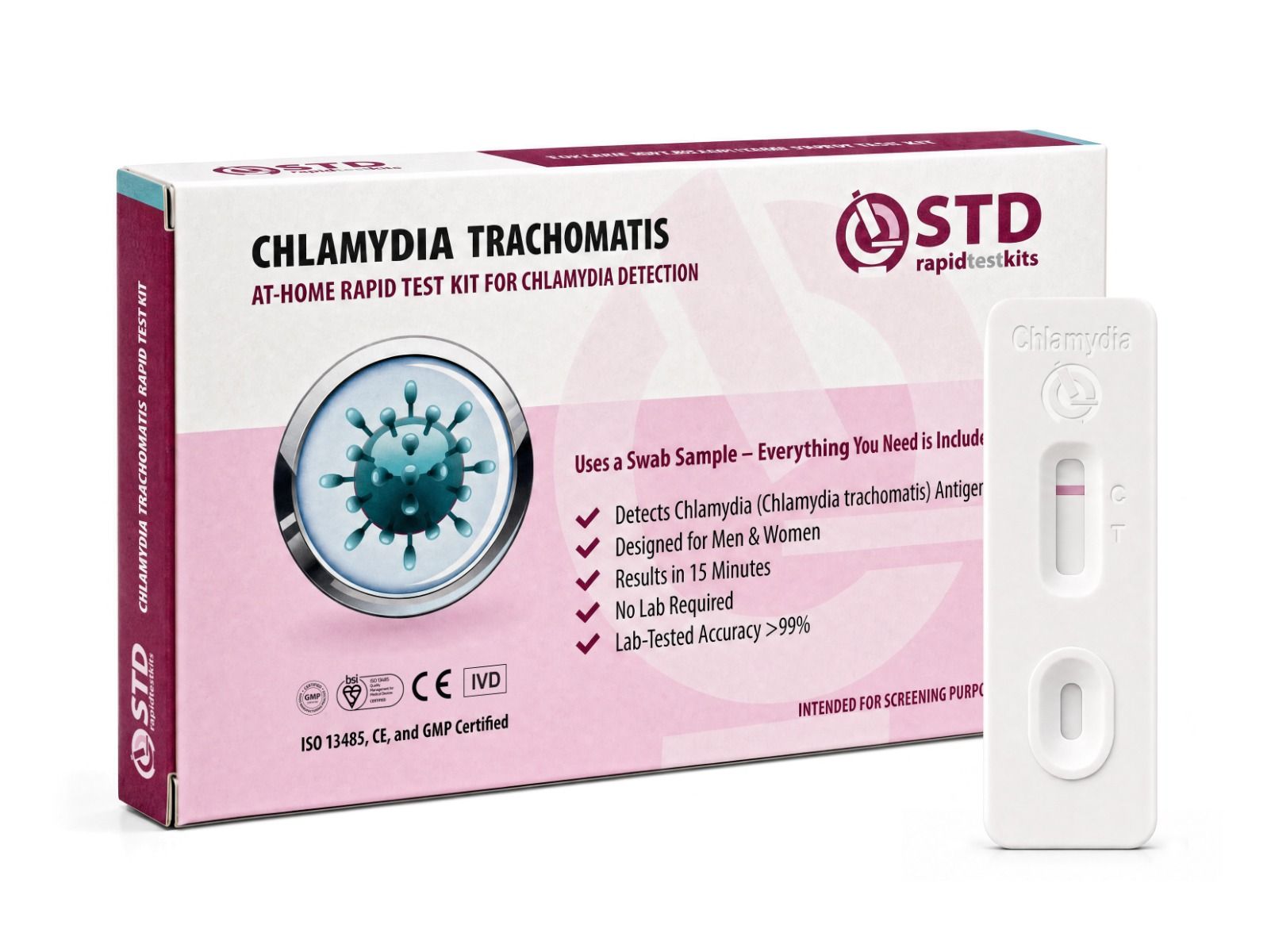
If getting to a clinic is hard, an at-home chlamydia and gonorrhea swab test gives a screening result in about 15 minutes in private. (This site, stdrapidtestkits.com, sells those kits; we point you to them only when they fit the concern at hand.) A positive rapid screen still needs lab confirmation and a prescription for treatment, but it gets you to the right answer fast and shortcuts the multi-week loop.
Signs your "UTI" might actually be chlamydia
Any one of these is a reason to ask for a chlamydia and gonorrhea test rather than a second round of UTI antibiotics. Only a test can confirm the cause.
- Burning urination that began within days or weeks of sex with a new partner Common
- Symptoms that persist after a full course of UTI antibiotics Common
- A negative urine dipstick or culture, but ongoing burning and urgency Common
- Abnormal vaginal or urethral discharge alongside the burning Common
- Deep pelvic or lower-abdominal pain, especially during sex Less common
- Spotting between periods or bleeding after sex Less common
When to test, and what to test for
The reliable testing window for chlamydia (NAAT and rapid swab) starts at about 14 days after exposure. Testing earlier risks a false negative, because the bacterial load may not have built up enough to detect. Simple timing guidance:
- If you have symptoms now, test now. Symptoms mean the infection has been active long enough to detect.
- If you had a possible exposure but no symptoms, wait at least 14 days from the exposure date for the most reliable result.
- If you tested negative inside the first 2 weeks, retest at the 2-to-3-week mark to confirm.
- For routine screening, the CDC recommends yearly chlamydia testing for all sexually active women under 25, and for women 25 and older with new or multiple partners.
Other STIs have their own windows: gonorrhea is similar to chlamydia (reliable from about 2 weeks), HSV blood antibody testing reflects seroconversion at 6 to 12 weeks, syphilis serology is usually accurate from about 3 weeks but peaks later, and HIV with a fourth-generation antigen/antibody test detects most infections by 45 days (antibody-only rapid tests need closer to 90). For UTI-mimicking symptoms specifically, a chlamydia and gonorrhea panel is the most useful single test, since both produce nearly identical urinary symptoms and often occur together.
One caveat about home kits: an at-home rapid test is a lateral-flow immunoassay, not a NAAT. It uses the same swab sample type as a lab NAAT, but the chemistry differs, and labs run NAAT or PCR for higher analytical sensitivity. The two are complementary, not equivalent. A positive home result is reliable enough to act on (start the prescriber pathway for treatment). A negative result on a properly-timed test makes chlamydia unlikely but does not rule it out with the same confidence as a lab NAAT, especially before day 14.
Symptoms now: test now. No symptoms, recent exposure: wait at least 14 days from the exposure date. Negative result before day 14: retest at week 2 to 3 to confirm. Positive home rapid result: start the prescriber pathway for treatment and partner notification; you do not need to wait for a lab confirmation to begin.
Married or committed? You can still have an STI
One uncomfortable part of this topic: being newly married, in a long relationship, or a virgin until your wedding does not rule out an STI. The biology behind that runs in a few directions. Many STIs stay silent for long stretches, and the CDC notes chlamydia often causes no symptoms; the same is true for many HSV and HPV infections, which can persist quietly for years before anything shows. Premarital and pre-relationship panels are also not standardized, so a clinician may test for chlamydia and gonorrhea but skip HSV serology, trichomoniasis, mycoplasma genitalium, or HPV unless specifically asked. That leaves room for two people who both got tested to each still carry something nobody checked for. And any earlier exposure, including oral or non-penetrative contact, may never have been cleared or detected.
None of this is about blame. The World Health Organization estimates that more than 1 million curable STIs are acquired worldwide every day, the majority with no symptoms at all. A new symptom in a committed relationship follows the same testing logic as any other situation, because the biology does not change with relationship status.
Why a committed relationship does not rule out an STI
- Many STIs, including chlamydia, HSV, and HPV, can stay silent for months or years before any sign appears.
- Premarital and pre-relationship panels are not standardized and often skip HSV serology, trichomoniasis, mycoplasma genitalium, and HPV.
- An infection from any earlier contact, including oral or non-penetrative, may never have been cleared or detected.
What chlamydia testing looks like in pregnancy and pre-conception
If you are pregnant or planning to conceive, the stakes around UTI-symptom misdiagnosis change. Screening for asymptomatic bacteriuria is a routine part of early prenatal care, because untreated bacteriuria in pregnancy can progress to a kidney infection and is linked with lower birth weight. A chlamydia screen at the first prenatal visit is also standard.
The reasoning is concrete: chlamydia passed to a newborn during vaginal delivery can cause eye infection (conjunctivitis) or pneumonia, so treating it during pregnancy protects both parent and baby.
For people in the pre-conception window, knowing your chlamydia status is one of the simplest fertility-protection steps available. A single NAAT from a vaginal self-swab, or a 15-minute home rapid kit, can catch an infection before scarring sets in. Couples who reach a fertility workup and find unexplained tubal-factor infertility sometimes discover evidence of past chlamydia exposure: the infection long cleared, the structural damage already done. An infection caught before fallopian-tube scarring develops leaves fertility options intact, because the structural damage from repeated untreated cycles cannot be reversed with antibiotics.
Doxycycline, the standard first-line chlamydia regimen, is not used in pregnancy. Azithromycin is the preferred alternative. If you are pregnant and test positive for chlamydia, your prescriber will adjust the regimen accordingly, and your newborn will be monitored for chlamydial conjunctivitis and pneumonia.
Preventing post-sex burning next time
If you have had one post-sex UTI or STI scare, the prevention list is short and well-evidenced.
Lowering the odds next time
- Use lubricant generously. Water-based or silicone lubricants reduce micro-trauma; avoid oil-based lubricants with latex condoms, which they degrade.
- Pee within 15 to 30 minutes of sex. The NHS lists post-sex urination as a standard prevention measure that flushes bacteria from the urethra.
- Stay hydrated. Higher urine output flushes the urinary tract, and travel-related dehydration (flights, alcohol, hot climates) compounds the risk.
- If you are UTI-prone, ask about prophylaxis. Some clinicians prescribe a single post-coital antibiotic dose, and D-mannose has moderate evidence for reducing recurrence.
- Test on a schedule. Annual STI screening is reasonable for most sexually active adults, more often if either partner has new exposures.
When to see a provider without waiting for a home test
Most post-sex burning resolves on its own (tissue trauma) or with a short antibiotic course (cystitis). A small subset of symptoms needs prompt clinical evaluation rather than home management. Home rapid kits are useful screening tools when the picture is mild to moderate, but they do not replace a clinic visit when red-flag features appear.
Recurrent post-sex UTIs are a recognized pattern that deserves a proper workup, not just another round of the same antibiotic. If you have any signs of pelvic inflammatory disease (deep pelvic pain, fever, abnormal discharge, painful sex, bleeding between periods), see a provider the same day. PID is treated clinically and needs antibiotics within hours, not days; that delay is the part of the chlamydia story that leads straight to tubal scarring.
- Fever above 38°C (100.4°F) or chills with urinary symptoms (the infection may have moved beyond the bladder).
- One-sided lower-back or flank pain (a kidney-infection sign).
- Nausea or vomiting alongside urinary symptoms.
- Blood in the urine that does not clear within a day.
- Severe pelvic pain that is new and persistent, or limits walking.
- Heavy or unexplained vaginal bleeding.
- Suspected pregnancy with any UTI or STI symptoms (some antibiotics are not safe in early pregnancy).
- Symptoms that return within weeks of finishing antibiotics.
- Signs of pelvic inflammatory disease: deep pelvic pain, fever, abnormal discharge, painful sex, bleeding between periods.
Bottom line: when to test for chlamydia even if you "have a UTI"
Treat any of these patterns as a reason to test for chlamydia, whatever your provider has called it:
- Burning urination plus a recent new sexual partner, regardless of the UTI test result.
- A UTI that does not improve within 3 to 5 days of first-line antibiotics.
- Recurrent "UTIs" that keep returning despite repeated treatment.
- Pelvic or lower-abdominal pain alongside urinary symptoms.
- Spotting between periods, bleeding after sex, or unusual discharge with the urinary symptoms.
- Any urinary symptom that began within days or weeks of a possible exposure.
- You are planning to conceive and have never had a chlamydia NAAT.
Chlamydia is a treatable, curable bacterial infection. The test is simple, the treatment is a short antibiotic course, and the cost of testing is small next to the cost of letting the infection progress to PID.
What to do right now
Do you have a fever, one-sided flank pain, or signs of PID such as deep pelvic pain, abnormal discharge, or bleeding between periods?
Yes: See a provider the same day. These point past a simple bladder infection and need prompt in-person evaluation and treatment.
Have UTI antibiotics failed to improve your symptoms within 48 to 72 hours, or did your UTI test come back negative while symptoms continue?
Yes: Stop the repeat-UTI loop and test for chlamydia and gonorrhea, either with an at-home swab kit or a provider NAAT.
Did your burning start within days or weeks of sex with a new partner?
Yes: Test for chlamydia and gonorrhea now; symptoms mean the infection has been active long enough to detect.
No: If you are sexually active, fold a chlamydia and gonorrhea screen into your routine annual testing.
Guidance only; a healthcare provider can advise based on your specific situation.
Chlamydia often has no symptoms, but it can cause serious health problems, even without symptoms. If symptoms occur, they may not appear until several weeks after having sex with a partner who has chlamydia.
Frequently asked questions
- Can chlamydia really feel exactly like a UTI?
- Yes. The urethra sits in the same anatomical neighborhood as the cervix, and chlamydia commonly infects both. Burning urination, urgency, and pelvic pressure are among the most common chlamydia symptoms in women, and they are nearly indistinguishable from an uncomplicated UTI without a specific test for chlamydia.
- If my urine culture is negative, can I still have chlamydia?
- Yes. A urine culture grows common UTI bacteria like E. coli. Chlamydia trachomatis lives inside cells and does not grow on standard culture plates; it needs a NAAT or rapid swab test. A negative urine culture rules out a UTI, not a sexually transmitted infection.
- Will my UTI antibiotics also clear chlamydia?
- No, and that is the most common reason symptoms persist after a UTI course. UTI antibiotics target bacteria like E. coli that grow in urine; chlamydia lives inside cells and does not respond to those drugs. If you finished a UTI course and still have burning or pelvic pressure, that is the clearest signal to request a chlamydia test rather than a second UTI prescription. The treatment that works is a different antibiotic taken for a full week.
- Is burning after first-time or honeymoon sex always an infection?
- No. Friction-related micro-trauma to vaginal and urethral tissue is common after first-time or long-awaited sex, especially without enough lubrication. Pure irritation usually improves within 24 to 72 hours with rest, hydration, and gentle hygiene. If the burning sharpens or shifts to urinary symptoms during that window, the picture is moving toward a UTI.
- How long after exposure should I wait before testing for chlamydia?
- Wait at least 14 days after the exposure. Testing earlier risks a false negative because the bacterial load is still too low for detection. The exception: if you already have symptoms, test now, since an active symptomatic infection is detectable regardless of timing.
- Can men get UTI-like symptoms from chlamydia too?
- Yes, though less often. Chlamydia in men typically causes urethral discharge or burning when urinating, and many male infections cause no symptoms at all. The same overlap problem applies: a UTI test on a male urine sample will not detect chlamydia. Men with persistent urethral burning after sexual contact should specifically request a chlamydia and gonorrhea NAAT.
- Can oral sex transmit chlamydia or other STIs?
- Yes. Oral sex can transmit chlamydia, gonorrhea, syphilis, herpes (HSV-1 and HSV-2), and HPV, and throat infections are often symptom-free. A genital swab cannot detect a throat infection, and we do not sell pharyngeal swabs. For an oral-exposure site test, a clinic throat swab is the right tool.
- We were both tested before this relationship. Why test again if symptoms appear now?
- Premarital and pre-relationship panels are often not standardized. A clinician may cover chlamydia and gonorrhea but skip HSV serology, trichomoniasis, mycoplasma genitalium, or HPV unless asked. Two people who both got tested can each still carry an infection nobody checked for, and many STIs stay silent for months or years. A new symptom in a committed relationship is a health signal, not a trust verdict.
- Can chlamydia cause infertility even without symptoms?
- Yes, and that is the strongest reason to test even when you feel fine. Chlamydia is frequently silent, but the bacteria still trigger an immune response that can scar the fallopian tubes whether or not symptoms appear. The CDC reports that 1 in 8 women with a history of pelvic inflammatory disease have difficulty getting pregnant, one of the major downstream complications of untreated chlamydia.
- U.S. Centers for Disease Control and Prevention. About Chlamydia: symptoms, asymptomatic presentation, and the timeline that symptoms may not appear until several weeks after exposure.
- U.S. Centers for Disease Control and Prevention. About Pelvic Inflammatory Disease: chlamydia and gonorrhea as common causes, tubal-scarring and infertility complications, and the 1-in-8 difficulty-conceiving figure.
- U.S. Centers for Disease Control and Prevention. STI Treatment Guidelines: doxycycline 100 mg twice daily for seven days as the first-line chlamydia regimen, with azithromycin as an alternative including in pregnancy.
- U.S. Centers for Disease Control and Prevention. STI Surveillance Annual Summary: about 1.5 million reported chlamydia cases in the United States in 2024 (provisional).
- National Health Service (UK). Urinary tract infections (UTIs): symptoms, shorter female urethra as a risk factor, and prevention measures including urinating after sex.
- World Health Organization. Sexually transmitted infections fact sheet: more than 1 million curable STIs acquired worldwide each day, and gonorrhea and chlamydia as major causes of pelvic inflammatory disease and infertility in women.
- MedlinePlus, U.S. National Library of Medicine. Chlamydia Infections: usually no symptoms, PID and infertility risk if untreated, and diagnosis via urine sample or vaginal swab.
