

Published: July 2025 | Last updated: April 2026 | Editorial review and quality control: Martina N.
Burning during urination is one of the most common reasons people walk into urgent care, and the default working diagnosis is a urinary tract infection. That works most of the time. It does not work when the burning is caused by something a urine dipstick cannot see. Chlamydia trachomatis, the bacterial infection most frequently reported to the CDC each year, often presents with the same symptom set as a UTI: stinging during urination, urgency, mild pelvic ache. The standard urine test will not find it.
This article walks through why the symptom overlap is so common, what the typical UTI workup actually checks for, when chlamydia is the more likely answer, and what testing and treatment look like once you stop chasing the wrong infection.
Can chlamydia cause burning when you pee even if your UTI test is negative?
Yes, and it is one of the most common reasons a UTI test comes back clean while the symptoms keep going. Chlamydia infects the urethra (the tube urine flows through) and causes inflammation called urethritis that feels almost identical to a UTI. Standard urine dipsticks check for nitrites, leukocyte esterase (an enzyme released by infection-fighting white blood cells), and bacteria like E. coli; they do not detect chlamydia. If burning appeared right after trying a new soap, lubricant, or condom brand and faded within a day or two, an irritant reaction is a likelier explanation than an STI. The pattern that points toward chlamydia is burning that persists or returns, especially after a new partner. In that case, the next step is testing specifically for chlamydia and gonorrhea.
Key Takeaways
- A negative UTI test does not rule out chlamydia. Routine urine dipsticks check for inflammation and the kind of bacteria that cause bladder infections, not for sexually transmitted bacteria.
- Chlamydia is curable with a 7-day course of doxycycline. Untreated infections can spread to the upper reproductive tract and cause pelvic inflammatory disease, ectopic pregnancy risk, and tubal infertility.
Why It Burns When the UTI Test Is Negative
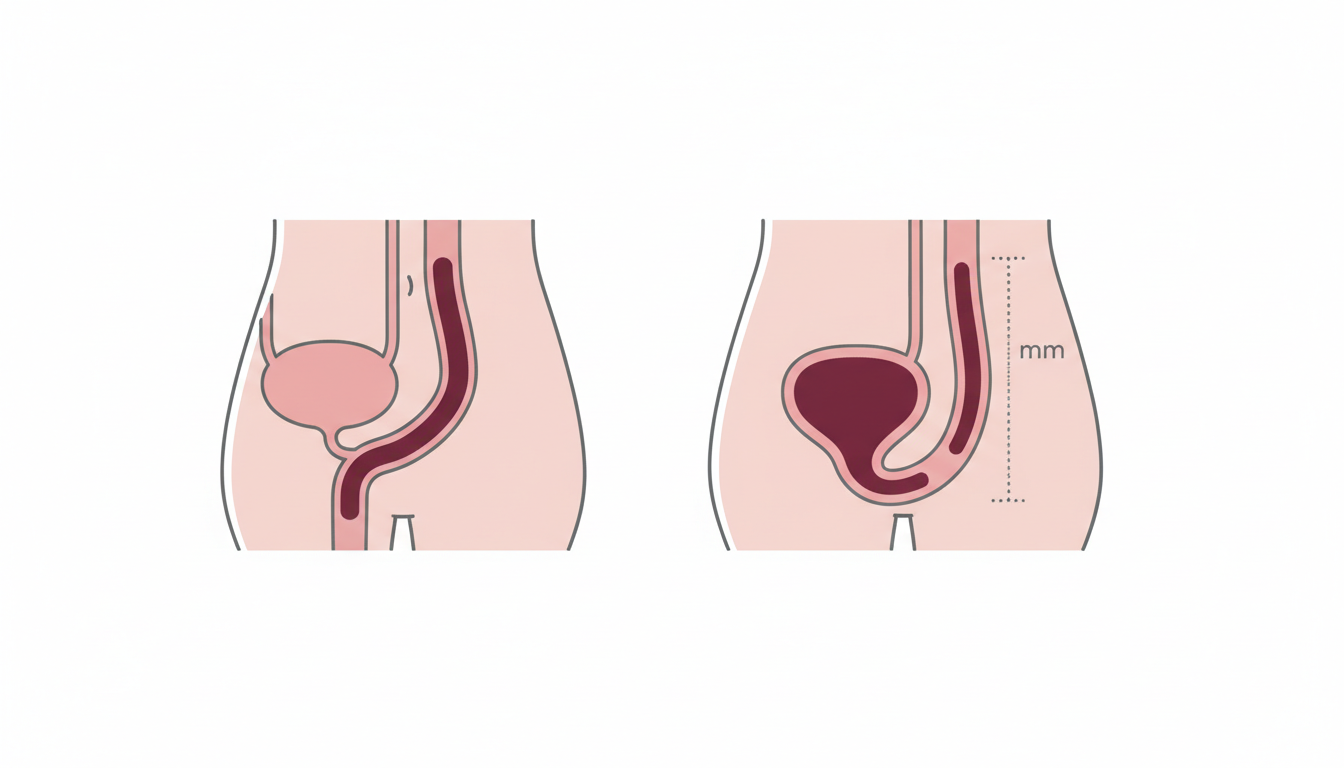
The urethra is the short tube that carries urine out of the body. In people with vaginas it sits between the vagina and the clitoris; in people with penises it runs the length of the penis. Either way, when something inflames the urethral lining, the nerves that fire during urination get irritated, and you feel that telltale stinging burn.
A urinary tract infection inflames the urethra (and often the bladder above it) by way of bacteria that have traveled up from the perineum. The most common culprit is Escherichia coli. A standard urine dipstick looks for the byproducts of that bacterial activity: nitrites produced by gram-negative bacteria, leukocyte esterase released by infection-fighting white cells, and a high white blood cell count under the microscope. A urine culture, run in a lab, identifies which bacterial strain is actually growing in the sample.
Chlamydia trachomatis is a different organism, and it does not show up on those tests. It causes a clinically distinct condition called urethritis (inflammation of the urethra without a bladder infection). The CDC's STI Treatment Guidelines describe non-gonococcal urethritis as commonly presenting with dysuria (painful urination), urethral itching, and sometimes mild discharge, exactly the symptoms most people associate with a UTI. The dipstick may show a few white cells from the inflammation, but the culture stays negative because there is no E. coli or other typical urinary pathogen growing.
That mismatch between symptoms and test result is the root of the confusion. The lab reading is technically correct: there is no urinary tract infection. The bacteria responsible for the symptoms are simply outside the scope of what a UTI workup is designed to find.
UTI vs Chlamydia: The Symptom Overlap
The reason the two conditions get confused has very little to do with how rare or unusual chlamydia is. It is about how similar the lived experience can be. Both can produce a stinging burn during urination, both can produce a vague pelvic ache, and both can flare worse after sex. The differences are subtle, often non-existent in the early days, and rarely diagnostic on their own.
The table below collects the most useful distinguishing patterns. Read it as a probability map rather than a checklist: any individual symptom can show up in either infection, and many people with chlamydia have no noticeable symptoms at all.
| Symptom or finding | Typical UTI | Typical chlamydia |
|---|---|---|
| Burning during urination | Common | Common |
| Urinary urgency or frequency | Common | Sometimes mild |
| Cloudy or strong-smelling urine | Common | Rare |
| Pelvic or lower-abdominal ache | Sometimes | Sometimes |
| Vaginal or penile discharge | Rare | Sometimes (often subtle) |
| Spotting between periods or after sex | Not associated | Possible |
| Pain during sex | Not typical | Possible |
| No symptoms at all | Unusual | Very common (CDC notes chlamydia often has no symptoms) |
| Urine dipstick result | Often positive (nitrites, leukocytes) | Often negative or non-specific |
| Urine culture result | Bacterial growth identified | No growth |
Why So Many Cases Get Missed
Chlamydia is the most-reported bacterial STI in the United States, and yet it is also the one most likely to go undiagnosed. The CDC's chlamydia overview notes that the infection often causes no symptoms in women, and a large share of cases in men also stay silent. When symptoms do appear, they are usually mild enough to be mistaken for irritation, a yeast issue, or, most often, a UTI.
A few factors make the misdiagnosis stick:
- Routine clinic protocols default to a UTI workup. A urine sample, a dipstick, sometimes a culture. Unless the patient brings up sexual exposure or specifically asks for STI testing, an STI panel is rarely added.
- Telehealth and urgent-care visits favor speed. A short consult plus an empiric antibiotic prescription is the path of least resistance. If symptoms partially improve on UTI antibiotics (because of broad-spectrum activity or coincidence), the underlying chlamydia stays untreated.
- Younger women are screened on paper but rarely in practice. The CDC recommends annual chlamydia screening for sexually active women under 25 and any woman with new or multiple partners. Coverage rates remain well below the recommended target.
- Stigma blocks the question. Patients sometimes do not mention sexual exposure, especially in monogamous-presenting relationships, because they assume STIs are someone else's problem. Providers, in turn, do not always probe.
The result is a pattern many people end up living: round one of antibiotics for a UTI, brief improvement, return of symptoms, round two, and so on, until someone finally orders an STI test.
Three patterns are worth taking seriously. First, two or more UTI rounds in six months with negative urine cultures. Second, burning that started or worsened within a few weeks of a new sexual partner. Third, partial improvement on UTI antibiotics followed by symptom return. None of these prove chlamydia, but each one is a strong reason to add an STI test rather than reach for another antibiotic.
Testing for Chlamydia After a Clean UTI Result
Lab testing for chlamydia uses nucleic acid amplification testing (NAAT), which detects the bacterium's genetic material in a urine sample, vaginal swab, or cervical swab. NAAT is the diagnostic gold standard the CDC recommends for confirming a chlamydia infection. It is highly sensitive and specific, and it is what most clinics and STI specialty centers use.
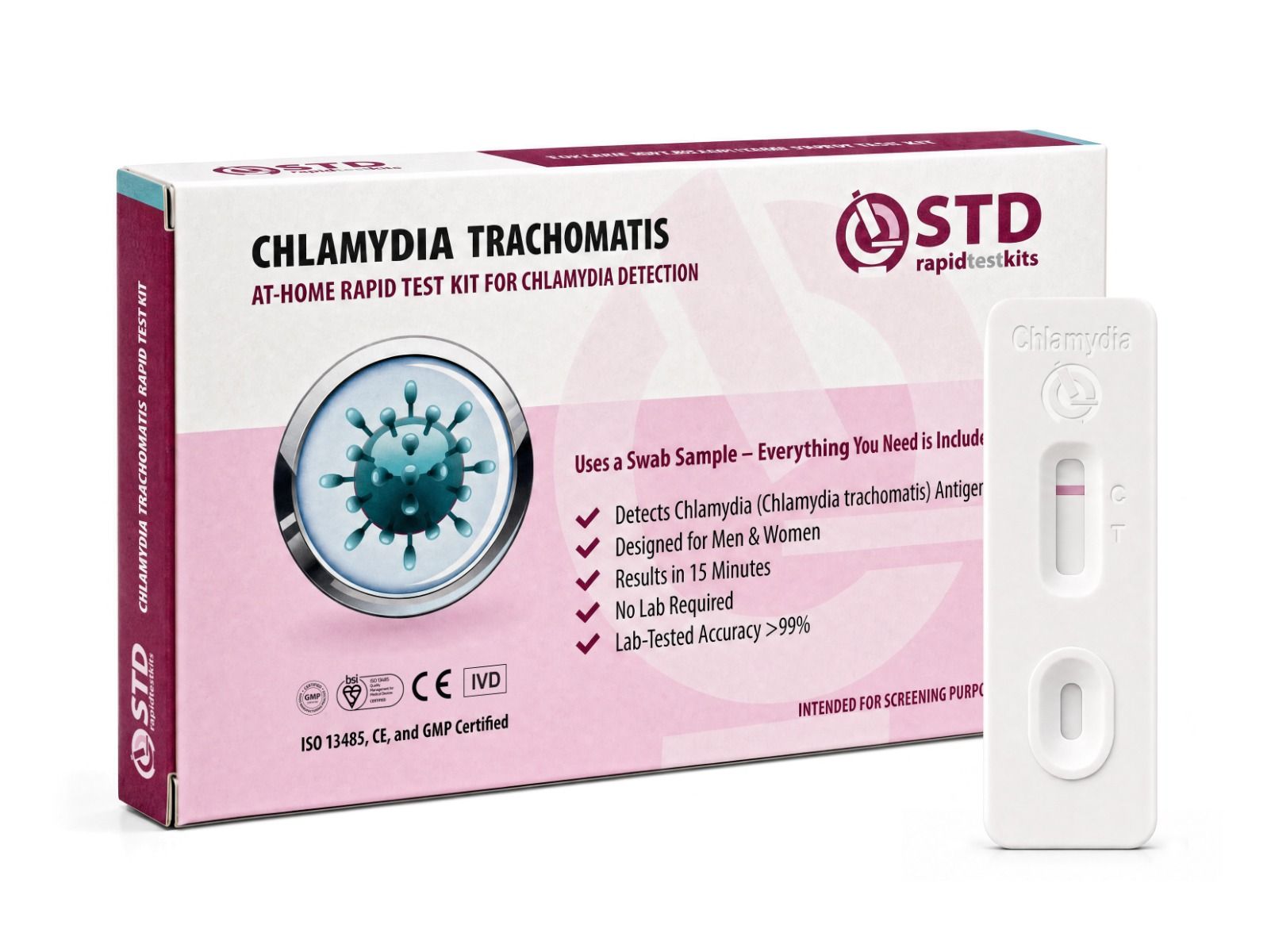
At-home rapid tests use a different chemistry. Lateral-flow immunoassays detect chlamydia antigens (proteins on the surface of the bacterium) in a self-collected swab sample, with results read in roughly fifteen minutes. They are useful for fast, private screening, particularly when a clinic visit is logistically hard or socially uncomfortable. The two technologies are complementary rather than equivalent: a positive lateral-flow result is meaningful and worth acting on; a negative result in the face of persistent symptoms is worth confirming with a lab NAAT.
The practical decision tree:
- Burning continues after one negative urine culture and you have had a new partner in the last few months. A swab-based rapid test or a clinic NAAT is the next step.
- Burning continues after multiple antibiotic courses. See a provider, request a full STI panel, and ask specifically for NAAT-based testing for chlamydia and gonorrhea.
- You want a private screen before going to a clinic. An at-home rapid swab test gives you a same-day yes or no for chlamydia. Confirm a positive with a lab NAAT before starting treatment, since antibiotic prescription is provider-dependent in most U.S. states.
Treatment: What Actually Clears It
Once chlamydia is confirmed, treatment is short and effective. Per the CDC's STI Treatment Guidelines, the recommended first-line regimen is doxycycline 100 mg by mouth twice daily for 7 days. This replaced single-dose azithromycin as the preferred option in 2021 because doxycycline is more effective against rectal chlamydia and against the co-infections that often travel together. Azithromycin (a single 1 gram dose) remains an alternative when doxycycline is not appropriate, including during pregnancy.
A few things tend to surprise people once they start treatment:
- Symptom relief usually starts within 48 to 72 hours. Full bacterial clearance takes the full 7 days. Stopping early because the burn has eased is a reliable way to relapse.
- You should not have sex for 7 days after starting doxycycline (or for 7 days after a single dose of azithromycin). This protects partners and avoids reinfecting yourself before the bacterial clearance is complete.
- Partners need treatment too, even if they are asymptomatic. Most U.S. states allow expedited partner therapy, where the provider gives the patient a prescription or medication to pass on to the partner without a separate appointment.
- Chlamydia does not give you immunity. A clean retest does not protect against a future infection from a new (or re-infected) partner.
Cost-wise, generic doxycycline is one of the cheapest antibiotics on the market. The bottleneck on treatment is almost always getting the right diagnosis in the first place.
Chlamydia often has no symptoms, but it can cause serious health problems, even without symptoms. If you do have symptoms, they may not appear until several weeks after having sex with a partner who has chlamydia. It can cause permanent damage to a woman's reproductive system.
Why UTI Antibiotics Cannot Treat Chlamydia
The most common UTI antibiotics in U.S. outpatient practice are nitrofurantoin (Macrobid), trimethoprim-sulfamethoxazole (Bactrim), fosfomycin (Monurol), and the fluoroquinolones (ciprofloxacin, levofloxacin). Each one targets a class of bacteria associated with urinary tract infections. None of them is a first-line drug for chlamydia.
Nitrofurantoin and fosfomycin are highly concentrated in urine but have no meaningful activity against Chlamydia trachomatis, which is an intracellular bacterium that lives inside human cells. Trimethoprim-sulfamethoxazole is similarly ineffective against chlamydia. Fluoroquinolones do have some activity against chlamydia, which is why a fluoroquinolone-treated UTI sometimes seems to ease chlamydia symptoms; however, the dose, duration, and bacterial sensitivity are not reliable, and CDC guidance does not include fluoroquinolones in standard chlamydia regimens.
| Antibiotic | Common indication | Activity against chlamydia |
|---|---|---|
| Nitrofurantoin (Macrobid) | Uncomplicated UTI | None |
| Trimethoprim-sulfamethoxazole (Bactrim) | UTI | None |
| Fosfomycin (Monurol) | Single-dose UTI | None |
| Ciprofloxacin / Levofloxacin | Complicated UTI, pyelonephritis | Partial; not CDC-recommended for chlamydia |
| Doxycycline | Chlamydia, several other STIs | First-line (100 mg twice daily, 7 days) |
| Azithromycin (single 1 g dose) | Chlamydia in pregnancy or doxycycline contraindication | Alternative regimen |
When to See a Provider Instead of Testing at Home
At-home testing makes a lot of situations simpler. A few situations are not among them. If you have any of the following, treat them as red flags and book an in-person appointment rather than waiting on a mail-order kit:
- Fever, chills, or back pain, which can signal kidney involvement (pyelonephritis) on the UTI side, or pelvic inflammatory disease (PID) on the chlamydia side. PID is a complication of untreated chlamydia or gonorrhea that can scar the fallopian tubes and cause ectopic pregnancy or infertility.
- Severe pelvic or lower-abdominal pain, especially if it is one-sided or worsens with movement.
- Heavy or unusual bleeding between periods or after sex, particularly when paired with pelvic pain.
- Pregnancy or known pregnancy concern. Untreated chlamydia in pregnancy can be passed to the newborn during delivery and cause neonatal conjunctivitis or pneumonia. Treatment regimens also differ in pregnancy; doxycycline is contraindicated.
- Visible sores, ulcers, or unusual lesions. These point to other causes (herpes, syphilis) that need different testing and care.
For everyone else, an at-home swab test is a reasonable first step. The point of testing is to know what to do next; an at-home result that comes back positive then becomes the trigger for a virtual or in-person consult to get the prescription.
Untreated chlamydia can spread to the upper reproductive tract and cause pelvic inflammatory disease (PID). The CDC links PID with longer-term risks of ectopic pregnancy, tubal infertility, and chronic pelvic pain. Symptoms include lower-abdominal pain, fever, abnormal bleeding, and pain during sex. PID is treatable, but the scarring it can leave behind is the main reason getting chlamydia treated promptly matters. Same-week treatment after a positive result is the goal.
After Treatment: Retesting and Telling Partners
The CDC recommends retesting for chlamydia about three months after treatment, regardless of whether your partner was also treated. The reason is simple: reinfection is the single most common reason chlamydia comes back, far more common than treatment failure. Three months gives the test enough lead time to detect a new infection from a new (or untreated) partner.
If symptoms return earlier than three months, retest immediately. Persistent dysuria after a completed course of doxycycline is unusual and worth a fresh sample.
The partner conversation is awkward and unavoidable. A few things to know going in:
- Most U.S. states allow expedited partner therapy, which lets your provider give you medication or a prescription to pass to your partner without a separate appointment. Ask explicitly; many providers will not offer it unprompted.
- Anonymous partner-notification services are available through many local STI programs and via web-based services that let you send a partner a message that they should test for an STI without revealing your identity.
- The conversation does not need to be long. Saying you tested positive for chlamydia and they should get tested too is enough. The other person's reaction is theirs to manage; your part is the notification.
If you have multiple recent partners, think back over the last 60 days, the time window the CDC uses for likely transmission, and notify each one.
The Bottom Line on Burning Without a UTI
If a urine test came back clean and the burn is still there, the question worth asking is which other organism inflames the urethra. Chlamydia tops that list, gonorrhea is second, and irritation from soaps, spermicides, or trauma is third.
What this looks like in practice: order or request a chlamydia swab when the urine workup keeps coming back clean. If it is positive, a 7-day course of doxycycline resolves the infection in most cases and symptom relief usually begins within 48 to 72 hours. If it is negative and the burning continues, the next layer of investigation moves to gonorrhea, mycoplasma, or non-infectious irritation from soaps, spermicides, or vaginal dryness.
The productive next step is a chlamydia-specific swab rather than another empiric prescription. An at-home rapid test gives a yes-or-no answer in about fifteen minutes; a positive result is worth confirming with a lab NAAT before treatment, and a 7-day course of doxycycline is the current CDC first-line regimen.
FAQs
- Can chlamydia really feel exactly like a UTI?
- The CDC notes that most chlamydia infections produce no symptoms at all. When symptoms do appear, the lived experience mirrors a UTI closely enough that testing is the only reliable way to separate the two. People commonly describe the burn, the urgency, and a mild pelvic ache without ever suspecting a sexually transmitted cause, especially when no discharge is present.
- Why did my UTI test come back negative if I am still burning?
- Standard UTI workups look for nitrites, leukocyte esterase, white blood cells, and bacterial growth from urinary pathogens like E. coli. They are not designed to detect chlamydia trachomatis. A negative urine culture rules out a UTI; it does not rule out chlamydia, gonorrhea, or non-infectious causes of urethritis.
- How long after sex can chlamydia start causing symptoms?
- Most symptoms, when they appear at all, show up one to three weeks after exposure per the CDC, but the range is wider in practice. For testing purposes, a swab or NAAT becomes reliably accurate about one to two weeks after exposure, so testing too early can produce a false negative.
- Can men get chlamydial urethritis or is this a women's issue?
- Men get chlamydial urethritis routinely. UTIs are uncommon in men, so a man with burning urination and a clean urine culture is more likely to have a sexually transmitted urethritis than a UTI. Chlamydia and non-gonococcal urethritis from other organisms account for most of these cases.
- If my partner has no symptoms, do they still need testing?
- Yes. Most chlamydia infections in both men and women are asymptomatic, per the CDC. A symptom-free partner can carry the infection and pass it back after your treatment is finished. Expedited partner therapy lets a provider treat partners without a separate appointment in most U.S. states.
- Will chlamydia clear up on its own?
- Sometimes, but not reliably and not on a schedule you can plan around. A meaningful share of untreated chlamydia infections progress to pelvic inflammatory disease in women or epididymitis in men, both of which carry long-term consequences. The risk-reward of waiting on a self-clearance is poor when a 7-day antibiotic course is curative.
- Can I take leftover UTI antibiotics for chlamydia?
- No, and the attempt usually backfires. Nitrofurantoin and fosfomycin do not kill chlamydia. Trimethoprim-sulfamethoxazole does not kill chlamydia. A partial improvement on these drugs can mask the underlying infection long enough for it to spread, so a confirmed chlamydia diagnosis warrants a chlamydia-specific regimen (doxycycline or, in pregnancy, azithromycin).
- Should I retest after treatment, even if I feel fine?
- Yes, the CDC recommends retesting about three months after treatment for chlamydia. The point is not to confirm cure (treatment failure is rare) but to catch reinfection from a partner who was missed or returned to risk. If symptoms come back sooner, retest sooner.
- U.S. Centers for Disease Control and Prevention. Chlamydia overview, including symptoms, transmission, asymptomatic infection rates, and complications.
- U.S. Centers for Disease Control and Prevention. STI Treatment Guidelines, chlamydial infections section, current first-line doxycycline regimen and azithromycin alternative for pregnancy.
- U.S. Centers for Disease Control and Prevention. STI Treatment Guidelines, urethritis and cervicitis section, including non-gonococcal urethritis presentation and management.
- U.S. Centers for Disease Control and Prevention. Urinary tract infection basics, including standard diagnostic workup and common causative organisms.
- National Health Service (UK). Chlamydia, symptoms, testing, and treatment overview.
- Mayo Clinic. Chlamydia trachomatis, symptoms and causes overview.
