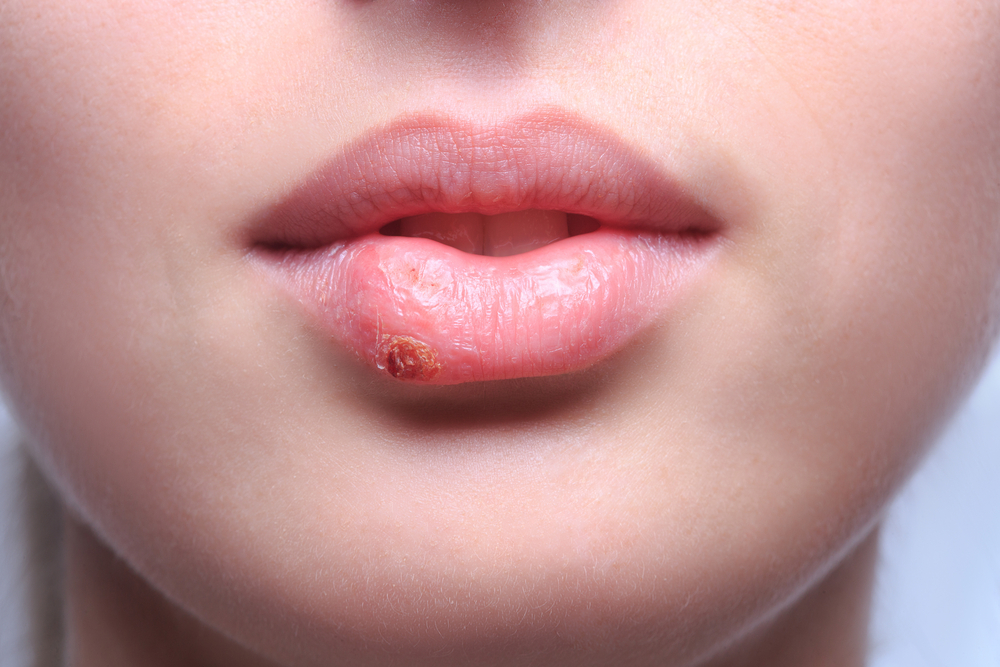
Published: July 2025 | Last updated: May 2026 | Editorial review and quality control: Martina N.
Yes. Chlamydia trachomatis can infect the throat after oral sex. Most cases cause no symptoms; when symptoms appear they are mild, a scratchy throat or slightly swollen lymph nodes. Standard urine and blood STI panels will not detect it. Diagnosis requires a clinic-collected pharyngeal NAAT swab, ordered only when you specifically ask based on your sexual history.
A sore throat after oral sex is one of those symptoms that is easy to brush off and easy to misread. It feels like allergies. It looks like the start of a cold. A clinician might call it strep and prescribe penicillin. Yet none of those explanations rule out the quiet possibility that Chlamydia trachomatis, the same bacterium responsible for most genital chlamydia, has set up in the back of the throat. Once it does, it usually causes no symptoms at all. When it does, the signs whisper rather than shout.
This guide covers what oral chlamydia actually feels like, why most standard STI tests miss it, when and how to test, what treatment looks like, and how to lower your risk going forward. It is written for anyone who has had unprotected oral sex recently and wants honest information rather than reassurance or panic. The clinical claims are pulled from current CDC STI treatment guidelines and supporting public-health sources. None of it replaces a clinical visit when symptoms worry you.
Key Takeaways
- Most oral chlamydia infections cause no symptoms, and standard urine or blood STI tests will not detect a throat infection.
- A clinic-collected pharyngeal NAAT swab is the only reliable diagnostic. Our at-home rapid kits use genital swabs and fingerprick blood, not pharyngeal swabs.
This Doesn't Look Like an STI, and That's the Problem
The textbook picture of a sexually transmitted infection involves visible discharge, burning, sores, or unmistakable pain. Pharyngeal chlamydia rarely matches that picture. The throat does not have the same nerve density or visible architecture as the genital tract, and chlamydia bacteria do not provoke the same inflammatory response in the pharynx that they sometimes provoke in the urethra or cervix.
Oral chlamydia, or pharyngeal chlamydia in clinical writing, is an infection of throat tissue caused by Chlamydia trachomatis, the same bacterium responsible for the familiar genital infection. The species does not distinguish between body parts. It colonizes whichever moist mucous membrane it lands on, which includes the back of the throat, the urethra, the cervix, and the rectum.
According to the CDC's chlamydia treatment guidelines, the majority of people with detectable oropharyngeal chlamydia have no throat symptoms at all, and the symptomatic minority is well below half of confirmed cases. Because the symptoms (when they exist) overlap with strep throat, viral pharyngitis, post-nasal drip, and acid reflux, primary care and urgent care clinicians rarely think of chlamydia first. A negative rapid strep test plus a course of amoxicillin sometimes ends the conversation, even when the throat does not get better. That gap between what the patient describes and what the workup checks for is where most missed diagnoses live.
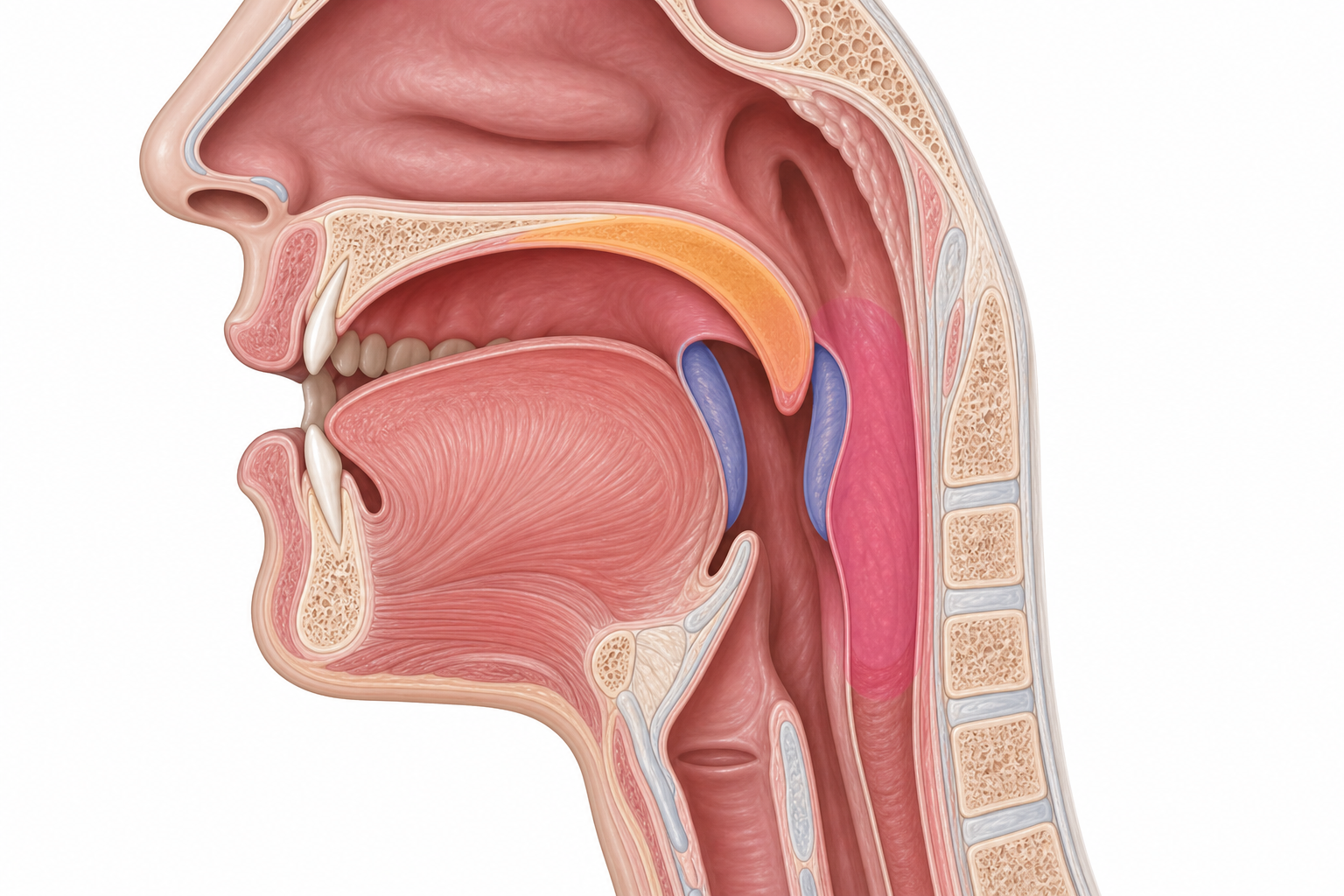
Oral chlamydia: what to watch for (and how rare each sign is)
Most cases produce none of these signs. A clear symptom is the exception, not the rule, and the picture overlaps heavily with viral sore throat, post-nasal drip, and allergies. None of these is specific to chlamydia.
- No symptoms at all (the majority of confirmed cases) Common
- Mild, scratchy sore throat that outlasts a typical cold Less common
- Tonsils that look slightly red or have a faint white film Less common
- Tender or slightly swollen lymph nodes in the neck or under the jaw Less common
- Vague irritation when swallowing, often without real pain Less common
- An unpleasant taste that does not clear with brushing Rare
- Fever or severe throat pain Rare
| Feature | Oral Chlamydia | Strep Throat | Viral Sore Throat |
|---|---|---|---|
| Sore or scratchy throat | Mild, when present at all | Often severe | Mild to moderate |
| Fever | Rare | Common | Sometimes |
| White patches on tonsils | Sometimes, faint | Often, more pronounced | Rare |
| Swollen lymph nodes | Occasional, mild | Common | Sometimes |
| Cough or runny nose | No | No | Common |
| Responds to amoxicillin or penicillin | No | Yes | No (viral) |
| Routinely tested for at clinic visit | No, only if requested | Yes, rapid swab | Diagnosed by exclusion |
Why Your Recent STI Test Probably Missed It
A "full panel" at a clinic almost never includes a throat swab unless you specifically request one. The default workup for chlamydia is a urine sample (or a vaginal or cervical swab), which detects bacteria at the genital site only. If your exposure was oral, a urine test cannot find what is in your throat.
The CDC's consumer guidance on STI risk and oral sex advises talking openly with a provider about the activities that might put you at risk so the right tests are ordered. The CDC's screening recommendations direct providers to add extragenital (throat and rectal) sites based on reported sexual practices, which means the patient has to disclose oral or receptive anal sex for the right swabs to land on the lab order. Many people do not, either out of embarrassment or because no one asked the right question. The result is a clean panel that did not look at the site of exposure. "Negative" in that case is a true result for the sites that were sampled, and a meaningless result for the site that was not.
Where you go to get tested shapes which sites end up sampled by default. Primary care and urgent care typically run urine chlamydia and gonorrhea plus blood for HIV and syphilis, and rarely add throat or rectal swabs. Sexual health clinics are the strongest fit for extragenital concerns because staff are trained to ask the right history questions. At-home rapid kits from this site cover the genital site (self-collected swab) and bloodwork (fingerprick) but do not include a pharyngeal NAAT. This site sells rapid at-home STI lateral-flow kits; we note clearly where our tests apply and where a clinic visit is needed instead. Here is how the common test types compare for a throat infection specifically:
| Test type | Detects throat infection | Detects genital infection | Available at home | Notes |
|---|---|---|---|---|
| Urine NAAT | No | Yes | Some kits offer it | Standard clinic default; misses oral and rectal sites |
| Genital self-swab (lateral-flow) | No | Yes | Yes | What our at-home kits use; rapid result, screens the genital site |
| Pharyngeal NAAT (clinic-collected throat swab) | Yes | No | No, clinic only | The reliable test for pharyngeal chlamydia; must be requested |
| Mail-in multi-site NAAT panel | Sometimes | Yes | Yes | Confirm before ordering that the kit explicitly includes a throat swab |
How Oral Chlamydia Spreads
The transmission routes are simpler than the symptoms. Chlamydia in the throat moves between bodies through direct mucosal contact during oral sex.
- Giving oral sex to someone with a genital chlamydia infection can deposit bacteria in your throat. This is the dominant route.
- Receiving oral sex from someone with throat chlamydia can move the bacteria to your genitals, though this appears to be a less efficient route based on available evidence.
- Sharing sex toys between mouth and genitals without cleaning or a fresh barrier can carry the infection across sites.
- Autoinoculation (touching infected genitals then your own mouth or eyes) is theoretically possible but is not a well-documented pathway in the published literature.
Kissing is the question that comes up most often. Current evidence treats kissing as a meaningful transmission route for oropharyngeal gonorrhea but not for chlamydia. Chlamydia trachomatis appears to need more sustained mucosal exposure than a brief kiss provides, which is why a greeting kiss with someone who has pharyngeal chlamydia carries minimal risk. The exposures that matter are giving or receiving oral sex without a barrier.
Sharing utensils, drinks, towels, or casual social contact does not transmit chlamydia. The MedlinePlus chlamydia reference from the U.S. National Library of Medicine covers clinical presentation and testing across body sites in plain language, and underscores that infection at one site does not guarantee infection at another. Per the WHO fact sheet on sexually transmitted infections, chlamydia remains one of the four curable bacterial STIs accounting for the bulk of new infections worldwide each year. The CDC's chlamydia treatment guidelines recommend screening at all relevant anatomical sites for people who report oral or anal exposures, since infection at one site does not predict status at another.
A partner can carry chlamydia in only one site (throat-only, genital-only, or rectal-only) and still pass it to your matching site through oral sex. That is part of why couples sometimes test "negative" together but keep reinfecting each other. The wrong sample is being checked on one or both sides, so each round of treatment clears the sampled site while the unsampled site continues to seed the next exposure.
Performing unprotected oral sex on a partner whose last negative result came from a urine-only panel is the highest-risk pattern in this category. That negative result did not test the site you are now concerned about, which makes the partner's reassurance medically incomplete rather than wrong. If you and a recent partner are working from each other's prior STI panels, ask which sites were sampled before treating the result as conclusive.
When to Test, and Why Timing Matters
Testing too soon after exposure can return a false negative. Like other bacterial infections, pharyngeal chlamydia needs time to multiply to a level a swab can reliably detect. The clinical guidance most labs and clinics work from puts that window at about two weeks. NAAT testing detects the bacterium's genetic material rather than the bacterium itself, which makes it sensitive even at the low bacterial loads typical of throat infections, but the bacterial load still has to climb past the assay's detection floor before a positive can register.
A practical timeline:
| Time since exposure | What is happening | What to do |
|---|---|---|
| 0 to 5 days | Bacterial load is usually too low to reliably detect | Hold off on testing unless symptoms are severe; note the exposure date |
| 6 to 13 days | Detection becomes possible but false negatives are common | Test if symptoms appear, plan to retest at the 14-day mark |
| 14 days and beyond | Throat-swab NAAT reaches reliable accuracy | Best window for the most reliable result |
| 3 to 4 weeks post-treatment | Residual non-viable DNA clears | Earliest sensible window for a test of cure if your clinic offers one |
| 3 months after treatment | Reinfection check window per CDC | Retest if you were treated for a confirmed infection |
What Treatment Looks Like
Pharyngeal chlamydia is curable with antibiotics, and the regimen is straightforward. The current first-line treatment per the CDC's chlamydia treatment guidelines is doxycycline 100 mg by mouth twice daily for seven days. Single-dose azithromycin remains a documented alternative in certain situations, including pregnancy and adherence concerns, though it is no longer the default for pharyngeal infection. Either way, the prescription comes from a clinician after a positive test, not from an at-home kit.
There is also a separate reason not to sit on a confirmed infection. Untreated bacterial STIs including chlamydia raise HIV transmission risk by disrupting mucosal barrier integrity and concentrating immune target cells at infection sites, which makes both acquiring and passing on HIV more efficient during the active infection window. That elevated risk operates until antibiotics clear the bacterium, which is one more clinical reason not to wait on a confirmed positive. If HIV exposure from the same encounter is also a concern, discuss post-exposure prophylaxis (PEP) timing or PrEP with a clinician separately, since HIV testing has its own window period and is not part of a chlamydia workup.
A few practical points the printed pharmacy handout often does not spell out:
- Finish the full course. Stopping early because symptoms cleared is one of the most common reasons treatment fails.
- Avoid oral sex (and other sexual contact) until the course is finished, with a seven-day buffer after starting doxycycline or after a single-dose azithromycin regimen. NHS guidance on chlamydia similarly recommends avoiding sexual contact until the treatment course is complete.
- Treat partners in parallel. If your partner is not treated at the same time, the most likely outcome is that you will pass the infection back to each other within weeks of finishing your own meds.
- Plan a retest at three months. Reinfection from an untreated partner is by far the most common reason a positive result reappears after a successful course; antibiotic failure is rare. For pharyngeal infection specifically, the evidence base is thinner than for genital sites, and some sexual-health services run a test of cure four weeks after completing therapy when the partner-treatment chain is uncertain. If your provider offers this, accept it.
If your throat symptoms do not clear within a week or two of finishing the full course, return to the prescribing clinician. A persistent sore throat after treatment can indicate a gonorrhea co-infection (the same swab usually catches it when ordered) or a non-STI cause that the chlamydia regimen did not address. Do not start a second course on your own.
Talking to a Partner Without the Shame Spiral
Telling a partner about a positive test is the part of the process most people dread, and the part that genuinely matters for stopping the chain of transmission. Two things to keep in mind: chlamydia is one of the most common bacterial STIs in the world, and the script does not need to be elaborate.
Direct, low-drama wording works best. The sample message in the box below works as a text or in person. You are not confessing, you are sharing useful health information. If a direct conversation feels impossible, the practical options below also work:
- Anonymous partner-notification services. Many state and county health departments will contact recent partners on your behalf without disclosing your identity. U.S. readers can locate these through their local health department's STI program.
- Expedited partner therapy (EPT). Some clinics provide a prescription for the partner based on your diagnosis, without requiring an independent visit. Availability varies by state.
- The 60-day look-back rule. The working number most clinicians use is anyone you have had oral, vaginal, or anal contact with in the 60 days before symptoms or diagnosis. If the most recent partner was longer ago than that, contact that person too.
"I tested positive for chlamydia. The clinic recommended that recent partners get tested too, ideally with a throat swab if oral was involved. Wanted to give you the heads up."
That is the entire conversation.
Lowering the Risk Going Forward
Oral sex is part of most people's intimate lives, and it carries a small but real risk profile for several STIs including chlamydia, gonorrhea, herpes, syphilis, and HPV. Risk reduction is mostly about layering a few practical habits.
- Use barriers when the situation is new or unknown. External condoms during fellatio and dental dams during cunnilingus or analingus reduce transmission risk substantially. Latex or polyurethane both work; the key is having one available at the moment, not in the drawer at home.
- Build a shared testing routine before dropping barriers. Two negative tests at the appropriate window from each partner is a reasonable baseline before deciding to skip protection. Confirm which sites each panel actually sampled.
- Test every three to six months if you have multiple partners or new partners regularly. The CDC recommends annual screening for sexually active women under 25 and for older adults with multiple partners, a cadence that applies regardless of symptom status.
- Ask for the throat swab specifically if you have had unprotected oral sex. The provider will not necessarily offer it.
- Treat "my partner just tested positive" as exposure, even with no symptoms and a negative initial test. Retest at 14 days and accept presumptive treatment if your clinician offers it.
None of this requires perfection. Regular testing, prompt treatment, and barriers with new partners cover most of the population-level risk.
The "Just Oral" Framing Is Part of Why This Hides
Sex education in most U.S. and U.K. settings still treats oral sex as the lower-risk alternative to penetrative sex. That framing is partly accurate. The risk of HIV transmission from oral sex is genuinely lower than from receptive anal or vaginal sex, and the risk of pregnancy is zero. The risk of bacterial STIs at the throat site, however, is not zero, and the framing tends to bleed across categories in casual conversation.
The result is a population of sexually active adults who do not think of oral sex as something that requires testing. Barriers get used inconsistently or not at all during oral. Throat swabs do not get requested. The infection stays hidden, gets passed on, and cycles through dating networks until someone happens to get tested at a sexual-health clinic where the right questions are asked.
Asymptomatic carriers drive pharyngeal-chlamydia spread, not kissing or casual contact. Someone who feels fine, has a recent negative urine test, and assumes they are clean sits at the center of the transmission chain. They are answering honestly, and they are also incomplete: the test answered a question about the genital site while the exposure was at the throat. Fixing this is straightforward but unglamorous:
- Get tested at the sites where you have had contact.
- Ask for the swab when it is not offered.
- Treat the result, treat your partners, and skip the shame loop.
Screening for chlamydia and gonorrhea at extragenital sites should be considered based on a person's sexual history and reported exposure.
Next steps if you had unprotected oral sex
Was your most recent unprotected oral exposure less than 14 days ago?
Yes: Wait until day 14 for the most reliable result, then book a sexual-health clinic visit and request a pharyngeal NAAT swab in addition to the standard urine and blood panel. Mention the oral exposure so the right swabs land on the lab order.
Do you want to screen the genital site in parallel while waiting for the clinic appointment?
Yes: Use an at-home genital chlamydia rapid swab (or the chlamydia-gonorrhea combo) to cover the genital site. It will not detect a throat infection, but it covers the second-most-likely site for the same exposure event.
Has your pharyngeal NAAT come back positive?
Yes: Complete the full antibiotic course (typically doxycycline 100 mg twice daily for seven days), avoid sexual contact for seven days after starting therapy, notify recent partners so they can test and treat at the same time, and retest at three months to catch reinfection.
No: If symptoms persist beyond two weeks despite a negative early test, repeat the throat swab and ask about a gonorrhea co-infection check. If symptoms clear, no further action is needed.
Practical sequencing for the most common situation: recent unprotected oral exposure and uncertainty about your status.
Frequently asked questions
- Can you really get chlamydia from giving oral sex?
- Yes. If a partner has a genital chlamydia infection, oral contact with their genitals can deposit bacteria in your throat. The risk is lower than for vaginal or anal sex, but it is well documented and meaningful, especially because oral sex with barriers is much less common than barrier use during intercourse.
- What does oral chlamydia feel like?
- Most people notice nothing at all. When symptoms do appear they are typically mild: a scratchy throat or faintly red tonsils, easy to attribute to allergies or a lingering cold. Fever and severe pain are rare, which is part of why pharyngeal chlamydia is so often missed at the first clinic visit.
- If my urine STI test was negative, am I in the clear?
- Not for the throat. Urine tests detect chlamydia at the genital site only. If your exposure was oral and you only tested urine, your throat was not checked. Ask for a separate pharyngeal swab if oral sex is part of your recent history.
- How long after oral sex should I test?
- Aim for at least 14 days after exposure for the most reliable result. Testing at 5 to 7 days can occasionally pick up an established infection, but false negatives are common in that window. If symptoms persist past two weeks despite a negative early test, retest.
- Can I test for oral chlamydia at home?
- Not with the rapid lateral-flow kits sold here. Our at-home tests use vaginal or penile self-collected swabs and fingerprick blood, not pharyngeal swabs. For a throat infection specifically, a clinic-collected swab sent to a NAAT-capable lab is the standard. Some mail-in services offer customizable multi-site kits with throat collection; if you go that route, confirm the kit explicitly includes a pharyngeal swab.
- Does mouthwash kill oral chlamydia?
- No. Mouthwash can briefly lower oral bacterial load and is being studied for oropharyngeal gonorrhea, but it is not a treatment for chlamydia at any site. The treatment is oral antibiotics, typically a seven-day course of doxycycline twice daily.
- Is oral chlamydia dangerous if left alone?
- It is rarely a short-term emergency, but it is not benign. Untreated, the bacteria can persist for weeks or months, transmit to partners through oral or oral-genital contact, and contribute to the population-level reservoir that keeps reinfection cycles going. Untreated chlamydia at any site can also raise the risk of acquiring or transmitting HIV. Treatment is short and inexpensive; there is no clinical reason to wait.
- Can kissing transmit oral chlamydia?
- Casual kissing rarely transmits it. Current evidence treats kissing as a meaningful transmission route for oropharyngeal gonorrhea but not for chlamydia, which appears to need more sustained mucosal exposure than a kiss provides. The exposures that matter are giving or receiving oral sex without a barrier.
- U.S. Centers for Disease Control and Prevention. Chlamydial Infections: STI Treatment Guidelines, including pharyngeal screening recommendations and first-line antibiotic regimens (doxycycline 100 mg twice daily for seven days).
- U.S. Centers for Disease Control and Prevention. STI Screening Recommendations, including the guidance on adding extragenital (throat and rectal) sites based on sexual history.
- U.S. Centers for Disease Control and Prevention. About STI Risk and Oral Sex, consumer guidance on talking with a provider about exposures so the right tests are ordered.
- U.S. Centers for Disease Control and Prevention. Basic information about chlamydia, including transmission, symptoms, and screening recommendations.
- National Health Service (UK). Chlamydia overview, including transmission routes, treatment regimens, and post-treatment abstinence guidance.
- World Health Organization. Sexually transmitted infections fact sheet, providing global context for the four curable bacterial STIs and the scale of new infections worldwide.
- MedlinePlus (U.S. National Library of Medicine). Chlamydia Infections patient-facing reference, covering clinical presentation and testing across body sites.
