Mouth Ulcers and STDs: When to Worry and How to Test
Most mouth ulcers are not sexually transmitted. They are everyday canker sores, accidental bites, or recurrent cold sores from childhood-acquired HSV-1. A handful of STIs can show up as oral lesions, and they are worth knowing how to recognize. This guide walks through what those lesions look like, which infections cause which patterns, and which tests can confirm or rule them out.
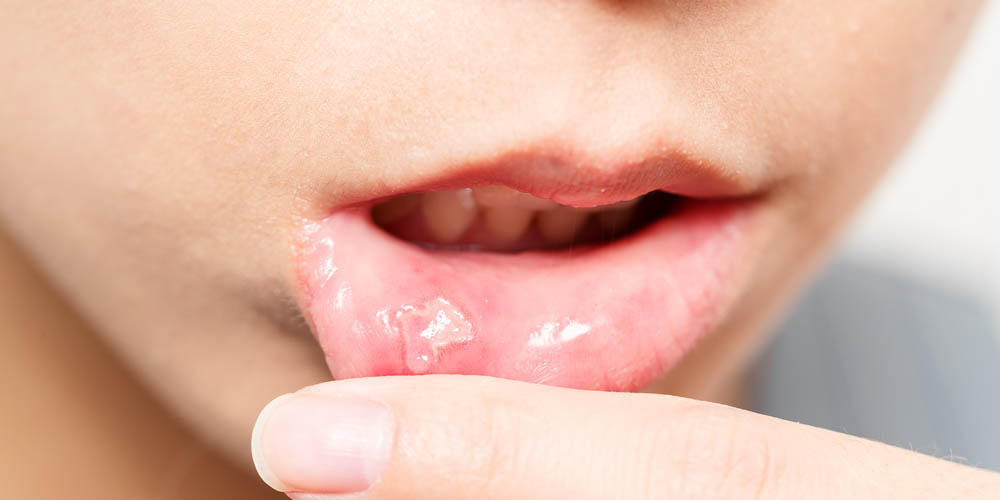



- Most adult mouth ulcers are aphthous (canker) sores or trauma, not STIs. The everyday canker sore heals in 7 to 14 days without treatment.
- When an STI is the cause, the sore usually appears within days to weeks of a specific sexual exposure. Painless ulcers and clusters of small blisters are the two patterns most worth investigating.
Published: October 2025 | Last updated: May 2026 | Editorial review and quality control: Martina N.
A sore in your mouth that won't go away can feel alarming, and a quick search can pull you straight into worst-case territory. The calmer reality: most mouth ulcers in adults are not sexually transmitted at all. They are aphthous ulcers (the everyday canker sore), accidental cheek bites, ill-fitting dental work, reactions to acidic foods or sodium lauryl sulfate in toothpaste, or recurrent cold sores from a herpes simplex virus type 1 infection picked up in childhood from a non-sexual source.
That said, a handful of sexually transmitted infections can produce ulcers, blisters, warts, or patches in the mouth. The patterns are different from the typical canker sore, and they show up after specific exposure events. This guide explains how to tell those patterns apart, which STIs are involved, and which tests are useful (and which are not) when an STI is the suspected cause.
Most mouth ulcers are not caused by an STI
Before walking through what oral STI lesions look like: in any given week, the vast majority of people with a mouth ulcer have something benign going on. The common non-sexual causes include aphthous ulcers, accidental bites and burns, irritation from braces or rough fillings, deficiencies in iron, folate, or vitamin B12, food sensitivities, and reactions to certain mouthwashes and toothpastes. Recurrent cold sores at the lip border are usually HSV-1 reactivations from a childhood infection, not a recent sexual exposure.
Aphthous ulcers, the most common cause overall, appear as small (typically 2 to 5 millimeters) round or oval lesions with a pale yellowish-white floor and a thin red rim. They sit inside the lips, cheeks, or under the tongue, sting on contact with salty or acidic food, and heal in 7 to 14 days without scarring. Aphthous ulcers are one of the most common oral conditions in adults, and many people experience them repeatedly throughout life (per the NHS guidance on mouth ulcers).
So the calmer reading of "I have a mouth sore" usually points to a benign trigger that will resolve in a couple of weeks. STI testing makes sense when the lesion's pattern, timing, or context shifts the picture. The next sections cover those shifts in detail.
See a doctor or dentist within a few days, not weeks, if a mouth sore: lasts longer than three weeks, is painless and firm to the touch, appears as a single isolated ulcer with raised rolled borders, is accompanied by swollen lymph nodes in the neck, follows a recent unprotected sexual encounter (oral, vaginal, or anal), or comes with fever, weight loss, or persistent fatigue. Persistent unexplained mouth ulcers also warrant evaluation to rule out non-infectious causes including oral cancer.
How to tell an STI lesion from a canker sore
Four visual patterns help separate STI-related oral lesions from the everyday canker sore. None of them is diagnostic on its own (visual inspection is famously unreliable in the mouth, even for clinicians), but together they shift the probability one way or the other.
Pattern of appearance. Aphthous ulcers usually appear singly or in twos and threes, round or oval, with a yellowish-white center. Oral herpes typically begins as a tight cluster of small clear blisters that crust over and merge into a single irregular sore. Syphilitic chancres are most often a single round ulcer with a clean firm base and a raised rolled edge. Oral HPV lesions look like cauliflower-textured warts, not ulcers.
Pain. Canker sores hurt, especially with acidic or salty food. Herpes lesions hurt and tingle before they appear. Syphilitic chancres are characteristically painless or only mildly tender, which is part of why they are missed: a sore on the lip that does not hurt is unusual enough to investigate.
Location. Aphthous ulcers favor movable mucosa: inner lip, inner cheek, under the tongue. Herpes favors the vermilion border (the lip line) and the hard palate. Syphilitic chancres can appear anywhere the bacterium directly contacted tissue, which after oral sex includes lips, tongue, soft palate, and tonsils. HPV warts most often sit on the tongue or soft palate.
Timing relative to exposure. Aphthous ulcers have no exposure context. Oral herpes typically appears within the first one to two weeks after first exposure. Syphilitic chancres typically appear within weeks of exposure. HIV-related ulcers tend to follow seroconversion or immune decline, not the immediate exposure.
Can mouth ulcers be a sign of an STI?
Yes, occasionally. Oral herpes (HSV-1 and HSV-2), primary syphilis, oral HPV, pharyngeal gonorrhea, and HIV-related opportunistic conditions can all present with sores in the mouth. They are uncommon causes overall: the typical adult mouth ulcer is a benign canker sore that resolves in 7 to 14 days. Suspect an STI when a sore appears within weeks of an unprotected sexual encounter, when it is painless and unusually firm, or when it does not heal within two weeks. Confirmation depends on the infection: blood antibody tests (at home or in clinic) can confirm HSV, syphilis, and HIV, while pharyngeal gonorrhea requires a throat swab from a clinic.
Where in the mouth these infections show up
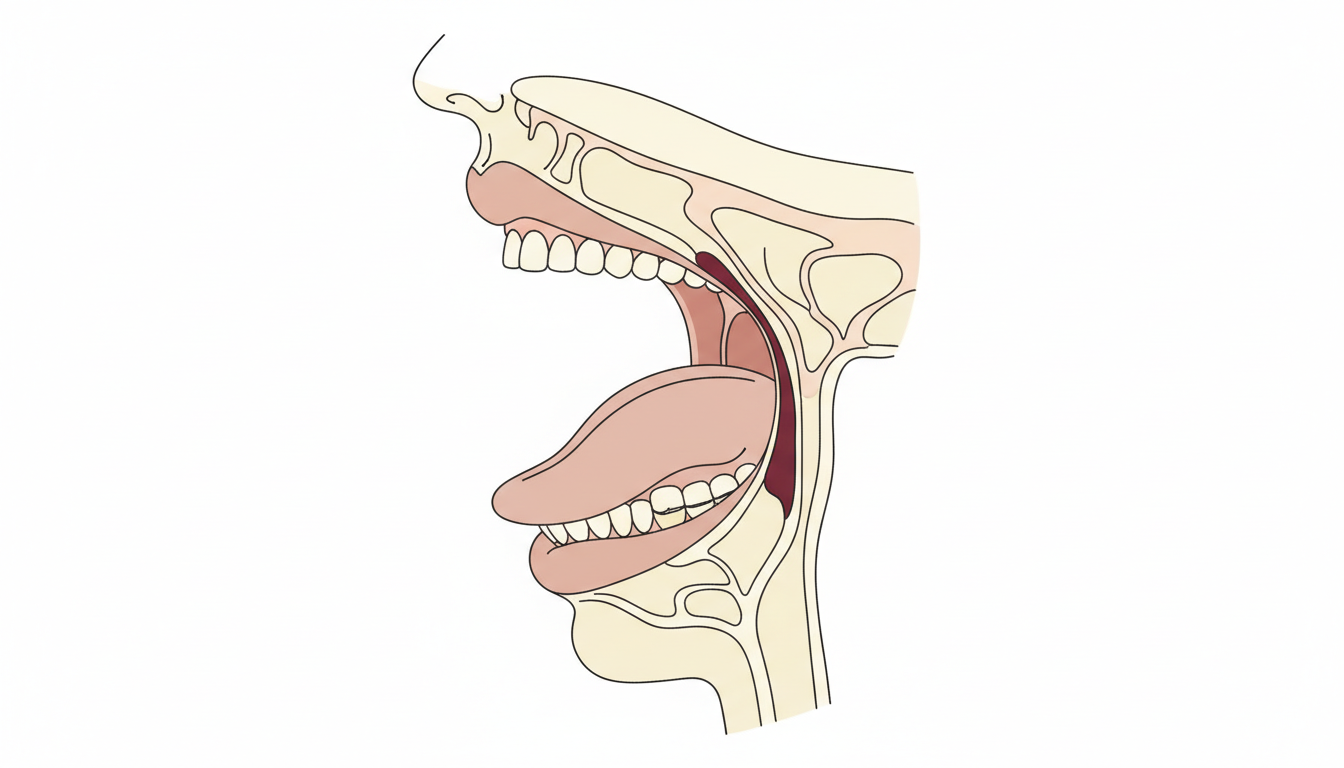
The oral cavity is not one tissue. The lips, tongue, hard palate, soft palate, tonsillar pillars, and posterior pharyngeal wall behave differently in terms of which pathogens settle where and what the resulting lesion looks like. This matters when you are trying to interpret an image search or describe a sore to a clinician.
HSV vesicles tend to favor the vermilion border (the lip line) and the keratinized hard palate. Syphilitic chancres can appear anywhere mucosa was in direct contact with infectious fluid, which includes lips, tongue, and soft palate. Pharyngeal gonorrhea sits in the posterior pharyngeal wall and the tonsillar pillars and frequently produces no visible lesion at all, only redness or asymptomatic colonization. Oral HPV warts and oropharyngeal HPV cancers tend to favor the base of tongue and the tonsils. HIV-related opportunistic conditions vary by which pathogen has taken hold (Candida favors the soft palate and tongue; oral hairy leukoplakia favors the lateral tongue).
Oral herpes: HSV-1 and HSV-2
Two related viruses cause oral herpes. HSV-1 has historically been associated with cold sores on the lips and is commonly acquired in childhood from a parent's kiss or shared utensils. HSV-2 has historically been associated with genital herpes. The clean line between them has blurred over the past two decades because oral sex transfers either virus to either site. A person with cold-sore HSV-1 can transmit it to their partner's genitals (per the CDC herpes overview). Oral sex can also transfer HSV-2 from genitals to the mouth, though that direction is less common.
The first oral HSV outbreak (primary infection) typically appears within the first one to two weeks after exposure. It begins with a tingling or burning sensation, followed by a tight cluster of small clear-fluid-filled vesicles on the lip border, hard palate, or gums. The vesicles burst within a day or two, crust over, and heal in 7 to 10 days. The first outbreak is often the worst, sometimes accompanied by fever, sore throat, swollen neck lymph nodes, and general fatigue. Recurrences are typically milder, appear in roughly the same spot, and are triggered by stress, illness, sun exposure, or hormonal cycles.
A note on testing for herpes. Blood antibody tests (the kind used at home) detect IgG and IgM antibodies to HSV-1 and HSV-2 in the bloodstream; they confirm whether your immune system has ever encountered the virus, but they cannot tell you whether a sore you have right now is herpes. The tests also need time to turn positive. The window period is roughly 12 weeks for IgG, with most people seroconverting by then, so testing too early after a first exposure can return a false negative. For an active sore where the diagnosis matters today, a clinic swab and PCR of the lesion fluid is the more direct route.
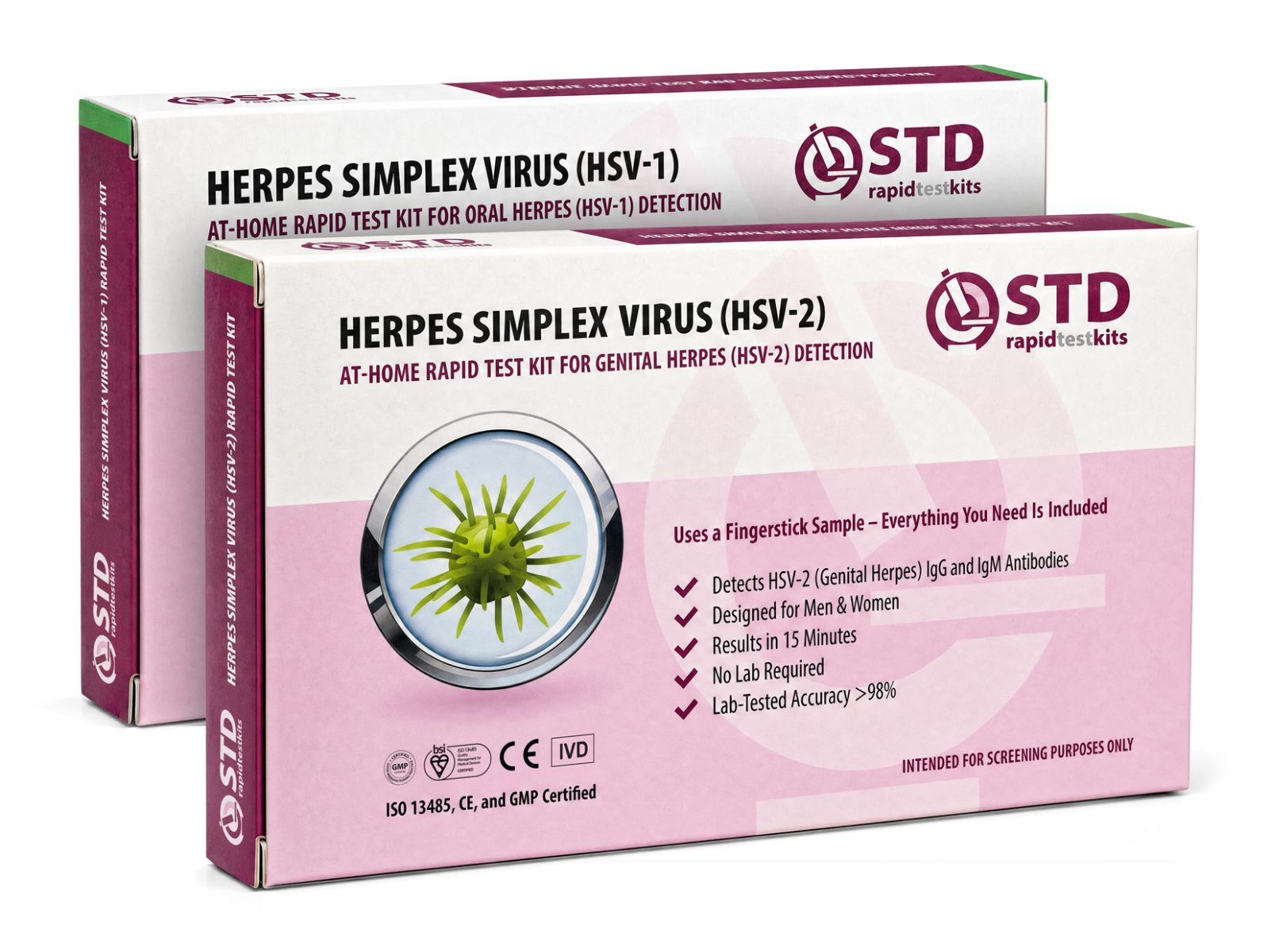
This site sells rapid at-home STI tests; the panel below is a product recommendation.
Syphilis chancres in the mouth
Syphilis is caused by the bacterium Treponema pallidum. Reported syphilis cases in the United States have risen substantially over the past decade, and oral chancres have become a more frequent presentation as oral sex transmits the bacterium efficiently into mouth tissues. Per the CDC syphilis overview, primary syphilis appears as a sore (chancre) at the site where the bacterium entered the body, and the chancre itself lasts 3 to 6 weeks. The sore typically develops within 10 to 90 days of exposure, with an average around three weeks.
The classic primary syphilis chancre is unmistakable when you know what to look for: a single round ulcer, 5 to 15 millimeters across, with a clean firm base and a raised rolled border. The most diagnostically useful feature is that it is painless or only mildly tender. A sore on the lip or tongue that you can press without flinching, after a recent oral sex encounter, is unusual enough to warrant testing.
The chancre heals on its own in 3 to 6 weeks even without treatment. This is the single biggest reason syphilis goes undiagnosed at the primary stage: the sore disappears, the person assumes the problem has resolved, and the bacterium continues to spread internally. Untreated syphilis progresses to a secondary stage (rash, fever, lymphadenopathy, sometimes mucous patches in the mouth) and eventually a tertiary stage with cardiovascular, neurological, and ocular complications. Diagnosis is straightforward by blood test from roughly three weeks after exposure, and treatment with benzathine penicillin G is highly effective at any stage.
A primary syphilis chancre heals spontaneously in 3 to 6 weeks regardless of whether the infection has been treated. Spontaneous healing is the body containing the local lesion; it is not the immune system clearing the bacterium. Without antibiotic treatment, the infection moves into a secondary stage and continues to be transmissible. If you noticed a painless mouth sore that healed on its own a few weeks ago, a syphilis blood test is still worthwhile. The multi-STI panel below covers syphilis alongside the other infections involved in oral exposure.
Oral HPV: usually invisible, sometimes a wart
Human papillomavirus is the most common sexually transmitted infection in the world, and oral HPV infection is common in adults. Most oral HPV infections clear on their own within one to two years and produce no symptoms at all. A small fraction persist, and a subset of those are caused by high-risk HPV types that are now the leading cause of oropharyngeal cancers in many high-income countries (per the CDC HPV overview).
When oral HPV does produce a visible lesion, it is usually a wart, not an ulcer. Squamous papillomas appear as small (typically 2 to 10 millimeters) cauliflower-textured pinkish-white growths, most often on the soft palate, tongue, or inside the cheek. They are usually painless and slow-growing. Other HPV-associated lesions include focal epithelial hyperplasia (Heck disease) and verruca vulgaris.
The HPV vaccine prevents infection by the highest-risk types and is recommended routinely through age 26, with shared clinical decision-making through age 45 (per the CDC HPV vaccine schedule). It does not treat existing infection but is highly effective at preventing new ones. The home HPV kit on this site is a self-collected vaginal swab validated for cervical screening in women only; there is currently no equivalent at-home test for oral HPV. A persistent oral lesion suspected of being HPV-related should be evaluated and biopsied by a dentist or ENT specialist.
The HPV vaccine is the strongest preventive tool against the high-risk types responsible for most oropharyngeal cancers; it is approved for routine vaccination through age 26 and shared clinical decision-making through age 45. There is currently no validated at-home test for oral HPV; a persistent oral wart, ulcer, or unexplained lesion should be examined and (if needed) biopsied by a dentist, oral medicine specialist, or ENT.
Pharyngeal gonorrhea: the sore-throat STI
Gonorrhea is caused by the bacterium Neisseria gonorrhoeae. Pharyngeal gonorrhea (a throat infection) is acquired through receptive oral sex with an infected partner. The clinical reality is awkward: the majority of pharyngeal gonorrhea infections are completely asymptomatic, and when symptoms do occur they are typically a mild sore throat indistinguishable from routine viral pharyngitis. (For general background on the infection, see the CDC gonorrhea overview, which confirms that gonorrhea can infect the throat.)
When pharyngeal gonorrhea does produce visible signs, the throat shows redness, occasional pustular spots on the tonsillar pillars, and sometimes mildly swollen anterior cervical lymph nodes. Frank ulcers in the mouth from gonorrhea alone are uncommon. The clinical importance of the infection is twofold: it is highly transmissible to sexual partners, and the pharynx is a major reservoir for antibiotic-resistant strains, which is one of the reasons pharyngeal gonorrhea is a public-health concern beyond any one person's symptoms. Pharyngeal gonorrhea is also harder to clear than genital gonorrhea because antibiotic penetration into throat tissue is more limited, which is why culture-guided treatment at a clinic matters rather than empirical self-treatment.
Diagnosis requires a pharyngeal swab tested by NAAT (nucleic acid amplification test) at a clinic or laboratory. Throat swabs are not part of the at-home rapid testing landscape. If your concern is specifically a throat infection from a recent oral-sex encounter, the right path is a clinic visit with a request for a pharyngeal swab (and ideally rectal swab if exposure was anal, plus a urine NAAT for genital infection).
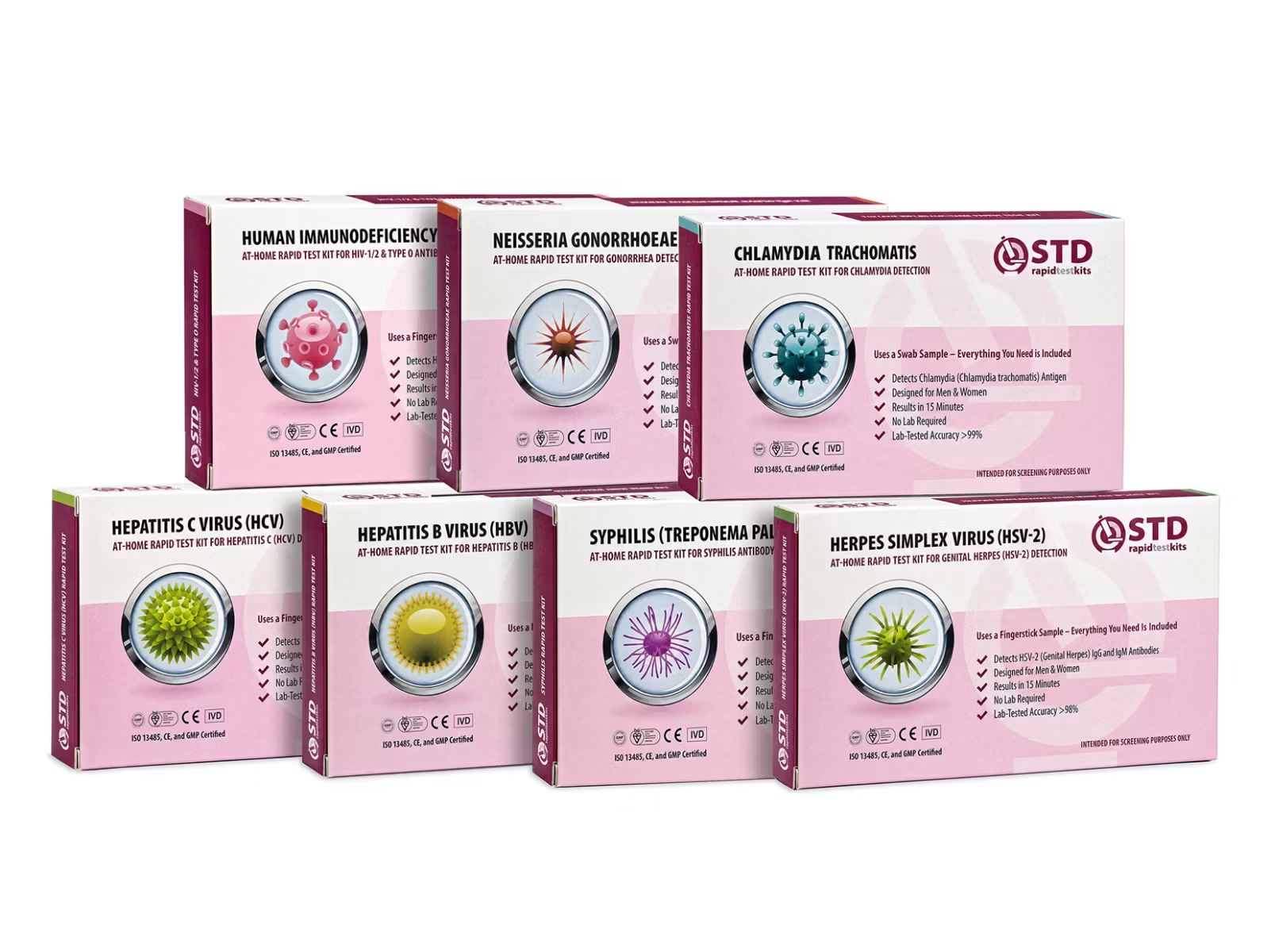
For a confirmed diagnosis of an active throat gonorrhea or chlamydia infection, you need a clinic NAAT pharyngeal swab. We do not offer a pharyngeal-swab home kit. Our rapid blood and genital-swab kits cover the adjacent risks from the same sexual encounter (genital chlamydia, gonorrhea, syphilis, HIV) and complement a clinic throat swab rather than replacing it.
HIV-related oral ulcers
HIV itself does not directly cause mouth ulcers in the way HSV or syphilis does. Oral lesions in people living with HIV are a downstream consequence of immune-system suppression. As CD4 counts fall, the mouth becomes a frequent site for opportunistic infections and inflammatory conditions. In the pre-antiretroviral era, oral lesions were a frequent finding in people with advanced HIV infection; on modern therapy, that picture is much rarer.
The most common HIV-associated oral conditions are oropharyngeal candidiasis (thrush, with characteristic creamy white patches on the tongue and palate), oral hairy leukoplakia (corrugated white plaques on the lateral tongue, caused by Epstein-Barr virus reactivation), recurrent aphthous-type ulcers that are larger and more persistent than typical canker sores, herpetic outbreaks that are more frequent and more severe, and (in advanced disease) oral Kaposi sarcoma.
The clinical implication: a person on effective antiretroviral therapy with a normal CD4 count is at no greater risk of oral lesions than the general population. The oral-lesion picture described above belongs to untreated or poorly-controlled HIV infection. The case for HIV testing is not that mouth ulcers are themselves a sign of HIV (they almost never are in immunocompetent people) but that HIV testing is a foundational part of any sexual-health workup, and an unexplained pattern of recurrent or unusually severe mouth lesions is one of the contexts where it should be on the list. Per the CDC HIV testing guidance, fourth-generation antigen-antibody testing detects HIV by roughly 18 to 45 days after exposure; rapid antibody-only home tests have a longer window of around 23 to 90 days.
STIs are often asymptomatic. When symptoms occur, they can be non-specific.
How to actually test for these infections
The question "is my mouth sore an STI" splits into two practical questions. The first is what is in my mouth right now. The second is am I carrying an STI systemically. The two have different answers and need different tests.
For an active oral lesion you can see today, the diagnostically useful test is a swab or biopsy of the lesion itself, performed in a clinic. A clinician swabs the sore and sends it for PCR (HSV) or NAAT (gonorrhea, chlamydia) or sends a small sample for histopathology (suspicious HPV or oral cancer lesions). At-home tests cannot do this; they are not designed to test the contents of a specific sore.
For systemic infection (the question of whether the bacterium or virus is in your bloodstream regardless of where the lesion sits), at-home rapid blood tests are useful and increasingly common. They are lateral-flow immunoassays, not laboratory NAAT or PCR; the technologies are different, and a positive at-home result is generally worth confirming at a clinic. The advantages of rapid blood testing are speed (results in 15 minutes), privacy, and the ability to test from home for several common infections in one sitting.
The table below maps the common oral STI presentations to which test type actually answers the question. Note that for any infection where the only diagnosis is a lesion-site swab, the home-test answer is no.
| Infection | Sample type for diagnosis | At-home option? |
|---|---|---|
| HSV-1 / HSV-2 (active oral lesion) | Swab and PCR of lesion fluid (clinic) | No |
| HSV-1 / HSV-2 (past or established) | Blood antibody test (12+ weeks post-exposure) | Yes (rapid blood test) |
| Syphilis | Blood antibody test (3+ weeks post-exposure) | Yes (rapid blood test) |
| Pharyngeal gonorrhea | Throat NAAT swab (clinic only) | No |
| Genital gonorrhea | Genital swab (NAAT in clinic; rapid lateral-flow at home) | Yes (rapid swab test) |
| Oral HPV | Clinical evaluation; biopsy if persistent | No |
| HIV | Blood test (4th-gen antigen-antibody at clinic; antibody at home) | Yes (rapid blood test) |
Prevention basics that actually reduce oral STI risk
The risk-reduction levers for oral STIs resemble those for genital STIs, with a few site-specific notes. Condoms during oral sex and dental dams for receptive oral-vaginal or oral-anal contact reduce HSV, syphilis, gonorrhea, and HPV transmission; adoption is admittedly low, but the protection is real. Regular testing of both partners is the single most effective intervention in long-term partnerships, especially before discontinuing barriers. Per the WHO fact sheet on sexually transmitted infections, more than 1 million curable STI infections are acquired worldwide every day, the majority of them asymptomatic, which is why regular screening matters more than waiting for symptoms.
Specific to oral risk: the HPV vaccine prevents the high-risk types responsible for most oropharyngeal cancers and is one of the few interventions that meaningfully reduces oral-cancer risk. Avoiding shared utensils, toothbrushes, and lip products with someone who has an active cold sore reduces HSV-1 transmission. Treating an active syphilis infection promptly (with antibiotics) prevents progression to secondary and tertiary disease and renders the person non-infectious.
Top three actions
- Get the HPV vaccine if you are within the eligible age window. It is the single most effective tool against oropharyngeal HPV cancers.
- Use condoms for oral-penile contact and dental dams for oral-vaginal or oral-anal contact. Adoption is low; protection is real.
- Test regularly with a partner before discontinuing barriers. Most STIs are silent; routine screening catches what symptoms miss.
Frequently asked questions
- Are mouth ulcers usually a sign of an STI?
- No. The vast majority of mouth ulcers in adults are aphthous (canker) sores, accidental bites or burns, dental irritation, food sensitivities, or recurrent cold sores from a childhood-acquired HSV-1 infection. STI-related oral lesions exist but are uncommon overall. Suspect an STI when the sore appears within days to weeks of a specific sexual exposure, is painless and firm, or fails to heal within two to three weeks.
- Can you get syphilis from kissing?
- Transmission of syphilis through kissing alone is uncommon but documented. The bacterium Treponema pallidum requires direct contact with a primary chancre or a moist secondary-stage lesion. Deep kissing where one partner has an active oral chancre or mucous patch can transmit the infection. Most oral syphilis is acquired through oral sex with an infected partner who has a genital chancre rather than from kissing.
- How long after exposure do oral STI symptoms appear?
- It depends on the infection. Oral herpes typically appears within the first one to two weeks after first exposure. Syphilitic chancres typically appear within weeks of exposure. Oral HPV is usually asymptomatic for months or years if it produces visible lesions at all. Pharyngeal gonorrhea typically appears within a week of exposure if it produces symptoms, but most cases are asymptomatic. HIV-related oral conditions develop later in untreated infection as immunity declines.
- Can a home test detect an STI in my throat?
- No. At-home rapid tests on this site are blood antibody tests (HIV, syphilis, herpes, hepatitis) or self-collected genital swabs (chlamydia, gonorrhea, trichomoniasis, HPV in women). Pharyngeal gonorrhea and oral HSV active lesions require a clinic swab. Blood tests can confirm whether you carry the infection systemically, which is useful information, but they cannot diagnose an active throat infection.
- Should I see a dentist or a sexual-health clinic for a mouth sore that won't heal?
- Both are reasonable starting points, and many will refer to the other if the lesion is outside their scope. A dentist or oral medicine specialist is appropriate for any persistent oral lesion lasting longer than three weeks, especially one that does not match the typical canker-sore pattern. A sexual-health clinic is appropriate when there is a recent unprotected sexual exposure or when systemic STI testing is the priority. Persistent, unexplained, or painless oral ulcers always warrant evaluation to rule out oral cancer in addition to infectious causes.
- Will a blood antibody test show oral HSV-2?
- A type-specific HSV-2 antibody test cannot tell you whether your infection is oral or genital; antibodies in the bloodstream look the same regardless of body site. A positive result confirms HSV-2 somewhere in the body, but not where. To localize an active oral lesion, a clinic swab or PCR of the sore is the diagnostic step; the antibody test answers the separate question of whether you carry HSV-2 systemically.
- What's the most reliable test for oral gonorrhea?
- A pharyngeal-swab NAAT (nucleic acid amplification test) performed at a clinic. The clinician swabs the back of the throat, the swab is sent to a laboratory, and results are typically available in 1 to 3 days. This is the only reliable test for pharyngeal gonorrhea. At-home rapid tests do not cover this site. If you also had genital exposure during the same encounter, an at-home rapid genital-swab test is a useful complement that covers genital chlamydia and gonorrhea while you wait for the throat-swab result.
- U.S. Centers for Disease Control and Prevention. Genital herpes basics, including symptom presentation, primary-outbreak features, and HSV-1 transmission from oral to genital sites.
- U.S. Centers for Disease Control and Prevention. Syphilis overview, including primary chancre features (clean firm base, raised border, heals in 3 to 6 weeks) and stages of disease progression.
- U.S. Centers for Disease Control and Prevention. HPV basics, including transmission, common-versus-high-risk types, and oropharyngeal cancer association.
- U.S. Centers for Disease Control and Prevention. HPV vaccine recommendations and schedule, including routine vaccination through age 26 and shared clinical decision-making through age 45.
- U.S. Centers for Disease Control and Prevention. Gonorrhea basics, including that gonorrhea can infect the throat in addition to the genitals and rectum.
- U.S. Centers for Disease Control and Prevention. HIV testing guidance, including window periods for fourth-generation antigen-antibody testing (18 to 45 days) and antibody-only rapid testing (23 to 90 days).
- U.K. National Health Service. Mouth ulcers: causes, triggers, and when to see a clinician.
- World Health Organization. Sexually transmitted infections fact sheet, including the figure that more than 1 million curable STI infections are acquired worldwide every day, and the predominantly asymptomatic profile of STIs.