
Published: November 2025 | Last updated: May 2026 | Editorial review and quality control: Martina N.
Chlamydia has a reputation for being silent, and the reputation is accurate. Most chlamydia infections cause no noticeable symptoms at all, which is one of the reasons it remains one of the most commonly reported bacterial sexually transmitted infections in the United States (CDC, About Chlamydia). When symptoms do show up, they are often mistaken for something else: a urinary tract infection, a yeast infection, irritation from new soap or new underwear.
This article walks through what chlamydia can actually feel like when symptoms appear, how the signs differ between female and male anatomy, why throat and rectal infections usually produce nothing at all, and when testing makes sense even if you feel completely fine.
Key Takeaways
- Most chlamydia infections produce no symptoms, according to CDC guidance, which is why routine screening matters more than waiting for a sign.
- When symptoms appear they often mimic other conditions: burning while urinating, unusual discharge, or pelvic pain. A test is the only way to tell chlamydia apart from a UTI or yeast infection.
Why Chlamydia Often Feels Like Absolutely Nothing
The bacterium that causes chlamydia, Chlamydia trachomatis, infects the cells lining the genitals, urethra, throat, or rectum without producing the dramatic inflammation that other infections create. The CDC's clinical resource notes that chlamydia often has no symptoms at all (CDC, About Chlamydia). The infection is still active and still transmissible during this silent phase. It can still cause damage to the reproductive tract.
Even when symptoms do appear, they tend to be mild. A faint burn while peeing. A discharge that is slightly different from your usual baseline. A vague pelvic ache that comes and goes. None of these scream sexually transmitted infection, and most people interpret them as something more familiar: dehydration, a yeast issue, the start of a period, sex that was a little too vigorous.
That ambiguity is the danger. Untreated chlamydia can cause pelvic inflammatory disease (PID) in women, which can lead to chronic pelvic pain, ectopic pregnancy, and tubal-factor infertility (CDC, About Pelvic Inflammatory Disease). In men, untreated infection can spread to the epididymis and cause swelling and pain. The longer it sits, the more risk it carries.
Chlamydia can damage the reproductive tract long before any noticeable symptom appears. That is why scheduled screening matters more than waiting to feel something. The CDC recommends annual chlamydia screening for sexually active women under 25 and for older women with new or multiple partners.
What Chlamydia Feels Like in Women
For people with vaginas, chlamydia tends to show up as small changes that are easy to dismiss. The most commonly reported symptom is unusual vaginal discharge. It might be thicker than your normal, slightly yellow or gray, or have a faint odor. It rarely looks dramatic. Many women describe it as discharge that just feels off rather than anything obviously alarming.
Burning or stinging during urination is the second most common sign. It can feel similar to a urinary tract infection, which is exactly why so many chlamydia infections get treated as recurrent UTIs first. If a urinalysis comes back clean but the burning persists, that is a strong signal to test for chlamydia and gonorrhea.
Pelvic or lower abdominal pain is a more concerning sign because it can indicate the infection has begun to climb into the upper reproductive tract. The pain might feel like menstrual cramps occurring outside of a period, a dull ache during deep penetration, or pressure that worsens with movement. Spotting between periods or after sex is another possible sign, particularly when the cervix is inflamed.
The NHS's chlamydia overview lists pain or bleeding during sex, bleeding between periods, painful urination, and lower abdominal pain as the typical female signs (NHS, Chlamydia). What none of these signs do is shout. Plenty of women carry chlamydia for months while attributing the occasional twinge to stress, hormones, a new contraceptive, or a recent yoga class.

What Chlamydia Feels Like in Men
For people with penises, the most common symptom is also urinary: a burning or stinging sensation during urination, sometimes accompanied by a clear, white, or cloudy discharge from the tip of the penis. The discharge is often most noticeable first thing in the morning before the first urination of the day, and it can dry on underwear quickly enough to go unnoticed.
Some men experience testicular pain or a heavy, aching sensation in one side of the scrotum. This can be a sign that the infection has reached the epididymis, the small tube where sperm matures. Untreated epididymitis can cause prolonged pain and, rarely, problems with fertility. The NHS lists urethral discharge, painful urination, and testicular pain or swelling as the typical male signs when chlamydia produces symptoms (NHS, Chlamydia).
What chlamydia rarely causes in men is a fever or a feeling of being systemically sick. The infection stays local. That is part of why it gets dismissed: a single uncomfortable trip to the bathroom does not feel like a reason to call a doctor when you are otherwise running, working, eating, and feeling normal.
And many male infections produce no symptoms at all (CDC). Plenty of men carry chlamydia for months without any clue, transmit it to partners during that time, and only learn about it when a partner gets diagnosed and traces the timeline backward.
So what does chlamydia actually feel like?
When chlamydia produces noticeable symptoms, the most common ones are burning during urination, unusual genital discharge (clear, white, yellow, or cloudy), and lower abdominal or pelvic pain. Some people also notice testicular pain or pain during intercourse. Many infections produce no symptoms at all, which is why feeling fine is not a reliable signal of infection status. A test is the only way to know.
Throat and Rectal Infections Usually Feel Like Nothing
Chlamydia does not stay in the genitals. If exposure happened through oral or anal sex, the infection can settle in the throat (pharyngeal chlamydia) or rectum (rectal chlamydia). Both of these are typically asymptomatic.
Pharyngeal chlamydia rarely causes a sore throat, and even when it does the soreness is usually mild and easy to attribute to a cold, allergies, or a long flight. The CDC's treatment guidelines note that routine oropharyngeal screening is not recommended, and the majority of pharyngeal infections produce no symptoms (CDC, Chlamydial Infections Treatment Guidelines).
Rectal chlamydia is similar. Some people experience rectal discomfort, a feeling of fullness, mucus in stool, or light bleeding, but most rectal infections produce no symptoms at all. The infection is still treatable, still transmissible, and still capable of spreading to other tissues.
This article is published by stdrapidtestkits.com, which sells genital swab and blood-based rapid tests but does not sell pharyngeal or rectal swab kits. For site-specific throat or rectal testing, a clinic visit is needed. The home kits here cover genital and systemic bloodwork risk from the same exposure event.
Pharyngeal and rectal chlamydia are typically asymptomatic. Throat or rectal swab testing requires a clinical visit; at-home rapid tests cover genital and systemic bloodwork risk only.
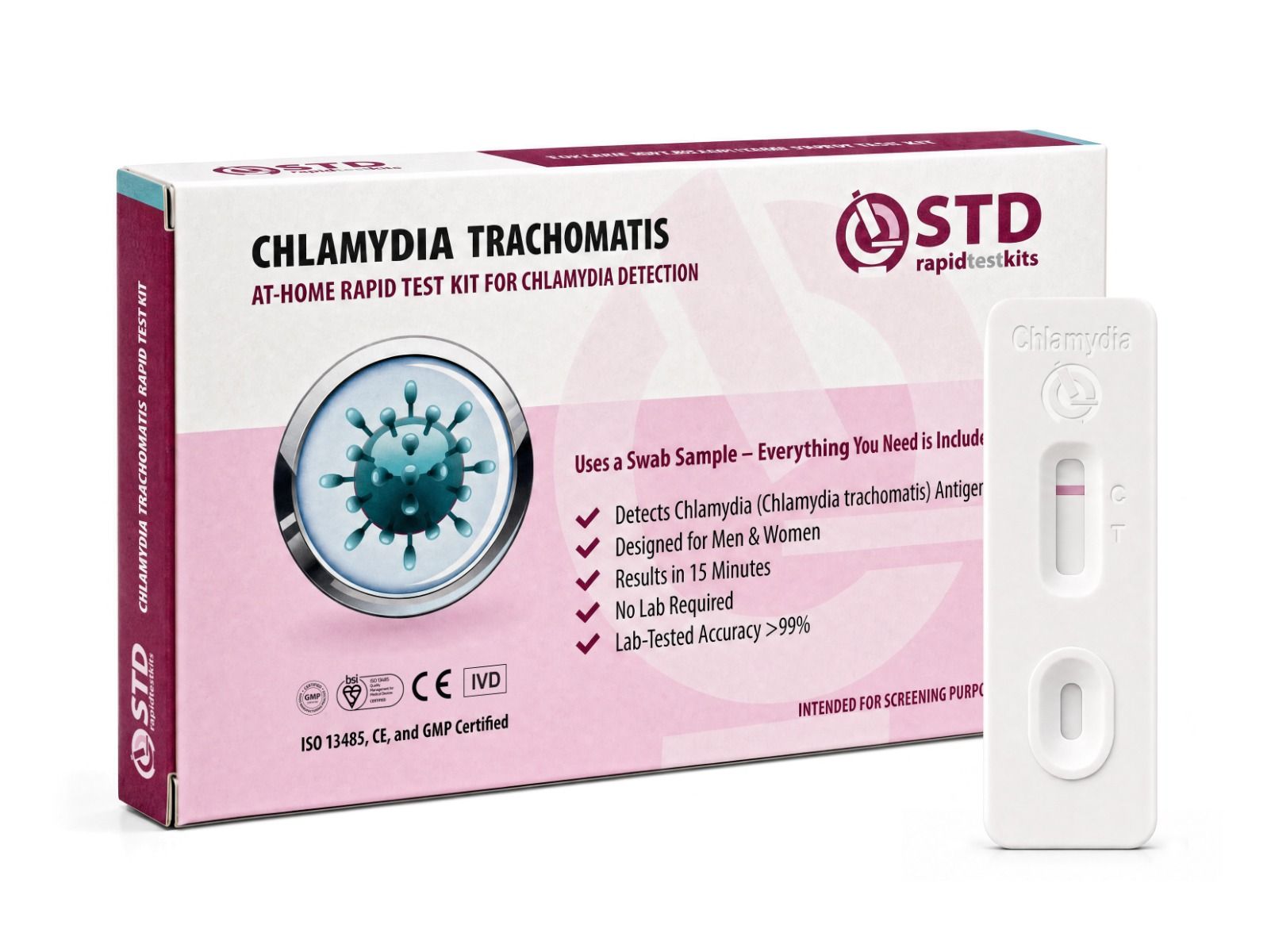
Chlamydia, UTI, Yeast, Trich: How They Compare
One of the most useful things you can do when something feels off is compare the pattern against the most common conditions that mimic chlamydia. The signs overlap heavily, which is why even experienced clinicians order tests rather than guess. If you have any combination of burning urination, abnormal discharge, and pelvic discomfort, the only way to know which condition you are dealing with is to test.
| Condition | Main symptoms | Discharge? | Pain with sex? | Test type |
|---|---|---|---|---|
| Chlamydia | Burning urination, pelvic or testicular pain, mild discharge | Sometimes (clear, yellow, or cloudy) | Sometimes | Lab NAAT or rapid swab at home |
| Urinary tract infection | Burning urination, urgency, lower abdominal pressure | Usually no | Rarely | Urine culture or dipstick |
| Yeast infection | Itching, thick white discharge, vulvar irritation | Yes (thick, white, no odor) | Often | Microscopy or self-evaluation |
| Trichomoniasis | Frothy discharge, fishy odor, irritation | Yes (yellow-green, with odor) | Often | Lab NAAT or rapid swab at home (women only) |
Early Signs of Chlamydia
If chlamydia produces early symptoms, they typically appear in the weeks following exposure. Mild rather than dramatic. Subtle rather than obvious.
Common early signs
- Burning sensation during urination, often mild and easy to dismiss
- Unusual discharge from the vagina or penis: clear, white, yellow, or cloudy
- Pelvic or lower abdominal pressure, sometimes worsening with deep sex
- Testicular pain or heaviness, often on one side
- Spotting between periods or after intercourse
- Mild rectal discomfort or fullness if rectal exposure occurred
Long-Term Damage Without Treatment
The contrast between early signs and long-term damage is stark. Untreated chlamydia in women can progress to pelvic inflammatory disease, which the CDC links to chronic pelvic pain, ectopic pregnancy, and infertility (CDC, About Pelvic Inflammatory Disease). The damage is often silent until pregnancy is attempted. In men, untreated infection can cause epididymitis and reactive arthritis, with rare progression to fertility problems.
Chlamydia during pregnancy can also pass to a newborn during delivery and cause serious health problems for the baby, which is one reason prenatal screening is standard in many healthcare systems (CDC, About Chlamydia).
When Do Chlamydia Symptoms Show Up?
The timeline for chlamydia symptoms varies widely. The NHS notes that when symptoms do appear, they can start anywhere from one week to several months after infection (NHS, Chlamydia). Many people stay symptom-free for the entire course of the infection.
This timeline matters for testing. Most lateral-flow rapid home tests, including the swab kits sold here, are validated to detect infection roughly two weeks after exposure. Testing earlier can produce a false negative because the bacterial load has not yet reached detectable levels in the sampled tissue. If a recent exposure is the concern and the first test is negative, retesting at the two-week mark is the safer move.
Burning or discharge that appears within 24 to 48 hours of new sexual contact is more likely to be friction, irritation, or a different infection than chlamydia, simply because chlamydia needs time to replicate. That said, plenty of pre-existing infections can flare after sex for unrelated reasons, so a sudden symptom is still worth checking.

Most people who have chlamydia have no symptoms. If you have symptoms, they may not appear until several weeks after having sex with an infected partner.
Retesting: When to Check Again
Testing is not a one-shot exercise. Several common scenarios call for a second test, and skipping the retest is one of the easiest ways to end up with an undetected reinfection or a missed early infection. The CDC's clinical guidance specifically recommends a follow-up test at three months after treatment, not because antibiotics fail (they almost never do for chlamydia) but because reinfection from an untreated partner is the most common path to a positive retest (CDC, Chlamydial Infections Treatment Guidelines).
| Scenario | Recommended retest timing | Why it matters |
|---|---|---|
| Tested within 5 days of exposure | Retest at 14 days post-exposure | The first test may miss an early infection because bacterial load is too low to detect |
| Tested positive and finished antibiotics | Retest at 3 months | Reinfection is common, especially when a partner was not treated at the same time |
| Symptoms continue after treatment | Return to a clinician within 2 to 4 weeks | May indicate persistent infection, secondary infection, or a treatment problem |
| New sexual partner after treatment | Test 2 to 3 weeks after the new contact | The exposure window resets with every new partner |
Telling a Partner Without Panic
If a test comes back positive, telling a current or recent sexual partner is the next step. It feels harder than it usually is. Most people receive the news with concern for their own health rather than anger, especially if the conversation is calm and informational.
If saying it in person feels impossible, anonymous notification services exist. Tools like Tell Your Partner and Don't Spread It let you send an anonymous text or email through public-health channels in many regions. The goal is making sure they know to test and treat, not making sure they know it came from you.
Chlamydia can sit silently for weeks or months before appearing on a test, which means a positive result does not pinpoint when or from whom transmission happened. Without a known exposure date, the timeline is rarely recoverable.
"I tested recently and found out I have chlamydia. It is one of the most common STIs, and it is treatable with a single course of antibiotics, but you should get tested too. I wanted you to hear it from me."
That sentence covers what they need to know without forcing a longer conversation than either of you wants.
If Going to a Clinic Feels Impossible
The hardest part of testing is sometimes the decision to test at all. Embarrassment is real, even though it should not have to be. Cultural messaging around sex, leftover anxiety from inadequate sex education, the simple fact that nobody loves an awkward clinic conversation, all of it adds friction.
At-home testing exists in part to remove that friction. Order, swab or fingerstick, read the result, decide what to do next. No clipboard at a front desk. No waiting room. No questions about your dating life beyond what you choose to share with a downstream clinician for treatment.
If a result is positive, treatment for chlamydia is straightforward: a single dose of azithromycin or a one-week course of doxycycline, both inexpensive and widely available (CDC, Chlamydial Infections Treatment Guidelines). Telehealth services can prescribe without an in-person visit in many jurisdictions. If the symptoms could plausibly be from more than one infection, a multi-test panel is worth considering rather than testing for chlamydia alone.

FAQs
- Can chlamydia really be present with no symptoms at all?
- Yes. Most chlamydia infections produce no symptoms, according to CDC guidance. The infection is still active, still transmissible, and still capable of causing reproductive-tract damage during the silent phase.
- What is the most common feeling people describe when chlamydia does cause symptoms?
- Burning during urination is the most commonly reported symptom for both men and women. It often feels like a urinary tract infection, which is part of why chlamydia is missed: a clean urine culture combined with persistent burning is a strong signal to test for chlamydia and gonorrhea.
- If my discharge is yellow, does that mean I have chlamydia?
- Not necessarily. Yellow or green discharge can come from chlamydia, gonorrhea, trichomoniasis, or even bacterial vaginosis. Color alone does not diagnose anything. A change from your personal baseline is the more useful signal: if your discharge looks, smells, or feels different from normal, testing is the way to find out why.
- I was treated for a UTI but the symptoms came back. Could it be chlamydia?
- Yes. Burning urination, urgency, and pelvic discomfort overlap heavily between UTIs and chlamydia. If a UTI is treated and the symptoms persist or recur quickly, asking for an STI screen is the right move. A meaningful share of suspected recurrent UTIs in sexually active people turn out to involve an undiagnosed STI.
- Can I get chlamydia from oral or anal sex?
- Yes. Oral sex can transmit chlamydia to the throat; anal sex to the rectum. Neither usually causes symptoms, so exposure history drives the testing decision more than any feeling. Throat or rectal swab testing requires a clinical visit; at-home kits cover the genital and systemic bloodwork risk from the same encounter.
- If I leave chlamydia untreated, will my body clear it on its own?
- Sometimes, but it is a bad gamble. Some untreated infections clear over time. Others persist for months or years and cause complications: pelvic inflammatory disease in women, epididymitis in men, and rare fertility problems for both. A single course of antibiotics resolves it reliably. Hoping it goes away is not a strategy worth using.
- How soon after treatment should I test again to confirm I am clear?
- The CDC recommends a retest at three months after treatment, mainly to catch reinfection from an untreated partner rather than to confirm the antibiotics worked. Testing earlier than three weeks after treatment can also produce false positives on lab NAAT tests because dead bacterial DNA may still be detected.
- Are at-home rapid chlamydia tests as accurate as clinic tests?
- Home rapid lateral-flow tests are different technology from laboratory NAAT tests. Performance data on the <a href="https://www.stdrapidtestkits.com/chlamydia-home-test" target="_blank" rel="noopener">chlamydia home test product page</a> describe rapid-test performance for at-home screening, while lab NAAT remains the analytical gold standard. The two are complementary: home tests for fast at-home screening, lab NAAT to confirm any positive result.
How we sourced this article. The information here is summarized from current public-health and clinical guidance: the U.S. Centers for Disease Control and Prevention's chlamydia fact sheet and 2021 STI Treatment Guidelines, the CDC's pelvic inflammatory disease resource, the NHS chlamydia information page, and the World Health Organization's STI fact sheet. The article describes general patterns and is not a substitute for clinical evaluation. For symptoms that concern you, see a licensed clinician.
- U.S. Centers for Disease Control and Prevention. About Chlamydia: basic fact sheet, asymptomatic infection, screening recommendations, and pregnancy-related complications.
- U.S. Centers for Disease Control and Prevention. Chlamydial Infections, 2021 STI Treatment Guidelines, including treatment regimens, retest timing, and pharyngeal screening.
- U.S. Centers for Disease Control and Prevention. About Pelvic Inflammatory Disease (PID), including progression from untreated chlamydia and long-term complications.
- NHS. Chlamydia: symptoms in women and men, incubation, testing, and treatment information for the United Kingdom public.
- World Health Organization. Sexually transmitted infections (STIs) fact sheet with global epidemiology and prevention guidance.
