Can You Test for Chlamydia at Home? How It Works and When to Test
Chlamydia is the most commonly reported bacterial sexually transmitted infection in the United States, and most people who have it feel nothing at all. This guide covers when to test, how an at-home swab works, what current CDC treatment looks like, and the complications that make routine screening worth the small effort.
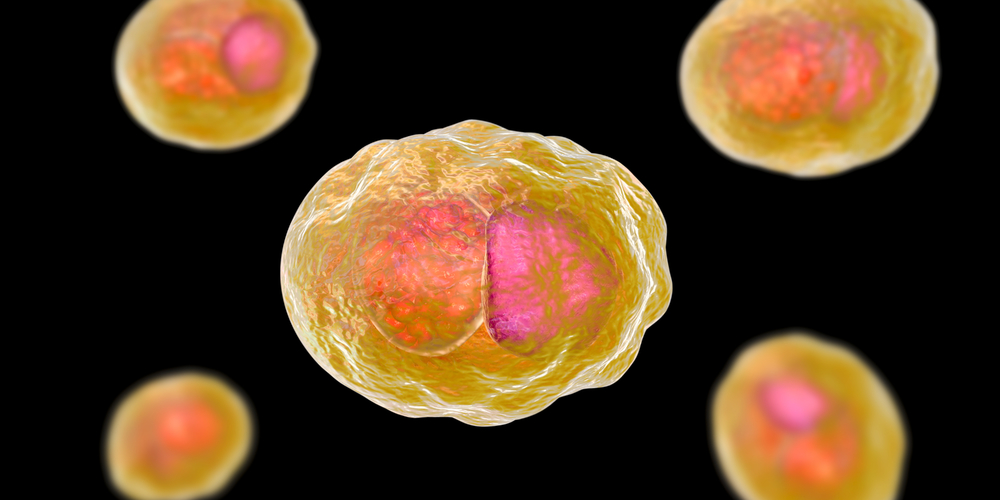



- Most chlamydia infections never cause symptoms, so testing is the only way to know. Routine screening matters even when nothing feels wrong.
- CDC first-line treatment is doxycycline 100 mg twice daily for 7 days, and retesting around three months after treatment is recommended because reinfection from an untreated partner is the most common follow-up problem.
Published: August 2025 | Last updated: May 2026 | Editorial review and quality control: Martina N.
Can you test for chlamydia at home, and is it accurate?
Yes. A self-collected vaginal or penile swab captures the same sample a clinician would take, and at-home rapid lateral-flow tests are accurate enough for routine screening when used after the window period. Test about 14 days after a possible exposure, confirm any positive result with a clinician, and retest at 3 months. Lab NAAT remains the gold standard for analytical sensitivity.
Chlamydia is the most commonly reported bacterial sexually transmitted infection in the United States. The CDC recorded 1,515,985 chlamydia cases in 2024, the second consecutive yearly decline, but the figure still represents one of the largest reportable-disease counts on the agency's books. Globally the picture is bigger: the World Health Organization estimated roughly 129 million new chlamydia infections in 2020 among people aged 15 to 49.
Most people who carry it feel nothing. That is the entire reason routine screening exists. A swab test, whether self-collected at home with an at-home chlamydia test or taken in a clinic, can confirm or rule out the infection. This site sells at-home rapid STI test kits; links to our products appear inline where they are relevant. Treatment is short, oral, and inexpensive. What this article covers: who should test and how often, how at-home swab testing actually works, when to test after a possible exposure, what current treatment looks like, and the complications that make the whole effort worthwhile.
Key takeaways
- Most chlamydia infections never cause symptoms, so testing is the only way to know. Routine screening matters even when nothing feels wrong.
- CDC first-line treatment is doxycycline 100 mg twice daily for 7 days, and retesting around three months after treatment is recommended because reinfection from an untreated partner is the most common follow-up problem.
What chlamydia is and why screening matters
Chlamydia is an infection caused by the bacterium Chlamydia trachomatis. It transmits through vaginal, anal, or oral sexual contact with someone who is infected, and a person who has been treated successfully can be infected again from a new exposure. Past infection does not produce protective immunity. The bacterium tends to settle in the cervix in women and the urethra in men, but it also infects the rectum (proctitis) after receptive anal contact and the throat (pharyngeal chlamydia) after receptive oral contact.
The reason every public-health body emphasizes routine screening is that most infections never declare themselves. The CDC's overview page is direct about this: chlamydia often has no symptoms, but it can cause serious health problems even without symptoms. Estimates of how often infections stay silent vary by study and population, but most research consistently finds the majority of carriers, particularly women, have no symptoms at the time of diagnosis. The infection can still scar reproductive tissue silently, raise the risk of acquiring HIV during exposure, and pass from a pregnant person to a newborn during delivery.
Detection is straightforward when someone tests, and treatment is a short oral antibiotic course. The limiting factor is whether people know they should test and can reach a kit without going to a clinic, which is the gap home swab tests close.
Chlamydia is common, treatable, and curable. Most people who test positive clear the infection completely with one short course of oral antibiotics. The reason routine screening matters is not that the infection is hard to treat; it is that catching it before it causes downstream complications takes a small amount of effort that pays off massively.
Symptoms in women, men, and beyond the genitals
Most chlamydia infections produce no symptoms at all. When symptoms do appear, the NHS notes they can show up anywhere from one week to several months after infection, which is part of why people frequently miss the connection between a recent partner change and a new symptom.
In women, the most common pattern is cervicitis, which can produce abnormal vaginal discharge, intermenstrual bleeding (spotting between periods), or bleeding during or after sex. If the urethra is also involved, urination can sting or burn and can feel more frequent than usual. Lower abdominal or pelvic discomfort can appear when the infection ascends from the cervix toward the uterus and fallopian tubes.
In men, the typical presentation is urethritis: a watery or mucoid discharge from the penis and a burning sensation during urination. Some men develop epididymitis (a painful, swollen testicle), usually on one side. As with women, plenty of men carry the infection without any of these signs.
Beyond the genitals, chlamydia produces three patterns worth knowing. Rectal infection (proctitis) can cause anal pain, discharge, or bleeding, and is most common after receptive anal contact, although it can also occur from local spread in women. Throat infection (pharyngeal chlamydia) is usually silent and is picked up only by direct testing. Eye infection (chlamydial conjunctivitis) develops when infected genital secretions reach the eye, causing redness, discharge, and irritation.
Plenty of people search for information on chlamydia after noticing one symptom and worrying. Vaginal discharge varies normally across the cycle. Mild urinary discomfort can come from a urinary tract infection, irritation from soaps, or simple dehydration. A sore throat is almost always viral. None of those are reliable signs of chlamydia on their own. The only thing that confirms or rules out chlamydia is a test. If you are in the recommended screening groups (covered in the next section), test on schedule regardless of whether anything feels wrong; if you have specific symptoms that have lasted more than a few days, test sooner.
Who the CDC says should test, and how often
The CDC's STI screening recommendations set a baseline of routine annual testing for several specific groups, with more frequent testing layered on top for higher-risk situations. The recommendations are population-level: they describe who has enough background risk to make annual screening a clear win even when no symptoms exist. They do not replace the case for testing after a specific exposure event.
The table below summarizes the core groups. "At least annually" means every year on a routine basis even when the person feels fine; the additional triggers (new partner, new STI diagnosis, signs of infection, change in PrEP status) call for an extra test outside the routine cadence.
| Group | Routine cadence | Additional triggers |
|---|---|---|
| Sexually active women under 25 | At least annually | New partner, multiple partners, partner with a known STI |
| Women 25 and older with risk factors | Annually | New or multiple partners, partner with an STI |
| Pregnant women under 25 | First prenatal visit and again in third trimester | Test of cure 4 weeks after treatment if treated during pregnancy |
| Pregnant women 25 and older with risk factors | First prenatal visit | Repeat in third trimester if risk factors persist |
| Men who have sex with men | At least annually at urethra and rectum | Every 3 to 6 months on PrEP, with HIV, or with multiple partners |
| Anyone after a possible exposure | Single test on the appropriate timeline | Repeat test at 3 months after treatment if positive |
How a home chlamydia test works
The phrase "at-home STI test" gets used loosely. Two different product formats sit under that label, and they work differently. A mail-in laboratory kit has you self-collect a urine or swab sample at home, ship it to a certified lab, and read a result through a secure portal a few days later. These run on the same nucleic acid amplification test (NAAT) chemistry clinics use. They are highly accurate but slower.
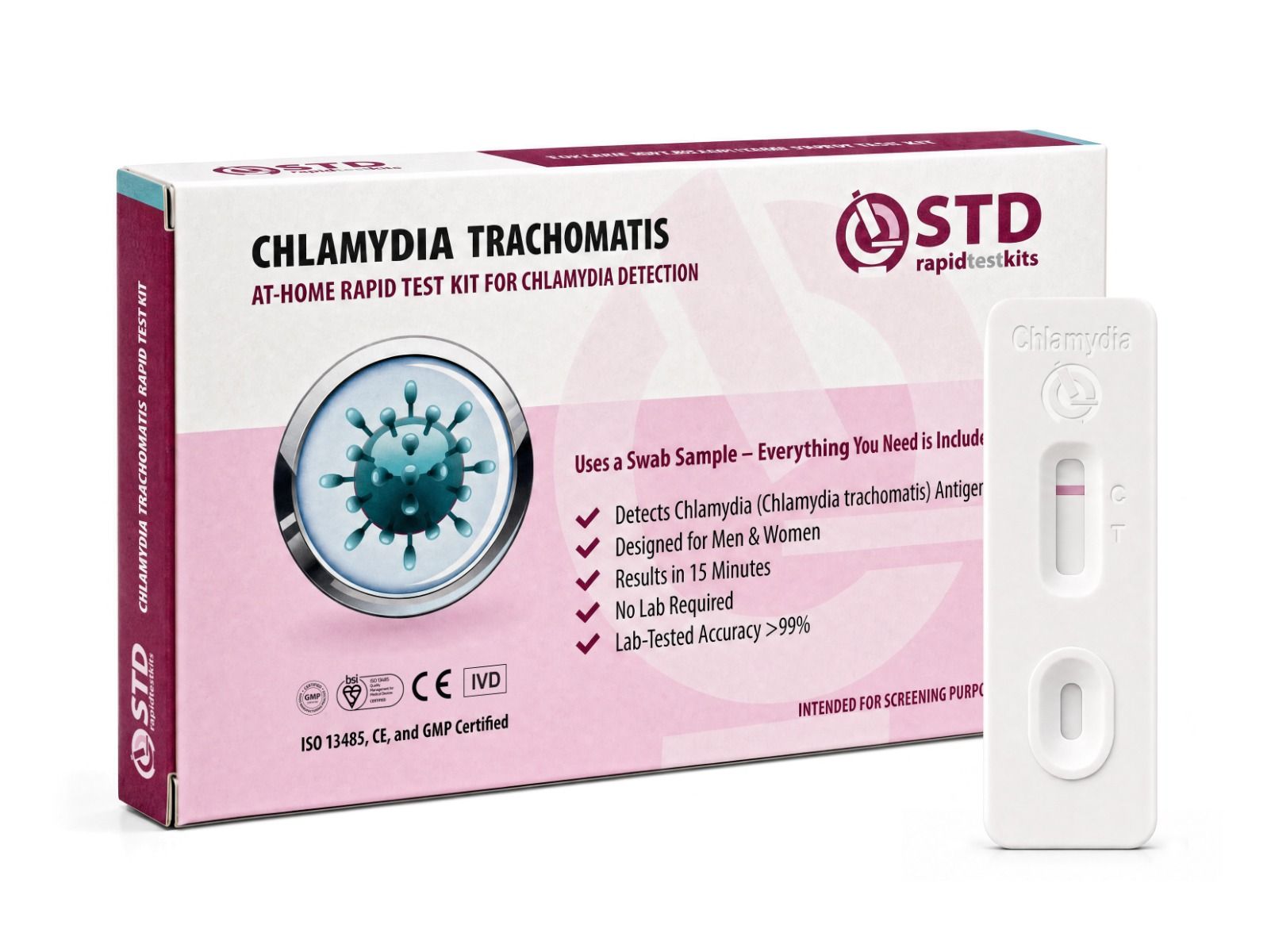
The format described in this guide, and the one we sell, is a rapid lateral-flow test. The kit contains a sterile self-collection swab, a buffer solution that breaks down sample material into a liquid the test strip can read, and a single-use cassette with a control line and a result line. Most people get a readable result in about fifteen minutes. The chemistry is the same general family of immunoassay technology behind home pregnancy tests and rapid Covid tests, applied here to chlamydia antigens captured on the swab.
Both formats have their place. A rapid lateral-flow test is fast, private, and useful for screening, especially when you want an answer quickly or when getting to a clinic is hard. A lab NAAT is the most analytically sensitive option and is the test of choice when symptoms are present, when you need a definitive diagnosis to start treatment, or when you have had a positive rapid result that needs confirmation. The comparison below lays out the trade-offs in one place.
Rapid lateral-flow vs lab NAAT
| Feature | Rapid lateral-flow (our home kit) | Lab NAAT (clinic or mail-in) |
|---|---|---|
| Sample type | Self-collected vaginal or penile swab | Vaginal swab, penile swab, or first-catch urine |
| Processing location | At home, by you | Certified laboratory |
| Time to result | About 15 minutes | Typically 2 to 5 days after lab receipt |
| Analytical sensitivity | Useful for screening; lower than NAAT at very low bacterial loads | Highest analytical sensitivity; detects very low bacterial loads |
| Best fit | Quick private screening when clinic access is limited | Symptomatic cases and confirmation of a positive home result |
| What a positive means | Strong signal; confirm with a lab NAAT when access allows | Treated as definitive; clinician usually prescribes immediately |
Both formats are valid for routine screening; pick by what you need from the result.
Window period: when to test after a possible exposure
Window period is the time between an exposure and the point at which a test can reliably detect the infection. Test too early and a real infection can return a false negative. Test too late and the infection has had longer to cause harm.
For chlamydia, the practical guidance is to wait about 14 days after the most recent possible exposure before testing. Bacterial load needs to climb high enough at the sample site for any test to detect it, and below the 7-to-10-day mark too many infections sit beneath that detection threshold. Some people test at 7 days for early reassurance and then retest at 14 days; that approach is fine but the 14-day result is the one that carries more weight.
The standard window shifts in two situations. If symptoms appear sooner than 14 days, test as soon as the symptoms appear, since symptomatic infections usually carry enough bacterial load to be detectable. If the exposure was higher-risk or there is reason to suspect multiple infections, retest at the standard 14-day mark even after an early result, and consider a combination panel that also covers gonorrhea and bloodborne STIs whose windows are longer.
After treatment, the next testing milestone is at three months, not at the end of the antibiotic course. The CDC's treatment guidelines explicitly recommend retesting approximately 3 months after treatment, regardless of whether you believe your sex partners were treated, because reinfection from an untreated partner is the single most common follow-up problem.
Window period at a glance
- Minimum reliable detection: 7 to 10 days after exposure (still misses many real infections at this point)
- Recommended testing point: about 14 days after the most recent possible exposure
- If symptoms appear earlier than 14 days, test right away
- Post-treatment retest: about 3 months after treatment, regardless of partner status
- Test of cure (pregnancy only): about 4 weeks after treatment to confirm clearance
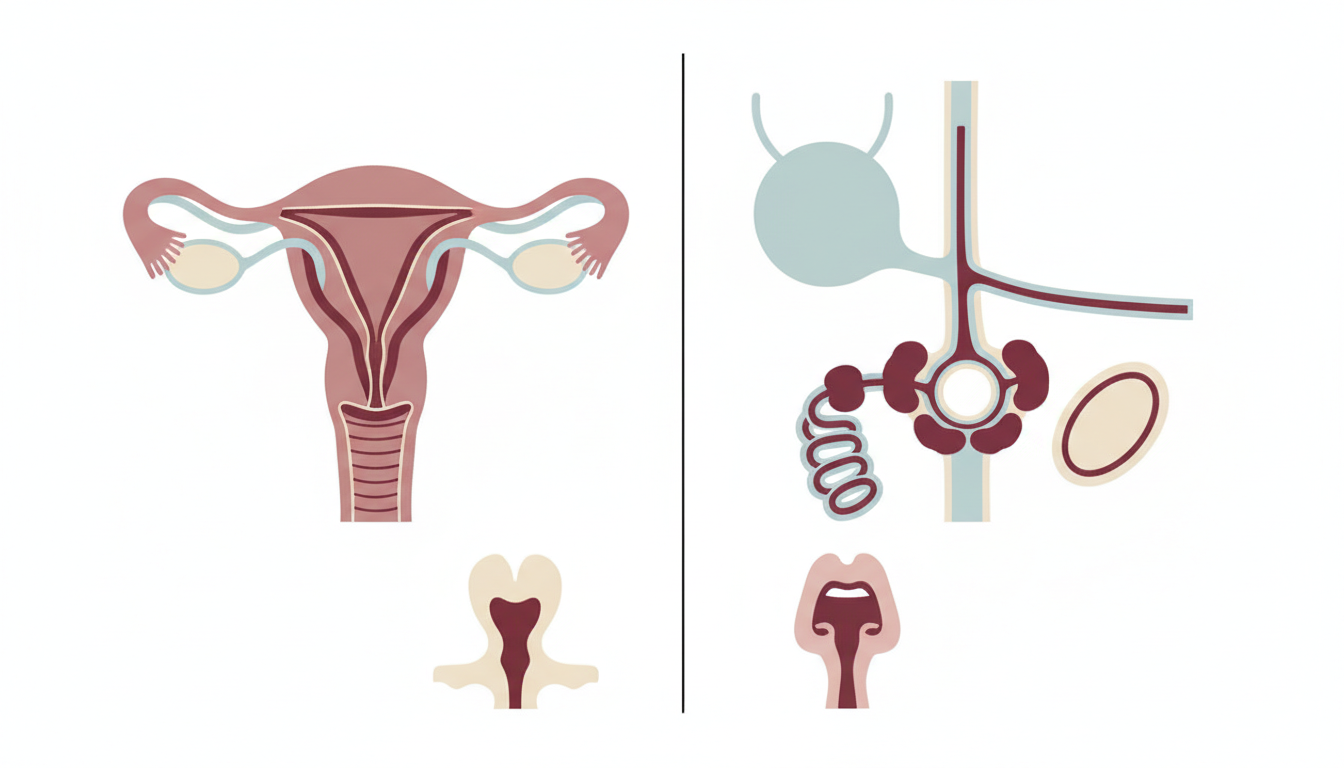
Sample collection: how the swab works for different anatomies
The kit is designed for self-collection from the part of the genital tract most likely to harbor the infection. The collection method differs between vaginal and penile anatomy, but in both cases the swab is short, painless, and the kit walks you through the process step by step. One important caveat: an at-home genital swab samples the genital tract only. If your exposure was through receptive oral or anal sex, this kit will not sample the right anatomy, and a clinician-collected NAAT of the throat or rectum is what you need.
| Anatomy | Sample type | What you do |
|---|---|---|
| Vaginal | Self-collected vaginal swab | Insert the swab a short distance into the vagina, rotate it gently for the time the instructions specify, then place it into the buffer tube. |
| Penile | Self-collected urethral or glans swab | Swab the urethral opening at the tip of the penis, or (when the instructions allow) the urine-soaked glans after holding urine for about an hour, then place the swab into the buffer tube. |
| Throat or rectal exposure | Not covered by our at-home rapid kit | See a sexual-health clinic for site-specific NAAT testing; we do not sell pharyngeal or rectal kits. |
What treatment looks like
Chlamydia is bacterial, so the entire treatment is a short course of oral antibiotics. The CDC's current first-line regimen for non-pregnant adolescents and adults is doxycycline 100 mg orally twice daily for 7 days. Doxycycline replaced single-dose azithromycin as first-line in the 2021 guidelines update because head-to-head data showed clearly better cure rates, particularly for rectal infection. Azithromycin 1 g as a single dose remains an alternative when doxycycline cannot be tolerated or adherence to a 7-day course is unrealistic, and levofloxacin 500 mg daily for 7 days is a second alternative.
During pregnancy, doxycycline is contraindicated because of fetal tooth and bone effects. The CDC recommends azithromycin 1 g as a single dose as the first-line pregnancy regimen, with amoxicillin available as an alternative. Pregnancy is also the one situation where a test of cure (a repeat test specifically to confirm the infection is gone, not just a routine retest) is recommended, performed about four weeks after treatment.
Partner treatment is the step most often skipped. Anyone you have had sexual contact with in the 60 days before your positive result should be tested and treated; without it, reinfection is likely the moment you resume sexual contact. Most U.S. states allow expedited partner therapy, where a clinician prescribes treatment for a partner without seeing them in person; ask your provider whether it is available in your state. On timing, the CDC recommends abstaining from sexual contact for 7 days after a single-dose regimen, until the full 7-day course is finished for doxycycline, and until any partner has also completed treatment.
Chlamydia treatment in one box
- Non-pregnant adults: doxycycline 100 mg orally twice daily for 7 days (CDC first-line).
- Pregnant: azithromycin 1 g as a single oral dose; doxycycline is contraindicated in pregnancy.
- Treat any sexual partner from the past 60 days; ask about expedited partner therapy in your state.
- No sex during the antibiotic course, and not until any partner has finished treatment too.
- Retest about 3 months after treatment to catch reinfection from an untreated partner.
Complications of leaving chlamydia untreated
The complications of untreated chlamydia are the entire reason public-health bodies push routine screening so hard. The single biggest one in women is pelvic inflammatory disease (PID), an upward extension of the infection from the cervix into the uterus, fallopian tubes, and surrounding tissue. The CDC lists PID among the primary harms that routine chlamydia screening is designed to prevent, and PID itself can lead to chronic pelvic pain, tubal scarring that causes infertility, and ectopic pregnancy, which is a pregnancy that implants outside the uterus and is a medical emergency. The Mayo Clinic's PID page describes the same progression and adds practical notes on when pelvic pain warrants urgent care.
Less common but serious complications include Fitz-Hugh-Curtis syndrome, where the infection reaches the capsule around the liver and produces right-upper-quadrant pain, and reactive arthritis, an inflammatory joint syndrome that classically presents with the triad of arthritis, urethritis, and conjunctivitis. In men, untreated infection can cause epididymitis severe enough to threaten fertility and, rarely, reactive arthritis as well.
Untreated chlamydia also raises susceptibility to acquiring HIV, because mucosal inflammation creates entry points for the virus. In pregnancy, the picture is more urgent: untreated infection raises the risk of preterm labor, premature rupture of membranes, low birth weight, and transmission to the newborn at delivery, with neonatal conjunctivitis and pneumonia as the most common consequences.
Co-infections: why combination testing often makes sense
Chlamydia and gonorrhea share transmission routes, age groups, and clinical presentations. Co-infection is common enough that historical CDC guidance recommended treating empirically for both at the same time when chlamydia was diagnosed; the current guidance is to treat each based on test results, but the underlying pattern still holds: someone exposed to one is statistically more likely to have been exposed to the other.
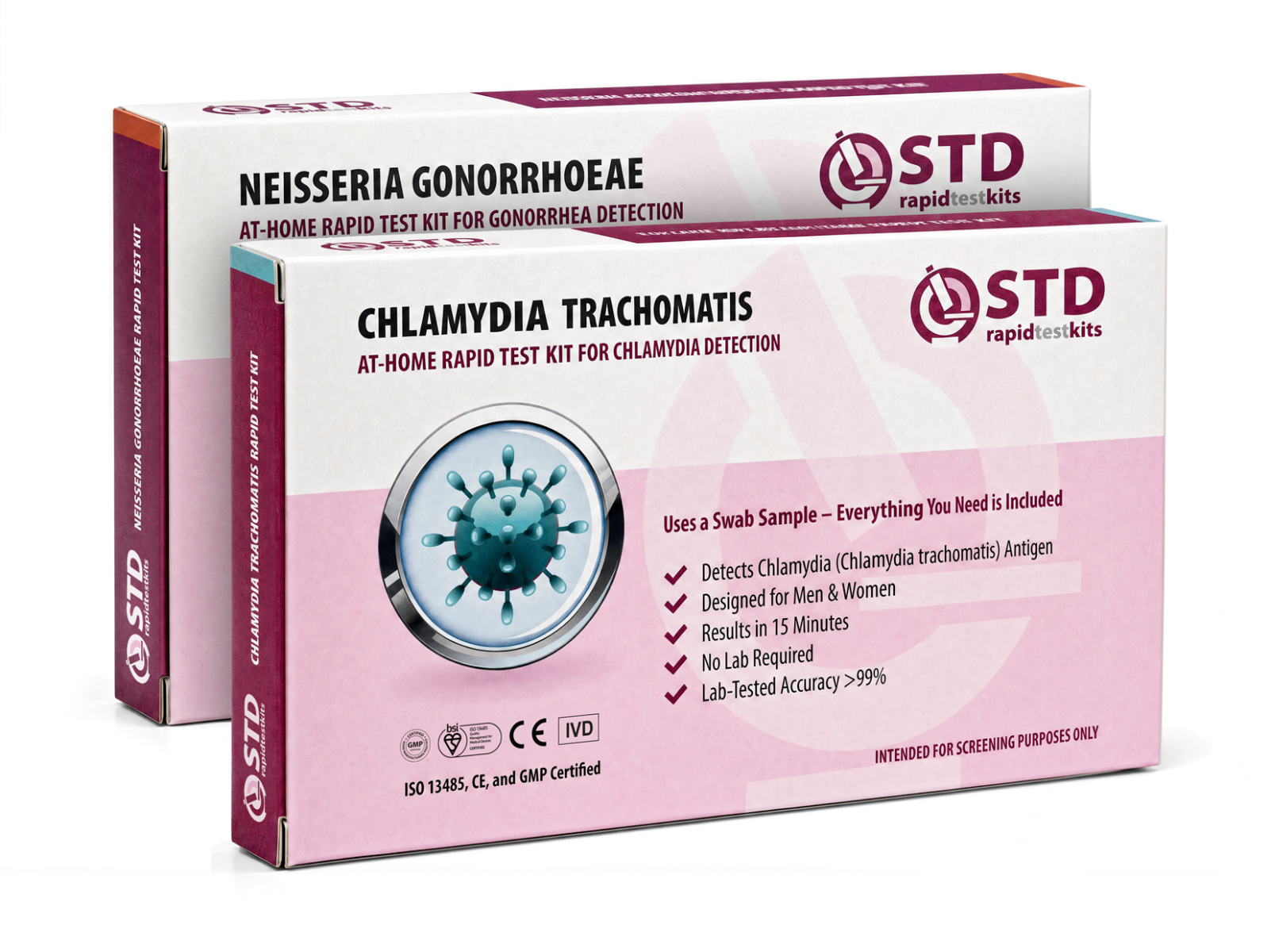
For most readers facing a single recent exposure, the practical question is whether to test only for chlamydia or to use a combination panel. A 2-in-1 swab kit covers chlamydia and gonorrhea from the same self-collected sample, takes the same 15 minutes, and only adds a small amount of cost over the single-infection test. Broader combination panels that add syphilis (via fingerstick blood), HIV, and hepatitis are appropriate when the exposure was higher-risk, the partner's STI history is unknown, or several months have passed without testing.
The cost differential between single-infection and combination kits is usually smaller than the cost of having to order a second test later when the first one missed a co-infection from the same exposure event. The at-home combo STI test kits page lists every panel we sell, from the 2-in-1 up to the 8-in-1 and 10-in-1 broader screens.
| Panel | Covers | Sample type | Best fit |
|---|---|---|---|
| Single-infection | Chlamydia only | Self-collected swab | One concern, recent specific exposure |
| 2-in-1 | Chlamydia + gonorrhea | Single self-collected swab | Common bacterial pair from one event |
| 3-in-1 | Chlamydia + gonorrhea + syphilis | Swab plus fingerstick blood | Higher-risk exposure or uncertain partner history |
Chlamydia often has no symptoms, but it can cause serious health problems, even without symptoms. Untreated chlamydia can damage a person's reproductive system.
Prevention and partner notification
The behaviors that prevent chlamydia are the same ones that prevent most bacterial STIs. Consistent condom use during vaginal, anal, and oral contact reduces transmission risk substantially, although not to zero, because condoms can slip or break and because contact with secretions on adjacent skin is still possible. Reducing the number of concurrent partners and knowing each partner's recent testing status both lower exposure odds further. Mutual monogamy with a partner who has tested negative is the lowest-risk arrangement short of abstinence.
If you test positive, partner notification is the part most people find awkward and the part that matters most for stopping the chain. Anyone you have had sexual contact with in the 60 days before your positive result should know they have been exposed, should test, and should be treated even if their test is negative, because chlamydia can be present below detection levels in some samples. Many U.S. states support anonymous partner notification through public-health departments if you do not want to have the conversation directly. Expedited partner therapy lets a clinician prescribe treatment for a partner without an in-person visit; it is legal in most states and is a meaningful way to interrupt the reinfection cycle.
Vaccination is not currently part of the chlamydia prevention picture. There is no licensed chlamydia vaccine, and while several research candidates have entered clinical trials in recent years, none are yet approved for routine use.
Use condoms or dental dams consistently for vaginal, anal, and oral contact. Mutual recent testing with a partner is the strongest practical lower-bound on exposure risk. After a positive result: notify all sexual partners from the previous 60 days, ask your provider whether expedited partner therapy is available in your state, and abstain from sexual contact until both you and any partner have completed treatment.
Why people choose to test at home
Clinic-based STI testing has historically meant a small set of recurring frictions: appointments that do not fit shift work, intake paperwork that asks pointed questions in front of strangers, waiting rooms that feel unwelcoming, and the social weight of being seen walking into a sexual-health center. None of those frictions stop high-confidence adults from getting tested. They do quietly stop a lot of other people from ever testing at all.
An at-home rapid kit removes most of that friction in one step. The kit arrives in plain packaging. You read the instructions, swab yourself, drop the buffer onto the cassette, and have a result in about the time it takes to make a cup of coffee. There is no appointment, no waiting room, and no conversation about your sex life with anyone you did not choose to tell. The cost is also predictable: a flat upfront price, no clinic copay, no separate lab fee, and no insurance EOB that a policyholder might see later.
For people in rural areas where the nearest sexual-health clinic is forty miles away, for shift workers who cannot match clinic hours, and for anyone in a community where a clinic visit would be noticed, that combination of speed, privacy, and predictable cost is the entire value of the at-home format. For the majority of people who simply need a routine screen, an at-home rapid kit removes every friction point between deciding to test and having a result.
Three common cases: (1) routine or asymptomatic screening on schedule, where an at-home rapid kit is usually the right tool; (2) significant symptoms or a complex situation (pregnancy, severe pain, recent assault), where a clinic visit is faster and more thorough; (3) a positive at-home result, where a clinic confirmation NAAT and a treatment prescription are the next step.
When to see a clinician instead
Home testing covers most routine screening situations. There are specific scenarios where a clinic visit is the better starting point.
- Significant symptoms. Severe lower abdominal pain, fever, heavy abnormal bleeding, severe testicular pain or swelling, or any combination that suggests PID or epididymitis warrants a same-day clinical evaluation, not a home test. These syndromes need imaging, antibiotics started immediately, and follow-up that a home kit cannot provide.
- Throat or rectal exposure as the primary concern. Our at-home swab is validated for genital self-collection. Pharyngeal and rectal swabs are not part of the at-home rapid format we sell; if those are the sites of concern, a sexual-health clinic that does pharyngeal and rectal NAAT testing is the right call.
- Pregnancy. Chlamydia testing in pregnancy is folded into prenatal care, and any positive result is followed by treatment, retesting in the third trimester, and a test of cure four weeks after treatment. Coordinate testing with your prenatal provider rather than treating it as a standalone home decision.
- Sexual assault or coerced exposure. Specialized clinics offer post-exposure prophylaxis options, evidence collection, and trauma-informed care that goes well beyond what a single test provides.
- Repeated positive results despite treatment. If you have completed treatment correctly and are still testing positive at retest, a clinician can investigate antibiotic absorption, partner re-exposure, or alternative diagnoses that mimic chlamydia.
Severe lower abdominal pain, fever, heavy abnormal bleeding, or severe testicular pain or swelling are present. Throat or rectal exposure is your primary concern. You are pregnant. The exposure was a sexual assault or otherwise coerced. You have already been treated and a retest is still positive. In any of these situations a clinician visit is faster, safer, or more comprehensive than starting with a home kit.
If you have been putting it off, here is the simplest plan
The smallest version of the right thing to do, for a sexually active adult who has not been screened in the last twelve months and has no current symptoms, is roughly this: order a rapid swab kit, collect the sample at the next convenient moment, read the result in fifteen minutes, and treat that result as the start of either a clean health snapshot or a one-week course of antibiotics. Either outcome is a useful answer.
If you have symptoms, the at-home rapid test is still useful as a first signal, but a same-week clinic visit is the better path because symptoms typically warrant a confirmatory NAAT plus an examination for other causes. If you have a recent specific exposure that worries you, wait two weeks, then test. If your only exposure was oral or anal, see a clinic for a site-specific swab; an at-home genital kit is the wrong tool for that question. A swab, fifteen minutes at home, and a result: that is the full procedure for anyone who has been putting this off.
Should you test for chlamydia now?
Have you had a possible exposure in the last 14 days?
Yes: Wait until day 14 post-exposure for the most reliable result. Test sooner if symptoms appear, since symptomatic infections usually carry enough bacterial load to be detected earlier.
Are you in a CDC-recommended annual-screening group (women under 25, men who have sex with men, anyone with new or multiple partners) and you have not been screened in the past 12 months?
Yes: Order a rapid swab kit and test now. The at-home result is sufficient for routine screening; a positive result gets confirmed and treated by a clinician.
No: Test on the cadence that matches your situation: every 3 to 6 months on PrEP or with multiple partners, annually for most other sexually active adults with risk factors, or after any new exposure event.
Did your test come back positive?
Yes: Contact a primary care provider, sexual-health clinic, or telehealth STI service to start doxycycline 100 mg twice daily for 7 days (or azithromycin 1 g single dose in pregnancy). Notify any partners from the previous 60 days. Avoid sex during the course. Retest about 3 months after treatment.
No: If you tested inside the 14-day window, plan a follow-up test at the four-week mark. Otherwise, continue routine screening on the cadence above.
A short flow for the most common situations. Treatment decisions still belong with a clinician.
Frequently asked questions
- How accurate is an at-home chlamydia test compared to a lab test?
- Rapid lateral-flow chlamydia tests are accurate enough for routine screening when collected correctly after the 14-day window, with sensitivity climbing as bacterial load builds in the days after exposure. The biggest gap between home and lab testing shows up in very early infections with very low bacterial load, the scenario where lab NAATs outperform home kits most clearly. A positive home result is worth a lab confirmation when access allows; a clearly negative result taken at the right time is meaningful for routine screening.
- How soon after exposure can a chlamydia test detect infection?
- The 14-day mark is the practical minimum. Before 7 to 10 days, most infections have not produced enough bacterial load for any test, rapid or NAAT, to detect reliably. If symptoms appear before day 14, test right away; otherwise wait the full two weeks for the most dependable result. If you tested inside the two-week window and got a negative, plan a follow-up test at about four weeks to be safe.
- Can I test for chlamydia without symptoms?
- Yes, and you should if you fall into the CDC-recommended screening groups. Most chlamydia infections have no symptoms at all, so testing without symptoms is the entire point of routine screening. The infection still causes the same downstream complications whether you feel anything or not.
- What if my home test is positive?
- Treat as soon as possible with the CDC's first-line regimen (doxycycline 100 mg twice daily for 7 days, or azithromycin 1 g single dose if pregnant). Contact your primary care provider, a sexual-health clinic, or a telehealth STI service; most clinicians will treat empirically based on a positive screen rather than wait for confirmation. Notify any sexual partner from the previous 60 days so they can be tested and treated. Avoid sexual contact during treatment. Retest about 3 months after treatment to catch reinfection.
- Do I need to retest after treatment?
- Reinfection from a partner who was not treated is the most common reason a cleared infection comes back, which is why the CDC recommends retesting roughly 3 months after treatment regardless of whether you believe your partner was treated. In pregnancy, add a test of cure about 4 weeks after treatment to confirm clearance before the third trimester.
- Does chlamydia go away on its own?
- No. Untreated chlamydia can persist for months or longer and cause complications including pelvic inflammatory disease, tubal scarring, infertility, and increased susceptibility to HIV. Antibiotic treatment is required to clear it reliably.
- Can the home swab kit detect throat or rectal chlamydia?
- The test cassette detects Chlamydia trachomatis antigen captured on a genital self-collected swab; it has not been validated on throat or rectal samples, which carry different microbial backgrounds and require distinct NAAT-based lab processing. If those are the exposure sites, a sexual-health clinic with pharyngeal and rectal NAAT panels is the appropriate route.
- Is there one kit that tests for chlamydia plus other STIs at the same time?
- Yes. Our 2-in-1 swab bundles chlamydia with gonorrhea using the same self-collected sample, and broader combination panels add syphilis, HIV, hepatitis B and C, and herpes (sample type varies by infection: swab for the bacterial pair, fingerstick blood for the rest). If it has been more than a year since your last full screen, the broader panel often makes more sense than testing for chlamydia alone.
- Will anyone know I bought or used a test?
- Our kits ship in plain, unmarked outer packaging with no visible reference to the contents or to STI testing. The result is read by you at home; nothing is automatically sent to a lab or recorded in a health record unless you choose to share it with a clinician. Privacy is one of the main reasons people use at-home rapid testing rather than a clinic.
- U.S. Centers for Disease Control and Prevention. About Chlamydia: public information page on symptoms, screening recommendations, and complications.
- U.S. Centers for Disease Control and Prevention. STI Treatment Guidelines: Chlamydia. First-line regimen, alternative regimens, retesting and test-of-cure guidance.
- U.S. Centers for Disease Control and Prevention. Sexually Transmitted Infections Surveillance: 2024 reported chlamydia case totals.
- U.S. Centers for Disease Control and Prevention. About Pelvic Inflammatory Disease (PID): characterization of PID as a primary harm of untreated chlamydia and gonorrhea.
- U.S. Centers for Disease Control and Prevention. STI screening recommendations by population (annual cadence and additional triggers).
- Mayo Clinic. Pelvic inflammatory disease (PID): symptoms, causes, and when pelvic pain warrants urgent care.
- Mayo Clinic. Epididymitis: symptoms and causes of the inflammation of the tube behind the testicle that chlamydia can produce in men.
- World Health Organization. Sexually transmitted infections (STIs) fact sheet. 2020 global estimate of approximately 129 million new chlamydia infections among people aged 15 to 49.
- National Health Service (UK). Chlamydia: symptoms, testing, treatment, and retesting guidance, including the one-week-to-several-months symptom timeline.