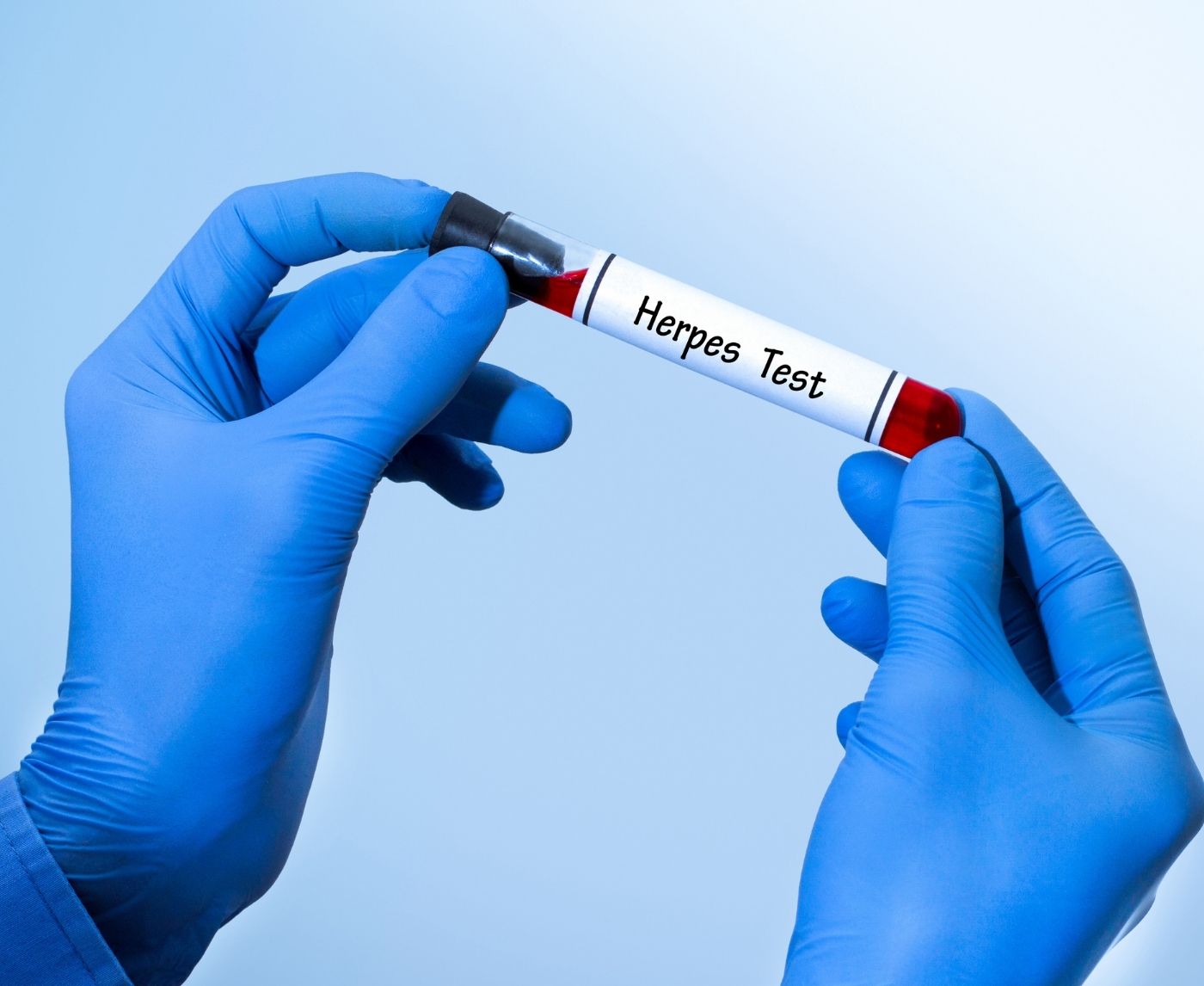
Published: October 2025 | Last updated: May 2026 | Editorial review and quality control: Martina N.
A negative herpes test does not always mean herpes is not there. That is the uncomfortable truth thousands of people run into every year, when a lab result says one thing and the body keeps insisting on another: a pre-period tingle, a patch of skin that goes raw and disappears within hours, a burning sensation during urination that no infection can explain. None of it shows up on the printed result, and none of it is imaginary either.
Herpes Simplex Virus (HSV) behaves differently from most pathogens that screening tests are built around. It does not stay in the bloodstream where antibody panels can find it. After a first infection, it retreats into nerve clusters at the base of the spine and lives there indefinitely, reactivating in cycles that can be loud or completely silent. A blood test can come back negative because antibodies have not built up yet, because the assay missed your particular antibody profile, or because the timing did not catch a viral shedding episode.
This article walks through why that happens, which test you should ask for by name, what the window periods look like, and when retesting makes sense. The goal is not to alarm you. Most people who land here will not turn out to have herpes. For the smaller group who do and have been told otherwise, the right information is more useful than reassurance, and that is what the rest of this piece tries to give you.
Key Takeaways
- An IgG antibody blood test taken before week 12 after exposure can miss a real infection. The CDC's recommended window for reliable serology is roughly 12 to 16 weeks after the suspected exposure.
- Herpes can be active and contagious during asymptomatic viral shedding, when antibody titers are low and outbreaks are absent. Recurring tingling, nerve pain, or skin rawness without visible sores deserves more than a single negative test.
What a negative herpes test really tells you
A negative result on a herpes blood test tells you one specific thing: at the moment your sample was drawn, your body was not producing detectable levels of HSV-specific antibodies. That is it. It does not tell you whether you have ever been exposed. It does not tell you whether the virus is currently latent in your nerve tissue. And it does not rule out a recent infection that has not yet triggered seroconversion.
Most herpes blood tests look for IgG antibodies, the long-term immune memory the body builds after an infection takes hold. The IgG response to HSV-1 and HSV-2 develops slowly compared with other viruses. According to the CDC's STI Treatment Guidelines, IgG antibodies typically become detectable within several weeks after infection but can take up to four months to reach reliably positive levels.
Some clinics still run IgM antibody tests instead. The CDC explicitly advises against using IgM testing for herpes diagnosis because it cross-reacts between HSV-1 and HSV-2, can be triggered by reactivation of an old infection rather than a new one, and produces false positives often enough that the results are essentially uninterpretable. If your lab report shows an IgM herpes test, the result is not the answer to your question regardless of which way it came back.
Swab PCR is the third option. It works by detecting active viral DNA from a sore. The catch is timing. The lesion has to be open and shedding live virus, ideally within 48 hours of appearing. By the time most people make it to a clinic, the sore has started healing, the viral load on the surface has dropped below the assay's detection threshold, and a negative swab tells you the swab arrived too late.
Can a herpes blood test be wrong?
Yes. A herpes IgG blood test can return a false negative if the sample is drawn before week 12 to 16 after exposure, when antibody levels have not risen to the assay's detection threshold. It can also miss low-titer infections in people whose immune systems produce a weaker antibody response. A negative swab is even less reliable, because swabs only detect active viral shedding from a fresh open lesion. Retesting at 12 to 16 weeks with a type-specific IgG assay is the standard confirmation pathway when the first result does not match what you are feeling.
How HSV hides between outbreaks
After a primary infection, HSV travels along sensory nerves to nerve cell bodies clustered in structures called dorsal root ganglia. For genital herpes, that means the sacral ganglia near the base of the spine. The virus enters a state called latency. Its genome stays inside the nerve cell as a circular DNA molecule, mostly transcriptionally silent, evading the immune system because nerve cells do not display surface antigens the way most other cells do. The immune system cannot easily see something it cannot get to.
Latency is not stillness. The virus periodically reactivates in response to triggers like stress, illness, hormonal cycles, immune suppression, friction, or local skin injury. When it reactivates, viral particles travel back down the nerve to the original infection site, where they either cause a visible outbreak or shed silently from the surface of the skin without producing a sore.
This silent shedding is one of the main reasons herpes spreads efficiently. A 2011 study summarized in PMC's article on genital shedding of HSV-2 found that people with established HSV-2 infection shed viral DNA from the genital tract on roughly 10 to 20 percent of days. Among people with symptomatic disease, the figure was closer to 20 percent of days. Among people who had never noticed an outbreak, it was still around 10 percent. Someone in a monogamous relationship can transmit herpes without ever having had an outbreak themselves, including a partner whose own test was negative because their infection was atypical or low-titer.
Tronstein et al. (2011) found HSV-2 viral DNA shed from the genital tract on roughly 20% of days in people with symptomatic infection, and around 10% of days in people who had never noticed an outbreak. Both groups can transmit the virus during shedding episodes, with or without visible sores.
Window periods, by test type
Different herpes tests have different windows because they detect different things. Knowing which one you took matters more than knowing the result.
IgG antibody blood test, type-specific: Detection becomes reliable around week 12 to 16 after exposure. Some labs report the earliest possible window as four to six weeks, but the IgG response is slow and variable from person to person. A negative IgG drawn before week 12 is provisional. The CDC's standard recommendation when there has been a known exposure is repeat testing at the 12 to 16-week mark.
IgM antibody test: The CDC's STI treatment guidelines state that IgM testing should not be used for herpes diagnosis. IgM cross-reacts between HSV-1 and HSV-2, can become positive during reactivation of an old infection, and does not distinguish recent from past exposure. If your clinic ran an IgM test, the result is not interpretable for the question you are trying to answer, and you should request a type-specific IgG instead.
Swab PCR or viral culture from an active lesion: Most useful within 48 hours of a sore appearing, while the lesion is still open and shedding live virus. Sensitivity drops fast as the sore starts to crust and heal. A negative swab on a partially healed lesion tells you the swab missed enough virus to register, not that the sore was something other than herpes.
Type-specific glycoprotein G ELISA: This is the format most reputable labs now use for IgG testing. It can distinguish HSV-1 from HSV-2 antibodies. Older non-type-specific tests could not separate the two and produced a lot of confused results. If your lab report does not say HSV-1 specific or HSV-2 specific, the assay may have been a non-type-specific format. Ask, or request a re-run.
What to ask your provider for, by name
If you are going to your doctor or a walk-in clinic specifically for herpes testing, the request that gets you the right test is: type-specific HSV-1 and HSV-2 IgG antibody testing, ideally a glycoprotein G-based ELISA. That phrasing matters because some clinic order panels still default to IgM, which the CDC has spent years trying to get clinicians to stop ordering for herpes diagnosis.
If you have an active sore right now, ask for a PCR swab while the lesion is still open. PCR is more sensitive than viral culture, which used to be the standard. The 48-hour window is not flexible. Sores that have started crusting or healing will not yield enough virus for the swab to detect, no matter which assay technology the lab runs.
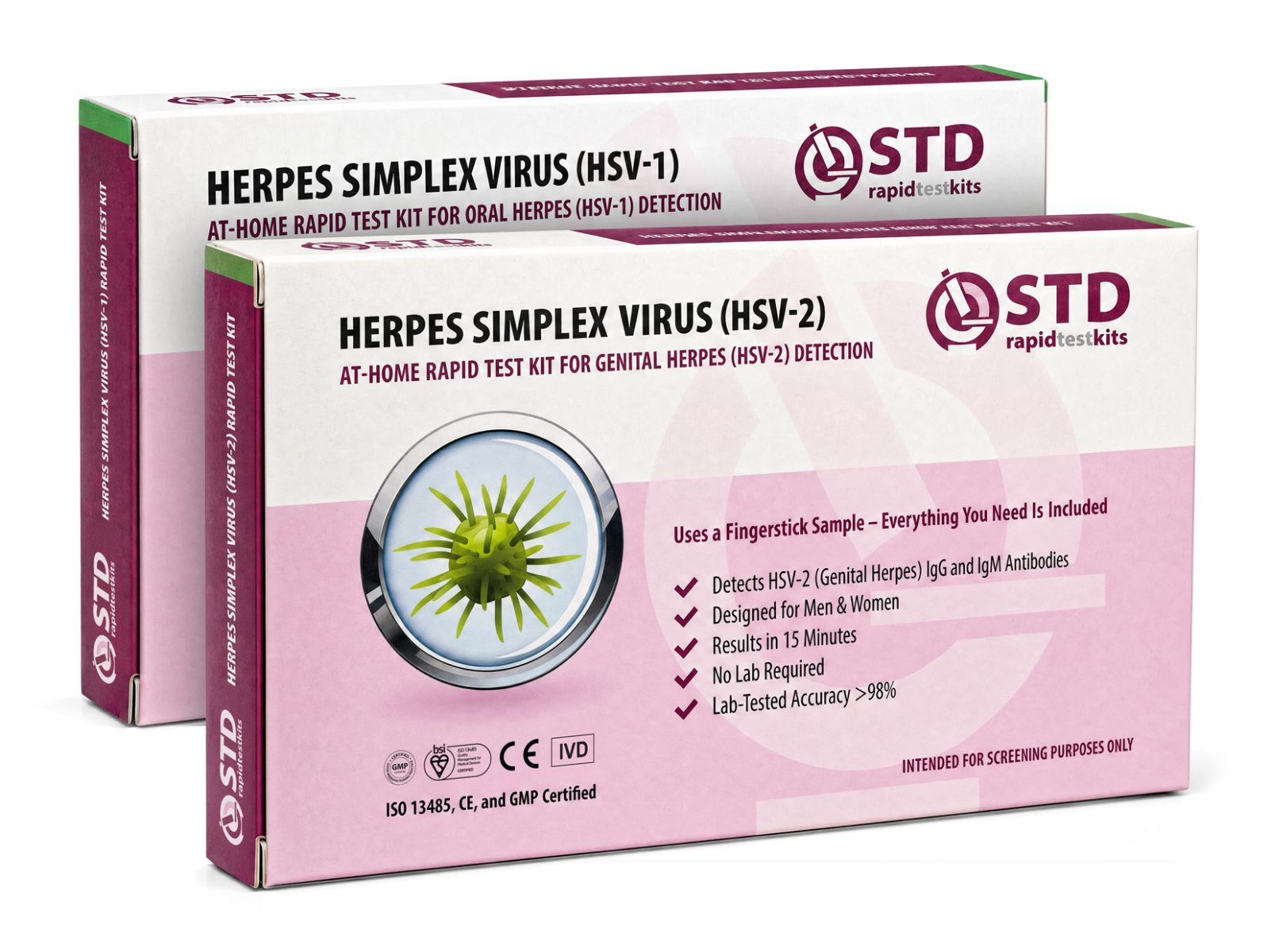
For at-home testing, the same logic applies. A blood-based antibody test you collect by fingerstick uses the same IgG chemistry as a clinic blood draw. Accuracy depends on whether you are inside the window period and whether the test is type-specific. At-home rapid lateral-flow tests are screening tools that work well for the question “have I seroconverted yet.” A positive result is meaningful and worth confirming with a lab; a negative result inside week 12 does not rule out a recent infection.
If you have already tested and the result was negative but symptoms are continuing, the next move depends on timing. Inside week 12, retest at week 16 with a type-specific IgG. Outside week 16 with no exposure since, a second negative IgG is reasonably reassuring for that exposure event, with the small caveat that some people produce antibody titers below standard assay thresholds. That subset is small, but it exists, which is why ongoing symptoms with multiple negatives are sometimes worth bringing to a sexual-health-specific clinician rather than a generalist.

Prodrome: symptoms without an outbreak
Prodrome is the term for the early-warning sensations that often precede a herpes outbreak by hours to days. They include tingling, itching, burning, sharp shooting nerve pain, low-grade aches in the lower back or thighs, and patches of skin that feel raw or hypersensitive. They occur because the virus is traveling back down the nerve toward the skin surface, irritating sensory pathways along the way.
What is less commonly understood is that prodrome can occur without a visible outbreak following it. The reactivation event happens, the immune system catches it before the virus reaches the skin in detectable quantities, and the only thing the person notices is the nerve sensation. There is nothing visible from the outside, and something genuinely happened in the nervous system regardless.
People with this pattern often spend months or years cycling through misdiagnoses: yeast infection, urinary tract infection, bacterial vaginosis, ingrown hair, razor burn, contact irritation, hormonal sensitivity, anxiety. The symptoms are real, and they get attributed to whatever else might fit the picture, especially when herpes blood tests come back negative inside the window period. Public-health guidance from the CDC consistently notes that asymptomatic and atypical first infections are common, with a large fraction of cases producing no classic blistering at all.
None of this means every recurring tingle is herpes. Pelvic floor irritation, contact dermatitis, lichen sclerosus, and pudendal nerve compression can all produce overlapping sensations, and a clinician familiar with vulvovaginal or sexual-health presentations should evaluate the broader differential when nothing visible appears on examination.
Common prodrome sensations
- Tingling, itching, or burning in the genital area or upper inner thighs
- Sharp shooting nerve pain that follows the path of a single nerve
- Low-grade aches in the lower back, sacrum, or buttocks
- Patches of skin that feel raw or hypersensitive without visible change
- Symptoms that recur on a similar schedule each menstrual cycle or stress event
Most people with genital herpes have no symptoms or have very mild symptoms.
When retesting makes sense
Clinical guidance treats herpes serology as a sequence rather than a one-shot answer. The standard retest pattern after a known exposure looks roughly like this:
Week 4 to 6: Earliest reasonable test, but a negative is provisional. Some people will have detectable antibodies by this point. Many will not, even if infected.
Week 12: Second test. Most people who are going to seroconvert have done so by now. A confirmed negative at this point covers the majority of true negatives.
Week 16: Final confirmatory test for cases where the exposure was high-risk or where symptoms have continued. By 16 weeks, the IgG response in someone who has been infected should almost always be detectable on a type-specific assay.
If you have passed the 16-week mark and continue to test negative on a type-specific IgG, the probability of HSV-2 infection from that specific exposure is low. A small subset of people produce antibody titers below the standard assay threshold even after the full seroconversion window, which is why some clinicians order a confirmatory Western blot when serology disagrees with a strong clinical picture. That fraction is small enough that ongoing high-anxiety surveillance past 16 weeks is unlikely to be serving you well.
If you have ongoing symptoms that do not fit the timeline of a known exposure, two paths are worth considering. The first is asking for a swab during a symptomatic episode rather than between them, since PCR on an active sore is the most direct test for replicating virus. The second is asking your provider to evaluate the differential diagnoses that mimic herpes prodrome: vulvovaginal pain syndromes, pudendal neuralgia, contact dermatitis, lichen sclerosus, and a few others. A clinician who works specifically in sexual health or vulvovaginal medicine is often more familiar with these patterns than a general primary-care provider.
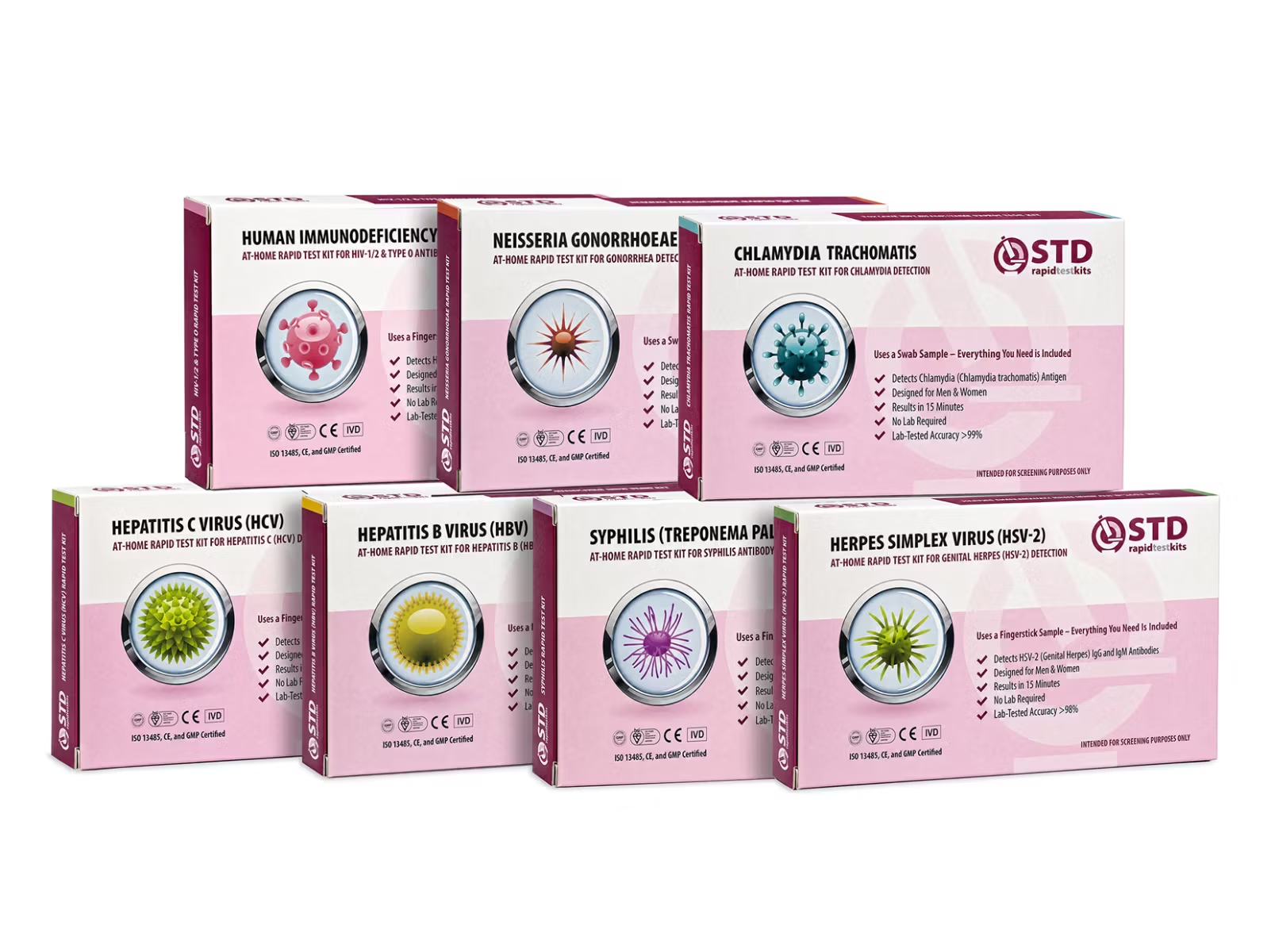
Comprehensive at-home panels are useful when the broader question is what else might be going on. If you are already past the 16-week mark on herpes retesting and symptoms persist, an STI panel that covers chlamydia, gonorrhea, syphilis, HIV, and hepatitis can rule out other infections that present with overlapping genital symptoms.
When your symptoms keep getting dismissed
One of the more frustrating patterns in sexual health care is the gap between what a patient describes and what the clinical encounter recognizes. A negative test result, in many appointments, ends the conversation. The clinician moves on. The patient is left holding symptoms that nobody is willing to interpret.
A few practical things help. Keeping a symptom diary that tracks the date, the location on the body, the character of the sensation, and what was happening before it started gives a clinician something concrete to work with. A provider who can see that the same tingle on the upper inner thigh recurs every four to six weeks the day before a period starts has more pattern to evaluate than one who only hears “I keep feeling weird down there.”
Asking specifically for the test you want, by name, also matters. “I'd like a type-specific HSV-1 and HSV-2 IgG test” is harder to brush off than “can you check me for herpes.” If a clinician declines the test, the reason should be documented; if they decline because they think it is unnecessary, that is a conversation that can be had with their decision in writing.
Switching providers is reasonable when the existing one is not helpful. Sexual-health-specific clinics, family-planning services, and STI-focused telehealth practices generally have more current familiarity with herpes serology than a primary-care office that handles hundreds of unrelated conditions every week. Bringing your test history with you to a new provider saves a round of repeat work and shows them what has already been ruled in or out.

What “negative but still wondering” really means
If you have read this far, your situation probably is not the textbook case. The clean version of herpes diagnosis (clear exposure, classic blisters, positive swab, definitive answer) describes a minority of real infections. The rest live in the space between symptoms that do not quite fit and tests that do not quite resolve.
A negative test outside the right window is provisional, and retesting at 12 to 16 weeks is the standard pathway. Recurring prodromal symptoms with negative serology do not always mean herpes, and they do not always mean nothing either. Pelvic floor specialists, vulvovaginal clinicians, and dermatologists familiar with sexual-health presentations are the right people to bring an unresolved pattern to.
If you eventually do test positive, the news is less life-altering than stigma has trained people to expect. Daily suppressive antiviral therapy reduces outbreak frequency and asymptomatic shedding substantially. Transmission to partners is reducible with disclosure, condoms during higher-risk windows, and antivirals. Most people with HSV-2 live their lives without serious medical complications.
Practically, that means asking for type-specific IgG testing 12 to 16 weeks after the exposure event you are concerned about, repeating it if symptoms persist, and using a PCR swab during any active episode that occurs in the meantime.
FAQs
- Can I have herpes and still test negative?
- Yes. The most common reason is timing. IgG antibodies typically take 12 to 16 weeks after exposure to reach reliably detectable levels, so a test drawn earlier than that can miss a real infection. A smaller fraction of people produce antibody titers below the standard assay threshold even after the window has passed, which is why some clinicians order a confirmatory Western blot when serology disagrees with a strong clinical picture.
- How long after exposure does a herpes blood test become accurate?
- For type-specific HSV-1 or HSV-2 IgG testing, accuracy is reasonably reliable by week 12 and very reliable by week 16. Some labs report a four-to-six-week earliest detection window, but a negative inside that early window should be treated as provisional. The CDC recommends repeat testing at the 12 to 16-week mark when there has been a known exposure.
- What is the difference between IgG and IgM herpes tests?
- If your result says IgM positive, it is not usable for a herpes diagnosis. The CDC stopped recommending IgM for herpes years ago because it cannot tell you whether an exposure was recent or old, it cross-reacts across both virus types, and it can turn positive during reactivation of an infection you already had. Ask for a type-specific IgG instead and treat the IgM result as noise.
- Can prodrome symptoms occur without a visible outbreak?
- Yes. The reactivation event can produce nerve sensations like tingling, burning, or skin rawness without the virus reaching the skin in quantities that produce a visible sore. The immune system catches the reactivation before it surfaces. People with this pattern often have recurring symptoms that map to specific triggers (stress, hormones, illness) but have no lesion to point at.
- Is a swab test more accurate than a blood test for herpes?
- It depends on what you are trying to confirm. PCR swab on an active sore within 48 hours of appearance is the most direct evidence of an active infection at that site. After the lesion has started healing, swab sensitivity drops sharply and a negative swab does not rule out herpes. Blood antibody testing answers a different question: have you ever been exposed and built immune memory. Both tests have a place.
- Can I transmit herpes to a partner if my test came back negative?
- Yes, in two scenarios. The first is when the negative result is a false negative because the test was taken inside the window period, before antibodies were detectable. The second is asymptomatic viral shedding in someone who has been infected long enough to seroconvert but happens to have low-titer antibodies on the assay used. Type-specific glycoprotein G ELISA reduces the second scenario significantly compared with older non-type-specific tests.
- Are at-home herpes tests reliable?
- At-home rapid lateral-flow antibody tests use the same IgG detection principle as clinic blood draws. Reliability depends on whether the test is type-specific (HSV-1 or HSV-2 distinguished), whether you are inside the window period, and whether you follow the manufacturer's collection instructions. A positive result is meaningful and worth confirming with a lab. A negative result before week 12 should be repeated at the standard window mark.
- U.S. Centers for Disease Control and Prevention. STI Treatment Guidelines: Genital Herpes. Source for window-period guidance, IgG vs IgM recommendations, and serology timing.
- U.S. Centers for Disease Control and Prevention. About Genital Herpes. Source for the proportion of people with no or very mild symptoms and the unawareness rate.
- World Health Organization. Herpes simplex virus fact sheet. Source for global HSV-1 and HSV-2 prevalence estimates.
- U.S. Centers for Disease Control and Prevention, National Center for Health Statistics. Prevalence of Herpes Simplex Virus Type 1 and Type 2 in Persons Aged 14 to 49: United States, 2015 to 2016. NCHS Data Brief 304. Source for U.S. seroprevalence figures.
- Tronstein E, et al. Genital Shedding of Herpes Simplex Virus Among Symptomatic and Asymptomatic Persons With HSV-2 Infection. Source for asymptomatic shedding rates of 10 to 20 percent of days.
- U.S. Centers for Disease Control and Prevention. Screening Recommendations for Genital Herpes. Source for recommendations on routine screening and clinical decision-making.
