
Published: August 2025 | Last updated: May 2026 | Editorial review and quality control: Martina N.
Divorce at 52 cracks something open. There are first dates again, butterflies again, lingerie again. What very few people warn women about is that there is also infection risk again, and the rules have shifted since the last time most of them were single. Sexually transmitted infections are rising fastest among adults over 50 in the United States, and women re-entering the dating world after a long marriage sit right in the middle of that wave.
This guide unpacks why midlife women face higher risk than they expect, why menopause symptoms can disguise an active infection, what testing actually solves, and how to keep a new sex life both pleasurable and safe. The story is not about fear. It is about information that previous decades did not require, but this one does.
Key Takeaways
- STI diagnoses have risen sharply among adults 55 and older over the past decade, with the steepest percentage increases concentrated in the 65-and-older subgroup. Postmenopausal women face higher transmission risk because lower estrogen thins vaginal tissue and weakens the protective flora that helps fight infection.
- Menopause symptoms and STI symptoms overlap heavily. Routine testing every three to six months while dating new partners is the only reliable way to tell the difference.
When Menopause Masks the Warning Signs
At midlife the body is already changing. Vaginal dryness, irritation, and light spotting after sex are classic signs of declining estrogen. They are also classic early signs of several common sexually transmitted infections, including chlamydia, gonorrhea, and trichomoniasis. When a woman or her clinician attributes the symptoms to “just hormones,” an active infection can quietly continue for months before anyone connects the dots.
The biology behind this overlap is well documented. Lower estrogen reduces the thickness of the vaginal lining and weakens the lactobacillus-dominant flora that helps fight off pathogens. According to guidance from the National Institute on Aging, these tissue and microbiome changes are part of why postmenopausal women can develop infections that their younger selves cleared without trouble. Thinner tissue is also more likely to develop micro-tears during sex, which raises the per-act probability of acquiring an infection from an exposed partner.
The pattern many midlife women describe is similar from case to case. Months of attributing burning, itching, or unusual discharge to menopause. A new partner mentions a discharge of his own, or a routine swab catches something that did not belong there. Burning during urination can be a urinary-tract infection, but it can also be chlamydia or gonorrhea. Spotting after sex can be vaginal atrophy, but it can also be cervical inflammation from an active STI. Untreated chlamydia and gonorrhea can scar the upper reproductive tract, raise the risk of pelvic inflammatory disease, and complicate gynecologic care later in life.

The Numbers No One Talks About
The cultural script treats STIs as a problem of younger adults. The data tell a different story. The U.S. CDC's STI surveillance and screening guidance documents a steady, sharp rise in syphilis, gonorrhea, and chlamydia diagnoses among adults aged 55 and older over the past decade. Within that broader cohort, separate analyses of CDC surveillance data covering 2020 through 2023 found that the steepest percentage increase in STI diagnoses was concentrated among adults 65 and older, the fastest-growing demographic in the country for new cases.
Several overlapping factors are driving the shift. Pregnancy is no longer a concern for postmenopausal women, so condoms quietly drop out of the conversation. Many partners in the 50-plus dating pool have not been tested in decades and assume that a negative result from before their long-term marriage still applies. Dating apps have made it dramatically easier to meet new partners after divorce or widowhood, but those apps do not pause for testing conversations. Clinicians under-screen this age group because the cultural assumption that older adults are not sexually active still shapes routine care.
The result is a population that is sexually active, often with several partners over time, meeting new partners through frictionless platforms, while testing rates remain low and condom use is rare. Layer onto that the longer life expectancy of postmenopausal women, the rise of online dating in the 50-plus segment, and the relatively recent normalization of casual sex after a long marriage.
CDC surveillance documents a steady rise in syphilis, gonorrhea, and chlamydia diagnoses among adults 55 and older across the past decade. Within that group, the 65-and-older subgroup shows the steepest percentage increases of any age cohort in recent years, including teens and twenty-somethings.
When Doctors Don't Ask the Right Questions
Silence does not stop at the bedroom door. It continues in the exam room. Studies of clinical practice have repeatedly found that primary-care providers ask older adults about sexual activity less often than they ask younger patients, and recommend STI testing less often even when symptoms warrant it. Several published analyses of global STI screening practice identify under-screening of older adults as a measurable contributor to rising rates in this age group.
The mechanism is simple. If providers do not ask, women rarely volunteer the information. If women do not bring it up, infections that present with vague symptoms get attributed to menopause, urinary-tract issues, or “just aging.” Time passes. Infections that would have been simple to treat at the start become more complicated, more likely to spread to a partner, and more likely to cause lasting damage to fertility and reproductive health.
Patient advocacy closes this gap. If a clinician does not raise sexual health, the patient can. A short script works in most appointments: “I started dating again recently and would like a full STI panel today.” Most providers will run the panel without further questions. The few who push back, treat the request as an embarrassment, or wave it off because of the patient's age are signaling that they are not the right clinician for this stage of life. Trans-vaginal swabs, blood draws, and urine samples are routine work in most clinics, and the lab portion of the encounter is short.

The Swipe That Changed Everything
Dating apps have rewritten midlife dating. Tinder, Bumble, Match, Hinge, and Facebook Dating have made it easy to meet new partners after decades of marriage. One swipe, one drink, and a relationship that used to take weeks to form can compress into a single evening. That is a structural change in how new sexual partnerships start, not a moral one. The same connection technology that re-introduced people to first kisses and first weekends away has also re-introduced them to first-encounter risk that the previous generation of midlife dating did not face at the same scale.
What the apps will not tell anyone is that they are not built around health. They will not ask about a last test. They will not flag local STI prevalence. They will not warn that global rates of curable STIs are rising and that age does not insulate anyone from that trend. Research on midlife daters has found that condom use among older women re-entering the dating scene is substantially lower than among younger women, often because condoms are mentally filed under “pregnancy prevention,” a category that no longer applies after menopause.
The practical adjustment for the 50-plus dating routine is the one previous decades built around contraception: a screening conversation early, condoms by default, and a regular testing cadence layered into the schedule.
Older adults remain sexually active, but historically have been under-tested and under-treated for sexually transmitted infections. Routine screening, condom use, and open patient-provider conversations are essential at every age.
Why Stigma Hits Harder in Midlife
An STI diagnosis at 25 feels like a rite of passage that nobody asked for. At 52, the same diagnosis can feel like a personal failure. That difference is cultural, not clinical. Older women are told, in a thousand small ways, that desire after menopause is unbecoming and that sexual decisions after divorce reflect poor judgment rather than the same statistical risk that applies to anyone with a sexual partner.
That stigma keeps women silent. They do not tell their friends, their grown children, or their doctors. They do not get tested. In that silence, infections spread, often without symptoms, sometimes for years. Studies of midlife women's HIV risk have found that physiological vulnerability after menopause is compounded by social pressure not to negotiate condom use with a new partner, particularly when the new partner is presented as a “safe choice” because of his age, his profession, or his place in the woman's social circle.
The corrective is normalization rather than embarrassment-management. Sexual health at 52 belongs in the same category of routine medical care as cholesterol screening or a colonoscopy, and skipping any of them creates avoidable risk. Treating sexual-health visits as ordinary midlife screening puts them alongside the bone-density scan and the colonoscopy reminder where they belong.
Relearning Pleasure and Protection
One of the most liberating parts of post-divorce dating is rediscovering sex as a choice rather than a routine. Post-divorce dating brings back new partners, hotel rooms, and lingerie that previously hung forgotten in the back of the closet. Pleasure does not have an expiration date, and the clinical evidence on sexual activity after 50 consistently shows that women who remain sexually active in midlife and beyond report higher subjective well-being, not lower. The catch is that pleasure without protection can quietly erode the very freedom it represents.
Condoms are still the only tool that reduces transmission of multiple STIs at once during penile-vaginal sex, and the CDC's condom-effectiveness guidance applies just as much at 55 as at 25. Their job is no longer to prevent pregnancy. Their job is to prevent infections that can complicate a midlife life with antibiotics, follow-up testing, partner notification, and, in the case of HSV-2 or HIV, lifelong management.
For women whose partners resist condoms with the old “I'm clean” reassurance, the answer is matter-of-fact: ask when they were last tested, ask for the result, and offer to test together. A partner who treats that request as an insult is signaling something useful about how they will handle every later disagreement. A partner who treats it as a normal step is signaling something equally useful in the other direction. The conversation is rarely as awkward as it feels in advance, and it gets easier each time.
After menopause, condoms do one job: stop infections, not pregnancies. The CDC's condom-effectiveness guidance applies just as much at 55 as at 25, particularly because postmenopausal vaginal tissue is more prone to micro-tears that raise per-act transmission risk.
The Testing Taboo
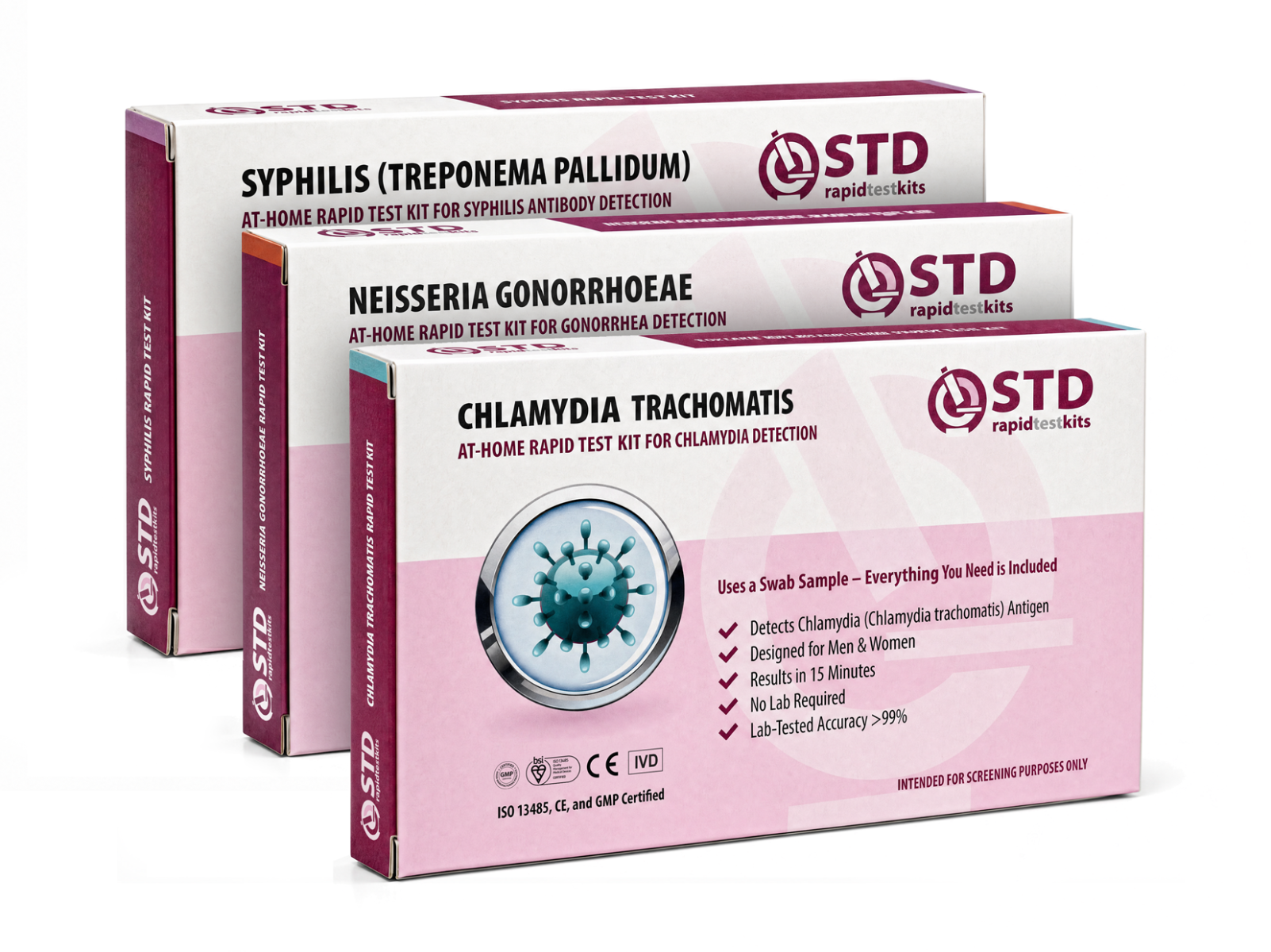
Testing is the second hurdle. For many midlife women, the idea of sitting in a sexual-health clinic waiting room next to people their children's age is enough to delay the visit indefinitely. The discomfort is understandable. It is also exactly the gap that at-home testing closes.
Modern at-home rapid tests use the same self-collected swab or fingerstick blood sample as a clinic. The lateral-flow chemistry is different from the laboratory NAAT (nucleic acid amplification test) that a clinic uses, but for screening purposes, particularly when used after the correct window period for each infection, at-home rapid kits give a useful answer in about 15 minutes. A positive result is worth confirming with a clinic NAAT. A clear negative on a routine screen, taken at the right interval after a new partner, is the signal that lets a woman approach her next encounter without low-grade anxiety in the back of her mind.
The framing matters. Routine testing serves as a baseline rather than an accusation, the same way an annual mammogram or a routine blood-pressure check serves as a baseline.

What a Full Midlife Screening Actually Covers
“Get tested” is generic advice. The useful version is specific. A complete sexual-health screen for a midlife woman re-entering the dating world covers the most common bacterial and viral infections that are detectable in a self-collected sample. Different infections require different sample types, and different windows from exposure before they are reliably detectable. Knowing the difference avoids the most common testing mistake, which is testing too early after a new exposure and getting a falsely reassuring negative.
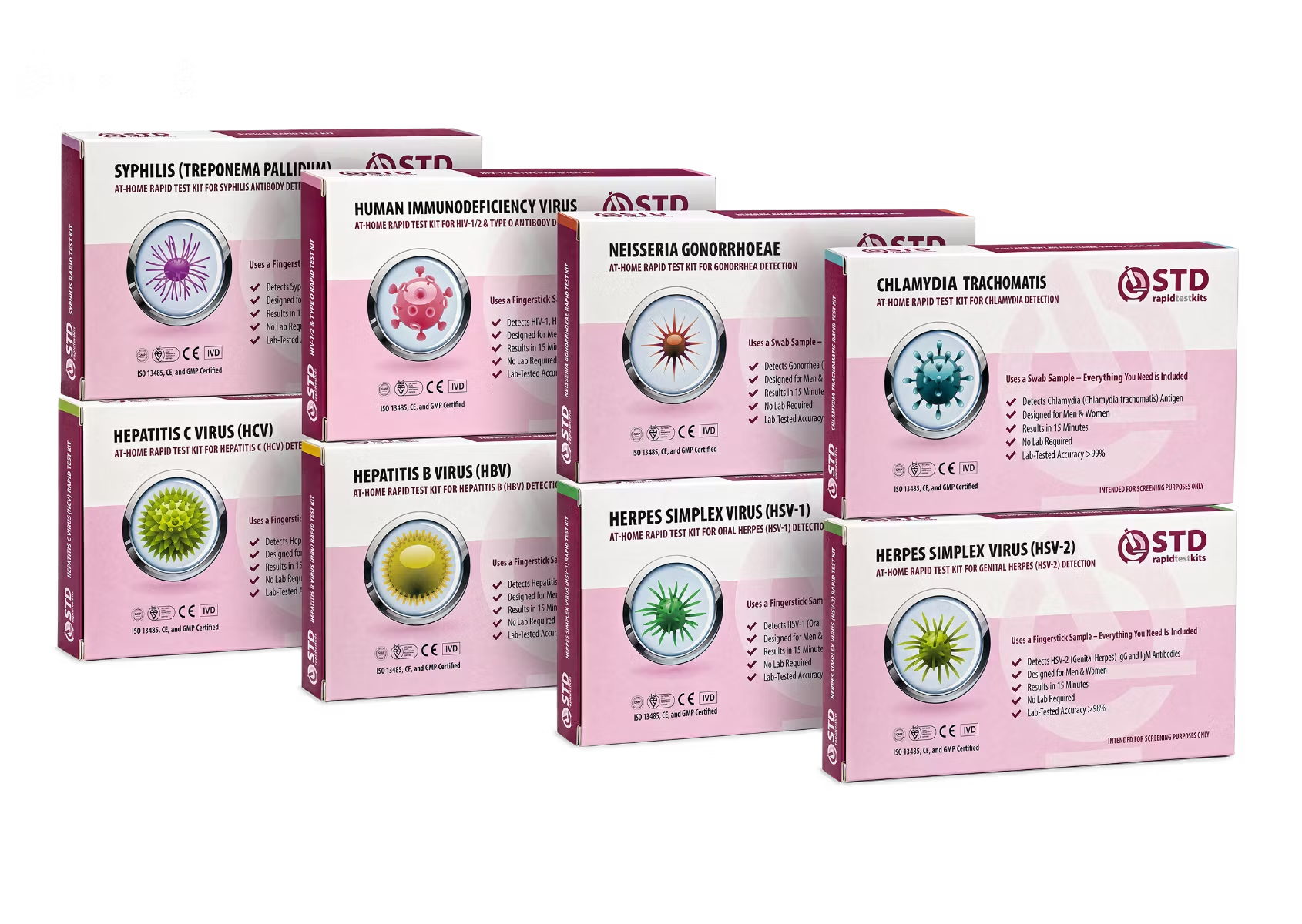
For women who want a single screen rather than serial visits, a multi-infection at-home rapid kit covers most of the panel in one session. The kit will not replace a clinic NAAT for confirmation of a positive result, but as a screening pass, it surfaces the cases that need follow-up and reassures the cases that do not. CDC screening guidance recommends routine sexual-health follow-up after a new partner, particularly when symptoms appear.
| Infection | Sample type | Reliable detection window after exposure |
|---|---|---|
| Chlamydia | Vaginal swab | About 14 days |
| Gonorrhea | Vaginal swab | About 14 days |
| Trichomoniasis | Vaginal swab | About 1 to 4 weeks |
| HPV | Vaginal swab | Detectable when present; routine cervical screening |
| Syphilis | Fingerstick blood | 3 to 6 weeks |
| HIV (4th-generation antigen-antibody) | Fingerstick blood | 3 to 6 weeks |
| HIV (antibody-only) | Fingerstick blood | Up to 12 weeks |
| Hepatitis B | Fingerstick blood | 3 to 9 weeks |
| Hepatitis C | Fingerstick blood | 8 to 11 weeks |
| HSV-1 / HSV-2 (antibody) | Fingerstick blood | Up to 12 weeks for full seroconversion |
Treatment Is Not the End of Desire
An STI diagnosis is a treatable medical condition, not a moral verdict. The bacterial infections that drive most of the rising rates among midlife women, chlamydia, gonorrhea, syphilis, and trichomoniasis, are all treatable with antibiotics. Most courses are short. Most cures are complete. Partner notification and a single follow-up retest at the recommended interval close the loop.
The viral infections, herpes simplex and human papillomavirus, are managed rather than cured, but the management is well-established and rarely interrupts a sex life of any age. Daily suppressive therapy reduces HSV-2 transmission to a partner and reduces the frequency of outbreaks. The HPV strains that cause genital warts and most cervical cancers are still detectable on a routine swab, and ongoing cervical screening per the recommended schedule catches changes early enough to treat them.
The clinical picture for HIV in 2026 is also dramatically different from the cultural memory many women in this age group are working from. Modern antiretroviral therapy makes HIV a manageable chronic condition, and effective treatment that suppresses the virus to undetectable levels prevents transmission to a sexual partner. Pre-exposure prophylaxis (PrEP) is available for women who have ongoing risk. None of this should encourage carelessness. It should reframe the fear that an HIV diagnosis at 55 ends a person's sexual life. It does not. The earlier the diagnosis, the more straightforward the treatment course.
The pattern that matters most is early detection. The longer an infection goes untreated, the more it can damage the upper reproductive tract, the more partners it potentially exposes, and the more complicated the eventual course of treatment. Routine testing is the lever. A diagnosis is not the end of intimacy. Silence is.
Bringing It All Together
Divorce at 52 opens a new chapter rather than closing one. The chapter has more options than the previous one and slightly different math. Dating apps changed the speed of meeting people, menopause changed how a body responds to potential infection, and cultural silence did not change at all. That last gap is the one each woman has to close on her own. The protective routine for midlife dating is short and worth treating as ordinary medical hygiene rather than a chore.
None of this is punishment. These are routine maintenance steps for a sex life meant to last decades after divorce. The freedom to say yes is more freeing when there is no quiet doubt attached.
- Use condoms with new partners until both have current negative results.
- Test routinely, every three to six months while actively dating, or before stopping condom use with a new exclusive partner.
- Talk to a clinician about screening rather than waiting for symptoms. Most chlamydia and gonorrhea cases in women cause no early symptoms at all.
- Choose the testing format you will use in practice, whether a clinic visit, a mail-in lab test, or an at-home rapid kit.
FAQs
- Am I really at risk for STIs at my age?
- Yes. CDC surveillance data show that adults 55 and older are one of the fastest-growing cohorts for new STI diagnoses, with sharp rises in syphilis, gonorrhea, and chlamydia over the past decade. Within that broader group, the 65-and-older subgroup shows the steepest percentage increases of any age cohort in recent years. Biology does not adjust for age, divorce papers, or grandchildren. As long as sexual contact is happening with new partners, the underlying transmission risk is still there.
- How can I tell if it is menopause or an STI?
- By itself, the symptom list cannot tell you. Burning, dryness, irritation, and spotting after sex can come from either declining estrogen or an active infection like chlamydia, gonorrhea, or trichomoniasis. The reliable answer comes from a swab. If symptoms started after a new partner or do not improve with standard menopause care, ask a clinician for a full STI panel rather than assuming hormones.
- Is it awkward to ask a new partner about testing?
- It feels awkward for about thirty seconds, then it stops. A short version that works in most situations: "I would like us to swap recent test results before we have sex without condoms. When were you last tested?" If a partner refuses to answer, that is the answer. A partner who is comfortable with the question is also more likely to be a comfortable partner in other ways.
- Do at-home STI test kits actually work?
- Yes. Modern at-home rapid kits use the same self-collected vaginal swab or fingerstick blood sample as a clinic, and lateral-flow chemistry returns a result in about 15 minutes when used after the correct window period. They are reliable as a screening test. A positive result should be confirmed with a clinic NAAT, but a clear negative on a routine screen, taken at the right interval, is solid information for everyday dating decisions.
- If I already caught an STI, is my sex life over?
- Not at all. The bacterial infections that drive most rising rates (chlamydia, gonorrhea, syphilis, trichomoniasis) are curable with antibiotics. Herpes and HPV are manageable, not curable, but neither one prevents an ongoing sexual relationship when handled openly. HIV is a manageable chronic condition with modern treatment, and effective therapy prevents transmission to a partner. Early diagnosis makes every one of those scenarios easier.
- Can I get HIV after menopause?
- Yes, and several biological factors raise the per-act risk slightly compared with younger women. Thinner vaginal tissue and reduced protective flora make micro-tears and infection acquisition more likely. The protective routine is the same as at any age: condoms with new partners until both have current negative results, regular HIV testing if dating new partners, and a conversation with a clinician about pre-exposure prophylaxis (PrEP) if ongoing risk applies.
- What if I feel fine? Do I still need testing?
- Yes. A large share of chlamydia and gonorrhea cases in women cause no early symptoms at all, which is why CDC screening guidance is built around routine testing rather than symptom-driven visits. Feeling fine is the most common state for someone with an early infection. Routine testing is how those cases get caught before they cause damage.
- How often should I test if I am dating again?
- Every three to six months while actively dating is the practical baseline, with one fresh panel before any new exclusive partner stops using condoms. The window period for each infection matters more than the calendar interval. Testing too early after a new exposure can produce a falsely reassuring negative, so time each test to the appropriate window for the specific infection rather than rushing it the morning after.
- U.S. Centers for Disease Control and Prevention. STI screening guidance and surveillance overview, including data on rising rates among adults 55 and older.
- U.S. Centers for Disease Control and Prevention. HIV transmission, testing, and prevention data including PrEP and treatment-as-prevention.
- National Institute on Aging. Menopause overview covering vaginal tissue changes, microbiome shifts, and sexual-health implications for older women.
- World Health Organization. Sexually transmitted infections fact sheet, including global trends and screening recommendations.
- U.K. National Health Service. Menopause symptoms, sexual-health considerations, and clinical screening guidance for women over 50.
- U.S. Centers for Disease Control and Prevention. Condom effectiveness and correct-use guidance for STI prevention.
