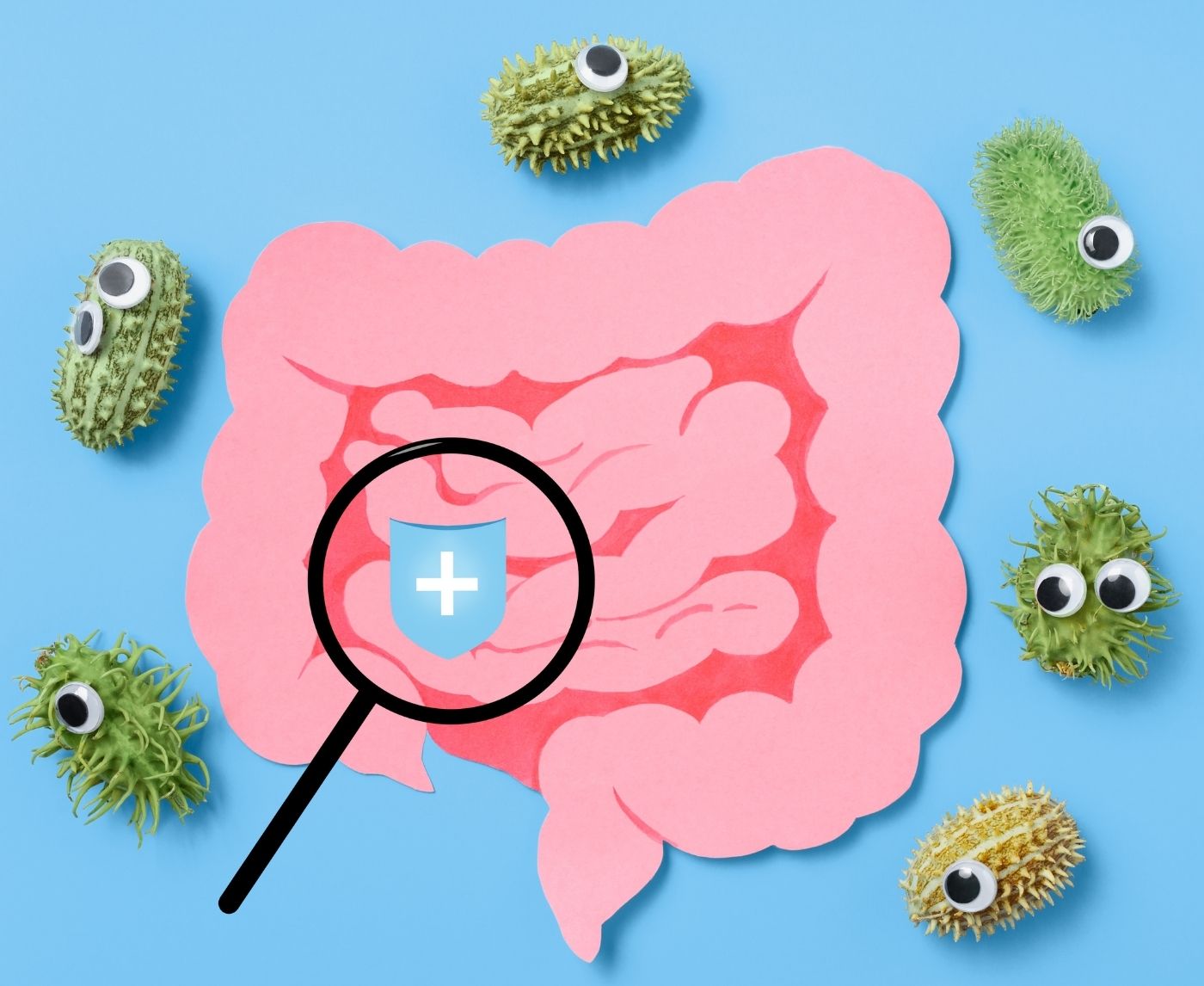

Published: December 2025 | Last updated: April 2026 | Editorial review and quality control: Martina N.
Probiotics show up in nearly every wellness aisle now, and the marketing keeps creeping closer to sexual health. Vaginal probiotics. Probiotics for “intimate balance.” Probiotics that supposedly lower STI risk. The research is more cautious than the labels suggest, and the gap between what probiotics can do and what condoms and testing do is wider than most product copy admits.
Here is the version supported by the evidence. Certain Lactobacillus strains can help maintain or restore a healthy vaginal microbiome. A healthy vaginal microbiome is associated with lower risk of bacterial vaginosis (BV), and BV itself is linked to higher susceptibility to several sexually transmitted infections including HIV. So probiotics may indirectly reduce risk for some women by supporting the conditions that make infection harder. They do not directly stop transmission, they do not work for every person, and they cannot replace the basics of barrier protection, vaccination where available, and regular testing.
This article walks through what the evidence says, where the research is preliminary, which strains have human-trial data, and where probiotics fit alongside the proven tools.
Can probiotics reduce STD risk?
Possibly, in a narrow and indirect way. Lactobacillus-based probiotics (especially L. rhamnosus GR-1 and L. reuteri RC-14) have human-trial evidence for reducing bacterial vaginosis recurrence. Because BV is associated with higher risk of acquiring HIV, herpes, chlamydia, gonorrhea, and HPV, supporting the vaginal microbiome may modestly lower indirect STI susceptibility. Probiotics do NOT directly prevent any specific STI and cannot replace condoms, HPV/hepatitis B vaccination, HIV PrEP, or regular STI testing.
Key Takeaways
- Probiotic strains Lactobacillus rhamnosus GR-1 and L. reuteri RC-14 have the most clinical evidence for reducing bacterial vaginosis recurrence, which can lower indirect STI risk for some women.
- Probiotics do not directly prevent any specific STI and cannot replace condoms, HPV/hepatitis B vaccination, HIV PrEP, or regular STI testing.
How vaginal Lactobacillus shapes infection risk
The vagina has its own microbiome, and in most healthy reproductive-age women it is dominated by Lactobacillus species. These bacteria do two specific jobs that matter for STI biology.
First, they ferment glycogen in vaginal cells into lactic acid, which holds the local pH around 3.8 to 4.5. That acidic environment is hostile to most pathogenic bacteria and to many viruses, including HIV under laboratory conditions. Second, several Lactobacillus strains produce hydrogen peroxide and bacteriocins, small antimicrobial peptides that inhibit the growth of competing organisms.
When Lactobacillus dominance breaks down, the vaginal microbiome shifts toward a more diverse mix of anaerobic bacteria. That state is bacterial vaginosis, the single most common vaginal condition in women of reproductive age. The CDC's BV treatment guidelines note that BV is associated with increased risk of acquiring HIV, herpes simplex virus type 2, gonorrhea, chlamydia, trichomoniasis, and HPV (CDC STI Treatment Guidelines, bacterial vaginosis). The mechanism is partly mechanical (loss of the protective acid barrier) and partly inflammatory; BV-associated bacteria produce enzymes that degrade cervical mucus and recruit HIV target cells to the genital mucosa.
So the chain of reasoning behind probiotics for STI risk is: probiotics support Lactobacillus dominance, Lactobacillus dominance suppresses BV, and suppressing BV reduces a known risk multiplier for several STIs. The chain is plausible and partly supported by data. It is also several steps removed from saying probiotics prevent STIs.
One scope note. The vaginal microbiome work above is specific to female anatomy. Penile and urethral microbiome research exists but is far thinner, and we will not extrapolate from vaginal data to claims about male sexual health.
Two specific mechanisms matter for STI biology:
- Lactic acid production. Lactobacillus ferments glycogen in vaginal cells into lactic acid, holding pH around 3.8 to 4.5. That acidic environment is hostile to many pathogens.
- Antimicrobial peptides. Several strains also produce hydrogen peroxide and bacteriocins, which directly inhibit the growth of competing organisms.
When this dual defence breaks down, BV-associated anaerobes can take over, degrade cervical mucus, and recruit HIV target cells to the genital mucosa.
What the evidence shows for specific STIs
The strongest signal in the literature is for bacterial vaginosis recurrence, not for direct STI prevention. Systematic reviews of probiotic supplementation alongside or after antibiotic treatment for BV have found a modest reduction in 1-month recurrence rates, with the effect strongest for protocols using oral plus vaginal Lactobacillus rhamnosus GR-1 and Lactobacillus reuteri RC-14. Effects on longer-term recurrence (6 to 12 months) are less consistent, and many trials are small.
For HIV specifically, the picture is preliminary. Observational studies show that women with Lactobacillus-dominant microbiomes have lower rates of HIV acquisition than women with diverse anaerobic communities, but this is correlation, not a probiotic intervention trial. Randomized trials of vaginal probiotics for HIV prevention have not been completed at scale, and current public-health guidance for HIV prevention (PrEP, condoms, U=U for partners with HIV) does not include probiotics (CDC, Preventing HIV with PrEP).
For chlamydia and gonorrhea, there is no human-trial evidence that probiotics reduce acquisition. The infections are caused by specific pathogens (Chlamydia trachomatis and Neisseria gonorrhoeae) that infect the columnar epithelium of the cervix, urethra, rectum, and pharynx. A healthier vaginal microbiome may make initial colonization slightly harder. It is not a barrier in the way a condom is.
For herpes, syphilis, and HPV, there is no meaningful evidence that probiotics affect transmission or progression. These infections do not depend on bacterial coinfection in the way BV-associated organisms shape HIV risk, and the proposed mechanisms simply do not apply.

Why probiotics cannot replace condoms or testing
This part is worth being direct about, because supplement marketing tends to imply otherwise. Three reasons probiotics sit alongside, never in place of, the proven tools.
One: probiotics do not act at the moment of exposure. A condom physically blocks pathogen contact during sex. A probiotic capsule taken yesterday adjusts your background microbiome, which may shift baseline susceptibility. It does not stop a specific exposure event from causing infection.
Two: efficacy varies enormously by strain, dose, and route. Many over-the-counter probiotic products contain Lactobacillus acidophilus, which is well-studied for digestive applications but a poor colonizer of the vagina compared with L. crispatus, L. gasseri, L. jensenii, or the GR-1 / RC-14 pair specifically validated in urogenital studies. Two probiotics on the same shelf labeled “for women's health” can have completely different microbiome effects depending on which strain identifier is inside.
Three: the time horizon is wrong. Probiotic effects on the vaginal microbiome typically take weeks to consolidate, and they fade if dosing stops. STIs can be acquired in a single exposure. The protective tools you need at the moment of exposure are barrier methods (condoms, dental dams) and biomedical prevention (HIV PrEP for those at substantial risk, HPV vaccination, hepatitis B vaccination).
Probiotics work in a specific scenario, the way a micronutrient supplement helps someone with a documented deficiency. Outside that scenario, the effect is modest and the baseline tools matter more. Probiotics are still no replacement for proven barrier methods or proven treatments.
- Wrong moment. Probiotics adjust background microbiome conditions over weeks. A condom physically blocks pathogen contact during a single exposure event.
- Wrong precision. Off-the-shelf probiotic species and doses vary widely; many products use strains studied for digestion, not for vaginal colonization.
- Wrong duration. Probiotic effects fade if dosing stops. STIs can be acquired from a single exposure, with no second chance.
Which probiotic strains have the most evidence
Probiotic labels list strains using a three-part name: genus (Lactobacillus), species (rhamnosus, reuteri, crispatus, etc.), and a specific strain identifier (GR-1, RC-14, DSM 14869, CTV-05). The strain identifier matters because two probiotics on the same shelf labeled “Lactobacillus rhamnosus” can behave very differently depending on which strain is inside.
The pair with the most published human data for vaginal applications is Lactobacillus rhamnosus GR-1 combined with Lactobacillus reuteri RC-14. These are the strains studied for BV recurrence reduction, and they have shown reasonable colonization of the vaginal mucosa even when delivered orally. Lactobacillus crispatus CTV-05 has more recent trial data for BV recurrence with vaginal-only delivery, including a randomized trial published in the New England Journal of Medicine in 2020.
Strains commonly sold but with weaker urogenital evidence include generic Lactobacillus acidophilus, Bifidobacterium animalis, and various blended “women's health” mixes that do not specify strain identifiers at all. Those may still help digestive health, which is what most general probiotics are formulated for. They are not the strains BV studies relied on.
Dosage in published BV trials typically ranges from 1 billion to 10 billion CFU (colony-forming units) per day (NIH Office of Dietary Supplements, probiotics fact sheet). Trial durations range from 30 days to 6 months, with most recurrence outcomes measured at the 30-day mark. Talk to a clinician before starting any vaginal-route probiotic, especially during pregnancy, and look for products that name a specific strain identifier rather than just a species.
| Strain | Delivery route in trials | Primary evidence | Notes |
|---|---|---|---|
| L. rhamnosus GR-1 + L. reuteri RC-14 | Oral or vaginal | BV recurrence reduction across multiple randomized trials | Largest combined dataset; oral capsules can colonize vaginally |
| L. crispatus CTV-05 | Vaginal only | Randomized trial (NEJM 2020) on BV recurrence | Newer single-strain product; vaginal application required |
| L. acidophilus (generic) | Oral | Digestive-health applications | Poor vaginal colonizer; not the strain BV trials relied on |
How probiotics fit alongside testing and protection
A reasonable sexual-health routine for someone considering probiotics looks roughly like this. Treat probiotics as the optional fifth item, not the first.
Condoms or other barrier methods, used correctly and consistently, are the single most effective behavioral tool against STI transmission for most pathogens, with the partial exception of HSV and HPV (which can spread from skin contact outside the area covered by a condom). Vaccination covers HPV (routine through age 26, shared clinical decision-making through age 45 per ACIP guidance, see CDC HPV vaccine recommendations) and hepatitis B (routine in childhood, available in adulthood). For people at substantial risk of HIV exposure, daily oral PrEP or long-acting injectable PrEP is highly effective.
Regular STI testing covers the rest of the gap. The CDC recommends annual chlamydia and gonorrhea screening for sexually active women under 25, annual HIV testing for everyone aged 13 to 64 at least once, more frequent testing for people with multiple partners or other risk factors, and syphilis testing during pregnancy and for at-risk groups. Many infections (chlamydia, gonorrhea, early HIV, early syphilis) cause no symptoms in most cases. Testing is the only way to know.
Probiotics, if you choose to use them, fit in alongside this stack. They may help if you have recurrent BV that has been confirmed by a clinician. They may modestly support vaginal microbiome health in the months after a course of antibiotics, and that is roughly the boundary of where the evidence supports their use.
Where the research is still thin
Direct prevention of STI acquisition by probiotics is not established for any specific infection. The HIV correlation data is suggestive, the BV recurrence data is the strongest, and the rest is extrapolation.
Long-term effects (over 12 months) on vaginal microbiome stability are mixed. Some studies show probiotic-treated women maintain Lactobacillus dominance better than placebo at 6 months. Others show the difference fades by 9 to 12 months without continued dosing.
Strain-by-strain comparisons are limited. Most trials test single strain combinations against placebo or no treatment. We do not have head-to-head data telling us GR-1 plus RC-14 is better or worse than CTV-05 for any specific outcome.
Dose-response is not well characterized. The 1 to 10 billion CFU range used in trials is wide, and we do not know whether higher doses give proportionally better results, no incremental benefit, or different microbiome effects.
Pregnancy data is reassuring overall (oral Lactobacillus probiotics are generally considered safe in pregnancy). BV recurrence data specifically in pregnant women is more limited than in non-pregnant adults. Always check with the clinician managing your pregnancy before starting any new supplement.
Male sexual-health probiotic data is even thinner than female data. There is some research on penile and gut microbiome composition and STI susceptibility, but nothing close to the evidence base for vaginal probiotics, so this article does not extend its claims to male readers.
BV may increase a woman's susceptibility to STIs, including HIV, herpes simplex virus, chlamydia, and gonorrhea.
Practical guidance for women considering probiotics
If you are weighing whether probiotics make sense for you, a short framework.
If you have recurrent BV (three or more episodes in 12 months), ask your clinician about adjunctive probiotics. The evidence is strongest in this scenario, and the clinical pattern is to combine probiotics with antibiotic treatment rather than substituting one for the other. The CDC's BV treatment guidelines list metronidazole and clindamycin as first-line agents; probiotics are an emerging adjunct, not a replacement.
If you are otherwise healthy with no symptoms, probiotics are unlikely to harm you and equally unlikely to provide measurable STI risk reduction. For most healthy people, the highest-yield investment is a testing calendar, not a supplement shelf.
If you are male, the question of vaginal probiotics does not apply. There is some research on penile microbiome composition and STI susceptibility, but the evidence base is much thinner. Standard prevention (condoms, vaccination, testing, PrEP if indicated) is the practical answer.
One commercial-disclosure note. This article is published by stdrapidtestkits.com, which sells at-home rapid STI test kits. We do not sell probiotics. Our recommendation that probiotics are a possible (and limited) adjunct rather than a replacement for testing reflects the evidence, not a competitive position.
Quick decision guide
- Recurrent BV (3+ episodes in 12 months): ask your clinician about GR-1/RC-14 or CTV-05 alongside antibiotic treatment.
- Healthy with no symptoms: probiotics offer little measurable benefit; routine testing is a higher-yield use of resources.
- Male readers: vaginal microbiome data does not extrapolate; rely on condoms, vaccination, testing, and PrEP if indicated.
Lifestyle factors that affect the vaginal microbiome
Probiotic supplements are one input. Several daily-life factors shape the vaginal microbiome more consistently than what is in a capsule, and addressing them is often higher-yield than buying a premium probiotic.
Antibiotics taken for any reason (urinary tract infections, dental work, sinus infections, acne) reduce Lactobacillus populations along with the target pathogen. The microbiome usually rebounds within weeks. During and after a course, the risk of yeast overgrowth and BV is elevated. This is the scenario where targeted Lactobacillus probiotics have the most evidence as a recovery aid.
Hormonal status matters. Estrogen drives glycogen production in vaginal cells, which feeds Lactobacillus. Low-estrogen states (postpartum, breastfeeding, perimenopause, menopause, certain hormonal contraceptives) reduce that fuel supply, which can shift the microbiome toward less Lactobacillus dominance.
Smoking is associated with reduced Lactobacillus crispatus dominance and elevated BV risk in multiple cohort studies. The exact mechanism is not fully worked out, but smoking-related changes in vaginal cytokine levels are part of it.
Douching consistently disrupts the vaginal microbiome and is associated with higher BV rates. The CDC's BV information page lists douching as a behavior that “upset[s] the normal balance of vaginal bacteria, increasing your risk for getting BV” (CDC, About Bacterial Vaginosis). The vagina is self-cleaning; soap and water on the external vulva is enough.
Diet effects on the vaginal microbiome are real but modest. High-fiber diets and reduced sugar intake are weakly associated with healthier vaginal microbiome profiles. Yogurt and kefir provide live cultures, mostly digestive-tract strains rather than vaginal ones, and the dose is generally below clinical-trial thresholds.

Common myths about probiotics and sexual health
Three claims that show up repeatedly in marketing copy and that the evidence does not support.
Myth 1: Probiotics are a natural alternative to condoms. They are not an alternative to anything. Condoms physically block pathogen transmission at the moment of exposure. Probiotics adjust background microbiome conditions over weeks. The two address different problems on different timescales, and one cannot substitute for the other.
Myth 2: Yogurt is a vaginal probiotic. Yogurt and kefir contain live cultures, mostly Streptococcus thermophilus, Lactobacillus bulgaricus, and a few Lactobacillus and Bifidobacterium species selected for digestive applications. Dietary intake of yogurt delivers far below the CFU dose used in clinical trials, and the strains used in food fermentation are not the ones BV research relied on.
Myth 3: Probiotics treat active STIs. They do not. Chlamydia and gonorrhea need antibiotics. Syphilis needs penicillin. Active HIV needs antiretroviral therapy. HPV-related cervical changes need clinical follow-up. Probiotics may help with BV recurrence after appropriate treatment, but they are not a substitute for the treatment itself.
The cleaner mental model: probiotics are a possible ally for one specific condition (BV recurrence) with downstream benefits for some women. They are not a sexual-health replacement system.
Frequently asked questions
- Can probiotics prevent every sexually transmitted infection?
- No. Probiotics have human-trial evidence for reducing bacterial vaginosis recurrence, which is associated with elevated risk of several STIs. They do not directly prevent any specific STI. Condoms, HPV and hepatitis B vaccination, HIV PrEP for those at substantial risk, and regular testing remain the proven prevention tools.
- Which probiotic strains have the most evidence for vaginal health?
- Lactobacillus rhamnosus GR-1 combined with Lactobacillus reuteri RC-14 has the largest published human-trial dataset for BV recurrence reduction, including both oral and vaginal delivery. Lactobacillus crispatus CTV-05 has more recent trial data for vaginal-only delivery. Look for products that name a specific strain identifier.
- How long do probiotics take to affect the vaginal microbiome?
- Detectable effects on vaginal microbiome composition typically take 2 to 4 weeks of consistent dosing, with most BV recurrence trials measuring outcomes at 30 days and beyond. Effects fade if dosing stops, so probiotics are not a one-time intervention.
- Are probiotics safe to take during pregnancy?
- Oral Lactobacillus probiotics are generally considered safe in pregnancy, but specific BV recurrence data in pregnant women is more limited than in non-pregnant adults. Always check with the clinician managing your pregnancy before starting any new supplement, especially anything intended for vaginal use.
- Can men benefit from probiotics for sexual health?
- The vaginal microbiome literature does not extrapolate to men. There is preliminary research on penile and gut microbiome composition in relation to STI susceptibility, but the evidence base is much thinner. For male readers, standard prevention (condoms, vaccination, testing, PrEP if indicated) remains the practical answer. Note that our at-home trichomoniasis and HPV kits are validated for vaginal self-swab only; male readers needing those tests should see a clinic.
- Do probiotics replace condoms?
- No, and the gap is wider than most supplement marketing admits. A condom stops one exposure event in real time. A probiotic shifts background microbiome conditions over weeks. They solve different problems and neither substitutes for the other.
- How often should I test for STIs if I take probiotics?
- The same frequency as without probiotics. Taking a probiotic does not change your STI-testing calendar. The CDC recommends annual chlamydia and gonorrhea screening for sexually active women under 25, with more frequent testing if you have multiple partners or other risk factors, plus at least one lifetime HIV test for everyone aged 13 to 64.
- Can probiotics help if I currently have BV?
- Probiotics are not a stand-alone BV treatment. The CDC's first-line therapies are metronidazole and clindamycin. Probiotics are an emerging adjunct, used alongside or after antibiotics, with the strongest evidence in women who experience recurrent BV. Talk to a clinician before starting probiotics for an active infection.
- U.S. Centers for Disease Control and Prevention. STI Treatment Guidelines, bacterial vaginosis section. Source for the BV-STI risk associations cited throughout (HIV, HSV-2, gonorrhea, chlamydia, trichomoniasis, HPV) and for first-line BV antibiotic therapy.
- U.S. Centers for Disease Control and Prevention. Preventing HIV with PrEP. Source for the role of pre-exposure prophylaxis in HIV prevention and for the absence of probiotics from current HIV prevention guidance.
- U.S. Centers for Disease Control and Prevention. HPV vaccine recommendations. Source for HPV vaccination age windows, including routine vaccination through age 26 and shared clinical decision-making for adults aged 27 through 45.
- National Health Service (UK). Bacterial vaginosis overview. Source for patient-facing description of BV and general recommendations on intimate hygiene.
- U.S. Centers for Disease Control and Prevention. About Bacterial Vaginosis. Source for behavioral risk factors for BV including douching, multiple partners, and lack of condom use.
- U.S. National Institutes of Health, Office of Dietary Supplements. Probiotics fact sheet for health professionals. Source for the 1 to 10 billion CFU per dose range cited for probiotic supplements and overview of safety considerations.
