





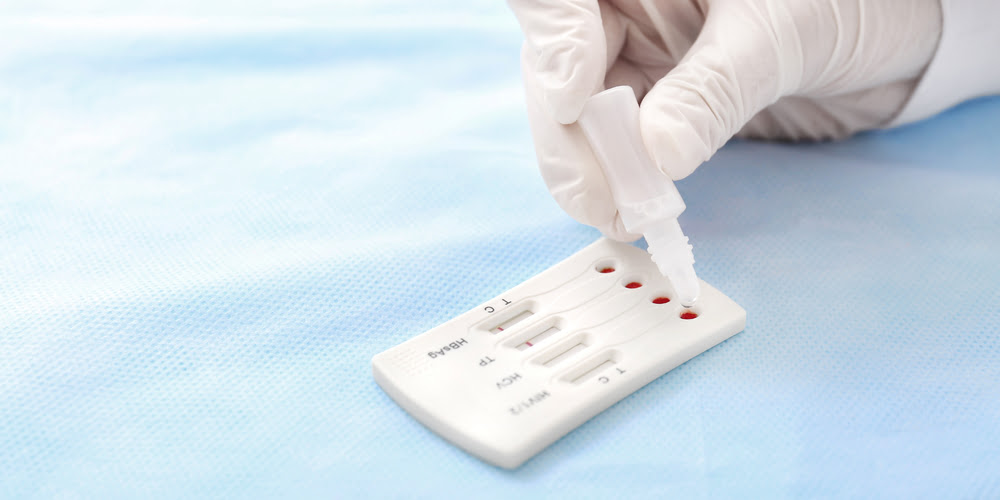

Quick Answer: Donovanosis begins as a painless red bump that slowly ulcerates and bleeds. It’s rare but dangerous if untreated, and completely curable with the right antibiotics.
That First Bump That Doesn’t Hurt (Yet)
Mara noticed it one night after showering. A firm red dot, tucked near her labia. It didn’t hurt. It didn’t itch. It just... existed. She rubbed it with her towel and noticed blood on the fabric. She typed “bleeding bump no pain STD” into her phone, skimming results in the glow of her bathroom mirror. Nothing looked like what she had. Nothing mentioned Donovanosis.
This is how it begins for most: unnoticed or misdiagnosed. Medically, Donovanosis starts as a single, painless, red papule. Over days or weeks, it ulcerates, creating what some researchers describe as a “beefy red” wound that bleeds on contact. It’s not fast, and it doesn’t scream. That quiet progression is what makes it so dangerous, and so often ignored.
Still Alive in the Shadows of Global Health
In the U.S., fewer than 100 cases are reported annually. But that number is misleading. Most doctors here wouldn’t recognize it if they saw it. Diagnostic tools like Giemsa-stained smears or PCR aren’t standard in many clinics, especially if the patient is uninsured, BIPOC, or an immigrant. And globally? The story shifts.
In southern India, Papua New Guinea, parts of South Africa, and northeastern Brazil, Donovanosis remains stubbornly present. Studies have shown prevalence as high as 2–3% of genital ulcer disease cases in certain regions. It’s not “gone.” It’s just not in the spotlight, because those affected are poor, rural, or colonially marginalized. That’s not a coincidence. It’s a pattern.

People are also looking for: Do I Need to Disclose an STD to a Travel Hookup?
Why It’s Misunderstood, and Who Pays the Price
One of the biggest myths about Donovanosis is that it’s “flesh-eating.” Let’s set the record straight: the bacterium Klebsiella granulomatis causes progressive ulceration, yes, but not by necrosis like gangrene. It spreads slowly, damaging skin and soft tissue through inflammation, not actual “eating.” That doesn’t make it less dangerous, but it does make it less monstrous than headlines suggest.
Another myth? “You’d know if you had it, it must hurt.” Except it often doesn’t. The ulcers are painless. They bleed easily but cause minimal discomfort. Some people wait weeks or months before seeking help. During that time, it may spread to thighs, groin, anus, or even internal genital structures.
Shame feeds the delay. “I didn’t want to go in,” one patient confessed in a study from South Africa. “I thought they’d judge me.” That’s not unique to Donovanosis. But when the disease is rare, the stigma is worse. Patients are seen as deviant, dirty, or reckless, when really, they’re just human.
When the Diagnosis Finally Lands
Ravi was 26 when he noticed a second bump forming below the first. He lived outside Bengaluru and finally walked into a small sexual health NGO clinic after a month of avoiding mirrors. A nurse dabbed at his lesion, smeared the fluid on a slide, stained it purple, and viewed it under the scope. She saw the tell-tale Donovan bodies, intracellular bacteria with a “safety pin” appearance. It was Donovanosis.
In better-funded clinics, PCR testing might detect the DNA of K. granulomatis. But most diagnoses still rely on trained eyes and old-school microscopy. Many clinicians in non-endemic countries have never seen a case. That diagnostic blind spot means mislabeling it as syphilis, herpes, or even skin cancer.
Ravi started treatment the same day, 1g of azithromycin weekly, planned for at least three weeks. By week two, his lesions were healing. By week four, they were nearly gone. What saved him wasn’t money. It was access, timing, and a provider who knew what to look for.
Let’s Talk Treatment Like Adults
This part matters. Because too many people never hear it: Donovanosis is curable. Fully. Easily. With the right antibiotics and enough time. The CDC and WHO both recommend azithromycin as first-line treatment, but doxycycline, erythromycin, ciprofloxacin, or Bactrim are also effective. Duration? Until the lesions are completely gone, usually three weeks or more.
Sexual partners from the past 60 days may need treatment, even if they show no symptoms. But public health guidelines vary here. Some experts say routine partner treatment isn’t always required. Still, testing partners, and using protection until full clearance, is a sex-positive way to care for each other’s bodies and peace of mind.
And if you’ve had any genital ulcers, especially in endemic regions or after unprotected sex, you should also test for HIV. Donovanosis doesn’t just hurt skin, it makes it easier for HIV to enter your system, or spread to someone else. That’s not a scare tactic. It’s a biological reality.
Check Your STD Status in Minutes
Test at Home with RemediumHIV Rapid Test Kit
 For Men & Women
 Results in Minutes
 No Lab Needed
 Private & Discreet
Order Now $33.99 $49.00
Consent Is Protection, and So Are Condoms
There’s nothing dirty about pleasure. But pleasure should never come at the cost of silence. Use condoms and dental dams, especially during travel, or with new partners. Know the difference between a razor nick and something that bleeds too easily. And if someone you love has ulcers, treat them like someone you care about. Encourage testing. Share your own story. Push past the shame.
Donovanosis doesn’t need to be a secret STI. It needs to be a known one, talked about, tested for, and treated with care, not cruelty. That shift starts with people like you Googling strange symptoms, and getting real answers.
When It Doesn't Go Away: What Happens Without Treatment
People wait. That’s the most common mistake. Weeks pass. The red bump turns soft at the center. Then it breaks. The bleeding starts, sometimes just a smear on the toilet paper, sometimes enough to leave a stain on your sheets. It doesn’t scab. It doesn’t crust. It just stays raw. Slowly, steadily, it grows outward. One ulcer becomes two. The edges raise. The center deepens.
In extreme cases, well documented in historical literature and more recent case reports, the ulcers can coalesce, erode surrounding skin, and cause anatomical distortion. In the scrotum or vulva, tissue loss becomes severe. In long-neglected cases, the disease may even extend internally: to the urethra, cervix, pubic bone, or abdomen. In people with compromised immune systems, it may spread hematogenously, meaning it enters the blood and travels to distant organs.
It’s not an apocalypse. It’s not a zombie disease. But it's devastation by delay. Not from the bacteria themselves, but from the systems that let people bleed and beg and hide instead of heal. Studies from Brazil and Papua New Guinea have shown permanent scarring, genital disfigurement, and increased susceptibility to secondary infections in cases that went months, or years, without care.
Not Just Biology, Why This STI Still Exists
If Donovanosis is rare, curable, and documented, then why does it persist in 2025? The answer isn’t microbiology. It’s economics, geography, and global neglect.
In 2001, the World Health Organization included Donovanosis in its global STD control strategy. The idea was to eliminate it through syndromic management: if someone had genital ulcers, they’d be treated for all likely culprits, including syphilis and Donovanosis, without waiting for lab results. That helped, for a while. But as case numbers dropped, funding did too. Diagnostic supplies were reallocated. Clinician training programs dissolved. Surveillance faded.
In a 2019 paper published in the Journal of Global Infectious Diseases, researchers argued Donovanosis had become a “forgotten STI”, not because it was eradicated, but because the global health community moved on without finishing the job. In many rural regions, the bacteria still pass silently from partner to partner. What disappears from headlines doesn’t disappear from bodies.

People are also reading: The 3 Rashes That Get Mistaken for HIV (And What They Really Are)
“I Thought It Was Cancer” – The Psychological Toll
Let’s talk fear. Not the Hollywood kind, the kind that keeps people from saying anything at all. One man in KwaZulu-Natal told a health worker he thought his ulcer was “flesh rotting” cancer. He hid it for four months. Another woman in Trinidad came in only when her boyfriend asked why she bled every time they had sex. Her diagnosis? Donovanosis, stage two, already spreading toward her perineum.
The emotional harm of being “the only one” is its own epidemic. In areas where sexual health education is minimal, and STD stigma is weaponized, people don’t just delay care, they dissociate. And when they finally seek help, the healthcare system often punishes them for waiting. The doctor flinches. The nurse doesn’t mask her disgust. The shame calcifies.
This isn’t a horror story. It’s a systems failure. Because no one ever told them: “This is real. This is okay. This is fixable.”
The HIV Connection That Nobody Talks About
Let’s be brutally clear. Genital ulcers from Donovanosis aren’t just physically painful, they’re biologically risky. Open wounds offer a direct path into the bloodstream for viruses like HIV. Studies dating back decades show that ulcerative STIs dramatically increase the likelihood of both acquiring and transmitting HIV during sex. That risk is real whether the ulcer is tiny or extensive, symptomatic or not.
In fact, a 2017 review in *Sexually Transmitted Infections* emphasized that syndromic ulcer management, including Donovanosis treatment, should be seen as an HIV prevention strategy in high-burden areas. But when syndromic management fades, or ulcer STIs are considered “rare and irrelevant,” that connection is lost. And people get infected for reasons they didn’t even know were risks.
So yes, treating Donovanosis is prevention, not just of pain, but of something much more permanent. Ignoring it isn’t neutral. It’s a decision with consequences.
Sex Without Shame Starts With Clarity
Let’s take a moment to reset. If you’re reading this because something on your body doesn’t look or feel right, here’s what I need you to hear: your concern is valid. You’re not disgusting. You’re not dirty. And you are not alone.
Testing isn’t a betrayal of trust. It’s an act of care, for yourself and anyone you’ve shared skin with. If you live in or travel to a region where Donovanosis exists, you deserve providers who know what to look for. If you’re a provider in the U.S., Canada, or Europe, remember: rare doesn’t mean gone. Ask questions. Take smears. Rule it in, not just out.
And if you’re someone who had a red bump that turned into a bleeding sore and you're still waiting for it to “go away on its own,” let this be the moment you stop waiting.
Check Your STD Status in Minutes
Test at Home with Remedium8-in-1 STD Test Kit
 For Men & WomenResults in MinutesNo Lab NeededPrivate & Discreet
Order Now $149.00 $392.00
For all 8 tests
“How Do I Tell Them?” – The Hardest Conversation
You finally have a name for it. You’ve seen the ulcer. Maybe even started treatment. But there’s one more thing sitting heavier than the diagnosis itself: telling the person you were with. Or the one you love. Or both.
Donovanosis isn’t as headline-grabbing as chlamydia or HIV, but the reaction can be just as painful. One patient described her girlfriend backing away mid-sentence. “She Googled it while I was still talking. Then said nothing and left.” Another man in Johannesburg told a partner by texting, “I think you should get tested.” He never got a reply.
But there are better ways. Try this: “I found out I have an STI. It’s rare, and I didn’t know I had it. You might not either, but I want you to be safe.” Notice that it’s not an apology. It’s a care offering. It’s not shame; it’s solidarity.
And the reality? Your partner might be relieved. Some even respond with gratitude. “Thank you for telling me,” one woman texted back. “That’s brave. I’ll go too.” What they remember isn’t the diagnosis. It’s how you handled it.
Case Study: “I Thought It Was Herpes. No One Even Mentioned Donovanosis.”
Ty, 32, nonbinary, had been living in Berlin for two years when they first noticed a sore after a summer fling. It wasn’t painful, just weepy. They assumed herpes and got tested, but everything came back negative. Twice. Doctors shrugged. One told them, “Maybe it’s a fungal thing.” Another suggested Ty was exaggerating.
Six weeks in, the sore had spread. It was larger, deeper, and had a ridge forming on the edge. Ty returned to the sexual health clinic, this time asking for a swab. The doctor hesitated, then said, “This looks like something I’ve only seen once, Donovanosis.” A biopsy confirmed it. Antibiotics cleared it within a month.
“It wasn’t the sore that messed me up,” Ty says. “It was feeling invisible. Like my pain didn’t register until it was textbook.” For queer and nonbinary people, whose symptoms may not fit cis-centered diagnostic templates, Donovanosis isn’t just rare, it’s easy to miss.
The lesson? If something’s off, keep advocating. Keep asking. Rare doesn’t mean imagined. And one “no” doesn’t mean you stop.
What Healing Really Looks Like
Healing from Donovanosis isn’t just about antibiotics. It’s about shedding fear. About letting someone see you naked and not flinch. About running a finger across scarred tissue and saying, “That’s not shame. That’s survival.”
Lesions will shrink. Bleeding will stop. Skin will mend. But what you carry forward is deeper: the knowledge that your body warned you, that you listened, and that you found answers even when no one was talking about this disease.
You don’t owe the world a sanitized body. You owe yourself a cared-for one. Healing isn’t a return to “before.” It’s a step into knowing. It’s your body reminding you: you noticed. You acted. You healed.

People are also reading: STD Myths That Are Putting You in Danger
Your Next Step, Without Fear, Without Shame
If you’ve made it this far, you already know more than 99% of people ever will about Donovanosis. And if something about this article hit too close, maybe it’s time to stop guessing and start knowing.
Don't wait and wonder, get the clarity you deserve. This at-home combo test kit checks for the most common STDs discreetly and quickly. Peace of mind isn’t just possible, it’s a few clicks away.
FAQs
1. Wait, so what exactly is Donovanosis again?
It’s a sexually transmitted infection that starts off as a harmless-looking red bump and can turn into a bleeding ulcer if left alone. Caused by a bacterium called Klebsiella granulomatis, not a virus. Not herpes. Not cancer. Just rare, weird, and way too under-talked about.
2. Does it hurt?
Wildly, no. Most people say it doesn’t hurt at all, especially in the beginning. That’s part of the problem. It doesn’t scream for attention, it just... hangs around. Until it grows. And bleeds. And maybe scares the hell out of you later.
3. Can I catch it even if I use condoms?
Condoms help a lot, but they’re not magic shields. If your parts are rubbing skin-to-skin outside the covered zones, there’s still a chance. It spreads through direct contact with infected areas, not fluids, so anything uncovered is fair game.
4. I thought it was an ingrown hair. How the hell was I supposed to know?
You weren’t. That’s the point. Most people mistake it for a razor bump, a friction sore, or even a fungal thing. If it bleeds too easily, grows over time, or just doesn’t go away, it deserves a second look. Or a doctor’s look.
5. Can you get Donovanosis from oral sex?
Rare, but technically yes. The bacteria love mucous membranes, and mouths are full of those. Still, most cases come from genital-genital contact, especially in areas where the infection is more common.
6. How soon do symptoms show up?
Usually somewhere between 10 and 40 days after exposure. Sometimes faster, sometimes slower. It’s sneaky like that. And once it starts, it doesn’t stop unless you stop it with meds.
7. Is it curable?
Completely. 100%. No lifelong infection, no shame stamp on your chart. Just a few weeks of the right antibiotics, azithromycin is the go-to, and you’re on your way to healing.
8. Do I have to tell my partner?
Morally, yes. Legally, it depends on where you live. But look, telling someone helps protect them and shows you care. You don’t need a dramatic sit-down. Just honesty, compassion, and a plan. “I found out I have something rare, and I want you to be safe.” That’s it.
9. Could this be why I’m testing negative for herpes but still have a sore?
Absolutely. Donovanosis flies under the radar. If you’ve been tested for herpes or syphilis and it’s all negative but the ulcer is still there, ask your provider to consider rare STIs, including this one. You’re not overreacting. You’re being smart.
10. Can I test for it at home?
Not yet. Diagnosis usually requires a microscope, a tissue swab, or a biopsy. There’s no mail-in test for Donovanosis (yet), but if you're worried about multiple STDs, an at-home combo test can still give you solid peace of mind while you sort things out.
You Deserve Answers, Not Assumptions
Whether you’re staring at a bump, waiting for results, or just needed someone to name the thing no one else talks about, this was for you. Donovanosis is real, rare, and completely treatable. But silence makes it dangerous.
Your body is worthy of attention. Your symptoms are worthy of care. And your peace of mind is closer than you think.
End the guessing game, know your status now. Because knowing isn’t just power, it’s healing in motion.
Sources
CDC – 2021 STD Treatment Guidelines: Donovanosis
Neglected tropical diseases and their impact: Donovanosis case study
Verywell Health – Donovanosis: Causes, Symptoms & Treatment
Medscape – Granuloma Inguinale (Donovanosis)
Wikipedia – Granuloma Inguinale
Indian Journal of Dermatology – Clinical Study of Donovanosis
MedlinePlus – Granuloma Inguinale
Docs Medical Group – Donovanosis in Connecticut


