Published: August 2025 | Last updated: May 2026 | Editorial review and quality control: Martina N.
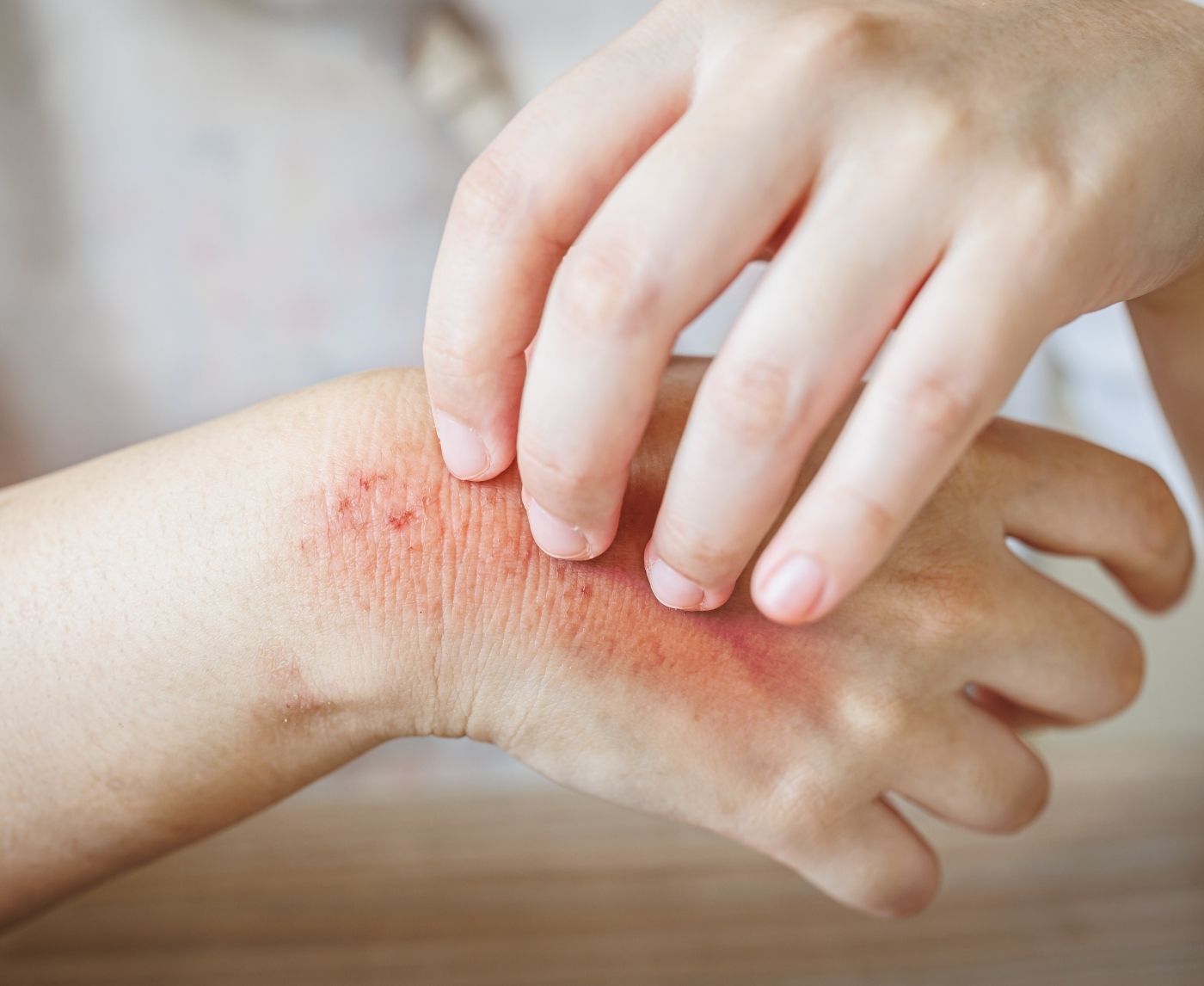
A rash shows up on your chest a few days after a hookup, and your phone is suddenly in your face at 2 a.m. running through every HIV image search result. Most of those rashes are not HIV. Heat rash, drug-reaction rash, and the secondary syphilis rash that mimics it most closely all show up far more often than acute HIV rash does, and each one has its own timing, distribution, and accompanying symptoms that pull it out of the HIV column once you know what to look for. This article walks through what an acute HIV rash actually looks like, the three rashes that get confused with it most, and how to use timing plus testing rather than image-matching to get to a real answer.
Key Takeaways
- Acute HIV rash typically appears 2 to 4 weeks after exposure alongside a flu-like cluster (fever, sore throat, swollen lymph nodes), rather than appearing on its own right after sex.
- Heat rash, drug reactions, and secondary syphilis are far more common rash causes; testing at the right window is the only way to confirm whether HIV is involved.
Why HIV Rash Confusion Happens
HIV does not cause a rash within hours of exposure. When acute HIV does produce a rash, it is part of acute retroviral syndrome, the body's first immune response to the virus, and it usually appears 2 to 4 weeks after exposure alongside fever, sore throat, fatigue, and swollen lymph nodes. The skin pattern by itself rarely shows up alone; it travels with that flu-like cluster.
The reason confusion is so common comes down to two things: timing assumptions and image-search bias. Many people who recently had unprotected sex assume any rash within days of the encounter is a warning sign, even though acute HIV rash is much more of a 2-week-out symptom. Image-search results lean heavily toward severe presentations on light skin, which leaves people with darker complexions and milder presentations unsure whether what they are seeing counts. Both of these factors push readers toward worst-case interpretations.
Anxiety also shapes interpretation. After an exposure scare, people often misread normal body sensations: a flushed cheek becomes "early fever," a slight neck tenderness becomes "swollen lymph nodes," and a heat rash on the chest becomes proof that something is wrong. None of those readings are evidence; they are pattern-matching under stress. The way out: identify what your skin is doing, identify what other symptoms (if any) accompany it, and check the timing against the 2-to-4-week acute HIV window before drawing conclusions.
After an exposure scare, the body often produces sensations that feel like the symptoms you are looking for: a flushed face, throat tightness, a transient ache near the lymph nodes. These are stress responses, not evidence of infection. Use the symptom cluster (fever above 38 °C, sustained sore throat, palpable swollen lymph nodes lasting days, fatigue that disrupts normal activity) and the post-exposure timing as your reference points, not isolated sensations.
What an Acute HIV Rash Actually Looks Like
The acute HIV rash is described in clinical references as maculopapular: small, flat to slightly raised spots, usually 5 to 10 millimeters across, sometimes merging into broader patches. The color is reddish or pink on light skin and can read as purplish, brown, or simply a slightly different skin texture on medium-to-dark complexions. Distribution favors the upper body: chest, back, neck, upper arms, and sometimes the face. Itching is uncommon. The rash usually fades on its own within one to two weeks.
Crucially, the rash does not arrive alone. People with acute HIV typically also have a fever (often 38 to 39 °C), a sore throat, swollen lymph nodes in the neck or groin, fatigue that disrupts normal activity, and sometimes oral ulcers. The NHS guidance on HIV symptoms describes this flu-like cluster as the most common acute presentation. A rash without that cluster is much more likely to be something else.
Two further details narrow the picture. Acute HIV symptoms typically resolve within one to three weeks even without treatment, because the immune system establishes a temporary equilibrium with the virus during this window. That resolution does not mean the infection is gone; it means the acute phase has passed and the virus is now in clinical latency, where it can be detected reliably with antibody testing. The second detail: the rash is sometimes called "morbilliform" because it loosely resembles the measles rash in distribution, though it is generally less severe and rarely affects the conjunctiva or oral mucosa to the degree measles does.
Within 2 to 4 weeks after HIV infection, about two-thirds of people will have flu-like symptoms.
Look-Alike #1: Heat Rash (Miliaria)
Heat rash, clinically called miliaria, happens when sweat ducts get blocked by friction or non-breathable fabric and trapped sweat irritates the surrounding skin. The result is a cluster of small red or pink bumps, often with tiny clear-tipped vesicles, usually on the chest, upper back, neck folds, and skin under tight waistbands or bra straps. It can sting or itch, and it shows up fast, usually within hours of the heat or friction trigger.
A few situational examples help calibrate. A new bumpy rash on the upper back the morning after sleeping in a synthetic shirt during a heatwave is almost certainly miliaria. A red, prickly rash on the inner thighs after a long humid run with friction is almost certainly miliaria. A bumpy chest rash that appears within 24 hours of a sexual encounter and clears with a cool shower and loose cotton is almost certainly miliaria, regardless of the encounter, because acute HIV rash takes weeks rather than hours to develop.
Timing. Heat rash arrives within hours of the trigger; HIV rash arrives 2 to 4 weeks after exposure.
Symptom set. Heat rash is a stand-alone skin problem with no fever, no sore throat, no swollen lymph nodes; HIV rash travels with that flu-like cluster.
Response to environment. Heat rash fades within a few days once the skin cools and the irritant is removed; HIV rash does not respond to a cool shower or a change of clothes.
Look-Alike #2: Drug Reaction Rashes
Drug-induced exanthem is one of the most common causes of new-onset rash in adults. Antibiotics (especially amoxicillin and sulfa drugs), antivirals, NSAIDs like ibuprofen, and even some over-the-counter medications can trigger an immune response that produces a widespread, flat-to-slightly-raised pink or red rash, often starting on the trunk and spreading outward. It can resemble acute HIV rash closely, particularly when fever or sore throat is also present from the underlying infection the medication is treating.
The differentiator is the medication timeline. Drug rashes typically appear 7 to 14 days after starting a new medication on first exposure, and more quickly on re-exposure, often within days. They usually resolve within a week of stopping the offending drug. If a rash appeared after you started a new prescription, that is the first lead worth chasing with the prescribing clinician.
Painful skin, blistering, mucous-membrane involvement (mouth, eyes, genitals), facial swelling, or systemic symptoms beyond what the underlying infection would explain. These can indicate Stevens-Johnson syndrome, DRESS syndrome, or anaphylaxis-adjacent reactions. They are rare, but they justify an immediate clinic or emergency-room visit rather than waiting it out.
Look-Alike #3: Secondary Syphilis Rash
Secondary syphilis is the rash that genuinely overlaps with HIV symptoms in clinical presentation, and the two infections are often tested together because they travel in similar transmission routes. The classic secondary-syphilis rash appears 4 to 10 weeks after the initial painless sore (chancre) of primary syphilis, which many people never notice. It produces flat or slightly raised reddish-brown spots, often symmetrical, that can show up on the trunk and crucially on the palms and soles. Palms-and-soles involvement is unusual for HIV rash and is one of the strongest pointers toward syphilis.
The rash usually does not itch, can be subtle on darker skin, and may fade and recur over weeks. The CDC's syphilis information describes the rash as one of several secondary-stage signs alongside swollen lymph nodes, fatigue, weight loss, and patchy hair loss. Clinicians routinely order an HIV test alongside a syphilis test because untreated syphilis raises HIV-acquisition risk and the two infections share exposure pathways.
The primary chancre that precedes the secondary rash is itself often missed. It tends to appear 10 to 90 days after exposure as a single painless ulcer at the site of inoculation: genital, anal, or oral. Because it does not hurt, many people do not notice it, especially when it sits on internal mucosal surfaces. The secondary rash is then frequently the first sign that drives someone to seek care, and the connection back to the unnoticed primary stage gets made retroactively at testing.
A single intramuscular injection of long-acting benzathine penicillin G clears early-stage syphilis (primary, secondary, and early latent) for most patients. The earlier syphilis is caught, the simpler the treatment course, which is one reason public-health guidance pairs HIV and syphilis testing routinely after a possible exposure.
Side-by-Side: How These Rashes Compare
Looking at one rash on your own skin and trying to match it to a search-engine image is the lowest-yield way to figure out what is going on. The differences between these conditions live mostly in timing, accompanying symptoms, and distribution, rather than in the spot itself. The table below collapses the four rash types into the dimensions that actually matter when you are trying to tell them apart.
A useful mental check before drawing conclusions: What was the timing? What other symptoms? What is the distribution?
| Rash type | Timing after trigger | Other symptoms | Distribution | Resolves with |
|---|---|---|---|---|
| Acute HIV rash | 2 to 4 weeks after exposure | Fever, sore throat, swollen lymph nodes, fatigue | Chest, back, neck, upper arms, sometimes face | Resolves on its own in 1 to 2 weeks; virus persists |
| Heat rash (miliaria) | Hours after sweating or friction | None systemic | Skin folds, areas under tight or synthetic clothing | Cooling, airflow, loose cotton |
| Drug reaction rash | 7 to 14 days after starting a new drug | Sometimes fever from the underlying illness | Trunk first, spreads outward | Stopping the offending drug; clinician consult |
| Secondary syphilis rash | 4 to 10 weeks after the primary chancre | Swollen lymph nodes, fatigue, hair loss, weight loss | Trunk plus palms and soles (key pointer) | Single penicillin injection when caught early |
Visual Comparison: Three Real Rash Patterns
The three figures below show the visual range readers most often encounter when they are trying to interpret a rash on their own skin. The first is a non-specific torso rash that could fit several common causes; the second is the maculopapular pattern linked to acute HIV; the third is the secondary-syphilis distribution on the palms, the visual signature that most reliably distinguishes syphilis from HIV. Looking at the figures alone will not give you a diagnosis. Pair what you see with the timing and symptom-cluster columns from the table above.
When and How to Test for HIV
The right test depends on how long it has been since the exposure you are worried about. Lab-based fourth-generation antigen-antibody tests can detect HIV from roughly 18 to 45 days after exposure, with most infections detectable by 45 days. Antibody-only tests, including most rapid finger-prick and oral-fluid tests, take longer to turn positive: typically 23 to 90 days, with most infections detectable by 12 weeks. Nucleic-acid (RNA) tests can detect HIV from about 10 to 33 days but are usually reserved for higher-risk situations or recent exposures within the past few weeks.
What this means in practice: if you tested negative at 2 weeks post-exposure on a rapid antibody test, that result is not yet reliable; re-test at the appropriate window. If you tested negative at or after 12 weeks with an antibody test, the result is conclusive for that exposure. The CDC and NHS both publish detailed testing-window guidance that aligns with these intervals.
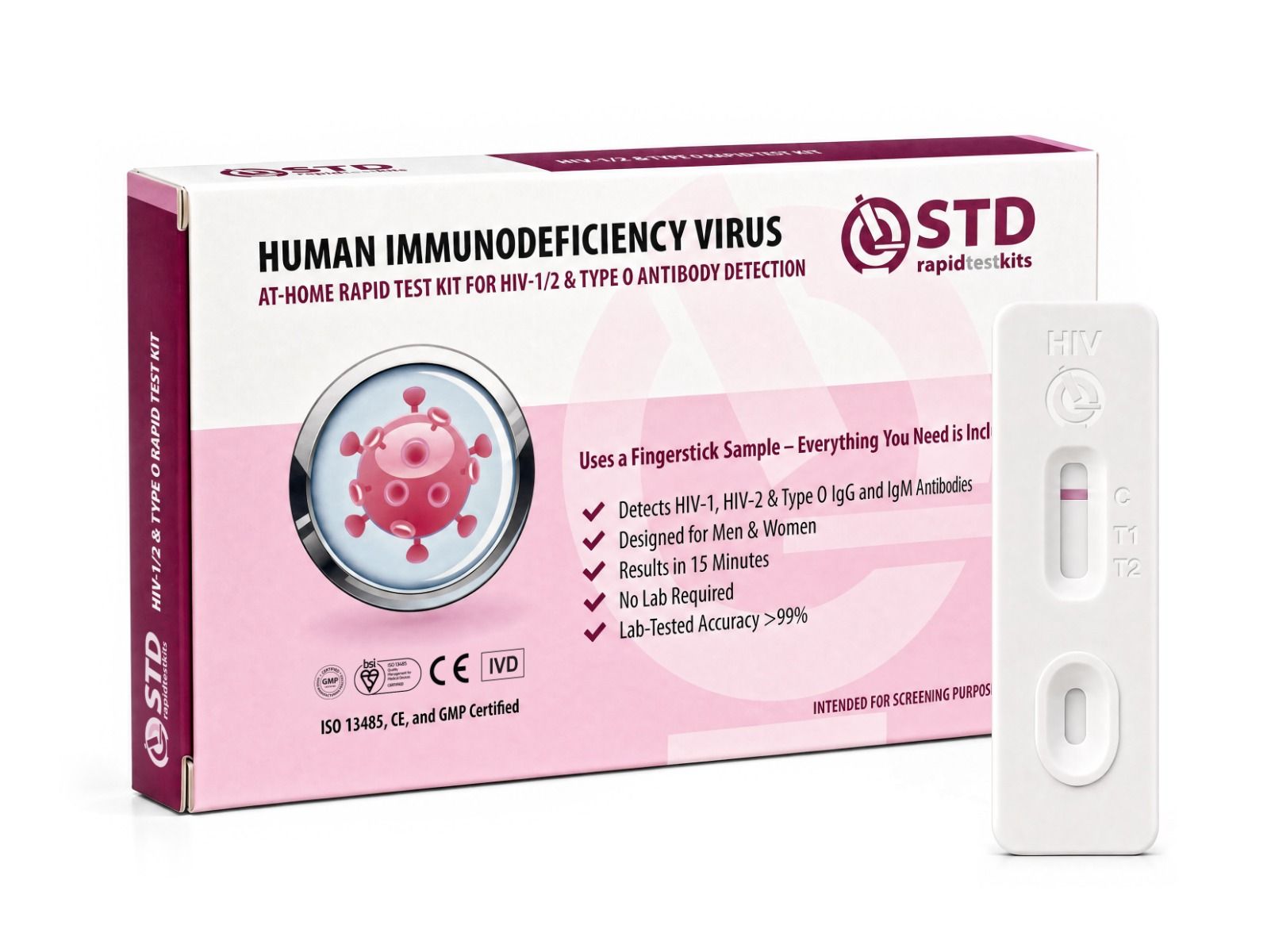
At-home rapid kits work the same way as clinic-based rapid tests: they look for HIV antibodies (and in some panels, the p24 antigen). They are screening tests, not confirmatory tests. A positive at-home result should always be followed by a confirmatory laboratory test, which most clinics perform routinely as part of a positive-screening protocol. A negative result at the appropriate window typically does not require follow-up testing unless there has been a more recent exposure event since the test.
This article is published by stdrapidtestkits.com, which sells at-home rapid STI testing kits. We recommend products based on fit-for-purpose for the reader's concern, not commercial benefit; the kits referenced below are linked because they screen for the infections the rash patterns above point at.
What If You Are Worried About More Than HIV?
If a recent exposure has you worried about more than one infection, especially syphilis, hepatitis, chlamydia, or gonorrhea, a single combo kit covers more ground per finger-prick than separate tests. The same window-period rules apply: blood-based tests rely on antibody responses that take weeks to develop, so retest at the appropriate interval if the exposure was recent.
For people whose only worry is the rash itself, and who tested at the appropriate window, a single negative result usually closes the loop. For people in ongoing higher-risk situations, repeat screening every 3 to 6 months is the public-health norm, and pre-exposure prophylaxis (PrEP) is worth discussing with a clinician if your exposure pattern is consistent.

Talking to a Partner Without Shame or Blame
Bringing up testing with a recent partner is the part most people dread. The shorter and lower-stakes the framing, the easier the conversation lands. Reframing testing as routine care rather than accusation does most of the work; you do not need to disclose fear, symptoms, or a specific incident.
If a partner reacts with anger or shaming, that response is information about how they handle health communication, not a verdict on your concern. Get tested anyway. Partner notification is a normal part of public-health practice; many local health departments will assist with anonymous notification if a positive result requires it, so you do not have to make that call alone.
"I'm getting tested as a routine check after a recent exposure, and I'd suggest we both do it." Direct, low-stakes, no accusation, no symptom disclosure required. If the conversation needs more, the rash and timing context can come later; for opening the topic, this single sentence is usually enough.
From Panic to Clarity
A rash on your chest after a stressful encounter is a common, low-information signal. The rash itself rarely tells you what caused it. Timing, accompanying symptoms, and a properly timed test do. Heat rash and drug reactions account for most of these scares; secondary syphilis is the look-alike that genuinely overlaps with HIV concerns; and acute HIV rash arrives 2 to 4 weeks after exposure with a flu-like cluster, rather than on its own the morning after.
If the timing fits the HIV window and other symptoms are present, test. If it does not, watch the rash for resolution and treat the trigger you can identify. Either way, the path forward is testing rather than image-matching, and clarity is something you can usually have within a few weeks.
FAQs
- How quickly does an HIV rash appear after exposure?
- Acute HIV rash typically appears 2 to 4 weeks after exposure as part of acute retroviral syndrome. A rash that shows up within hours or a few days of a sexual encounter is far more likely to be heat rash, friction irritation, or a contact reaction. The timing alone rules out HIV for most early rashes.
- Does an HIV rash itch?
- Usually no. The maculopapular rash of acute HIV is typically not itchy. Intense itching points more toward eczema, allergic contact dermatitis, scabies, or hives. Heat rash can sting and feel prickly, but it does not arrive with the flu-like symptoms (fever, sore throat, swollen lymph nodes) that accompany acute HIV rash.
- What is the difference between heat rash and HIV rash?
- Heat rash arrives within hours of sweating or friction; HIV rash arrives 2 to 4 weeks post-exposure. The fastest way to tell them apart at home is to cool down: heat rash fades within hours of switching to loose cotton and getting airflow, while HIV rash does not respond to environmental changes.
- Can a drug reaction look exactly like an HIV rash?
- Yes. Drug-induced exanthems can closely resemble acute HIV rash, especially when fever is present from the underlying infection the medication is treating. The clue is the medication timeline: drug rashes typically appear 7 to 14 days after starting a new medication and resolve within a week of stopping it.
- Why does the syphilis rash get confused with HIV?
- Both can produce a maculopapular rash on the trunk in a similar post-exposure timeframe, and they sometimes co-occur. The clearest pointer toward syphilis is rash on the palms or soles, which is unusual for HIV. Most clinicians test for both together because the two infections share transmission routes.
- Does HIV rash look the same on dark skin?
- The pattern is the same: flat to slightly raised spots distributed across the upper torso. The color reads differently. On medium-to-dark complexions, the spots may look purplish, brown, or simply present as a different skin texture rather than the pink-red appearance shown in most stock images. Distribution and accompanying symptoms matter more than color for identification.
- When is a finger-prick HIV test reliable after exposure?
- Antibody-based rapid tests, including most fingerstick and oral-fluid options, are most reliable from 23 to 90 days after exposure, with most infections detected by 12 weeks. A negative at 2 weeks is not conclusive. Lab-based fourth-generation antigen-antibody tests can detect earlier, generally from 18 to 45 days after exposure.
- Should I test for syphilis if I am testing for HIV?
- Public-health guidance routinely pairs the two. Syphilis is treatable with a single penicillin shot when caught early, and untreated syphilis raises HIV-acquisition risk through genital ulcers and immune disruption. A combo kit that screens for both makes practical sense after an exposure that might have included either infection.
- NHS guidance describing acute HIV symptoms (fever, rash, sore throat, lymph node swelling) and a 2-to-6-week post-exposure window for symptom onset.
- NHS overview of syphilis stages, including secondary-stage rash characteristics referenced in the syphilis look-alike section.
- CDC syphilis information page covering primary chancre and secondary rash on palms and soles, the key visual differentiator from HIV rash.
- CDC HIV information hub with current guidance on transmission, testing windows, and acute symptoms underpinning the testing-window math in this article.
- HIV.gov symptoms-of-HIV page from the U.S. Department of Health & Human Services. The acute retroviral syndrome description quoted in this article (within 2 to 4 weeks after infection, about two-thirds of people develop flu-like symptoms) is sourced here.
- American Academy of Family Physicians review on common skin rashes, used as the primary-care reference for heat-rash and drug-rash differentiation.
