Sexual massages sit in a gray zone that most sexual health writing skips. The contact is real but not penetrative, which puts these encounters in a category of their own. This article covers what can and can't transmit, which infections deserve real attention, and why delay and shame after a paid encounter often cost more than the encounter itself ever would.

Published: October 2025 | Last updated: May 2026 | Editorial review and quality control: Martina N.
Sexual massages, happy endings, erotic bodywork: whatever name a venue puts on the menu, the encounter sits in a gray zone that most sexual health content steers around. There's contact, sometimes considerable contact, but no penetration. So when someone visits one of these services, or visited once and is now lying awake wondering, they end up searching for risk information that matches their actual situation rather than a general STI overview written with something else in mind. This article fills that gap. It covers what can and can't spread through a happy ending scenario, which specific infections deserve genuine attention versus which ones people chronically overworry about, and the practical question of when (and how) to test if you're concerned.
The short version: yes, some STIs can spread from a happy ending massage. The risk is lower than most people assume, and it depends entirely on what kind of contact occurred. Herpes, HPV, and syphilis are the infections most worth knowing about in manual and body-to-body scenarios. HIV, gonorrhea, and chlamydia rarely transmit from a handjob alone. If oral sex was part of the session, the risk picture shifts, and a full STI panel at the correct window periods becomes the right response.
Key Takeaways
- Herpes, HPV, and syphilis are the only STIs with a realistic transmission route from manual or body-to-body massage contact. HIV, gonorrhea, and chlamydia rarely transmit without oral sex or penetration.
- Testing too early gives a false negative. Window periods matter: 6 weeks for herpes and syphilis, 14 days for chlamydia, 3 weeks for gonorrhea, 6 to 12 weeks for HIV.
Does the Type of Contact at a Sexual Massage Change Your STD Risk?
Before anything else, it helps to be precise about what occurred. "Happy ending massage" is a broad phrase that covers an enormous range of contact: a fully clothed provider giving a handjob through a sheet at one end, full-body naked contact with oral sex at the other. The STI risk profile of these two scenarios is genuinely different, and conflating them is the source of a lot of unnecessary panic, and occasionally some misplaced reassurance going the other way.
STIs need a transmission route. They don't float through the air, and they don't absorb through furniture. The main routes are three: direct contact with infected bodily fluids reaching a mucous membrane, skin-to-skin contact between infected and uninfected tissue, and blood-to-blood transfer. Different infections rely on different routes, which is why the specific type of contact matters so much when doing any honest risk assessment. A handjob with massage oil and no other contact is a fundamentally different exposure scenario than one that includes oral sex, body-to-body naked contact, or visible skin lesions on the provider.
Someone who received only manual stimulation, with no oral contact, no visible sores, and no broken skin on either side, sits in a very different situation from someone who also received a blowjob. The second scenario introduces mucous membrane exposure, saliva, and potentially throat-based infections, none of which factor into a handjob alone. The more precisely you can remember what happened, the more useful your risk assessment becomes. If you're unsure about what counts as meaningful contact in the regular massage context, our article on whether you can get an STD from a regular massage covers the baseline well.
| Type of Contact | Primary Transmission Route | Key Infections to Consider |
|---|---|---|
| Handjob only, no fluids, no sores | Minimal skin contact | Theoretical herpes/HPV only |
| Handjob with saliva used as lubricant | Oral fluids to genital skin/mucosa | Gonorrhea, chlamydia (low), herpes |
| Body-to-body naked contact | Extended skin-to-skin | Herpes, HPV, molluscum contagiosum |
| Nuru massage (full body skin contact) | Extended skin-to-skin over large surface area | Herpes, HPV, molluscum; slightly elevated vs. handjob |
| Oral sex (fellatio) included | Mucous membrane plus oral fluids | Gonorrhea, chlamydia, herpes, syphilis |
| Visible sores present during contact | Direct lesion contact | Herpes, syphilis, elevated risk |
Which STDs Can You Actually Get from a Happy Ending Massage?
The three infections most worth knowing about after a happy ending massage, in order of genuine realistic concern, are herpes, HPV, and syphilis. These three share a common trait: they can spread through skin contact, not only fluid exchange. That distinction is what makes a handjob a different kind of exposure than it first appears.
Herpes, both HSV-1 and HSV-2, is the infection that comes up most often in this context for good reason. It spreads through direct contact with infected skin or mucous membranes, and importantly, it can transmit even when no visible sore is present, a phenomenon called asymptomatic viral shedding. If the provider had an active herpes outbreak on their hands (a condition called herpetic whitlow) or on any skin that made direct contact with your genitals, transmission is biologically possible. In practice, hand-to-genital transmission of herpes is considerably less common than genital-to-genital transmission, and the risk drops further when no sores are visible. The probability never quite reaches zero, which is why herpes belongs at the top of any honest list of post-massage concerns.
HPV is the second infection that deserves honest attention, and it behaves differently from everything else on this list. According to the CDC, HPV is the most common sexually transmitted infection in the United States, so common that nearly every sexually active person who hasn't been vaccinated will acquire it at some point. It spreads through skin-to-skin contact with infected tissue, not through fluids, which means a handjob creates a theoretical transmission pathway that gonorrhea and HIV simply do not. The probability is lower than direct genital-to-genital contact, but it exists. The genuinely uncomfortable part about HPV: there is no approved at-home or clinic test for HPV in people without a cervix. If you have a penis, you cannot test your way to certainty about HPV. The practical response is vaccination. The CDC recommends routine HPV vaccination through age 26, with shared clinical decision-making for adults aged 27 through 45 who weren't fully vaccinated earlier.
Syphilis is the third worth noting. It spreads through direct contact with a syphilitic sore, called a chancre. This requires an active visible lesion on the provider to make contact with your skin or mucous membranes. The complication is that syphilitic chancres are painless; people frequently don't know they have one, and neither do their partners. A review of syphilis transmission evidence published in NCBI finds that transmission probability depends heavily on the stage of infection and the presence of active lesions at the contact site; hand-to-genital contact without visible sores is therefore a low-probability route. If there was direct genital skin contact and you can't rule out the presence of lesions, the 6-week test window for syphilis is worth keeping in mind.
Molluscum contagiosum, less discussed but realistic in this context, is a skin infection that spreads through direct skin-to-skin contact. It's not classified as an STI in all contexts, but it transmits readily during naked body contact and is a documented consequence of sexual massage scenarios. Small dome-shaped bumps appearing 1 to 6 weeks after an encounter are the main sign. There is no home test for molluscum; diagnosis is visual, so a GP or dermatologist can confirm on sight and discuss options (cryotherapy, curettage, or watchful waiting for self-limiting cases in immunocompetent adults). It's treatable and not dangerous, but it's frequently overlooked in articles about happy ending risk, which is exactly why it belongs on this list.
What STDs Can't Spread from a Handjob or Sexual Massage?
HIV, gonorrhea, and chlamydia are the three infections people most reliably spiral about after any sexual encounter, and they're also the three least likely to transmit through a handjob or non-penetrative massage. The reasoning is biological, not optimistic.
HIV requires direct access to the bloodstream or mucous membranes through infected fluid. Intact skin, the skin on hands, thighs, or external genitals without open wounds, is an effective barrier. According to the CDC, HIV transmission requires a specific biological pathway involving infected fluids and a direct route in. A handjob, even one where ejaculation occurs on intact skin, creates no meaningful transmission route. Infectious disease specialists consistently categorize this exposure as negligible for HIV.
Gonorrhea and chlamydia are bacterial infections that primarily colonize mucous membranes: the urethra, cervix, rectum, and throat. They don't survive well on dry skin surfaces or in open air, and they need to reach a mucous membrane to establish infection. For either to transmit through a handjob alone, infected fluid would need to be transferred directly to a mucous membrane, which realistically only occurs if saliva from a throat infection was used as lubricant, or if someone touched their own infected genitals and then immediately touched your mucous membranes. Under standard massage conditions with no oral component, the risk is extremely low. The moment oral sex enters the equation, that assessment changes.
Hepatitis B and C can theoretically transmit through blood contact, but this would require open wounds on both parties simultaneously coming into contact. A routine happy ending without broken skin creates no meaningful hepatitis pathway. These infections are not a realistic concern from non-penetrative massage contact, though they belong in a full panel if the encounter also involved oral sex or any contact with visible blood.
HIV, gonorrhea, and chlamydia all require infected fluid to reach a mucous membrane. Intact skin on hands, thighs, and external genitals is an effective barrier for all three under standard handjob conditions.
What Is the STD Risk from a Nuru Massage Specifically?
Nuru massage deserves its own mention because people search for it specifically and because its risk profile is genuinely distinct from a standard handjob. Nuru is a full body-to-body massage technique that originated in Japan (the name means "slippery"), performed using a gel that coats both bodies and enables prolonged skin-to-skin contact across a large surface area. No penetration, typically no oral sex, but significantly more skin contact than manual stimulation alone.
For nuru massage, the herpes and HPV exposure opportunity is modestly higher than a standard handjob: same skin-to-skin mechanism, but the contact surface area is considerably larger. A standard handjob involves hand-to-genital contact at a specific point. Nuru massage involves the entire torso, thighs, groin, and genitals in prolonged contact. Penetrative sex still sits higher on the risk scale; compared to a clothed handjob, though, the exposure is meaningfully greater. A fairer comparison is body-to-body naked contact, which sits in a low-to-moderate risk category specifically for herpes and HPV.
The practical guidance after a nuru massage matches body-to-body sexual contact in general: herpes and syphilis testing at 6 weeks, with herpes the primary concern. HPV cannot be tested for in people without a cervix. HIV, gonorrhea, and chlamydia remain low priority in the absence of oral sex or penetration. If the nuru session also included oral sex, the full panel becomes relevant and the appropriate windows apply for each infection. The absence of penetration doesn't eliminate all risk, though it keeps the relevant infection list short and manageable.

Why Do People Delay Testing After a Massage Parlor Visit, and What Does It Cost Them?
Here's something the clinical articles skip: the biggest actual risk factor after a massage parlor encounter usually isn't the biological one. It's what happens in the days and weeks afterward. The shame-to-delay pipeline is real and well-documented in sexual health. Someone who feels embarrassed about visiting a parlor is far more likely to wait too long before testing, test too early because the anxiety becomes unbearable, or quietly hope the discomfort goes away rather than getting a straight answer. All three of those responses produce worse outcomes than testing at the right time and moving on.
Testing too early is a surprisingly common mistake. The instinct makes sense: you want to know immediately. Biology doesn't run on your emotional timeline. Testing on day three because you're spiraling will almost certainly return a negative result, and that negative result means nothing. It doesn't mean you're clear. It means the test doesn't have enough to detect yet. False reassurance followed by continued unprotected contact with a regular partner is a genuinely bad outcome, worse than waiting and testing correctly.
The other delay pattern is shame-induced paralysis: knowing you probably should test, then putting it off for weeks because you don't want to explain yourself to a clinic. This is exactly the problem that at-home rapid testing solves. You don't have to tell anyone what happened. You don't have to sit in a waiting room. You collect the sample, run the test, and get your answer privately at home. The fear of getting tested for an STD is incredibly common; the test itself is the least complicated part of the process. If you've been avoiding it, that's the thing worth addressing, not the underlying risk.
It's also worth naming something specific to the paid-sex context. People who visit massage parlors with sexual services are sometimes managing a private life that isn't fully known to their regular partners. The anxiety in that situation is layered. People are weighing two questions at once: whether they have something, and what happens to the rest of their life if they do. That's a real and human concern. The answer to it is still accurate information and timely testing rather than avoidance. Knowing your status, whatever it is, always leaves you in a better position than not knowing.
Most people who have an STI don't know it, because many STIs cause no symptoms. The only way to know your STI status is to get tested.
When Should You Get Tested After a Happy Ending: Exact Windows by Infection
Testing at the right time is the difference between a result that genuinely tells you something and one that leaves you exactly where you started. The window periods below are the ones to use. No vague "test soon" language. The specific numbers matter, and they're based on how long each infection takes to produce detectable antibodies or reach detectable levels in your system.
For herpes (HSV-1 and HSV-2), test from 6 weeks after exposure. Herpes antibody tests need time to develop, and testing at 2 or 3 weeks frequently produces false negatives even in people who are genuinely infected. If herpes is your primary concern after manual stimulation or body-to-body contact, waiting the full 6 weeks is the only way to get a trustworthy answer. For syphilis, also test from 6 weeks after exposure; the antibody response takes time, and early testing is unreliable. For chlamydia, test from 14 days after exposure. For gonorrhea, test 3 weeks after exposure. For HIV, test at 6 weeks for a first indicator, then retest at 12 weeks for certainty. For hepatitis B, test from 6 weeks after exposure. For hepatitis C, the window is longer: 8 to 11 weeks for reliable detection.
If the encounter was manual stimulation only with no oral sex, the most relevant infections to test for are herpes and syphilis, both at the 6-week mark. HPV cannot be tested for in people without a cervix. Gonorrhea, chlamydia, and HIV are low enough priority after a handjob alone that testing is more about peace of mind than genuine risk management, though if you haven't tested in a while, a full panel is never a bad idea. If oral sex was included, move the entire panel up in priority and test for everything at the appropriate windows. Our article on how at-home STD testing works, its accuracy, and what to do with results covers exactly what to expect from the testing process if you've never done it before. Keep in mind that at-home rapid tests use lateral-flow chemistry; lab-based testing (NAAT for chlamydia and gonorrhea) remains the analytical gold standard, and a positive at-home result is worth confirming clinically.
| Infection | Test From | Relevant After Happy Ending? |
|---|---|---|
| Herpes HSV-1 & HSV-2 | 6 weeks after exposure | Yes, skin contact route applies |
| Syphilis | 6 weeks after exposure | Yes, if direct genital contact occurred |
| Chlamydia | 14 days after exposure | Low priority (handjob only); elevated if oral sex included |
| Gonorrhea | 3 weeks after exposure | Low priority (handjob only); elevated if oral sex included |
| HIV | 6 weeks first indicator; 12 weeks for certainty | Negligible for handjob; test if oral sex or broken skin |
| Hepatitis B | 6 weeks after exposure | Only if blood contact occurred |
| Hepatitis C | 8 to 11 weeks after exposure | Only if blood contact occurred |
What If Oral Sex Was Part of the Massage? Does That Change Everything?
Oral sex changes the risk profile significantly, and a lot of people bury this detail when describing their encounter, sometimes deliberately, sometimes because they're not sure what counts. If a blowjob was part of the session, even briefly and without ejaculation, the exposure calculation shifts. You're no longer in the lowest-risk category. Mucous membranes are now involved, and the infections that rely on them (gonorrhea, chlamydia, herpes, and syphilis) all have documented transmission pathways through oral-to-genital contact.
Oral gonorrhea and chlamydia are more common than most people realize. Someone performing oral sex can carry a throat infection with absolutely no symptoms: no soreness, no discharge, nothing. They may genuinely not know. The CDC's 2024 provisional STI surveillance data reported more than 2.2 million combined cases of chlamydia, gonorrhea, and syphilis in the United States, a reminder that these infections are circulating at high enough rates that encounters in commercial settings carry real exposure odds, not just theoretical ones. Syphilis is a particular case: primary and secondary syphilis cases declined in 2024, though the overall case burden remains well above where it was a decade ago. These aren't exotic infections found only in rare populations.
The part that catches people off guard: oral STI infections behave differently from genital ones. Throat gonorrhea, in particular, is notoriously asymptomatic; the vast majority of people who carry it orally have no idea. It won't cause a sore throat you'd notice. It won't produce discharge you'd see. The only way to find it is to test for it specifically with a throat swab, which standard panels don't always include unless requested. Our at-home rapid kits screen the blood and genital sites; an oral throat infection is one of the situations where a clinic visit for a pharyngeal swab is the right tool.
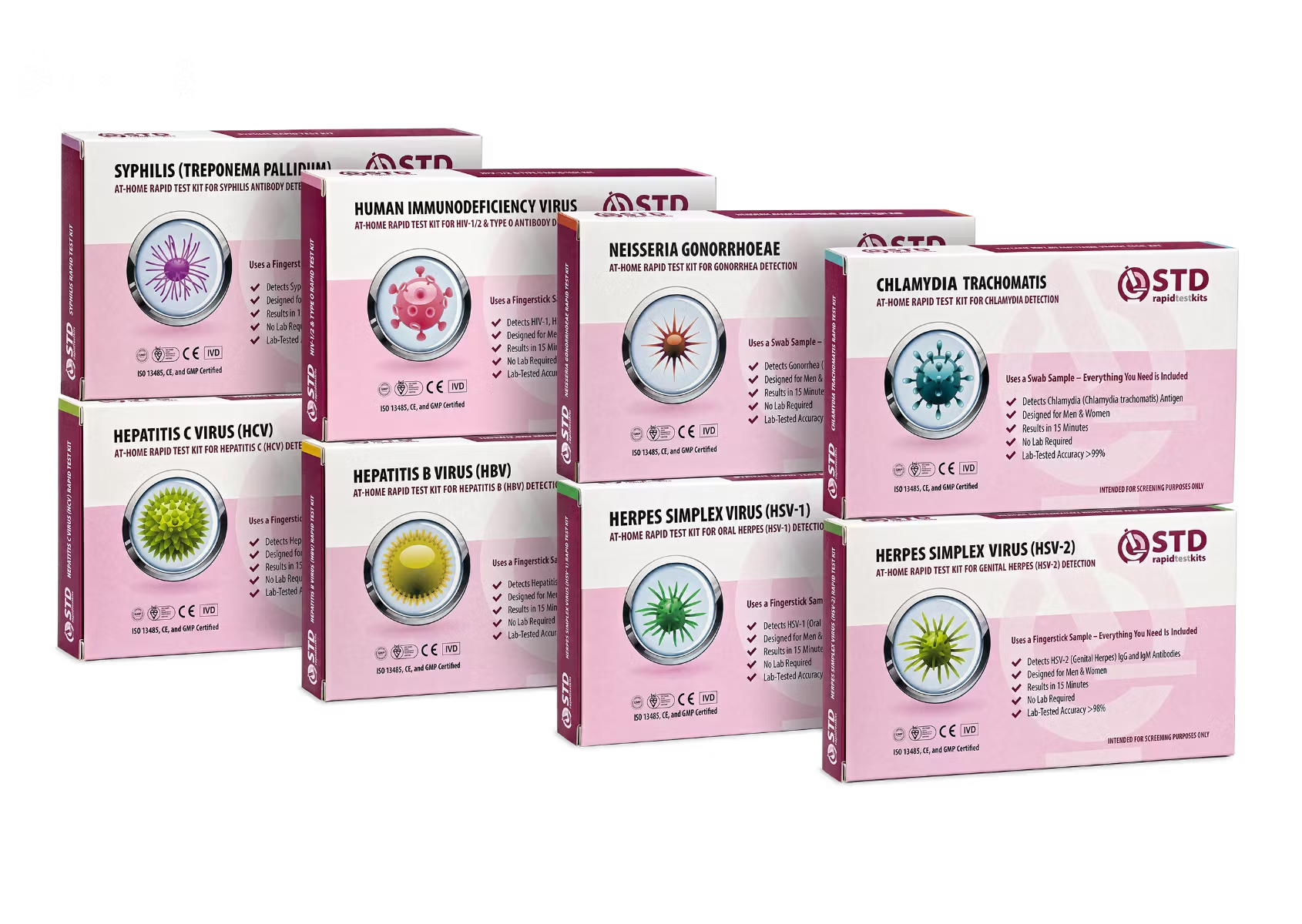
If oral sex was included in the session, a full panel at the correct window periods is still the smart move alongside any clinic throat work. The 7-in-1 Complete At-Home Rapid STD Test Kit covers HSV-2, chlamydia, gonorrhea, syphilis, HIV, hepatitis B, and hepatitis C, the relevant systemic picture for this exposure type, handled privately at home. If you want HSV-1 included as well, the Complete 8-in-1 At-Home Rapid STD Test Kit adds it to the panel.
At-home rapid kits screen blood and genital sites. Throat gonorrhea and chlamydia require a pharyngeal swab administered at a clinic; a urine sample alone will not detect an oral infection. If a blowjob was part of your session, ask the clinic specifically for throat swab testing.
What Symptoms Should You Watch For After a Sexual Massage?
The body has a frustrating tendency to become extremely symptomatic right after a sexual encounter you're anxious about. Itching, burning, a rash, a bump: any of these can feel like confirmation of a worst-case scenario within hours of getting home. The truth is more boring. Most new physical sensations in the days immediately following a massage encounter are friction irritation, contact dermatitis from massage oil, or anxiety expressing itself physically. Genuine STI symptoms take time to develop, and they follow predictable timelines.
For herpes: the first outbreak, if it occurs, typically appears 2 to 20 days after exposure. It usually starts with tingling, itching, or a burning sensation in the affected area before blisters or sores emerge. If you're three days post-encounter and convinced you have symptoms, it's almost certainly not herpes yet. Syphilis produces a painless chancre at the site of contact, appearing anywhere from 10 to 90 days after exposure. Because the chancre is painless, people often miss it entirely. Molluscum contagiosum, if it transmits, shows up as small firm bumps with a characteristic dimpled center, usually 1 to 6 weeks after contact. Gonorrhea and chlamydia can produce unusual discharge or a burning sensation when urinating, typically within 1 to 3 weeks, though both frequently produce no symptoms at all. Waiting for a symptom to appear is therefore not a reliable strategy.
The internet is spectacularly unhelpful for symptom self-diagnosis after a sexual health scare. Searching images at 2 AM will make every razor bump and ingrown hair look like an outbreak. A rash from massage oil, friction from the session itself, or anxiety-driven skin flushing can all look alarming when you're primed to find something wrong. Symptoms are a useful signal that may prompt testing; they aren't a diagnosis. Anything you think you see or feel in the 72 hours after a massage encounter should be filed under "monitor and test at the right window," rather than "confirmed infection." If you've ever gone down a similar spiral after touching a shared surface, our piece on STD transmission from public toilets is a useful calibration for separating real risk from anxiety-driven fear.
Typical symptom onset windows
- Herpes: first outbreak appears 2 to 20 days after exposure, usually starting with tingling or burning before blisters emerge.
- Syphilis: painless chancre at the site of contact appears 10 to 90 days after exposure (frequently missed because it doesn't hurt).
- Molluscum contagiosum: small dome-shaped bumps with a dimpled center appear 1 to 6 weeks after contact.
- Gonorrhea or chlamydia: discharge or burning urination typically within 1 to 3 weeks, though both often produce no symptoms at all.
If You Visit Massage Parlors Regularly, What a Smart Testing Routine Looks Like
If sexual massage services are a regular part of your life, the honest and practical approach is consistent risk management built around the infections that matter in this context, not shame or abstinence. The three most worth protecting against are herpes, HPV, and syphilis, because all three spread through skin contact and don't require penetration. Sexual health guidance for people with multiple partners or regular casual sexual encounters is consistent: test every three to six months, regardless of whether any particular encounter felt risky.
The HPV piece is especially important for regular visitors. If you haven't been vaccinated and you're under 45, vaccination is the single most impactful protective step available. The HPV vaccine covers the strains most likely to cause genital warts and the high-risk strains linked to cancer. It won't resolve an existing infection, though it significantly reduces the risk of acquiring new ones. The CDC recommends routine HPV vaccination through age 26 and shared clinical decision-making for adults aged 27 through 45 who weren't fully vaccinated earlier. For everything else, consistent condom use during any oral component of a session meaningfully reduces gonorrhea, chlamydia, syphilis, and HIV risk, though condoms don't fully cover herpes or HPV because both can live on skin a condom doesn't reach.
One thing that surprises people: standard STD panels don't automatically include herpes testing. Unless you specifically ask for an HSV-1 and HSV-2 antibody test, you may never have actually been tested for herpes, even after regular sexual health checkups. Given that herpes is the infection most realistically relevant to massage encounter risk, this is worth knowing. If you've never explicitly requested herpes testing, there's a real chance you don't know your status, which is far more common than most people realize. The Complete 8-in-1 At-Home Rapid STD Test Kit includes both HSV-1 and HSV-2 alongside the full standard panel, so herpes isn't accidentally left out of your routine check. A regular testing habit (every 3 to 6 months for people with frequent casual sexual contact) turns an anxiety-driven reaction into a structured, calm approach to sexual health.
Common STI myths, like the idea that you'd always know if you had something, or that professional-looking venues are somehow lower risk, are exactly the kind of thinking that leads to delayed testing. Our pillar article on STD myths and facts covers the most persistent misconceptions in detail and is worth a read if you're recalibrating your general understanding of risk.
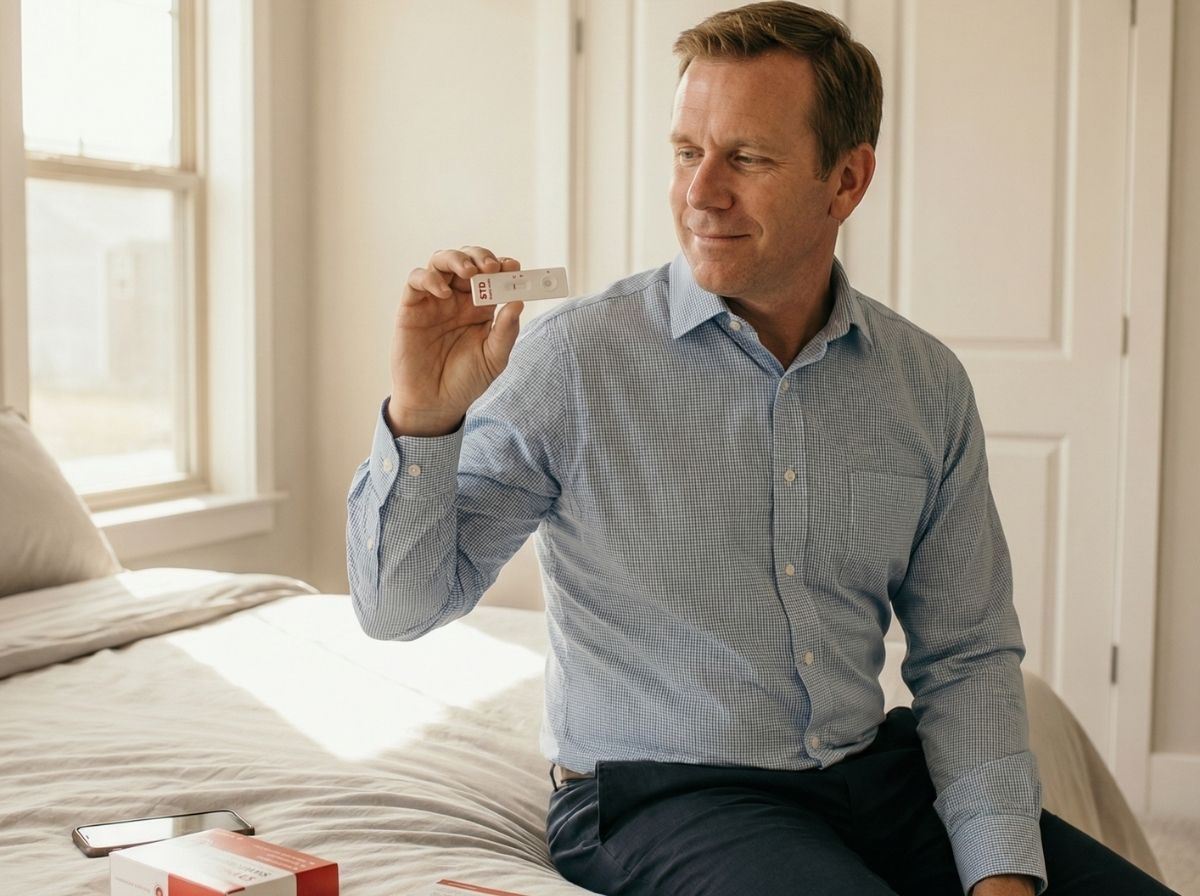
Test After a Sexual Massage, Privately and Accurately, at Home
If your encounter involved oral sex, body-to-body contact, or any situation where you're genuinely uncertain about what happened, a full panel at the correct window period is the right call. You don't need to explain yourself to anyone to get answers. At-home rapid testing handles the whole thing privately. The Complete 8-in-1 At-Home Rapid STD Test Kit covers HSV-1, HSV-2, chlamydia, gonorrhea, syphilis, HIV, hepatitis B, and hepatitis C, the full set relevant to this kind of exposure, in a single discreet kit with results in minutes.
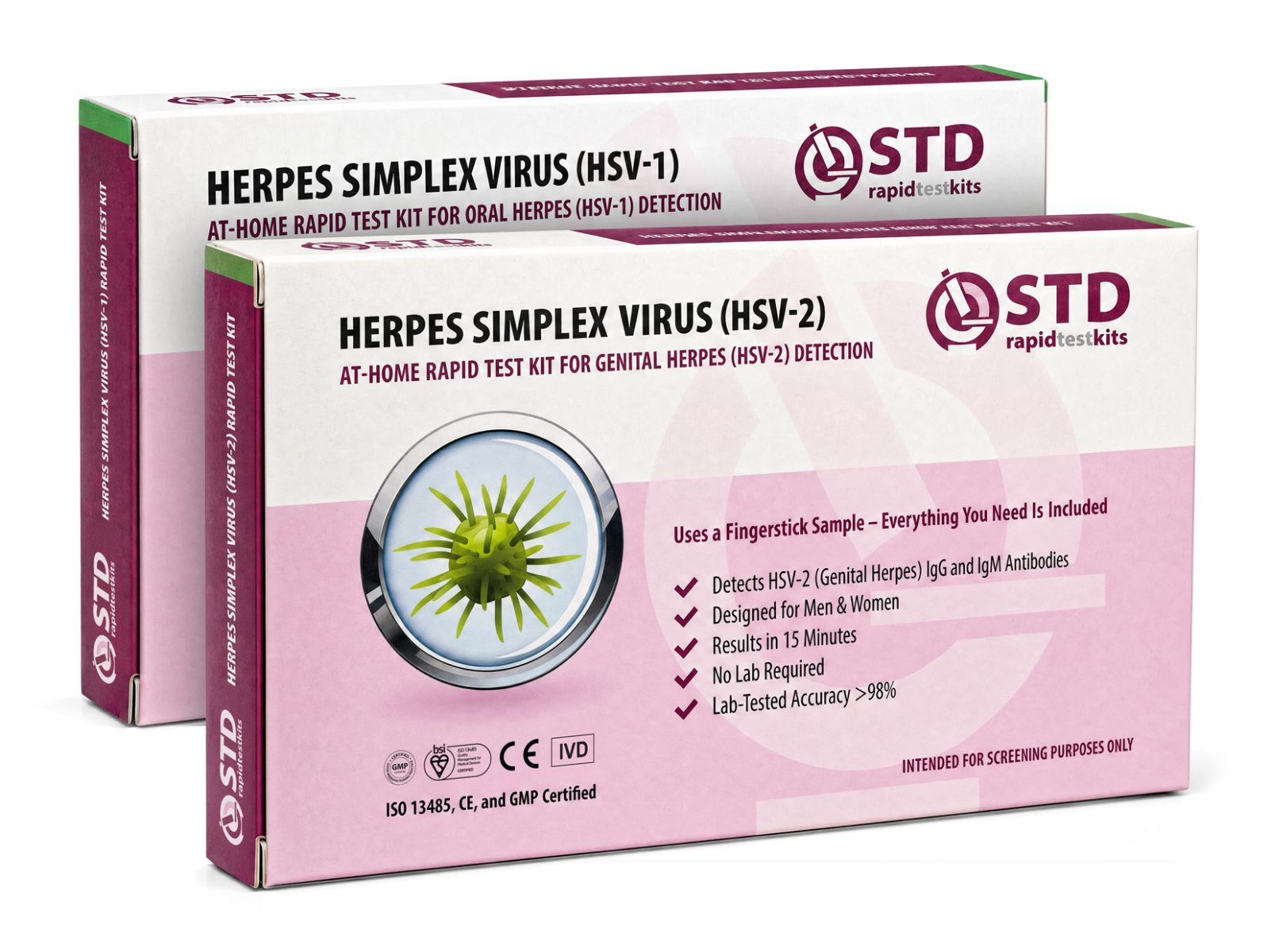
If your encounter was manual stimulation only and herpes is your primary concern, the targeted option is the Genital & Oral Herpes HSV-1+2 Rapid Test Kit, which screens for both strains from a single fingerstick blood sample, ready when you hit the 6-week window. For encounters that included oral sex, the 7-in-1 Complete At-Home Rapid STD Test Kit covers the relevant systemic picture without requiring a clinic visit.
Testing is a practical tool for getting clarity. It isn't a confession, and the result doesn't tell anyone but you. Visit STD Rapid Test Kits to find the right test for your situation and screen on your own terms.
FAQs
- Can you get HIV from a happy ending massage?
- Effectively no. The CDC classifies handjob-only exposure as negligible for HIV. HIV needs infected fluid to reach a mucous membrane or breach the bloodstream directly, and intact skin on hands and external genitals blocks that route entirely. The only reason to add HIV to your panel after a massage parlor visit is if oral sex occurred, or if there was visible broken skin on either person.
- Can you get herpes from a handjob at a massage parlor?
- In theory, yes, though it happens far less often than genital-to-genital transmission. Herpes can spread when infected skin makes direct contact with another person's skin, including during asymptomatic shedding when no sores are visible. The risk rises meaningfully if the provider had an active outbreak on their hands (herpetic whitlow) or genitals, and direct skin contact occurred. If herpes is your concern, test at the 6-week mark, the window where antibody tests become reliable.
- What is the realistic HPV risk from a sexual massage?
- HPV can transmit through skin-to-skin contact, which technically includes hand-to-genital contact during a massage. The probability is lower than from direct genital-to-genital contact, though it's not zero. The harder truth is that HPV cannot be tested for in people without a cervix, so for most people who receive happy endings, HPV is an infection you can't get a clean answer on through testing. If you're not vaccinated and you're under 45, vaccination is the most actionable step available.
- Can you get chlamydia or gonorrhea from a handjob?
- Highly unlikely from manual stimulation alone. Both are mucous membrane infections that don't survive well on skin, and a standard handjob doesn't create the necessary route. The exception is if the provider had an oral infection and used saliva as lubricant, which creates direct fluid-to-genital-skin contact with a possible mucous membrane route. If oral sex was also part of the session, gonorrhea and chlamydia become genuinely relevant and worth testing for.
- How soon should I get tested after a massage parlor visit?
- Timing depends on the infection. For herpes and syphilis, test from 6 weeks after exposure. For chlamydia, 14 days. For gonorrhea, 3 weeks. For HIV, 6 weeks for a first indicator and 12 weeks for certainty. For hepatitis C, 8 to 11 weeks. Testing before these windows can return a false negative even if you're infected, which is worse than simply waiting because a false negative can create unwarranted reassurance.
- What is herpetic whitlow, and is it something to consider after a massage?
- Herpetic whitlow is a herpes infection of the fingers or hands, caused by HSV-1 or HSV-2. It looks like small blisters or sores on the fingers. If the person giving the massage had an active whitlow outbreak and that skin made direct contact with your genitals, transmission is biologically possible. It's not common, but it's the mechanism that makes herpes the one infection worth flagging after manual-only massage contact. If you noticed unusual sores or blisters on the provider's hands, mention that when you test.
- Should I get tested after every massage parlor visit?
- If sexual services are part of your visits regularly, a testing schedule of every 3 to 6 months is what sexual health guidelines recommend for people with multiple casual sexual partners. This isn't a default assumption that every encounter is high-risk. It's about catching anything that does transmit early enough to treat it before complications develop or before it's unknowingly passed on. A regular testing schedule replaces post-encounter panic with routine information.
- Can syphilis spread from a happy ending massage?
- Only if the provider had an active syphilitic sore (chancre) that made direct contact with your skin or mucous membranes. Syphilitic chancres are painless, so neither person may know one is present. Under standard conditions (no visible lesions, no penetration, no oral sex), syphilis transmission from a massage is very unlikely. If direct genital contact occurred, syphilis testing at the 6-week mark is worth including in your panel because the chancre can easily be missed.
Our article was constructed based on current advice from the most prominent public health and medical organizations, and then molded into simple language based on the situations that people actually experience, including non-penetrative encounters, testing-window confusion, and the uncomfortable question of whether to test at all. In the background, our pool of research included broader public health guidance, clinical references, and peer-reviewed reviews; the sources below are the most pertinent and useful for readers who want to verify our claims for themselves.
- U.S. Centers for Disease Control and Prevention. How HIV spreads, including which exposures do and don't transmit the virus.
- NCBI / PMC. Review of syphilis transmission evidence, including stage-dependence and the requirement for active chancre contact at the contact site for transmission.
- U.S. Centers for Disease Control and Prevention. STI surveillance 2024 (provisional), case counts and trend data for chlamydia, gonorrhea, and syphilis.
- U.S. Centers for Disease Control and Prevention. STI prevention recommendations, including condom use, vaccination, and testing frequency.
- NCBI Bookshelf. Herpes simplex type 2 clinical overview, covering transmission routes and clinical features.
- U.S. Centers for Disease Control and Prevention. HPV vaccination recommendations, including routine ages and shared clinical decision-making for adults through age 45.
