Published: August 2025 | Last updated: May 2026 | Editorial review and quality control: Martina N.
The short answer first: classic sexually transmitted infections (chlamydia, gonorrhea, syphilis, and herpes) are not a realistic concern from a haircut or pedicure. The infections worth thinking about in salon and barber settings are bloodborne ones, hepatitis B, hepatitis C, and in genuinely rare circumstances HIV. These travel through blood-to-blood contact, not sexual contact, which means the risk pathway is entirely different. So is how you think about whether to get tested after a salon visit.
For most salon visits the risk is extremely low. For some, depending on the service, the tools, and how well the salon actually follows sterilization protocol, it warrants paying attention. The difference between those two situations is what this article explains, in plain numbers, with the testing windows that actually matter if you decide to follow up.
Key Takeaways
- The infections you can plausibly catch in a salon are bloodborne (hepatitis B, hepatitis C, and very rarely HIV), not the classic STDs people first think of.
- Risk depends on whether tools were properly sterilized between clients, not on the service itself; if testing is warranted, reliable windows are 6 weeks (HBV), 8 to 11 weeks (HCV), and 6 weeks with a 12-week retest (HIV).
How Do Bloodborne Infections Actually Spread Through Salon Tools?
The mechanism is straightforward once you see it laid out. Hepatitis B, hepatitis C, and HIV are all transmitted through blood-to-blood contact. In a sexual context that happens through mucosal membranes and bodily fluids. In a salon context the pathway is different: a contaminated tool breaks one person's skin, leaves a trace of blood on the instrument, and if that instrument isn't properly sterilized before the next client it can introduce infected material into that next person's bloodstream through a fresh break in their own skin.
The critical word is "if." Most US barbers and nail technicians are trained in bloodborne pathogen prevention, and state cosmetology regulations require disinfection of non-single-use instruments between clients. The gap, according to assessments by state health departments, isn't in the written standards. It's in whether those standards are followed in every salon, every day, on every tool. The Virginia Department of Health, after investigating a case of acute hepatitis C linked to a manicure and pedicure, concluded that risk cannot be excluded when reusable instruments are not fully cleaned and disinfected according to state regulations.
The biology matters too. Hepatitis B is significantly more resilient than HIV outside the body; per the CDC's hepatitis B information, the virus can survive on environmental surfaces for at least seven days and remain infectious. Hepatitis C is less resilient but still persistent: depending on conditions, HCV can remain viable on surfaces from 16 hours to several days. HIV degrades rapidly once it leaves a host and is generally considered a much smaller concern in salon environments. These survival differences are why hepatitis, not HIV, dominates the clinical conversation around salon-related infection risk.
What creates the entry point is what the industry calls a "microtrauma," a break in the skin that may not even bleed visibly. A nail file that burns slightly, a cuticle trimmer that goes a fraction too deep, a foot basin that abrades softened skin. According to OSHA's nail-salon bloodborne hazard guidance, salon workers can be exposed to bloodborne pathogens any time they contact infected blood from a client, and that contact can occur without a dramatic wound. You don't have to be visibly bleeding for a contaminated instrument to become a transmission route.
| Pathogen | Survival on Surfaces | Relevance to Salon Risk |
|---|---|---|
| Hepatitis B (HBV) | At least 7 days on dry surfaces | Highest concern; can remain infectious on improperly cleaned tools between clients |
| Hepatitis C (HCV) | 16 hours to several days, condition-dependent | Documented association with razor shaving and shared manicure equipment |
| HIV | Minutes to a few hours; degrades rapidly outside the host | Very low; no documented confirmed salon transmissions in the US |
Which Infections Are Actually Documented in Salon Settings?
This is where the conversation gets specific, and where a lot of internet panic gets corrected. The right question isn't "is it biologically possible?" but "has it actually happened, and how often?"
Hepatitis B and hepatitis C have both been documented in connection with salon and barber exposures, although the evidence base in the United States specifically is still considered understudied. A 2024 review of infections acquired in barbershop settings, published in PMC, surveyed multiple case-control studies and found a recurring association between barbershop shaving and elevated HCV risk, with several studies reporting odds roughly two to two-and-a-half times higher among men who shaved at barbershops compared with those who did not. The association tracks with shared blades and inadequate disinfection rather than the haircut itself.
The Standout Cases, and Why HIV Is Different
A case of acute hepatitis C "clearly related to a manicure and pedicure treatment" was the incident that prompted the Virginia Department of Health's formal assessment of salon infection risk in the US. That assessment concluded that risk cannot be excluded when non-single-use instruments are not fully cleaned and disinfected according to state regulations.
HIV in salon settings is a different story. There are no documented confirmed cases of HIV transmission in a barber shop or nail salon in the United States. The single most widely cited case internationally involved a woman in Brazil who appeared to have contracted HIV through cuticle scissors shared with a cousin (not through a professional salon at all). HIV simply does not survive long enough outside the body for a contaminated tool sitting between clients to be a realistic vector in well-run shops.
What about the sexually transmitted infections people usually think of first, chlamydia, gonorrhea, syphilis, and herpes? These are not transmission concerns in barber or salon settings. They require sexual contact, mucosal exposure, or skin-to-skin genital contact. A razor, a nail file, a foot basin, none of these create the pathway those infections need. The anxiety around "can I get an STD from a barber?" is legitimate when applied to bloodborne infections, and essentially zero when applied to the STDs people most commonly associate with the term.
Nail salon workers can be exposed to bloodborne pathogens, including hepatitis B, hepatitis C, and HIV, any time they contact infected blood from a client.
Nail Salons vs. Barber Shops: Is the Risk Different?
The risk profile isn't identical between the two, because the tools and the nature of skin contact differ. Understanding that difference helps put any specific situation in context.
Nail salons carry a higher documented association with hepatitis transmission for a few reasons. Pedicures in particular involve prolonged exposure of softened skin to shared equipment (foot basins, cuticle tools, nail files, pumice stones) in an environment where microtraumas are common. Cuticle removal is one of the most significant risk factors: the cuticle exists specifically to seal the nail bed against external pathogens, and once it's disrupted that barrier is gone. Foot basins that aren't properly disinfected between clients are another documented concern, primarily for bacterial and fungal infections but potentially for bloodborne pathogens if a client has open sores or broken skin.
Pedicures and manicures carry the highest documented HBV and HCV association in salon settings because of cuticle work and shared foot basins. The cuticle is the body's seal against external pathogens; once it's broken, the nail bed has no barrier. Haircuts without shaving carry extremely low bloodborne risk by comparison.
Where Barber-Specific Risk Actually Lives
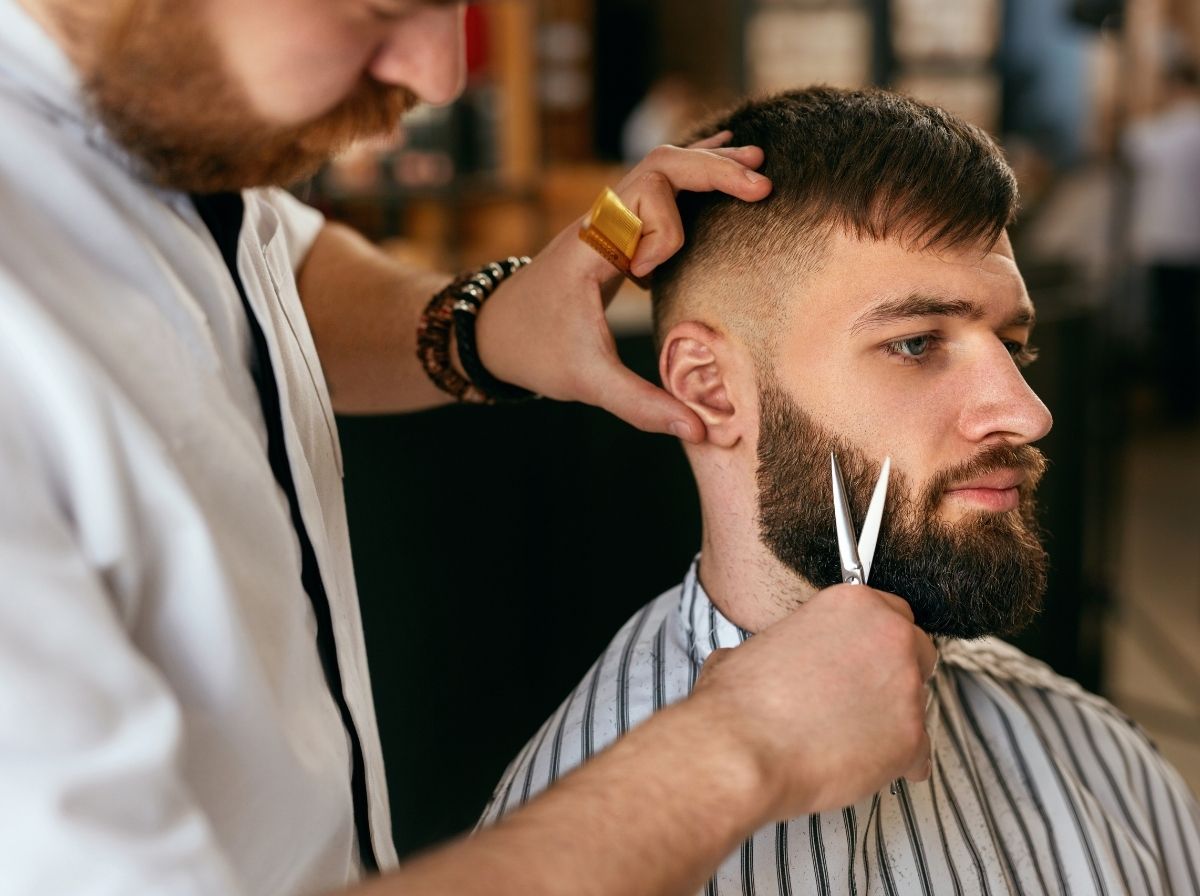
Barber shops carry their own specific risk profile, primarily centered on straight-edge razors and beard trimmers. Shaving involves intentional close contact with skin, and any nick, however minor, creates a direct exposure point. The PMC barbershop review cited above found that shaving was associated with elevated HCV risk in multiple studies, particularly where disposable blades weren't used or were reused. The practice of sharing blades between clients, still occurring in some settings outside US-regulated shops, is the highest-risk scenario in barbering.
Both settings share a common variable: compliance with sterilization standards. A well-run salon that uses fresh or properly sterilized tools, disposes of single-use items, and maintains clean foot basins carries a very different risk level than one that doesn't. A shop that reuses unsterilized blades across clients carries meaningfully higher risk than one that swaps in a fresh blade for each service.
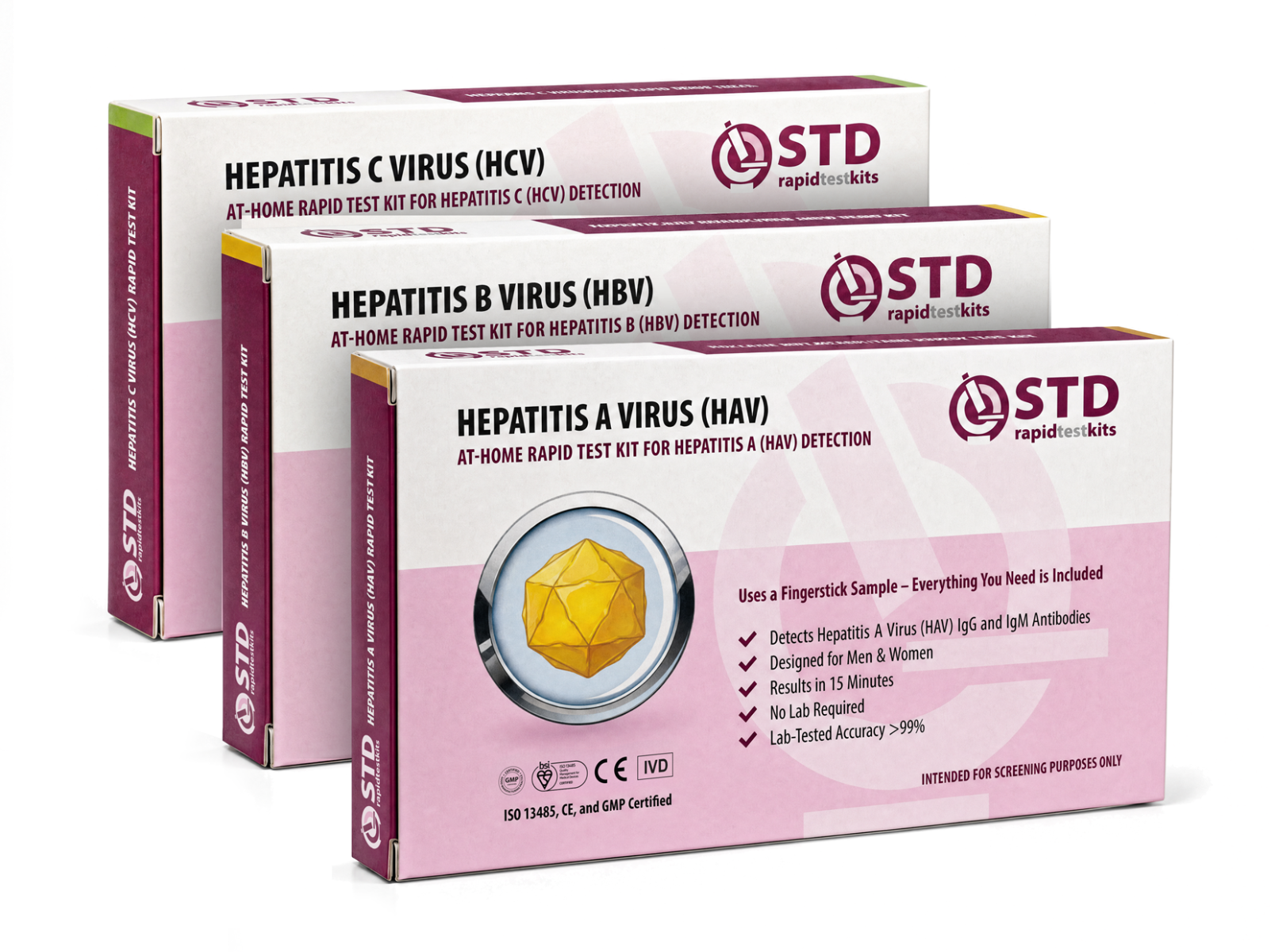
If you decide testing is the right next step for a specific exposure, stdrapidtestkits.com sells the at-home rapid tests referenced in this article. For salon-related concerns the most direct match is the kit that covers hepatitis B and hepatitis C together, since those are the two infections with the strongest documented salon link.
| Service | Primary Concern | Risk (proper sterilization) | Risk (poor sterilization) |
|---|---|---|---|
| Pedicure with cuticle removal | HBV and HCV via tools, plus bacterial | Very low | Low to moderate |
| Manicure with cuticle trimming | HBV and HCV via tools | Very low | Low |
| Barber shave with straight razor | HBV and HCV via blade | Very low | Low to moderate |
| Haircut, no shaving involved | Minimal bloodborne risk | Extremely low | Extremely low |
| Foot basin soak | Bacterial and fungal mainly; some bloodborne | Very low | Low |
I Got Nicked at the Barber. What Should I Actually Do?
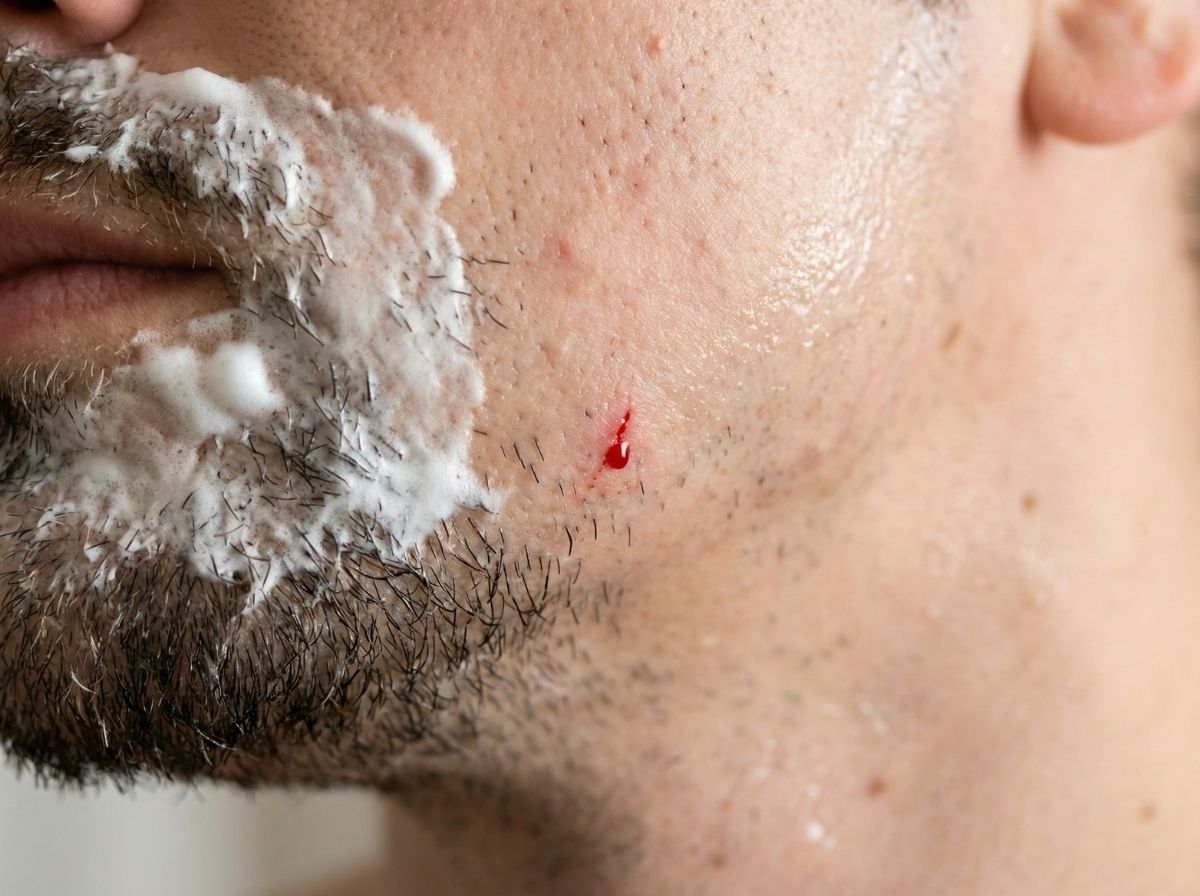
The vast majority of nicks in professional salon settings do not result in infection, full stop. The risk is real as a biological mechanism, but low in absolute terms, particularly in US salons that operate under state inspection and generally follow disinfection requirements. The goal here is clear thinking, not a spiral.
First, if you were cut and you're uncertain about the salon's practices, wash the area thoroughly with soap and water immediately. That won't undo a bloodborne exposure that already occurred, but it limits additional contamination and is always the right instinct. If the wound is more than a nick, an antiseptic like povidone-iodine or an alcohol-based product is appropriate. Cover it with a clean dressing until it stops weeping.
How to Read the Context Around the Nick
The next question is context. A cut from a fresh disposable blade at a clean, well-run shop carries essentially no bloodborne risk; "disposable" means it touched no one before you. A cut from a reused blade, an improperly cleaned clipper, or a shop with visibly poor hygiene practices is a different calculation. If the tools looked questionable, if the shop was disorganized, if you watched instruments get wiped down rather than soaked, those are the moments where testing becomes a reasonable call rather than an anxious overreaction.
If you decide to test, timing is everything. Testing too early produces a false negative that feels reassuring but isn't; the biology needs time to generate detectable signals. The specific windows for each infection are covered in the next section.
Fresh disposable blade, clean shop, no hygiene concerns: risk is very low, testing not generally required, wash the cut and move on.
Reused blade, visibly poor hygiene, or you watched tools get wiped rather than soaked: testing for hepatitis B and hepatitis C from 6 to 11 weeks post-exposure is a reasonable step. Add HIV retest at 12 weeks only if you have specific concerns beyond the salon visit itself.
When Should You Get Tested After a Barber or Nail Salon Visit?
Testing after a potential salon exposure is reasonable when the skin was broken, you have concerns about the salon's sterilization practices, and the service involved tools that could realistically carry blood from a prior client. The infections worth testing for in this context are hepatitis B, hepatitis C, and (in genuinely unusual circumstances) HIV. The rest of the classic STD panel, chlamydia, gonorrhea, syphilis, herpes, is not relevant to this kind of exposure.
Every bloodborne infection has a window period, a gap between the moment of exposure and the point at which the infection becomes reliably detectable in the bloodstream. Testing inside that window produces results that feel definitive but aren't. Your body needs time to produce the antibodies or antigens that tests are designed to detect, and until enough of them have accumulated even an active infection can return a negative result.
Testing-trigger checklist
- Skin was broken during the service (a visible nick, an abraded cuticle, or a burning sensation from a tool).
- Tools could plausibly have carried blood from a prior client (reusable blade, shared clippers, cuticle tools that weren't visibly sealed or freshly sterilized).
- You have specific concerns about the shop's sterilization practices (tools wiped rather than soaked, no autoclave, no labeled sterilization pouches, foot basin not flushed between clients).
The Specific Windows That Matter
For hepatitis B, antibody and surface-antigen levels become reliably detectable about 6 weeks after exposure on lateral-flow rapid tests, per CDC hepatitis B information. Hepatitis C has a longer detection window: the reliable rapid-test antibody range begins at 8 to 11 weeks after exposure, because HCV antibody development takes longer to mature, per the CDC hepatitis C testing guidance. HIV antibody-only rapid tests follow a similar pattern to hepatitis B for the initial indicator (about 6 weeks for a first reliable result), but a confirmatory retest at 12 weeks is the standard way to rule out infection with certainty, because some immune responses develop more slowly. Lab-based 4th-generation antigen-antibody HIV tests can shorten that window further, but home rapid kits are antibody-based.
| Infection | When to Test | Notes |
|---|---|---|
| Hepatitis B | From about 6 weeks after exposure | Rapid tests detect surface antigen plus antibody response |
| Hepatitis C | From 8 to 11 weeks after exposure | Antibody development is slower than HBV; earlier results are unreliable |
| HIV | 6 weeks for an initial reading; 12 weeks for confirmation | Extremely rare in salon settings but testable if real concern exists |
Why Most Sexually Transmitted Infections Are Not a Concern Here
It's worth being direct about this, because the phrase "can you get an STD from a barber" pulls in search results that mix bloodborne infections with classic sexually transmitted ones, and the confusion is worth clearing up.
Chlamydia and gonorrhea are bacterial infections that need mucosal surfaces (the genitals, throat, or rectum) to establish themselves. A nail file or razor does not provide that pathway. Syphilis requires contact with a syphilitic sore. Herpes requires direct skin-to-skin contact with an active or shedding genital or oral site. Neither of those transmission mechanisms exists in a standard salon or barbershop service.
The reason hepatitis B, hepatitis C, and HIV are different is that they are bloodborne, not sexually transmitted in the traditional sense. They travel through blood, and blood-contaminated tools can create a pathway. That's a distinct mechanism, and it's why the infections relevant to this question are the bloodborne ones, not the genital ones.
Chlamydia, gonorrhea, syphilis, and herpes have no transmission route through salon tools or services. No testing is needed for these infections after a haircut, shave, or pedicure. If those are your worry, you can set them aside.
How to Reduce Your Risk at Future Salon or Barber Visits
This isn't a call to stop getting haircuts or pedicures. It's a case for being an informed customer, because the difference between a low-risk salon visit and a higher-risk one is mostly visible if you know what to look for.
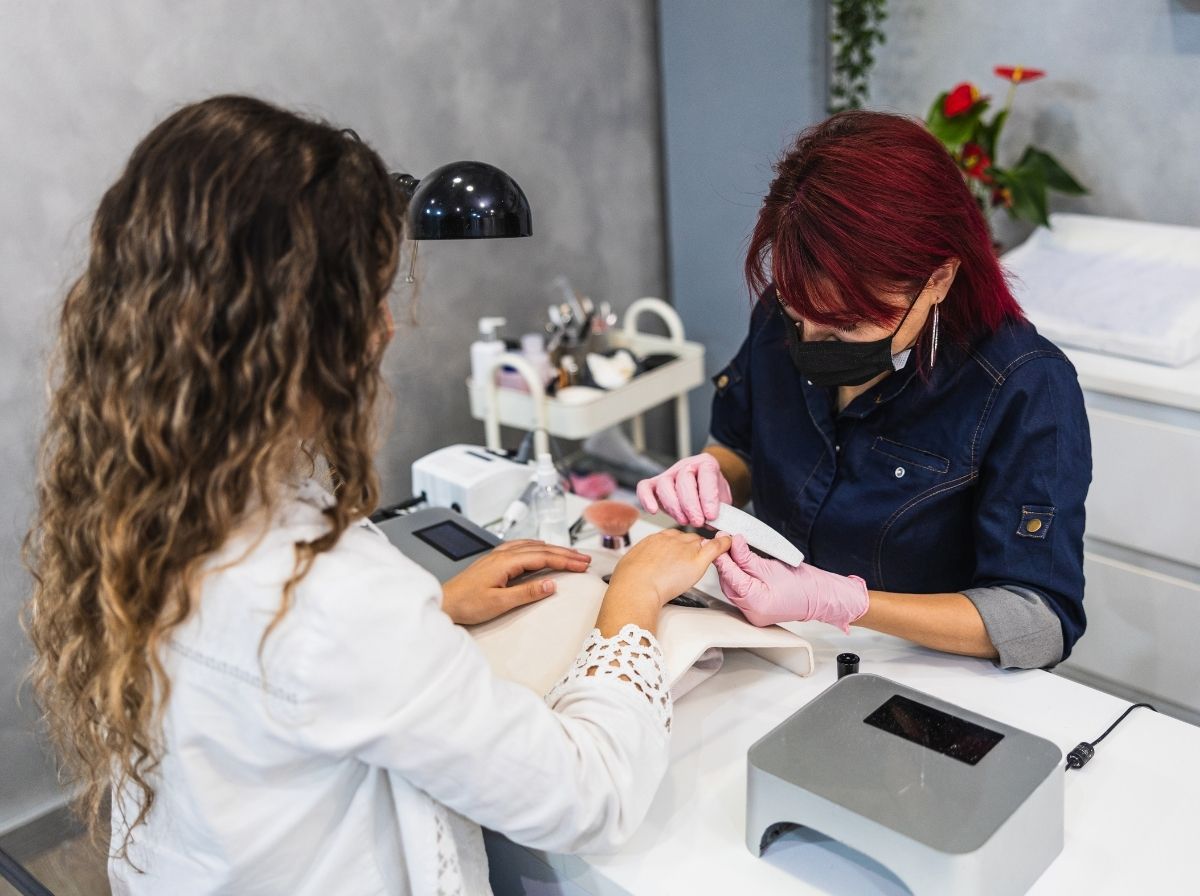
The clearest signal of a well-run salon is what happens to the tools between clients. Metal instruments (clippers, cuticle cutters, scissors) should be sterilized, autoclaved where required, or individually packaged for single use, not simply wiped down or dropped briefly into a jar of blue liquid. That jar of blue Barbicide solution that's a fixture in many barber shops is a real disinfectant, but it only works correctly when used at the right concentration and for the right contact time. If the scissors go in and come right back out, the disinfection isn't complete.
Concrete Steps That Lower Your Exposure
Beyond watching how tools are handled, four practical moves carry most of the risk reduction available to a salon client. None requires confrontation or special expertise; each is a small habit change.
Four practical risk-reduction moves
- Ask how the salon disinfects foot basins. OSHA and state cosmetology rules require disinfection after each client and at end of day; a salon with nothing to hide will answer plainly.
- Bring your own tools (nail file, clippers, cuticle tool) for one-off visits, or ask a regular salon to keep a labeled personal set. This removes the shared-instrument variable almost entirely.
- Postpone if you have open cuts, active sores, or broken skin on hands or feet. Some states explicitly prohibit service in this situation; the rest is common sense.
- Confirm your hepatitis B vaccination status. The CDC recommends HBV vaccination for all adults aged 19 to 59 who haven't previously received it; it removes the highest-resilience salon pathogen from the equation entirely.
Get Clear Answers Without the Wait
If you've had a salon or barber visit that left you wondering, the most direct path forward is testing at the right time window, not earlier. For the two infections that actually matter in this context (hepatitis B and hepatitis C), an at-home rapid test removes the need for a clinic visit and gives you a result in minutes at home.
If you want broader coverage that also includes HIV, syphilis, herpes, and more, a multi-panel kit handles all of it in a single session. No clinic, no waiting room, no explanation required.

FAQs
- Can you get hepatitis from a nail salon?
- Yes in principle, though risk is low in well-run salons. Hepatitis B and C are the two infections with the strongest documented link to nail-salon exposure. The exposure scenario requires a contaminated reusable tool that broke skin and wasn't sterilized between clients. If you aren't confident about the salon's practices and the skin barrier was broken during the service, testing from 6 weeks (HBV) and 8 to 11 weeks (HCV) is a reasonable step.
- Can you get HIV from a barber shop razor?
- Practically, no. HIV degrades quickly outside the body, and there are no documented confirmed cases of HIV transmission in a US barber shop or salon. The theoretical pathway exists (contaminated blade breaks skin), but the virus does not survive long enough on tools to make this a realistic concern. Hepatitis B and C are the relevant bloodborne risks in that setting.
- What is the actual risk of getting an STD from a pedicure?
- Classic STDs like chlamydia, gonorrhea, syphilis, and herpes are not a concern in pedicure settings; they don't have a transmission route through salon tools. Hepatitis B and C are the infections worth thinking about, and the risk is meaningful primarily when tools aren't properly sterilized and skin is broken during the service.
- I got nicked at the barber. Should I get tested?
- If the cut was from a disposable or clearly fresh blade in a clean shop, the risk is very low and testing is a personal judgment call. If the blade was reused, the shop had visible hygiene concerns, or you aren't confident about their sterilization practices, testing for hepatitis B and C starting at 6 to 11 weeks post-exposure is a reasonable step.
- How long should I wait before testing after a salon exposure?
- Hepatitis B can be tested from about 6 weeks after exposure. Hepatitis C needs 8 to 11 weeks because antibody development is slower. HIV can be tested at 6 weeks for a first indicator, with a confirmatory retest at 12 weeks. Testing before these windows can produce a false negative even if an infection is present.
- Is it safe to get a pedicure right after shaving your legs?
- No. Shaving creates micro-abrasions across the skin that give pathogens easy access, including the bacterial infections most commonly associated with foot basin outbreaks. The standard recommendation is to avoid shaving the legs for at least 24 hours before a pedicure, ideally longer.
- Can shared nail files spread infection?
- Yes. Nail files are single-use items by design; the abrasive surface can't be reliably sterilized and can harbor blood and skin debris from previous clients. Any salon reusing nail files on multiple clients is not following correct protocol. Bringing your own is the simplest fix.
- Does the blue disinfectant solution at barber shops actually work?
- Barbicide, when used at the correct concentration and for the correct contact time (typically 10 minutes of full immersion), is an effective EPA-registered disinfectant. The problem is misuse: tools dipped briefly rather than soaked, or the solution not changed regularly. Properly applied it reduces risk significantly. Used as a prop on the counter, it doesn't.
- U.S. Occupational Safety and Health Administration. Bloodborne pathogen exposure guidance covering nail-salon and personal-service worker risk routes.
- National Library of Medicine, PMC. Infections Acquired in Barbershop Settings: A Review (published November 2024). Supports the elevated HCV association with barbershop shaving and shared blades.
- U.S. Centers for Disease Control and Prevention. Hepatitis B information for the public. Supports HBV environmental survival of at least 7 days and the testing-window discussion.
- U.S. Centers for Disease Control and Prevention. Hepatitis C information for the public. Supports the 8 to 11 week HCV antibody detection window and transmission-route summary.
- U.S. Centers for Disease Control and Prevention. HIV testing overview. Supports the rapid antibody window period and the recommendation for confirmatory retesting.
- World Health Organization. Hepatitis B fact sheet. Supports the global epidemiology and bloodborne transmission framing.
