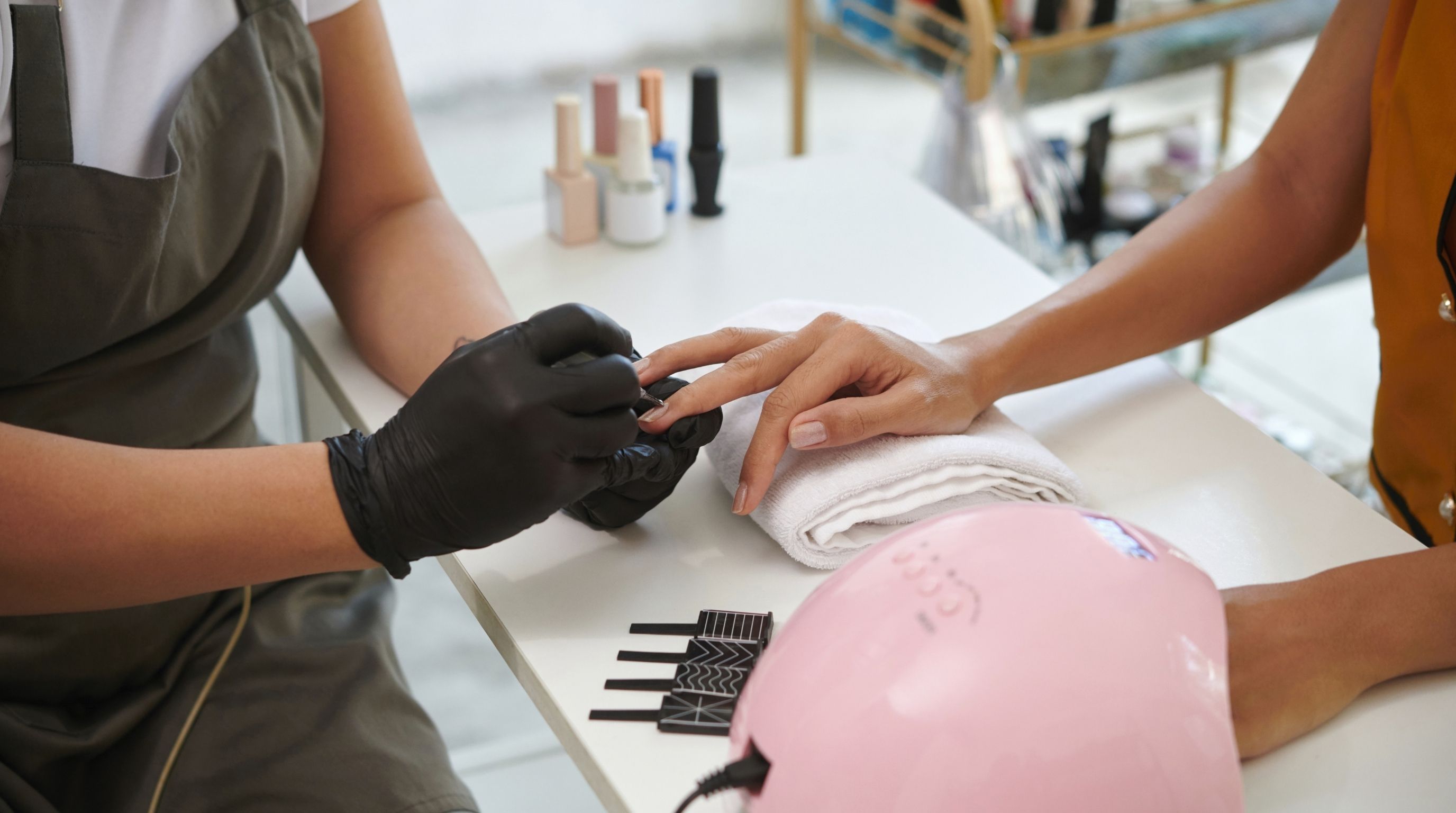
Published: November 2025 | Last updated: May 2026 | Editorial review and quality control: Martina N.
An Instagram post by HIV advocate bianca.carolina_ asked a question that sounds simple but turned out to be anything but: Should someone living with HIV tell their nail technician about their status? The comments split sharply. Some readers said yes, out of respect. Others said absolutely not, because the risk is essentially zero. Doctors and advocates chimed in from both sides, and somewhere in the middle of all that noise, the actual answer got a little lost. This article exists to find it, and to give you the science, the law, and the real-world context that the comment section couldn't.
The short answer is no. There is no legal obligation, no ethical requirement, and no meaningful medical justification for disclosing HIV status to a nail technician. The longer answer is more interesting, and it involves a crash course in how HIV actually behaves, what U=U really means, what federal law says about your privacy at a nail salon, and why the debate keeps happening in the first place.
Key Takeaways
- Federal law (ADA Title III) protects HIV-positive clients from any requirement to disclose status at nail salons, spas, or other beauty service providers.
- Across billions of nail services in the United States, exactly one possible HIV transmission has ever been documented through shared manicure equipment, and that case involved personal tools shared at home, not in a licensed salon.
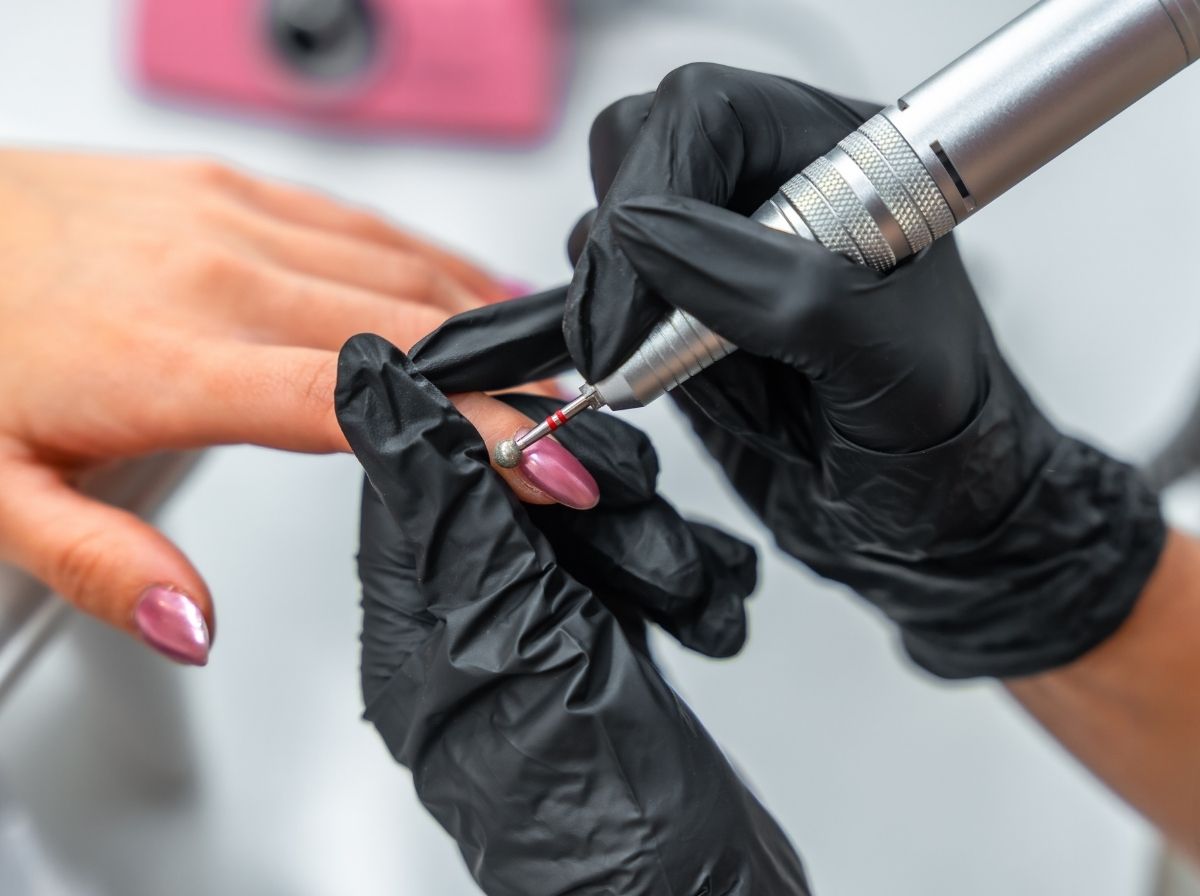
Why This Question Keeps Coming Up
Bianca Carolina is not the first person to wrestle with this question publicly, and she won't be the last. She's an HIV-positive advocate who has built a significant following by talking openly about life with the virus, including the parts that are awkward, stigmatized, and misunderstood. When she asked whether she should disclose her status to her nail tech, she wasn't confused about the medicine. She was navigating something murkier: the social pressure that still follows a diagnosis that has been manageable and non-transmissible in most everyday contexts for years.
That pressure is real, and it doesn't come from nowhere. For decades, HIV was synonymous with death, and the fear that built up around it was enormous. The 1980s and 1990s produced a kind of cultural panic that embedded itself deeply in policies, in relationships, in the instinct to disclose or confess even when there's nothing to confess. Thirty-plus years later, the medicine has transformed completely. The cultural memory, unfortunately, has not kept up at the same pace.
The Instagram comment sections reflect exactly that gap. You'll find people insisting on disclosure as a matter of courtesy, others citing wildly inaccurate transmission risks, and a handful of people, usually the ones who actually know the science, pointing out that the question itself is built on a false premise. According to CDC surveillance data, approximately 1.2 million people in the United States are currently living with HIV. Most of them are getting their nails done, their hair cut, their skin treated, and their teeth cleaned without disclosing anything, and that is completely appropriate.
Roughly 1.2 million people in the United States are currently living with HIV. The vast majority visit nail salons, hairdressers, dentists, and other beauty service providers without disclosing anything. Under both federal law and current medical science, that is exactly the correct posture.
What HIV Actually Needs to Spread
Here's the biology, explained without the textbook. HIV, Human Immunodeficiency Virus, is transmitted through specific bodily fluids: blood, semen, vaginal fluids, rectal fluids, and breast milk; those are the only five transmission-capable fluids. It does not spread through saliva, sweat, tears, urine, or casual skin contact. And critically, it needs a direct route into the bloodstream or mucous membranes to establish infection. Touching HIV-infected blood with intact skin carries essentially no transmission risk; the skin is an effective barrier.
Outside the body, HIV is fragile. It begins to lose viability almost immediately upon exposure to air and dies rapidly under normal environmental conditions. This is why dried blood, even blood that was HIV-positive, is not a transmission concern the way fresh, active blood would be in a medical setting. The virus requires a very specific set of circumstances to move from one person to another: infected fluid, a point of entry, and enough viral presence to establish infection. In a nail salon with properly maintained tools, those circumstances are extraordinarily difficult to achieve.
For transmission to occur via manicure instruments, you would need infected blood on a tool, that tool used immediately on another client who also has a break in their skin, and a sufficient quantity of virus present. The theoretical scenario exists. In practice, across the entire history of nail salons operating in the United States, billions of services performed, there is exactly one documented case of possible HIV transmission through shared manicure equipment in that entire period. In that case, a young Brazilian woman had shared personal nail instruments with a family member over an extended period in an uncontrolled home setting, not a licensed salon with sanitation protocols. Even that single case remains classified as a possible transmission, not a confirmed one.
This is not reassuring spin. It is the epidemiological record. Public-health surveillance contains no documented HIV transmission from a licensed nail salon operating under standard sanitation protocols, and OSHA's Bloodborne Pathogens Standard, which covers nail salon settings, lists Hepatitis B and C among the bloodborne pathogens of greatest practical transmission concern there given their far greater environmental durability relative to HIV. The modes of transmission that drive the epidemic, sexual contact, shared needles, and perinatal transmission, have nothing to do with a manicure.
Three conditions must all be present for HIV to move from one person to another: (1) one of five specific bodily fluids, namely blood, semen, vaginal fluid, rectal fluid, or breast milk; (2) a direct route into the bloodstream or a mucous membrane; (3) a sufficient quantity of active virus. Saliva, sweat, tears, urine, and intact skin do not transmit HIV.
U=U and Why It Changes Everything
Even before you factor in salon sanitation, there's another layer of science that the Instagram comments largely missed: U=U. It stands for Undetectable Equals Untransmittable, and it is one of the most significant scientific breakthroughs in HIV medicine of the past decade.
Here's what it means. When a person living with HIV takes antiretroviral therapy (ART) consistently and achieves an undetectable viral load, meaning the amount of HIV in their blood drops below the threshold that tests can detect, they cannot sexually transmit the virus to a partner. Across the landmark trials, HPTN 052, the PARTNER study, and Opposites Attract, virally suppressed participants did not transmit HIV to their partners in any documented case. The finding was formally affirmed in a 2019 JAMA paper by officials from the NIH's National Institute of Allergy and Infectious Diseases. HIV.gov describes the evidence base as overwhelming.
Bianca Carolina mentioned being undetectable, and she used the term U=U in her original post. That context matters enormously. An undetectable person's blood contains so little active virus that the theoretical nail salon scenario collapses entirely. The conditions required for transmission cannot be assembled.
What's striking, and a little troubling, is that a 2025 study published in the Journal of the International Association of Providers of AIDS Care found that more than half of people living with HIV surveyed in the United States did not know what U=U means. If the people closest to the issue are still catching up on this science, it's no surprise that a nail salon comment section is working from 1990s information.
Do I have to tell my nail tech I'm HIV-positive?
No. There is no federal or state law in the United States that requires HIV disclosure to a nail technician or any other beauty service provider. The Americans with Disabilities Act explicitly protects this privacy. Medically, the risk of HIV transmission in a properly run salon is effectively zero, and for a person on antiretroviral therapy with an undetectable viral load (U=U), the risk is zero. The hepatitis B and C protocols a good salon already follows protect every client, regardless of anyone's HIV status.
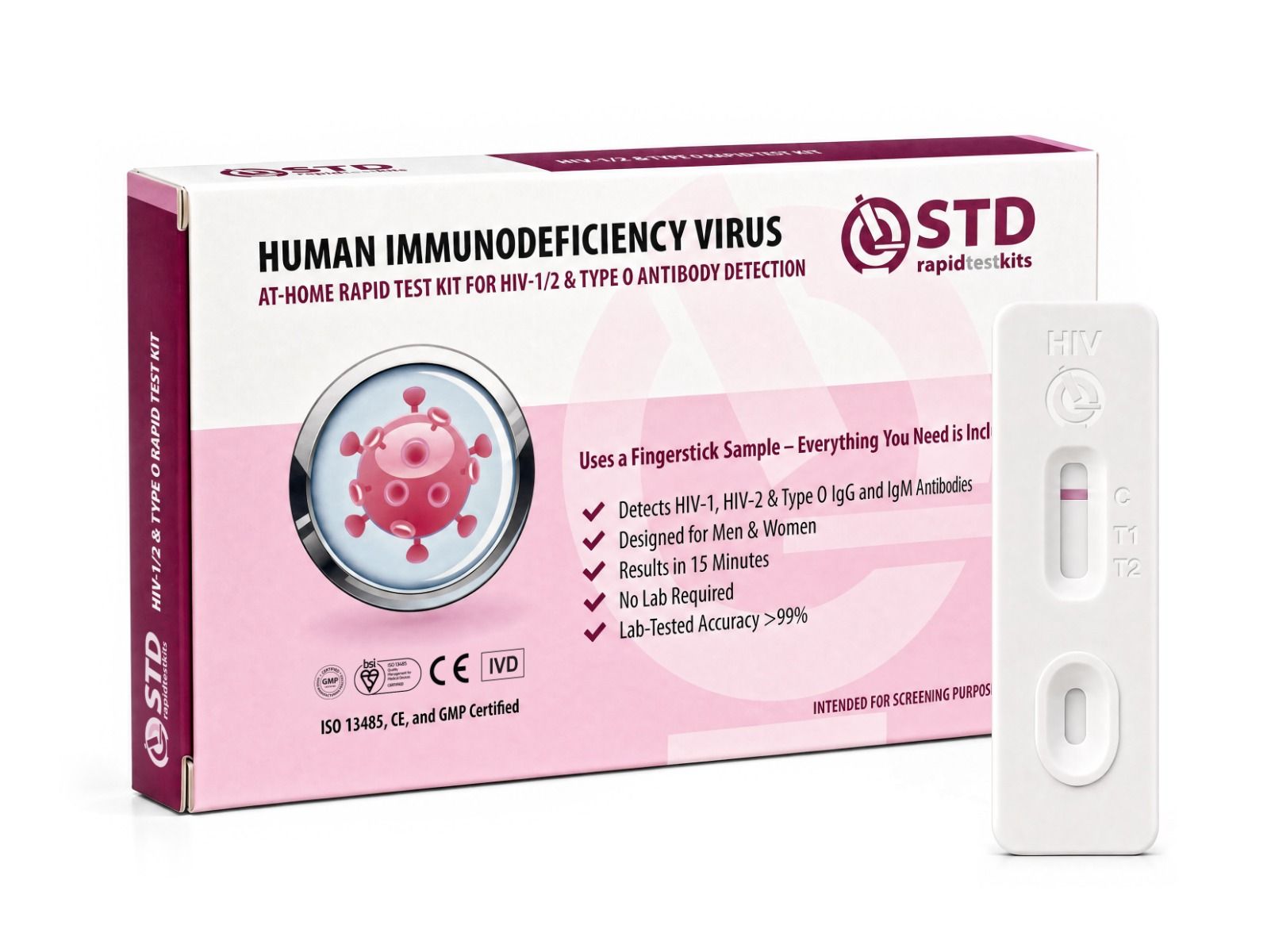
This article is published by stdrapidtestkits.com, which sells the rapid HIV home test below and other at-home STI test kits. We recommend products based on fit for the reader's concern, not commercial benefit. Always confirm any positive home result with a follow-up laboratory test.
The Actual Risk at the Nail Salon (And What Should Concern You)
If you're genuinely worried about bloodborne infections at a nail salon, here's a reframe that might surprise you: HIV is not the one to focus on. Hepatitis B and Hepatitis C are the bloodborne viruses that present a real, documented risk in salon settings, and neither of them requires an HIV-positive client to be present for that risk to exist.
Hepatitis C can survive outside the body for up to four days on surfaces, a durability HIV cannot match because Hepatitis C lacks an outer lipid envelope, the membrane layer that makes HIV fragile in open air. Without that envelope, Hepatitis C holds its structure and infectivity on contaminated surfaces far longer. It also establishes infection with a far smaller viral dose than HIV requires, which is why improperly cleaned manicure instruments are a documented Hepatitis C transmission route in a way they are not for HIV. Hepatitis B is even more durable and transmissible, and unlike Hepatitis C, it has no cure, though there is a highly effective vaccine. OSHA's Bloodborne Pathogens Standard explicitly covers nail salons and requires employers to evaluate and address exposure risks; in practice, Hepatitis B and C present the higher documented transmission risk in those settings because of their greater environmental durability relative to HIV.
This means that the sanitation protocols a good salon follows are not specifically designed to protect you from HIV-positive clients. They exist because any client, regardless of known status, might be carrying any number of bloodborne infections, including ones they don't know about yet. The window period for HIV, during which a person can test negative despite being infected, means that any client could theoretically be in the early stages of infection. Good salons operate on the principle of universal precautions: treating every client's blood as potentially infectious, every time, no exceptions.
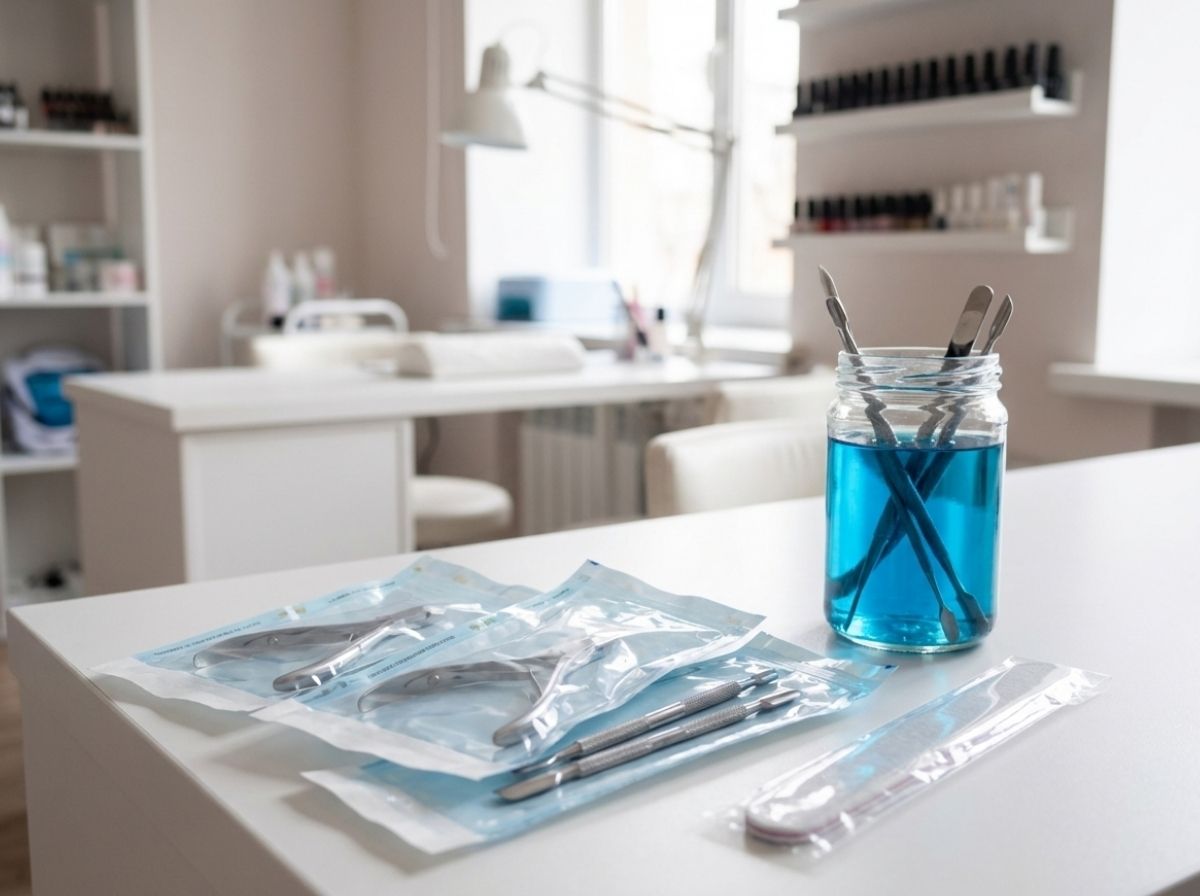
What does that look like in practice? Metal implements should be either single-use or properly sterilized between clients, soaked in EPA-registered disinfectant solution like barbicide, not just wiped down or run under water. Porous tools like nail files and wooden cuticle sticks should never be reused between clients. Work surfaces should be disinfected between appointments. When you walk into a salon, you can ask your tech what their sterilization process looks like. That's informed self-care, and it protects you from Hepatitis C, fungal infections, and bacterial transmission far more than any client's HIV disclosure ever could.
Hepatitis C can survive up to four days on a contaminated surface and infects with a far smaller viral dose than HIV requires. HIV, by contrast, loses viability within minutes of exposure to air. The sanitation protocols a good salon follows are calibrated to the harder-to-kill virus, which is why they protect every client regardless of anyone's HIV status.
What Good Salons Already Do, And What You Can Ask For
If you're living with HIV and you're deciding whether to go to a nail salon, the most useful thing to know is that a salon following proper sanitation protocols is already protecting both you and everyone around you, regardless of anyone's HIV status. You don't need to disclose anything for the salon to be safe. The protocols aren't triggered by disclosure. They're supposed to be in place all the time.
Licensed nail technicians in the United States are required to complete training in bloodborne pathogens and infection control as part of their state licensing requirements. Florida, for example, requires cosmetologists and nail specialists to complete a 4-hour HIV course at initial licensure and 1 hour of HIV education at every renewal. The expectation built into the regulatory framework is that techs treat every client as potentially carrying any bloodborne infection, because that's the only approach that actually makes everyone safe.
You are absolutely within your rights to ask questions before a service, and any salon operating to a professional standard will have clear answers. Here's what correct protocol looks like for the tools most likely to come into contact with skin or blood:
| Tool | Correct Protocol | What to Ask |
|---|---|---|
| Metal nippers, cuticle pushers, scissors | Fully submerged in EPA-registered disinfectant (e.g. barbicide) between every client, or autoclaved | "Are these coming out of a disinfectant bath or a sealed pouch?" |
| Nail files and buffers | Single-use, disposed of after each client or kept per-client only | "Is this file new, or is it mine to keep?" |
| Wooden cuticle sticks | Single-use, thrown away after one client, never reused | If you see one pulled from a shared drawer, ask for a fresh one |
| Pedicure basin | Drained, scrubbed, and disinfected with EPA-registered solution between every client, minimum 10-minute contact time | "How do you clean the basin between appointments?" |
| Electric file drill bits | Disinfected between clients; bits that contact skin carry the same risk as metal hand tools | "Are the drill bits changed or disinfected between clients?" |
Bring Your Own Tools If You Want To
These questions are normal and welcomed by any salon that takes hygiene seriously. They protect you from Hepatitis C, fungal infections, and bacterial transmission, and they don't require you to explain why you're asking. A salon that gets defensive when asked basic sanitation questions is telling you something useful about their standards.
If you bring your own tools, which is perfectly acceptable and actually encouraged by many nail care professionals, you eliminate the shared-instrument question entirely. Metal nail implements are easy to sterilize at home with rubbing alcohol or a small autoclave-style sterilizer. Bringing your own set is standard infection-control practice, and nail care professionals actively recommend it to clients who want to minimize any transmission risk, HIV-related or otherwise. You can keep a small zippered pouch in your bag with your nippers, file, and cuticle pusher. The salon supplies the polish, the technique, and the time. You supply the metal.
The Law: What HIV-Positive Clients Are Actually Required to Do
Nothing. Legally, a person living with HIV is not required to disclose their status to a nail technician, a salon owner, a hairdresser, an esthetician, or any other beauty service provider. This is not a gray area. It is settled law.
The Americans with Disabilities Act (ADA) classifies HIV as a disability and prohibits discrimination in public accommodations, a category that explicitly includes nail salons, spas, and beauty establishments. Under Title III of the ADA, a salon cannot deny service to a person because of their HIV status. They cannot require a doctor's note. They cannot ask a client to return only during off-hours. They cannot refuse to use their standard tools. If they do any of these things, they are in violation of federal law.
In 2021, a Durham, North Carolina nail salon, Diva Nails, reached a settlement with the U.S. Department of Justice after an HIV-positive client was denied future service following an accidental disclosure of his status by another customer. The salon was required to pay damages, post a nondiscrimination policy at its entrance, and provide HIV education and training to all employees, including the fact that HIV transmission in a salon setting is, in the DOJ's own language, virtually impossible.
The privacy side of this is equally clear. Health information is personal. A client's HIV status is protected medical information, and there is no legal framework in the United States that requires disclosure to beauty service providers. The decision to share, if someone chooses to, is entirely voluntary, entirely personal, and entirely the client's to make on their own terms.
Under Title III of the Americans with Disabilities Act, a beauty service provider in the United States cannot require HIV disclosure as a condition of service, cannot refuse service to an HIV-positive client, cannot demand a doctor's note or medical clearance, cannot restrict the client to off-hours appointments, and cannot refuse to use standard tools. Violations are enforceable through the U.S. Department of Justice, with damages and mandatory non-discrimination training as standard remedies.
Why People Still Feel Like They Should Tell
This is the part the law doesn't cover. Because even when you know you're not legally required to do something, the social pressure to do it anyway can feel overwhelming, especially when you've been diagnosed with something that carries as much cultural weight as HIV.
There's a version of the nail salon question that isn't really about transmission risk or legal obligations at all. It's about the internalized feeling that having HIV means you owe people warnings. That your body is now a liability. That disclosure is a form of courtesy, or decency, or honesty, even in contexts where there is nothing to be honest about because there is no meaningful risk to disclose.
That feeling has a name: HIV stigma, and it is persistent. The CDC tracks HIV stigma as a formal public health indicator, noting that it creates real barriers to testing, treatment, and care. People who fear judgment delay getting tested. People who fear discrimination don't start treatment. People who've absorbed the message that their status makes them dangerous feel compelled to announce themselves in situations where it isn't relevant, and then brace for rejection.
Bianca Carolina asking the question publicly wasn't a sign that she didn't know the answer. It was a moment of honesty about the gap between what she knows intellectually and what the weight of stigma makes her feel socially. That gap is real, it's common, and it deserves acknowledgment, not dismissal. The science says she owes her nail tech nothing. The social landscape she's navigating is more complicated than that, and pretending otherwise would miss the point entirely.
The most useful thing the Instagram conversation produced, beyond the inevitable misinformation, was visibility. People who didn't know what U=U meant looked it up. People who assumed HIV was still the terrifying death sentence of 1987 got a reality check. And a woman living openly with a manageable condition had a conversation in public that most people still have only in private, if at all.
The CDC formally measures HIV stigma because it creates documented barriers to testing, treatment, and retention in care. Reducing stigma is a public-health intervention in its own right; the social pressure to disclose where it isn't medically or legally required is a downstream effect of that same stigma.
Testing: Knowing Your Status Changes Everything
One of the most important things the TikTok conversation around bianca.carolina_ did was remind people that HIV status is something you find out, and then manage. The people most at risk of unknowingly transmitting HIV are not the people who know their status and are on treatment. They are the people who don't know they're infected because they've never been tested.
According to the CDC, an estimated 13% of people living with HIV in the United States are unaware of their infection. That group, not the openly HIV-positive person on ART with an undetectable viral load, is where the actual transmission risk lives. Routine testing is about closing that gap. You cannot manage what you don't know about.
At-home rapid testing has made knowing your status easier than it has ever been. If you've had unprotected sex, shared needles, or had a potential exposure and haven't tested recently, an at-home HIV test gives you a private, fast answer without a clinic visit, a waiting room, or a conversation with anyone you're not ready to have. The HIV 1&2 At-Home Rapid Test Kit from STD Rapid Test Kits delivers results in about 20 minutes with 99.7% accuracy. You collect a small blood sample with a finger prick, follow the instructions, and have your answer before your nail polish dries.
Timing your test correctly is the difference between a result you can trust and one you can't. Here's how that works biologically: HIV tests detect antibodies, the proteins your immune system produces specifically to fight the virus. Your body doesn't generate those antibodies the moment you're exposed. It takes time to mount that response, which means there's a window after infection during which a test will come back negative even if you're infected. That negative is not a true negative; it's a biological artifact of testing too early.
| Infection | When to Test | Negative Result | Positive Result |
|---|---|---|---|
| HIV | 6 weeks (first indicator); retest at 12 weeks for certainty | Negative at 12 weeks = did not contract HIV from that exposure | Virus is present; connect with a healthcare provider immediately |
| Hepatitis B | From 6 weeks after exposure | Negative at 6 weeks is reliable given Hepatitis B's shorter incubation period | Confirms active infection; requires medical follow-up |
| Hepatitis C | From 8 to 11 weeks after exposure | Negative after 11 weeks is considered conclusive | Infection is present; testing before 8 weeks risks a false negative |
What Your Test Result Actually Means
The reason those windows are non-negotiable comes back to the antibody biology explained above: each virus triggers a different immune response timeline, and each test is calibrated to that specific window. Testing outside it doesn't give you a result you can act on; it gives you noise. Getting the timing right means the result you read actually means something.
It's also worth noting that a positive result for any of these infections is not the end of the conversation; it's the beginning of a manageable one. HIV caught early and treated promptly is what gets someone to undetectable status. Hepatitis C is now curable in the overwhelming majority of cases with a short course of direct-acting antivirals. Hepatitis B has no cure but is highly controllable with ongoing treatment, and vaccination before exposure prevents it entirely.
For anyone who has had multiple potential exposures or wants broader peace of mind, combo testing covers the full picture in one session. The 7-in-1 Complete At-Home STD Test Kit screens for HIV alongside HSV-2, Chlamydia, Gonorrhea, Syphilis, Hepatitis B, and Hepatitis C. One test session, comprehensive results, no clinic required. And if you're a woman who wants the most complete panel available, the Women's 10-in-1 At-Home STD Test Kit adds HPV and Trichomoniasis to that lineup.

FAQs
- Is it against the law to not tell my nail tech that I have HIV?
- No. There is no law in the United States, either at the federal or state level, that requires you to tell a nail technician or any other beauty service provider that you have HIV. The choice to share your health information is entirely yours.
- Can you actually get HIV from a nail salon?
- In real life, it is extraordinarily rare. There is only one documented case of possible HIV transmission through shared manicure equipment in the entire history of salon services, and that case involved personal tools shared at home for years, not in a licensed salon. With proper sterilization, the risk is essentially nonexistent.
- What does U=U mean, and does it apply to nail salons?
- U=U stands for "Undetectable Equals Untransmittable." It means that a person with HIV who is on antiretroviral therapy and has an undetectable viral load cannot sexually transmit the virus to a partner. In a nail salon, where HIV transmission was already nearly impossible, U=U makes the risk smaller still. There is so little active virus in an undetectable person's blood that the already extreme conditions needed for transmission cannot occur.
- What if my nail tech accidentally cuts me and there is blood?
- A small nick or cuticle bleed is common and doesn't mean you've been exposed to a disease. HIV needs to enter the bloodstream through infected fluid, and a small cut in a salon where tools are properly sterilized between clients doesn't create those conditions. Universal precautions are designed to protect everyone, regardless of anyone's status.
- Should I be more worried about Hepatitis C than HIV at the nail salon?
- Yes, actually. Hepatitis C can survive outside the body for up to four days and only needs a small amount of virus to establish infection. It's the bloodborne virus that genuinely matters for nail salon hygiene, which is why good salons use EPA-registered disinfectants that can kill it. No client's HIV status changes either risk.
- Can a nail salon legally refuse service to an HIV-positive customer?
- No. The Americans with Disabilities Act classifies HIV as a disability and salons as public accommodations. Refusing service based on HIV status is a Title III violation. A 2021 DOJ settlement with a North Carolina salon confirmed this; the salon paid damages and was required to provide HIV nondiscrimination training to all staff.
- When should I test for HIV after a potential exposure?
- Test at 6 weeks after exposure for a first indicator result; a negative at that point is meaningful but not conclusive. Retest at 12 weeks for certainty. A negative result at 12 weeks means you did not contract HIV from that exposure. The two-stage window exists because your immune system needs time to produce enough antibodies for the test to detect, and testing before 6 weeks carries a real risk of a false negative.
- What should I look for to know a nail salon is safe?
- Ask whether metal tools came out of a sealed sterilization pouch or an EPA-registered disinfectant bath. Confirm that wooden cuticle sticks and nail files are single-use. Ask how the pedicure basin is cleaned between clients (it should be drained, scrubbed, and disinfected with at least a 10-minute contact time). A good salon will answer clearly. If they can't, or if the tools look dirty, it's reasonable to leave.
The Answer Was Always Clear; Testing Keeps It That Way
The Instagram debate about HIV and nail salons generated a lot of heat and not enough light. But buried in the hundreds of comments on Dr. Karan Rajan's response video, and in the thousands of responses to bianca.carolina_'s original post, was a genuine need: people want to understand what HIV actually means in everyday life in 2026, not what it meant in 1986. The answer to her question is straightforward. There is no legal obligation, no meaningful transmission risk, and no ethical requirement to disclose. A person living with HIV who is undetectable and on treatment getting a manicure is no more remarkable than any other Tuesday appointment.
What does matter, for everyone, regardless of status, is knowing where you stand. The people most likely to unknowingly transmit HIV are the ones who don't know they have it. Routine testing closes that gap. If you've never tested, or haven't tested since a potential exposure, the HIV 1&2 At-Home Rapid Test Kit gives you a 99.7% accurate answer in about 20 minutes, privately, at home; test at 6 weeks for a first indicator and retest at 12 weeks for certainty. For broader coverage in one session, the 7-in-1 Complete At-Home STD Test Kit screens for HIV plus Hepatitis B, Hepatitis C, HSV-2, Chlamydia, Gonorrhea, and Syphilis.
Knowing your status is not a confession. It's just information, and information is always better than a comment section. You can find the full range of at-home rapid test kits at STD Rapid Test Kits.
What to Do Next
- If you live with HIV: you owe no one at a salon any disclosure. Ask about sterilization protocols if you want; you're entitled to the same tools and service as any other client under federal law.
- If you're worried about bloodborne infection at a salon: focus on Hepatitis B and C, not HIV. Ask about EPA-registered disinfectant baths, single-use porous tools, and how the pedicure basin is cleaned between clients.
- If you haven't tested for HIV in a while: a rapid home test at 6 weeks post-exposure, retested at 12 weeks for certainty, closes the awareness gap that drives most unintentional transmission.
Our article was constructed based on current advice from the most prominent public health and medical organizations, and then molded into plain language based on the situations that people actually experience, including the social pressure around disclosure, the persistent gap between modern HIV medicine and cultural memory, and the real-world questions that arise about routine personal care. In the background, our pool of research included broader public health guidance, clinical literature, and DOJ enforcement records, but the sources below are the most pertinent and useful for readers who want to verify our claims for themselves.
- U.S. Centers for Disease Control and Prevention. HIV surveillance data, prevalence estimates, and information on the 13% of people living with HIV unaware of their status.
- HIV.gov. The Science Is Clear: With HIV, Undetectable Equals Untransmittable. Plain-English summary of the evidence base for U=U, citing HPTN 052, PARTNER, Opposites Attract, and the 2019 JAMA paper from NIAID.
- Journal of the International Association of Providers of AIDS Care (JIAPAC). Lack of Knowledge and Understanding of U=U Among People Living with HIV in the United States (2025).
- OSHA. Health Hazards in Nail Salons: Biological Hazards. Describes the Bloodborne Pathogens Standard as it applies to salon settings, listing Hepatitis B, Hepatitis C, and HIV as bloodborne hazards employers must evaluate.
- U.S. Department of Justice, Middle District of North Carolina. Settlement Reached with Nail Salon for Violations of the Americans with Disabilities Act (2021). Documents the Diva Nails case and ADA Title III nondiscrimination requirements for public accommodations.
- PubMed. An HIV-1 Transmission Case Possibly Associated with Manicure Care (AIDS Research and Human Retroviruses). The single documented possible-transmission case worldwide via shared personal manicure tools in a home setting.
