Published: August 2025 | Last updated: May 2026 | Editorial review and quality control: Martina N.
Fertility depends on healthy tissue, open pathways, and precise timing. Sperm have to be produced in adequate numbers and reach an egg through unobstructed channels. Eggs have to mature, release, and travel through fallopian tubes that are not scarred shut. Untreated sexually transmitted infections interfere with every one of these steps, often without producing the symptoms people expect.
The hardest part of this story is how quietly it unfolds. Chlamydia and gonorrhea, the two infections most strongly linked to lasting reproductive damage, frequently produce no symptoms at all. By the time pregnancy attempts begin, the inflammation that mattered most may have happened years earlier. This article covers how that damage occurs, who carries the highest risk, what testing looks like before symptoms appear, and what changes after treatment.
Key Takeaways
- Chlamydia and gonorrhea are among the most common preventable infectious causes of tubal infertility, and both are typically asymptomatic in women.
- Antibiotics clear the underlying infection, but they cannot reverse scarring that has already formed in the fallopian tubes or epididymis.
Why Untreated STDs Damage Fertility
When bacteria like Chlamydia trachomatis or Neisseria gonorrhoeae reach the cervix, urethra, or upper reproductive tract, the immune system responds with inflammation. That response is helpful in the short term because it recruits white blood cells to the site of infection. The problem begins when the bacteria are not cleared promptly, either because no one knows the infection is present or because treatment is delayed past the point where the immune response can resolve cleanly.
Over weeks and months, chronic inflammation lays down fibrin and collagen, which are the building blocks of scar tissue. In women, this scarring can occur in the cervix, the uterine lining, the fallopian tubes, or the surrounding pelvic tissues. In men, it can form in the epididymis, prostate, or the ducts that carry sperm from the testes outward. Once scar tissue narrows or blocks a passage, the structural change typically persists even after the underlying infection is treated and gone.
Whether a treatable infection leaves permanent change depends mostly on how long it goes untreated. The longer an untreated infection has access to deeper tissues, the more likely it is to produce damage that cannot be reversed with antibiotics. The U.S. Centers for Disease Control and Prevention notes that the majority of chlamydia infections in women produce no symptoms at all, which is why chlamydia remains one of the most common preventable causes of tubal infertility in the United States.

How Pelvic Inflammatory Disease Develops in Women
Pelvic inflammatory disease, usually called PID, is the most important pathway from a curable STD to lifelong infertility in women. It is not a separate infection. PID is the term for what happens when bacteria from the cervix migrate upward into the uterus, fallopian tubes, and surrounding pelvic structures, triggering an inflammatory response in tissue that was not built to handle one.
A single episode of PID raises the risk of future infertility, and repeated episodes raise that risk substantially. The CDC overview of PID reports that about one in eight women with a history of PID has difficulty becoming pregnant later.
Inflammation in the fallopian tubes produces adhesions, which are bands of fibrous tissue that bind together surfaces that should remain separate. As adhesions form, they can narrow or completely close the tube. A blocked tube prevents egg and sperm from meeting at all. Partial scarring is in some ways more dangerous, because an egg may still be fertilized but cannot descend normally into the uterus, raising the risk of ectopic pregnancy.
What makes PID particularly costly is that the underlying STD often produces no clear symptoms, while the PID itself may produce only vague pelvic ache or spotting that is easily attributed to a normal cycle. Many women learn they had PID only when fertility evaluations after a year of unsuccessful conception attempts reveal tubal damage.
How Untreated Infections Affect Male Fertility
Male fertility is discussed less often in connection with STDs, but the same bacteria can produce significant problems on the male side of the equation. Chlamydia and gonorrhea most commonly cause epididymitis, an inflammation of the coiled tube where sperm mature before ejaculation. Acute epididymitis is usually painful, but lower-grade chronic inflammation can persist quietly and produce damage that becomes apparent only on a semen analysis.
Inflammation from these infections can also affect the prostate and seminal vesicles, both of which contribute fluid that supports sperm survival after ejaculation. The CDC's overview of chlamydia describes how the infection can spread to the male reproductive tract and cause complications that affect fertility.
Beyond physical blockage, untreated inflammation can reduce sperm count, impair motility, and damage the DNA carried inside each sperm cell. Andrology research has documented measurable drops in sperm concentration and motility after chlamydia infection, with partial recovery in many cases after antibiotic treatment. Some changes appear reversible. Others persist when the inflammation has lasted long enough, or has been severe enough, to produce permanent structural change in the epididymis or vas deferens.
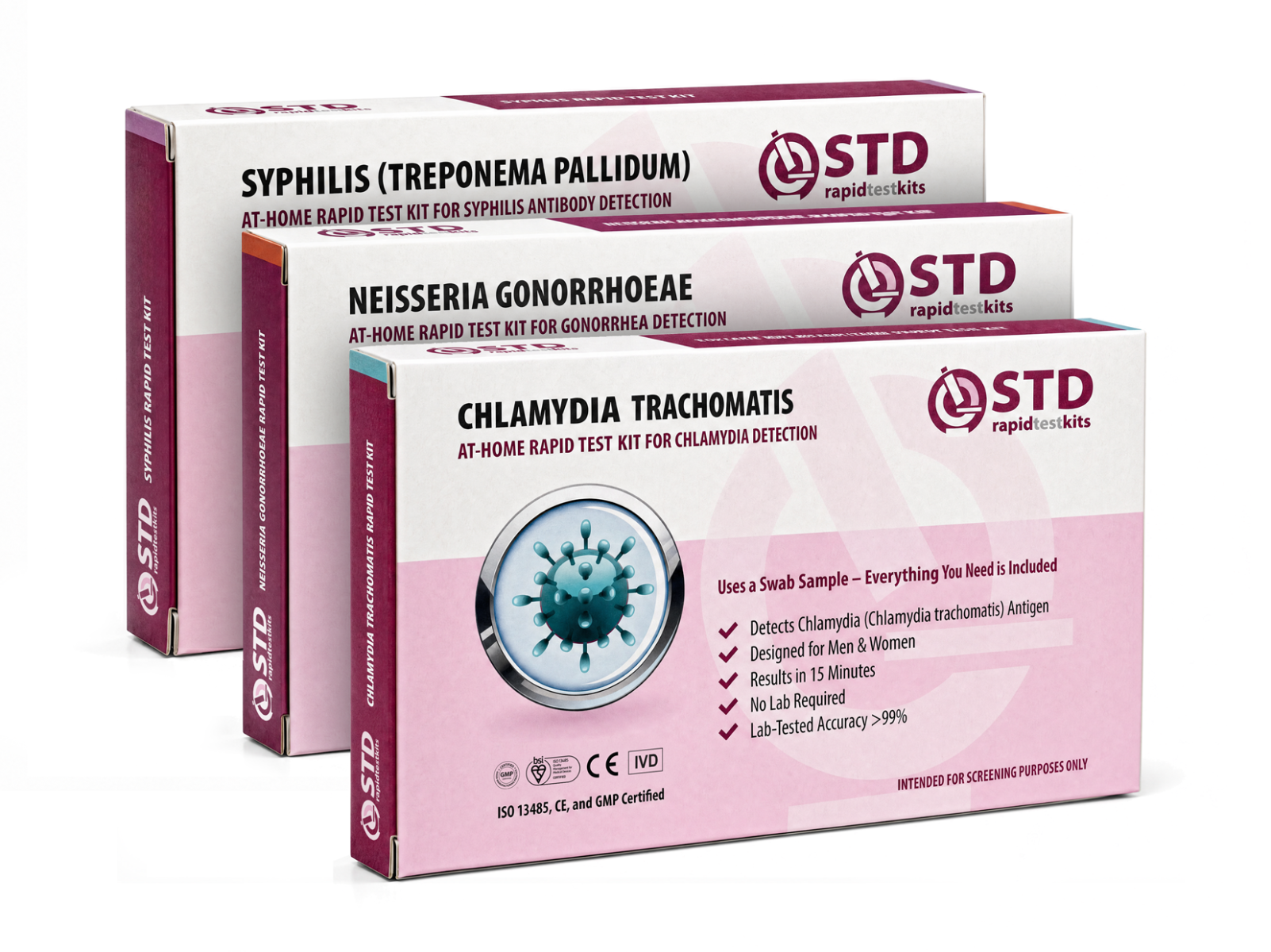
For men trying to conceive, a sperm analysis is the typical first investigation if pregnancy does not occur after a year of trying. Findings consistent with prior reproductive-tract inflammation are common in men with an undiagnosed history of chlamydia or gonorrhea exposure. This site sells rapid at-home tests for the most fertility-relevant STDs; a positive at-home result should still be confirmed through a clinician.
Which STDs Carry the Highest Fertility Risk
Not every sexually transmitted infection threatens fertility the same way. The bacterial infections (chlamydia, gonorrhea, and to a lesser extent trichomoniasis) do most of the structural damage. The viral infections affect reproductive outcomes through more indirect routes. The table below summarizes how the four most common STDs map onto fertility risk for men and women, along with the single most important warning point for each.
| Infection | Female fertility risk | Male fertility risk | Most important warning |
|---|---|---|---|
| Chlamydia | One of the most common preventable causes of tubal infertility; scarring in fallopian tubes can prevent fertilization or cause ectopic pregnancy | Can infect the epididymis and prostate; may reduce sperm motility or partially block sperm transport | Usually asymptomatic; damage often forms silently before any symptom appears |
| Gonorrhea | Rapid onset of pelvic inflammatory disease with high risk of tubal damage if treatment is delayed | Inflammation of epididymis or testes; repeat infections raise risk of persistent transport problems | Frequently co-infects with chlamydia, and the combination accelerates damage |
| Syphilis | Does not usually cause mechanical infertility but substantially raises miscarriage, stillbirth, and neonatal harm | Rare direct fertility impact; untreated infection can cause systemic complications over years | Harms pregnancy outcomes more than fertility itself; prenatal screening is critical |
| Trichomoniasis | Chronic inflammation can disrupt vaginal microbial balance and raise susceptibility to other STDs | Less directly studied, but inflammation and coinfection may indirectly affect sperm quality | Amplifies the damage caused by other infections, particularly chlamydia |
Why the Most Damaging Infections Often Cause No Symptoms
One of the most counterintuitive parts of reproductive health is that the infections most likely to leave a person infertile are typically the ones least likely to be noticed. Chlamydia is asymptomatic in the majority of women and a large fraction of men. Gonorrhea is less consistently silent in men but still produces no obvious symptoms in many cases, particularly when the infection sits in the cervix or rectum rather than the urethra.
When inflammation is happening in the upper reproductive tract, the tissue involved does not produce pain reliably. A woman with chlamydia or gonorrhea may notice only mild spotting, slight pelvic discomfort, or unusual discharge, all of which are easy to attribute to a period, a routine bacterial imbalance, or an irritation. By the time the inflammation reaches a point that demands medical attention, scarring may already be partially in place.
Reinfection turns a single exposure into a long-term problem, because each return of the bacteria restarts the inflammatory cycle. Treatment clears the current infection, but repeated exposure (most commonly when a partner has not been treated) starts the damage clock again. The cumulative effect of two or three undetected episodes over five years is substantially worse than a single early-treated infection. WHO guidance on STIs stresses treating both partners to break the reinfection cycle, and the CDC's chlamydia overview reinforces the importance of retesting after treatment to confirm the infection has cleared.
Symptoms cannot be relied on as a warning system. A person who has had a new partner in the past year without a follow-up screen could be carrying chlamydia or gonorrhea right now without any awareness of it.
How long does it take for an untreated STD to cause infertility?
There is no single fixed timeline. Permanent scarring can begin within weeks of an untreated chlamydia or gonorrhea infection in some people, while others carry the same infection for months or years without measurable damage. The risk rises with the duration of infection, the presence of co-infection (especially chlamydia plus gonorrhea), and the number of repeat exposures. Because the most damaging infections usually cause no symptoms, periodic screening is the only reliable way to catch the timeline early enough to prevent permanent change.
When Damage Is Reversible and When It Is Not
Antibiotics are effective at clearing the bacterial infections that drive most fertility-related reproductive damage. A standard course of azithromycin or doxycycline clears chlamydia in the large majority of cases, and intramuscular ceftriaxone clears most gonorrhea infections. What antibiotics cannot do is reverse scarring that has already formed in the fallopian tubes, epididymis, or vas deferens.
The damage most likely to recover after treatment is the kind caused by acute, short-duration inflammation. In men, sperm parameters often return toward baseline over three to six months once the infection is gone, especially when the inflammation was mild. In women, mild PID treated promptly may leave no measurable structural change, and natural conception often follows without difficulty.
Damage that is more likely to be permanent comes from infections that lasted months or years, repeated episodes of PID, or severe acute inflammation that produced extensive adhesions before treatment. In those situations, scarring persists even after the underlying infection is gone, as the CDC's PID overview describes. People in this category may still conceive naturally, but the probability is reduced, and assisted reproductive options such as in vitro fertilization can become relevant if natural conception does not occur after a reasonable trying period.
The distinction between reversible and permanent damage is not always clear at the time of treatment. A person treated for chlamydia today may not learn whether any tubal scarring formed until pregnancy attempts begin. Treatment timing affects long-term outcomes more than symptom severity does at the moment of diagnosis.
Untreated chlamydia or gonorrhea can cause pelvic inflammatory disease, which can lead to long-term complications including infertility, ectopic pregnancy, and chronic pelvic pain.
Where Viral STDs Fit Into the Picture
The viral STDs (HPV, herpes simplex virus, and HIV) do not typically damage the structures involved in fertilization. Their effects on reproductive outcomes come through different routes, but they should not be dismissed when planning for pregnancy.
HPV does not directly impair conception, but high-grade cervical lesions can require procedures such as loop electrosurgical excision or cone biopsy. Those procedures may affect cervical structure and can raise the risk of preterm birth in subsequent pregnancies. Routine cervical screening detects these changes early, when conservative treatment is sufficient and the cervical effect is minimal.
Herpes does not cause infertility. People living with herpes conceive at roughly the same rates as people without it. An active genital outbreak at the time of delivery affects mode of delivery, since transmission to the newborn during vaginal birth carries serious risk, and a cesarean section is typically recommended when lesions are present during labor.
HIV is its own category. Modern antiretroviral therapy has made conception possible for people with HIV without onward transmission to a partner or child, but the planning process benefits from specialist input early. Pre-exposure prophylaxis for the negative partner, viral suppression in the positive partner, and timed conception are standard parts of safe-conception planning today.
Herpes does not affect fertility between outbreaks. An active genital outbreak at the time of labor is what triggers a cesarean section to protect the newborn. HPV affects fertility only indirectly, through cervical procedures used to treat high-grade lesions. HIV planning is now a managed process with antiretroviral therapy, PrEP for the negative partner, and timed conception, and benefits from specialist input early.
Who Benefits Most From Pre-Conception STD Testing
The strongest protection against STD-related infertility is testing on a schedule rather than testing only when symptoms appear. CDC screening guidance calls for annual chlamydia and gonorrhea testing for sexually active women under 25, and additional testing for older women with new or multiple partners. Men in the same risk groups benefit from regular screening as well, although routine screening for asymptomatic men is less standardized in current public-health guidance.
For couples actively trying to conceive, a baseline screen for both partners is straightforwardly useful. An infection that has been silent in one partner can have been contributing to undiagnosed fertility difficulty, and treating it before conception attempts begin eliminates one common variable. Testing also catches undiagnosed past exposures, since neither person may be aware of an asymptomatic infection acquired before the current relationship. The scenarios in the table below identify situations where pre-conception screening is most likely to change outcomes.
| Situation | Why testing helps |
|---|---|
| New sexual partner within the past twelve months | Asymptomatic infection from a prior exposure is common and remains transmissible |
| History of chlamydia, gonorrhea, or PID | Baseline screen rules out current reinfection and informs fertility planning |
| Previous miscarriage or ectopic pregnancy | Tubal scarring from earlier infection may have contributed and is worth ruling out |
| Last STD screen more than a year ago | Chlamydia and trichomoniasis can persist without symptoms for many months |
| First pregnancy attempt with current partner | Confirms both partners are starting from the same baseline before conception |
What Catching an Infection Early Actually Changes
Almost every STD-related fertility outcome that ends badly shares the same backstory. An infection went undetected for long enough that scarring took hold, and treatment after that point cleared the bacterium but not the structural change it left behind. The window in which treatment makes the largest difference comes before symptoms appear, which is also the window most people skip because they feel fine.
This is not a story about being careful or being responsible. It is a story about how a specific class of infections behaves when the immune system cannot clear them quickly. Each new inflammatory episode adds to whatever scarring already existed, and the worst fertility outcomes develop in people who felt completely well throughout the process, as the CDC's archived overview of STDs and infertility documents.
For people considering pregnancy in the next year or two, the practical step is unambiguous: get tested, have the partner tested, treat any positive results promptly, and retest after treatment to confirm clearance. The investment is small relative to fertility evaluations later, and the protective effect on long-term reproductive health is among the largest single interventions available outside of standard prenatal care.
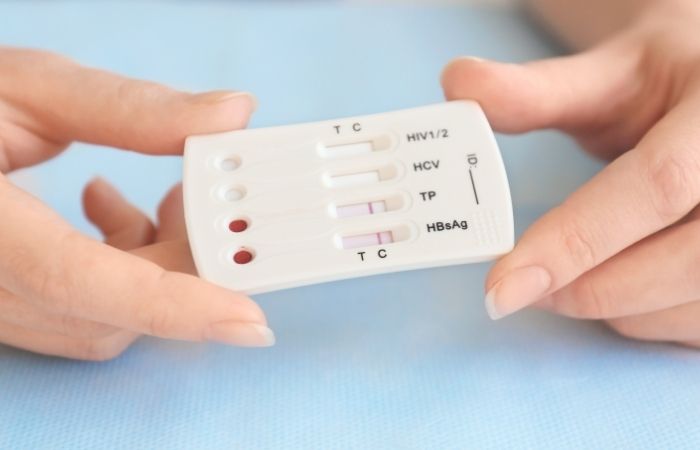
An at-home rapid test can be the first step when going to a clinic feels like a barrier. Positive results should still be followed up with confirmatory testing through a clinician.
Testing Today Protects Options Tomorrow
Untreated STDs are one of the few preventable causes of infertility that almost always trace back to a known set of bacterial infections. The reason they remain common contributors to difficulty conceiving is structural, not individual: the most damaging infections produce the fewest symptoms, and many people learn about the damage only after trying to conceive without success.
The simplest counter-strategy is to test on a schedule that does not depend on noticing symptoms. For sexually active adults outside of mutually monogamous relationships, annual screening is enough for most situations. For couples preparing for conception, a baseline screen for both partners catches the silent infections that otherwise show up as unexplained fertility delays later. Broader at-home panels are a useful option when both partners want a single comprehensive baseline.
FAQs
- Can I be infertile from an STD I never knew I had?
- Yes, and this is common. Chlamydia and gonorrhea are typically silent in women, and many people learn they had one of these infections only after fertility difficulties begin. Scar tissue in the fallopian tubes or epididymis usually forms over months without producing pain or other clear symptoms.
- If I had an untreated STD years ago, is the damage permanent?
- It depends on how long the infection persisted and how much inflammation it produced. Some people who were exposed and never treated still conceive normally. Others have measurable tubal or epididymal scarring. A combination of current STD testing and, if needed, a fertility evaluation can clarify the picture. Catching past infection now is still useful because it removes one variable from later trying.
- Does it matter if I have never had STD symptoms?
- Chlamydia and gonorrhea cause more fertility damage when they produce no symptoms, because nothing prompts the person to seek testing. Annual screening is the only reliable way to catch these infections before scarring forms. Most chlamydia infections in women never produce a noticeable symptom, so absence of symptoms is not evidence of absence of infection.
- Can a negative test today tell me whether past infections damaged my fertility?
- No. A negative test confirms only that there is no current infection. It does not detect past damage. If fertility is your specific concern, a clinician can evaluate tubal function in women, typically by hysterosalpingogram, or sperm parameters in men by semen analysis, to assess whether earlier exposures left structural changes.
- Can men lose fertility from untreated STDs?
- Yes. Chlamydia and gonorrhea can cause epididymitis, prostatitis, or partial blockage of the ducts that carry sperm. The result can be reduced sperm count, reduced motility, or partial transport failure. Men are also frequently asymptomatic during the bacterial phase, which means damage can accumulate without warning.
- Do antibiotics restore fertility once an STD is cleared?
- Antibiotics clear the bacterial infection and stop further damage. They do not reverse scarring that has already formed. If treatment happens early, the inflammation often resolves with no measurable structural change. If treatment happens later, antibiotic clearance still matters for the partner and for preventing further injury, but it does not undo existing scarring.
- Should both partners be tested before trying to conceive?
- Yes, when feasible. An infection in one partner can have been quietly contributing to a fertility difficulty, and treating both partners simultaneously prevents the ping-pong pattern of reinfection. A baseline screen for both is one of the most efficient steps in pre-conception planning.
- How often should sexually active adults test for STDs?
- For women under 25 who are sexually active, the CDC recommends annual chlamydia and gonorrhea screening. Women over 25 with new or multiple partners should also screen annually. Men in similar risk groups benefit from regular screening as well, although the formal guidance is less specific. Anyone with a new partner, a known partner exposure, or a longer-than-usual gap since the last test should consider an additional check regardless of age or symptoms.
- U.S. Centers for Disease Control and Prevention. About chlamydia, including asymptomatic prevalence, reproductive complications, and retesting guidance.
- U.S. Centers for Disease Control and Prevention. About pelvic inflammatory disease (PID), including infertility and ectopic pregnancy risk after a history of PID.
- U.S. Centers for Disease Control and Prevention. Archived overview of STDs and infertility, with discussion of cumulative damage from repeated infections.
- World Health Organization. Sexually transmitted infections (STIs) fact sheet, including partner-treatment guidance.
- UK National Health Service. Sexually transmitted infections overview, including testing recommendations for asymptomatic infection.
