
Published: November 2025 | Last updated: May 2026 | Editorial review and quality control: Martina N.
Post-sex vulvar itching is one of the most common, and most non-specific, sexual-health symptoms. Friction, a new lubricant, semen pH, or a yeast shift can all set it off. So can chlamydia, trichomoniasis, or herpes. The trick is knowing which itch needs a wait-and-see, and which one needs a test.
This guide walks through both. The short version: itching that fades within 24 to 48 hours and never comes back is usually not an infection. Itching that lingers past two days, returns after every sexual encounter, or shows up alongside new discharge, sores, or pelvic pain needs screening. Specific testing windows for each common STI are listed below.
Key Takeaways
- Itching that fades within 24 to 48 hours after sex is usually friction, a yeast shift, or a reaction to lube or latex. Track when it starts and what's new in your routine.
- If itching lasts more than two days, recurs every time, or includes sores, new discharge, or pelvic pain, test. Most rapid kits are reliable for chlamydia, gonorrhea, and trichomoniasis from day 5 to 7 onward; for herpes, swab any active sore as soon as it appears, and confirm a negative IgG blood antibody test with a repeat at 12 weeks post-exposure (false negatives are more frequent at earlier stages).
Common non-STI causes of post-sex itching
A lot of post-sex itchiness is mechanical or chemical, not infectious. The vulva has a high concentration of nerve endings and sweat glands, which makes it reactive to friction, fragrance, and sudden moisture changes. Vigorous sex without enough lubrication can produce micro-abrasions in vulvar and vaginal tissue; those tiny tears sting or itch as they heal, usually within a day or two.
Semen pH plays a role too. Vaginal pH sits around 3.8 to 4.5 (acidic), while semen is closer to 7.2 to 8 (alkaline). The brief mismatch can drive a histamine reaction in sensitive people, especially after condomless sex.
Internal flora can also shift after sex. A borderline yeast population can tip into overgrowth (CDC STI Treatment Guidelines on vulvovaginal candidiasis), or vaginal flora can drift toward bacterial vaginosis. Yeast typically itches alongside thick white discharge; BV more often presents with thin, fishy-smelling discharge but can include itching too (CDC fact sheet on bacterial vaginosis).
| Non-STI trigger | What it feels like | Typical onset | Usual duration |
|---|---|---|---|
| Friction or micro-abrasions | Stinging, raw soreness | Hours | 1 to 2 days |
| Semen pH mismatch | Burning, mild swelling | Minutes to hours | Hours to 1 day |
| Yeast overgrowth | Itching with thick white discharge | 1 to 3 days | Until treated |
| BV flora shift | Itching with thin, fishy discharge | 1 to 3 days | Until treated |
| Lube or latex reaction | Itching, burning, swelling | Minutes to hours | Hours to 1 day |
STIs that can start as itching
Vulvar itching is sometimes the first sign of a sexually transmitted infection, and occasionally the only sign for days or weeks. The CDC notes that most people with genital herpes have mild symptoms or none at all, and that about 70% of trichomoniasis infections are asymptomatic at any given moment. Symptom pattern alone is not enough to rule infection in or out; testing is.
The breakdown below covers the most common STIs that can present with post-sex itching, the typical onset window after exposure, and what else to watch for.
| STI | Onset after exposure | Itching common? | Other clues |
|---|---|---|---|
| Herpes (HSV-1 or HSV-2) | 2 to 12 days | Yes, often the first sign | Tingling, burning, blisters, flu-like symptoms |
| Trichomoniasis | 5 to 28 days | Yes, frequent | Yellow-green discharge, fishy odor, pain |
| Chlamydia | 1 to 3 weeks | Sometimes | Discharge, spotting, pain during sex or urination |
| Gonorrhea | 2 to 7 days | Rare | Thick discharge, pelvic pain, burning urination |
| HPV (genital warts) | Weeks to months | Rare | Flesh-colored bumps or warts |

Tested negative but still itchy?
False negatives happen, especially when testing too soon. Each STI has a window period, the gap between exposure and the point at which a test can reliably detect it. A trichomoniasis swab on day 3 can come back negative even when the infection is present, and herpes IgG blood antibody results are more often falsely negative in the first weeks of infection; a repeat test at 12 weeks post-exposure is the CDC's recommended confirmation (CDC STI Treatment Guidelines on genital herpes).
Itching also has plenty of non-infectious causes that won't show up on any STI panel. Glycerin in flavored lubes is a common culprit; switching to a plain water-based or pH-balanced lube clears symptoms for many people. Fragranced laundry detergent, scented wipes, parabens in body products, and latex condoms can all produce contact-dermatitis itching that mimics infection.
If symptoms persist after a negative test, or evolve over time with new discharge, sores, or pain, retesting is worth doing. So is asking a clinician to rule out non-infectious skin conditions like vulvar eczema or lichen sclerosus. A recurrent yeast or BV pattern is also worth working up with a clinician (CDC STI Treatment Guidelines on vaginal discharge syndromes).
Many people with genital herpes don't have any symptoms or have mild symptoms they don't notice, but they can still transmit the virus to others.
How long to wait before testing
Timing matters more than people expect. Test too early and a negative result can give a false sense of safety; wait too long and treatment is delayed. Window periods are based on when each infection becomes detectable in the lab, not when symptoms start. Itching can absolutely show up before a test can catch what's causing it.
Patience is the practical move here. The table below lists earliest-useful and best-practice testing times for the four STIs most likely to cause post-sex itching.
How soon after sex can I get a useful test?
For chlamydia, gonorrhea, and trichomoniasis, swab tests are reliable from about day 5 to 7 after exposure, with day 14 onward being more sensitive. For herpes, swabbing an active sore is most accurate (do it as soon as a sore appears); IgG blood antibody tests are most reliable at 12 weeks post-exposure, since false negatives are more frequent at earlier stages of infection. Testing on day 1 or 2 after a worried encounter is almost always too early.
| STI | Earliest testing time | Best testing time | Retest needed? |
|---|---|---|---|
| Herpes (HSV) | Swab active sores immediately | Blood test: repeat at 12 weeks post-exposure for reliable detection | Yes, if early blood test was negative |
| Trichomoniasis | 5 days | 7 to 14 days | Sometimes |
| Chlamydia | 5 to 7 days | 14+ days | Yes, if exposed again |
| Gonorrhea | 5 to 7 days | 14+ days | Yes, depending on symptoms |
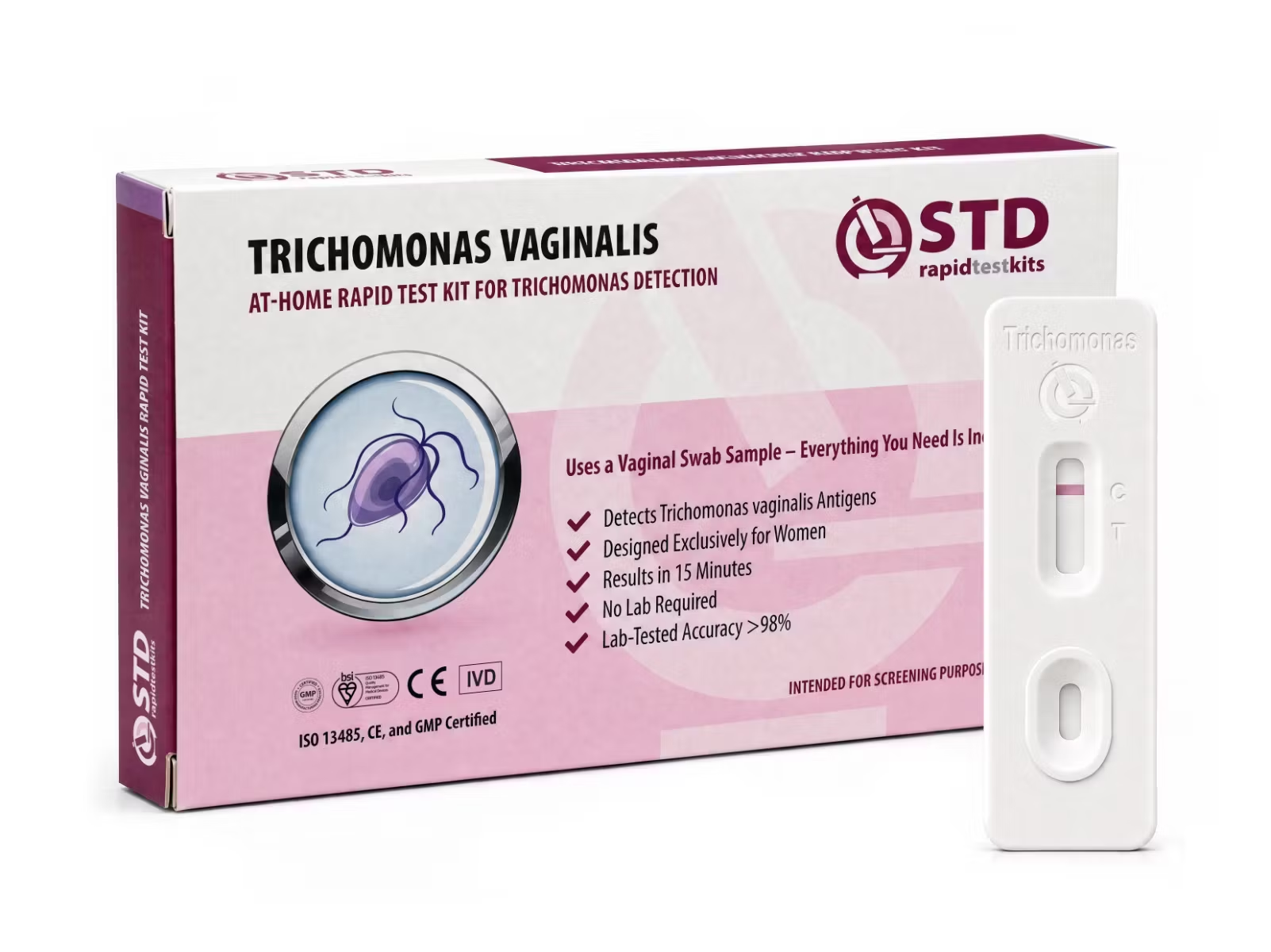
Itching with no discharge or visible signs
One common myth is that you only need to test if there's discharge. That's not how it works. Itching alone, especially when it follows sex, is enough reason to consider screening. Herpes and trichomoniasis can present this way, and so can reactions to semen, latex, or fragranced laundry detergent.
If there are no bumps, fluid, or odor, that doesn't rule out an infection. The reader might be catching it early, or reacting to something non-infectious. Unless a full screen has been done recently and a partner's status is known, testing is still a reasonable next step. Genital warts (HPV) can occasionally itch but more typically present as visible flesh-colored bumps; the at-home HPV swab is validated for vaginal self-swab in women only, so male readers concerned about HPV should see a clinic.
Chlamydia and trichomoniasis are frequently silent in the people carrying them. Itching alone after an unprotected encounter is enough reason to screen, even with no discharge, sores, or odor.
Lubes, latex, and allergic reactions
Plenty of post-sex itch triggers have nothing to do with infection. Glycerin is often added to lubes but can promote yeast growth in people prone to it. Parabens and fragrances in body products can cause contact dermatitis. Latex in condoms, and spermicides in others, can spark a histamine response: itching, swelling, burning, with no STI involved.
The pattern most likely to indicate a product allergy is an itch that starts within minutes to hours of contact, follows the same product every time, and clears within a day once exposure stops. If that fits, the practical move is to remove one variable at a time. Switching to a non-latex condom (polyurethane or polyisoprene) and a plain fragrance-free water-based lube for a month, while dropping any wipes or sprays with artificial scent, will usually expose the culprit. Keeping a brief note in your phone after each episode makes patterns visible within a few weeks.

When and why to retest
A negative result on day 5 or day 7 doesn't always close the case. Bodies and exposures change. If unprotected sex happened again, if symptoms have evolved, or if the original cause was never clear, a second test gives clarity. This is especially true for herpes, where IgG blood antibody seroconversion is most reliably confirmed by a repeat test at 12 weeks post-exposure, since results in the first weeks of infection are more often falsely negative.
Many clinicians recommend a follow-up test 30 to 45 days after any new exposure, particularly if the first test was within the first week. A partner who hasn't tested adds another variable: reinfection from an untreated partner is common, particularly for chlamydia, gonorrhea, and trichomoniasis.
A negative HSV IgG blood test in the first weeks after exposure does not close the question. Plan a confirmatory test at 12 weeks post-exposure, the CDC's recommended retest interval. If a sore appears in the meantime, get it swabbed within 48 hours; PCR on an active lesion is far more sensitive than antibody testing in the early weeks.
When to escalate to a specialist
There's a particular kind of anxiety that comes from not knowing. The itch is real, nothing visible is wrong, tests come back inconclusive, and a clinician says it's "probably nothing." When that's the loop, symptom journaling helps: log when itching begins, what was used (condoms, lube, soaps, detergents), what kind of sex happened, any new partners, and any cycle context.
Sometimes a few weeks of journaling reveals a non-sex trigger, like a new detergent leaving residue on underwear. Sometimes the picture stays unclear, and that's when escalation makes sense. Persistent vulvar itching that doesn't respond to antifungals and isn't explained by STI testing should be evaluated by a gynecologist or a dermatology-trained provider. Conditions like lichen sclerosus and vulvar eczema aren't infections, but they need treatment, and they get worse without it.
Triggers to escalate to a specialist
- Antifungal treatment (over-the-counter or prescription) didn't resolve symptoms.
- An STI panel has come back negative twice across appropriate windows.
- Itching has persisted past 6 weeks or recurs in a predictable cycle.
- New skin changes appear: thinning, white patches, thickened plaques, or ulcers.
- Pain during sex or urination has become part of the pattern.
Testing as care, not panic
Itching after sex can stir up guilt, embarrassment, or worry about what a partner will think. Having symptoms doesn't make anyone "dirty," and wanting answers isn't paranoia. STIs are common, treatable medical conditions that millions of people deal with each year. Whether the relationship is monogamous, polyamorous, queer, or somewhere in between, the body deserves curiosity, not shame.
STIs are common and treatable. A test result is information about your body at a point in time, not a verdict on your character or your choices. Reaching for a test is care, not punishment.
Talking to your partner
Bringing up post-sex symptoms can feel like walking a tightrope, especially after a new or casual encounter. The simplest opener works best: "Hey, I've been feeling itchy since we had sex. I'm not accusing you of anything, I just want to get checked." That kind of honesty disarms defensiveness and frames testing as shared responsibility.
A partner who feels fine isn't ruled out as a source. STIs like trichomoniasis and chlamydia can be silent in men and still transmit. Suggest dual testing and offer to share results.

FAQs
- Does itching after sex always mean an STI?
- Usually not. An itch that fades within 48 hours and leaves no other trace is more likely friction, semen pH, or a lube ingredient than an infection. The threshold for testing is persistence past two days, recurrence every time you have sex, or any accompanying sore, new discharge, or pelvic pain.
- How soon after sex can I feel STI symptoms like itching?
- It varies. Herpes can produce tingling or itching within 2 to 12 days. Trichomoniasis often takes 5 to 28 days. Chlamydia and gonorrhea range from a few days to a few weeks. Some people stay asymptomatic for months. Feeling itchy two days after sex doesn't mean a test will catch the cause yet, which is why testing windows matter.
- I tested negative but the itching won't quit. What now?
- First, check the timing. A test taken before its window period closes can miss an active infection. If it's been more than two weeks and the test was within the right window, the cause is likely non-infectious: yeast, BV, hormonal changes, or a product reaction. Try removing fragranced products one at a time, including laundry detergent, and see whether the symptom clears.
- Could it just be the condom or lube making me itchy?
- Often, yes. Latex allergy is real and presents as burning, swelling, or itching that starts within minutes to hours of contact. So can spermicides, glycerin, parabens, and "flavor" or "warming" additives. If the itch starts right after sex with the same product every time, switch to a non-latex condom (polyurethane or polyisoprene) and a plain, fragrance-free, water-based lube for a month and watch the pattern.
- What if I'm itchy but there's no discharge, bumps, or odor?
- Testing is still reasonable. Some STIs start with nothing more than a vague itch, and early symptoms are often subtle. If a worried exposure happened, don't wait for the symptom set to grow. The cost of testing now is low; the cost of missing chlamydia or trichomoniasis for a month is higher (untreated infections can lead to pelvic inflammatory disease).
- Can my partner give me something even if they feel fine?
- Yes. Most people with chlamydia or trichomoniasis don't know they have it. A partner saying "I feel fine" doesn't mean they've tested recently, or at all. If symptoms are present and a partner hasn't been screened, that's information, not paranoia.
- Is it possible to have herpes and not notice?
- Yes. CDC data shows most people with genital herpes never get a textbook outbreak. A brief itch, small cut, or tingling that heals in days is often the only sign. Because IgG blood antibody results are more often falsely negative in the first weeks (the CDC recommends a repeat test at 12 weeks post-exposure as the standard confirmation), and a swab only works on active sores, a routine STI panel can miss it. Ask a clinician specifically about an HSV IgG blood test if the concern is there.
- Should I stop having sex until I figure this out?
- Probably, at least until a test result comes back or symptoms clear. Sex during an active irritation can make it worse and can expose a partner if there's an undiagnosed infection. A short pause to test and figure out the cause beats prolonging an unclear situation.
How we sourced this article: Our editorial team summarized current guidance from leading public-health bodies, including the CDC, alongside published clinical references on vulvovaginal symptoms and STI window periods. Quantitative claims (window periods, asymptomatic rates) are inline-cited to the source page. This article is informational; for symptoms that concern you, see a licensed provider.
- U.S. Centers for Disease Control and Prevention. STI Treatment Guidelines, vaginal discharge syndromes (vaginitis, BV, candidiasis, trichomoniasis).
- U.S. Centers for Disease Control and Prevention. STI Treatment Guidelines, genital herpes (diagnostic testing, type-specific serology, 12-week confirmatory retest recommendation).
- U.S. Centers for Disease Control and Prevention. About Genital Herpes (HSV-1 and HSV-2 transmission, symptom prevalence, asymptomatic shedding).
- U.S. Centers for Disease Control and Prevention. About Trichomoniasis (asymptomatic rate, symptom timeline, window periods).
- U.S. Centers for Disease Control and Prevention. About Bacterial Vaginosis (symptoms, post-sex flora shifts).
- U.S. Centers for Disease Control and Prevention. STI Treatment Guidelines, vulvovaginal candidiasis (yeast overgrowth presentation and treatment).
