Published: September 2025 | Last updated: May 2026 | Editorial review and quality control: Martina N.
Probiotic supplements promise a long list of vaginal, genital, and immune benefits. Some of those promises hold up under scrutiny. Many do not. For anyone dealing with recurrent yeast infections, persistent bacterial vaginosis, or unpredictable herpes outbreaks, sorting the real biology from wellness marketing matters, because the wrong choice delays real treatment.
This article walks through what current research supports, where probiotics earn their place in a treatment plan, and where they fall flat. Strain-specific evidence exists for a few narrow uses, but probiotics do not replace antifungals, antivirals, or antibiotics during an active infection. The sections below cover what that distinction looks like for each condition and where the evidence holds up.
Key Takeaways
- Specific Lactobacillus strains may reduce recurrence of bacterial vaginosis and yeast infections after treatment, but no probiotic cures an active infection.
- For herpes, no probiotic prevents outbreaks the way antivirals do; immune-support evidence is early and limited.
Why Probiotics Aren't a Universal Fix
A common pattern shows up in online forums and gynecology offices alike. Someone treats a yeast infection or a case of bacterial vaginosis with the prescribed medication, the symptoms come back weeks later, and the search for a natural fix begins. Probiotics top almost every list of recommendations, often pitched as a way to break the recurrence cycle without more antibiotics or antifungals.
The intuition is partly right. Vaginal and gut microbiomes are real, measurable ecosystems, and disrupting them with broad-spectrum antibiotics or hormonal shifts does change the balance in ways that favor conditions like bacterial vaginosis or vulvovaginal candidiasis. The mistake comes from assuming any probiotic supplement automatically restores that balance, or that probiotics can replace treating an active infection.
They cannot. Recurrence prevention and active treatment are two different jobs done by two different tools. A reader who skips a clinic visit for itching that turns out to be trichomoniasis (which probiotics will never touch) loses weeks of comfort and risks passing the infection to a partner.
Probiotics may help reduce how often BV or yeast infections come back after a treated episode. They do not clear an active infection on their own. Antifungals, antibiotics, and antivirals handle that part, and the two roles cannot substitute for each other.
What "Probiotics" Means in Real Terms
Probiotics are live microorganisms, usually bacteria, that may benefit the host when consumed in adequate amounts. That is the working definition used by the International Scientific Association for Probiotics and Prebiotics. Two phrases in that sentence carry most of the weight: "live" and "adequate amounts."
Most over-the-counter capsules contain blends of Lactobacillus, Bifidobacterium, and sometimes Saccharomyces species. The Lactobacillus genus alone has dozens of species (L. rhamnosus, L. reuteri, L. crispatus, L. acidophilus, and more), and each species behaves differently in the body. Even within one species, individual strains vary in how well they survive stomach acid, where they colonize, and what effects they produce.
A drugstore capsule labeled "probiotic, 10 billion CFU" tells you very little about what is inside. A scientifically useful label names the exact species, the strain identifier (often a code like GG, GR-1, or DSM 17938), and the colony-forming unit count per dose. Without that level of detail, comparing two probiotic products is closer to guessing than choosing.
When research links a probiotic to a benefit for BV, yeast, or herpes, it almost always means one specific strain at one specific dose. Buying "probiotics" in general is not the same as buying the studied product. The National Center for Complementary and Integrative Health makes this point bluntly: the effects of one strain do not generalize to another.
What a useful probiotic label should include
- The exact species name (for example Lactobacillus rhamnosus, not just "Lactobacillus")
- A specific strain identifier such as GG, GR-1, RC-14, or DSM 17938
- A colony-forming unit (CFU) count per dose
- Third-party verification like USP, NSF, or ConsumerLab certification
The Real Gut-Genital Connection
The vaginal microbiome and the gut microbiome are connected, but the connection runs through the immune system more than through any direct physical pipeline. Bacteria do not generally travel through internal tissue from one site to another. Instead, both microbiomes interact with mucosal immune cells, regulating cytokines, T-cell activity, and inflammatory signaling that affects the body globally.
A disrupted gut microbiome (after antibiotic courses, certain dietary patterns, or chronic stress) can raise systemic inflammation. Higher inflammation can make conditions like recurrent BV, candidiasis, or herpes outbreaks more frequent or more severe. Restoring gut microbial balance may dampen that inflammation indirectly, which is the strongest biological case for probiotics in this space.
There is also a more direct route for vaginal colonization. Bacteria from the perianal region migrate to the vaginal entrance routinely, which is part of how E. coli urinary tract infections happen. Oral probiotics that pass through the gut intact can theoretically reach the vagina by the same path. Studies of L. rhamnosus GR-1 and L. reuteri RC-14 have shown that oral capsules of these strains can be recovered from vaginal swabs in some users, though colonization rates vary widely between individuals.
So the gut-genital link is real. It is not, however, a guarantee that any probiotic capsule will improve vaginal flora. The strain matters. The dose matters. The user's baseline microbiome matters. And underlying infections still need infection-specific treatment.
Wellness Claims, Reality-Checked
Probiotics get marketed for everything from acne to autoimmune disease. For the three conditions this article focuses on (herpes, BV, and yeast), the claims sort into a small number of patterns worth checking against the evidence. Each row in the table below pairs a common claim with what the research supports.
| Common claim | Verdict | What the research supports |
|---|---|---|
| Probiotics cure BV or yeast infections. | Overstated | Specific strains may reduce recurrence after treatment, but active infections need antibiotics or antifungals to clear. |
| Probiotics stop herpes outbreaks. | Mostly wishful | Antivirals are what suppress outbreaks. Some strains may modestly affect immune function in early studies. |
| Vaginal probiotics work faster than oral ones. | Sometimes | For BV and yeast recurrence specifically, direct vaginal delivery has shown faster effects in small trials. |
| The right strain matters more than the brand. | Accurate | Strain-specific benefits are well-documented. Generic "Lactobacillus" tells you little. |
| All probiotics need refrigeration to work. | Outdated | Many shelf-stable formulations use freeze-drying and protective coatings. Follow the label. |
Strains With Real Evidence Behind Them
Across the published literature, a handful of strains repeatedly show up with measurable effects on vaginal or immune health. Most other probiotic species have not been tested for these uses, which does not mean they are useless, but does mean a reader looking for evidence-backed choices has a fairly short list. The table below summarizes the strains most consistently studied for the conditions this article covers.
| Strain | Best-studied use | What it appears to do |
|---|---|---|
| Lactobacillus rhamnosus GR-1 | BV recurrence (with L. reuteri RC-14) | Oral colonization that reaches the vagina in some users; reduces recurrence after metronidazole. |
| Lactobacillus reuteri RC-14 | BV recurrence (paired with GR-1) | Studied alongside GR-1; the pair is the most-cited oral combination for BV prevention. |
| Lactobacillus crispatus | Healthy vaginal flora maintenance | Dominant species in most asymptomatic, low-BV-risk vaginal microbiomes. |
| Lactobacillus rhamnosus GG | General immune support, gut | Heavily studied for gut and immune effects; relevant for inflammation-driven HSV reactivation. |
| Bifidobacterium lactis | Gut barrier, systemic inflammation | Improves gut barrier function in trials; possible indirect benefit for outbreak-prone HSV patients. |
Probiotics and Herpes Outbreaks
Herpes is the part of this conversation that draws the most wishful thinking. There is no probiotic that prevents HSV transmission, eliminates the virus from the body, or replaces antiviral medications during an outbreak. Anyone selling probiotics with those claims is overstating the evidence. The CDC's herpes guidance is clear that suppressive or episodic antiviral therapy remains the standard of care.
What the research does suggest is more limited but still interesting. HSV reactivation, the trigger for outbreaks, involves the immune system. The virus stays dormant in nerve ganglia and reactivates when local or systemic immunity dips. Stress, illness, hormonal shifts, and sleep deprivation are well-known triggers, all of which affect immune function.
Some probiotic strains, particularly Lactobacillus rhamnosus GG and certain Bifidobacterium species, have been studied for their effects on T-cell function and interferon signaling. Early laboratory and small-cohort studies suggest these strains may modulate antiviral immunity in ways that could theoretically reduce outbreak frequency. The clinical evidence remains thin, though: small sample sizes, mixed outcomes, and very few randomized controlled trials specifically targeting HSV reactivation.
For someone with frequent outbreaks who already takes daily suppressive antivirals (acyclovir, valacyclovir, or famciclovir), adding a well-studied probiotic is unlikely to harm and may marginally help. For someone with infrequent outbreaks, the case is weaker. In neither scenario is a probiotic a substitute for the antiviral when an outbreak starts.
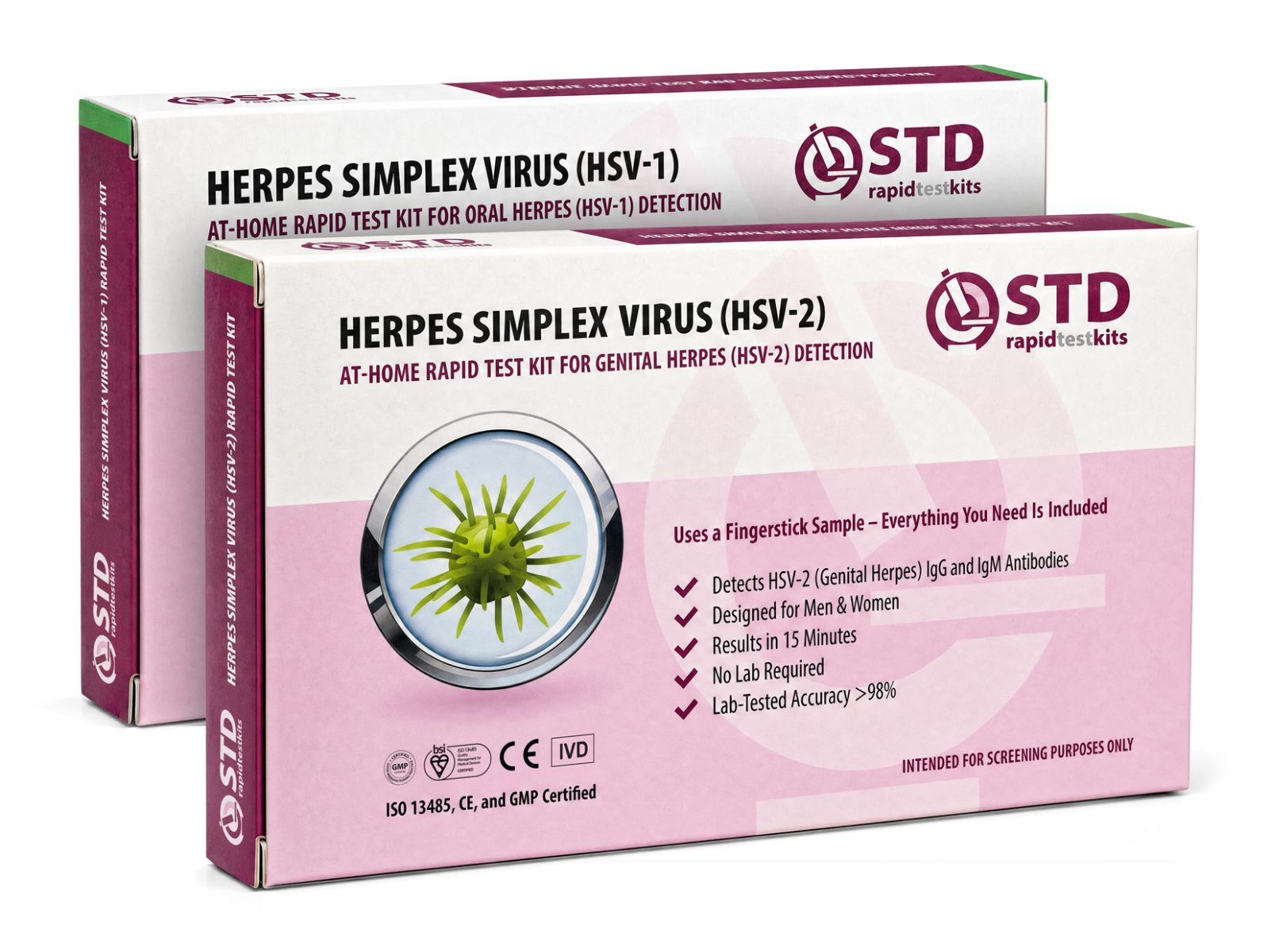
For readers unsure whether their symptoms even come from herpes (sores in the genital area have several possible causes), testing matters more than supplementing. Antibody blood tests can confirm HSV-1 or HSV-2 infection roughly 12 weeks after exposure, when seroconversion is generally reliable.
A note on commercial framing: this site sells at-home rapid tests, and the herpes blood panel below is one of the products we carry. We recommend products based on fit for the reader's concern, not commercial benefit.
Vaginal vs Oral Probiotics
Probiotics for vaginal health come in two forms: oral capsules taken daily, and vaginal suppositories or ovules inserted directly. Each has tradeoffs worth understanding before buying.
Oral capsules are easier to take consistently, work well alongside other daily supplements, and have the broadest evidence base for general gut and immune support. The downside is that an oral capsule must survive stomach acid, transit the small intestine, and ideally either colonize the gut or migrate to the vaginal entrance. Many capsules fail at one of those steps. Studies of L. rhamnosus GR-1 and L. reuteri RC-14 taken orally have shown vaginal colonization in some users, but rates vary considerably between studies and between individuals.
Vaginal suppositories deliver bacteria directly to the site. For BV and yeast recurrence prevention, several small trials of vaginal L. rhamnosus or L. crispatus products have shown lower recurrence rates over the months following antibiotic or antifungal treatment. The tradeoffs are practical: vaginal probiotics are messier to use, more expensive per dose, and far fewer products are well-studied or independently tested for label accuracy.
FDA regulation of probiotic supplements is light. They sit in the dietary supplement category, which means manufacturers do not need to prove efficacy or even verify that the strain on the label matches what is in the capsule, according to the NCCIH overview of probiotics. Independent third-party testing (USP, NSF, or ConsumerLab certification) is the closest thing to a quality check most consumers can rely on.
| Delivery route | Best evidence for | Practical tradeoff | Best use case |
|---|---|---|---|
| Oral capsule | Gut and immune support; some vaginal colonization in studies | Must survive stomach acid; results vary between users | Long-term daily maintenance and general microbiome support |
| Vaginal suppository | BV and yeast recurrence prevention after treatment | Messier, more expensive, fewer rigorously tested products | Short-term use after a treated BV or yeast infection |
When Probiotics Help, When They Don't
Probiotics have a real place in a few specific scenarios. After a course of antibiotics, taking a well-studied probiotic during and after treatment can speed the return of normal flora and may reduce immediate recurrence of BV or yeast. For people with recurrent BV (defined clinically as four or more episodes per year), some practice patterns include probiotic adjunct therapy alongside metronidazole or clindamycin, though formal guidelines remain cautious about how strongly to recommend it. For HSV patients with infrequent outbreaks tied to stress, a probiotic that supports gut health may indirectly help by lowering systemic inflammation. For anyone going through dietary or hormonal changes that disrupt the microbiome, evidence-backed strains can support recovery.
Probiotics do not help in several other scenarios, no matter how the marketing reads. None of these conditions respond to probiotics alone: clearing an active yeast infection requires an antifungal (topical clotrimazole or oral fluconazole), resolving symptomatic BV requires an antibiotic (typically metronidazole), suppressing an HSV outbreak requires an antiviral, and no probiotic screens for or treats chlamydia, gonorrhea, trichomoniasis, syphilis, hepatitis B, hepatitis C, or HIV.
The riskiest scenario is using probiotics as a substitute for testing. Symptoms like unusual discharge, vaginal odor, itching, or pelvic discomfort can come from BV, candidiasis, trichomoniasis, chlamydia, gonorrhea, or noninfectious irritation. Each has a different treatment path, and the only way to choose the right one is testing. Probiotics taken as a stand-alone response to those symptoms can delay correct diagnosis by weeks. Trichomoniasis in particular often presents with frothy discharge and odor that look like BV at a glance, but it requires anti-parasitic treatment rather than antibiotics or probiotics.
Test Before You Supplement
The most useful thing a reader with persistent symptoms can do is identify the source of those symptoms. Probiotics are reasonable as recurrence prevention; they are not diagnostic tools.
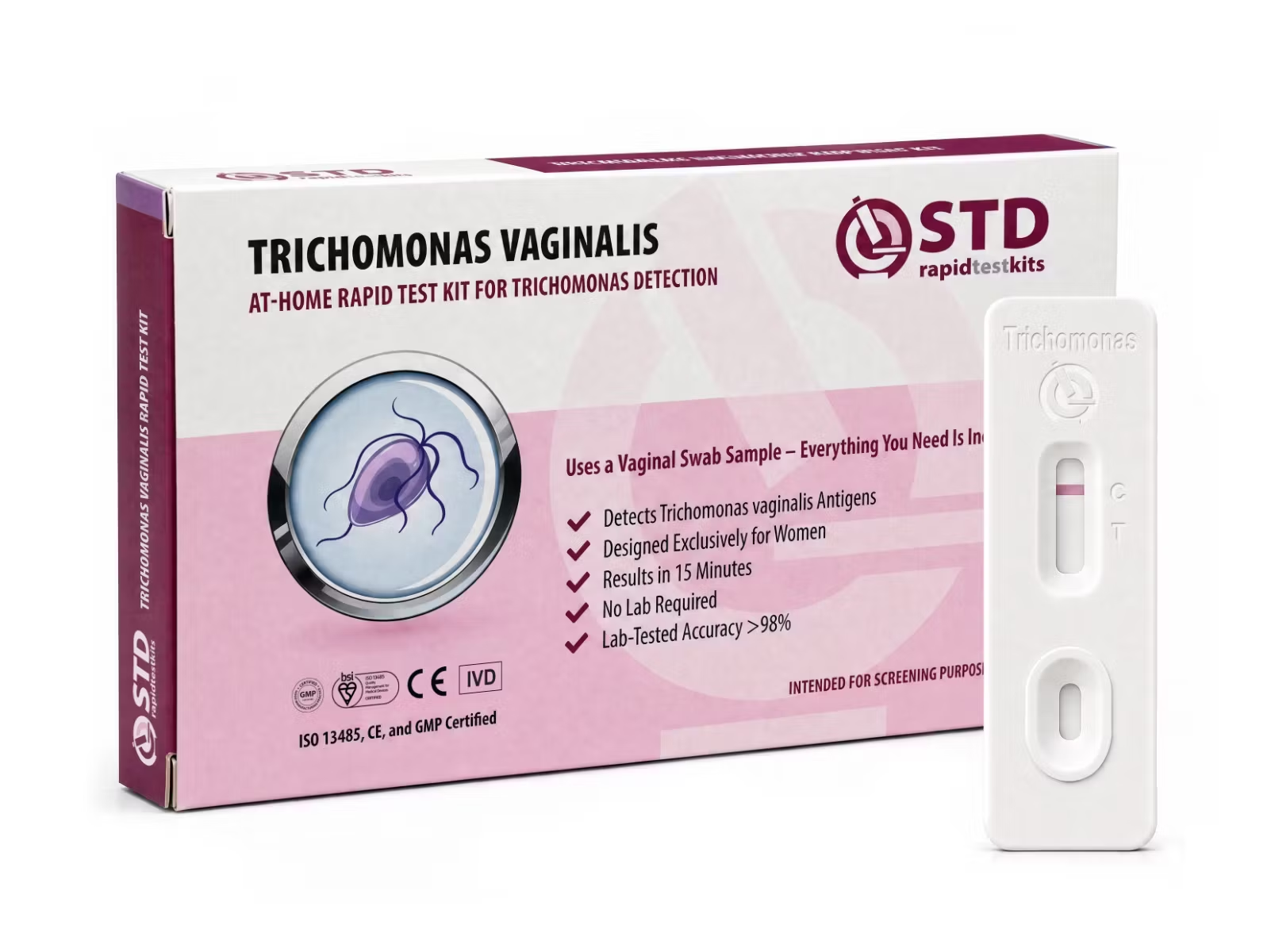
At-home rapid tests cover several of the common culprits. Trichomoniasis can be screened with a self-collected vaginal swab; chlamydia and gonorrhea use similar swabs. Blood-based rapid tests check for HSV, HIV, syphilis, and hepatitis B or C after the relevant window periods have passed. Bacterial vaginosis and yeast themselves are typically diagnosed by clinical evaluation (pH testing, microscopy, sometimes culture) rather than a single at-home kit, so persistent or atypical symptoms still benefit from a clinician visit alongside any self-screening.
For people with vaginas dealing with recurrent symptoms, an evidence-based sequence beats supplement-stacking. Rule out STIs first (chlamydia, gonorrhea, trichomoniasis, and HSV when relevant), confirm or rule out BV and yeast with appropriate diagnostics, treat what is identified, then consider a recurrence-prevention plan that may include lifestyle changes, hormonal evaluation, and evidence-backed probiotic strains. Layering supplements on top of an unidentified infection wastes time and money.
For people with penises, probiotic research for genital health is far thinner. General gut-immune support for HSV outbreak frequency applies regardless of anatomy. Beyond that, the main use case for testing is the same: confirm what is causing symptoms before reaching for supplements. The at-home trichomoniasis and HPV swab kits sold on this site are validated for female anatomy only; male readers needing those specific screening tests should see a clinic.
The pattern that wastes the most time, across age and gender, is cycling through different probiotic brands, doses, and formats while symptoms persist. If two months of consistent probiotic use has not changed anything, the next step is a test, not a different brand. The microbiome can be supported. It cannot be willed into clearing an infection.

Probiotics sold as dietary supplements don't require FDA approval before they're marketed.
FAQs
- Can probiotics cure a yeast infection that has already started?
- No. An active yeast infection needs an antifungal, either an over-the-counter topical (clotrimazole, miconazole) or a prescription oral pill like fluconazole. Probiotics may help reduce how often yeast infections come back when used as a preventive after treatment, but they do not clear the active candida overgrowth on their own. Treat first, then consider strains studied for prevention.
- Will probiotics stop herpes outbreaks?
- Not on their own. Antivirals like valacyclovir or acyclovir are the medications that shorten and prevent outbreaks. Some probiotic strains may support immune function in ways that could marginally reduce outbreak frequency, but the evidence is preliminary and the effect size is modest. If you have frequent outbreaks, talk to a clinician about suppressive antiviral therapy first; probiotics can be a secondary addition.
- How long does it take for probiotics to help with recurrent BV?
- Studies of vaginal Lactobacillus suppositories after antibiotic treatment typically show effects measured over weeks to months. Most protocols involve daily or every-other-day use for the first month, then less frequent maintenance dosing. There is no rapid "I took it last night, my BV is gone" effect. Most BV recurrence-prevention protocols run three to six months total; ask your clinician what timeline fits your recurrence history.
- Are vaginal probiotic suppositories better than oral capsules?
- For BV and yeast recurrence specifically, vaginal suppositories deliver bacteria directly and may act faster. For general immune and gut support, oral capsules are easier and better-studied. Many people use both: oral daily for maintenance, vaginal short-term after a treated infection. Product quality (strain identity, CFU count, third-party testing) matters more than the route.
- Do men benefit from probiotics for genital health?
- The research is much thinner for male anatomy. General gut-immune benefits apply regardless of sex, which may marginally help HSV outbreak frequency in some users. There is no equivalent of "vaginal flora support" for the penis; the urethra and surrounding skin are not colonized by Lactobacillus the same way. Probiotics for men are best framed as systemic support, not a localized genital tool.
- Is eating yogurt enough?
- Usually not. Most commercial yogurts contain Streptococcus thermophilus and Lactobacillus bulgaricus, which are useful for fermenting yogurt but not the strains studied for vaginal or immune health. CFU counts in yogurt are also typically far below the doses used in clinical trials. Yogurt is fine as food; targeted strain-specific supplements are a different product.
- Do probiotics need to be refrigerated?
- Check the label first. Modern freeze-dried probiotics with protective coatings usually survive room temperature; older liquid or refrigerated-only strains cannot. A car glove box or a steamy bathroom shelf will kill most formulations, so cool and dry storage is the rule regardless of what the label says.
- When should I stop trying probiotics and just get tested?
- New or changing symptoms (unusual discharge, sores, pelvic pain) warrant a test before waiting two months. If you are using probiotics for prevention and have no new symptoms, give one full menstrual cycle of consistent use. No change after that? A rapid home test or clinic visit is more informative than a brand switch.
- U.S. National Center for Complementary and Integrative Health. Probiotics: What You Need To Know. Overview of probiotic evidence, regulation, and strain-specific effects.
- U.S. Centers for Disease Control and Prevention. Bacterial Vaginosis (BV) treatment guidance, including recurrence considerations.
- U.S. Centers for Disease Control and Prevention. Genital Herpes: clinical guidance on suppressive and episodic antiviral therapy.
- U.S. Centers for Disease Control and Prevention. Trichomoniasis: symptoms, transmission, and treatment.
- UK National Health Service. Bacterial vaginosis: symptoms, treatment, and recurrence.
- UK National Health Service. Thrush in men and women: causes, treatment, and prevention.
