
Published: November 2025 | Last updated: May 2026 | Editorial review and quality control: Martina N.
How do I know if I have a hidden STI?
You don't, until you test. Chlamydia, gonorrhea, HPV, herpes, and latent syphilis often cause no symptoms, and the CDC says most people with genital herpes do not know they carry it. Screen on each infection's window: about 2 weeks for chlamydia and gonorrhea, up to 90 days for HIV, and 12 to 16 weeks for HSV-2 antibodies.
Most people picture a sexually transmitted infection as something that announces itself: a sore, an itch, a fever, an obvious sign that something has changed. The reality is closer to the opposite. The CDC's overview of sexually transmitted infections states plainly that many STIs have no symptoms or only mild symptoms in their early months (CDC, About STIs). People can carry an STI for weeks, months, or sometimes years while feeling completely fine, and pass it to partners during that entire window.
This is why public-health agencies stopped relying on symptom-based testing decades ago. If you wait for your body to flag the problem, you will miss most of the cases that actually exist. The only reliable way to know is to test on a schedule that matches your sexual activity, not on a schedule that matches how you feel. This article walks through why so many infections stay silent, the difference between a dormant infection and an asymptomatic one, how long each can hide, when testing is most reliable, and what to do if a result comes back positive while you feel completely normal.
Key Takeaways
- Most chlamydia, gonorrhea, herpes, HPV, and early HIV infections cause no symptoms in their early months, and several can hide for months or years before anything surfaces.
- Routine screening is the only reliable way to find a hidden infection. Test 2 weeks after a new exposure for chlamydia and gonorrhea, and use the full window for HIV (up to 90 days for rapid antibody tests), syphilis (3 to 6 weeks with confirmation at 90 days), and herpes antibody testing (12 to 16 weeks).
Why so many STIs do not cause symptoms
Different infections hide for different biological reasons, and most of them are well-suited to staying invisible long enough to spread.
Chlamydia and gonorrhea live in mucosal tissues (cervix, urethra, rectum, throat) where the body's inflammation response is mild compared to a typical bacterial infection. The bacteria can persist for weeks without producing the classic symptoms of burning urination or unusual discharge. The CDC's chlamydia overview states that chlamydia often has no symptoms but can still cause serious health problems (CDC chlamydia overview). When symptoms do appear they are often mild enough to be mistaken for a urinary tract infection or a yeast infection, and a substantial share of men with chlamydia also report no symptoms.
HPV is more extreme. The virus replicates in the basal layer of cervical, vaginal, anal, or oropharyngeal tissue, where it can stay in cells without driving any visible change for years. The CDC estimates that nearly everyone will get HPV at some point, and that most infections (about 9 in 10) clear on their own within 2 years without ever causing a wart, an abnormal Pap result, or any symptom at all (CDC HPV basics). The high-risk strains that drive cervical, anal, and throat cancers tend to do their damage silently over a decade or more before any clinical sign appears.
Herpes simplex virus 2 (HSV-2) is similarly stealthy, with a different mechanism: between outbreaks the virus retreats into sensory nerve ganglia, where it sits without replicating. The CDC states that most people who have HSV-1 or HSV-2 do not have symptoms, and many do not know they have a herpes infection at all (CDC genital herpes testing). Some never have a visible outbreak. Others have outbreaks so mild they get blamed on chafing, an ingrown hair, or a recurring yeast infection. Even between outbreaks, people with HSV-2 shed virus from their skin periodically, which is how partners in long-term relationships can pick it up without either person ever seeing a sore.
Early HIV is the surprise category. Many people get a brief flu-like illness 2 to 4 weeks after exposure (called acute retroviral syndrome), but plenty of people have no acute symptoms at all. After that early phase, HIV typically produces no symptoms for years until the immune system has been damaged enough that opportunistic infections appear. By then the virus has had years to spread silently.
Even syphilis, the disease historically known for its dramatic chancres and rashes, often slips through the early stages with no recognized signs. The primary chancre is usually firm, round, and painless, and it can occur in places (cervix, anus, throat) that the person never sees (CDC syphilis overview).

Dormant versus asymptomatic: two states, one testing rule
Two different things often get lumped together when people talk about a hidden STI, and the difference shapes what testing can find and when.
Dormant means the pathogen is present but not actively replicating. Herpes between outbreaks is the classic example: HSV-1 and HSV-2 retreat into nerve cells, sit quietly, and can stay that way for months or years before a trigger brings them back out. HPV can sit in epithelial cells in a similar low-activity state. Syphilis has a clinically recognized latent stage that can last years between the secondary and tertiary phases. The infection is genuinely quiet during these periods, even though it remains in the body and can reactivate later.
Asymptomatic is a different state. Here the infection is active and replicating, often inflaming tissue and remaining contagious, but it produces no signs you would notice. Chlamydia and gonorrhea are the textbook examples, especially in women and in throat or rectal infections. The bacteria are doing their work; they simply do it without an obvious warning.
Both states matter for the same reason: feeling fine does not rule out an infection. The mechanism is different, but the practical answer is the same. Test if it has been a while, if you have had a new partner, or if a partner has tested positive. The table below pulls the two patterns together so you can see which infections are which, what dormant phase (if any) each one has, and what kind of damage it can do while it stays out of view.
| Infection | Typical asymptomatic pattern | Dormant phase possible? | Most common silent harm if untreated |
|---|---|---|---|
| Chlamydia | Most infected women and roughly half of infected men have no recognizable symptoms | No (active but asymptomatic) | Pelvic inflammatory disease, infertility, ectopic pregnancy |
| Gonorrhea | A large share of infections, especially pharyngeal and rectal, are silent | No (active but asymptomatic) | PID, joint infection, reproductive damage |
| HPV (high-risk) | Most infections produce no symptoms and clear on their own | Yes (cellular latency) | Cervical, anal, throat, and penile cancer |
| Herpes (HSV-2) | Most people with genital herpes do not know they have it (per CDC) | Yes (latent in nerve ganglia) | Asymptomatic viral shedding, partner transmission, neonatal risk |
| HIV | Many people have no acute symptoms; later phase silent for years | Yes (chronic clinical latency) | Immune damage and AIDS if diagnosed late |
| Trichomoniasis | Majority of cases, especially in men, produce no symptoms | No (active but asymptomatic) | Increased HIV susceptibility, pregnancy complications |
| Syphilis | Painless primary chancre often missed | Yes (latent stage can last years) | Cardiovascular and neurological damage in tertiary stage |
How long can you carry an STI without knowing
The duration depends on the pathogen, and it is almost always longer than people expect. Two timelines are in play here, and they are often confused. The incubation period is how long after exposure symptoms might appear, if they ever do. The test window period is how long after exposure a test can reliably detect the infection. The two do not always match.
For chlamydia and gonorrhea, the test window is roughly 1 to 2 weeks after exposure, even though symptoms (when present) take 1 to 3 weeks to appear. For HIV, the CDC states that a lab antigen/antibody test can usually detect HIV 18 to 45 days after exposure, a rapid antigen/antibody fingerstick test 18 to 90 days, and a nucleic acid test (NAT) 10 to 33 days (CDC HIV testing). Syphilis blood tests are most reliable at 3 to 6 weeks, with confirmatory testing often recommended at 90 days.
Herpes is trickier. The CDC's herpes testing page states that after exposure it can take up to 16 weeks or more for current tests to detect infection (CDC herpes testing guidance). Most type-specific IgG assays become reliable around 12 weeks, with the outer bound extending to 16 weeks or more for some assays. People often carry HSV-2 for months before any test will reliably catch it.
Beyond the test window, dormancy stretches the carry-time even further. Some people contract HSV-1 or HSV-2 in their teens or twenties and have their first recognized outbreak in their thirties or forties. HPV can sit in cervical tissue for ten years or more before an abnormal Pap result flags it. Untreated syphilis enters a latent phase that can quietly last years before late-stage complications affect the heart, brain, or nerves. Untreated HIV slowly depletes the immune system over 8 to 10 years even when the person feels completely well. So yes, you can carry chlamydia for a few months, gonorrhea for several weeks, HIV for years, and HPV for a decade or more without knowing.
The reverse assumption trips people up too. People who have not been sexually active for a while sometimes assume time has cleared anything from before. It has not: bacterial infections persist until they are treated, and viral infections can sit in nerve or skin cells indefinitely. A long gap without sex is not a substitute for a test.
| Infection | Test type | Reliable window after exposure |
|---|---|---|
| Chlamydia | NAAT or rapid lateral-flow swab | 1 to 2 weeks |
| Gonorrhea | NAAT or rapid lateral-flow swab | 1 to 2 weeks |
| HIV | Antigen/antibody lab test (4th gen) | 18 to 45 days |
| HIV | Rapid antigen/antibody fingerstick test | 18 to 90 days |
| HIV | Nucleic acid test (RNA NAT) | 10 to 33 days |
| Syphilis | Rapid antibody or RPR/VDRL | 3 to 6 weeks; confirm at 90 days |
| Herpes (HSV-2) | Antibody blood test | 12 weeks typical; up to 16 weeks for some assays |
| Trichomoniasis | NAAT or swab antigen test | 5 to 7 days |
| HPV | DNA test, paired with Pap (women) | Variable; screened on cervical schedule |
When to test if you feel fine
Testing too early after an exposure is the most common reason people get a falsely reassuring negative. If you test 3 days after a new partner and get a negative chlamydia result, that result is not yet meaningful, because the infection has not had time to reach detectable levels.
The CDC's screening guidance for sexually active adults breaks down roughly like this: chlamydia and gonorrhea screening every year for sexually active women under 25 and for older women with new or multiple partners; HIV screening at least once for everyone aged 13 to 64, more often for men who have sex with men, people who inject drugs, and anyone with multiple partners; syphilis screening for at-risk populations and during pregnancy. The UK's NHS frames the same logic plainly: many STIs have no symptoms, so the only way to know for sure is to get tested (NHS, STIs). People with new partners are typically advised to test 2 weeks after the most recent exposure for chlamydia and gonorrhea, and again at 90 days for HIV and syphilis to clear all window periods.
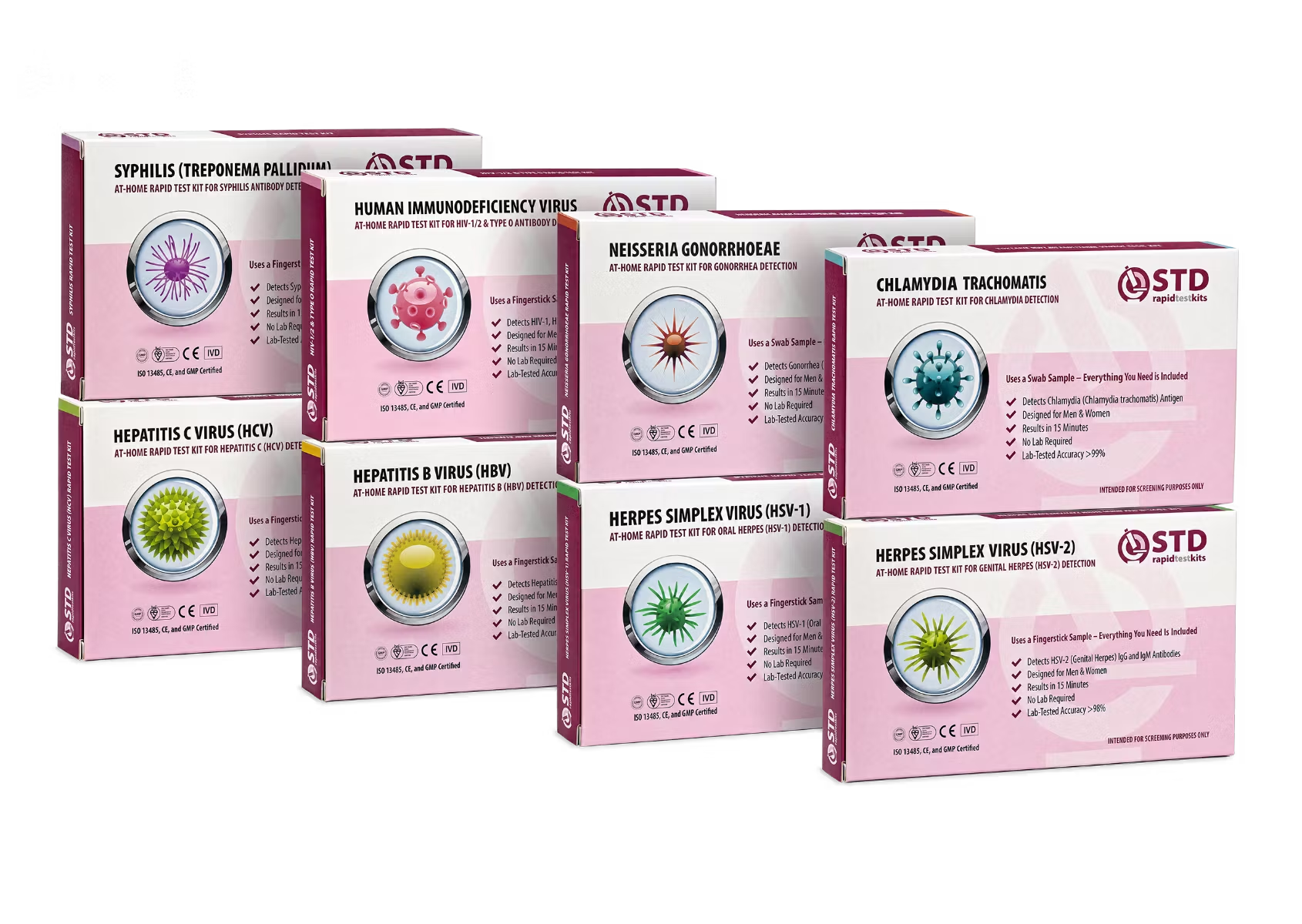
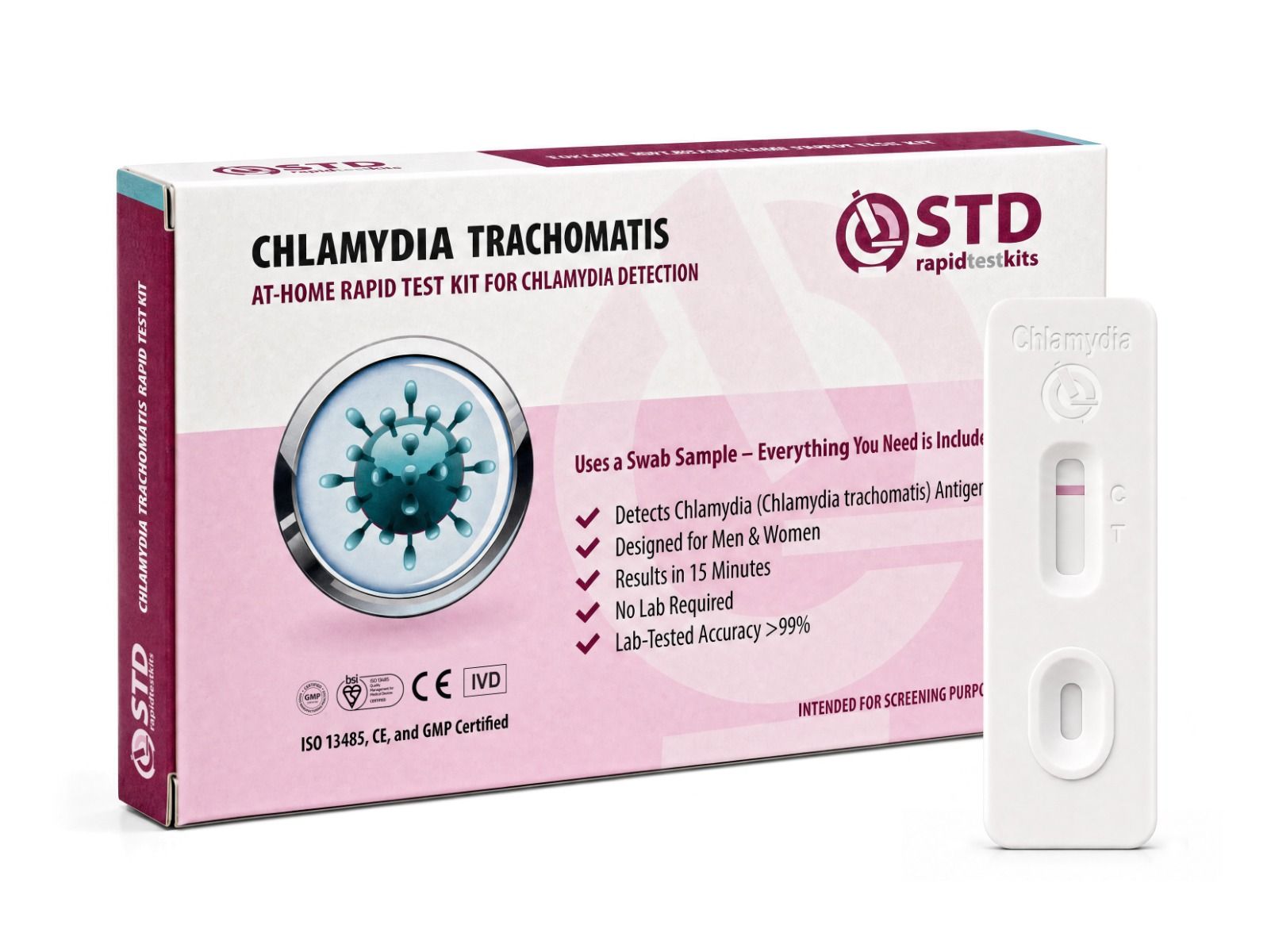
Our at-home rapid STI test kits use lateral-flow chemistry, which is faster and more private than lab NAAT testing but somewhat less sensitive on very early infections. A rapid kit is well-suited for periodic screening and for confirming that a window period has cleared. For the highest analytical sensitivity (within a few days of exposure or for confirming a positive), a lab NAAT remains the gold standard. The two are complementary rather than equivalent.
One disclosure: stdrapidtestkits.com publishes this article and sells the rapid home tests linked below. We recommend products based on fit-for-purpose for the reader's concern, not commercial benefit, and we say so plainly when a clinic visit is the better option.
Incubation period is how long after exposure symptoms might appear (if they ever do). The test window period is how long after exposure a test can reliably detect the infection. Dormancy happens later: once the body has been colonized, several viruses can stay quiet for months or years even after the test window has long cleared. A negative test inside the window does not rule out infection; retest after the window has passed.
The risks of waiting for symptoms
Silence is not the same as safety. Untreated chlamydia and gonorrhea can ascend into the upper reproductive tract and cause pelvic inflammatory disease (PID), a leading preventable cause of female infertility, ectopic pregnancy, and chronic pelvic pain. Many cases of PID start with an asymptomatic infection that was never detected.
Untreated high-risk HPV is the cause of essentially all cervical cancers and a substantial share of throat, anal, and penile cancers. Cervical screening (Pap testing alone or HPV co-testing) catches cellular changes years before cancer develops, but only if the screening actually happens.
Untreated HIV progresses to AIDS in most cases over 8 to 10 years; with modern antiretroviral therapy started early, life expectancy is essentially normal. Late diagnosis is the strongest single predictor of poor outcomes, and people with no symptoms are the most likely to be diagnosed late.
Untreated syphilis can stay quiet for years before causing cardiovascular and neurological damage in its tertiary stage. The early stages, when treatment with a single penicillin injection is curative, are usually the asymptomatic ones.
Among people who test while still asymptomatic, chlamydia and gonorrhea are typically resolved with a single course of antibiotics, syphilis with a single penicillin injection, and HIV is held off from immune damage entirely with antiretroviral therapy started early.
- Chlamydia and gonorrhea: ascend to the upper reproductive tract, cause PID, and damage fertility
- High-risk HPV: drives cervical, anal, throat, and penile cancers over 10+ years
- HIV: progresses to AIDS within 8 to 10 years if untreated; near-normal life expectancy if caught early
- Syphilis: moves into cardiovascular and neurological damage in its tertiary stage if the early latent phase passes untreated
At-home testing versus clinic testing for asymptomatic cases
For people who do not have symptoms, the barrier to testing is usually practical rather than medical. You may not want to ask your primary care doctor for a full STI panel. The local sexual health clinic has limited hours. There is no partner pushing you to test, and there are no symptoms pulling you in. So nothing happens.
At-home rapid lateral-flow kits remove the logistics. The kit ships in plain packaging, you collect the sample (fingerstick blood for HIV, syphilis, hepatitis, and herpes; self-collected genital swab for chlamydia, gonorrhea, trichomoniasis, and HPV), and you read the result in roughly 15 minutes. There is no clinic visit, no insurance claim, and no awkward intake form.
The trade-off is sensitivity. Lab NAAT testing performed at a clinic or via a mail-in kit is more analytically sensitive than rapid lateral-flow chemistry, especially for very early infections. For periodic screening with a known exposure date already past the window period, rapid kits are well-suited. For confirming a positive, ruling out a recent exposure that may still be inside the window, or any complex case (pregnancy, immune compromise, suspected reinfection), a clinic visit and lab confirmation is the right path.
Scope note for readers needing oral, rectal, or pharyngeal swabs: those sample types are clinic-administered, and we do not sell at-home pharyngeal or rectal swab kits. If your specific concern is throat or rectal exposure, see a clinic for the right swab. Our rapid panel can still answer the adjacent genital and bloodwork questions from the same encounter.
Many STIs have no symptoms or may only cause mild symptoms, so people can have an infection but not know it.
What to do if you test positive but feel fine
A positive result on an at-home test is the start of the process, not the end. Reinfection rates from untreated partners are high enough that the CDC recommends retesting 3 months after treatment for chlamydia, gonorrhea, and trichomoniasis. A positive without symptoms is not a worse situation than a positive with symptoms; if anything, it is a better one, because you caught the infection before it caused damage.
Most STIs are treatable, and several are curable. Antibiotics clear the infections caused by bacteria or parasites, while viral infections have no cure but respond to antiviral medicine that eases symptoms and lowers the risk of passing the infection on (MedlinePlus, STIs). Chlamydia, gonorrhea, syphilis, and trichomoniasis respond to antibiotics or antiparasitics. Hepatitis C, which the broader panels screen for, is now curable in most cases with direct-acting antiviral medication. Herpes is managed with antivirals that reduce both outbreak frequency and asymptomatic shedding. HPV is monitored through cervical screening and treated if cellular changes appear. HIV is a chronic, treatable condition with modern antiretrovirals; people on suppressive therapy reach undetectable viral loads and do not transmit the virus to sexual partners (the principle known as undetectable equals untransmittable, or U=U).
Three steps after a positive at-home result
- Confirm the result. Lateral-flow rapid tests have a small false-positive rate. A clinic NAAT or lab-based blood draw confirms the diagnosis before any treatment plan kicks off, and most clinics and telehealth platforms offer same-week confirmatory testing.
- Start treatment. Chlamydia, gonorrhea, syphilis, and trichomoniasis are bacterial or parasitic and curable with antibiotics or antiparasitic medication. Herpes and HIV are viral and not curable, but daily medication suppresses transmission risk and prevents long-term damage.
- Notify recent partners. Most U.S. health departments offer anonymous partner notification services if you are not comfortable having the conversation directly. Treating partners is the only way to break the reinfection cycle.
Talking to a partner when you did not know
The "I did not know" conversation is awkward for the same reason testing without symptoms is awkward: there is no obvious cue that something is wrong. A partner may interpret the disclosure as accusation, evidence of cheating, or a moral failing. None of those framings are accurate. STIs travel through populations on long timelines and through people who feel completely fine. The carrier did not necessarily do anything wrong, and the partner being notified did not necessarily catch it from the carrier.
Latency makes that point sharper. A positive result in a long-term relationship does not always point to a recent partner. Herpes can stay dormant for years before a first outbreak. HPV can be picked up early in life and only show on a Pap smear a decade later. Syphilis has a latent stage that can quietly carry forward from an old, untreated infection. Even chlamydia, which is more likely to be a recent infection, can leave behind pre-existing reproductive damage that shows up on imaging years after the bacteria itself was cleared. Information helps; blame does not. The constructive next step is for both partners to test, treat what is treatable, and decide together how to handle anything that requires ongoing management.
What works better, per public-health partner-notification guidance: be specific, be brief, and offer resources. The disclosure script in the callout below is one example that protects the partner medically and respects them emotionally.
If the conversation feels too risky (an estranged ex, a partner who has shown signs of being unsafe), state and local health departments and the CDC's partner services program can send anonymous notifications. The other person gets the information they need to test and treat without you needing to make the call yourself.
"I just got tested and came back positive for chlamydia. I do not have any symptoms and I do not know exactly when I picked it up, but you should get tested too. Most U.S. clinics will treat you the same day if your result comes back positive."
How often to test if you are symptom-free
The CDC recommends at least yearly chlamydia and gonorrhea screening for sexually active women under 25 and for older women with new or multiple partners, and at least annual screening for sexually active gay and bisexual men (CDC STI screening recommendations). Testing frequency tightens to every 3 to 6 months for higher-risk situations: men who have sex with men who have multiple or anonymous partners, people with multiple new partners in a year, anyone in non-monogamous relationships, and people whose partners have other partners.
If you are in a long-term mutually monogamous relationship and both partners have been tested at least once since the relationship started, the routine-screening pressure drops significantly. Test again any time the relationship structure changes, any new symptom appears, or a partner discloses an exposure.
HPV testing is recommended as part of cervical cancer screening for women starting at age 25, with HPV co-testing every 5 years (or Pap-only every 3 years). HIV testing is recommended at least once between ages 13 and 64 for everyone, with more frequent testing based on risk (WHO STI fact sheet).
Condoms reduce transmission risk significantly but do not eliminate it. HPV and herpes can pass through skin contact in areas not covered by a condom, and condom failure (slippage, breakage, late application) is a real source of exposure. Annual screening is still the right baseline even for consistent condom users. And if it has been more than a year since your last full panel, or you have changed partners since then, schedule a screen this week rather than waiting for an annual visit. The window for the most common silent infections is short enough that delay rarely helps.
Should you screen even with no symptoms?
Has it been more than a year since your last full STI panel, or have you had a new partner since then?
Yes: Screen now even without symptoms. Use a rapid at-home panel once you are past the window period, or a clinic NAAT if your most recent exposure is still inside the window.
Was your most recent exposure less than 2 weeks ago?
Yes: Wait out the window before trusting a negative: about 2 weeks for chlamydia and gonorrhea, up to 90 days for HIV and syphilis, and 12 to 16 weeks for HSV-2 antibodies. Retest at those marks.
Did a previous test or an at-home kit come back positive?
Yes: Confirm at a clinic with a NAAT or lab blood draw, start treatment, notify recent partners, and retest 3 months after treatment for chlamydia, gonorrhea, or trichomoniasis.
No: If none of the above apply and you have no symptoms, annual screening is a reasonable baseline. Test sooner whenever a partner discloses an exposure or a new symptom appears.
Guidance only. A healthcare provider can advise based on your specific situation.
Frequently Asked Questions
- Can I really have an STI and feel completely fine?
- Yes. The CDC's chlamydia overview states that chlamydia often has no symptoms while still doing damage. Most HPV infections clear silently without ever producing a wart or an abnormal Pap. Most people with genital herpes do not know they carry the virus. Feeling normal is not the same as testing clear.
- Can you have an STI for years without knowing?
- Yes. Diagnosis most often comes from routine screening or a partner's positive result, not from any symptom, because several common STIs produce none. Herpes can stay dormant in nerve cells for years before a first outbreak, high-risk HPV can sit in cervical tissue for a decade before an abnormal Pap, and untreated syphilis has a latent stage that lasts years. Bacterial infections like chlamydia persist until they are treated.
- If I have no symptoms, can I still pass an STI to a partner?
- Yes. Asymptomatic infections are still contagious. Herpes can shed virus from intact skin even when no sore is visible. Chlamydia and gonorrhea spread through cervical, urethral, anal, and pharyngeal tissue regardless of whether the carrier has symptoms. Untreated HIV is most contagious in its early acute phase, which often produces no symptoms or only a mild flu-like illness.
- How soon after a new partner should I test?
- Two weeks is the most actionable starting point for chlamydia and gonorrhea. Add HIV and syphilis testing at 6 weeks, then retest both at 90 days to clear their longer detection windows. For an HSV-2 antibody test specifically, wait 12 to 16 weeks. Testing earlier than these intervals risks a false negative because the body has not produced enough viral DNA, antigen, or antibody for the assay to register.
- Can stress trigger a dormant herpes outbreak?
- Stress, illness, hormonal shifts, friction, sun exposure, and a weakened immune system are all common outbreak triggers for HSV-1 and HSV-2. Dormancy means the virus is sitting in nerve cells without replicating. A reactivation event can bring it out of that state, sometimes years after the initial infection. The trigger does not cause the infection itself; it just shifts an existing infection from quiet to visible.
- Why did my test come back negative and then positive a few weeks later?
- You almost certainly tested inside the window period the first time. Every STI test needs the body to produce enough of a target (bacterial DNA, viral antigen, or antibody) for the assay to detect it. Tests done within a few days of exposure often miss the early infection. If your first test was early and the exposure was real, retest after the recommended window has cleared.
- Are at-home rapid tests accurate enough for someone with no symptoms?
- Yes, for screening purposes once the window period has cleared. Lateral-flow rapid tests are less analytically sensitive than lab NAATs but produce reliable results when used correctly and at the right point post-exposure. Confirm any positive with a clinic NAAT or lab blood draw. For very early infections (within a few days of exposure) a lab NAAT is more sensitive.
- I have been with the same partner for years. Could a positive test mean infidelity?
- Latency makes this impossible to infer from a test date. Herpes, HPV, and latent syphilis can carry forward from exposures that predate the current relationship, sometimes by years. A surprise positive is much more often a timing artifact than evidence of recent infidelity. Both partners testing together and discussing how to manage anything chronic is the productive path.
- How often should I test if I am sexually active and feel fine?
- Test whenever you start a new relationship or your last screen was more than 12 months ago. The annual baseline tightens to every 3 to 6 months for higher-risk situations including multiple new partners per year or non-monogamy. Consistent condom users still need the baseline interval, because condoms do not cover every transmission route for HPV and herpes.
- U.S. Centers for Disease Control and Prevention. Overview of sexually transmitted infections, including the statement that many STIs have no symptoms or only mild symptoms so people can have an infection but not know it.
- U.S. Centers for Disease Control and Prevention. HIV testing guidance, including window periods for fourth-generation antigen/antibody lab tests (18 to 45 days), rapid fingerstick tests (18 to 90 days), and nucleic-acid tests (10 to 33 days).
- U.S. Centers for Disease Control and Prevention. Herpes testing guidance, including the statement that after exposure it can take up to 16 weeks or more for current tests to detect HSV infection, and that most people with HSV do not have symptoms.
- World Health Organization. Sexually transmitted infections fact sheet covering global epidemiology, transmission, and asymptomatic infection rates.
- UK National Health Service. Sexually transmitted infections overview, stating that many STIs have no symptoms and the only way to know for sure is to get tested.
- U.S. National Institutes of Health, MedlinePlus. Sexually transmitted infections, including that STIs may cause no symptoms, that bacterial and parasitic STIs are treatable with antibiotics, and that viral STIs have no cure but can be managed with antiviral medicine that lowers the risk of spreading the infection.
