
Published: September 2025 | Last updated: May 2026 | Editorial review and quality control: Martina N.
If you have been on HIV treatment for years and your body has started changing in ways that do not match how you eat or exercise, you are not imagining it. Antiretroviral therapy can shift where fat sits, alter how insulin behaves, and reshape the body's silhouette in ways doctors sometimes call lipodystrophy. Some people respond by asking whether GLP-1 medications, the class that includes Ozempic, can help. Whether that is a reasonable question, what the early research actually shows, and how to have a useful conversation with your provider are the things this article tries to answer plainly.
Ozempic (semaglutide) is approved for type 2 diabetes, and its higher-dose sibling Wegovy is approved for chronic weight management in people with obesity or weight-related health conditions. Neither is FDA-approved specifically for HIV-related body changes. Clinical studies published since 2023, including a randomised placebo-controlled phase 2b trial, have looked at how GLP-1 receptor agonists affect waist circumference, visceral fat, insulin resistance, and inflammation in people living with HIV. The early signals are interesting. The certainty is still limited. The right next step is almost always a conversation with an HIV-informed clinician, not an online purchase.
Key Takeaways
- Early randomised trial evidence suggests semaglutide may reduce visceral fat and improve insulin resistance in some people living with HIV, but it is not FDA-approved for HIV-related lipodystrophy and long-term data is still limited.
- Semaglutide has no clinically significant direct interactions with modern antiretrovirals like dolutegravir or tenofovir, but absorption changes and overlapping GI side effects mean any combination should be supervised by an HIV-informed clinician.
Who this guide is written for
This article is written for adults living with HIV who have noticed unexplained weight changes, fat redistribution, or metabolic shifts that started after years of antiretroviral therapy. It is also written for the partner, friend, or caregiver doing the research alongside them. If you have ever asked, “Why does my body look different now even though my routine has not changed?”, you are far from alone, and the question deserves better answers than “you should just be glad your viral load is undetectable.”
We will cover what lipodystrophy is and is not, how Ozempic works in the body, what the most recent studies say about GLP-1 medications in people living with HIV, what providers consider when prescribing semaglutide off-label, and how to have a productive conversation about whether this medication might fit your situation. None of this is medical advice. It is a plain-English summary of current public-health guidance and peer-reviewed research, designed to help you ask sharper questions at your next appointment.
A note on disclosure: this article is published by stdrapidtestkits.com, which sells at-home STI testing kits. We do not sell Ozempic. We do sell HIV and combination STI tests that can be useful when ruling out infections that mimic or complicate metabolic changes. Product mentions in this article are based on fit-for-purpose for the reader's concern, not commercial benefit.
Written for adults on long-term ART who have noticed unexplained body composition changes. This is not medical advice and is not a substitute for an evaluation by an HIV specialist or endocrinologist who knows your full medication history.
What HIV-related lipodystrophy looks like
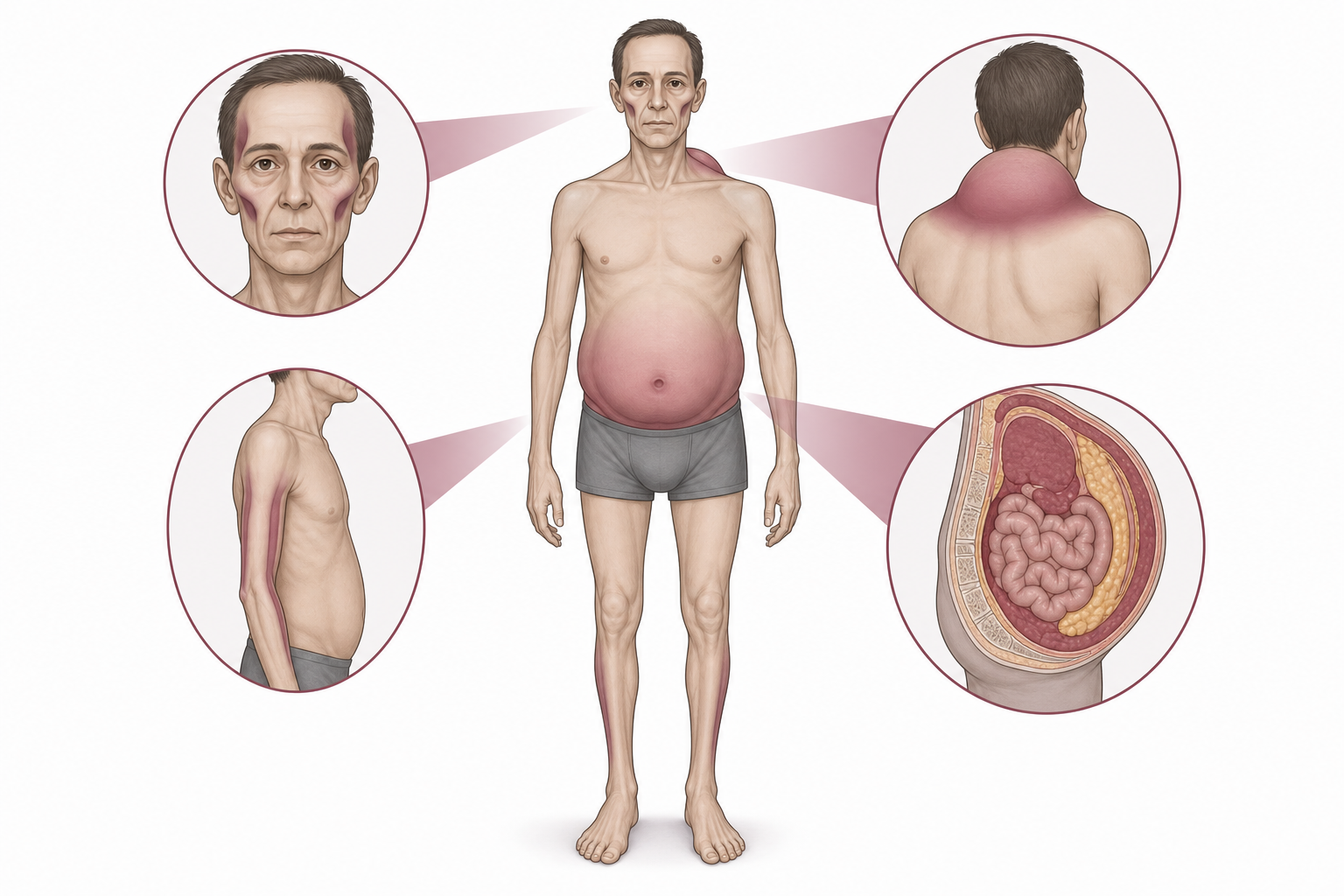
Lipodystrophy is the umbrella term for abnormal fat distribution or metabolic disturbance that can develop in people living with HIV. It can involve fat loss (lipoatrophy), fat gain (lipohypertrophy), or both at once. Historically it appeared most often after years of older nucleoside reverse transcriptase inhibitors like stavudine (d4T) and zidovudine (AZT). Newer integrase inhibitors and tenofovir alafenamide regimens are gentler on body composition, but milder forms still occur, particularly in long-term survivors who started treatment when the older drugs were standard.
The condition is not purely cosmetic. Visceral fat, the deep fat that wraps around abdominal organs, is metabolically active and raises the risk of insulin resistance, cardiovascular disease, and metabolic dysfunction-associated steatotic liver disease (formerly called NAFLD). That is why HIV care teams have become more attentive to body composition changes over the past several years, and why medications that target visceral fat, including GLP-1 receptor agonists, have entered the conversation.
If you are seeing some of these signs, do not jump to a conclusion on your own. General weight gain from age, diet, stress, or hormonal changes can look similar from the outside. The diagnostic distinction matters because it shapes treatment: lifestyle interventions and ART regimen optimization are first-line steps before any prescription weight-loss medication enters the discussion. The signs and patterns most commonly reported are summarized below.
| Sign | What it looks like | Why it happens |
|---|---|---|
| Facial wasting (lipoatrophy) | Sunken cheeks or temples despite normal or higher body weight | Loss of subcutaneous fat under the skin, historically linked to older NRTIs |
| Dorsocervical fat pad (“buffalo hump”) | Soft tissue accumulation at the upper back and base of the neck | Visceral fat redistribution that can occur on multiple ART regimens |
| Central adiposity | Increased belly size, sometimes with stretch marks, even at stable overall weight | Visceral fat accumulation tied to ART and chronic inflammation |
| Limb wasting | Veins and tendons more visible in arms and legs | Subcutaneous fat loss in the extremities, often paired with central fat gain |
| Metabolic shifts | Higher fasting glucose, higher triglycerides, lower HDL cholesterol | Insulin resistance and dyslipidemia tied to long-term ART and chronic inflammation |
How Ozempic works, in plain terms
Ozempic (semaglutide) is a GLP-1 receptor agonist, a class of medications that mimic the action of glucagon-like peptide-1, a hormone the gut releases after meals. GLP-1 has several effects: it triggers insulin release when blood sugar rises, slows the rate at which the stomach empties, signals fullness to the brain, and reduces post-meal glucagon. Semaglutide is engineered to bind the GLP-1 receptor and resist breakdown, so a once-weekly injection keeps these signals active for the whole week.
In type 2 diabetes, this combination lowers fasting glucose and HbA1c (a 3-month average blood-sugar marker). In obesity, the indication for the higher-dose Wegovy, it produces meaningful weight loss in most users, primarily by reducing appetite and food intake. The weight loss is not magic. It is the natural result of feeling less hungry, eating smaller portions, and feeling full sooner. Side effects mostly come from the same gut-slowing mechanism: nausea, reflux, constipation, and occasional vomiting, usually worst during dose escalation.
The reason this matters for HIV is straightforward. People living with HIV often face the same metabolic problems that GLP-1 medications were designed to address: visceral fat accumulation, insulin resistance, and dyslipidemia. The drug does not care whether those metabolic problems started with HIV treatment or with genetics and diet. The receptor biology is the same, which is why HIV clinicians have been tracking the GLP-1 evidence base closely since 2023.
Can you take Ozempic with HIV medications?
This is the most important practical question, and the short answer is: probably yes, but only under clinician supervision. According to the University of Liverpool HIV Drug Interactions database, semaglutide has no clinically significant direct interactions with the major antiretrovirals in routine use, including dolutegravir, bictegravir, tenofovir disoproxil fumarate, tenofovir alafenamide, emtricitabine, lamivudine, and darunavir. There are no contraindications listed for the modern integrase-inhibitor regimens that most people start treatment on today.
“No major drug-drug interaction” does not mean “no considerations.” A few practical points matter:
- Delayed gastric emptying. Ozempic slows how quickly the stomach empties, which can change the absorption of other oral medications. For most modern ART, this is unlikely to compromise viral suppression, but timing of doses may be worth discussing with your pharmacist or HIV clinician.
- Overlapping GI side effects. The nausea, reflux, diarrhea, and constipation associated with semaglutide overlap with side effects of some HIV medications. Starting both together makes it harder to identify the cause if you feel unwell. Most providers stagger introductions.
- Limited data outside stable viral suppression. The studies done so far have largely enrolled people with stable viral suppression. In very low CD4 counts, AIDS-defining illnesses, or active opportunistic infections, an HIV specialist should be making the call rather than a primary care provider working from general weight-management guidance.
No major direct interactions with modern ART have been documented. The cautions are about absorption timing, overlapping GI side effects, and limited data in advanced HIV. Use semaglutide only through a licensed provider and a regulated pharmacy, and coordinate with your HIV clinician.
What the early research is showing
The most-cited recent work in this space is the SLIM LIVER study, a randomised, double-blind, placebo-controlled phase 2b single-centre clinical trial of weekly semaglutide in adults with HIV and lipohypertrophy published in 2024 (Eckard et al., PubMed 38964353). Participants saw clinically meaningful reductions in visceral adipose tissue and improvements in markers of insulin resistance over the study period. Secondary analyses from the same cohort have reported reductions in inflammatory biomarkers and improvements in epigenetic aging measures. The trial is the first randomised prospective evidence that GLP-1 medications can change the metabolic phenotype of HIV-related body changes, though follow-up time is still measured in months rather than years.
Separate work in people with HIV and metabolic dysfunction-associated steatotic liver disease has shown that semaglutide reduces liver fat fraction and slows fibrosis progression. That matters because chronic inflammation and metabolic dysfunction often track together in long-term HIV survivors, and the liver is one of the organs most affected.
What the research does not yet show is equally important. It does not show that Ozempic reverses the lipoatrophy side of lipodystrophy, the sunken cheeks and limb wasting. Semaglutide reduces fat. It does not restore lost subcutaneous fat. In some people with active facial wasting, weight loss from semaglutide can make the wasting look more obvious. It also does not yet show what happens at year five, year ten, or after stopping the medication. Most weight-management evidence from non-HIV populations suggests body composition rebounds when GLP-1 medications are stopped unless the underlying behavior changes are sustained, and whether the same is true in HIV-associated lipohypertrophy is an open question.
In the 2024 phase 2b RCT (Eckard et al., Lancet Diabetes Endocrinol), weekly semaglutide produced statistically significant reductions in visceral adipose tissue and improvements in insulin sensitivity compared with placebo, in adults with HIV and lipohypertrophy. The trial is the strongest evidence to date that GLP-1 medications can shift the metabolic phenotype in this population, while leaving questions about durability and effect outside the trial population open.
How body changes affect mental health and care continuity
Body composition changes are not just a metabolic problem. Studies of long-term HIV survivors have consistently documented substantial rates of moderate-to-severe body image distress, with measurable downstream effects on medication adherence, social engagement, and intimacy. For people who started ART in the late 1990s or early 2000s on the regimens most associated with visible fat changes, the experience can feel like being marked publicly with a label they cannot peel off.
The clinical response to this used to be: “Your viral load is undetectable, that is the goal, the rest is cosmetic.” That framing increasingly does not hold. International HIV care guidelines now recognize body composition and metabolic health as part of comprehensive care, not as separate quality-of-life concerns. The visibility of these changes becomes a clinical issue when it discourages people from staying engaged in care, from disclosing status, or from attending follow-up.
This is part of why GLP-1 medications have arrived as a conversation in HIV clinics. They are one of the first interventions in decades that can credibly change the picture for someone whose body has been shaped by years of older treatment. Not a cure, just a tool that addresses a real metabolic pattern. Even when it cannot undo every visible change, the sense of having an active option matters for people whose bodies have felt outside their control for a long time.
If a clinician dismisses your concerns about body shape with “your viral load is fine,” that response is out of step with current HIV care guidelines. Metabolic and body-composition follow-up is now considered part of comprehensive long-term HIV care.
Comparing the causes of HIV-related weight gain
One reason this topic gets confused is that several different processes can produce similar-looking body changes, and they respond differently to treatment. A useful first step with any provider is sorting out which pattern is most likely driving what you are seeing.
HIV-related weight gain is not a single phenomenon. Long-term exposure to older nucleoside reverse transcriptase inhibitors, chronic low-grade inflammation tied to HIV itself, weight gain associated with newer integrase inhibitor regimens, and ordinary lifestyle and aging effects can all contribute, sometimes simultaneously. Each driver has a different relationship to GLP-1 medications, which means the answer to “will Ozempic help me?” depends on which driver is most prominent for you. The table below summarizes the major patterns.
The general takeaway: Ozempic is most relevant when central fat gain, insulin resistance, or weight gain on modern ART is the dominant pattern. It is less useful when the dominant problem is lipoatrophy (fat loss) from older drugs, where the goal is restoring lost tissue rather than reducing accumulated fat. For lipoatrophy-dominant patterns, ART substitution or, in selected patients, the FDA-approved tesamorelin (a growth-hormone-releasing factor analog indicated specifically for excess abdominal fat in HIV-associated lipodystrophy) may be the better conversation. We return to tesamorelin in the provider-conversation section below.
| Underlying cause | How it shows up | What Ozempic can and cannot do |
|---|---|---|
| Legacy NRTI exposure (stavudine, zidovudine) | Facial wasting, limb fat loss, sometimes paired with central fat gain | May reduce remaining visceral fat; cannot restore lost subcutaneous fat |
| Chronic HIV-related inflammation | Insulin resistance, gradual central fat accumulation, fatty liver | Can improve insulin sensitivity and reduce visceral and liver fat in early studies |
| Modern ART weight gain (integrase inhibitor regimens) | Gradual general weight gain, especially in the first 1 to 2 years after starting or switching | May counteract weight gain through standard GLP-1 appetite and metabolic effects |
| Lifestyle and aging | Weight gain that tracks with diet, activity level, and decade of life | Can support weight loss the way it does in non-HIV populations |
Five myths worth clearing up
The conversation about Ozempic and HIV is noisy online, and a few patterns of misinformation come up repeatedly. Here is what the evidence actually supports.
- Myth 1: Ozempic will reverse facial wasting. It will not. Semaglutide reduces fat, it does not rebuild subcutaneous tissue that has already been lost. In people with active facial wasting, weight loss may even make the loss more visible. Restoration of lost facial fat is a separate clinical problem with separate tools, including ART substitution, dermal fillers, and (in selected cases) fat transfer procedures.
- Myth 2: You can buy Ozempic safely without a prescription if you live with HIV. No. Unregulated semaglutide sold online or through unauthorized compounding pharmacies has been associated with dosing errors, contamination, and serious adverse events. Combining unregulated product with antiretroviral therapy is doubly risky, both because of unknown interactions and because the actual contents and dose are unknown. Use semaglutide only through a licensed provider and a regulated pharmacy.
- Myth 3: Ozempic interferes with HIV medications. Not directly. Per the Liverpool HIV Drug Interactions database, there are no major direct interactions with the standard antiretrovirals. Semaglutide can slow absorption of some oral medications, which is a softer concern, but the modern ART regimens most people are on are not in the narrow group that requires precise absorption timing.
- Myth 4: All weight gain on HIV medications is lipodystrophy. It is not. Some weight gain is the body recovering from untreated HIV, some is normal aging, some is lifestyle, and some is genuine medication-related body composition change. Real lipodystrophy involves abnormal fat distribution patterns, not just an upward number on the scale. Diagnostic clarity matters because it changes the treatment plan.
- Myth 5: Ozempic is a miracle drug for HIV-positive bodies. It is promising, not magical. Early studies are encouraging, but long-term data from this population is still measured in months rather than years, and the medication works best alongside sustained dietary and activity changes and (where appropriate) ART regimen optimization. It is a tool, not a fix.
Semaglutide is in a class of medications called incretin mimetics. It works by helping the pancreas to release the right amount of insulin when blood sugar levels are high.
Working with your provider
Because Ozempic is not formally indicated for HIV-related body changes, prescribing happens at the provider's discretion, and insurance coverage varies widely. If you want this conversation to go well, a few asks make it easier:
- Bring concrete observations. Photos taken over time, waist circumference measurements, recent lipid panel results, and a clear description of when the changes started carry more weight than a general “I have gained weight.” Providers respond to specifics, especially when the specifics suggest a redistribution pattern rather than across-the-board weight gain.
- Ask whether ART optimization is on the table first. For many people, switching from an older or weight-gain-associated regimen to a newer one improves body composition over 6 to 12 months. That is the lowest-risk first step. Your HIV provider can tell you whether your current regimen is associated with body composition changes and whether a switch is reasonable given your viral suppression history.
- Ask about endocrinology referral. Many HIV clinics now coordinate with endocrinologists and obesity-medicine specialists for metabolic management. An endocrinologist is the more likely prescriber of semaglutide and can manage dose escalation, monitor for side effects, and coordinate with your HIV team.
- Ask about tesamorelin. It is the only FDA-approved medication specifically indicated for excess abdominal fat in HIV-associated lipodystrophy. It works through a different mechanism, a growth-hormone-releasing factor analog, and has its own side effect profile. It is worth understanding both options before settling on one, particularly because tesamorelin requires daily injection and produces a narrower benefit (abdominal fat reduction without the broader metabolic and weight-management effects of GLP-1 medications).
- Ask about cost support. Manufacturer patient-assistance programs and resources like NeedyMeds can sometimes reduce out-of-pocket cost. Off-label use is often not covered by insurance, so verify pricing before committing to a course.
Where ruling out other infections fits in
One reason providers sometimes pause before prescribing semaglutide is that several treatable conditions can mimic or worsen the metabolic picture: untreated syphilis, undiagnosed chronic hepatitis B or hepatitis C, occult HIV in someone who has not been recently tested, and endocrine problems like thyroid disease can all drive weight or body composition changes that look superficially similar to ART-related lipodystrophy. Sorting those out first is part of responsible workup.
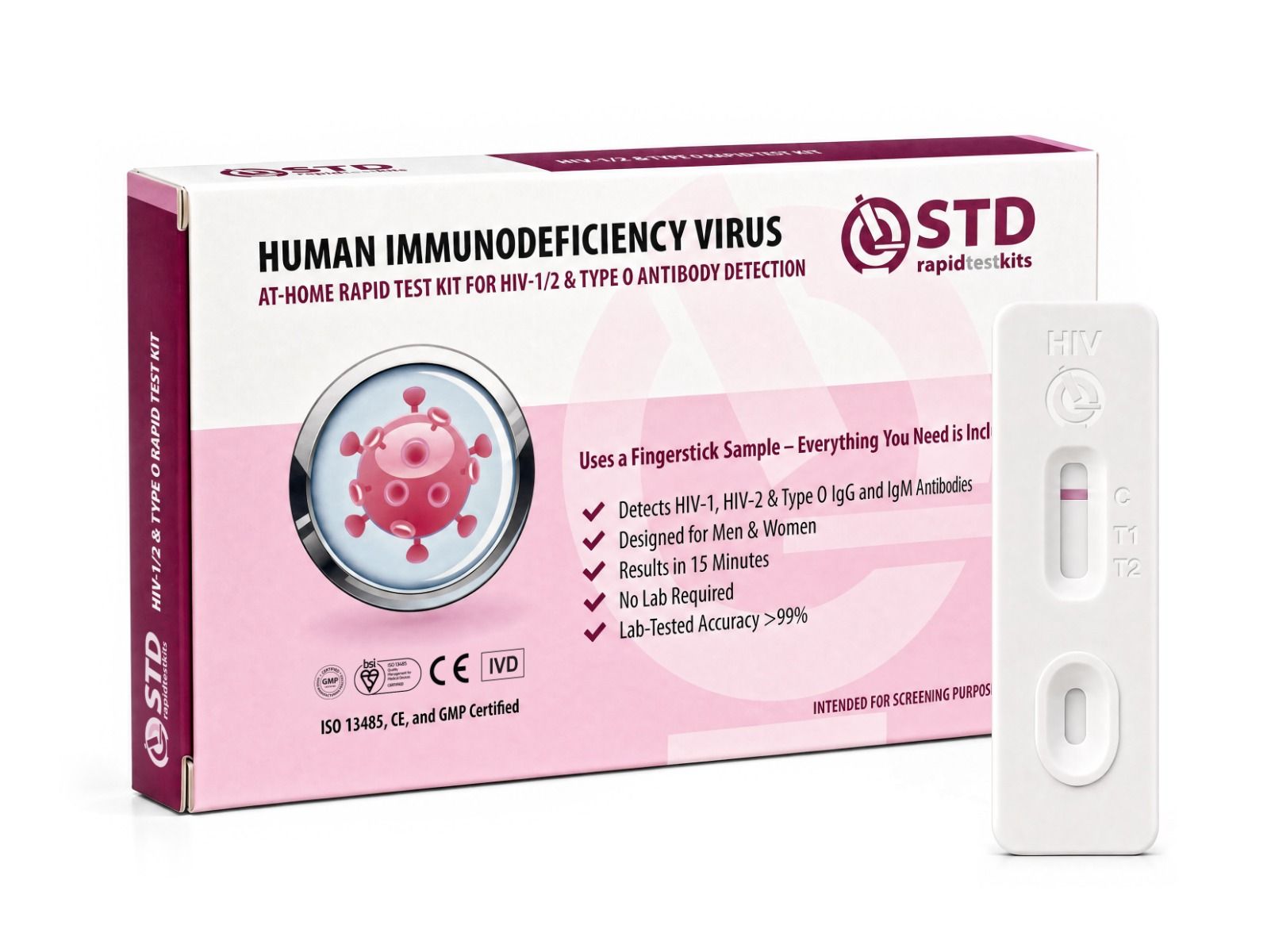
For STI-related concerns specifically, a private at-home rapid panel can be a useful first step before a clinic visit. The HIV-only rapid test confirms current HIV status. The 6-in-1 combo panel also screens for syphilis, hepatitis B, hepatitis C, chlamydia, and gonorrhea, all of which can affect general health and complicate decisions about a new metabolic medication. Whatever you find or do not find from at-home testing, the result is data your provider can use to focus the next conversation.
What to do next
If you are seeing body composition changes you do not like and have been told they are nothing to worry about, you are allowed to push back. The science has moved. Long-term metabolic care is now part of HIV care, not separate from it. Ozempic may or may not be the right tool for you, but the conversation is reasonable, and the underlying concern is medically real. A short, concrete checklist for the next 30 days:
- Confirm current HIV status with a rapid at-home test if you have not been tested recently.
- Rule out other treatable infections that can mimic metabolic changes (syphilis, hepatitis B and C, thyroid).
- Request a body composition and metabolic assessment at your next HIV appointment, with photos, waist circumference, and recent lipid and glucose panels.
- Ask specifically about ART regimen optimization as the lowest-risk first step.
- Ask for an endocrinology or obesity-medicine referral if your HIV provider is not comfortable managing semaglutide off-label.
Frequently asked questions
- Is Ozempic FDA-approved for HIV-related lipodystrophy?
- No. Ozempic (semaglutide) is FDA-approved for type 2 diabetes, and the higher-dose Wegovy formulation is approved for chronic weight management. Neither has a formal indication for HIV-related fat changes. Off-label prescribing by HIV-informed clinicians is the current pathway, supported by emerging research from studies like the 2024 SLIM LIVER randomised controlled trial in adults with HIV and lipohypertrophy.
- Is Ozempic safe to take with HIV medications?
- Generally yes, with clinician oversight. The University of Liverpool HIV Drug Interactions database lists no clinically significant direct interactions between semaglutide and modern antiretrovirals like dolutegravir, bictegravir, tenofovir, and emtricitabine. Semaglutide slows stomach emptying, which can modestly affect absorption of some oral medications, so the combination should be managed by a provider who knows your full medication list.
- What is the difference between HIV-related lipodystrophy and ordinary weight gain?
- Lipodystrophy is abnormal fat distribution: fat appears in unusual places (deep abdomen, dorsocervical pad) while disappearing from others (face, limbs). Ordinary weight gain tracks more or less proportionally across the body. The distinction matters because lipodystrophy responds to different interventions, including ART substitution and (in selected cases) targeted medications like tesamorelin or, off-label, semaglutide.
- Does Ozempic affect HIV viral load?
- There is no evidence that semaglutide raises or lowers HIV viral load. Viral suppression depends on your antiretroviral therapy, not on metabolic medications. The studies done in people with HIV so far have not shown adverse effects on viral suppression in participants who were already undetectable at baseline.
- Will Ozempic reverse facial wasting from older HIV medications?
- Semaglutide works by reducing fat mass. Facial wasting is a deficit of subcutaneous fat, not an excess, so the drug's mechanism runs in the wrong direction for this pattern. In some people, weight loss from semaglutide can make facial wasting more noticeable. Clinicians managing lipoatrophy-dominant lipodystrophy look first at ART substitution, then at volume-restoration options like dermal fillers or fat-transfer procedures.
- Is it safe to buy Ozempic online without a prescription if I am HIV-positive?
- No. Unregulated semaglutide sold through unauthorized compounding pharmacies or online sources has been linked to dosing errors, contamination, and serious adverse events. Combined with antiretroviral therapy, the risks are higher because the actual contents and dose are unknown. Use only a licensed provider and a regulated pharmacy.
- What if my doctor refuses to discuss Ozempic for HIV-related fat changes?
- Ask why, and bring documentation: photos over time, waist measurements, recent lipid and glucose panels, and the published research on GLP-1 use in HIV-associated lipohypertrophy. If your provider still will not engage, a referral to an endocrinologist or obesity-medicine specialist who works with HIV patients is reasonable. Telehealth specialists in HIV metabolic care are also increasingly available.
Our article was constructed based on current advice from the most prominent public health and medical organizations, and then molded into simple language based on the situations that people actually experience. We combined CDC and NIH HIV guidance, MedlinePlus drug information, the University of Liverpool HIV Drug Interactions database, and peer-reviewed research on GLP-1 medications in people living with HIV to provide a well-rounded guide to Ozempic and HIV-related fat changes.
- U.S. Centers for Disease Control and Prevention. HIV landing page: background on HIV transmission, testing, and long-term care considerations relevant to the population this article addresses.
- U.S. National Institutes of Health, HIVinfo. Patient information on HIV medicines and the body shape and metabolic changes that can occur with antiretroviral therapy.
- U.S. National Library of Medicine, MedlinePlus. Semaglutide Injection patient information: drug mechanism, indications, dosing, and side effects.
- University of Liverpool. HIV Drug Interactions database: source for the semaglutide and antiretroviral interaction profile referenced throughout this article.
- Eckard AR et al. Once-weekly semaglutide in people with HIV-associated lipohypertrophy: a randomised, double-blind, placebo-controlled phase 2b single-centre clinical trial (SLIM LIVER), Lancet Diabetes Endocrinol, 2024. PubMed 38964353. Source for the visceral fat and insulin sensitivity findings cited in the research section.
