






Last updated: April 2026
Not long ago, getting tested for STDs meant navigating a system that felt deliberately inconvenient, booking an appointment, taking time off work, sitting in a waiting room, discuss your sex life with a clinician you may not know well, and then waiting days for results. It's no surprise that millions of people skipped it. Today, you can order a rapid STD test online, have it arrive in plain, unmarked packaging, collect your sample at home, and have results in as little as 15 minutes. No appointment. No waiting room. No one else needs to know. At-home STD testing has quietly become one of the most significant shifts in sexual healthcare access in a generation, and it's only accelerating.
If you've been curious about at-home testing but weren't sure how it works, whether it's reliable, or whether it's really meant for someone like you, it is, and this guide covers everything you need to know.
People are also reading: STD Testing in the US: Every Option, Every Cost, Explained
Do You Need a Doctor to Get an STD Test at Home?
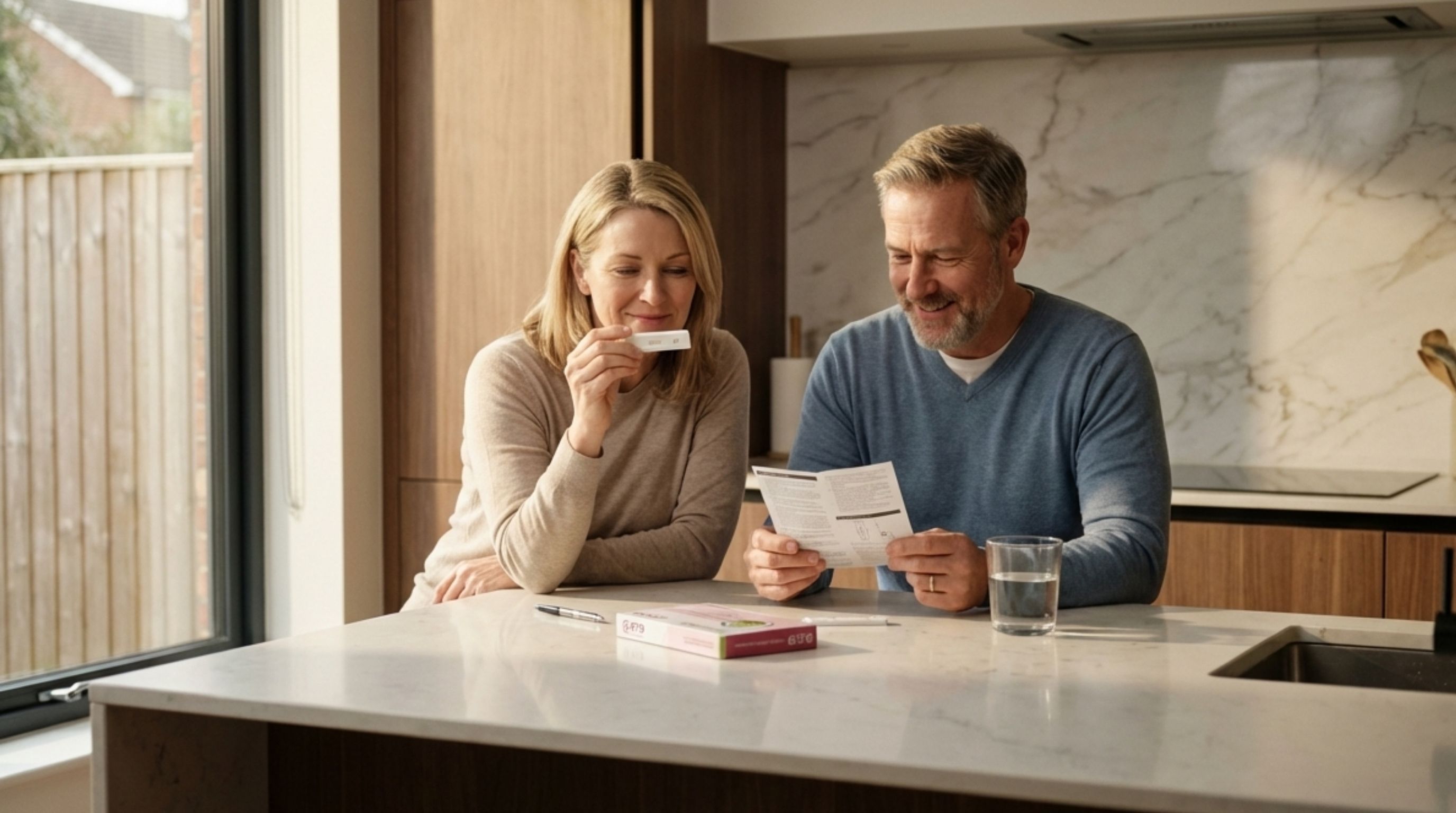
No, and that's exactly the point. At-home rapid STD test kits are available to order online without a prescription, without a doctor's referral, and without any prior medical consultation. You buy the kit, it arrives at your door, you follow the included instructions to collect your sample, and you read the result yourself. For rapid tests, the result is ready within 15 to 20 minutes. The entire process can happen on a Tuesday evening after work without anyone else involved.
This is a meaningful shift from where things stood even a few years ago. Historically, the only way to get a legally recognized, clinical-grade STD result was through a licensed lab processing a sample collected by a healthcare provider. That framework made sense when the technology required it. It no longer does. The same lateral flow immunoassay technology that powers home pregnancy tests and COVID rapid tests now drives accurate, clinically validated rapid STD tests, collected at home, read at home, no intermediary required.
For people on PrEP (a preventive HIV medication taken daily), regular STD testing is part of the standard health protocol. Many manage this entirely through at-home kits, testing every three months on their own schedule without quarterly clinic visits. That's not a workaround, it's a legitimate, increasingly common approach to sexual health maintenance, and it reflects how normalized routine at-home testing has become for people who take their sexual health seriously.
What Does Testing at Home Actually Look Like?
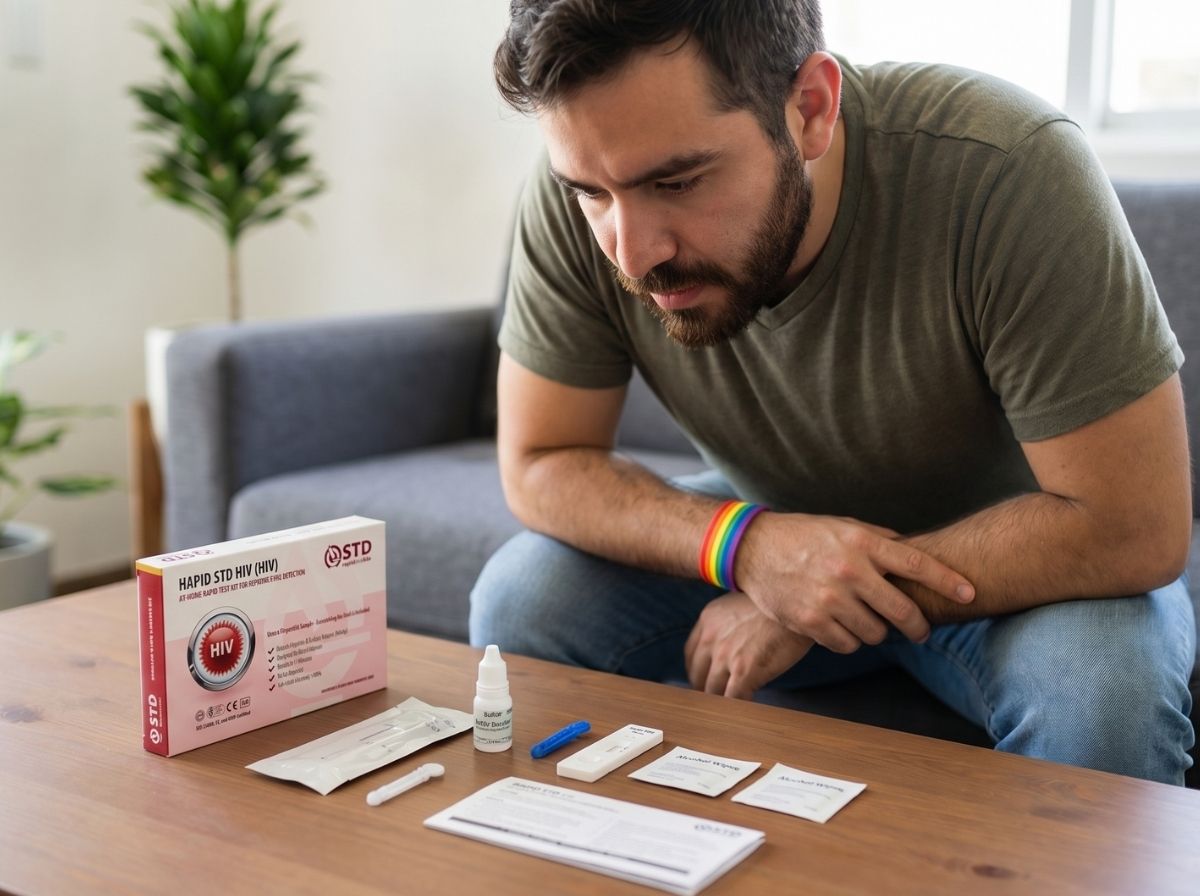
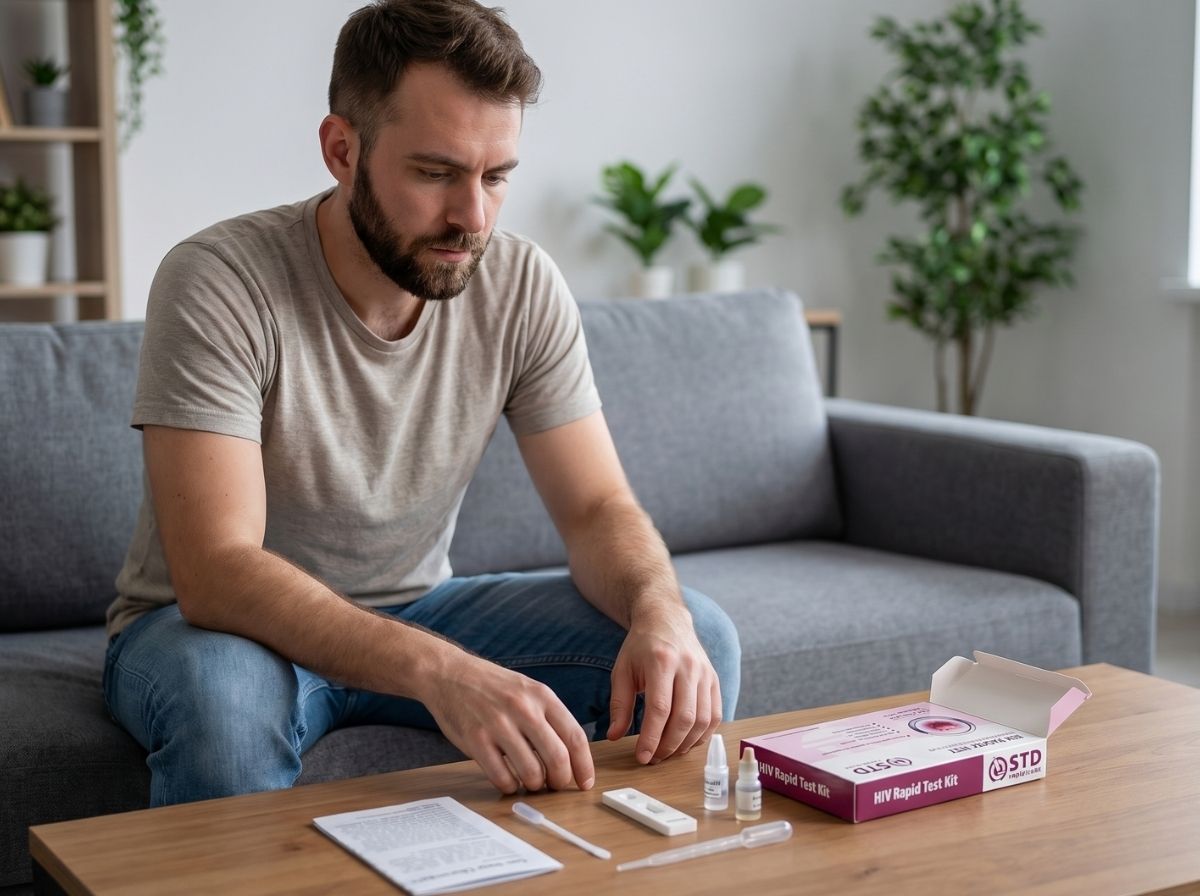
The process is genuinely straightforward, and understanding it removes most of the mystery. You order your kit online, it ships in plain, discreet packaging with no identifying branding visible on the outside. Inside, you'll find the test device, a sample collection tool (depending on the infection, this is a finger-prick lancet, a urine collection cup, or a swab), clear step-by-step instructions, and a result guide.
You collect your sample, which takes under five minutes in most cases, apply it to the test device, and set a timer. For rapid tests, the result window appears within 15 to 20 minutes, read the same way as a pregnancy test: one line or two, positive or negative. There's no app required, no sample to mail, no waiting for an email. The answer is in your hand the same day you test.
Combo kits, which test for multiple infections from a single order, work the same way but include separate test devices for each infection. The 7-in-1 Complete At-Home Rapid STD Test Kit covers HIV, HSV-2, chlamydia, gonorrhea, syphilis, hepatitis B, and hepatitis C from one order, using finger-prick blood and urine samples collected at home. For most people with a recent exposure or due for a routine check, a combo kit gives the most complete picture with the least friction.
| Step | What Happens | Time Required |
|---|---|---|
| Order | Choose your kit online, no prescription needed | 5 minutes |
| Delivery | Plain, discreet packaging, no branding visible externally | Typically 1–3 days |
| Sample collection | Finger prick, urine sample, or swab depending on the test | Under 5 minutes |
| Wait for result | Apply sample to test device and read the result window | 15–20 minutes |
| Read result | Positive or negative, same format as a pregnancy test | Immediate |
Is At-Home STD Testing Actually Private?
More private than a clinic visit in almost every measurable way. When you test at a clinic, there's an appointment record, an insurance claim if your plan covers it, a staff member handling your sample, and a result that travels through a lab and back to a provider before reaching you. Every one of those steps involves another person or system. At-home testing eliminates all of them.
Your kit ships in plain packaging. The company name, if visible at all, doesn't indicate what's inside. There's no insurance involvement for most at-home kits, which means no Explanation of Benefits form landing in a shared mailbox. You read your own result. You decide what to do with it. The information stays exactly as private as you choose to keep it.
This matters enormously for a large portion of people who would otherwise go untested. A 2024 scoping review published in the Journal of Primary Care and Community Health found that stigma and fear of judgment are among the primary reasons young adults avoid conventional STD testing facilities, with students specifically citing concerns about being seen, about parental discovery, and about social consequences. At-home testing sidesteps all of those concerns by design. When privacy isn't a barrier, testing rates go up. When testing rates go up, infections get caught earlier. That chain of logic is why public health officials have consistently pushed for wider at-home access.
According to the American Sexual Health Association, 70% of young people surveyed said they would prefer testing for STIs at home over visiting a doctor's office or clinic, and 91% said they would use at-home testing if it were free. Privacy and convenience were the top reasons cited. The preference is clear, consistent, and growing.
People are also reading: At-Home STD Testing: How It Works, How Accurate It Is, and What to Do With the Results
How Much Does At-Home STD Testing Cost?
Less than most people expect, and far less than the alternative when you factor in the full cost of a clinic visit. A single-infection rapid test typically runs between $25 and $50. Combo kits covering multiple infections range from roughly $60 to $150, depending on how many infections are included. There are no appointment fees, no lab processing fees billed separately, and no copay on top of the kit price. What you see is what you pay.
Compare that to an in-person STD panel at a private clinic: the visit alone can run $100 to $300 before a single test is ordered, and lab fees are usually billed separately. Health insurance covers clinic-based STD testing in many cases, but that only matters if you have insurance, if your plan actually covers the specific tests ordered, and if you're willing to have the claim on your record. For people without insurance, people on a parent's plan, or people who simply don't want a paper trail, out-of-pocket at-home testing is often the cheaper and more practical option.
It's worth noting that many flexible spending accounts (FSAs) and health savings accounts (HSAs) now cover at-home STD test kits, so if you have one of those, the effective out-of-pocket cost drops further. Public health clinics remain the right option for people who need free testing and aren't in a hurry. At-home rapid tests are for people who want answers on their own schedule, without the system getting involved.
Which STDs Can You Test for at Home?
All of the major ones. The range of infections covered by at-home rapid testing has expanded significantly, and the most common STDs, the ones responsible for the overwhelming majority of new diagnoses in the United States, can now all be tested from home.
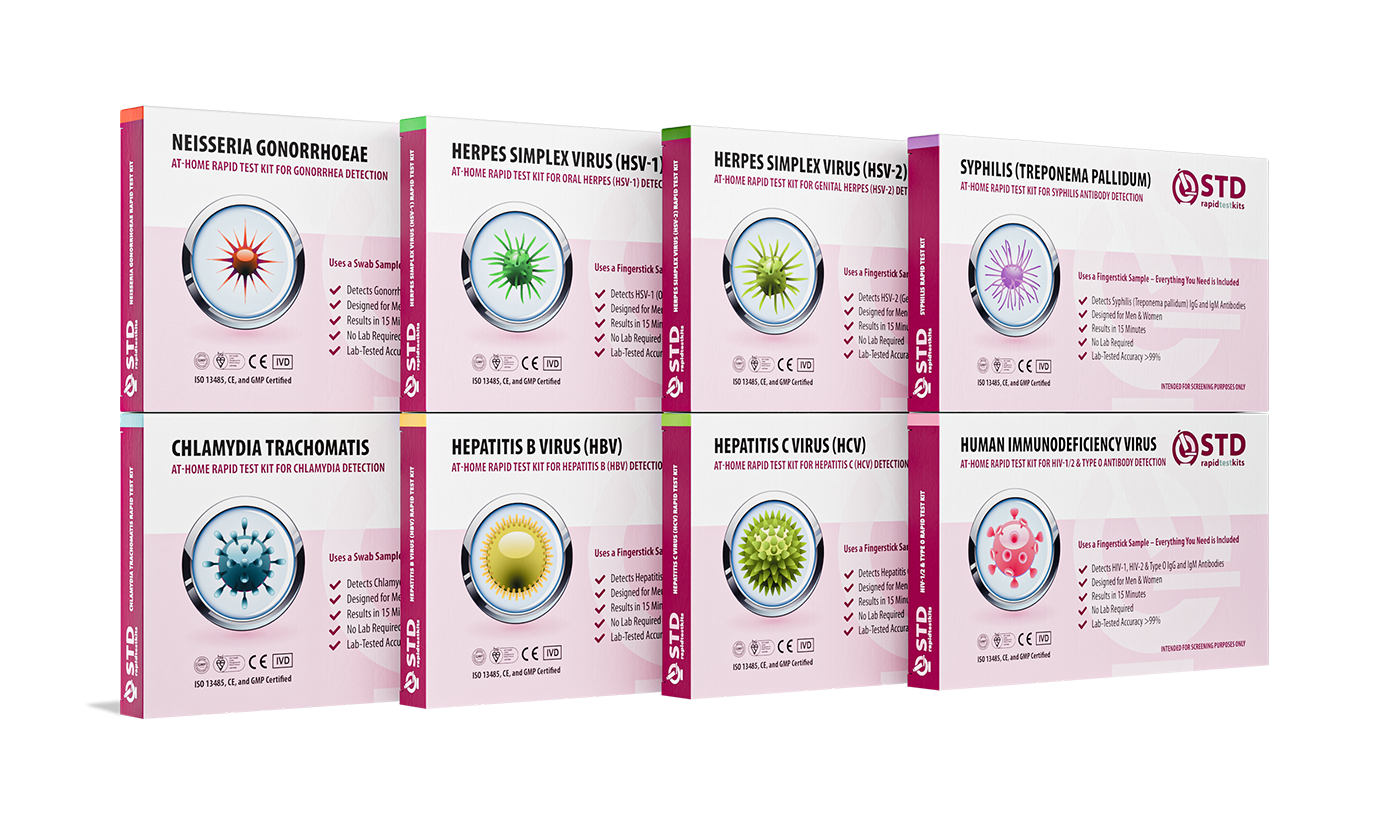
Single-infection kits are available for chlamydia, gonorrhea, syphilis, HIV, HSV-1 (oral herpes), HSV-2 (genital herpes), hepatitis B, hepatitis C, HPV, and trichomoniasis. Combo kits bundle multiple infections together, ranging from 2-in-1 pairings up to comprehensive 10-infection panels for women. For most people doing a routine check or responding to a recent exposure, a multi-infection combo kit is the practical choice. It covers the most likely infections without requiring you to guess which single test to buy.
| Infection | Test From | Sample Type |
|---|---|---|
| Chlamydia | 14 days after exposure | Urine or swab |
| Gonorrhea | 3 weeks after exposure | Urine or swab |
| Syphilis | 6 weeks after exposure | Finger-prick blood |
| HIV | 6 weeks (first indicator); retest at 12 weeks for certainty | Finger-prick blood |
| Herpes HSV-1 & HSV-2 | 6 weeks after exposure | Finger-prick blood |
| Hepatitis B | 6 weeks after exposure | Finger-prick blood |
| Hepatitis C | 8–11 weeks after exposure | Finger-prick blood |
| Trichomoniasis | 5–28 days after exposure | Vaginal swab |
| HPV | As directed, often no acute window | Vaginal swab |
One thing worth understanding: testing too early after an exposure doesn't give you a reliable negative. It gives you a result before the infection is detectable, which is not the same thing. Every infection has a window period, the gap between exposure and when a test can actually detect it. Testing inside that window risks a false negative that feels like reassurance but isn't. The table above reflects the correct timing. Mark your calendar and test when the window has passed.
Check Your STD Status in Minutes
Test at Home with Remedium8-in-1 STD Test Kit
 For Men & Women
 Results in Minutes
 No Lab Needed
 Private & Discreet
Order Now $149.00 $392.00
For all 8 tests
Who Is At-Home STD Testing Actually For?
A much broader group than the marketing usually suggests. The most obvious user is someone who's had an unprotected sexual encounter and wants to check their status before their next one. That's a legitimate and common reason to test, and at-home kits serve that need well. But the reality of who buys and uses these kits is wider than that.
It includes people who test routinely, every three to six months, as part of how they approach sexual health, the same way they schedule dental cleanings or annual physicals. It includes people in new relationships who want to know their status before going unprotected. It includes people who've been with the same partner for years but realize they've never actually been tested and feel some low-level anxiety about it. It includes people who had symptoms, Googled them anxiously at 2 AM, and want a concrete answer before calling a doctor. It includes teenagers who can't talk to their parents about this but need to know.
The CDC estimates that about 1 in 5 Americans has an STI at any given time, and the majority don't know it, because most STDs produce no obvious symptoms in most people. The idea that you'd know if something were wrong is one of the most persistent and damaging myths in sexual health. Chlamydia, gonorrhea, herpes, and hepatitis infections frequently produce no symptoms at all, sometimes for years. Testing is how you actually know. Not symptoms. Not intuition. Testing.
The Stigma Problem, and Why At-Home Testing Is the Fix
Here is the uncomfortable truth about why STD rates have stayed high for so long despite good, effective treatments being widely available: people don't get tested. Not because they don't care about their health, but because testing has historically been surrounded by enough awkwardness, judgment, and friction that avoidance felt easier than engagement.
Walking into a sexual health clinic means declaring, publicly, to staff, in a building that exists specifically for this, that you are a person who has sex and might have an infection. For a lot of people, that psychological weight is heavier than the abstract health risk. Research consistently shows that stigma is one of the primary barriers to STI testing, not ignorance, not lack of access, not cost, but stigma. The fear of being judged, the embarrassment of the conversation, the anxiety of being seen.
At-home testing doesn't solve stigma as a social problem. But it removes it as a practical barrier to testing. You don't have to have the conversation. You don't have to be seen. You don't have to navigate anyone else's reaction to the fact that you're a sexually active person who wants to take care of their health. You just test. That shift, from a process that requires courage to one that requires an internet connection, is genuinely significant. The CDC's Division of STD Prevention has said publicly that self-testing gives people a tremendous opportunity to control when, where, and how they get tested. That's not a press release platitude. It's a description of what changes when the barrier disappears.
People are also reading: Can You Get an STD in a Relationship? The Complete Guide for Couples
What Happens After You Get Your Result?
A negative result during the correct testing window is reliable and reassuring. It means the test detected no antibodies or antigens for that infection at the time of testing. If you tested at the right time, after the window period has closed, a negative is a genuine negative. You can move forward with confidence.
A positive result is not a crisis. It's information. All of the infections that rapid at-home tests cover have effective treatment options, and most of them, chlamydia, gonorrhea, syphilis, and trichomoniasis, are straightforwardly curable. HIV is not curable but is highly manageable with modern treatment, to the point where people on effective therapy live full, healthy lives and can have an undetectable viral load that effectively eliminates transmission risk. Herpes, hepatitis B and C are also manageable with appropriate care. A positive result means you now know something important about your health that you can act on, which is exactly the point of testing in the first place.
After a positive rapid test, the next practical step is to follow up with a healthcare provider for confirmation and to discuss treatment options. Most primary care providers and sexual health clinics handle this routinely. Bringing your test results with you gives them a concrete starting point. The conversation is usually far less fraught than people expect. Clinicians who work in sexual health have this conversation constantly, and they are not judging you for having tested positive. They're glad you tested at all.
FAQs
1. Can I order a home STD test without a doctor’s prescription?
No, none was needed. You can buy fast STD test kits for home use right online without having to see a doctor, get a referral or approval. You order. It ships. You try it. That is the entire process.
2. Will anyone know that I have ordered an STD test kit?
Only if you tell them, kits are sent in plain, discreet packaging with no branding on the outside to indicate what is inside. For most at-home kits, there’s no record of an appointment, no insurance claim, and no result that passes through anyone else’s hands. That score is yours and only yours.
3. How accurate are at-home STD tests?
Well-made rapid tests have accuracy rates from 97% to 99.7%, depending on the infection, and are clinically equivalent to many tests performed in a clinic. Accuracy factor is timing, not the test. Testing before the window period is over risks a false negative. Test at the right time and you can rely on the results.
4. Can I be tested for multiple STDs at once?
Yes. Combo kits give you the ability to test anywhere from 2-10 infections on a single order. A multi-infection panel removes the guesswork and tests all the major ones at once, so if you’ve had a recent exposure but aren’t sure which infections to prioritize, you can get them all at once.
5. How long after sex can I take an at-home STD test?
Depends on the infection. Chlamydia: test 2 weeks after exposure. Gonorrhea: 3 weeks. Syphilis, HIV, and herpes: 6 weeks Hepatitis C: 8-11 weeks. Tests too early in these windows can produce false negative results, not because the test is faulty, but because the infection is still not detectable enough.
6. What if my test is positive?
Follow up with your healthcare provider to confirm and discuss treatment. For every infection that rapid at-home tests cover, there is an effective treatment. Information is a positive result, not a verdict, and acting on it early always yields better outcomes than finding out later.
7. Does insurance cover at-home STD tests?
Most at-home kits sold directly to consumers are paid for out of pocket, not covered by standard health insurance. But many FSA and HSA accounts do cover them, which lowers the effective cost. If you're concerned about the cost, community health clinics and public health departments offer testing for free or at a low cost.
8. How good are at-home tests compared to a clinic?
Yes, for the most common STDs. Rapid test accuracy is clinically validated and comparable to clinic-based testing. The main advantage of testing in a clinic is the availability of a wider range of diagnostics and immediate clinical consultation in the case of positive results. At-home testing wins for speed, privacy and convenience. It’s a really good choice for regular screening and post exposure checks.
9. Do I need to test for STDs that have no symptoms?
Chlamydia, gonorrhea, herpes, hepatitis B and C, and HIV often have no symptoms whatsoever, sometimes for years. One of the biggest reasons people put off testing, and one of the biggest reasons infections go unnoticed, is the assumption that you’d know if something was wrong. The only way to truly know your status is by getting tested. Symptoms are an unreliable guide.
10. How often should I test at home?
If you have sex with new or multiple partners, a sensible routine is every three to six months. In a long term monogamous relationship and both of you have tested negative, the urgency is lower. If you have had an unprotected sex outside of a relationship, get tested after window period. There is no single right answer; the right frequency is whatever is an honest reflection of your actual risk level.
Ready to Test? Here's Where to Start
Testing at home is not a last resort for people who can't get to a clinic. It's a legitimate, private, clinically validated option for anyone who values their time, their privacy, or simply wants a result without the friction. If you've been putting it off, the barrier you're imagining is bigger than the one that actually exists.
The 7-in-1 Complete At-Home Rapid STD Test Kit covers the seven most common infections, HIV, HSV-2, chlamydia, gonorrhea, syphilis, hepatitis B, and hepatitis C, in a single discreet order. For complete coverage including HSV-1, the Complete 8-in-1 At-Home Rapid STD Test Kit tests for 8 infections with 99% accuracy. Women looking for the most comprehensive panel available, adding trichomoniasis and HPV, will find it in the Women's 10-in-1 At-Home Rapid STD Test Kit.
Results in minutes. Packaging no one can identify. No appointment, no waiting room, no conversation you didn't ask to have. Visit STD Rapid Test Kits and find the right kit for where you are right now.
How We Sourced This: Our article was constructed based on current advice from the most prominent public health and medical organizations, and then molded into simple language based on the situations that people actually experience, such as treatment, reinfection by a partner, no-symptom exposure, and the uncomfortable question of whether it "came back." In the background, our pool of research included more diverse public health advice, clinical advice, and medical references, but the following are the most pertinent and useful for readers who want to verify our claims for themselves.
Sources
1. CDC, 2024 National STI Surveillance Data Release (September 2025)
3. American Sexual Health Association, Young People Say They Prefer At-Home STI Testing
4. CIDRAP, FDA Approves At-Home Test for Sexually Transmitted Infections (March 2025)
5. PMC, Shifting Grounds: Facilitating Self-Care in STI Testing Through Self-Test Technology (2024)
6. CDC, Sexually Transmitted Infections Surveillance, 2024 (Provisional)
About the Author
Dr. F. David, MD is a board-certified infectious disease specialist focused on STI prevention, diagnosis, and treatment. He writes with a direct, sex-positive, stigma-free approach designed to help readers get clear answers without the panic spiral.
Reviewed by: Rapid STD Test Kits Medical Review Team | Last medically reviewed: April 2026
This article is for informational purposes and does not replace medical advice.


