







Silent STDs in Women: The Infections That Cause Damage Without Symptoms
Last updated: April 2025
Changes in vaginal discharge are one of the most common reasons people start Googling their symptoms, and one of the most common signs that an STD might be present. This article covers what normal discharge looks like, what each color and consistency change actually signals, which infections are most likely to cause those changes, and exactly when and how to test at home. Whether you're noticing something different or just want to know what to look for, you'll find clear, specific answers here.
You notice something different. Maybe the color is off, or there's a smell you don't recognize, or the texture has changed in a way that's hard to describe. The instinct to open a new browser tab at 11 pm and start comparing discharge photos is almost universal, and almost always leaves you more confused than when you started. Here's what actually helps: understanding what normal discharge looks like across your cycle, knowing which changes are genuinely concerning, and knowing which STDs are most likely to cause them.

People are also reading: Is Discharge Without Pain a Sign of an STD?
What Normal Discharge Actually Looks Like
It helps to have a clear baseline before you can tell what's not normal. Normal vaginal discharge is how the cervix and vaginal walls clean themselves. It gets rid of old cells and bacteria, helps keep the pH level stable, and changes naturally during the menstrual cycle. Knowing how this changes is what makes the difference between useful information and unnecessary panic.
Around the time of ovulation, which is about halfway through your cycle, your discharge usually becomes clearer, thicker, and noticeably slippery, like raw egg white. This is normal and happens because estrogen levels are rising. The body is getting ready for possible fertilization, and a lot of women use this pattern of discharge to keep track of their cycle. Discharge is usually thicker and whiter or off-white in the days before and after your period. There may be very little discharge right after a period. Sexual arousal also makes lubrication and discharge volume go up for a short time. It's normal and healthy for all of these differences to exist.
A healthy discharge does not have a strong or bad smell, a green or yellow color, a frothy or cottage cheese-like texture, a lot of itching or burning with the discharge, or a sudden and unexplained increase in volume that lasts longer than a day or two. Any of these changes, especially if they happen after getting a new sexual partner or being exposed to a higher risk, should be taken seriously. The hard part is that some of the infections that are most likely to change your discharge are also the ones that are least likely to show any symptoms at all. That's not a good reason to ignore what you're seeing. It's a reason to try.
Discharge Colors and What They Can Signal
Color is the first thing most people notice when discharge changes, and it's a useful starting point, though not a diagnosis on its own. The same color can have multiple possible causes, some of which are infections and some of which are not. Here's what each color typically signals and when it warrants testing.
| Color / Appearance | Most Likely Cause(s) | STD Possible? | Recommended Action |
|---|---|---|---|
| Clear, stretchy | Normal ovulation discharge | No | No action needed |
| White, thin, milky | Normal discharge, hormonal variation | No (unless odor or irritation present) | Monitor; test if symptoms develop |
| White, thick, clumpy | Yeast infection (candidiasis) | No (not an STD, but testable) | See a provider or use antifungal treatment |
| Gray or thin white with fishy odor | Bacterial vaginosis (BV) | No (not an STD, but associated with STD risk) | See a provider for diagnosis |
| Yellow or cloudy | Chlamydia, gonorrhea | Yes, high suspicion | Test immediately |
| Yellow-green, frothy | Trichomoniasis | Yes, high suspicion | Test immediately |
| Green | Trichomoniasis, gonorrhea, bacterial infection | Yes, high suspicion | Test immediately |
| Pink or light brown | Spotting, implantation bleeding, post-sex irritation | Possible (syphilis sores can bleed) | Monitor; test if associated with new exposure |
| Brown-yellow | Old blood clearing, possible cervical irritation | Possible if persistent or odorous | See a provider if it persists beyond a few days |
A few things worth clarifying about this table. Bacterial vaginosis and yeast infections are not sexually transmitted infections. BV occurs when anaerobic bacteria outcompete the Lactobacillus species that normally dominate a healthy vaginal microbiome; this shifts the vaginal pH from its protective acidic range (pH 3.8–4.5) upward toward alkaline, producing the characteristic thin gray discharge and fishy odor. Yeast infections occur when Candida fungi overgrow, typically in response to disrupted microbiome balance. Both conditions are worth mentioning here because STIs can directly contribute to these imbalances; the inflammatory response triggered by chlamydia or gonorrhea infection alters the vaginal environment in ways that create conditions favorable to BV. Green or yellow-green frothy discharge with a strong odor points most directly toward trichomoniasis among the STIs listed above.
Check Your STD Status in Minutes
Test at Home with Remedium3-in-1 STD Test Kit
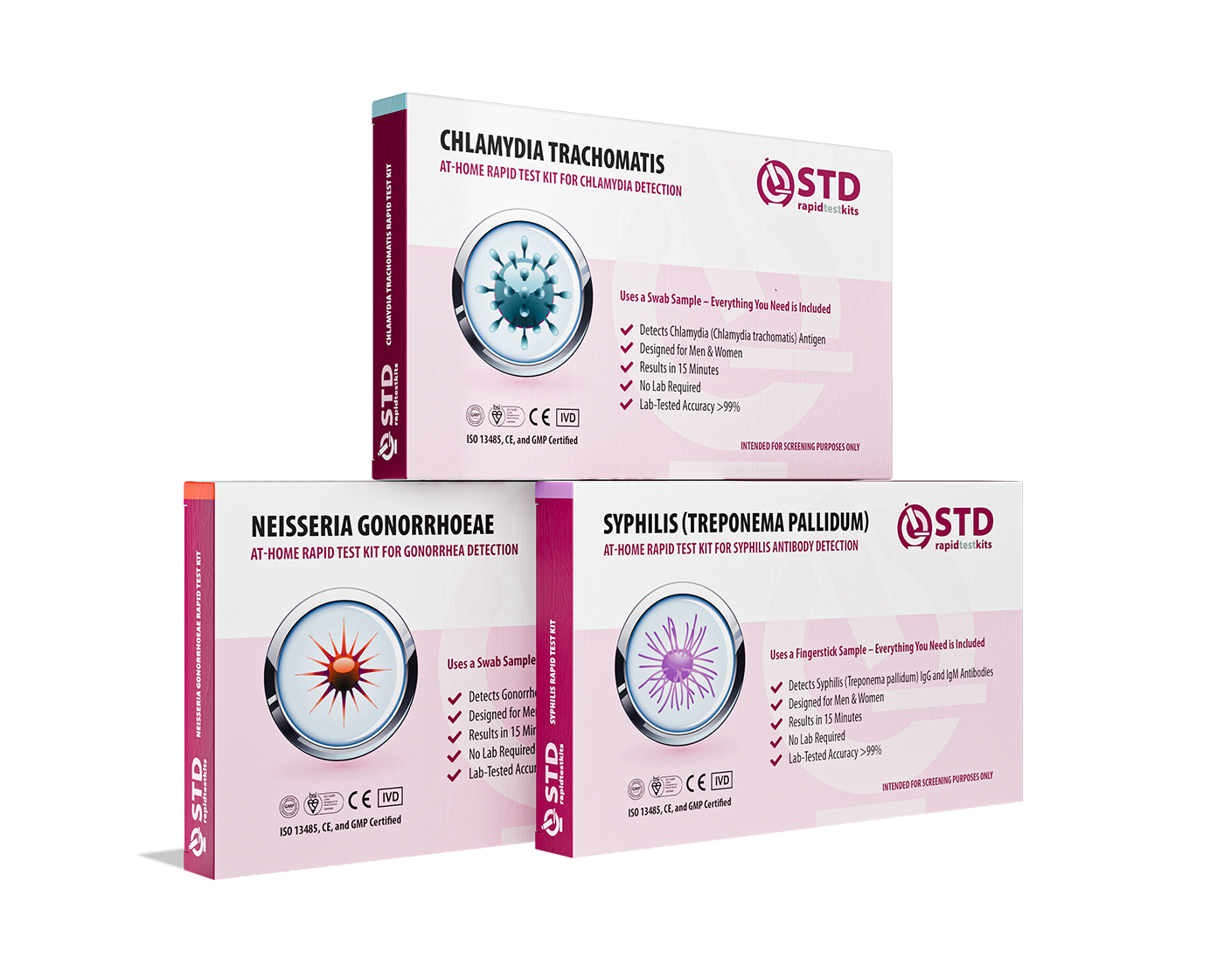
Claim Your Kit Today
Save 53%
 For Men & Women
 Results in Minutes
 No Lab Needed
 Private & Discreet
Order Now $69.00 $147.00
For all 3 tests
Which STDs Change Your Discharge, and How
Several of the most common sexually transmitted infections can cause noticeable changes in vaginal discharge. Each has a characteristic presentation, but it's important to understand upfront that the majority of these infections are asymptomatic in most women, meaning discharge changes, when they occur, are the exception rather than the rule. That's precisely why symptom-watching is not a substitute for testing.
Chlamydia is the most commonly reported STI in the United States, and it's asymptomatic in roughly 70% of women who have it. The reason so few women notice symptoms is biological: Chlamydia trachomatis bacteria infect the columnar epithelial cells of the cervix, where they replicate inside the cells without triggering the kind of immune response that produces obvious pain or acute inflammation. When discharge changes do occur, they result from cervical inflammation and increased mucus production, presenting as an increase in overall volume and a shift toward a yellow or cloudy color within 1 to 3 weeks of infection. Untreated chlamydia can spread from the cervix upward into the uterus and fallopian tubes, where the resulting inflammation, pelvic inflammatory disease, causes fibrous scarring of the tubal walls. This scarring narrows or blocks the tubes, which prevents eggs from reaching the uterus and is a leading preventable cause of infertility. The infection itself is entirely curable when caught early.
Gonorrhea produces a similar discharge profile to chlamydia, yellow, cloudy, or greenish, but often in greater volume and with a more purulent (pus-like) consistency, because Neisseria gonorrhoeae bacteria trigger a stronger neutrophil-driven immune response at the site of infection. Like chlamydia, it's frequently asymptomatic in women; according to the American College of Obstetricians and Gynecologists, up to 50% of women with gonorrhea have no noticeable symptoms, the bacteria infect the cervical mucosa without producing sufficient local inflammation to register as pain. Symptoms that do appear, such as yellow vaginal discharge, bleeding outside of menstruation, or pain during urination, typically develop within 2 to 5 days of exposure. Gonorrhea and chlamydia frequently occur as co-infections, which is why combination testing makes more practical sense than testing for one in isolation.
Trichomoniasis produces one of the more recognizable discharge patterns among STIs. The parasite Trichomonas vaginalis colonizes the vaginal epithelium and cervix, where it disrupts the normal acidic pH balance and triggers an inflammatory response that produces the characteristic frothy, yellow-green discharge with a strong fishy odor. The frothiness results from gas produced during the parasite's metabolic activity. Itching, soreness, and discomfort during sex occur because the inflammation affects the vulvar and vaginal tissues. Around 50% of women with trichomoniasis have no noticeable symptoms; the parasite can persist in the vaginal tract without triggering a detectable inflammatory response in all cases. Trichomoniasis is fully treatable and is the most common curable STI globally.
Herpes (HSV-1 and HSV-2) does not typically cause changes in vaginal discharge itself, but it can cause a watery or clear discharge that emerges from genital sores during an outbreak. The more characteristic presentation of genital herpes is painful blisters or sores around the genitals, thighs, or buttocks, often preceded by tingling, itching, or burning in the area. Many people with HSV-2 have their first outbreak without recognizing it for what it is; the sores can be small, appear in an unexamined area, or be mistaken for razor burn or an ingrown hair.
Syphilis does not cause vaginal discharge directly. Its primary symptom in the first stage is a chancre, a painless, firm, round sore at the site of infection, which can appear on the vulva, inside the vagina, on the cervix, or around the anus. Because the sore is often painless and may be in an internally located position, many women don't notice it. Syphilis progresses through stages if untreated, eventually causing systemic symptoms including rash and, in late stages, serious neurological and cardiovascular damage. The discharge connection is indirect: a syphilis chancre can occasionally produce a small amount of discharge from the sore itself.
| Infection | Discharge Color / Texture | Other Common Symptoms | Asymptomatic Rate (Women) |
|---|---|---|---|
| Chlamydia | Yellow or cloudy; increased volume | Burning urination, intermenstrual bleeding, pelvic pain | ~70% |
| Gonorrhea | Yellow, green, or cloudy; increased volume | Burning urination, irregular bleeding, pelvic pain | Up to 50% |
| Trichomoniasis | Yellow-green, frothy, strong odor | Itching, soreness, painful sex | ~50% |
| Herpes HSV-2 | Clear/watery from sores (not routine discharge) | Blisters, sores, tingling, genital pain | Variable, many outbreaks unrecognized |
| Syphilis | No direct discharge change | Painless chancre, rash, flu-like symptoms (later stages) | Chancre often unnoticed |
Color alone is not enough to diagnose anything. The same yellow discharge could be chlamydia, gonorrhea, or a non-STD bacterial infection. The only way to know which is which is to test. And because many of the infections that cause discharge changes also occur without any discharge change at all, particularly chlamydia and gonorrhea, the absence of unusual discharge is not a reliable indicator that you're in the clear.
People are also reading: Do You Need STD Testing After Sex With a Condom? What Your Risk Actually Looks Like
When to Test and Which Kit to Use
If you've noticed a change in your discharge, especially a shift toward yellow, green, frothy, or foul-smelling, the single most useful thing you can do is test. Not Google more. Not wait and see. Not assume it's a yeast infection and treat it with over-the-counter antifungals when it could be something different. Test. The at-home kits available from STD Rapid Test Kits, Female Test Kits are designed exactly for this situation: private, fast, and specific to the infections most likely to cause the symptoms you're experiencing.
The most important thing to understand about STI testing is that timing matters. Every infection has a detection window, a minimum number of days or weeks that must pass after exposure before the test can reliably detect it. Testing too early produces an unreliable negative result that can give a false sense of security. If you're testing because of discharge changes after a recent exposure, these are the windows you need to know:
| Infection | Test From |
|---|---|
| Chlamydia | 14 days after exposure |
| Gonorrhea | 3 weeks after exposure |
| Trichomoniasis | 14 days after exposure |
| Syphilis | 6 weeks after exposure |
| HIV 1 & 2 | 6 weeks (first indicator); retest at 12 weeks for certainty |
| Herpes HSV-1 & HSV-2 | 6 weeks after exposure |
| Hepatitis B | 6 weeks after exposure |
| Hepatitis C | 8–11 weeks after exposure |
If the test comes back negative during the right time period, it means that it did not find the biological markers, antibodies, or antigens for that infection. If the test is done at the right time, this result is accurate: it means that the infection is not present at levels that can be found. If you get a negative result before the window period is over, it doesn't mean the infection is gone; it just means the markers haven't had enough time to grow. If you test negative but still have symptoms, you should retest on the right date or see a healthcare provider. A positive result from a high-quality rapid STI test is a strong sign of infection; these kits have high specificity, so false positives are rare. If you get a positive result, you should stop having sex or use barrier protection and make an appointment with a healthcare provider to confirm the result and talk about what to do next. Most bacterial STIs found this way can be completely cured.
For discharge changes specifically, the infections to prioritize testing for first are chlamydia, gonorrhea, and trichomoniasis, since these are the STIs most directly associated with discharge symptoms. If your exposure risk was broader, a combo kit makes more sense than testing for one infection in isolation. The Chlamydia & Gonorrhea 2-in-1 At-Home Rapid Test Kit covers the two bacterial infections most likely to produce yellow or cloudy discharge, with 98% overall accuracy. For women who want comprehensive coverage, including trichomoniasis and HPV, the Women's 10-in-1 Complete At-Home Rapid STD Test Kit screens for ten infections simultaneously. Results in minutes. No clinic. No appointment. No waiting room.
Check Your STD Status in Minutes
Test at Home with Remedium10-in-1 STD Test Kit

Claim Your Kit Today
Save 61%
 For WomenResults in MinutesNo Lab NeededPrivate & Discreet
Order Now $189.00 $490.00
For all 10 tests
Other STD Symptoms Beyond Discharge
Discharge is one symptom, not the only one, and not always the most telling one. Several STIs cause other physical signs that appear alongside or instead of discharge changes, and recognizing them matters because some of the most serious complications develop from infections that never produce noticeable discharge at all.
Burning or pain during urination is one of the most commonly reported STD symptoms, alongside discharge changes. It occurs with chlamydia, gonorrhea, and trichomoniasis, and it's frequently mistaken for a urinary tract infection. The key difference: a UTI typically produces a strong urge to urinate frequently alongside burning, while STD-related urethral irritation may produce burning without the same urgency pattern. If a course of antibiotics for a suspected UTI doesn't resolve symptoms, or if there was a recent new sexual partner, STI testing is the logical next step.
Pelvic pain or discomfort during sex can indicate that an infection has spread beyond the cervix into the upper reproductive tract. When chlamydia or gonorrhea bacteria ascend from the cervix into the uterus and fallopian tubes, the immune response triggers inflammation, pelvic inflammatory disease, which damages the delicate ciliated cells lining the tubes. As the body heals this inflammation, fibrous scar tissue forms on the tubal walls. This scarring progressively narrows the fallopian tube lumen, which interferes with egg transport and sperm movement, causing infertility and dramatically increasing the risk of ectopic pregnancy, where a fertilized egg implants in the scarred tube rather than reaching the uterus. According to the CDC, PID can develop without dramatic symptoms; a woman may notice only mild pelvic discomfort or nothing at all while the structural damage accumulates over weeks.
Sores, blisters, or unusual bumps in or around the genital area are associated with herpes and syphilis. Herpes sores are typically painful, fluid-filled blisters that crust over and heal within one to two weeks; they may appear on the vulva, inside the vagina, on the cervix, or on the thighs and buttocks. Syphilis produces a painless chancre, a firm, round sore, at the site of first contact. Both infections can appear in locations that are difficult to see without deliberate examination, which is part of why they so often go unnoticed. Irregular vaginal bleeding, spotting between periods or bleeding after sex, can also signal cervical inflammation associated with chlamydia or gonorrhea infection, or in rarer cases, a more serious underlying condition. It's never something to dismiss without investigation.
Discharge During Pregnancy: Why It Matters More
During pregnancy, vaginal discharge naturally gets thicker. As the pregnancy goes on, the body makes more of a thin, white, milky discharge called leukorrhea. This helps keep the birth canal safe from infection. This is completely normal and usually doesn't smell bad or has a very light smell. The problem is telling the difference between this normal pregnancy discharge and an infection, since an untreated STI during pregnancy can have much worse effects than outside of it.
If you notice yellow, green, or gray discharge during pregnancy, especially if it has an unusual smell, itches, or burns, you shouldn't assume it's normal pregnancy discharge. Chlamydia and gonorrhea in pregnancy can lead to preterm labor, low birth weight, and neonatal infections, such as ocular infections and pneumonia in the infant. Trichomoniasis during pregnancy is linked to premature rupture of membranes and early delivery. The most dangerous time to have syphilis is when you're pregnant. It can pass to the fetus and cause congenital syphilis, which can lead to stillbirth, serious developmental problems, and death in the first few days of life. The CDC's 2024 provisional surveillance data showed that there were almost 4,000 cases of congenital syphilis, which is a 700% increase from ten years ago. This shows how serious the effects of not getting screened are.
Light brown or pink spotting in the early stages of pregnancy is often implantation bleeding, which is normal when the embryo attaches to the uterine lining and shouldn't worry you on its own. However, if you have bleeding or discharge that doesn't go away and has a color or smell, you should talk to a doctor and, if necessary, get tested for STIs. The American College of Obstetricians and Gynecologists says that all pregnant women should be tested for chlamydia, gonorrhea, and syphilis at their first prenatal visit. If you're pregnant and haven't been tested yet, at-home rapid testing is a good first step.
Discharge from the Penis: When Men Should Pay Attention
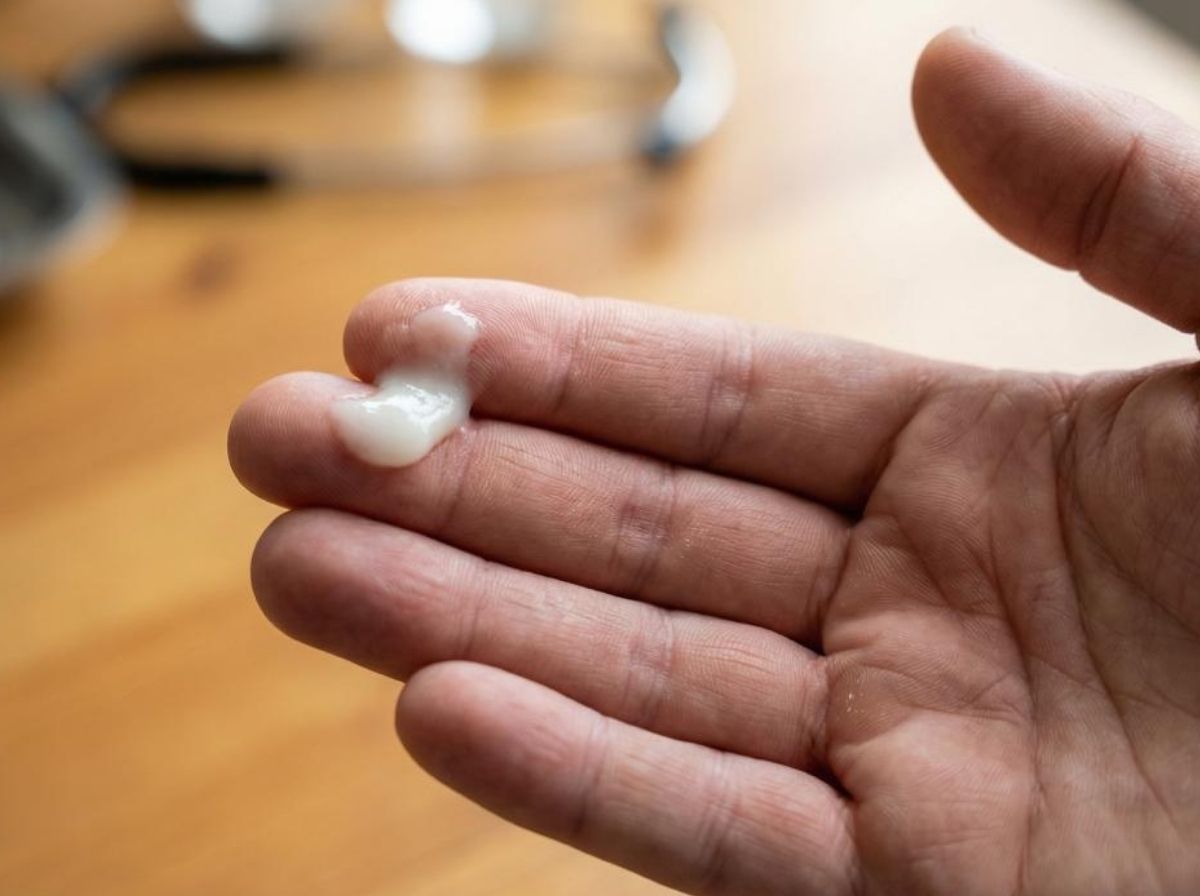
Penile discharge isn't something that comes up a lot in everyday conversation, but it's important to talk about it here because a partner's symptoms can be a helpful sign even if you don't have any symptoms yourself. Any discharge from the penis that isn't normal urination or ejaculation is not normal and needs to be looked into.
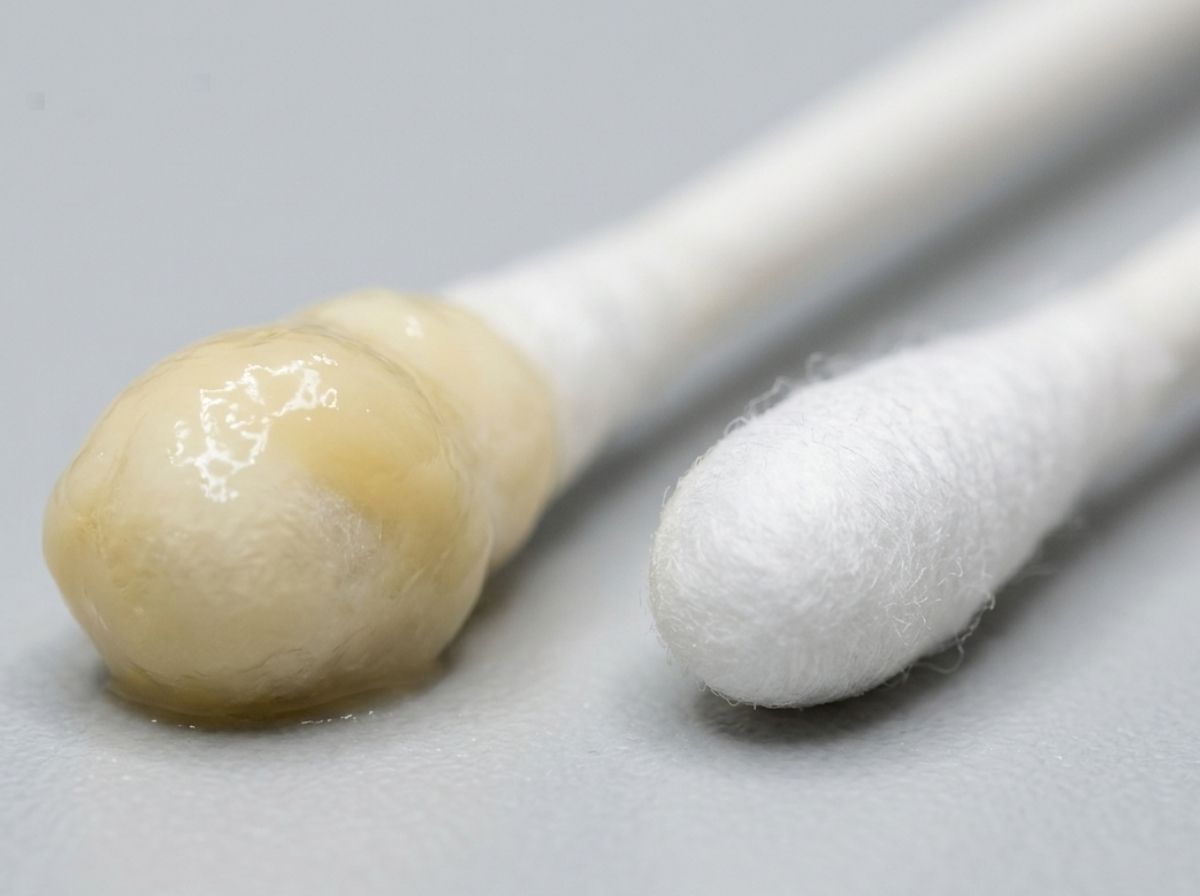
Chlamydia and gonorrhea are the two infections that are most likely to make the penis leak. Chlamydia usually causes a clear or white, watery discharge from the tip of the penis. This is often accompanied by a burning feeling when urinating. Gonorrhea usually causes a thicker, more abundant discharge that is often yellow, white, or greenish and may feel more like pus. Both infections can also affect the urethra, making it hurt and making you have to pee more often. Both infections are often asymptomatic in men, similar to their presentation in women; thus, the absence of discharge does not exclude them.
Men with trichomoniasis usually have mild symptoms, a clear or whitish discharge from the urethra, and mild irritation, or they may not have any symptoms at all. People who have had receptive anal sex can get gonorrhea, chlamydia, or herpes, which can cause clear, yellow, or green fluid to come out of the anus and cause itching or pain. This is clinically important, and more and more people are realizing that this is a good place to get tested, especially since guidelines now include recommendations for extragenital screening for chlamydia and gonorrhea. If you or your partner have noticed any of the changes in discharge that were mentioned above, the fastest and most private way to find out what is going on is to do a quick test at home.
People are also reading: STD Testing Frequency When Dating: How Often Is Actually Necessary?
FAQs
1. Can I have an STD with completely normal discharge?
Yes, and this is one of the most important things to understand about STI screening. The majority of women with chlamydia (around 70%) have no noticeable symptoms, including no change in discharge. Gonorrhea is asymptomatic in up to half of women who have it. Trichomoniasis is asymptomatic in roughly half of cases. Normal discharge does not mean you're clear, it means you don't have symptoms. Regular testing is the only reliable way to know.
2. What color discharge indicates an STD?
Yellow, green, or yellow-green discharge is the most commonly associated with bacterial STIs. Yellow or cloudy discharge is the most typical presentation of chlamydia and gonorrhea. Frothy yellow-green discharge with a strong odor strongly suggests trichomoniasis. Gray or white discharge with a fishy smell is more associated with bacterial vaginosis, which is not an STD but can co-occur with one. No single color definitively diagnoses an STD, testing is required.
3. What does chlamydia discharge smell like?
Chlamydia discharge typically has a mild, abnormal odor, but it may not have a strong or distinctive smell. The more noticeable characteristic is the color change (yellow or cloudy) and increased volume. Foul-smelling discharge is more characteristic of trichomoniasis or bacterial vaginosis. The absence of a strong smell doesn't rule out chlamydia.
4. How soon after exposure does discharge change?
It varies by infection. Chlamydia symptoms, if they appear, typically develop 1 to 3 weeks after exposure. Gonorrhea may cause symptoms within 2 to 5 days. Trichomoniasis symptoms can appear anywhere from 5 to 28 days after exposure. Many infections never produce noticeable symptoms at all, which is why testing at the appropriate window period is more reliable than waiting for symptoms to guide you.
5. Can people confuse BV with an STD?
Yes, and it's very common. Bacterial vaginosis causes gray or white discharge that smells like fish, which is especially strong after sex. People might mistake this for discharge from trichomoniasis or another infection. BV is not an STD, but it can change the vaginal microbiome during sexual activity, and having BV makes you more likely to get some STIs, like HIV. Testing can help a healthcare provider tell the difference between BV and STIs.
6. If I only have discharge and no other symptoms, should I get tested for STDs?
Yes. Changes in discharge, especially if it turns yellow, green, or frothy, are a good reason to get tested, even if you don't have any other symptoms. A lot of STIs only change the discharge and don't cause pain, burning, or other symptoms. If you wait for more symptoms to show up before getting tested, you might let the infection get worse and raise the risk of complications.
7. How soon after having unprotected sex should I get tested for gonorrhea or chlamydia?
Chlamydia can be reliably detected from 14 days after exposure. Gonorrhea requires at least 3 weeks. Testing before these windows can produce an unreliable negative result. If you're experiencing symptoms before the window period has closed, see a healthcare provider rather than relying solely on a home test result.
8. Which at-home test kit is best for discharge-related STD symptoms?
For discharge changes, the infections most likely to be responsible are chlamydia, gonorrhea, and trichomoniasis. The Chlamydia & Gonorrhea 2-in-1 At-Home Rapid Test Kit covers the two most common bacterial causes. For comprehensive female testing, including trichomoniasis and HPV, the Women's 10-in-1 Complete At-Home Rapid STD Test Kit is the most thorough option available.
9. Is it always a sign of an STD when you have green discharge?
Green discharge is a strong sign of an infection, but it doesn't mean you have an STD. Trichomoniasis and gonorrhea are the most common STIs that cause green discharge. In some cases, bacterial vaginosis can also cause a grayish-green discharge. If you have green discharge that won't go away, smells bad, or started after a new sexual contact, you should get tested to find out what's wrong.
10. What should I do if the STD test I took at home comes back positive?
You should take a positive result from a good, rapid STD test very seriously. The next step is to talk to a doctor or nurse, who will do a confirmatory test and talk about treatment options. Most bacterial STIs, like chlamydia, gonorrhea, and trichomoniasis, can be completely cured with treatment. In the meantime, don't have sex or use barrier protection all the time to stop the spread. Your regular partner should also get tested and treated.
Get Answers Without the Wait
Discharge changes can be genuinely unsettling, but the uncertainty is worse than the answer. Most of the infections most likely to cause yellow, green, or unusual discharge are curable, treatable, or highly manageable when caught early. The barrier to finding out has never been lower: at-home rapid testing delivers results in minutes, arrives in discreet packaging, and requires no appointment, no clinic, and no conversation you're not ready to have.
For targeted testing of the infections most commonly associated with discharge symptoms, the Chlamydia & Gonorrhea 2-in-1 At-Home Rapid Test Kit is the most direct option, 98% overall accuracy, results in minutes. For comprehensive female screening that covers trichomoniasis, HPV 16 & 18, herpes, HIV, hepatitis B & C, syphilis, and more, the Women's 10-in-1 Complete At-Home Rapid STD Test Kit covers everything in one session. Browse the full range of female-specific testing options at STD Rapid Test Kits, Female Test Kits.
Testing is the fastest way to stop the guessing game. Your results, your privacy, your peace of mind.
How We Sourced This: Our article was constructed based on current advice from the most prominent public health and medical organizations, and then molded into simple language based on the situations that people actually experience, such as treatment, reinfection by a partner, no-symptom exposure, and the uncomfortable question of whether it "came back." In the background, our pool of research included more diverse public health advice, clinical advice, and medical references, but the following are the most pertinent and useful for readers who want to verify our claims for themselves.
Sources
1. CDC, Sexually Transmitted Infections Surveillance, 2024 (Provisional)
2. American College of Obstetricians and Gynecologists, Chlamydia, Gonorrhea, and Syphilis
3. NCBI Bookshelf / WHO, Vaginal Discharge Syndrome: Guidelines for Management of Symptomatic STIs
4. PMC, Clinical Updates in Sexually Transmitted Infections, 2024
5. Mayo Clinic, Sexually Transmitted Disease (STD) Symptoms
6. Cleveland Clinic, Vaginal Discharge: Causes, Colors & What's Normal
About the Author
Dr. F. David, MD is a board-certified infectious disease specialist focused on STI prevention, diagnosis, and treatment. He writes with a direct, sex-positive, stigma-free approach designed to help readers get clear answers without the panic spiral.
Reviewed by: Rapid STD Test Kits Medical Review Team | Last medically reviewed: April 2025
This article is for informational purposes and does not replace medical advice.


