
Published: September 2025 | Last updated: May 2026 | Editorial review and quality control: Martina N.
Using a condom is one of the smartest things you can do for your sexual health, but it doesn't make you completely immune to sexually transmitted infections. That gap between "protected" and "zero risk" is where most of the confusion, and the anxiety, comes from. The internet tends to swing between extremes: either condoms are perfect, or they're useless. The truth sits right in the middle, and it's a lot more practical than either of those takes.
Yes, you may still need STD testing after sex with a condom because protection reduces exposure to infected fluids but does not fully prevent transmission through skin-to-skin contact, microscopic gaps, or pre-existing infections that were already incubating before the encounter. That means your next step isn't guesswork. It's understanding what kind of risk occurred and when testing will give you a reliable answer.
Key Takeaways
- Condoms are highly effective at reducing fluid-borne STI transmission (HIV, chlamydia, gonorrhea) with consistent correct use, per the CDC, but their protection against skin-to-skin infections like herpes and HPV is meaningful yet incomplete because shedding sites can sit outside the covered area.
- If your encounter involved a new or unknown-status partner, testing at the correct window period (14 days for chlamydia, 6 to 12 weeks for HIV) is the only way to convert post-condom uncertainty into a real answer.
How Much Protection Does a Condom Provide Against STDs?
Condoms work by creating a physical barrier that blocks the exchange of bodily fluids like semen, vaginal secretions, and blood, which is exactly how infections like HIV, chlamydia, and gonorrhea primarily spread. When used correctly from start to finish, this barrier dramatically reduces transmission because the pathogens don't get the direct access they need to infect mucosal tissue. The mechanics are straightforward: fluid-borne pathogens need a delivery route into the body, and the condom interrupts that route at the most critical point of contact.
Things get more complicated with infections that don't just depend on fluids. Viruses like herpes (HSV-1 and HSV-2) and human papillomavirus (HPV), along with bacterial infections like syphilis, can spread through direct skin-to-skin contact. If an infectious area exists outside the part of the body covered by the condom, which is common, transmission can still occur even when the condom never breaks. The biology here isn't dramatic or rare. It just reflects the fact that these pathogens evolved to move through a wider range of surfaces than a condom can cover.
This is why public health guidance consistently describes condoms as "highly effective" rather than "fully protective." According to the CDC's overview on condom effectiveness, correct and consistent use significantly lowers risk, especially for fluid-borne infections, but does not eliminate it entirely. That distinction matters because it directly affects whether testing is still necessary afterward.
The level of protection also shifts depending on the infection. For HIV, chlamydia, and gonorrhea, consistent correct use produces a large reduction in transmission risk because those infections rely on fluid transfer to mucosal surfaces, and the barrier blocks that exchange. For herpes, syphilis, and HPV, the reduction is smaller because a meaningful share of transmission happens through skin areas that a condom doesn't reach, as the CDC's genital herpes fact sheet notes when it describes condom protection as partial for skin-contact infections. Testing covers what condoms can't.
Using a condom may not fully protect you from getting herpes. This is because herpes sores can be on areas not covered by a condom.
Can You Still Get an STD Even If the Condom Didn't Break?
Yes, and this is where a lot of people get tripped up. A condom doesn't have to visibly fail for exposure to happen. Transmission can occur through areas not covered by the condom, including the base of the genitals, surrounding skin, or contact during moments before the condom is put on or after it's removed. Most people mentally log "the condom didn't break" as the final word on the matter. Biologically, it isn't.
There's also the issue of microscopic exposure. Even with correct use, small amounts of infectious material can come into contact with nearby skin or mucosal surfaces during movement. This doesn't mean condoms are unreliable. It means biology doesn't require a dramatic failure event to allow transmission. Infections operate at a microscopic level, and that's where these edge cases live. Imagine someone who used a condom confidently throughout, had no visible issues, and still picked up herpes months later. That scenario plays out more often than most people expect, and it has nothing to do with the condom failing. It has to do with where the virus was and what skin it touched.
Fit and positioning matter more than most people realize. A condom that slips, rolls, or isn't used from the very beginning of contact can leave brief windows where transmission is possible. None of this cancels out the protection condoms provide. The condom did its job; the question is whether every possible exposure route was covered by it, and in many real-world encounters, the honest answer is: not completely.
There's one more layer worth naming: the partner's infection status at the time of the encounter. Even if every condom step was executed perfectly, transmission risk ultimately depends on whether an active infection was present and shedding. An infection that was newly acquired or in an early stage can be highly transmissible while producing zero visible signs. Testing exists precisely because a newly acquired infection can shed and spread without visible signs.

What Actually Determines Your STD Risk After Protected Sex?
Your actual risk comes down to a combination of biology and exposure, not just whether a condom was used. The kind of sexual activity matters a great deal. Vaginal or anal sex involves direct contact between mucous membranes, which are the body's most permeable tissues and the easiest entry points for most pathogens. Oral sex carries a different profile depending on the infection. Some spread efficiently through oral-to-genital contact, others barely register that route. Treating all sexual activity as equivalent when estimating risk is one of the most common mistakes people make.
Another critical factor is whether the partner had an active infection at the time of the encounter. Many STDs are transmissible even in the complete absence of visible symptoms. The pathogen is still replicating, still present on mucosal surfaces or skin, and still capable of being passed on. Herpes can shed from the skin without any sores present, a process called asymptomatic shedding, and early syphilis lesions can be small, painless, and located somewhere neither partner noticed. According to the CDC's genital herpes fact sheet (cited above), most people with HSV don't know they have it, and viral shedding happens even when no lesions are visible.
Finally, there's the concept of exposure dose, the amount of pathogen that reaches susceptible tissue. Condoms reduce this significantly, which is why they're so effective overall. A small amount of pathogen can still be enough for transmission depending on the infection and the conditions present at the time. HIV, for example, requires access to bloodstream-facing tissue, and condoms block that pathway well. Herpes, by contrast, can transmit through a single area of unprotected skin contact, which is why the dose concept plays out differently depending on what you're dealing with.
The useful way to think about this is not to ask "did I use a condom?" as if that single variable settles the question. The more practical questions are: what type of contact occurred, what is realistically known about the partner's status, and which infections are biologically consistent with that combination of factors?
stdrapidtestkits.com publishes this article and sells the rapid lateral-flow at-home test kits described below. Product recommendations match the infections most relevant to a post-condom exposure, not commercial benefit.
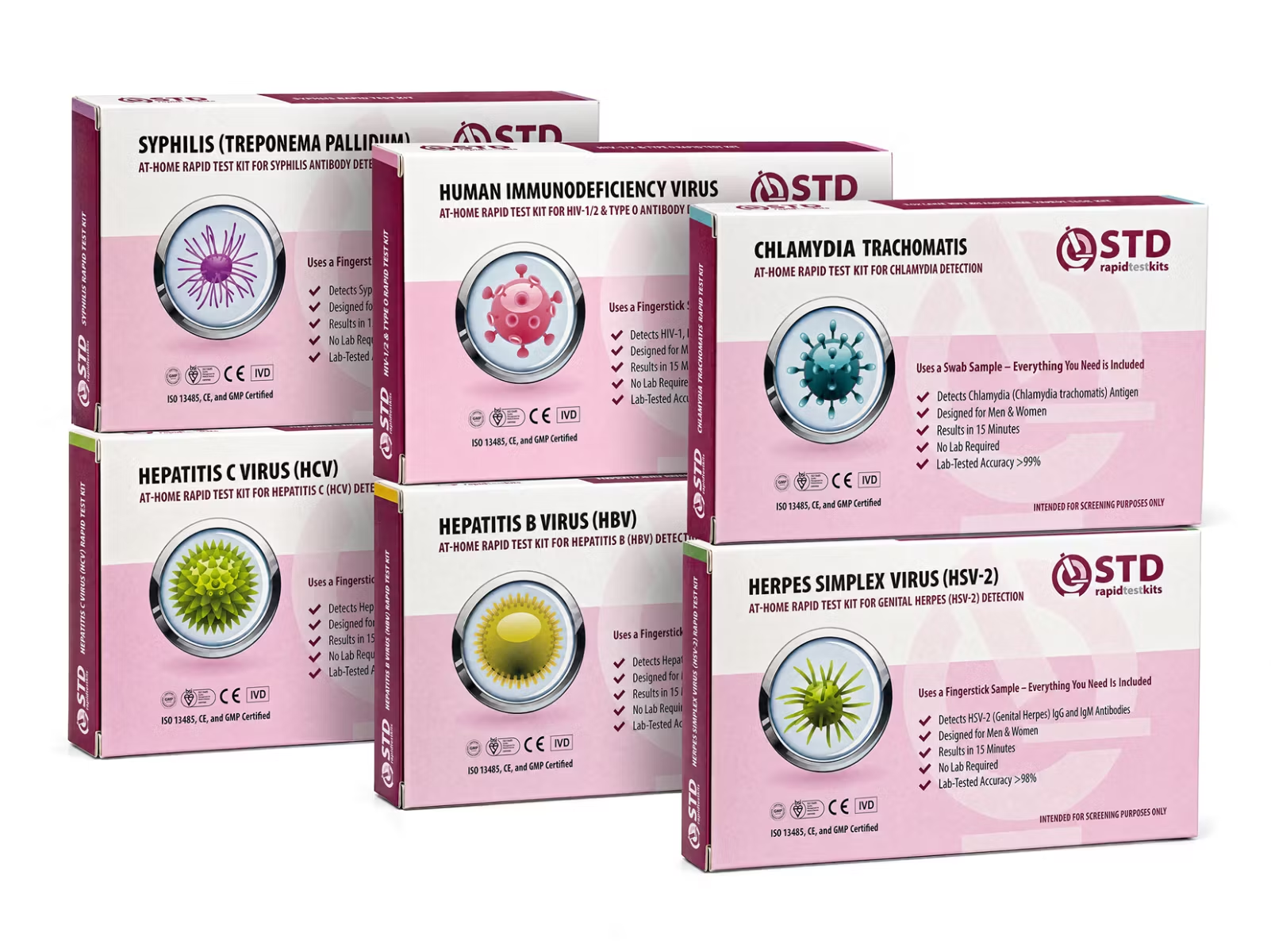
When Should You Get Tested After Sex With a Condom?
This is where most people either test too early and get a misleading result, or wait without knowing what timeline actually matters. STD tests don't detect infections immediately after exposure because the body needs time to reach detectable levels of bacteria or antibodies. That gap is called the window period, and it's the reason timing matters more than urgency.
For bacterial infections like chlamydia and gonorrhea, testing is done using a NAAT (nucleic acid amplification test), which detects the genetic material of the bacteria. These infections become detectable relatively quickly once they begin replicating in the body. Chlamydia is generally detectable from 14 days after exposure, and gonorrhea from about 3 weeks after exposure. Testing before these points increases the chance of a false negative because the bacterial load hasn't reached detectable levels yet.
The time it takes to find infections like HIV, syphilis, herpes, and hepatitis through blood tests depends on your immune system producing markers that the assay can identify. For HIV, an initial blood-antibody test at 6 weeks gives an early indicator, with a retest at 12 weeks to confirm. Syphilis, HSV-1 and HSV-2, and hepatitis B are typically testable from about 6 weeks after exposure. Hepatitis C usually needs 8 to 11 weeks. These timelines reflect how long it takes for antibodies or viral markers to reach measurable levels in the bloodstream, and the exact window varies by assay. For infection-specific guidance, the CDC's STI fact sheets and the NHS overview of STIs describe typical detection thresholds for each infection.
A negative result only means "no infection detected at the time of testing." If the test is taken before the correct window, the infection can still be present but undetectable. That's a false negative. Correct timing is the difference between clarity and false reassurance. A positive result means the infection has been detected and now needs confirmation and treatment. Most STDs can be treated or controlled, and catching them early lowers the risk of complications and onward transmission.
If your first test falls inside a window period, plan for a follow-up test once the full window has passed. Testing HIV at 6 weeks and getting a negative result reflects early detection markers; retesting at 12 weeks confirms whether the immune response has fully developed. And if the condom did break or slip, treat that exposure the same as unprotected sex and test on the same detection windows.
| Infection | When to Test |
|---|---|
| Chlamydia (NAAT) | From 14 days after exposure |
| Gonorrhea (NAAT) | From 3 weeks after exposure |
| Syphilis (blood test) | From 6 weeks after exposure |
| HIV (blood test) | First indicator at 6 weeks, confirmatory retest at 12 weeks |
| Herpes HSV-1 and HSV-2 (blood test) | From 6 weeks after exposure |
| Hepatitis B (blood test) | From 6 weeks after exposure |
| Hepatitis C (blood test) | From 8 to 11 weeks after exposure |
What If You Have No Symptoms, Should You Still Test?
Yes, because most STDs don't show any signs in the early stages, even when the infection is still active and can be passed on. This happens because many pathogens first settle in tissue without causing a strong inflammatory response, which means there is no pain, no discharge, and no clear warning signs. The absence of symptoms is genuinely misleading. It feels like a green light when biologically it's closer to a blank screen.
Chlamydia and gonorrhea are classic examples. They can infect the urethra, cervix, or throat and continue replicating without causing immediate irritation. By the time symptoms appear, if they appear at all, the infection has already been present long enough to be detectable on a test and potentially transmitted to someone else. Picture someone going through their week completely normally, no burning, no discharge, no discomfort, while quietly carrying an infection that a test would have flagged two weeks earlier. That scenario is the typical one, not the edge case.
This is also true for viral infections. HIV does not produce consistent early symptoms tied to detection timing, and herpes can remain unnoticed if outbreaks are mild or occur internally. According to the World Health Organization overview on STIs, the majority of sexually transmitted infections are asymptomatic at some stage, which is exactly why testing decisions should be based on exposure timing, not whether you notice anything unusual.
The practical takeaway is simple: feeling fine is not a test result. Feeling fine means your body hasn't produced a visible reaction yet, which could mean no infection, or it could mean an infection that hasn't triggered symptoms. The only way to know which one is true is to test at the right time.

Which STDs Are Most Likely After Protected Sex?
Not all STDs behave the same way when a condom is involved. The infections most effectively reduced by condoms are those transmitted through fluids, because the barrier blocks direct exchange. That's why HIV risk drops significantly with correct condom use. The virus needs access to bloodstream-facing tissue through infected fluids, and condoms interrupt that pathway. Cutting off that pathway is why condom promotion has been central to HIV prevention programs for decades.
Chlamydia and gonorrhea also fall into this category. Because they infect mucosal surfaces like the urethra, cervix, or rectum, preventing fluid transfer dramatically lowers transmission. These bacteria need direct mucosal-to-mucosal or fluid-to-mucosal contact to establish infection, and a well-used condom removes most of that opportunity. However, if exposure occurs outside the covered area or during brief contact before full condom use, infection is still biologically possible, just less likely. The math still favors you; it just doesn't go all the way to zero.
After protected sex, the infections that remain most relevant are those that spread through skin-to-skin contact. Herpes (HSV-1 and HSV-2), syphilis, and HPV can be transmitted from regions not protected by a condom. A herpes lesion doesn't need to be large or visible to shed virus. In fact, most herpes transmission happens during periods when no outbreak is present at all. Syphilis sores can be small, painless, and located in a spot neither person noticed during the encounter. HPV can transmit through ordinary skin contact without any symptoms whatsoever.
Skin-contact infections to keep on your testing radar
- Herpes (HSV-1 and HSV-2): viral shedding can happen from skin areas a condom doesn't cover, even with no visible lesion present.
- Syphilis: early-stage chancres can be small, painless, and located outside the covered area, which makes them easy to miss during the encounter.
- HPV: transmits through ordinary genital skin contact, often with no symptoms on either partner.
So Do You Actually Need an STD Test After Using a Condom?
In many cases, yes. Condoms reduce risk considerably but leave some transmission routes uncovered, which is what testing at the correct window is designed to address. If sexual contact occurred with a new or untested partner, testing based on the correct window periods is the only way to confirm whether any exposure led to infection. "We used a condom" is useful information. It is not a complete answer to the question of whether transmission occurred.
If the condom was used correctly from start to finish, your overall risk is lower, especially for infections transmitted through fluids. The only way to convert that lower-risk situation into a confirmed answer is testing at the correct window. Think about sitting with that uncertainty for weeks, checking the body, second-guessing every minor sensation, running probability calculations at midnight. Testing ends that loop. Not doing anything just extends it indefinitely.
The case for testing is even stronger when you weigh what you gain versus what you risk. The downside of testing unnecessarily is a few minutes of your time and a small amount of effort. The downside of not testing when you should have is an undetected infection that continues developing, potentially causes complications, and may be passed on to someone else. Testing costs almost nothing. Not testing when you needed to can cost a lot more.
The smartest move after protected sex is not to panic-test the next morning and not to do nothing for six weeks while your brain writes horror-movie scripts. It's to match your next step to the infection biology. First, identify what kind of sex happened (vaginal, anal, or oral), because that changes which infections are most relevant. Then count forward from the date of exposure and use the correct testing window. The table below maps the most common situations to what they usually mean for testing.
| Situation | What it usually means for testing |
|---|---|
| Condom used from start to finish during vaginal or anal sex, no slipping, no uncovered contact | Overall risk is lower, especially for HIV, chlamydia, and gonorrhea. Testing may still be appropriate based on partner status and the correct window period. |
| Condom stayed on, but there was genital skin contact outside the covered area | Herpes, syphilis, and HPV remain relevant because skin-to-skin transmission is still biologically possible. |
| Brief contact happened before the condom was put on or after it was removed | That contact still counts as exposure; test according to the timeline for the infections most associated with the type of sex involved. |
| Oral sex happened with partial barrier use or no barrier during part of the encounter | Throat and oral exposure can still matter for gonorrhea, chlamydia, herpes, and syphilis depending on the contact. |
Take the Next Step, Get Clear Answers
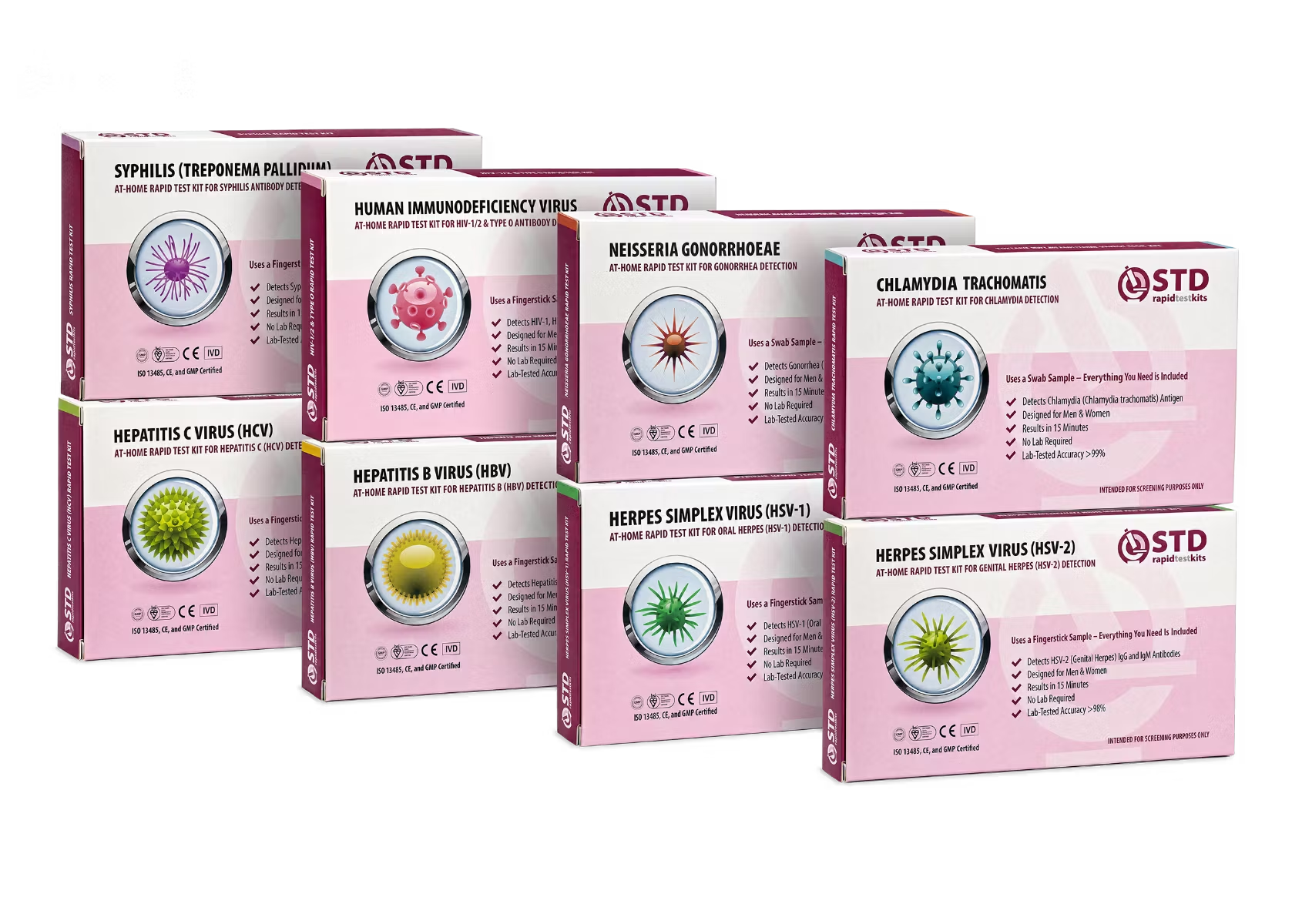
If you've had sex with a condom and still have that lingering "what if," testing at the correct window is the fastest way to resolve it. Use the STD Rapid Test Kits homepage to browse the full range of single-infection and combination panels. Your results stay private, and the process is designed to give you answers without the waiting room.
- Wait until you're past the correct detection window for the infections most relevant to the type of sex you had.
- Pick a single-infection kit or a combination panel that matches your exposure profile.
- If your first test fell inside a window period (especially HIV at 6 weeks), schedule a confirmatory retest at the full window.
FAQs
- If I used a condom the entire time, am I in the clear?
- You're in a much better position, yes, but not automatically in the clear. Condoms block fluids very effectively, which is huge for infections like HIV, chlamydia, and gonorrhea. But anything that spreads through skin contact, like herpes, syphilis, or HPV, can still slip through if the exposed area wasn't covered.
- What matters more, the condom or the partner's status?
- Both. The condom lowers your exposure, but your actual risk still depends on whether your partner had an active infection at the time. No active infection means no transmission. Since most STDs don't show obvious signs early on, you usually don't have that information, which is why testing exists.
- I feel completely fine. Doesn't that mean I'm good?
- Not necessarily. A lot of STDs start quietly. The bacteria or virus can be present and replicating without triggering pain, discharge, or anything noticeable. Feeling normal just means your body hasn't reacted yet, not that nothing happened.
- What's the biggest mistake people make after protected sex?
- Testing too early. It's incredibly common. You leave the encounter, feel unsure, test right away, get a negative result, and assume you're done. But if it's before the detection window, that result doesn't actually rule anything out.
- When does a test actually mean something?
- At minimum, wait two weeks for bacterial infections like chlamydia and roughly six weeks for blood-based tests like HIV, syphilis, and herpes. For HIV specifically, a 6-week negative warrants a 12-week retest to confirm. Before those points, a negative result can miss an active infection.
- What STDs should I realistically be thinking about after protected sex?
- Herpes, HPV, and syphilis stay on the table because they spread through skin contact. The fluid-based ones (HIV, chlamydia, gonorrhea) drop sharply in probability, but they're not mathematically zero, especially if there was any brief unprotected contact.
- If something did transmit, would I know right away?
- No, and that's one of the most frustrating parts. There's always a biological delay between exposure and detection. Even infections that eventually cause symptoms don't announce themselves immediately. That delay is exactly why testing windows exist.
- Do I really need to retest if my first result is negative?
- If your first test was done before the full window period, yes. Think of the first test as an early snapshot. The follow-up test confirms whether your body has reached detectable levels. It's not overkill, it's just how detection works.
Our article was constructed based on current advice from the most prominent public health and medical organizations, and then molded into simple language based on the situations that people actually experience, such as treatment, reinfection by a partner, no-symptom exposure, and the uncomfortable question of whether something "came back." In the background, our pool of research included more diverse public health advice, clinical advice, and medical references, but the following are the most pertinent and useful for readers who want to verify our claims for themselves.
- U.S. Centers for Disease Control and Prevention. Condom Effectiveness overview, including qualitative HIV and STD risk reduction with consistent correct use and the distinction between fluid-borne and skin-contact infections.
- U.S. Centers for Disease Control and Prevention. STI prevention guidance and overview.
- World Health Organization. Sexually Transmitted Infections fact sheet, including the asymptomatic nature of most STIs.
- U.K. National Health Service. Sexually Transmitted Infections (STIs) overview, including testing guidance after potential exposure and per-infection detection considerations.
- U.S. Centers for Disease Control and Prevention. About STIs landing page, linking to per-infection fact sheets with symptom, testing, and incubation information.
- U.S. Centers for Disease Control and Prevention. Genital Herpes fact sheet, including transmission via asymptomatic shedding and skin-to-skin contact, and partial protection from condoms.
