
Published: December 2025 | Last updated: April 2026 | Editorial review and quality control: Martina N.
Condoms have been the cornerstone of STI prevention for more than a century, and the public-health evidence behind them is solid. The U.S. Centers for Disease Control and Prevention summarizes decades of research with a simple line: latex condoms, when used consistently and correctly, are highly effective at preventing the sexual transmission of HIV and significantly reduce the risk of many other infections (CDC, Condom Effectiveness).
The word that does most of the work in that sentence is significantly. Condoms reduce risk; they don't erase it. The size of the reduction depends on the infection, the part of the body involved, and whether the condom is used correctly every time. This article walks through what condoms block well, what they block partially, and how to think about testing when you've used protection but still want a clean answer.
Can you still get an STD while using a condom?
Yes, but the risk is much lower than with no protection. Condoms are most protective against fluid-borne infections (HIV, chlamydia, gonorrhea, trichomoniasis, hepatitis B), and the CDC describes them as highly effective at preventing HIV transmission when used consistently and correctly. Protection is partial against skin-to-skin infections (herpes, HPV, and syphilis when the chancre sits outside the covered area), because condoms don't cover all of the genital skin. Pairing condoms with vaccination (HPV, hepatitis B), regular testing, and PrEP where appropriate closes most of the remaining gap.
Key Takeaways
- Latex and polyurethane condoms used consistently and correctly are highly effective at preventing HIV transmission per the CDC, and substantially reduce risk for chlamydia, gonorrhea, and trichomoniasis.
- Protection against herpes, HPV, and syphilis is partial because these infections spread through skin contact in areas a condom doesn't always cover.
How condoms actually protect against STIs
A latex or synthetic condom is a continuous physical barrier between the penis and the partner's mucosa. Laboratory studies have shown that the latex film is impermeable to particles as small as the smallest sexually transmitted viruses, including HIV, hepatitis B, and herpes simplex (CDC). Sperm, bacteria, and viral particles all stay on the inside; the partner's skin and mucous membranes stay clean of contact with infected fluid.
That barrier mechanism is why condoms work so well for infections that ride on semen, pre-ejaculate, vaginal fluids, or rectal secretions. If the pathogen is in the fluid, and the fluid never reaches the partner, transmission is blocked. The same principle is why lambskin (natural-membrane) condoms do not protect against STIs: their pores are large enough to let viruses through, even though they block sperm.
The U.S. Food and Drug Administration explicitly labels natural-membrane (lambskin) condoms as not recommended for STI prevention. Their natural pores allow viruses to pass even though sperm cannot. If STI protection matters, use latex, polyurethane, or polyisoprene.
Fluid-borne vs skin-to-skin: why some STIs are easier to block
Sexually transmitted infections fall into two broad transmission categories, and condoms perform very differently against each.
Fluid-borne infections live in body fluids and need fluid-to-mucosa contact to transmit. The list includes HIV, chlamydia, gonorrhea, trichomoniasis, and hepatitis B. For these, a condom that stays intact for the whole sexual contact is doing exactly what it was designed for: stopping fluid from reaching the partner. Real-world risk reduction is high, though never 100%, because condoms can break, slip, or be applied late.
Skin-to-skin infections spread through direct contact with infected skin or mucous membranes, often during periods when the infected partner has no visible symptoms. Genital herpes (HSV-1 and HSV-2), human papillomavirus (HPV), and the chancre stage of syphilis all behave this way. Some of the infectious skin lies in areas a condom does cover (the shaft of the penis, the vaginal walls during intercourse). But other infectious skin sits in areas a condom does not cover: the scrotum, the labia, the perineum, the upper inner thigh, the pubic area. A condom worn perfectly still leaves all of those surfaces exposed.
The CDC's herpes information page is direct about this: not all herpes sores occur in areas a condom can cover, and the skin can shed the virus from areas without a visible sore, so condoms may not fully protect against herpes (CDC, Genital Herpes). The same logic applies to HPV and to a syphilis chancre that develops on the scrotum or labia.
| Infection | Primary transmission route | Condom protection level |
|---|---|---|
| HIV | Body fluids (semen, vaginal, rectal, blood) | Highly effective with consistent and correct use, per CDC. |
| Chlamydia | Body fluids (urethral, cervical, rectal) | Substantial reduction with consistent use. Risk falls sharply but is not zero. |
| Gonorrhea | Body fluids (urethral, cervical, rectal, pharyngeal) | Substantial reduction with consistent use. Pharyngeal exposure during oral sex needs separate protection. |
| Trichomoniasis | Vaginal and urethral fluids | Substantial reduction with consistent use. |
| Hepatitis B | Body fluids and blood | High reduction. Vaccination remains the primary defense. |
| Syphilis | Skin contact at chancre site, plus body fluids | Partial (no precise estimate available; chancre location is the dominant variable). |
| Genital herpes (HSV-1, HSV-2) | Skin-to-skin contact, including asymptomatic shedding | Partial. Roughly 30 to 50% lower acquisition with consistent use, per published prospective cohort studies; not eliminated. |
| HPV | Skin-to-skin contact across the genital area | Reduces but does not eliminate risk. Vaccination is the primary defense. |
Real-world effectiveness numbers
The single best-studied condom outcome is HIV protection. The CDC's condom effectiveness program states that latex condoms used consistently and correctly are highly effective at preventing the sexual transmission of HIV (CDC, Condom Effectiveness). Cohort studies of HIV-discordant couples and analyses of receptive anal sex among men who have sex with men consistently show large risk reductions when condoms are used for every act, though the precise magnitude varies by study design and reported adherence.
For chlamydia and gonorrhea, observational studies consistently show large risk reductions among people who report consistent condom use, although precise numerical estimates vary because participants self-report frequency of use. The CDC's condom effectiveness program states that latex condoms substantially reduce, but do not eliminate, the risk of acquiring or transmitting bacterial STIs including chlamydia and gonorrhea (CDC, Condom Effectiveness).
For herpes, published prospective cohort studies estimate that consistent condom use reduces the risk of HSV-2 acquisition by about 30 to 50% compared with never using condoms. The protection is real but partial, because herpes can shed from skin a condom doesn't cover. For HPV, the evidence is weaker but trends in the same direction: condoms reduce HPV acquisition, but vaccination is the dominant prevention tool. The CDC recommends routine HPV vaccination for adolescents and young adults, with current age-specific guidance available on the CDC's HPV vaccine page (CDC, HPV).
This article is published by stdrapidtestkits.com, which sells at-home STI testing kits. We recommend products based on fit-for-purpose for the reader's concern, not commercial benefit.
When condoms fail (and why)
The protection numbers above describe condoms used consistently and correctly. In practice, three things drag real-world effectiveness below the laboratory ceiling: inconsistent use across all sexual acts, late application or early removal, and breakage or slippage. The list below summarizes each.
Three reasons real-world effectiveness drops
- Inconsistent use. Condoms only protect during the acts they cover. Pharyngeal gonorrhea picked up during unprotected oral sex is a common example: the rest of the encounter was protected, but the throat was not.
- Late application or early removal. Pre-ejaculate (the clear fluid released before ejaculation) can contain pathogens. A condom applied after genital contact has begun, or removed before separation, leaves a window of mucosal exposure.
- Breakage and slippage. Population estimates put the breakage rate at roughly 2% and the slippage rate at roughly 1% of uses. Most breakage is linked to oil-based lubricants weakening latex, expired or heat-damaged stock, incorrect sizing, or insufficient lubrication.
How to use a condom correctly
Most condom failures trace back to predictable application errors. The U.K. National Health Service publishes a step-by-step guide that mirrors CDC guidance (NHS, Male Condoms). The essentials:
- Check the expiration date and the wrapper. A condom from a wallet that has been there for two years, or from a glove compartment that hits 95 degrees in summer, has likely lost integrity.
- Open the wrapper carefully with your fingers. Teeth, scissors, and fingernails all create micro-tears.
- Put the condom on before any genital contact, not just before penetration. Pre-ejaculate exposure happens during external contact, too.
- Pinch the reservoir tip (the small bubble at the end) before rolling the condom on. This leaves space for ejaculate and prevents pressure-driven breakage.
- Roll the condom all the way down to the base of the erect penis. Half-rolled condoms slip.
- Use water-based or silicone-based lubricant. Oil-based lubricants (petroleum jelly, baby oil, lotion, coconut oil) degrade latex within minutes. Polyurethane and polyisoprene condoms tolerate a wider range of lubes; check the package.
- After ejaculation, hold the rim of the condom against the base while withdrawing. Withdraw before the erection fades to prevent the condom slipping off.
- Use a new condom for every act of sex, including switching between vaginal and anal sex within the same encounter.
If a condom feels loose, breaks during use, or comes off inside the partner, treat it as an unprotected exposure for testing purposes (more on that below).
Internal condoms and dental dams
The external condom worn on a penis is the most common barrier method, but it is not the only one. Two other tools have a place in the prevention toolkit.
Internal condoms (sometimes called female condoms or FC2) are pouches with flexible rings at each end, inserted into the vagina or anus before sex. They can be inserted up to several hours in advance, and they cover more of the external genital skin than an external condom (the outer ring sits flat against the vulva or perineum). For couples where an external condom is not workable, the internal condom provides comparable STI protection. The CDC includes them in its list of effective barrier methods.
Dental dams are thin squares of latex placed over the vulva or anus during oral sex. They reduce the risk of pharyngeal gonorrhea, syphilis, herpes, and HPV transmission during oral contact. A flat-cut piece of an external condom, or a non-lubricated condom split lengthwise, can substitute when commercial dental dams aren't available. Dental dams are the only barrier that addresses oral-sex transmission risk; an external condom does nothing for cunnilingus or rimming.
Internal condom: vaginal or anal sex. Insertable up to several hours in advance. Covers more external genital skin than an external condom.
Dental dam: oral sex on a vulva or anus. Improvise with a non-lubricated condom cut open lengthwise if a commercial dental dam isn't on hand.
External condom: vaginal, anal, or oral sex on a penis. Does nothing for cunnilingus or rimming.
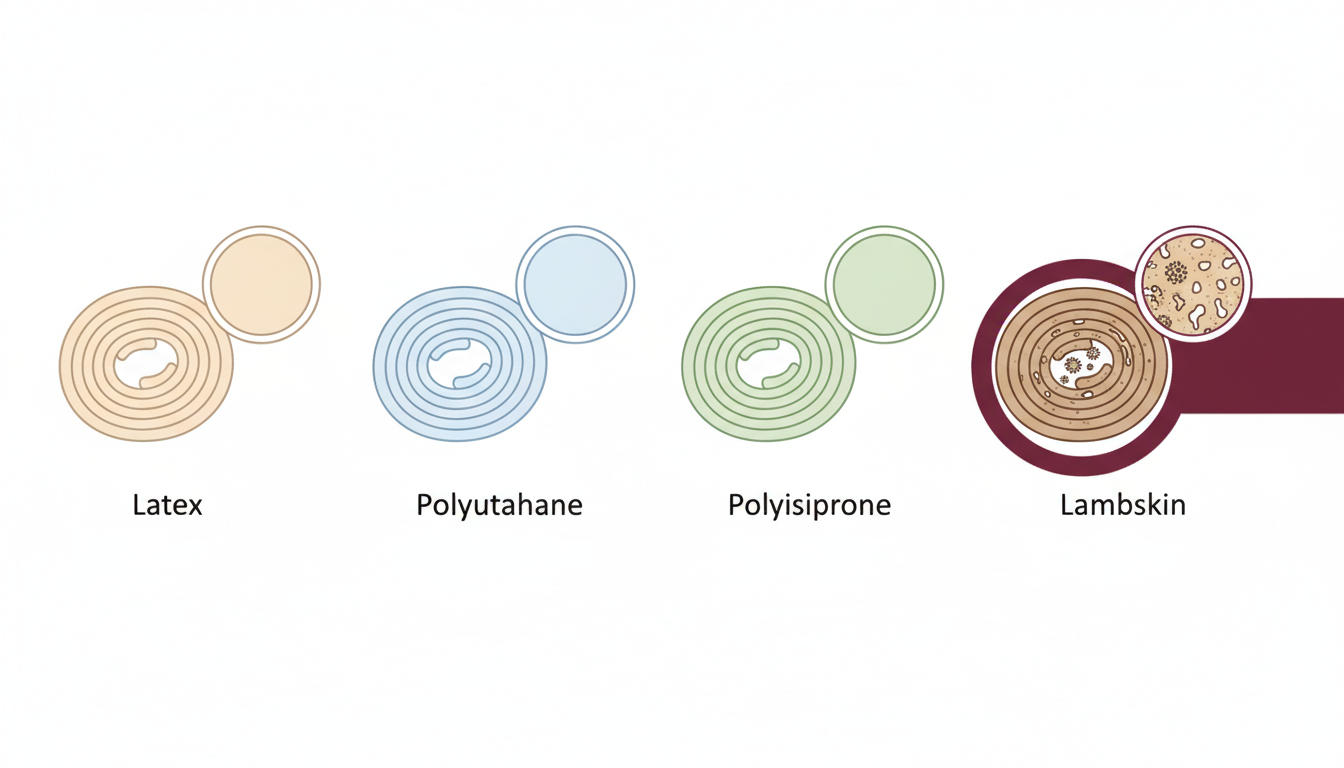
Material matters: latex, polyurethane, polyisoprene, lambskin
Not all condoms are equal for STI prevention. The material drives both the protection profile and the lubricant compatibility.
Latex condoms are the most studied and the gold standard for STI protection. They are impermeable to viruses and bacteria, well-fitting for most users, and inexpensive. The catch is latex allergy, which affects roughly 1 to 6% of the general population, plus the strict requirement for water- or silicone-based lubricant only.
Polyurethane condoms are thinner, conduct heat better, and work for users with latex allergy. Laboratory data support their effectiveness against STIs; one trade-off is a slightly higher reported breakage rate than latex in some studies.
Polyisoprene condoms are a synthetic latex-free alternative that feels closer to natural latex. They are FDA-cleared for STI prevention. Like latex, they are not compatible with oil-based lubricants.
Lambskin (natural-membrane) condoms are the historical odd one out. They prevent pregnancy by blocking sperm, but their natural pores allow viruses to pass. The FDA and CDC both state that lambskin condoms should not be relied on for STI prevention. If a partner brings out a natural-skin condom and STI protection is the goal, swap to latex or polyisoprene.
What to do if a condom breaks or slips
The rule of thumb after a condom failure is to act as if no protection was used and follow the standard exposure-management steps.
For HIV exposure within the last 72 hours: post-exposure prophylaxis (PEP) is a 28-day course of antiretroviral medication that, when started promptly, can substantially reduce the risk of HIV seroconversion. PEP is most effective when started within 24 hours and loses effectiveness as the window grows. Sexual-health clinics, urgent care, and emergency departments can prescribe it. Time matters more than transport: do not wait until Monday if a condom failed on Saturday night.
For pregnancy concerns: emergency contraception (the morning-after pill) is most effective within 24 hours and remains effective up to 72 hours for levonorgestrel and up to 120 hours for ulipristal. Copper IUDs can be inserted up to five days after exposure and are the most effective option.
For routine STI testing: testing windows differ by infection. Chlamydia and gonorrhea become detectable within roughly 1 to 2 weeks after exposure. HIV antibody tests reach reliable sensitivity by about 6 to 12 weeks; fourth-generation antigen-antibody tests close that gap to roughly 3 to 4 weeks. Syphilis testing is most reliable from about 6 weeks. HSV-2 antibody testing reaches highest sensitivity by 6 to 12 weeks for most assays, with some less-sensitive assays requiring up to 16 weeks for full seroconversion (CDC, Genital Herpes). Plan a single testing date that covers the most concerning infection, and re-test if a result is negative inside the window.
Time-sensitive steps after a condom failure
- Within 72 hours: get to a clinic, urgent care, or emergency department for HIV post-exposure prophylaxis (PEP). PEP is most effective when started within 24 hours and loses effectiveness as the window grows.
- Within 72 to 120 hours: take emergency contraception if pregnancy is a concern. Levonorgestrel works up to 72 hours; ulipristal up to 120 hours; a copper IUD up to 5 days and is the most effective option.
- 1 to 12 weeks out: schedule STI testing on a date that covers the most concerning infection. Chlamydia and gonorrhea: 1 to 2 weeks. Fourth-generation HIV: 3 to 4 weeks. Syphilis: 6 weeks. HSV-2 antibodies: 6 to 12 weeks for most assays.
Combining condoms with other prevention tools
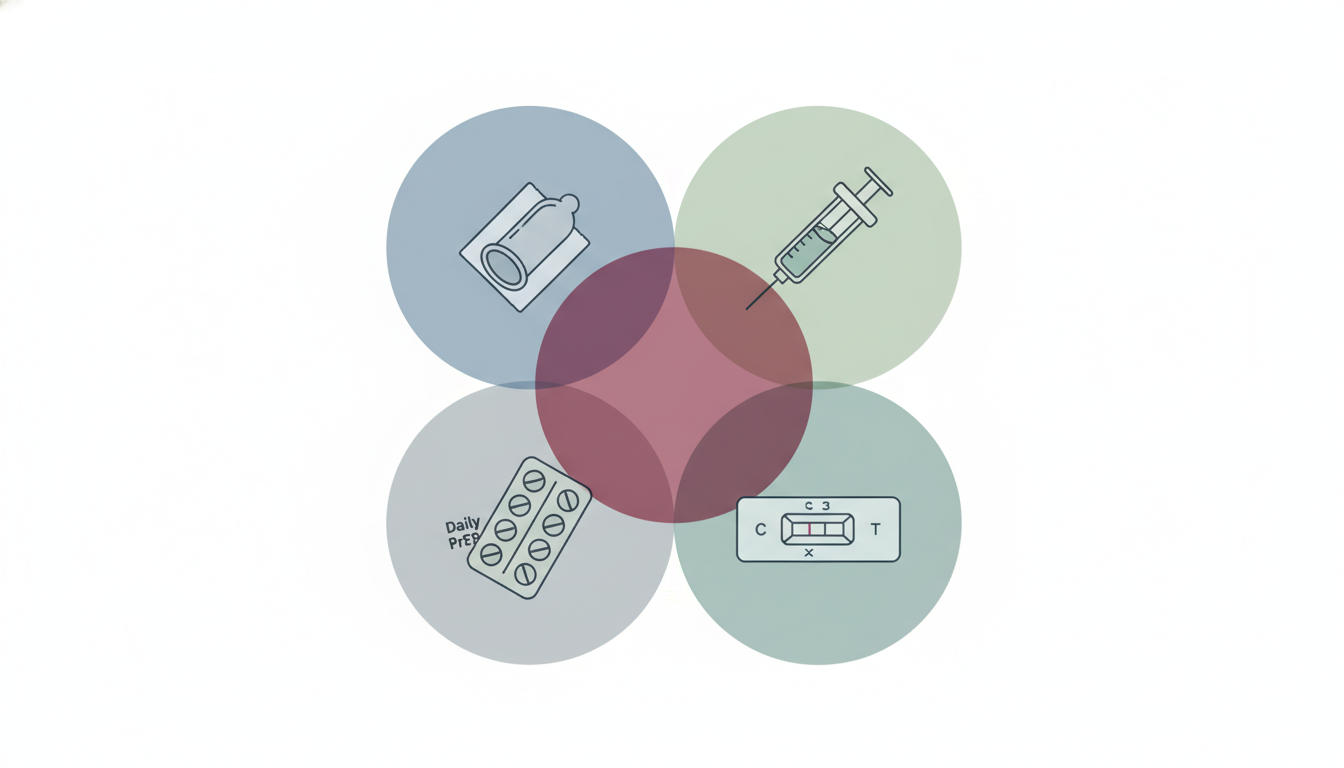
Condoms work best as one layer in a multi-layer prevention strategy. The other layers fill in the gaps that condoms can't cover.
Vaccination. The HPV vaccine prevents the high-risk HPV strains responsible for almost all cervical cancer and most anal, oropharyngeal, and other genital cancers. The hepatitis B vaccine prevents an infection condoms only partially block, and is recommended for all unvaccinated adults under the 2022 ACIP guidance. Both vaccines do work that condoms structurally cannot do.
Pre-exposure prophylaxis (PrEP). Daily oral PrEP (tenofovir-based) is described by the CDC as highly effective at preventing HIV when taken consistently among people at risk. Long-acting injectable cabotegravir is an alternative for those who cannot or prefer not to take a daily pill. PrEP plus condoms covers both HIV and the other infections condoms address.
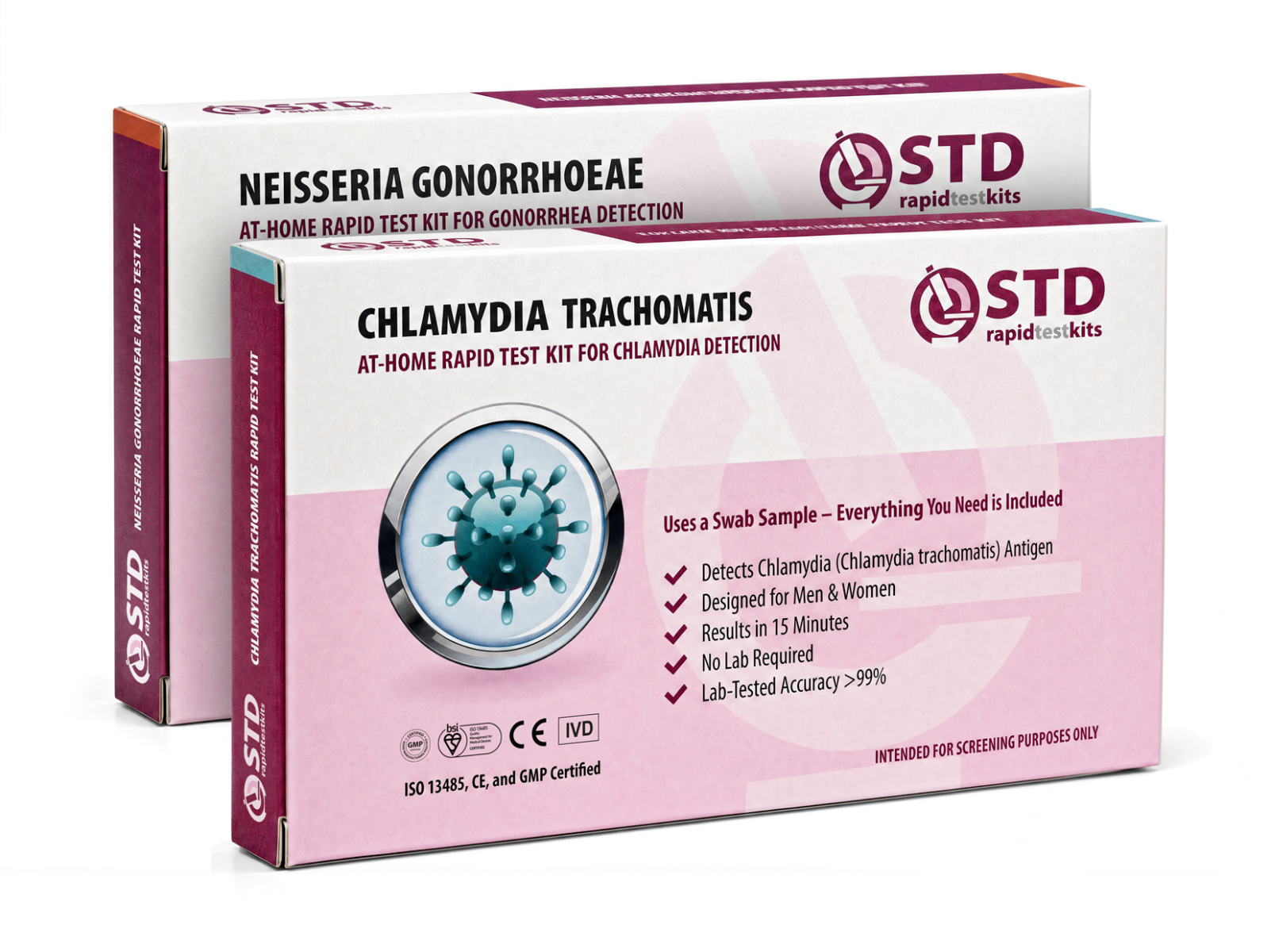
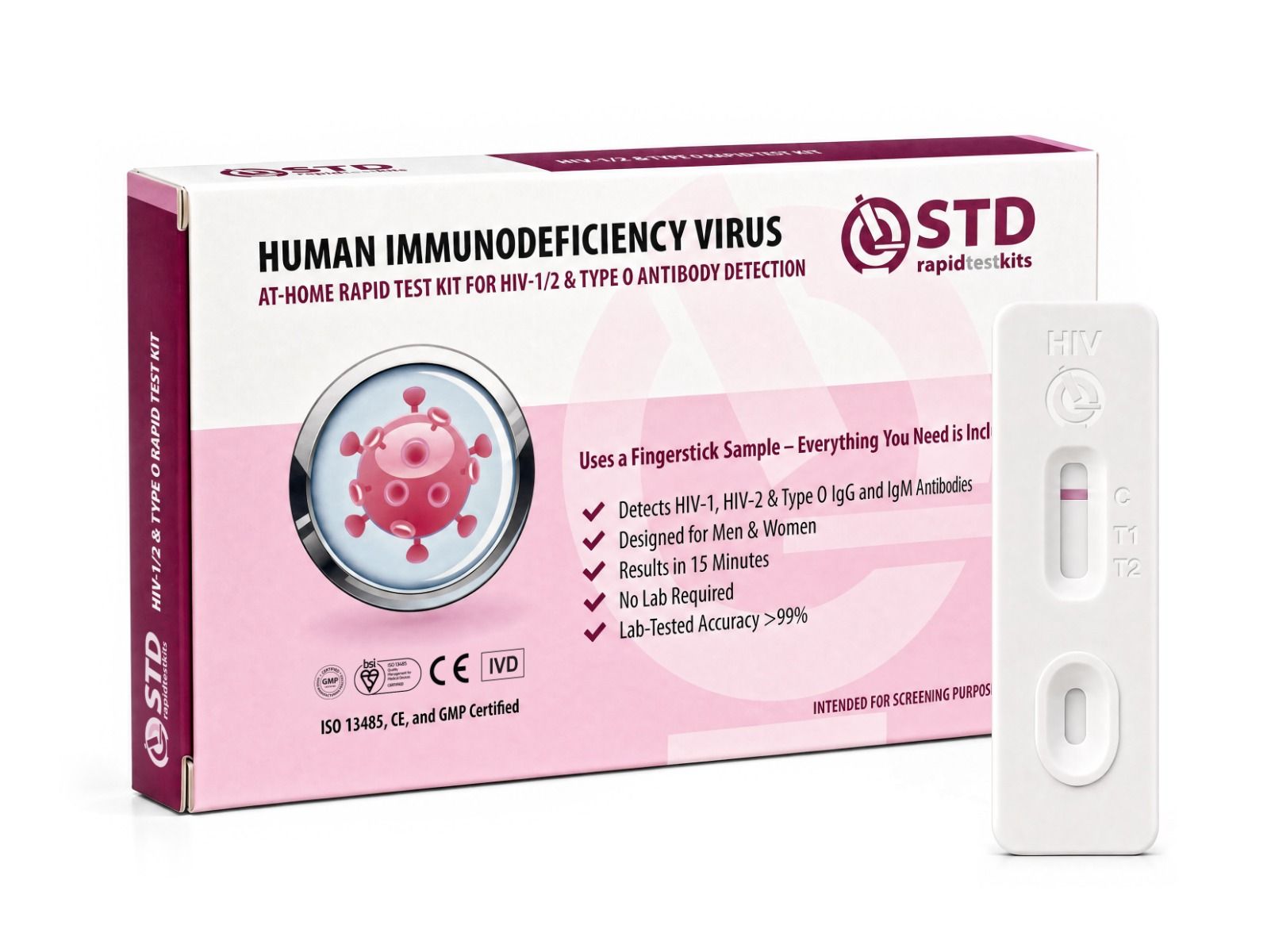
Regular testing. The CDC recommends annual STI screening for all sexually active women under 25 and for men who have sex with men, with more frequent testing for higher-risk profiles. Asymptomatic chlamydia and gonorrhea are common; routine testing finds and treats them before they cause complications. At-home rapid tests are screening tools using lateral-flow chemistry; a positive home result is worth confirming with a clinic-based NAAT, and a negative home result inside the window period should be retested after the window closes.
Talk with partners. Knowing a partner's last test date, vaccination status, and PrEP status changes the risk calculus more than any single intervention. Partner conversations are also the only way to address infections that don't have approved screening tests, like Mycoplasma genitalium in some contexts.
Latex condoms, when used consistently and correctly, are highly effective in preventing the sexual transmission of HIV, the virus that causes AIDS.
Frequently asked questions
- Are condoms 100% effective at preventing STDs?
- No. No barrier method is 100% effective in real-world use. The CDC describes consistent and correct condom use as highly effective at preventing HIV transmission and a substantial reduction in risk for other fluid-borne infections. Protection is partial against herpes, HPV, and syphilis when the infectious skin lies outside the area the condom covers.
- Can you get herpes or HPV from a partner who used a condom?
- Yes. Herpes and HPV transmit through skin-to-skin contact across the genital area, including the scrotum, labia, perineum, and pubic skin that a condom does not cover. Condoms reduce risk substantially but do not eliminate it. The HPV vaccine is the primary prevention tool for HPV, and antiviral suppressive therapy in the infected partner reduces herpes transmission risk further.
- Do condoms protect against oral STIs?
- External condoms protect during oral sex on a penis (fellatio), reducing the risk of pharyngeal gonorrhea, chlamydia, syphilis, and herpes. They do not protect during oral sex on a vulva or anus. For those, a dental dam (or a flat-cut piece of a non-lubricated condom) is the relevant barrier. Pharyngeal STI testing requires a clinic-administered throat swab, which we do not sell as a home kit.
- If a condom breaks, what should I test for and when?
- Earliest reliable test points: chlamydia and gonorrhea (1 to 2 weeks after exposure), fourth-generation HIV (3 to 4 weeks), syphilis (6 weeks), HSV-2 antibodies (6 to 12 weeks for most assays). HIV exposure within the last 72 hours: go to a clinic for post-exposure prophylaxis (PEP) before worrying about home testing. PEP is most effective when started within 24 hours.
- Are lambskin condoms okay for STI protection?
- No. Natural-membrane (lambskin) condoms have pores large enough for viruses to pass through. The FDA labels them as not recommended for STI prevention. They block sperm and prevent pregnancy, but use latex, polyurethane, or polyisoprene if you want STI protection.
- Does spermicide on a condom add STI protection?
- No. Nonoxynol-9 spermicide does not reduce STI risk and can irritate vaginal or rectal tissue, which may slightly increase HIV acquisition risk in frequent users. The CDC does not recommend spermicide-coated condoms for STI prevention. Plain lubricated condoms with separate water- or silicone-based lubricant are the better combination.
- How often should I get tested if I always use condoms?
- The CDC recommends annual screening for all sexually active women under 25, all sexually active men who have sex with men, and people with multiple or new partners regardless of condom use. More frequent testing (every 3 to 6 months) is recommended for higher-risk profiles. Condoms reduce risk; they don't replace screening, especially for asymptomatic infections like chlamydia.
- Can I use two condoms at once for extra protection?
- No. Doubling up creates friction between the two condoms, which makes both more likely to tear. Use one condom of the right size, applied correctly, with appropriate lubricant. If you want additional protection beyond what a condom provides, the right additions are vaccination (HPV, hepatitis B), PrEP for HIV risk, and regular testing.
- U.S. Centers for Disease Control and Prevention. Condom Effectiveness program page summarizing laboratory and epidemiological evidence on latex condom protection against STIs and HIV, including bacterial STIs (chlamydia, gonorrhea).
- World Health Organization. Condoms fact sheet covering global use, prevention recommendations, and the role of condoms in reducing transmission of most STIs.
- U.S. Centers for Disease Control and Prevention. Sexually Transmitted Infections Treatment Guidelines, used here for STI screening cadence and clinical management recommendations.
- U.S. Centers for Disease Control and Prevention. Genital herpes information page covering transmission, asymptomatic shedding, condom protection limits, and testing.
- U.S. Centers for Disease Control and Prevention. HPV information including current age-specific recommendations for HPV vaccination.
- U.K. National Health Service. Male condoms guide covering correct application, lubricant compatibility, and failure prevention.
