
Published: August 2025 | Last updated: April 2026 | Editorial review and quality control: Martina N.
Herpes simplex virus type 2 and HIV are different infections, but they share the same anatomy and the same vulnerability windows. Decades of research show that untreated HSV-2 raises the risk of acquiring HIV during sexual exposure and increases the risk of transmitting HIV in people already living with both viruses. Most people who fall into this overlap have no idea, because HSV-2 is mostly silent. The CDC notes that most people with genital herpes have no symptoms or very mild symptoms, and as a result most do not know they carry the infection.
This guide explains the biological mechanism, what daily suppressive antivirals actually do and do not prevent, when transmission risk is highest, how to test at home or in a clinic, and what to do if you already live with HIV. The goal is to replace alarm with a working plan.
Does untreated herpes really raise your HIV risk?
Yes. Untreated genital HSV-2 raises HIV acquisition risk during exposure by roughly two to three times compared with HSV-2-negative people, per pooled meta-analyses. It also increases HIV transmission risk for people already living with both viruses, because HSV reactivation transiently raises HIV viral load in genital secretions. Daily suppressive antivirals (valacyclovir or acyclovir) reduce HSV outbreaks and viral shedding substantially, which lowers HSV transmission and softens the HIV-risk effect. Routine HSV-2 and HIV testing is the only reliable way to know what you are working with.
Key Takeaways
- HSV-2 raises HIV acquisition risk by roughly two to three times in exposed people, and increases HIV transmission risk for those already living with HIV.
- Daily suppressive antivirals reduce HSV-2 viral shedding and outbreaks substantially, which is why testing for HSV-2 matters even when symptoms are mild or absent.
How HSV-2 makes it easier for HIV to infect you
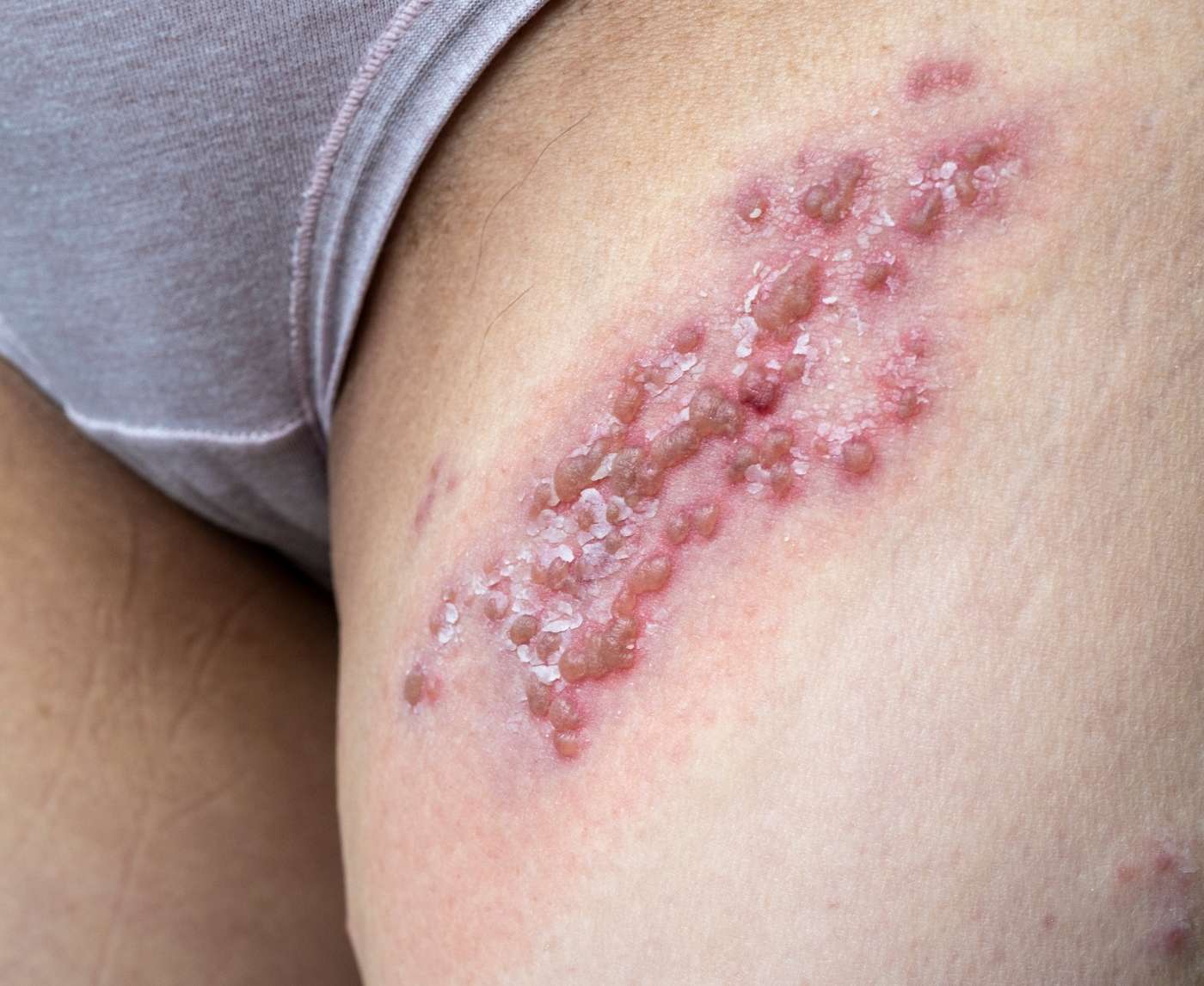
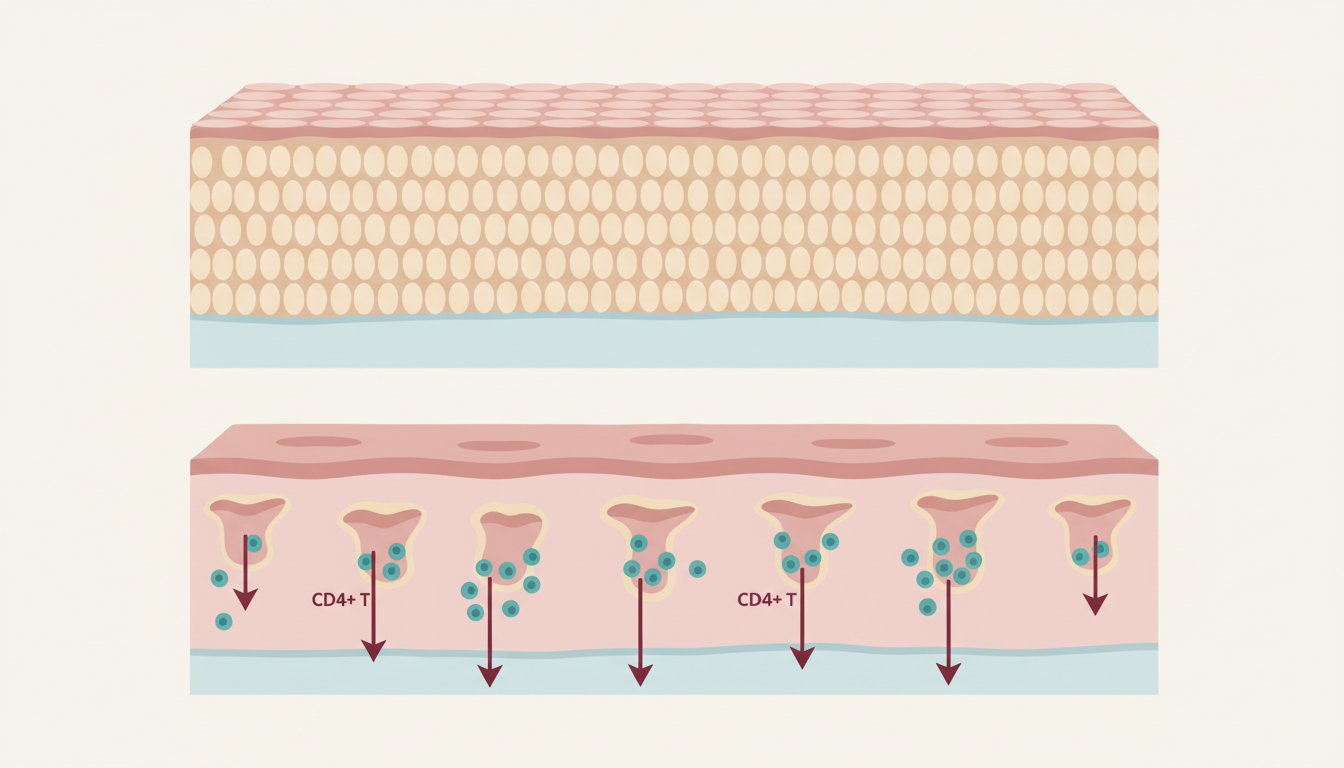
Herpes simplex virus type 2 changes the local environment of genital tissue in three ways that matter for HIV. First, active outbreaks create small breaks in the skin and mucous membrane. Even tiny erosions in the genital area give HIV a direct entry route into the bloodstream that intact skin would normally block.
Second, HSV-2 lesions recruit immune cells called CD4+ T cells to the site of inflammation. CD4+ cells are the exact cell type HIV preferentially infects. The body sends them in to fight one virus and ends up handing the other a target.
Third, HSV-2 changes the local mucosal environment even when no lesion is visible. Asymptomatic viral shedding sustains low-grade inflammation, and that inflammation maintains the same conditions of barrier disruption and immune-cell concentration that an active outbreak creates. The vulnerability window does not begin and end with a visible sore.
The cumulative effect: people with HSV-2 are roughly two to three times more likely to acquire HIV when exposed compared to people who are HSV-2-negative, per WHO data on the HSV-HIV interaction. Globally, WHO estimates about 13 percent of people aged 15 to 49 carry HSV-2, which makes the population-level overlap with HIV substantial.
| Biological Effect of HSV-2 | Why It Raises HIV Risk |
|---|---|
| Genital lesions or microscopic erosions | Breaches the skin or mucosal barrier that normally blocks HIV |
| Recruitment of CD4+ T cells to lesion sites | HIV preferentially infects CD4+ cells; concentration at the site invites infection |
| Asymptomatic viral shedding between outbreaks | Sustained low-level inflammation maintains entry conditions even with no visible sore |
| Persistent mucosal inflammation after lesions heal | Local susceptibility window extends beyond the visible outbreak |
Asymptomatic shedding: the part most people miss
Most genital HSV-2 transmission happens between outbreaks, not during them. Studies of monogamous couples have shown HSV-2 sheds detectably from genital skin on roughly 10 to 20 percent of days even when the infected partner has no symptoms and reports no recent outbreak. That shedding is what drives the silent transmission pattern.
It also drives the silent HIV-risk pattern. The same inflammatory environment that supports HSV reactivation also supports HIV entry. A person with HSV-2 who feels completely fine still has more activated CD4+ cells in genital tissue than a person without HSV-2.
This matters because most people with HSV-2 do not know they have it. The CDC notes that mild herpes symptoms can be mistaken for a pimple, an ingrown hair, or another minor skin issue, which is why most infections go unrecognized. People who have never connected an itch, a tingle, or a one-day spot to herpes have never tested for it, treated it, or factored it into their HIV-risk math.
For people who are immunocompromised, the picture gets more aggressive. HSV-2 lesions are typically larger, deeper, and slower to heal in people with low CD4 counts, which means more tissue disruption and a longer high-risk window for HIV acquisition or transmission.
What daily suppressive antivirals actually do
Suppressive therapy means taking a daily antiviral like valacyclovir or acyclovir to keep HSV-2 quiet between outbreaks, even when no symptoms are active. The goal is not to cure herpes (no current treatment can) but to reduce both visible outbreaks and the invisible viral shedding that drives transmission.
The clinical effect on HSV is well documented. Daily valacyclovir reduces the frequency of outbreaks substantially in people with frequent recurrences and reduces detectable HSV-2 viral shedding from genital sites. CDC herpes treatment guidance lists daily suppression as a standard option for people with recurrent symptomatic disease and for couples wanting to reduce transmission risk.
The HIV-risk effect is more nuanced and worth being precise about. Suppressive HSV therapy in HSV-2-positive people who do not have HIV did not consistently reduce HIV acquisition at the population level in large randomized trials in sub-Saharan Africa. The biological mechanism is real, but daily acyclovir alone was not enough, in those trials, to prevent HIV at scale. For people already living with HIV, the picture is more favorable: daily HSV suppression reduces HIV viral load in genital secretions during HSV reactivation, which lowers per-act transmission risk to partners during outbreaks. NIH HIV opportunistic-infection guidance, hosted at ClinicalInfo.HIV.gov, recommends HSV suppression in HIV-positive patients with frequent recurrences for symptom control and reduced infectiousness.
The practical takeaway: if you have HSV-2 with frequent outbreaks, daily suppression reduces your symptom burden and your partner-transmission risk. If you have HIV and HSV-2 together, suppression also reduces your HIV infectiousness during HSV flares. PrEP, condoms, and viral suppression of HIV itself remain the primary HIV prevention tools, with HSV suppression layered on as a useful adjunct.
| Suppressive Therapy Effect | What It Means in Practice |
|---|---|
| Reduced HSV-2 outbreak frequency | Fewer days of high-risk visible lesions for the patient and their partners |
| Reduced detectable HSV-2 viral shedding | Lower transmission probability per sexual act between outbreaks |
| Lower genital HIV viral load in HIV-positive patients during HSV reactivation | Reduces the spike in HIV infectiousness that occurs alongside HSV flares |
| Improved symptom control and quality of life | Less interruption to work, sleep, and intimate life |
The highest-risk window: active outbreaks
Visible HSV-2 outbreaks are the period of highest transmission risk for both herpes and HIV. Lesions, blisters, scabs, and the prodromal tingling phase before a sore appears all correspond to high local viral activity, more recruited immune cells, and more skin disruption. Condoms reduce but do not eliminate that risk because HSV lives on skin areas a condom does not cover.
The practical guidance is straightforward. Avoid sexual contact during prodromal symptoms and visible outbreaks until lesions have fully crusted and healed. For couples in a serodiscordant arrangement (one partner HSV-2-positive, one negative), the combination of avoidance during outbreaks plus daily suppression for the positive partner cuts transmission substantially compared to either alone.
Outside outbreaks, transmission still occurs at lower rates because of asymptomatic shedding. The combination of daily suppression, condoms, and honest disclosure reduces risk further.
HSV suppression reduces one specific slice of HIV risk: the inflammation and shedding driven by HSV reactivation. It does not replace the foundational HIV prevention tools. PrEP (pre-exposure prophylaxis) for HIV-negative people at risk, antiretroviral therapy for HIV-positive partners, condoms, and routine HIV testing remain the load-bearing strategies. HSV suppression layers on top of them.
If you already live with HIV: why HSV-2 still matters
HSV-2 management is not optional context for people on HIV care; it is part of HIV care. When HSV-2 reactivates, HIV viral load in genital secretions can rise transiently, even in people whose blood viral load is undetectable on antiretroviral therapy. That transient genital HIV rise is enough to raise per-act transmission risk to partners during outbreaks.
HSV-2 outbreaks are also typically more frequent, longer, and more severe in people with HIV, especially those with lower CD4 counts. Healing is slower; ulcers can be deeper. The same suppressive antivirals that work in HIV-negative people work in HIV-positive people, often at higher doses, with more direct benefit on quality of life.
The combination strategy that matches current clinical guidance: stay on antiretroviral therapy for HIV viral suppression, add daily HSV suppression if HSV-2 is recurrent, and test partners regularly. NIH HIV opportunistic-infection guidance covers the dosing specifics; an HIV provider can prescribe HSV suppression alongside an existing regimen.
Stay on antiretroviral therapy and keep your HIV viral load undetectable. Add daily HSV suppressive therapy (valacyclovir or acyclovir) if you have recurrent HSV-2 outbreaks; doses are typically higher than for HIV-negative patients. Test partners regularly for HIV and HSV-2 and discuss PrEP for HIV-negative partners. Each piece reduces a different slice of risk, and your HIV provider can prescribe HSV suppression alongside your existing regimen.
Testing first, then deciding what to treat
Most people who would benefit from HSV-2 management do not know they have HSV-2. The same is true for HIV: HIV.gov global statistics show a meaningful share of people living with HIV are still unaware of their status. Testing is the prerequisite for every other decision in this article.
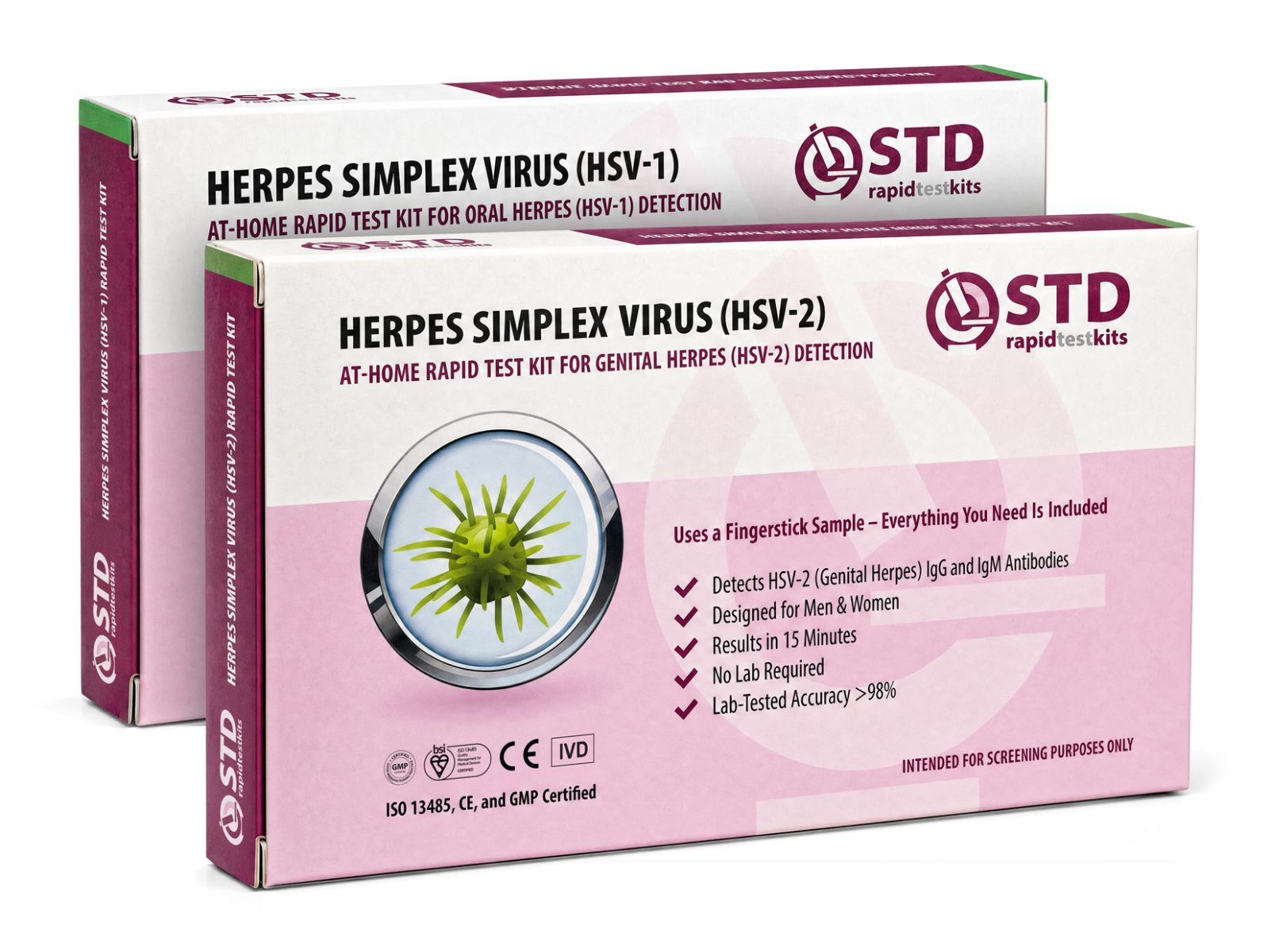
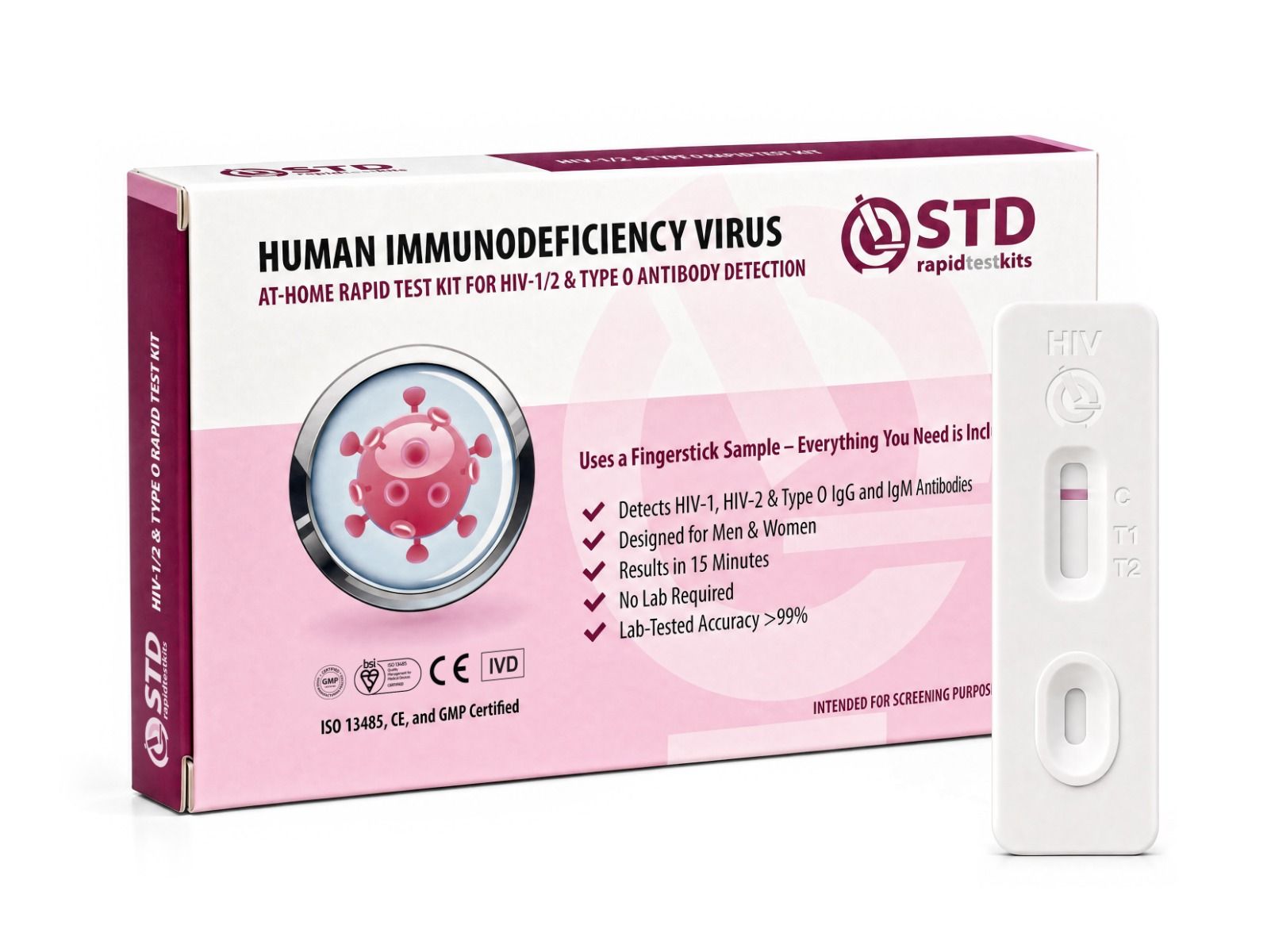
Two practical paths exist. Clinic testing through a sexual-health clinic, primary-care provider, or community health center remains the gold standard, especially because clinic visits give access to PrEP for HIV-negative people at risk, antiretroviral therapy for HIV-positive people, and prescription HSV antivirals when needed.
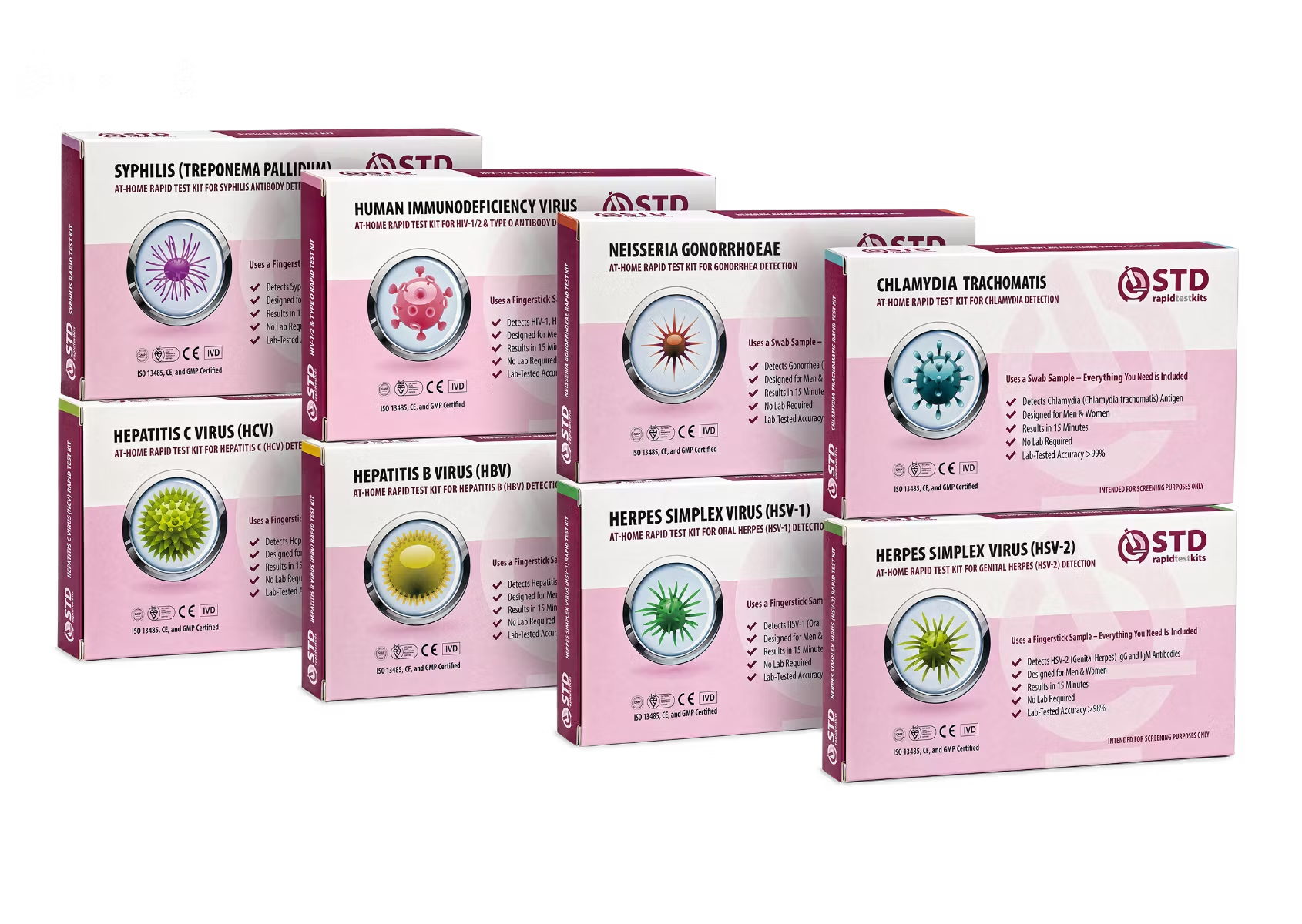
At-home rapid testing fills the gap when clinic access is limited, when privacy is the priority, or when the goal is a low-friction periodic screen. Home tests are lateral-flow antibody assays. They are useful as screens; positive results should be confirmed and managed through a clinical provider. For HSV specifically, antibody tests measure systemic seroconversion, which is most accurate roughly 12 weeks or more after suspected exposure. They do not diagnose individual lesions; an active sore should be evaluated and ideally swabbed at a clinic for definitive PCR identification.
This article is published by stdrapidtestkits.com, which sells at-home STI testing kits. We recommend products based on fit-for-purpose for the reader's concern, not commercial benefit.
Stigma is the public-health problem hiding inside the biology
HSV-2 is common, manageable, and not a moral failure. Yet the cultural framing of herpes as a permanent stain has direct epidemiological consequences. People who feel shame about a possible diagnosis avoid testing. People who avoid testing do not know to start suppression or to disclose. People who do not disclose put partners at higher risk for both HSV and HIV.
Routine HSV-2 testing is not part of the standard CDC STI screening panel for asymptomatic adults, precisely because the evidence base is mixed on whether universal screening improves outcomes at the population level. That guidance is reasonable for routine asymptomatic screening, but it does not mean testing is pointless. People with recurrent unexplained genital symptoms, people with HIV-positive partners, people considering serodiscordant relationships, and people who simply want to know all benefit from a confirmed result.
Knowing your HSV-2 status changes what you can do about HIV risk. A confirmed result lets you start suppression if outbreaks are recurrent, time sex around prodromal symptoms, talk to partners with specifics rather than guesses, and decide whether PrEP belongs in your prevention stack.
HSV-2 infection increases the risk of acquiring HIV infection approximately three-fold. Additionally, persons with both HIV and HSV-2 are more likely to spread HIV to others.
FAQs
- Does HSV-2 cause HIV?
- No. HSV-2 and HIV are different viruses, and one cannot turn into the other. The connection is that HSV-2 changes genital tissue in ways that make HIV easier to acquire if you are exposed and easier to transmit if you already have it. Treating HSV-2 reduces the size of that effect.
- How much does untreated HSV-2 actually raise HIV acquisition risk?
- The best-replicated estimate is a two- to three-fold increase per exposure event. The effect is larger during active outbreaks, when lesions and immune-cell concentration peak together, and smaller during quiet asymptomatic shedding periods. That is part of why daily suppression matters even when no visible sore is present, and why population studies show meaningful reductions in HSV transmission with consistent therapy.
- If I have no symptoms, am I really infectious?
- Yes. Asymptomatic shedding accounts for a substantial share of HSV-2 transmission. The same shedding periods correspond to elevated genital inflammation, which is what raises HIV risk during exposure.
- Will daily valacyclovir prevent me from getting HIV?
- Not on its own at the population level. Trials of HSV suppression in HSV-2-positive HIV-negative people did not show meaningful reduction in HIV acquisition. HSV suppression reduces HSV symptoms and outbreak frequency, and reduces HSV transmission to partners. For HIV prevention, the core tools remain PrEP, condoms, and partner viral suppression.
- I am HIV-positive. Should I take daily HSV suppression?
- If you have recurrent HSV-2 outbreaks, current NIH HIV opportunistic-infection guidance recommends daily suppressive therapy for symptom management and reduced transmission risk. Discuss dosing with your HIV provider; doses are typically higher than for HIV-negative patients.
- Can a home test diagnose herpes from a current sore?
- Not reliably. Home rapid tests are antibody tests that detect systemic seroconversion, which is most accurate twelve weeks or more after exposure. An active sore should be evaluated at a clinic and ideally swabbed for PCR, which directly identifies the virus in lesion fluid.
- How long after exposure should I test for HIV and HSV-2?
- For HIV antibody tests, accuracy is best from about three months after exposure (clinic-administered fourth-generation antigen-antibody tests detect earlier, around 45 days). For HSV-2 antibody tests the window is also roughly twelve weeks. Testing earlier can yield false negatives that need to be repeated.
- What if my partner has HSV-2 and I am HIV-positive?
- Talk to a provider about a combined plan: daily HSV suppression for your partner if their outbreaks are recurrent, your continued antiretroviral therapy to maintain undetectable viral load, condom use during HSV prodromal symptoms or visible outbreaks, and PrEP consideration for the HSV-2-positive partner if they are HIV-negative. Each piece reduces a different slice of risk.
- U.S. Centers for Disease Control and Prevention. Genital herpes overview, including the language that most people with genital herpes have no symptoms or very mild symptoms and most do not know they carry the infection.
- World Health Organization. Herpes simplex virus fact sheet covering HSV-2 global prevalence (about 13% of adults aged 15-49) and the approximately three-fold HIV acquisition risk increase in HSV-2-positive people.
- U.S. National Institutes of Health, ClinicalInfo.HIV.gov. HIV clinical guidelines for adult and adolescent opportunistic infections, including herpes simplex virus management in people with HIV.
- U.S. Department of Health and Human Services, HIV.gov. Global HIV statistics including the share of people living with HIV who are unaware of their status.
- Mayo Clinic. Genital herpes symptoms and causes, including outbreak presentation and recurrence patterns.
