






What “Fast” Really Means: STDs vs Symptoms
Let’s be clear: catching an STD fast doesn’t always mean you’ll feel it fast. There are two key concepts at play:
- Incubation period: The time from exposure to when symptoms might appear.
- Window period: The time before a test can reliably detect an infection.
Symptoms can sometimes appear before a test turns positive, or vice versa. This is why testing timelines and symptom tracking can feel so confusing. But some STDs are known for hitting fast, even overnight.

People are also looking for: Can a pimple on my vagina be an STD?
Gonorrhea: The 24-Hour Offender
Gonorrhea can be one of the fastest STDs to show up, especially in men. According to the CDC, symptoms can start in as little as 1 to 3 days, and in some cases, the next day.
Early signs to watch for:
- Painful urination (burning or stinging)
- Thick yellow-green discharge from the penis or vagina
- Anal itching or discharge after receptive anal sex
For women, symptoms are usually more subtle, or completely absent. That’s why testing is critical even if you feel fine.
Herpes: When Pain Follows Pleasure
Herpes Simplex Virus (HSV-1 or HSV-2) can sometimes produce symptoms within 24 to 48 hours after exposure, especially if your immune system is already stressed or compromised.
Look for:
- Tingling or burning near the genitals or mouth
- Red bumps or fluid-filled blisters
- Flu-like symptoms including fever, body aches, and swollen lymph nodes
Outbreaks may not always be visible or dramatic. Some people mistake early Herpes sores for ingrown hairs or razor burn, especially in the first infection.
Chlamydia: Stealthy but Not Immediate
Chlamydia is often the silent STD. While it’s incredibly common, especially among people under 25, it rarely shows symptoms quickly. Most people who get symptoms will start to notice them within 1 to 3 weeks, not hours.
When symptoms do appear, they may include:
- Mild pain during urination
- Watery or milky discharge
- Pelvic pain or spotting between periods
Don’t let the delay fool you. You can still spread Chlamydia even if you feel totally fine. And if left untreated, it can cause serious reproductive damage, especially in people with a uterus.
Check Your STD Status in Minutes
Test at Home with Remedium7-in-1 STD Test Kit
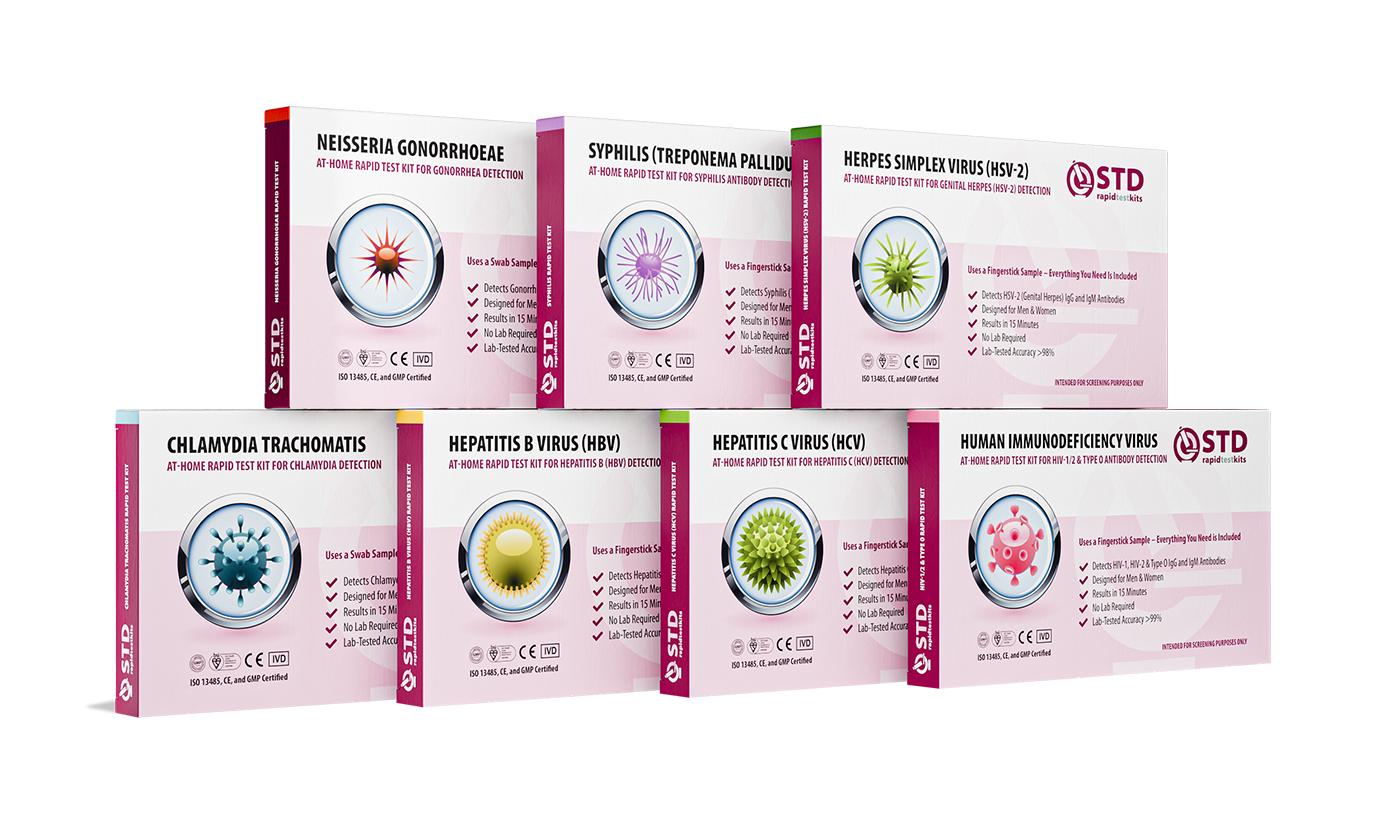
 For Men & Women
 Results in Minutes
 No Lab Needed
 Private & Discreet
Order Now $129.00 $343.00
For all 7 tests
HIV: Early Signs Can Be Deceptive
Acute HIV infection, also called primary HIV, usually doesn’t show up overnight. But within 2 to 4 weeks of exposure, it can cause a flu-like syndrome that many mistake for something else entirely.
Early symptoms may include:
- Fever
- Sore throat
- Fatigue or night sweats
- Swollen lymph nodes
This phase is also when a person is most contagious, even before most standard HIV tests can detect the virus. If you think you’ve had a high-risk exposure (like condomless anal sex or needle-sharing), you may need an HIV RNA test or PEP (post-exposure prophylaxis).
Syphilis: Symptoms You Might Miss
Syphilis has a reputation for being tricky. It typically starts with a single, painless sore, called a chancre, that can appear anywhere from 3 days to 3 weeks after contact. The problem? These sores are often missed or mistaken for ingrown hairs, pimples, or cuts.
Watch for:
- Small, round, painless sore (usually on genitals, mouth, or anus)
- Slight swelling of lymph nodes near the sore
If untreated, Syphilis moves into secondary stages that involve rash, hair loss, and neurological issues. Early detection is everything.
Trichomoniasis and Others: The Overlooked Speedsters
Trichomoniasis, a lesser-known but widespread STD caused by a parasite, can show symptoms in as little as 4 to 7 days, though some people notice signs earlier.
Signs include:
- Frothy, smelly vaginal discharge (in women)
- Penile itching or irritation (in men)
- Burning sensation after urination or ejaculation
Other STDs like Mycoplasma genitalium and Hepatitis B may also cause early irritation or systemic symptoms, but these are harder to pinpoint without a lab test.

People are also looking for: How soon do trich symptoms show up?
When in Doubt, Get Tested
Even if you feel nothing, or you feel too much, only a test can confirm what’s really going on. Symptoms can be caused by STDs, UTIs, allergic reactions, friction, or even stress. You shouldn’t try to self-diagnose from Google images or TikTok videos.
At-home testing offers a discreet, accurate way to rule out or confirm the most common STDs. Kits like the 8-Most Common STD Kit cover a wide range of possibilities in one go, without the clinic wait.
Why Waiting to Feel Something Can Be Dangerous
Many STDs are most contagious before symptoms appear. That means waiting for a rash or burn to show up before testing or informing a partner can unintentionally spread infection. According to the CDC, up to 80% of women with Chlamydia and 50% of men with Gonorrhea never experience symptoms.
It’s not about paranoia, it’s about prevention. If you’ve had unprotected sex, multiple partners, or notice anything off (even a twinge of pain or a change in discharge), testing is your next best step.
Common Misconceptions About STD Symptom Timing
Misconception #1: “If I don’t feel anything the next day, I’m fine.”
Reality: Many STDs take days or weeks to cause symptoms. Some never show signs at all. You could still be infected, and contagious.
Misconception #2: “If symptoms show up fast, I must’ve gotten it from my last partner.”
Reality: Symptoms can appear quickly, but the infection could’ve been dormant for weeks or months. Don’t jump to blame, it’s rarely that simple.
Misconception #3: “If it burns to pee, it’s definitely an STD.”
Reality: Burning can also be caused by UTIs, dehydration, or friction. Only a test can tell you for sure.
FAQs
1. Can STD symptoms appear within 24 hours?
Yes, Gonorrhea and Herpes can sometimes show signs within 24–48 hours. But most STDs take longer to show symptoms, or none at all.
2. What STD shows up the fastest?
Gonorrhea is often the fastest. Some people, especially men, report symptoms the next day.
3. Can I get tested right away after sex?
You can, but results may not be accurate. Most STD tests have a window period. Wait at least 1–5 days for Gonorrhea/Chlamydia, and 2+ weeks for HIV/Syphilis.
4. Is it normal to feel symptoms the next morning?
It’s possible, especially with irritation, allergic reactions, or fast-acting STDs. But many symptoms aren’t STD-related. Test to confirm.
5. What should I do if I have a rash or discharge right away?
Use an at-home STD test kit or see a provider. Don’t panic, but don’t ignore it either.
6. How do I tell if it’s an STD or a UTI?
UTIs cause urgency and cloudy urine. STDs usually cause discharge, pain, or visible sores. Still, they can overlap. Testing is key.
7. Can anxiety cause fake STD symptoms?
Yes. Panic can mimic symptoms like tingling, discomfort, or even phantom itching. That’s why testing helps separate fear from fact.
8. What’s the earliest I can test for everything?
Use a combo test kit after 3–5 days, then retest after 2 weeks for complete coverage. Or consult a provider if you’re unsure.
9. Can STDs cause symptoms with just one encounter?
Absolutely. All it takes is one exposure without protection. Even oral or anal sex can transmit infections.
10. Where can I get a fast, private test?
Try the 8-Most Common STD Kit for quick results at home.
Don’t Wait for Pain to Get Peace of Mind
STD symptoms don’t follow a schedule, and neither should your health decisions. Whether it’s a burn that started overnight or just a nagging “what if” after a one-night stand, the best move you can make is to get tested. Fast. Quietly. On your terms. Some infections show up quickly. Others don’t show up at all. But every STD has one thing in common: the longer it goes undetected, the more damage it can do, to your body, your mind, and your relationships.
Testing isn’t just about disease. It’s about power. It’s the moment you stop guessing and start knowing. Your body doesn’t have to be a mystery. Not today. Not tomorrow. Not 24 hours from now.
Sources
Incubation Periods of Common STIs – Verywell Health
Chlamydia & Gonorrhea Symptom Timelines – Mayo Clinic
How Long Does It Take for an STD to Show Up? – Healthline
STI Incubation Period Overview – CareThatFitsYou.org


