

Published: June 2025 | Last updated: April 2026 | Editorial review and quality control: Martina N.
Trichomoniasis is the most common curable sexually transmitted infection in the world, and almost no one has heard of it. It does not get the public-health spotlight that chlamydia and gonorrhea get. It does not carry the cultural shorthand that herpes or HIV do. It just sits quietly in genital tissues, often producing no symptoms at all, while passing from one partner to the next.
That silence is exactly what makes it a problem. The parasite responsible (a single-celled organism called Trichomonas vaginalis) infects roughly two million people in the United States according to CDC surveillance estimates, and only about three in ten ever notice anything is wrong. The other seven keep transmitting it without realizing. This article walks through what the infection actually does, how it shows up (or does not) in different bodies, what testing options exist, and why a short course of pills is usually the entire fix.
What is trichomoniasis and how is it treated?
Trichomoniasis (often called trich) is a sexually transmitted infection caused by a tiny parasite, Trichomonas vaginalis. About 70% of people who carry it have no symptoms; when symptoms appear, they include unusual vaginal or urethral discharge, itching, burning urination, and a fishy odor. It is fully curable with a short course of antibiotics, usually metronidazole or tinidazole. Both sexual partners need to complete treatment at the same time to prevent reinfection.
Key Takeaways
- Roughly seven in ten people carrying trichomoniasis have no symptoms at all, which is the main reason it spreads quietly between partners.
- A short course of metronidazole or tinidazole clears the infection. Both partners need to complete treatment together to stop a reinfection loop.
What trichomoniasis actually is
Trichomoniasis is caused by Trichomonas vaginalis, a microscopic single-celled protozoan parasite. It is not a virus and not a bacterium, which is why standard antiviral drugs and most antibiotics do not touch it. The parasite has a teardrop-shaped body and four whip-like flagella that let it move through genital tract fluids and stick to the cells lining the urogenital tract.
It primarily lives in the vagina and lower genital tract in women, and in the urethra in men. It can also colonize the bladder and ureters. The World Health Organization places trichomoniasis among the four most common curable STIs worldwide, alongside chlamydia, gonorrhea, and syphilis, with an estimated 156 million new cases per year globally among people aged 15-49 per WHO figures. In the United States, the CDC estimates roughly two million current infections, with the highest rates in women over 40 and in communities where routine screening is harder to access. The parasite cannot survive long outside a moist genital environment, which is why nearly all transmission is sexual.
WHO estimates 156 million new trichomoniasis infections per year globally among people aged 15-49. The CDC estimates roughly 2 million current infections in the United States at any given time, with the highest rates in women over 40. Despite those numbers, trichomoniasis receives a fraction of the public-health attention of chlamydia or gonorrhea, which is part of why it remains underdiagnosed.
Why most carriers never notice it
According to the CDC, only about 30% of people infected with trichomoniasis develop any symptoms. The other 70% feel completely fine. This is the heart of the problem: a person can carry the parasite for months or years without ever suspecting it, and pass it to every new sexual partner during that window.
When symptoms do appear, they often look like other things. Vaginal discharge that is itchy and slightly off-smelling can be mistaken for a yeast infection. A burning sensation during urination can be mistaken for a UTI. A faint urethral discharge in the morning is easy for a man to ignore as a one-off. The symptoms also closely resemble bacterial vaginosis or a yeast infection, with itchy or unusual discharge, odor, and burning urination, which makes self-diagnosis unreliable. Only a swab test reliably distinguishes them, since each condition needs a different treatment. The practical result: trich is rarely the first thing anyone (patient or clinician) thinks of, which is why it spreads quietly across years.
Symptoms in women and people with vaginas
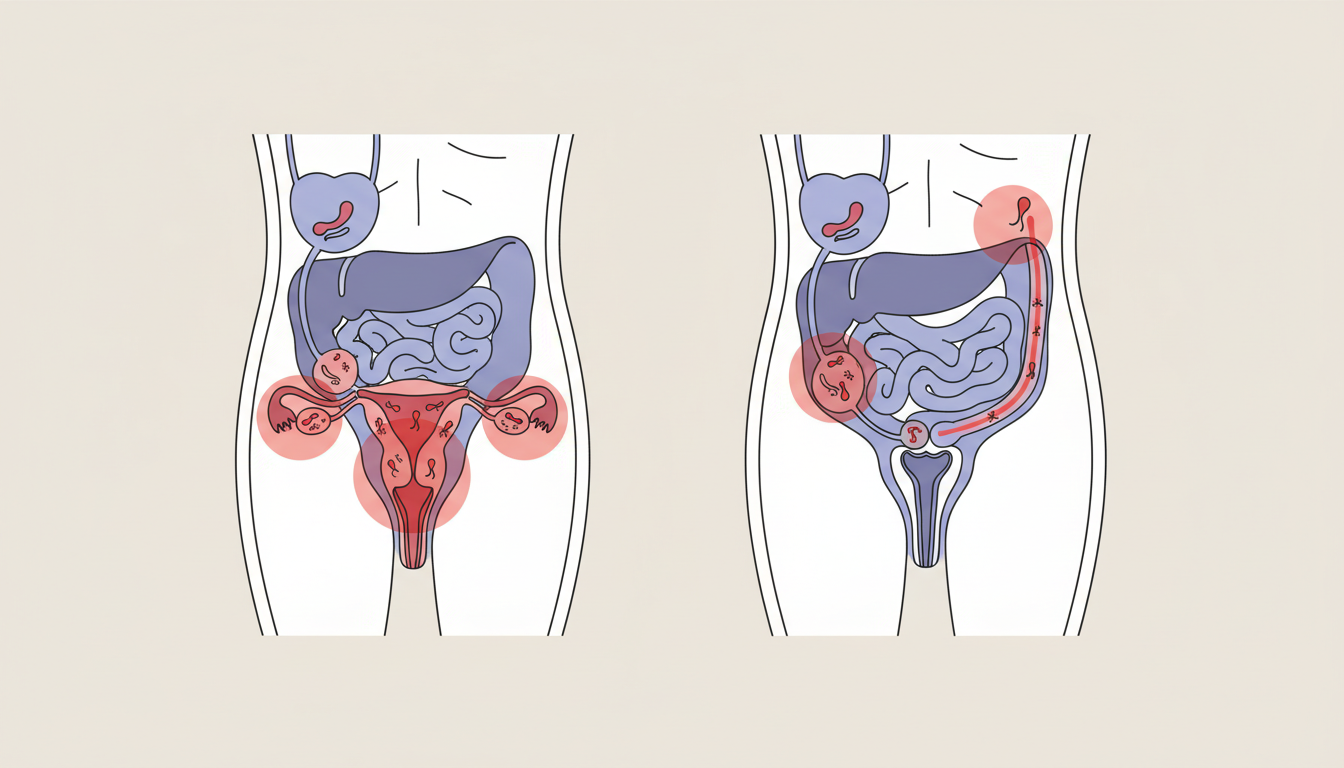
About half of women who develop symptomatic trichomoniasis notice changes in vaginal discharge first, per the CDC. The classic description is a thin, frothy, yellowish-green discharge with a noticeable fishy or musty odor that can get worse after sex. Discharge volume varies a lot from one person to the next, and not every case looks textbook.
Other common symptoms include:
- Genital itching, burning, or soreness. Often the first thing people notice. The vulva and vaginal opening can feel inflamed, sometimes with visible redness.
- Pain during sex. Inflammation of the vaginal walls makes intercourse uncomfortable or actively painful.
- Burning during urination. The infection can extend into the urethra and feel a lot like a urinary tract infection.
- Lower abdominal discomfort. Less common, more likely if the infection has been present for a while.
- Bleeding or spotting after sex. Cervical inflammation, sometimes called "strawberry cervix", can cause light contact bleeding.
Because these symptoms overlap heavily with bacterial vaginosis and yeast infections, many people self-treat with over-the-counter antifungals first and only seek testing when those do not work, which delays diagnosis since antifungal creams have no effect on a parasite.
Antifungal creams act on yeast organisms; they do nothing to a single-celled parasite like Trichomonas vaginalis. If symptoms continue after a full course of an over-the-counter yeast treatment, that pattern itself is a reason to test specifically for trichomoniasis (and for bacterial vaginosis, which also will not respond to antifungals).
Symptoms in men and people with penises
Symptoms are far less common in men. The National Library of Medicine's MedlinePlus notes that most men with trichomoniasis have no symptoms whatsoever, which is a major driver of partner-to-partner transmission. When symptoms do appear, they are usually subtle and easy to dismiss.
Possible signs include:
- A thin, sometimes whitish urethral discharge, often most noticeable first thing in the morning.
- Burning during or after urination, or after ejaculation. This can mimic a urinary tract infection or low-grade urethritis.
- Itching or irritation inside the penis, a vague tingling sensation that comes and goes.
- Mild discomfort during ejaculation. Less common but reported.
For a man, the symptoms are usually mild enough to ignore, which is why a male partner of someone diagnosed with trichomoniasis should still get treated even if he feels completely fine. "I do not have symptoms, so I do not need treatment" is one of the most common reasons trich keeps cycling through couples.
Why the symptom gap between sexes matters
- About 30% of infected women develop symptoms; the other 70% are silent carriers.
- Among infected men, the asymptomatic share is even higher, with most public-health sources putting it well above 70%.
- This sex-based asymmetry is the single largest reason a heterosexual couple stays in a reinfection loop: the male partner often feels fine, sees no need to test or treat, and re-exposes the female partner after she finishes her own course.
How trichomoniasis spreads from person to person
The parasite lives in genital fluids and the cells lining the lower genital tract. The main route of transmission is vaginal intercourse between a man and a woman, or between two women through shared genital contact and fluid exchange. Sex with ejaculation is not required: the parasite is present in vaginal and pre-ejaculate fluids regardless of climax.
Per the CDC, trich is rarely transmitted through oral or anal sex. The parasite needs the genital tract environment to survive, and the throat or rectum are not hospitable to it in the way the vagina or urethra are. Hand-to-genital contact carries some theoretical risk if shared fluids are involved but is not a typical transmission route.
The parasite can technically survive on damp objects (a wet towel, a moist swimsuit) for a short time, but transmission via these objects is so rare that public-health guidance does not treat it as a meaningful risk. Real-world transmission is sexual transmission, almost without exception.
Condoms reduce the risk significantly because they block direct fluid exchange. They do not eliminate the risk entirely because the parasite can be present on genital skin around the area a condom covers. Consistent condom use during the entire act, every time, gives the strongest protection. And here is something most people do not realize: you do not need multiple partners to acquire trichomoniasis, since one partner with an untreated infection is enough to restart the cycle.
| Route | Risk level | Notes |
|---|---|---|
| Vaginal intercourse (with or without ejaculation) | High | Direct exchange of genital fluids; the parasite's natural environment. |
| Genital-to-genital contact between women | Moderate to high | Shared fluids and skin contact in genital tissue. |
| Hand-to-genital with active fluid exchange | Low | Possible if fresh fluids are transferred; not a typical route. |
| Oral sex | Very low | The throat is not hospitable to the parasite. |
| Anal sex | Very low | The rectum is not the parasite's natural environment. |
| Damp objects (towels, swimsuits) | Negligible | Theoretically possible but not a meaningful real-world risk. |
What untreated trichomoniasis does over time
Trichomoniasis is not life-threatening, but "not life-threatening" does not mean "not worth treating." Left alone for months or years, the parasite causes chronic low-grade inflammation in the genital tract, and that inflammation has consequences.
Higher risk of acquiring or passing HIV. Genital inflammation from untreated trichomoniasis disrupts the protective lining of the vagina and urethra, making it physically easier for HIV to enter the bloodstream during a sexual encounter. The same inflammation increases shedding of HIV in someone who is already positive, raising onward transmission risk. Per the WHO, trichomoniasis infection raises the risk of HIV acquisition by approximately 1.5 times.
Pregnancy complications. Trichomoniasis during pregnancy is associated with preterm birth, low birth weight, and premature rupture of the amniotic membranes, per the World Health Organization. Routine prenatal screening for trich is not universal, but anyone pregnant with possible symptoms should be tested early.
Pelvic inflammatory disease (PID). Less commonly, untreated trich in women can contribute to upper genital tract infections that scar the fallopian tubes and increase the risk of infertility or ectopic pregnancy.
Urethritis and prostatic inflammation in men. The most likely complications in men are persistent low-grade urethritis or, rarely, prostatic infection.
Trichomoniasis during pregnancy is associated with preterm birth and low birth weight. If you are pregnant and noticing unusual discharge, itching, or burning, do not wait it out, and do not self-treat with over-the-counter antifungals. See your obstetric provider for testing. Treatment during pregnancy is safe and well-studied.
How testing works, in a clinic and at home
The only way to know whether you have trichomoniasis is to test for it. Symptoms alone are too unreliable. There are several testing technologies, and they differ in sensitivity and turnaround time.
Nucleic acid amplification testing (NAAT). This is the laboratory gold standard. NAAT detects parasite DNA from a vaginal swab, urethral swab, or first-catch urine sample. According to the CDC, NAAT is the most sensitive method available and the preferred test in clinical settings. Results typically take a few days from a clinical lab.
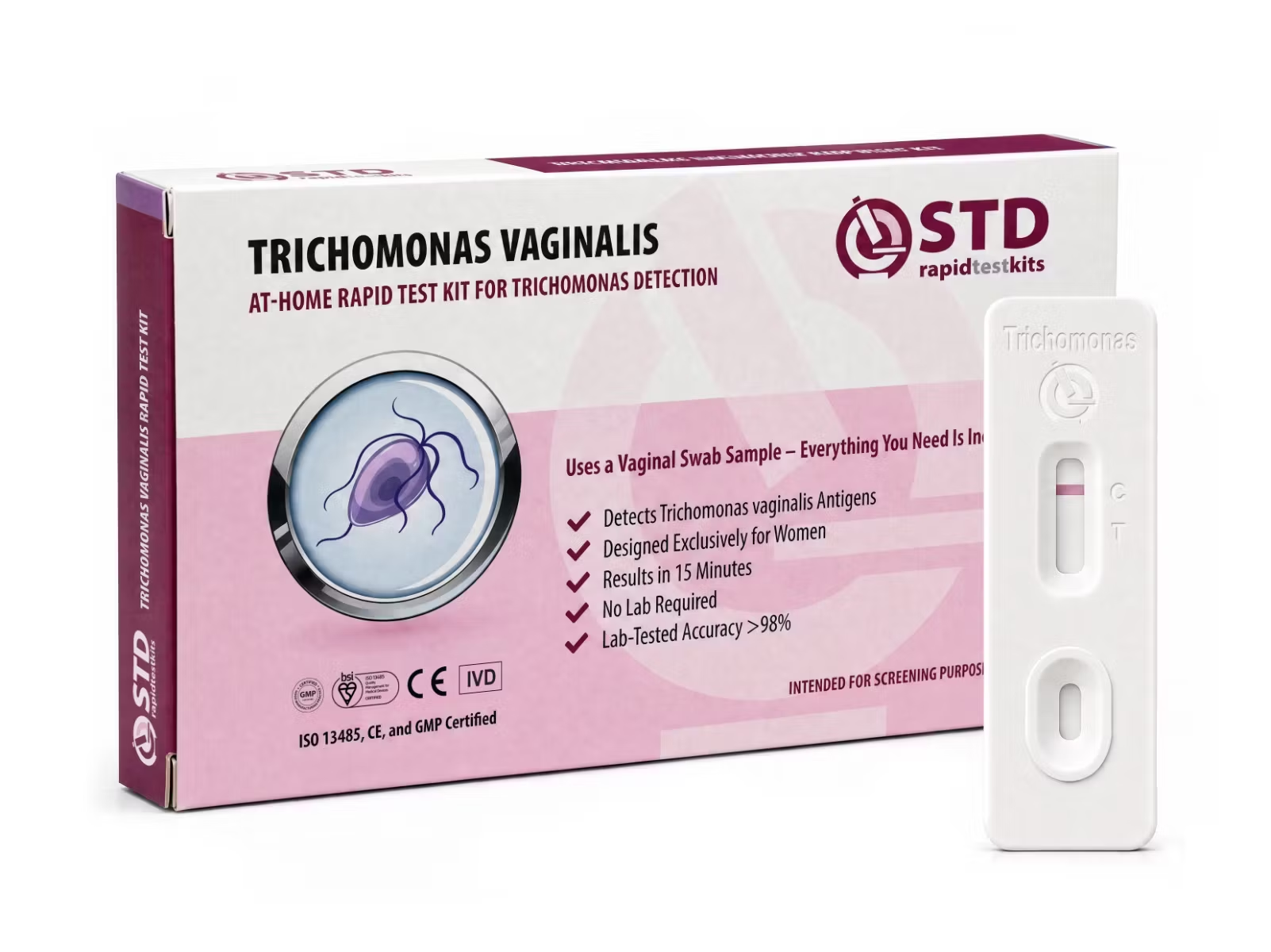
Antigen and rapid lateral-flow tests. These detect parasite proteins from a vaginal swab and produce a result within roughly 15 minutes. Rapid lateral-flow tests are not as analytically sensitive as a lab NAAT, but they are useful as a screening tool, especially for people with symptoms or known exposure who want a fast at-home answer. A positive rapid test result is worth confirming with a lab NAAT when possible.
Wet-mount microscopy. Older, in-clinic only. A clinician examines vaginal fluid under a microscope to spot moving parasites. Cheap and fast but misses roughly half of cases compared with NAAT, so it is no longer the recommended first-line test.
Self-collected vaginal swabs. Self-collected vaginal swabs are widely used for trichomoniasis testing, and at-home rapid kits are built on this convenience.
Disclosure: this site sells at-home rapid STI testing kits, including the trichomoniasis self-swab kit linked below. We recommend products based on whether they fit a reader's specific concern, not on commercial benefit.
How treatment works
Trichomoniasis is one of the more satisfying STIs to treat because the cure is genuinely simple. The CDC's STI treatment guidelines recommend two oral antibiotics: metronidazole and tinidazole. Both are highly effective.
The current preferred regimens are:
- For women: metronidazole 500 mg orally twice daily for 7 days. This was updated by the CDC in recent guideline cycles because the 7-day course produces meaningfully higher cure rates in women than the older single-dose regimen.
- For men: metronidazole 2 g orally as a single dose, or tinidazole 2 g orally as a single dose.
A few practical points matter once treatment starts:
- No alcohol while taking either drug and for at least 24 hours after metronidazole or 72 hours after tinidazole. The combination causes a strong unpleasant reaction with nausea, flushing, and headache.
- No sex until you and your partner have both completed the course AND any symptoms have resolved. Most clinicians say wait at least one week.
- Re-test in three months if you are sexually active. Reinfection is common, and a follow-up test catches it early. The CDC specifically recommends rescreening women three months after treatment.
Both drugs have well-tolerated safety profiles. Mild nausea, a metallic taste, and headache are the most common side effects, and they resolve when the course finishes.
Both drugs react badly with alcohol, producing nausea, flushing, headache, and a fast heart rate within minutes. Avoid all alcohol during the antibiotic course AND for at least 24 hours after the last metronidazole dose, or 72 hours after the last tinidazole dose. Avoid sex until both you and your partner have completed treatment AND any symptoms have fully resolved (most clinicians recommend at least one week).
Why both partners need to be treated together
This is the single biggest reason trichomoniasis comes back. If one partner takes the antibiotics and the other does not, the untreated partner stays infected and re-exposes the treated partner the next time they have sex. The parasite cycles back and forth indefinitely. People sometimes describe getting "the same infection" three or four times in a year before realizing what is happening.
Standard public-health practice for trichomoniasis is concurrent partner treatment. Both people take antibiotics at the same time, both abstain from sex during and shortly after treatment, and the cycle breaks. The NHS and the CDC both stress this.
Many U.S. states allow expedited partner therapy (EPT), where a clinician treating one person can write a prescription for that person's partner without seeing the partner first. If you are diagnosed and your partner cannot easily get to a clinic, ask whether EPT is an option in your area. It exists specifically to break the reinfection loop.
Practical reality: telling a partner is hard. Trich is not a name most people know, and "I have a parasitic STI you have probably never heard of and you also need pills" is not an easy text message to compose. Most clinics offer anonymous partner-notification services if direct conversation feels impossible.
Preventing reinfection going forward
There is no immunity to trichomoniasis. Having had it once does not stop you from getting it again the next week from a new partner. That makes ongoing prevention practical rather than complicated.
The strongest evidence-based steps:
- Use condoms consistently with new partners until both of you have completed STI testing. Condoms do not eliminate trich risk because the parasite can be on skin around the genitals, but they cut it substantially.
- Test routinely if you are sexually active with new or multiple partners. The CDC recommends regular STI screening for sexually active women under 25, anyone with new partners, and people in non-monogamous relationships. For trich specifically, an annual screen is reasonable.
- Talk before sex. Mutual sharing of recent test results is awkward but it is the single most reliable way to identify silent infections before they spread further.
- Re-test after treatment. Three months after a positive trich result, retest. Even with perfect partner treatment, reinfection rates are high enough that the CDC builds rescreening into its guideline.
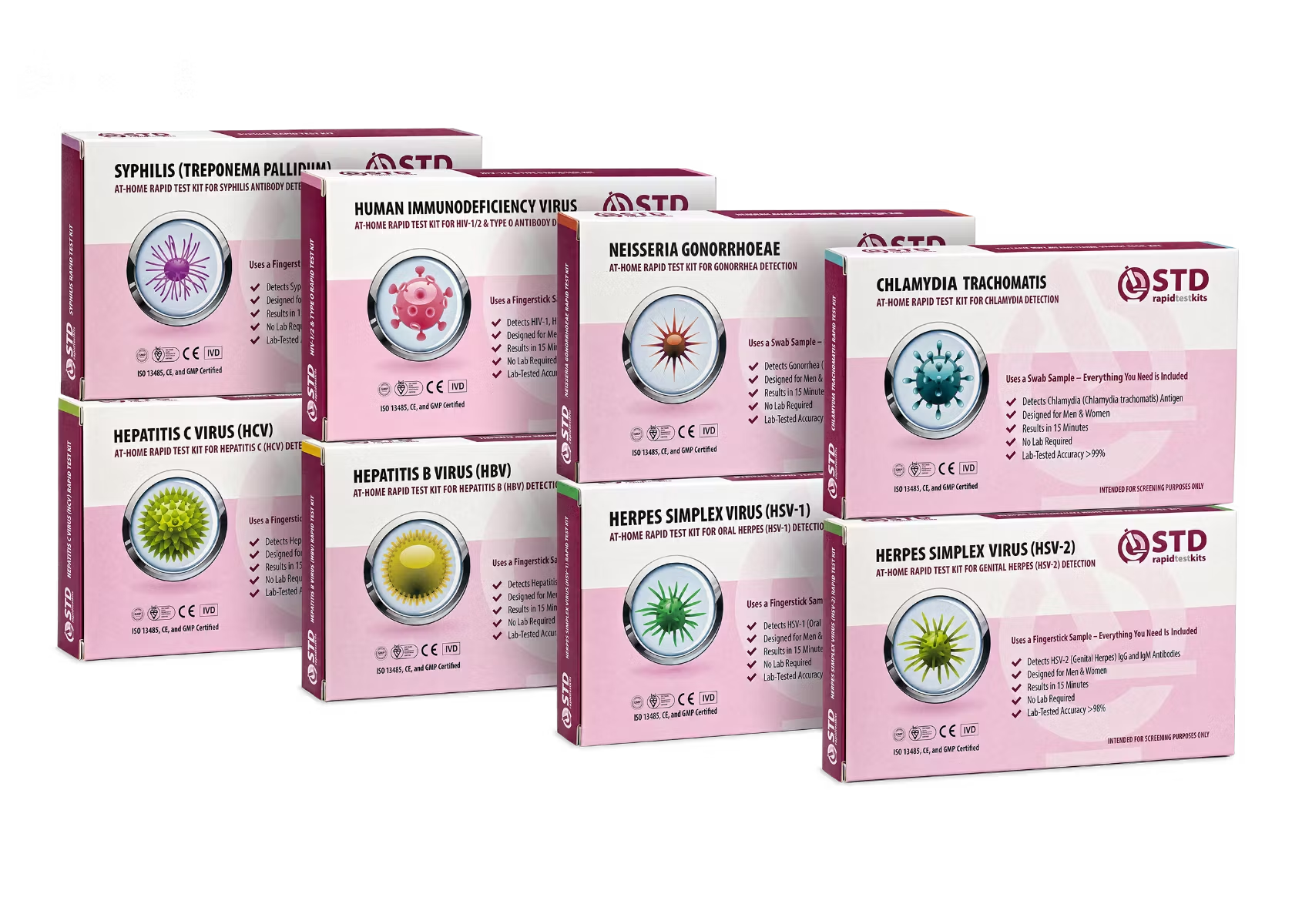
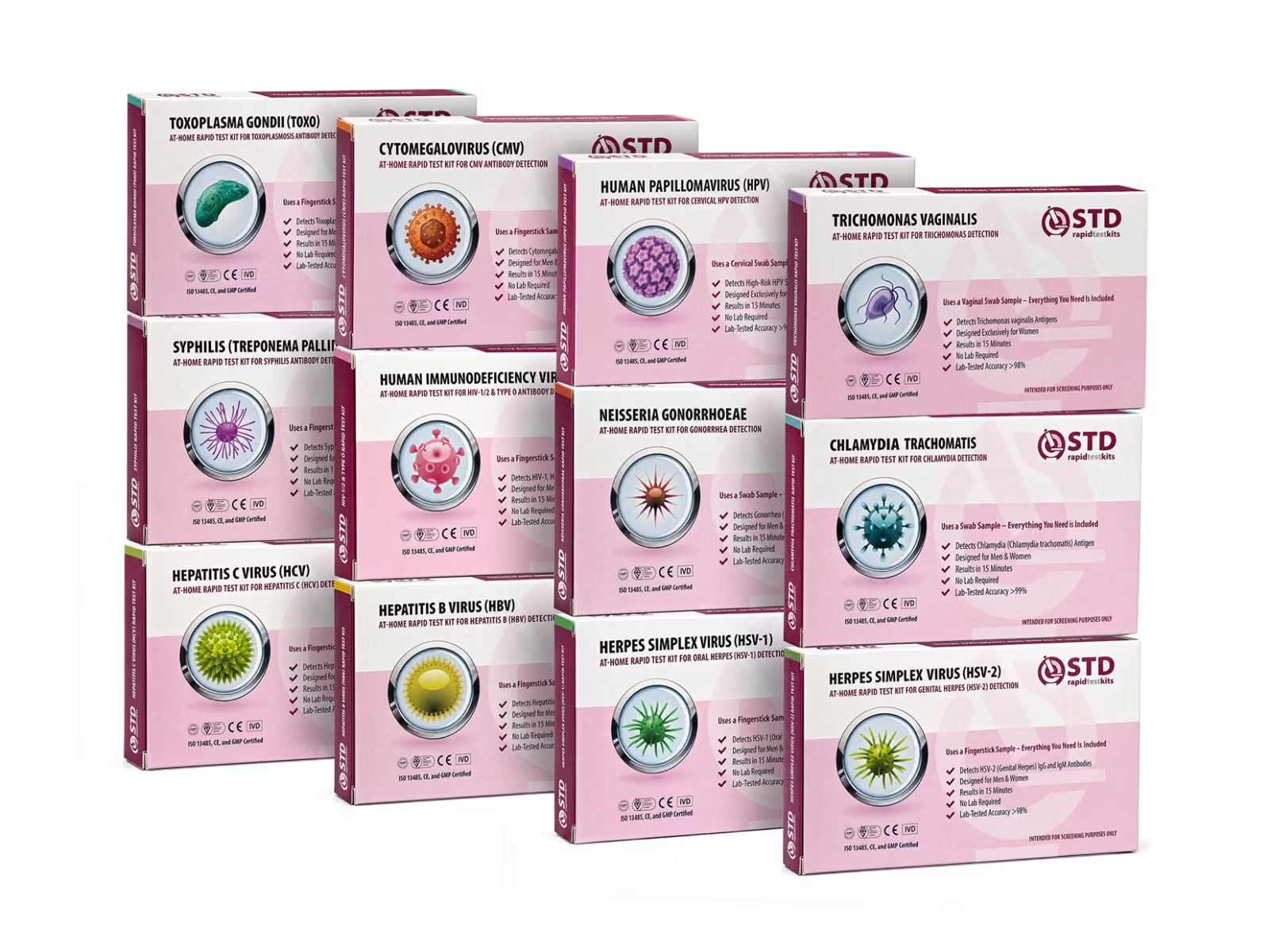
If you live in a part of the world where structured STI screening is not built into routine care, at-home rapid testing kits are a reasonable way to keep an eye on things between annual checkups.
Frequently asked questions
- Can men get trichomoniasis?
- Yes. Men carry and transmit trichomoniasis, and they are sexual partners in the majority of female cases. Men are simply less likely to develop noticeable symptoms, which is why male partners frequently go undiagnosed unless their female partner tests positive first.
- How soon after exposure do trichomoniasis symptoms appear?
- When symptoms appear at all, they typically show up between 5 and 28 days after exposure, per CDC guidance. Many people, especially men, never develop symptoms, so the absence of symptoms after exposure does not rule out infection. A test is the only way to know.
- Will trichomoniasis go away on its own?
- No. Without antibiotic treatment, the parasite continues to live in the genital tract for months or years. Symptoms may come and go, but the infection persists and remains transmissible to partners. Treatment is short and effective; there is no medical reason to wait it out.
- Why does my discharge smell fishy?
- A fishy or musty vaginal odor that gets stronger after sex is one of the more recognizable symptoms of trichomoniasis. It can also be caused by bacterial vaginosis, which is even more common, so the smell alone does not confirm trich. A swab test is needed to distinguish them, since they need different treatments.
- Can you get trichomoniasis from oral or anal sex?
- Rarely. The parasite is specifically adapted to survive in vaginal and urethral tissue; it does not establish in the throat or rectum. Vaginal intercourse is overwhelmingly the dominant route. Oral or anal exposure is a theoretical but not practically significant risk per current CDC guidance.
- What if my partner refuses to get tested or treated?
- If a partner is untreated, you will almost certainly be reinfected the next time you have sex. Most U.S. states allow expedited partner therapy, where your clinician can prescribe antibiotics for your partner without seeing them. If even that is impossible, the practical decision is to abstain or use condoms consistently with that partner until they are treated. Many clinics also offer anonymous partner-notification services.
- Can I get trichomoniasis again after treatment?
- Yes. There is no immunity from a previous infection. You can be reinfected immediately by an untreated partner or by a future partner who has it. The CDC recommends retesting roughly three months after a positive result because reinfection rates are high enough to make routine retesting worthwhile.
- Is trichomoniasis dangerous during pregnancy?
- It can be. Untreated trichomoniasis in pregnancy is associated with preterm delivery, low birth weight, and premature rupture of the amniotic membranes. Treatment with metronidazole during pregnancy is well-studied and considered safe. Anyone pregnant with possible symptoms should be tested early and treated promptly.
- U.S. Centers for Disease Control and Prevention. Sexually Transmitted Infections home page, including trichomoniasis fact sheets, prevalence estimates, the 30%-symptomatic figure, and current STI treatment guidelines.
- World Health Organization. Trichomoniasis fact sheet, used for the 156-million new-cases-per-year global burden estimate, the 1.5x HIV-acquisition risk increase, and pregnancy-complications data.
- National Health Service (United Kingdom). Trichomoniasis condition page, used for symptom presentations and partner-treatment recommendations.
- U.S. National Library of Medicine, MedlinePlus. Trichomoniasis topic page, used for the asymptomatic-in-men framing and general clinical overview.
- Mayo Clinic. Trichomoniasis condition overview, used for general symptom and complications framing.
