







Can You Treat Chlamydia at Home? The Truth About Private Treatment
How Co-Infections Occur
Sexually transmitted diseases are the diseases that are transferred from one individual to another through sexual intercourse. Every STD is caused by a different pathogen, which could be in the form of bacteria, viruses, or parasites. Co-infections refer to incidents where a patient develops several diseases, most commonly due to having unprotected sexual relations with numerous partners or with multiple sexual partners infected with various sexually transmitted infections.
Co-infection is most likely to occur when
- Participating in risky behaviors like unprotected sex or using contaminated needles.
- Being immunocompromised renders the body more susceptible to diseases.
- Undiagnosed and untreated infections occur due to lack of regular testing.
For instance, gonorrhea and chlamydia co-occur because they affect similar body parts and are acquired through similar practices. Grasping such insight is the initial step towards finding a solution to the problem at hand.
Key Benefits of Regular Testing and Prevention
Early Detection Saves Lives
Regular testing for STDs is important to facilitate early detection, especially co-infections. Learn how regular testing can prevent the spread of disease here. Most STDs, such as chlamydia and gonorrhea, are asymptomatic, so you might not have any idea that you are infected until complications arise. Thus, early detection allows for early treatment and reduces the chances of severe health complications such as infertility or pelvic inflammatory disease.
Prevention Is Better Than Cure
Condoms and dental dams decrease the chance of contracting and spreading an STD. Along with routine testing, these are two of the best options in preventing co-infections.
Protect Your Partner(s)
Knowing your status is important for your health and the well-being of your partner(s). Transparence and frequent testing build trust and healthy relationships.
Accessible At-Home Testing
The availability of STD testing kits in the comfort of your own home has transformed the landscape of sexual health. Check out single STD test kits for at-home use. These kits guarantee privacy, convenience, and quicker results than ever in taking care of your health.
Order Now $129.00 $343.00 Check Your STD Status in Minutes
Test at Home with Remedium
7-in-1 STD Test Kit Claim Your Kit TodaySave 62%
 For Men & Women
 Results in Minutes
 No Lab Needed
 Private & Discreet
For all 7 tests
Complications or Risks of Co-Infections
Increased Health Complications
- The presence of multiple STDs may aggravate the symptoms. For example, HIV and syphilis have the potential to worsen the course of HIV.
- Long-term consequences, if left untreated, of co-infections include infertility or chronic pain.
Differential Diagnosis
- Co-infections make the diagnosis of some STDs difficult. Overlapping symptoms can confuse the health professional and delay effective treatment.
Antimicrobial Resistance
- Some STDs, such as gonorrhea, are developing resistance to antibiotics, making them hard to treat. The problem is more complicated when an individual has multiple infections that require different treatments.
Solutions or Recommendations
Get Tested Regularly
Get regular testing for STDs, especially if one has multiple sexual partners or engages in high-risk behaviors. Testing will ensure that infections are diagnosed even when symptoms are absent.
Use Protection
Condoms and other barrier methods can greatly reduce the risk of sexually transmitted diseases. Use them as a necessary part of your sexual routine.
Communicate Openly
Talk openly about sexual health with your partner(s). Discussing testing history and agreeing on prevention methods helps to build trust and reduces risks.
Get Professional Help
If you have been diagnosed with one or more STDs, it is crucial that you seek medical attention. A physician will be able to recommend the necessary medications and follow-up needed to ensure that your recovery is complete.

Statistical Insight and Data
- According to CDC, over 20% of people in the US have an STD at any point in time, and this does not take into account possible co-infections.
- A study reported in the journal Sexually Transmitted Infections revealed that 30% of individuals infected with gonorrhea also had chlamydia infections.
- HIV positive individuals are also at an increased risk of developing syphilis and herpes infections as their immune statuses have been compromised.
Expert's View and Case Presentations
Expert Opinion
According to Dr. Emily Thompson, an infectious disease specialist:
"Most co-infections go unnoticed because most STDs are asymptomatic. Regular testing is, therefore, the surest way to ensure timely treatment and rule out complications."
Case Study
A 28-year-old male presented himself for gonorrhea symptoms; however, routine testing detected that he was also infected with syphilis. Administering both treatments simultaneously prevented further complications and showed the worth of comprehensive testing.
Order Now $69.00 $147.00 Check Your STD Status in Minutes
Test at Home with Remedium
3-in-1 STD Test Kit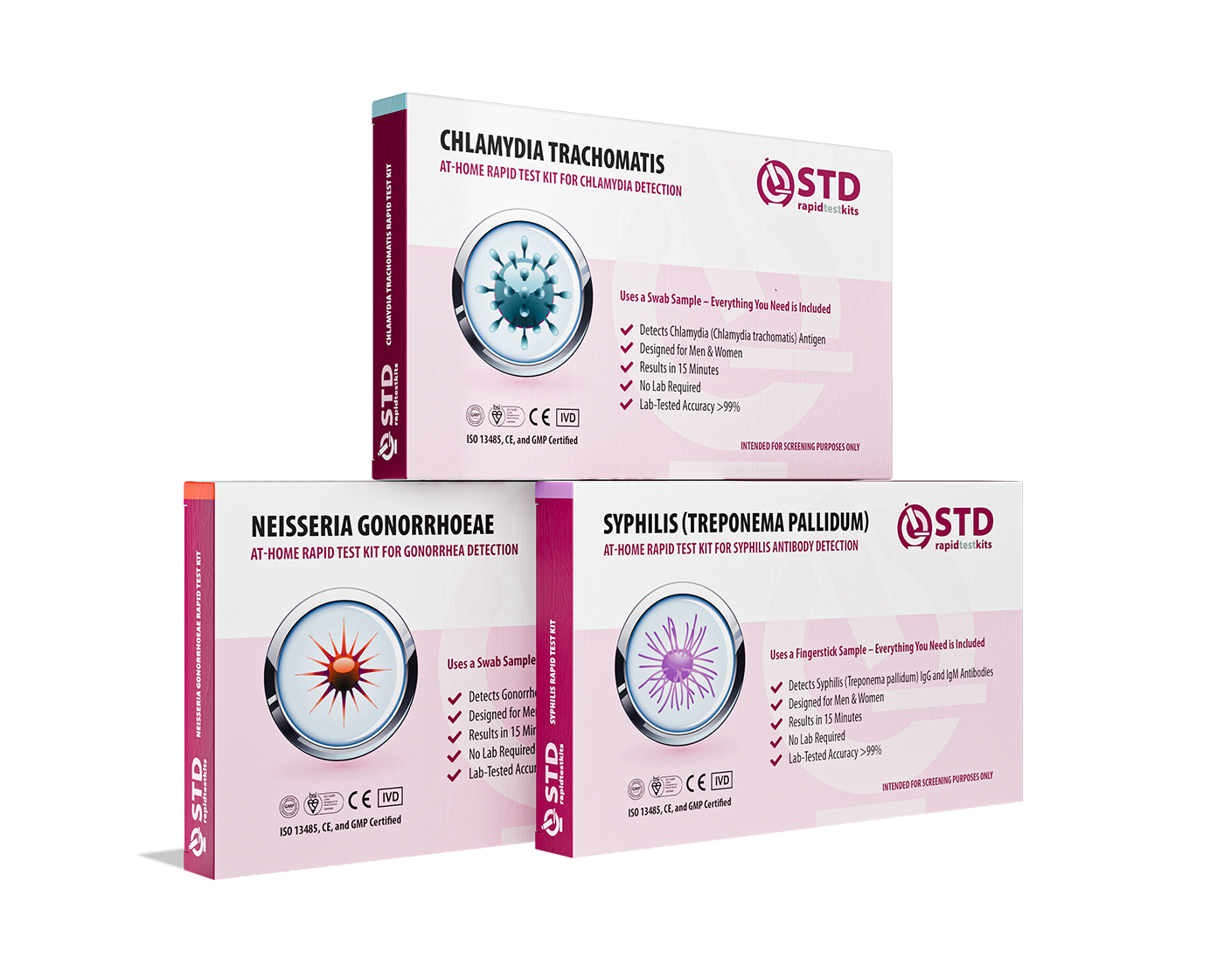 Claim Your Kit TodaySave 53%For Men & WomenResults in MinutesNo Lab NeededPrivate & Discreet
For all 3 tests
STDs That Can Coexist and Increase Susceptibility to Others
HIV & Syphilis
HIV and syphilis are commonly occurring together since the lesions of syphilis provide an easy entry point for the HIV infection. Read more about effective practices for preventing herpes and other STDs. This makes syphilis clients three to five times more susceptible to contracting HIV during unprotected sexual exposure.
Gonorrhea and Chlamydia
These bacterial infections frequently appear together, since they can be contracted through similar sexual behaviors. Testing for one frequently leads to testing for the other, since they frequently infect the same anatomic sites.
Herpes and Other Viral STDs
Having herpes can make you more susceptible to other viral STDs, such as HIV. Open sores from herpes provide viruses with an easier route into the bloodstream, increasing the risk.
HPV and Other Infections
Human papillomavirus is another common STD and can be taken alongside all the others as well. Discover how HPV and other STDs interact here. Co-infection involving high-risk type of HPV-Immune interactions augment the risk of acquiring the new infection.
Understanding these associations gives an individual much insight and enhances appreciation for comprehensive diagnosis and prevention strategy for STD

Frequently Asked Questions
1.- Can you have symptoms of more than one STD at the same time?
Yes, some symptoms can interact-for example, pain from urination, or unusual discharge; other infections may not show symptoms at all.
2.- How common are co-infections with STDs?
According to many studies, STD co-infections, such as chlamydia and gonorrhea, are fairly common, particularly among people who change partners rather frequently.
3.- What if the co-infections are not treated?
If left untreated, co-infections can result in severe complications like infertility, chronic pain, and an increased risk of HIV infection. Explore the risks of untreated infections here.
4.- Do home test kits detect multiple STDs?
Most of the test kits available for home testing are designed for multiple infections testing at once. Yes, these testing options will be convenient and discreet.
5.- Are co-infections difficult to treat?
They can be, particularly if one or more of the illnesses involve antibiotic-resistant bacteria. Seek medical attention immediately.
6.- What are some of the most common STD co-infections?
Some of the more common co-illnesses include gonorrhea and chlamydia; syphilis and HIV; herpes and other viral infections.
7.- Can STD co-infections make each other worse?
Yes. Some diseases can make symptoms or the course of another STD worse, such as HIV hastening syphilis.
8.- How often should you get tested for STDs?
Testing frequency depends on your risk factors, but all sexually active people should be tested at least once a year, and more often if they have multiple partners.
9.- Are the symptoms different for co-infections than for single STDs?
Symptoms can be more serious and of longer duration in cases of co-infection, though some remain asymptomatic, thus requiring testing.
10.- Can co-infections affect a pregnancy?
Yes, co-infections can cause complications such as premature birth, low birth weight, and passing STDs to the baby at birth. They can be, especially if one or more illnesses contain antibiotic-resistant bacteria. Seek medical attention immediately.
Take Responsibility for Your Sexual Health
That more than one STD can occur at the same time reinforces the need for prevention, testing, and treatment. The best defenses are regular testing, safe practices, and open communication with partners. If you believe you've been exposed to an STD, don't wait—use an at-home STD test kit in the comfort of your own home or visit a doctor. These precautions not only will make you healthy but also the people you are concerned with. Stay informed, stay safe, and stay healthy.
Sources
1.- Is it Possible to Get Two STDs at Once? - Your Sexual Health
2.- Can You Get More Than One STI at the Same Time? - Shim Clinic
3.- Can You Have More Than One STD at a Time? - Everlywell
4.- Prevalence of Co-Infections in Sexually Transmitted Infections - PMC
5.- How Many STDs Can You Get at Once? - WellWisp
6.- STDs: Can You Be Infected with More Than One Disease? - Elyon Clinic


