Published: October 2025 | Last updated: May 2026 | Editorial review and quality control: Martina N.
You're on PrEP, you're doing the right thing for your health, and then test day comes around and the questions start. Will the medication interfere with results? Could PrEP hide HIV? Should you stop taking it before testing? These are reasonable questions, and the short answer is calmer than what most search results suggest.
PrEP does not hide HIV. It can very slightly slow the earliest detectable point of a brand-new infection in rare cases of inconsistent use, and the mandatory three-month testing schedule that comes with PrEP care exists precisely to catch that edge case. For chlamydia, gonorrhea, syphilis, trichomoniasis, herpes, and hepatitis, PrEP has no effect on test reliability at all.
This piece walks through how each STI test behaves on PrEP, when to test after a possible exposure, what at-home testing can and can't answer, and what to do if a result comes back reactive.
Key Takeaways
- PrEP does not cause false negatives for chlamydia, gonorrhea, syphilis, trichomoniasis, herpes, or hepatitis. Test reliability for these infections is unchanged by HIV prevention medication.
- For HIV, the routine three-month testing cadence required while on PrEP fully covers the small timing nuance the medication can introduce. Follow the schedule and the results are reliable.
What PrEP Actually Is, and What It Isn't
PrEP, short for pre-exposure prophylaxis, is medication taken before potential HIV exposure to prevent infection. The two FDA-approved daily oral options are Truvada (emtricitabine plus tenofovir disoproxil fumarate) and Descovy (emtricitabine plus tenofovir alafenamide). A long-acting injectable, cabotegravir (Apretude), is also approved. When taken consistently, daily oral PrEP greatly reduces the risk of acquiring HIV from sex, according to the CDC's PrEP guidance.
What PrEP does not do is also important to spell out. It does not treat HIV in someone already infected. It does not prevent chlamydia, gonorrhea, syphilis, trichomoniasis, herpes, HPV, or hepatitis. And outside of one narrow, well-understood interaction with very early HIV detection, it does not affect STI test results.
What it does: prevents HIV infection when taken consistently.
What it doesn't do: treat existing HIV; prevent chlamydia, gonorrhea, syphilis, trichomoniasis, herpes, HPV, or hepatitis; interfere with tests for any of the non-HIV STIs.
How HIV Testing Works, and Where PrEP Fits In
HIV tests come in three broad categories, each looking for a different marker of infection. Antibody tests look for the immune response the body produces to HIV. Most rapid fingerstick and oral-fluid tests are antibody-based. Antigen/antibody tests, often called fourth-generation tests, detect both antibodies and the p24 viral protein, which appears earlier than antibodies. RNA tests, also called nucleic acid tests, look directly at HIV's genetic material and pick up infection earliest of all.
The nuance with PrEP is this. If someone is taking PrEP inconsistently and acquires HIV during that gap in coverage, the medication can suppress viral replication just enough to slow how quickly p24 antigen and antibodies rise. The infection still becomes detectable. The earliest detection markers can simply take a little longer to cross the threshold a test needs to register positive. RNA testing largely bypasses this concern because it detects viral genetic material directly.
The CDC's PrEP clinical guidance requires HIV testing before starting PrEP and every three months while continuing it, and providers can order an HIV RNA test when very recent exposure makes a single antigen/antibody result less informative.

Does PrEP affect STD test results?
PrEP does not interfere with tests for chlamydia, gonorrhea, syphilis, trichomoniasis, herpes, or hepatitis. For HIV, PrEP can very slightly delay the earliest detection window in rare cases of inconsistent use, which is exactly why the three-month routine testing schedule is part of standard PrEP care. When you follow the schedule, the results are reliable.
What About Tests for Other STIs?
This is the cleanest part of the answer. PrEP has no biological mechanism to interfere with tests for chlamydia, gonorrhea, syphilis, trichomoniasis, herpes, HPV, or hepatitis. The medication targets HIV reverse transcriptase, an enzyme that doesn't exist in bacteria, in non-HIV viruses, or in parasites. There is simply nothing for it to mask.
Chlamydia and gonorrhea are detected by nucleic acid amplification tests (NAATs), which look for bacterial DNA. PrEP doesn't change bacterial DNA. Syphilis is detected by antibody blood tests, and the body's immune response to Treponema pallidum is unaffected by HIV prevention medication. Trichomoniasis is detected by NAAT or rapid antigen testing on a urine sample or self-collected swab. Hepatitis B and C are detected by serology, again with no interaction with PrEP. Herpes is detected by swab PCR during an active outbreak or by type-specific antibody blood test, neither of which is affected by PrEP.
If a chlamydia, gonorrhea, syphilis, or hepatitis result comes back positive while you're on PrEP, the next steps are exactly the same as for someone not on PrEP: targeted treatment, follow-up where indicated, and partner notification.
| Infection | Common Test Type | Does PrEP Interfere? | Notes on Accuracy |
|---|---|---|---|
| HIV | Antigen/antibody or RNA | Small possible delay in very early detection | Three-month routine testing covers this nuance |
| Chlamydia | NAAT (PCR) | No | Unaffected by HIV prevention medication |
| Gonorrhea | NAAT (PCR) | No | Detection based on bacterial DNA |
| Syphilis | Antibody blood test | No | Immune response not altered by PrEP |
| Trichomoniasis | NAAT or rapid antigen | No | No biological interaction with PrEP |
| Hepatitis B/C | Serology (antigen/antibody) | No | Standard markers unaffected |
Why Testing Every Three Months Isn't Optional
Routine HIV testing while on PrEP is a clinical safeguard with three specific jobs.
First, it catches the rare case where someone acquires HIV while taking PrEP inconsistently. The two-drug regimen used in oral PrEP is not adequate treatment for established HIV infection. If someone becomes infected and continues PrEP without switching to a full antiretroviral regimen, the virus can develop drug resistance, making the eventual treatment harder. Early detection lets providers switch from the two-drug PrEP regimen to a full treatment regimen before resistance develops.
Second, the three-month cadence catches the even rarer breakthrough infections that occur despite consistent PrEP use. Real-world cohort studies put these at well under 1 percent of users per year, but they exist, and they're almost always linked to either inconsistent dosing or exposure to an HIV strain with resistance to one of the PrEP drugs.
Third, the three-month schedule lines up neatly with the recommended STI screening cadence for sexually active people on PrEP. Chlamydia, gonorrhea, and syphilis screening every three to six months is standard, and most clinics will run the full panel together. One blood draw, one urine sample, and (where indicated) throat and rectal swabs cover the entire schedule.
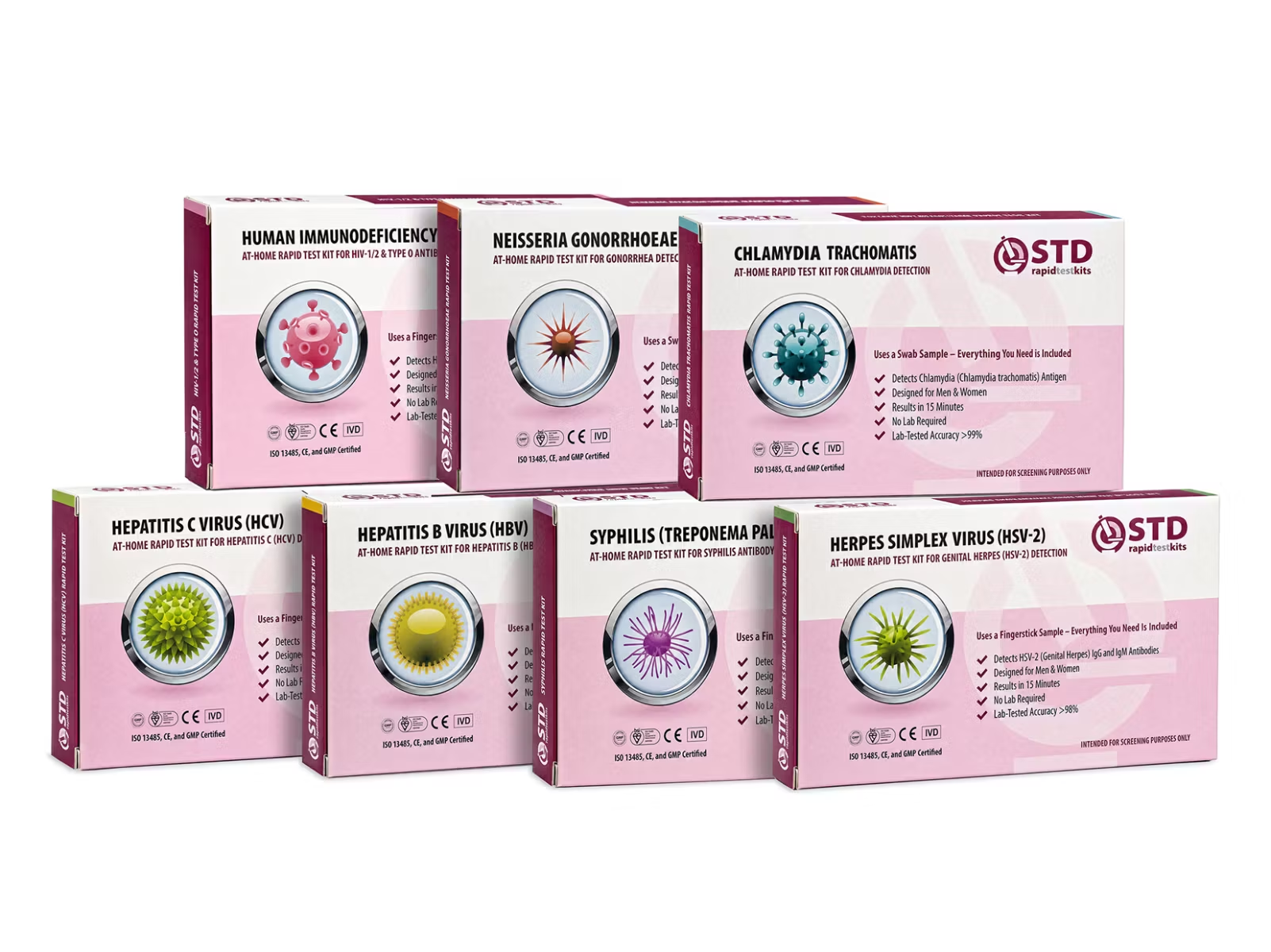
This article is published by stdrapidtestkits.com, which sells at-home STI testing kits. The product mentions below are placed where they fit the reader's likely need, not for commercial reach.
Window Periods, Explained Without Panic
"Window period" sounds clinical, but it just means the time between exposure and when a test can reliably detect infection. Different test types have different windows. For HIV, the ranges that the CDC's HIV testing overview cites are as follows. RNA tests can detect infection roughly 10 to 33 days after exposure. Fourth-generation lab antigen/antibody tests typically detect infection 18 to 45 days after exposure. Rapid fingerstick antibody tests range from about 23 to 90 days. Oral-fluid antibody tests usually run the longest, at 23 to 90 days, sometimes more.
Being on PrEP does not erase these windows. In rare cases of early infection during inconsistent use, the earliest detectable point can drift slightly later for antigen/antibody and antibody-only tests. Providers handle this by ordering RNA testing when a recent high-risk exposure is a specific concern, rather than relying on a single early antibody result.
For non-HIV STIs, windows are straightforward and unchanged by PrEP. The table below covers the common ones.
| Infection | Earliest Detection | Most Reliable Testing Point | Does PrEP Change This? |
|---|---|---|---|
| HIV (RNA) | 10 to 14 days | 2 to 4 weeks | Rare slight delay possible |
| HIV (4th-Gen lab) | 18 to 45 days | 6 weeks | Rare slight delay possible |
| HIV (rapid antibody) | 23 to 90 days | 3 months | Rare slight delay possible |
| Chlamydia | 1 to 2 weeks | 2 weeks | No |
| Gonorrhea | 1 to 2 weeks | 2 weeks | No |
| Syphilis | 3 weeks | 6 to 12 weeks | No |
| Hepatitis B (HBsAg) | 4 weeks | 8 to 12 weeks | No |
Breakthrough Infections Are Rare and Manageable
A "breakthrough" infection means HIV transmission while someone is taking PrEP. In real-world studies, this happens in well under 1 percent of consistent users per year. It nearly always traces back to one of two causes: dosing gaps over multiple weeks, or exposure to an HIV strain resistant to one of the PrEP drugs.
This is part of why providers monitor more than just HIV status during routine PrEP visits. Kidney function, hepatitis B status, and any signs of acute HIV symptoms (fever, rash, sore throat, lymph node swelling within a few weeks of exposure) are part of the check-in. If a reactive HIV test happens, providers move immediately to confirmatory testing, usually an HIV RNA test plus a full antigen/antibody panel, and pause PrEP while a treatment regimen is set up.
The cost of missing an early infection while someone keeps taking only two drugs is much higher than the cost of running a confirmatory test on a low-probability flag, which is why providers order confirmatory testing promptly on any reactive result rather than waiting for symptoms to develop.
Should You Ever Stop PrEP Before Testing?
Short answer: no, not without your provider's guidance. The instinct to stop comes from wanting a "cleaner" test, but the logic doesn't hold up.
Stopping PrEP before a test removes protection during a window when you may already be exposed. It does not meaningfully improve test sensitivity. If your provider is concerned about a recent specific exposure, they have better tools available, particularly the HIV RNA test, which detects viral genetic material directly and is much less affected by any timing nuance PrEP introduces.
The right answer is better test selection, not pausing prevention. Decisions about PrEP adherence belong in the conversation with your clinician.
If a recent exposure has you worried, call your provider and ask about an HIV RNA test rather than stopping your medication. RNA testing detects viral genetic material directly and is the right tool for very recent exposure. Skipping doses just to get a different result leaves you unprotected without making the test more accurate.
Are At-Home HIV Tests Reliable on PrEP?
Yes, with one important caveat about timing. At-home HIV tests use the same underlying lateral-flow chemistry as clinic-administered rapid tests, and PrEP doesn't change that chemistry. Reliability depends on two things: how recent the potential exposure was, and which type of sample the test uses. Blood-based fingerstick rapid tests are generally more sensitive in earlier infection than oral-fluid tests.
For people on PrEP following the three-month testing cadence, an at-home rapid HIV test is a reasonable mid-cycle check or a way to confirm long-standing negative status. It is not the right tool to evaluate a high-risk exposure that happened a few days ago. For very recent exposure, a clinic-administered HIV RNA test will detect infection earlier than any at-home antibody or antigen/antibody product can.
Our own at-home HIV test is a fingerstick blood antibody/antigen lateral-flow rapid test, used for screening rather than as a NAAT. It does not detect the very earliest infection in the first couple of weeks after exposure, and that limit applies whether or not you're on PrEP. A positive result from any at-home test should be confirmed by a clinic-run lab panel.

PrEP Doesn't Cover Other STIs, and Rates Often Look Higher
This is where many readers get blindsided. PrEP reduces HIV risk dramatically, but it has no effect on chlamydia, gonorrhea, syphilis, trichomoniasis, herpes, HPV, or hepatitis. In some PrEP cohorts, rates of these infections are higher, partly because people on PrEP are tested more frequently (so more infections are detected and counted) and partly because some users reduce condom use as their HIV risk feels lower. Both effects are well documented in CDC and WHO surveillance data.
None of this is a failure of PrEP. It just means STI screening needs to stay broad. CDC's recommended schedule for sexually active people on PrEP is HIV every three months, chlamydia and gonorrhea every three to six months (including throat and rectal swabs depending on sex practices), syphilis every three to six months, and hepatitis C at least annually with more frequent screening if there are specific risk factors. WHO's PrEP guidance aligns with this approach globally.
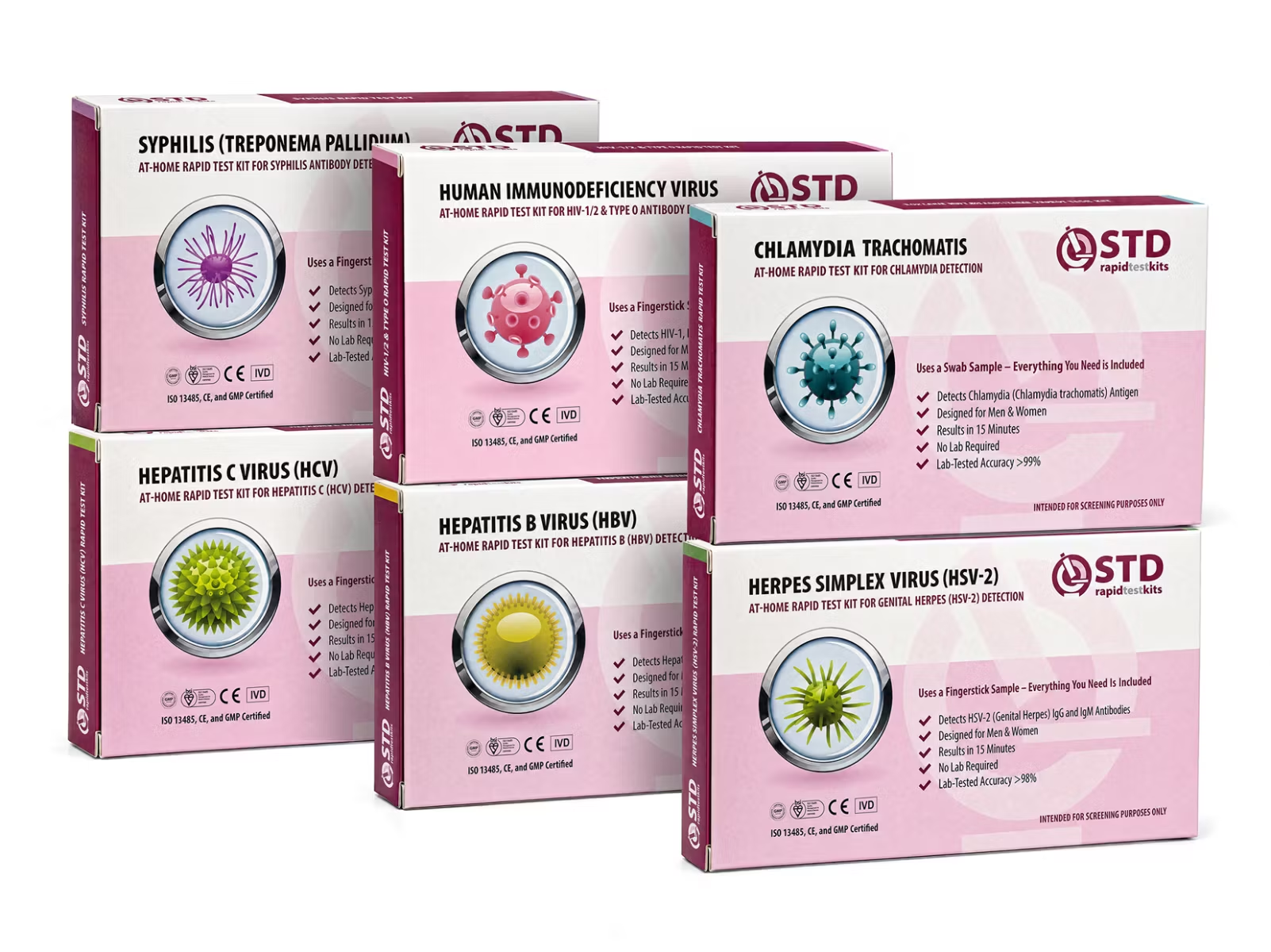
One scope note: clinic-administered throat (pharyngeal) and rectal swabs for chlamydia and gonorrhea are not something we sell as an at-home kit. Those samples need to be collected and processed by a clinic. Our at-home swab kits cover self-collected vaginal and penile sampling. If your sex practices include receptive oral or anal sex, the throat or rectal screening portion of your three- to six-month cadence should be done at a clinic, and our kits can cover the genital and blood-test portion at home.
| Condition | Does PrEP Prevent It? | Routine Testing Recommended? | Typical Screening Frequency |
|---|---|---|---|
| HIV | Yes, when taken consistently | Yes | Every 3 months |
| Chlamydia | No | Yes | Every 3 to 6 months |
| Gonorrhea | No | Yes | Every 3 to 6 months |
| Syphilis | No | Yes | Every 3 to 6 months |
| Hepatitis C | No | Yes | Annually (more often if higher-risk) |
| Trichomoniasis | No | Based on risk | Varies |
When Symptoms Appear, Test Regardless of PrEP Status
PrEP doesn't make symptoms disappear. If you notice unusual genital discharge, a sore that doesn't heal, painful urination, persistent sore throat after oral sex, rectal discomfort, or a rash, don't wait for your next quarterly screening. Get tested promptly.
Symptoms suggest active infection somewhere, and treatment is more effective the earlier it starts. PrEP users tend to have a tighter feedback loop with their clinic and can act faster than someone with no scheduled care. Use that to your advantage when something feels off.
One specific scenario worth flagging: if your HIV test is negative while on PrEP but symptoms suggesting acute HIV infection persist, your provider may repeat testing or order an RNA test, depending on timing. That's standard clinical caution.
Acute HIV symptoms that warrant earlier testing
- Fever appearing within 2 to 4 weeks of a high-risk exposure
- Sore throat that doesn't follow a normal viral-cold timeline
- Body rash on the torso or limbs without an obvious cause
- Swollen lymph nodes in the neck, armpit, or groin
- Profound fatigue, night sweats, or muscle aches alongside the above
If You Test Positive While on PrEP
A reactive HIV screening test while on PrEP is rare, and it's not the end of the story. Initial screening tests are tuned to be sensitive, which means they catch real infections and also flag occasional false positives. Confirmatory testing exists exactly for that reason.
If your initial test is reactive, your provider will order confirmatory testing, typically an HIV antibody differentiation test (or an HIV RNA test, or both), to verify whether infection is real. They will also pause PrEP if a true infection is confirmed and transition you to a full antiretroviral regimen, and they'll coordinate partner notification and any additional STI workup that's appropriate. No one starts treatment based on a single ambiguous screening result.
Even if HIV infection is confirmed, modern antiretroviral therapy is highly effective. People who start treatment early and stay adherent can expect a near-normal life expectancy, and once viral load is undetectable on treatment, the risk of sexual transmission is greatly reduced, a finding endorsed by the CDC, WHO, and other major public-health bodies.
For a positive non-HIV STI result, the path is the same as it would be for anyone else. Antibiotics for chlamydia, gonorrhea, syphilis, or trichomoniasis. Antiviral management for herpes outbreaks where appropriate. HPV vaccination remains useful through age 26 for routine vaccination and through age 45 with shared clinical decision-making, per ACIP. Partner notification and any indicated additional STI workup will be coordinated as part of the management plan.
Confirmatory testing comes first (antibody differentiation plus HIV RNA). PrEP is paused only if infection is confirmed. The medication regimen switches to a full antiretroviral combination. Your provider coordinates partner notification and any additional STI workup. None of these steps are triggered by a single ambiguous screening result.
Confirmatory Testing and the Wait
The space between "reactive" and "confirmed" can feel endless. Confirmatory algorithms exist specifically to prevent misdiagnosis. A screening test is designed to catch as many potential cases as possible, even at the cost of an occasional false positive. Confirmatory tests then verify with much higher specificity, which reduces both false negatives and false positives across the system.
For HIV specifically, if you receive a reactive screening result while on PrEP, your provider may run an HIV antibody differentiation test (to distinguish HIV-1 from HIV-2 and confirm true seroconversion) along with an HIV RNA test (to directly measure viral genetic material). RNA testing shortens the uncertainty window and helps clarify whether the infection is acute, established, or absent.
False-positive screening results are more common than confirmed breakthrough infections. While you wait, lean on your provider's office for the timeline rather than your search history, and ask which specific confirmatory test was ordered so you know what to expect.
How to Stay on Top of Testing Without Burning Out
Three-month testing is the standard, and the routine can feel exhausting if you only think about it when something feels off. A few practical anchors help.
Sync your STI screening with your PrEP refill appointment. Most clinics run the full panel together, so it's one visit, one set of samples, and one set of results. Use a privacy-conscious at-home option between clinic visits if you want extra reassurance, especially if you've had a new partner or a slip in routine. Treat the schedule as maintenance, not as a crisis check. Calendar reminders, app-based logging, or simply scheduling the next appointment as you leave the current one all reduce the cognitive load.
What This Actually Means for Your Life
If you're on PrEP and testing on schedule, your results are reliable. The medication does not sabotage screening for chlamydia, gonorrhea, syphilis, trichomoniasis, herpes, or hepatitis. The small HIV-test timing nuance is fully accounted for in the three-month cadence required by PrEP care. If you've had a specific high-risk exposure, your provider has more sensitive tools (especially RNA testing) to shorten the window of uncertainty.
You do not need to stop PrEP before testing. You do not need to assume every negative result is suspect. You do need consistency in dosing, appropriate timing after potential exposures, and information grounded in current public-health guidance instead of message-board rumor.
At a minimum, people on oral PrEP need repeat HIV antigen/antibody and HIV-1 RNA testing at least every three months, along with assessment for signs or symptoms of acute HIV infection, to confirm they do not have HIV.
FAQs
- Can PrEP cause a false negative HIV test?
- Not in the way most people fear. PrEP does not break the test. What it can do, in rare cases of new HIV infection while someone is taking PrEP inconsistently, is slightly delay when viral markers cross the detection threshold for antigen/antibody and antibody-only tests. The three-month testing schedule built into PrEP care exists specifically to handle that nuance. If you've had a recent high-risk exposure, ask your provider about an HIV RNA test, which detects infection earlier than antibody-based tests.
- Should I stop PrEP before getting tested?
- If a recent exposure concerns you, ask your provider about an HIV RNA test rather than stopping PrEP. Stopping the medication removes protection without making the test any more accurate. RNA testing is the right tool for very recent exposure because it detects viral genetic material directly, and it's much less affected by any timing nuance PrEP can introduce.
- Does PrEP affect chlamydia or gonorrhea test results?
- Completely unaffected. Chlamydia and gonorrhea NAATs look for bacterial DNA; PrEP targets a viral enzyme that bacteria don't have, so there is no biological pathway for interference. A positive result while you're on PrEP is treated exactly the same way as it would be for anyone else, usually with a single course of antibiotics and a follow-up test to confirm clearance.
- Can I use an at-home HIV test while on PrEP?
- Yes. At-home HIV tests use the same underlying lateral-flow chemistry as clinic-administered rapid tests, and PrEP doesn't change that. The key is timing. Blood-based fingerstick rapid tests are more sensitive in earlier infection than oral-fluid tests. For very recent high-risk exposure, a clinic-run HIV RNA test will detect infection sooner than any at-home option.
- How often should I test for STIs while on PrEP?
- HIV testing is required every three months while on PrEP. The CDC also recommends chlamydia, gonorrhea, and syphilis screening every three to six months for sexually active PrEP users, including throat and rectal swabs depending on sex practices. Hepatitis C screening is recommended at least yearly, more often if there are specific risk factors.
- What happens if I test positive for HIV while on PrEP?
- Your provider will order confirmatory testing, usually an HIV antibody differentiation test plus an HIV RNA test, before changing your medication. If infection is confirmed, you'll transition from PrEP to a full antiretroviral regimen, and partner notification and additional STI workup will be coordinated. Reactive screening results that turn out to be false positives are more common than confirmed breakthrough infections.
- Can PrEP delay HIV antibodies?
- In theory, slightly, if someone is taking PrEP inconsistently during very early infection. In practice, the three-month testing cadence and the availability of antigen and RNA testing make this a manageable timing issue rather than a clinical problem. Reliable detection is built into how the medication is prescribed and monitored.
- Does PrEP protect against other STIs besides HIV?
- No. PrEP is HIV-specific. It does not prevent chlamydia, gonorrhea, syphilis, trichomoniasis, herpes, HPV, or hepatitis. Routine STI screening alongside PrEP is essential, and condoms remain useful for reducing the risk of these other infections. HPV vaccination is recommended through age 26 for routine vaccination and through age 45 with shared clinical decision-making, per ACIP guidance.
How We Sourced This Article: This article summarizes current public-health guidance from the U.S. Centers for Disease Control and Prevention, the World Health Organization, and HIV.gov on pre-exposure prophylaxis, HIV testing methodology, window periods, and recommended STI screening schedules for sexually active people on PrEP. It is editorial summary content, not clinical advice. For medical decisions about your own care, talk to a licensed provider.
- U.S. Centers for Disease Control and Prevention. Pre-Exposure Prophylaxis (PrEP) overview, including the statement that PrEP greatly reduces the chance of getting HIV from sex or injection drug use when taken consistently.
- U.S. Centers for Disease Control and Prevention. Clinical Guidance for PrEP (HIV Nexus), including the requirement of HIV testing every three months for oral PrEP, confirmatory testing pathways, and management of reactive results.
- U.S. Centers for Disease Control and Prevention. HIV Testing overview, including window periods for antibody, antigen/antibody, and nucleic acid (RNA) tests.
- World Health Organization. Pre-Exposure Prophylaxis (PrEP) global guidance on use, monitoring, and STI co-screening for people on PrEP.
- HIV.gov. HIV Testing Overview, including the role of antiretroviral therapy in preventing transmission to others once viral load is suppressed.
