







Last updated: April 2026
The cheapest way to get tested for STDs in the US, for most Americans in most situations, is an at-home rapid test kit. Single-infection tests start at $18.99. Combo kits covering the most common infections start at $34.99. There are no consultation fees, no separate lab bills, no appointment required, and results are ready in minutes. That's the direct answer. The rest of this article explains why, and what the genuine alternatives look like once you factor in the full picture, because "cheapest" depends on your income, your location, which infections you need to test for, and how much your time is worth.
According to the CDC's 2024 provisional surveillance data, more than 2.2 million cases of chlamydia, gonorrhea, and syphilis were reported in the United States last year alone, a figure that remains 13% higher than a decade ago. Cost is a documented barrier to testing, and that barrier has consequences. The options below are designed to remove it.
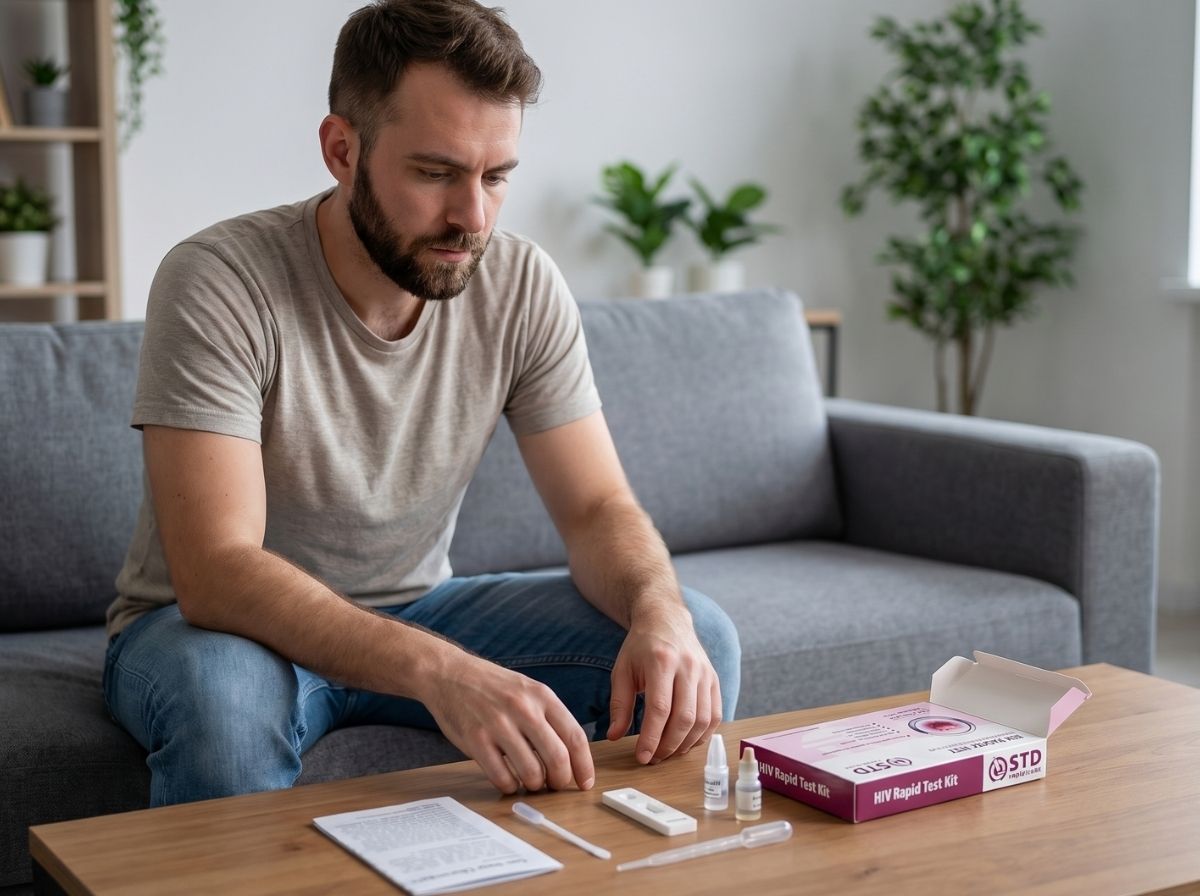
People are also reading: STD Myths and Facts: Common Misconceptions About Sexually Transmitted Infections
How Much Does STD Testing Cost Without Insurance in the US?
The range is wide, and the reason it's wide is worth understanding before you pick an option. The biological cost of running an STD test is the same whether you're at a county health clinic or a private urgent care two blocks away. What you're charged reflects the business model of the facility, not the cost of the test itself. A private urgent care prices services to cover overhead, staffing, and margin. A federally funded health center prices services to be accessible to people who couldn't otherwise afford care. Same test. Completely different invoice.
The second cost driver is hidden fees, and this is where a lot of people get caught off guard. Many clinics and urgent care centers advertise a base test price that doesn't include the consultation fee required before a provider can order the test, or the separate lab processing fee billed weeks later by the third-party lab that analyzes the sample. You walk in expecting to pay $80 and walk out owing two separate bills totalling $220. One question asked upfront, "Does that price include the consultation and all lab processing fees?", prevents most of that surprise.
The third driver is scope. A test for one infection costs considerably less than a panel covering eight. The problem is that "I want to check for everything" is a phrase that can trigger a full panel order at many clinics before you've had the chance to consider what you actually need. Knowing which infections to screen for, based on your specific exposure, cuts the bill without compromising the usefulness of the test.
| Testing Option | Single Infection | Comprehensive Panel | Hidden Fees? | Result Speed |
|---|---|---|---|---|
| Hospital / Private Practice | $100–$250 | $300–$600+ | Often, lab bill separate | 1–5 days |
| Urgent Care Center | $75–$185 | $200–$440 | Common, consultation + lab | 1–3 days |
| At-Home Rapid Test Kit (STD Rapid Test Kits) | From $18.99 | From $34.99 | None | Minutes |
| Planned Parenthood | $0–$70 (sliding scale) | $100–$270 | Lab fees sometimes separate | Same day to 1 week |
| FQHC / Community Clinic | $0–$40 (income-based) | $40–$150 | Varies by location | 1–14 days |
| County / State Health Dept. | Free–$30 (often waived) | Free–$75 | Rarely | Same day to 2 weeks |
The gap between the most and least expensive options for a comprehensive panel can exceed $500 for the exact same biological tests. Urgent care centers, which feel fast and accessible, consistently sit at the high end, and are the most likely to add surprise fees after the fact. At-home rapid test kits occupy a genuinely different category: the price on the product page is the price you pay, full stop, and results arrive in minutes rather than days.
Are At-Home STD Test Kits Cheaper Than Going to a Clinic?
On sticker price, at-home rapid test kits are cheaper than urgent care and private practice for virtually every comparison. Against free or sliding-scale clinic options, the comparison is more nuanced, but when the full cost is calculated, including time, transport, appointment lead times, and the scope of what's actually covered, at-home kits are competitive with or cheaper than clinic-based alternatives for the majority of Americans.
Picture this: it's Tuesday evening, you've been thinking about a recent exposure for three days, and you just want to know your status. Your options are to book a clinic appointment for sometime next week, drive to an urgent care and spend two hours waiting for a provider to order a test that won't be ready until Thursday, before the lab bill arrives separately, or order a rapid test kit that ships in discreet packaging and gives you a result in minutes from your own bathroom. The cost difference is real. So is the time difference. So is the privacy.
At-home rapid test kits from STD Rapid Test Kits use clinically validated lateral flow immunoassay technology, the same diagnostic method used in point-of-care clinical settings worldwide. There is no facility overhead, no consultation fee, no third-party lab invoice. Accuracy rates run from 97.2% to 99.7% depending on the infection, which is comparable to what you'd receive in a clinic for the same test. The Chlamydia Rapid Test Kit carries 99.7% accuracy. The HIV 1&2 Rapid Test Kit carries 99.7% accuracy. The Syphilis Rapid Test Kit carries 99.4% accuracy.
The privacy factor also carries economic value that doesn't appear in a price table. No insurance claim means no record on your policy. No clinic visit means no employer-linked health plan billing. For anyone navigating testing on a shared insurance plan, or simply wanting to keep their sexual health information genuinely private, at-home testing removes a layer of complexity with real financial and personal implications. According to the CDC, accessible testing is one of the most effective tools available for controlling STI transmission, and removing barriers to that access is the point.
One thing worth flagging for the cost-conscious buyer: the cheapest test is not always the one with the lowest price; it's the one that covers what you actually need to know. Testing for one infection when you have exposure risk across several means a second order and a second cost. Getting the right combo kit on the first order is almost always cheaper in total. More on choosing the right kit below.
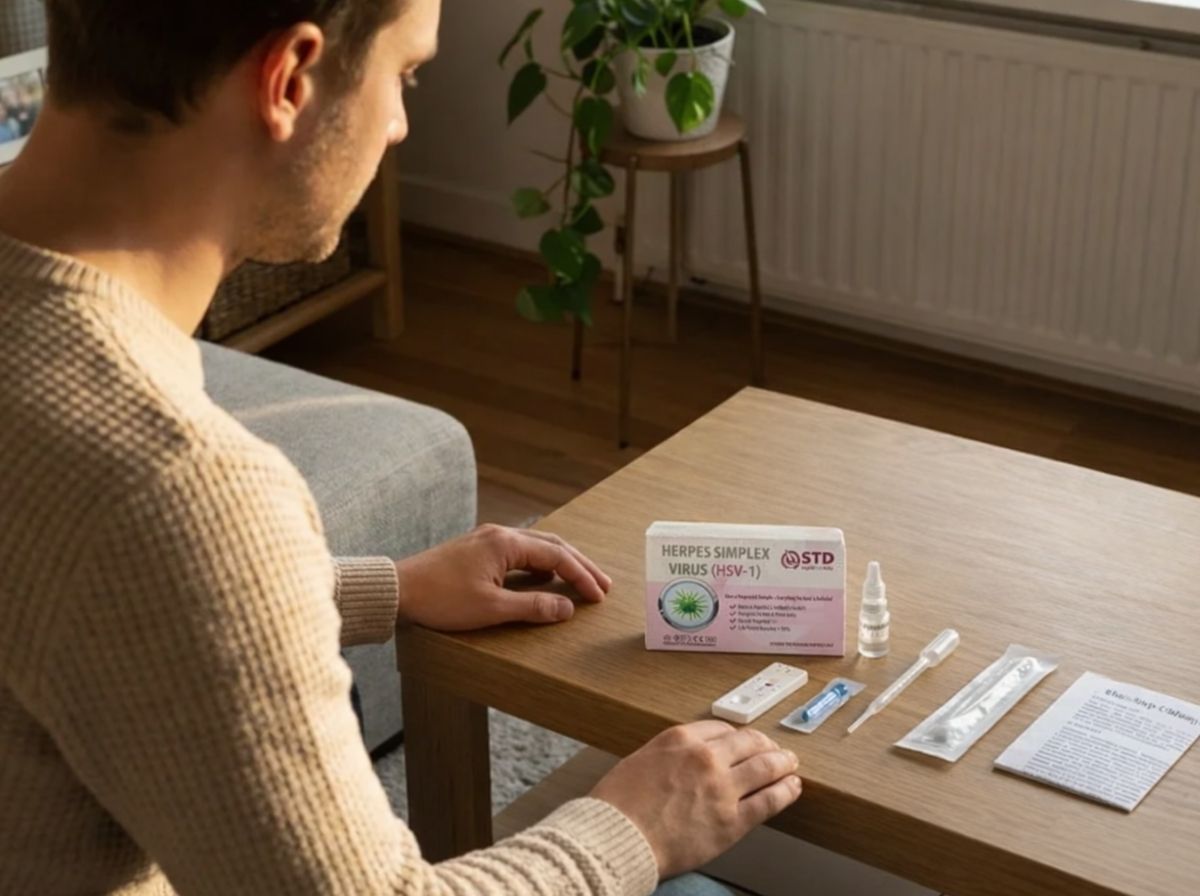
People are also reading: STD Myths and Facts: Common Misconceptions About Sexually Transmitted Infections
Which At-Home STD Test Kit Is Right for Your Situation?
The right kit depends on your specific exposure, not on a general instinct to "check everything." Here's how to match the test to the situation, and why combo kits almost always represent better value than stacking single tests.
| Situation | Recommended Kit | Accuracy | Starting Price |
|---|---|---|---|
| One specific concern after a known exposure | Single-infection test (Chlamydia, Gonorrhea, HIV, Syphilis, etc.) | 97.2%–99.7% | $18.99 |
| Recent unprotected sex, want to cover the most common infections | Chlamydia, Gonorrhea & Syphilis 3-in-1 | 99.5% | $34.99 |
| Full peace of mind, comprehensive coverage for men and women | Complete 8-in-1 Kit (HSV-1+2, Chlamydia, Gonorrhea, Syphilis, HIV, Hep B, Hep C) | 99% | $59.99 |
| Women seeking the most complete panel available | Women's 10-in-1 Kit (all above + Trichomoniasis + HPV 16&18) | 99% | $69.99 |
| Herpes concern specifically | Genital & Oral Herpes HSV-1+2 2-in-1 | 98.2% | $29.99 |
| Hepatitis concern specifically | Hepatitis B & C 2-in-1 | 98.8% | $29.99 |
The math on combo versus single tests is straightforward. If you test for chlamydia, get a negative, then realise you should have also checked gonorrhea and syphilis, you've already spent more, in money and in waiting, than the 3-in-1 would have cost on the first order. When in doubt about scope, go one level up on the combo kit. It's nearly always the more cost-efficient decision over a two-week window. Peace of mind is one test away, order yours today and have your result in minutes.
When to Test After Exposure, Getting the Timing Right Saves Money
One of the least obvious ways to waste money on STD testing is testing too early. Testing before an infection is detectable doesn't just give you a false negative, it means you'll need to retest, paying twice for what one well-timed test would have resolved. The timing of your test matters more than most people realise when they're in the middle of a post-exposure spiral.
Every infection has a window period, the time between exposure and when a test can reliably detect it. Testing before that window closes produces results that don't reflect reality. The correct window periods are as follows, and they're non-negotiable regardless of which testing method you use:
Chlamydia: test from 14 days after exposure. Gonorrhea: test from 3 weeks after exposure. Syphilis: test from 6 weeks after exposure. HIV: test at 6 weeks for a first indicator, then retest at 12 weeks for certainty. Herpes HSV-1 and HSV-2: test from 6 weeks after exposure. Hepatitis B: test from 6 weeks after exposure. Hepatitis C: test from 8–11 weeks after exposure.
Testing at the right time means one test delivers the answer you need. That's the most cost-efficient outcome available, and it applies equally to clinic-based and at-home testing. If you're unsure whether enough time has passed, the window periods above are your guide. Order when the biology is ready, not when the anxiety peaks.
Check Your STD Status in Minutes
Test at Home with Remedium8-in-1 STD Test Kit
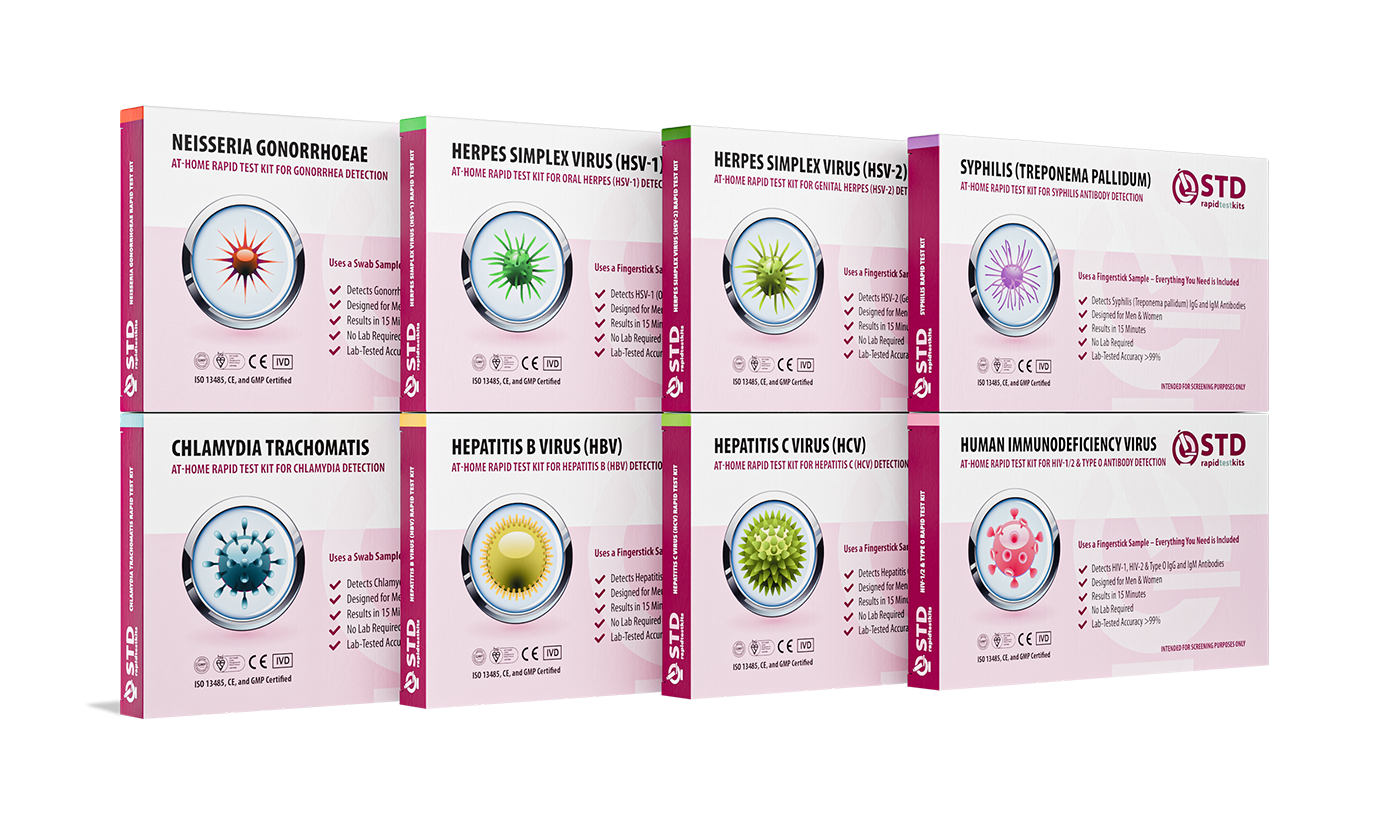
 For Men & Women
 Results in Minutes
 No Lab Needed
 Private & Discreet
Order Now $149.00 $392.00
For all 8 tests
Does Where You Live in the US Affect Your Cheapest Option?
Yes, significantly. The free and low-cost clinic landscape in the US is not evenly distributed, and geography is one of the most underappreciated variables in the "cheapest way to get tested" question. Someone in Los Angeles, Chicago, or New York has access to dozens of walk-in sexual health options within a short drive. Someone in rural Mississippi, Alaska, or West Texas may have one county health clinic with two days of operating hours per week and a three-week appointment queue.
Research published in peer-reviewed public health literature found that rural residents in the US travel two to three times farther to access medical care than their urban counterparts, and have consistently lower rates of STI screening as a result. A study of STI diagnoses in Yakima County, Washington found that living more than 10 miles from a screening site was directly associated with treatment delay or non-receipt. The South, which carries some of the highest STI rates in the country, including Mississippi's position near the top of national chlamydia and gonorrhea rankings, also has some of the most geographically fragmented clinic access.
| State / Area Type | Free Clinic Landscape | Typical Wait for Appointment | Test Menu at Free Options |
|---|---|---|---|
| Large metro states (CA, NY, IL) | Extensive, multiple FQHC, AHF, county options | Days to 1 week | HIV, Syphilis, Chlamydia, Gonorrhea often available |
| Mid-size states (VA, CO, WA) | Moderate, county health depts. plus some community clinics | 1–2 weeks | HIV and Syphilis reliable; others variable |
| Southern rural states (MS, AL, AR) | Limited, high STI rates, fragmented access | 2–4 weeks or longer | HIV often available; broader testing sparse |
| Remote / frontier states (AK, WY, MT) | Very limited, vast travel distances common | Weeks, sometimes months | Minimal; many residents have no local option |
For anyone outside a major metro area, at-home rapid test kits aren't just the cheapest option; they're often the only realistic option that delivers timely results for a full range of infections. They ship to any US address in discreet packaging, require no travel, no appointment, and no reliance on a clinic that may or may not be operating at full capacity. This geographic reality is also why the state-by-state picture matters: what "cheap" means in Atlanta is not what it means in rural Wyoming. At-home kits are the one option that delivers the same price and the same result speed regardless of your zip code. As we continue building out state-specific guides on this site, those articles will cover the local clinic landscape in detail. For now, the nationwide answer is consistent: an at-home rapid kit from STD Rapid Test Kits is the most reliably accessible and cost-predictable option across all 50 states.
Can You Use an HSA or FSA Card to Pay for STD Testing?
Yes, and this is one of the most underused cost-saving tools available for STD testing in the US. At-home rapid test kits are eligible expenses under both Health Savings Accounts (HSA) and Flexible Spending Accounts (FSA). If you have either of these accounts through your employer or an independent plan, you can use pre-tax dollars to pay for your test kit, effectively reducing the out-of-pocket cost by whatever your marginal tax rate is. For someone in the 22% federal bracket, a $59.99 kit costs closer to $47 in real purchasing power.
This matters particularly for people who have high-deductible health plans. These plans technically offer insurance coverage, but the deductible, often $1,500 to $3,000 or higher, means that most out-of-pocket medical expenses, including STD testing at a clinic, land entirely on the patient until the deductible is met. In that scenario, an at-home kit paid with HSA or FSA funds is almost always cheaper in practice than a clinic visit billed through insurance that hasn't hit its deductible.
Most at-home test kit providers, including STD Rapid Test Kits, do not require you to submit insurance claims, which also means no billing code is generated, no claim appears on your Explanation of Benefits, and your testing history stays genuinely private. For anyone on a shared family health plan, or whose employer has access to insurance claim data, this is a meaningful advantage that goes beyond cost alone.
For comparison, most clinic-based providers, urgent care, hospital, and private practice, do not accept HSA or FSA cards directly, and reimbursement requires saving receipts and submitting claims separately. The at-home route eliminates that friction entirely.
What Happens If You Can't Afford STD Testing and Skip It?
Cost-per-test is the number people focus on. The cost of not testing is the number that rarely comes up, and it's considerably larger. Most STDs are entirely asymptomatic in their early stages. Chlamydia shows no symptoms in the majority of people who carry it. Gonorrhea frequently presents with no symptoms at all, particularly in women. Someone can be infected for months and feel completely fine while the infection progresses and the window for straightforward treatment narrows.
Untreated chlamydia and gonorrhea can lead to pelvic inflammatory disease, a condition causing chronic pelvic pain and one of the leading preventable causes of infertility in the US. Untreated syphilis progresses through stages, each more serious than the last, and can reach neurological and cardiovascular involvement years after the initial infection. Untreated hepatitis C damages the liver over the years, often silently, until the damage is severe and treatment is more complex. The cost of managing complications from undetected STDs, in medical bills, lost work, and long-term health consequences, is orders of magnitude higher than the cost of any test on this page.
There's also a transmission dimension. Asymptomatic STDs spread silently. Every untested infection is a potential chain of transmission that a single test could have interrupted. The CDC's sustained public health messaging around accessible, routine testing exists precisely because the downstream cost of untested infections, to individuals and to the healthcare system, consistently outweighs any short-term saving from skipping the test. Testing is not a worst-case scenario response. It's the thing you do to stay ahead of biology rather than behind it. Your results, your privacy, your power.
People are also reading: How to Get STD Testing Without Insurance in the US
FAQs
1. What is the absolute cheapest way to get tested for STDs in the US?
For most Americans, at-home rapid test kits are the cheapest all-in option. Single-infection tests start at $18.99 with no hidden fees, no appointment, and results in minutes. Free clinic options exist but come with real limitations in 2026, appointment lead times, narrow test menus, geographic gaps, and ongoing funding pressures that have reduced availability at some facilities.
2. Can you get STD tested without a doctor in the US?
Yes, completely. At-home rapid test kits require no prescription, no provider referral, and no clinic visit at any stage. You order online, test at home, and read your result in minutes. For the most common STDs, chlamydia, gonorrhea, syphilis, HIV, herpes, hepatitis B and C, this is a complete, clinically accurate process that never involves a healthcare facility unless a positive result requires follow-up treatment.
3. Does Planned Parenthood test for STDs for free?
Sometimes. Planned Parenthood uses a sliding-scale fee structure based on income, and for very low incomes, testing can be free or close to it. However, coverage depends on the specific location, available funding programs, and which infections you need to test for. HIV and syphilis are the most consistently available at reduced cost; broader panels vary. Calling your nearest location ahead of time is the only reliable way to confirm what's available and at what cost.
4. What STD tests are free at a health department?
Most county and state health departments offer free testing for HIV and syphilis regardless of income. Chlamydia and gonorrhea testing is also commonly available at low or no cost. Testing for herpes, hepatitis B, hepatitis C, and HPV is less consistently available at public health facilities and varies widely by county. If you need a comprehensive panel, a free clinic may not cover everything, which is where at-home kits often fill the gap more completely.
5. Are at-home STD test kits accurate enough to trust?
Yes. Kits from STD Rapid Test Kits use the same lateral flow immunoassay technology used in clinical point-of-care settings. Accuracy runs from 97.2% to 99.7% depending on the infection, comparable to clinic-ordered tests for the same infection types. A positive result should be followed up with a healthcare provider for confirmatory testing and treatment; a negative result within the correct window period is a reliable, clinical-grade answer.
6. Can I use my HSA or FSA card to pay for at-home STD test kits?
Yes. At-home rapid test kits are eligible expenses under both Health Savings Accounts and Flexible Spending Accounts. This means you can pay with pre-tax dollars, effectively reducing the real cost by your marginal tax rate. It also means no insurance claim, no Explanation of Benefits record, and no billing code tied to your health plan, making it both cheaper and more private than most clinic-based alternatives.
7. How soon after exposure can I test for an STD?
It depends on the infection. Chlamydia: 14 days. Gonorrhea: 3 weeks. Syphilis: 6 weeks. HIV: 6 weeks for a first indicator, retest at 12 weeks for certainty. Herpes HSV-1 and HSV-2: 6 weeks. Hepatitis B: 6 weeks. Hepatitis C: 8–11 weeks. Testing before these windows produces unreliable results and means retesting, paying twice. Waiting for the correct window is the most cost-efficient approach.
8. Is it cheaper to test at home or at an urgent care center?
Significantly cheaper at home. Urgent care centers typically charge $75–$185 for a single test before the consultation fee and lab bill are added, both of which often arrive on separate invoices weeks later. At-home rapid test kits have a single, all-inclusive price. What you see at checkout is what you pay. No additional invoices.
9. What happens if I test positive on an at-home rapid test?
A positive result is the signal to follow up with a healthcare provider for confirmatory testing and to discuss treatment. All common bacterial STDs, chlamydia, gonorrhea, syphilis, are treatable. HIV and hepatitis are manageable with appropriate medical support. A positive at-home result is not a crisis, it's the information you need to take the right next step quickly, and catching it early is always better than catching it late.
10. Does geography affect how cheap STD testing is in the US?
Substantially. Free and low-cost clinic options are concentrated in major metro areas. Rural residents, particularly in the South, Alaska, and frontier states, may have limited or no local access to free testing, with appointment wait times measured in weeks. At-home rapid test kits are the one option that delivers the same price and the same result speed to every US address, regardless of zip code. For anyone outside a major city, they're often not just the cheapest option but the most practical one available.
Test Today, Get Your Answer in Minutes, Not Days
The version of STD testing where you book an appointment, wait a week, sit in a waiting room, get a result three days later, then receive two separate bills over the following month, that version is more expensive, slower, and less private than it needs to be. The at-home alternative exists, it's clinically accurate, and it costs a fraction of what a clinic charges for the same biological information.
For comprehensive coverage at the best value, the Complete 8-in-1 At-Home Rapid Test Kit covers HIV, Chlamydia, Gonorrhea, Syphilis, HSV-1, HSV-2, Hepatitis B, and Hepatitis C at 99% accuracy, the eight most common STDs in a single kit, for a fraction of what a clinic panel costs before the lab bill arrives. If your concern is specific, the single-infection rapid tests cover the most common infections individually from $18.99. Women looking for the most complete panel available will find it in the Women's 10-in-1 Kit, adding Trichomoniasis and HPV 16&18 to the full panel. And if you're weighing up costs more broadly, the detailed breakdown in our guide to how much STD testing costs and how to pay less covers every option side by side.
Testing is the fastest way to stop the guessing game. Take control of your sexual health today, visit STD Rapid Test Kits and have your result in minutes.
How We Sourced This: Our article was constructed based on current advice from the most prominent public health and medical organizations, and then molded into simple language based on the situations that people actually experience, such as treatment, reinfection by a partner, no-symptom exposure, and the uncomfortable question of whether it "came back." In the background, our pool of research included more diverse public health advice, clinical advice, and medical references, but the following are the most pertinent and useful for readers who want to verify our claims for themselves.
Sources
1. CDC, Sexually Transmitted Infections Surveillance, 2024 (Provisional)
2. CDC, STI Preventive Service Coverage Guidelines
3. National Association of Community Health Centers, Health Center Funding
4. STAT News, The Growing Financial Crisis Facing FQHCs (March 2026)
5. NCBI / PMC, Proximity to Screening Site, Rurality, and STI Treatment Outcomes
6. DCN Dx, Lateral Flow Assays: How Does Lateral Flow Work?
About the Author
Dr. F. David, MD is a board-certified infectious disease specialist focused on STI prevention, diagnosis, and treatment. He writes with a direct, sex-positive, stigma-free approach designed to help readers get clear answers without the panic spiral.
Reviewed by: Rapid STD Test Kits Medical Review Team | Last medically reviewed: April 2026
This article is for informational purposes and does not replace medical advice.


