







Last updated: April 2026
Why Chlamydia Can Stay Completely Silent for So Long
To understand how chlamydia hides so effectively, it helps to know what kind of pathogen Chlamydia trachomatis actually is. Unlike most bacteria that damage tissue on contact and trigger the immediate pain and swelling that tells you something is wrong, chlamydia is an obligate intracellular parasite. It lives and replicates inside the cells that line the genitourinary tract, including the cervix in women and the urethra in men, rather than in the tissue spaces between cells where the immune system's defenders patrol most actively.
This intracellular lifestyle is the foundation of chlamydia's silence. When the bacteria are tucked inside host cells, the immune system cannot reach them as easily. The resulting inflammatory response is often subdued, not dramatic enough to generate the fever, pain, or discharge that would signal an infection. The bacteria replicate, burst the host cell, release new copies that infect neighboring cells, and continue this cycle without triggering any sensation that anything is wrong.
The cervix, where the infection most often establishes itself in women, adds another layer of concealment. It sits several inches inside the vaginal canal and contains far fewer sensory nerve endings than the external genital tissue. Inflammation at the cervix simply does not hurt the way it would if the same level of infection occurred in a more sensitive location. Any discharge the inflamed cervix produces seeps downward and mixes invisibly with normal vaginal secretions before it could ever be noticed.
In men, the urethra can host a low-grade chlamydial infection for weeks or months without producing the burning, discharge, or itching that would send someone to a clinic. The bacterial load may be high enough to transmit the infection to partners but not high enough to generate the inflammatory threshold required to produce noticeable symptoms.

People are also reading: Do You Need STD Testing After Sex With a Condom? What Your Risk Actually Looks Like
How Long Can Chlamydia Actually Last Without Treatment?
This is one of the most studied and most difficult questions in chlamydia research, because studying untreated infection in humans raises obvious ethical problems. Researchers cannot simply let infected people go without treatment and observe what happens over the years. What the scientific literature does tell us is both credible and sobering.
A multi-parameter evidence synthesis published in the NIHR Health Technology Assessment series, analyzing data from multiple studies of untreated women, found that the mean duration of an asymptomatic chlamydial episode was approximately 1.4 years. A separate review cited a median of approximately one year based on available evidence. Research published in Scientific Reports confirmed that untreated chlamydial infections can persist for up to one to two years, continuing to be transmitted to sexual partners throughout that time. And critically, small series have documented that some infections persist for considerably longer.
Studies of untreated infection in men tell a similarly striking story. A Bayesian evidence synthesis published by NCBI found an estimated mean duration of untreated chlamydial infection in men of approximately 2.84 years, far longer than the six months commonly assumed in modeling studies. This suggests that men who carry the infection without symptoms may do so for multiple years before the infection eventually clears or is discovered.
There is some nuance here: not all untreated chlamydia persists indefinitely. Spontaneous resolution does occur. Research suggests that somewhere between 18% and 24% of infected people may clear the infection without antibiotic treatment within weeks to months, as the immune system eventually suppresses the bacteria. But this clearance is not predictable, not guaranteed, and is not a strategy. During the period before clearance, whether that is three months or three years, the infection is active and transmissible, and in women, it may be silently ascending into the upper reproductive tract.
| Timeline After Exposure | What Is Happening Biologically | Symptoms in Most People |
|---|---|---|
| Days 1 to 14 | Bacteria establishing inside cervical or urethral cells; incubation period | None |
| Weeks 1 to 4 (if symptoms ever appear) | Local urethral or cervical inflammation at the infection site | Possible mild burning, discharge, or nothing at all |
| Month 1 to month 6 (untreated) | Ongoing bacterial replication; immune response often insufficient to clear infection; possible early ascent to upper reproductive tract in women | None in the majority of cases |
| Month 6 to year 1 (untreated) | Cumulative tissue inflammation; PID risk increasing in women; epididymitis possible in men; immune clearance may occur in a minority | Usually none; occasional pelvic ache possible |
| Year 1 and beyond (untreated) | Ongoing silent inflammation; cumulative reproductive damage; infection remains contagious; reinfection from partner possible at any point | Often none; damage may only surface during fertility testing years later |
What the Infection Is Actually Doing During the Silent Years
The word "silent" is misleading if it implies nothing is happening. Chlamydia that produces no symptoms is not doing nothing. It is replicating continuously, maintaining a low-grade inflammatory state in the tissues it inhabits, and in a significant proportion of untreated women, working its way upward through the reproductive tract.
In women: The most serious consequence of long-standing, untreated chlamydia is the ascent of the bacteria from the cervix into the uterus and then into the fallopian tubes. This process, which triggers pelvic inflammatory disease (PID), often happens without fever, without pain, and without any warning the infected woman can detect. According to the CDC, untreated chlamydia causes PID in approximately 10 to 15% of infected women. When the fallopian tubes become inflamed, the immune response leaves scar tissue in its wake. That scarring can partially or fully obstruct the delicate tubular channel through which eggs travel from the ovary to the uterus. A partially blocked tube creates the conditions for an ectopic pregnancy. A fully blocked tube prevents natural fertilization from occurring at all.
Research published in Clinical Infectious Diseases found that women who tested positive for chlamydia had a 2.36 times higher risk of developing PID, a 1.87 times higher risk of ectopic pregnancy, and a 1.85 times higher risk of female infertility compared to women who tested negative. The PID risk increased further with repeat infections. Tubal factor infertility, meaning blocked or damaged fallopian tubes, affects between 8% of women after a single PID episode and up to 40% of women after three or more episodes. These are not hypothetical risks. They represent the documented outcomes of an infection that most of the women in those studies never knew they had.
In men: Long-standing untreated chlamydia in men can progress from the urethra to the epididymis, the coiled tube behind each testicle that stores and transports sperm. The resulting epididymitis causes testicular pain and swelling, usually on one side. Chronic or repeated epididymitis can scar the sperm-carrying ducts in ways that reduce sperm transport and, in rare cases, contribute to fertility problems. More commonly, the long-term consequence for men with undetected infection is continuous silent transmission to partners and the steady accumulation of inflammation in the urethral and epididymal tissue.
For both: An active chlamydia infection, even a completely asymptomatic one, disrupts the mucosal barrier of the genitourinary tract. This disruption makes it easier for other pathogens to establish themselves, including HIV. Women infected with chlamydia are up to five times more likely to contract HIV if exposed, according to CDC data. That increased vulnerability persists for as long as the infection is active.
Check Your STD Status in Minutes
Test at Home with RemediumChlamydia Test Kit
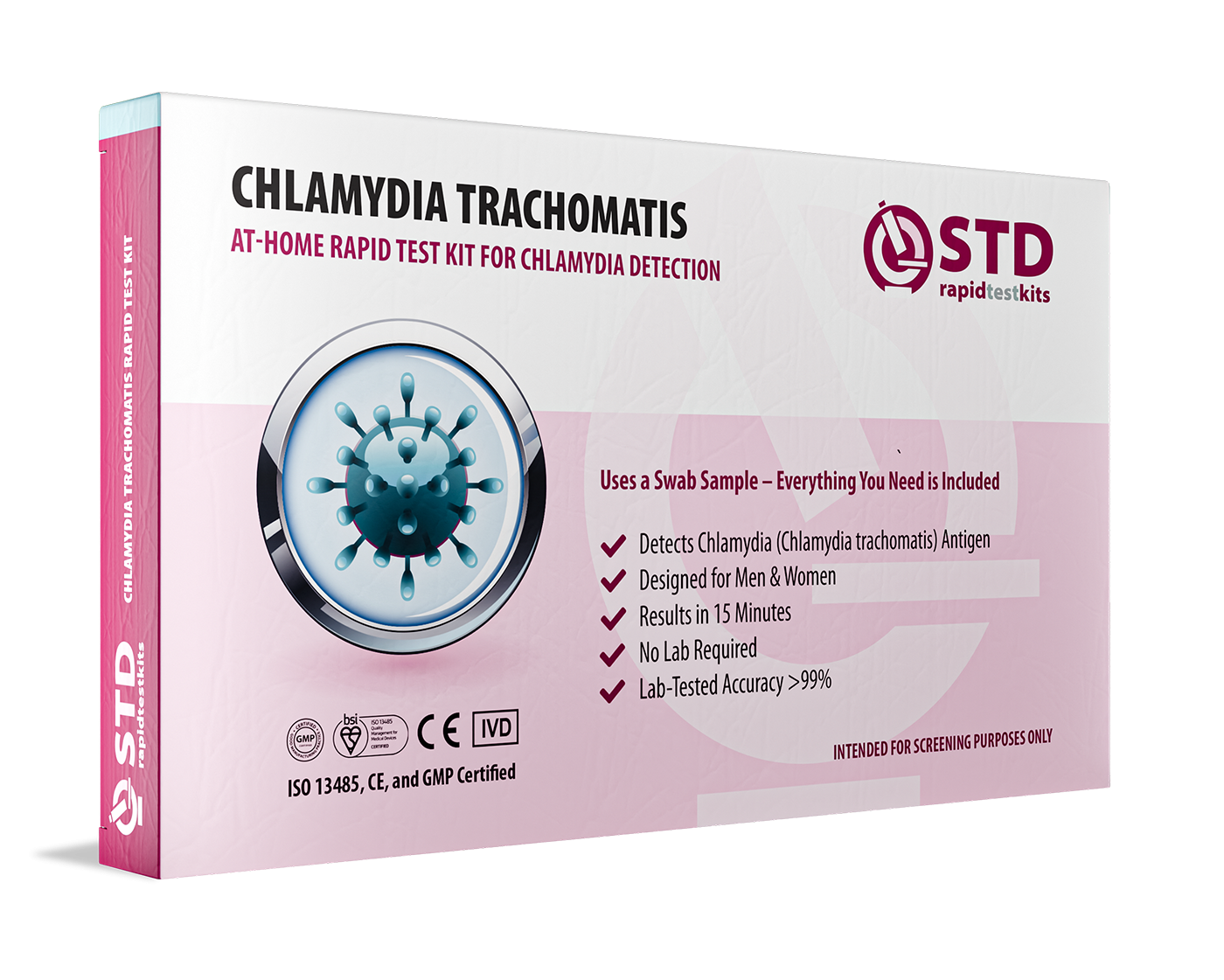
 For Men & Women
 Results in Minutes
 No Lab Needed
 Private & Discreet
Order Now $33.99 $49.00
The Relationship Question: What a Positive Test in a Long-Term Partnership Actually Means
One of the most emotionally charged scenarios connected to long-term undetected chlamydia is discovering a positive test result while in what both partners believe to be a committed, monogamous relationship. The instinctive assumption is that someone has been unfaithful. That assumption is understandable, but it is not always correct.
Chlamydia can be carried into a relationship from a previous partner and remain completely undetected for months or years, only discovered when one partner gets tested for the first time or when a partner's routine screening catches it unexpectedly. If neither partner has been tested since before the relationship began, the infection could have been present from the very start, brought in by either person without their knowledge.
This is not a defense of infidelity, and it does not resolve every situation. It is simply how biology works. A positive test result cannot tell you when the infection was acquired. It tells you only that the infection is currently present. The timing question, so emotionally loaded when it surfaces in a relationship, cannot be answered by any test. What can be answered is whether the infection is there now and whether both partners need treatment.
The practical implication: the only way to establish a reliable, clean baseline at the start of a new sexual relationship is for both partners to test before removing other protection. A positive result discovered later, without that baseline established, cannot definitively tell either person when or from whom the infection originated.
Who Is Most Likely to Be Carrying Chlamydia Without Knowing It
Certain situations dramatically increase the likelihood that chlamydia is present and undetected. Understanding them helps identify when testing is overdue rather than optional.
Anyone who has had unprotected sex with a new partner in the past few years without subsequent testing is a realistic candidate for carrying a silent infection. The absence of symptoms in both parties tells neither person anything meaningful about infection status. Community screening data from New Orleans found that up to 77% of detected chlamydial infections in that population were asymptomatic at the time of diagnosis, more than three in four infections that would never have been caught without active screening.
People who have only ever tested for chlamydia using a standard urine test but have also had anal or oral sex may be carrying an undetected extragenital infection. Rectal chlamydia and throat chlamydia produce no symptoms in the vast majority of cases, and a urine NAAT will not detect infections at those sites. A targeted swab from the rectum or throat is required to find them. The CDC recommends annual rectal chlamydia screening for men who report sexual activity at the rectal site, precisely because these infections would otherwise go entirely undetected.
People who have been through a period of multiple sexual partners without consistent testing between them are at particularly elevated risk. Each new partner represents a potential transmission event, and in a population where the majority of infected people do not know they are infected, unprotected sex carries a real probability of exposure regardless of how healthy both parties appear.
| Situation | Risk Level for Undetected Chlamydia | Recommended Action |
|---|---|---|
| Sexually active, never tested | High | Test now; wait 14 days from the most recent exposure for accurate result |
| Last tested more than 1 year ago with new partners since | High | Retest; the CDC recommends annual screening for sexually active women under 25 |
| Urine-only test history, also had anal or oral sex | Moderate to high for rectal or throat infection | Request site-specific swabs; urine tests cannot detect extragenital infections |
| Partner recently diagnosed with chlamydia | High regardless of symptoms | Test immediately; wait 14 days from last sexual contact for accurate result |
| Long-term relationship, neither partner tested before it began | Moderate; depends on prior history | Test once to establish a clean baseline; no symptoms does not mean no infection |
| Pregnant with no recent testing | High consequence if untreated | Routine prenatal screening; treatment is safe and protects the newborn from neonatal infection |
Testing: When, How, and What Your Result Actually Tells You
The good news about long-standing undetected chlamydia is that a test today can still catch it. The nucleic acid amplification test (NAAT) detects the genetic material of Chlamydia trachomatis directly. It works on a current infection regardless of how long that infection has been present. There is no upper time limit on how old an infection needs to be for a test to detect it, because the test is looking for bacterial DNA, not for the immune history of the infection.
When to test: Test from 14 days after the most recent exposure of concern. Before 14 days, the bacteria may not yet have established a detectable presence, and a negative result would not be reliable. If you are wondering about a historical exposure from months or years ago and have not been tested since, testing now gives you an accurate picture of whether the infection is currently present.
What sample is used: For women, a vaginal swab is the preferred sample and gives the most sensitive result. A first-catch urine sample (the first portion of the stream, not midstream) is the standard for men. At-home rapid test kits use the same NAAT detection principle as laboratory tests and deliver results with over 99% accuracy when used correctly at the 14-day window or later.
What a negative result means: Chlamydia trachomatis was not detected in the sample at this time. If the most recent exposure was more than 14 days ago, this is a reliable result. It does not tell you whether you had and cleared chlamydia in the past, only that it is not currently detectable.
What a positive result means: The infection is currently present and needs treatment. A positive result does not reveal how long the infection has been there, but it does tell you that the bacteria are active and transmissible right now. Recent sexual partners need to be informed and tested. Completing the full antibiotic course prescribed by a healthcare provider clears the infection. The CDC recommends retesting 3 months after completing treatment to rule out reinfection, which is the most common reason for a positive result shortly after treatment and usually comes from a partner who was not treated simultaneously.
Test from home using the Chlamydia At-Home Rapid Test Kit (99.7%). For a more complete picture that covers chlamydia alongside gonorrhea, which frequently co-infects without symptoms, the Chlamydia and Gonorrhea 2-in-1 At-Home Rapid Test Kit (98%) covers both in a single test. All kits are available at STD Rapid Test Kits.

People are also reading: How Long Can You Have Chlamydia Without Knowing?
Can Chlamydia Clear on Its Own After Years?
Sometimes, yes. Spontaneous clearance of chlamydia without antibiotic treatment does occur, and the research literature documents it. Around 18% to 24% of infected people in short-term studies cleared the infection without treatment. A CDC-cited review estimated a median duration of approximately one year for untreated infection, meaning half of untreated infections had cleared by around that point, and half had not.
But these numbers do not make spontaneous clearance a strategy worth relying on, for several important reasons.
First, the timeline is unpredictable. Whether a given person's immune system will clear chlamydia in 3 months, 18 months, or not at all cannot be known in advance. The research literature explicitly notes the wide heterogeneity in clearance rates between individuals. Some infections persist for years. Waiting to see if yours resolves is waiting without any meaningful information about when or whether it will.
Second, the damage that chlamydia causes in the upper reproductive tract does not wait for the infection to clear. PID develops from ascending infection, and it can begin causing fallopian tube inflammation within weeks to months of the initial cervical infection in women. The immune system clearing the bacteria does not reverse the scarring that accumulated during the period the infection was present. An infection that eventually clears after 18 months of silent activity may still have left permanent structural damage before it went.
Third, the infection is transmissible throughout the period it is present, regardless of whether it is generating symptoms or on its way to spontaneous clearance. Waiting for natural resolution means potentially transmitting the infection to one or more partners during that period.
Treatment with antibiotics clears the infection reliably, quickly, and without the ambiguity of waiting. It is the only approach that actually addresses the infection on a known timeline.
What to Do If You Suspect You Have Had Chlamydia for a Long Time
If you are reading this because something has prompted the thought, a partner's positive result, a new relationship prompting a first-ever test, a routine screening that caught something unexpected, or simply the recognition that years have passed without testing, the next step is straightforward: test now.
A positive result, even if the infection has been present for a year or more, is still a curable situation. The bacteria are detectable, the antibiotic course clears them, and further damage can be prevented from that point forward. The damage that may have accumulated during the silent period cannot be reversed, but no additional damage will occur once the infection is treated. That distinction matters, and it is why finding the infection now, even late, is better than finding it later or not at all.
If the result is negative and the most recent unprotected exposure was more than 14 days ago, that is a reliable answer. You can move forward with that information and build a regular testing cadence going forward, because one test establishes a baseline but not a permanent status. Regular testing, rather than a single reassuring negative, is the only way to stay on top of an infection that produces no warning signs.
FAQs
1. Can chlamydia really go undetected for years?
Yes. Research on the natural history of untreated chlamydia suggests a mean infection duration in women of approximately 1.4 years, and in men potentially approaching 3 years, when infections are not treated. During this entire time the infection produces no symptoms in the majority of people who carry it. Between 70% and 95% of infected women and around 50% of infected men never notice any sign of infection, regardless of how long it has been present. Community screening data confirm that the majority of detected infections are discovered in people who had no idea anything was wrong.
2. What is chlamydia doing to my body while I have no symptoms?
It is replicating inside the cells lining your genitourinary tract, maintaining a low-grade inflammatory state, and remaining contagious throughout. In women, the most serious risk is the bacteria ascending from the cervix to the fallopian tubes, causing inflammation and eventual scarring that can impair or block the tubes permanently. In men, the main risk is progression to epididymitis and, rarely, sperm duct scarring. In both, the active infection disrupts the mucosal barrier and increases susceptibility to HIV and other STIs.
3. If I feel completely fine, is it still possible I have chlamydia?
Yes, and this is precisely the point. Feeling fine is not evidence that the infection is absent. The infection produces no pain, no obvious discharge, and no fever in the majority of people who carry it. The only information that tells you whether chlamydia is present is a test, not how you feel. Feeling fine can coexist with an active, contagious, and potentially damaging chlamydial infection for months or years.
4. Does chlamydia get worse over time if untreated?
Not in the way most acute infections do. Chlamydia does not typically produce escalating symptoms over time. What happens instead is that the cumulative inflammatory burden in the reproductive tract increases with each month the infection continues, raising the probability of damage to the fallopian tubes in women and the epididymis in men. The infection does not announce that it has become more serious. It simply continues silently while the structural consequences accumulate.
5. Can chlamydia come back after it clears?
Yes, through reinfection. If a partner was not treated at the same time, the treated person can be reinfected immediately after finishing their antibiotic course. Reinfection from an untreated partner is the most common reason for a positive chlamydia test shortly after treatment. This is why the CDC recommends that all recent partners be treated simultaneously, and why retesting 3 months after treatment is standard practice. Each new reinfection carries the same PID and fertility risks as the original infection.
6. How long after exposure can a rapid test detect chlamydia?
Test from 14 days after exposure. Before 14 days, the bacteria may not have established a sufficient presence in the body for the NAAT to detect, and a negative result at that stage would not be reliable. After 14 days, the test is accurate at 99.7% for the at-home rapid kit. If the exposure was historical and more than 14 days ago, testing now gives you an accurate current picture.
7. If both my partner and I have no symptoms, do we still need to test?
Yes. The absence of symptoms in both partners provides no information about whether either person is infected. The majority of chlamydial infections produce no symptoms in either party. Regular testing, not symptom monitoring, is the only way to know. If neither of you has been tested since before your relationship began, one test from each of you establishes a genuine baseline.
8. Can I have chlamydia even if my last test was negative?
Yes, if you have had unprotected sex with a new partner since that test. A negative test tells you only that the infection was not present at the time of testing. Any subsequent unprotected exposure resets the risk. A test from last year does not protect against an exposure from last month. Testing should be repeated after any new unprotected sexual contact, from 14 days after that contact.
9. Is chlamydia easy to cure even after years of infection?
Yes. The bacteria themselves respond to antibiotic treatment regardless of how long the infection has been present. The antibiotic course clears the active infection. What cannot be treated with antibiotics is any structural damage, such as fallopian tube scarring, that accumulated during the years the infection was present. Treatment stops further damage from occurring. It does not reverse damage already done, which is one of the core reasons finding the infection sooner rather than later matters.
10. Does a positive chlamydia test prove my partner cheated?
Not necessarily. Chlamydia can persist in the body for a year or more without producing any symptoms, meaning either partner could have been carrying the infection from before the relationship began without knowing it. A positive test cannot tell you when the infection was acquired, only that it is currently present. In the absence of a confirmed negative test from both partners at the start of the relationship, a positive result later cannot be definitively linked to infidelity. The biology simply does not provide that level of precision.
Years Without Testing Is a Long Time. It Takes 15 Minutes to Change That.
If the last time you were tested for chlamydia was more than a year ago, or if you have never been tested at all, the answer to whether you have it right now is simply unknown. Not unlikely. Unknown. The Chlamydia At-Home Rapid Test Kit (99.7%) gives you a reliable answer from home, from 14 days after any exposure of concern. For those who want to cover chlamydia and gonorrhea together in one test, the Chlamydia and Gonorrhea 2-in-1 kit (98%) covers both. All available at STD Rapid Test Kits, discreet delivery, results you can act on.
How We Sourced This: Our article was constructed based on current advice from the most prominent public health and medical organizations, and then molded into simple language based on the situations that people actually experience, such as treatment, reinfection by a partner, no-symptom exposure, and the uncomfortable question of whether it "came back." In the background, our pool of research included more diverse public health advice, clinical advice, and medical references, but the following are the most pertinent and useful for readers who want to verify our claims for themselves.
Sources
2. CDC STI Treatment Guidelines, Chlamydial Infections
3. NCBI Health Technology Assessment, Duration of Asymptomatic Chlamydia trachomatis Infection in Women
4. NCBI PMC, Genital Chlamydia trachomatis Infections Clear More Slowly in Men Than Women
6. Scientific Reports, Trends in Chlamydia Prevalence in the United States, 2005 to 2016
About the Author
Dr. F. David, MD is a board-certified infectious disease specialist focused on STI prevention, diagnosis, and treatment. He writes with a direct, sex-positive, stigma-free approach designed to help readers get clear answers without the panic spiral.
Reviewed by: Rapid STD Test Kits Medical Review Team | Last medically reviewed: April 2026
This article is for informational purposes and does not replace medical advice.


