

Published: August 2025 | Last updated: April 2026 | Editorial review and quality control: Martina N.
Chlamydia is one of the most common sexually transmitted infections in the world, and one of the quietest. The U.S. Centers for Disease Control and Prevention notes that most people with chlamydia have no symptoms, which is why so many infections are picked up only through routine screening or after a partner tests positive. The first hint of trouble can arrive months or years after exposure, sometimes only when a fertility workup uncovers damage from an infection no one knew was there.
This guide walks through what the science actually says about how long chlamydia can persist undetected, what it is doing during the silent period, who is most likely to be carrying it right now, and how to get a reliable answer from a single test.
How long can you have chlamydia without knowing?
Most untreated chlamydia infections produce no noticeable symptoms, and the bacteria can persist for one to several years before they are detected. Research syntheses estimate an average duration of roughly one to two years in women and longer in men. A minority of infections clear on their own within months; many do not. A nucleic acid test taken 14 days or more after the most recent exposure detects the infection regardless of how long it has been present, and a short antibiotic course clears it.
Key Takeaways
- Most people with chlamydia notice no symptoms (more than half of infected men and the majority of infected women), and untreated infections commonly persist for one to several years while still being transmissible.
- A swab or first-catch urine test from 14 days after exposure detects the infection regardless of how long it has been present, and antibiotics clear it once detected.
Why Chlamydia Stays Silent for So Long
Understanding the silence starts with the pathogen itself. Chlamydia trachomatis is an obligate intracellular parasite. Unlike bacteria that damage tissue on contact and trigger the swelling, pain, and discharge that tell you something is wrong, chlamydia lives and replicates inside the cells lining the genitourinary tract, the cervix in women and the urethra in men, rather than in the tissue spaces where the immune system patrols most aggressively.
This intracellular lifestyle is the foundation of the silence. Tucked inside host cells, the bacteria are harder for immune defenders to reach. The resulting inflammatory response is often subdued, not dramatic enough to produce the fever, ache, or copious discharge that would push someone toward a clinic. The cycle of cell entry, replication, host-cell rupture, and reinfection of neighboring cells continues without generating any clear sensation that anything is wrong.
Anatomy adds another layer. The cervix, where infection most often establishes itself in women, sits several inches inside the vaginal canal and contains far fewer sensory nerve endings than the external genital tissue. Inflammation there simply does not hurt the way it would in a more sensitive location. Any discharge produced by an inflamed cervix mixes with normal vaginal secretions on its way down and is rarely noticed. In men, low-grade urethral infection can persist for weeks or months without producing the burning or visible discharge that would prompt testing, even when the bacterial load is high enough to transmit to a partner.
- Cell entry. The bacteria invade the columnar epithelial cells lining the cervix or urethra and replicate inside them, sheltered from most immune patrols.
- Subdued inflammation. The local immune response is often too low-grade to produce fever, ache, or copious discharge.
- Cycle of re-infection. When a host cell ruptures, new copies of the bacteria infect neighboring cells and the cycle continues, often without any clear sensation that anything is wrong.
How Long Can Chlamydia Actually Last Without Treatment?
Studying untreated infection in humans is ethically constrained, since researchers cannot deliberately withhold treatment. Most of what we know comes from evidence syntheses pooling natural-history data, partner-tracing studies, and follow-up of people who declined or missed treatment. Across that literature, mean durations of asymptomatic chlamydia in women cluster around one to two years, with research suggesting a still longer average in men. A meaningful minority of infections, somewhere in the range of one in five, clear without antibiotics within months as the immune system gradually suppresses the bacteria. The rest persist, often for far longer than people imagine.
Timing varies a lot from person to person. Some infections clear in three months. Some persist for three years or more. The CDC fact sheet describes chlamydia as commonly silent and capable of causing damage long after the initial exposure if it is not detected and treated. The table below sketches what the literature suggests is happening during each phase of an untreated infection.
| Time after exposure | What is happening biologically | Symptoms in most people |
|---|---|---|
| Days 1 to 14 | Bacteria establishing inside cervical or urethral cells; incubation period before tests reliably detect infection | None |
| Weeks 1 to 4 | Local inflammation at the cervix or urethra in those who develop any response at all | Possible mild burning, slight discharge, or nothing at all |
| Months 1 to 6 (untreated) | Continuous bacterial replication; immune response often insufficient to clear the infection; possible early ascent to upper reproductive tract in women | None in the majority of cases |
| Months 6 to 12 (untreated) | Cumulative tissue inflammation; rising risk of pelvic inflammatory disease in women and epididymitis in men; spontaneous clearance in a minority | Usually none; occasional pelvic ache or testicular discomfort |
| Year 1 and beyond (untreated) | Ongoing silent inflammation and cumulative reproductive damage; infection still contagious; reinfection from an untreated partner possible at any time | Often none until damage surfaces during fertility evaluation |
What the Infection Is Actually Doing During the Silent Years
Silent does not mean nothing is happening. Chlamydia that produces no symptoms is still replicating, still transmissible, and in a meaningful share of untreated women still working its way upward through the reproductive tract.
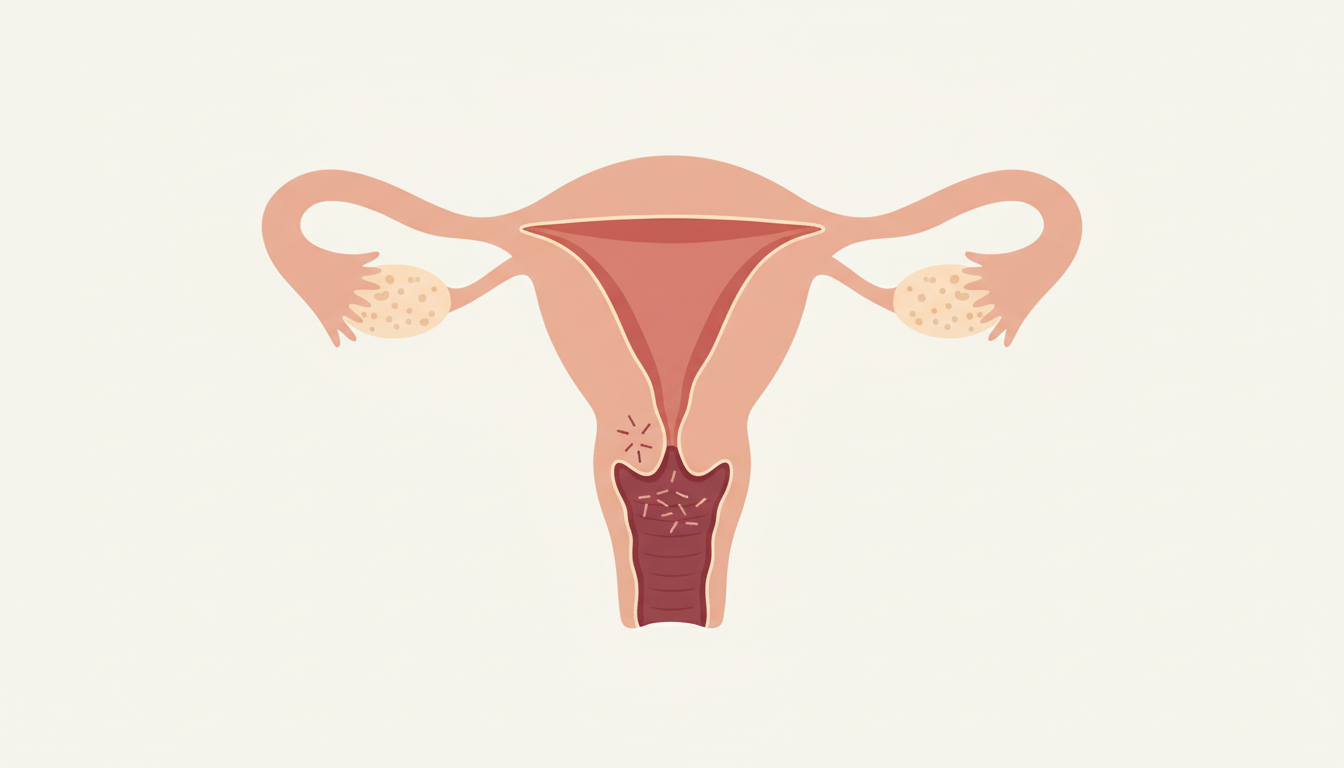
In women. The most serious consequence of long-standing untreated chlamydia is the ascent of the bacteria from the cervix into the uterus and then into the fallopian tubes. This is pelvic inflammatory disease, or PID. The CDC notes that untreated chlamydia can lead to PID, often without fever or warning. When the fallopian tubes become inflamed, scar tissue can form that partially or fully obstructs the channel through which eggs travel from the ovary to the uterus. Partial obstruction creates conditions for an ectopic pregnancy. Full obstruction can prevent natural fertilization entirely. Mayo Clinic notes that infertility, ectopic pregnancy, and chronic pelvic pain are recognized long-term complications of untreated chlamydia in women, with risk rising after repeat infections.
In men. Long-standing untreated chlamydia can progress from the urethra to the epididymis, the coiled tube behind each testicle that stores and transports sperm. The resulting epididymitis causes one-sided testicular pain and swelling. Chronic or repeated episodes can scar the sperm-carrying ducts and, in rare cases, contribute to fertility problems. More commonly, men with undetected infection simply continue transmitting silently while inflammation accumulates locally.
For everyone. Active chlamydia disrupts the mucosal barrier of the genitourinary tract, which makes it easier for other pathogens to establish themselves. Co-infection with gonorrhea is common enough that the CDC treatment guidelines explicitly recommend testing and treating for both together when one is found. Active STI inflammation also raises susceptibility to HIV transmission if exposed, an effect that lasts as long as the infection is active.
Risk by group from untreated chlamydia
- Women: ascending infection can scar the fallopian tubes, raising the risk of pelvic inflammatory disease, ectopic pregnancy, and tubal-factor infertility.
- Men: progression to epididymitis, with one-sided testicular pain and rare scarring of sperm-carrying ducts.
- Everyone: an active infection disrupts the mucosal barrier and raises susceptibility to HIV transmission if exposed.
When Subtle Symptoms Do Appear, and Why They Are Easy to Miss
When chlamydia does produce symptoms, they tend to be mild, intermittent, and easy to attribute to something else. The NHS chlamydia overview lists the typical signs in women as unusual vaginal discharge, bleeding between periods or after sex, pain when urinating, and pelvic discomfort. In men, possible signs are clear or cloudy urethral discharge, burning when urinating, and testicular pain. Many people with these signs assume they have a urinary tract infection, irritation from a new product, or normal cycle variation, and never test.
Sites outside the genitals are even harder to spot. Oral sex can transfer chlamydia to the throat, where it almost never produces symptoms. Receptive anal sex can lead to rectal infection, which sometimes causes irritation or discharge but is more often silent. A standard urine test does not pick up extragenital infections at the throat or rectum. Detecting them requires a swab from the relevant site, which is one reason routine annual rectal screening is recommended for men who report receptive anal sex.
Disclosure: this article is published by stdrapidtestkits.com, which sells at-home rapid STI test kits. Products are recommended based on fit for the reader's situation, and we are explicit when an at-home kit is not the right tool.
A urine NAAT only samples the urethra. If you have had oral or anal sex in the relevant window and want full coverage, you need a throat or rectal swab in addition to genital sampling. At-home rapid kits sample the genital site only and will not detect a throat or rectal infection. For those, a clinic visit is the right step.
Who Is Most Likely to Be Carrying Chlamydia Without Knowing It
Certain situations sharply raise the chance of an undetected infection. The situations below mark when a test is overdue rather than optional. Symptoms are excluded because, as the previous sections show, they are not a reliable signal in either direction.
| Situation | Risk of undetected chlamydia | Recommended action |
|---|---|---|
| Sexually active, never tested | High | Test now; wait 14 days from most recent exposure for reliable result |
| Last test more than a year ago, with new partners since | High | Retest; CDC recommends annual screening for sexually active women under 25 |
| Urine-only test history but also had oral or anal sex | Moderate to high for throat or rectal infection | Request site-specific swabs; urine tests miss extragenital infections |
| Partner recently diagnosed with chlamydia | High regardless of how you feel | Test 14 days after last contact; both partners need treatment |
| Long-term relationship, neither partner tested before it began | Moderate, depending on prior history | Test once together to establish a clean baseline |
| Pregnant with no recent screening | High consequence if untreated | Routine prenatal screening; treatment is safe and protects the newborn |
How Testing Works, and What Your Result Actually Tells You
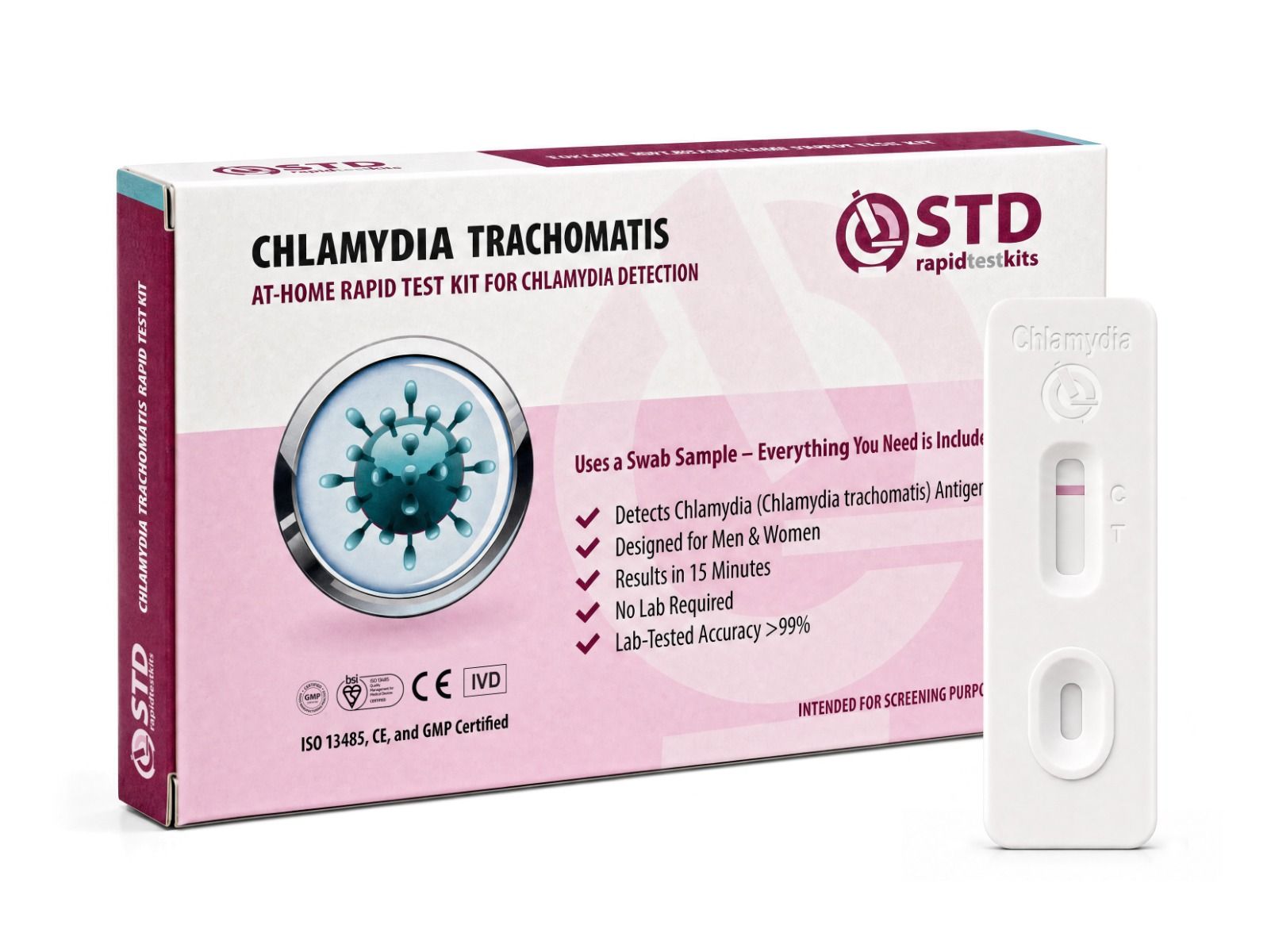
A test today catches a current infection regardless of how long it has been present. Nucleic acid amplification tests (NAATs) detect the genetic material of Chlamydia trachomatis directly. Lateral-flow rapid kits used at home work on the same swab sample type and detect the bacteria using a cassette format designed for in-home use. Lateral-flow chemistry is not the same as a lab NAAT and the two are complementary rather than equivalent, but both work on a present infection.
When to test. Test from 14 days after the most recent exposure of concern. Before 14 days, the bacteria may not have established a sufficient detectable load and a negative result would not be reliable. If you are wondering about a historical exposure from months or years ago and have not tested since, testing now gives you an accurate picture of whether the infection is currently present.
What sample is used. For women, a self-collected vaginal swab is the preferred sample for at-home rapid testing. For men, a urethral swab or a first-catch urine sample is the standard. MedlinePlus notes that both urine samples and vaginal swabs are used to test for chlamydia.
What a negative result means. Chlamydia was not detected in the sample at this time. If your most recent unprotected exposure was more than 14 days ago, this is a reliable answer for current infection. It does not tell you whether you had and cleared chlamydia in the past.
What a positive result means. The infection is currently present and needs treatment. A positive result shows the bacteria are active right now but gives no indication of when the infection started. Recent partners need to be informed and tested. The CDC also recommends a follow-up test about three months after treatment to rule out reinfection from an untreated partner, which is the most common reason a positive result reappears soon after a finished antibiotic course.
When a Positive Result Lands in a Long-Term Relationship
One of the more emotionally charged scenarios connected to long-standing undetected chlamydia is discovering a positive test inside a relationship that both partners considered monogamous. The instinct is to assume infidelity. That assumption is understandable but not always correct.
Because chlamydia can persist for a year or more without symptoms, an infection can be carried into a relationship from a previous partner and only surface much later, picked up the first time someone tests. If neither partner had a clean test on file before the relationship began, the infection could have been present from the start, brought in by either person without either knowing.
This is not a defense of infidelity, and it does not resolve every situation. It is how the biology of this particular infection works. A positive result tells you the infection is present right now. It cannot tell you when it was acquired.
The only way to know whether a future positive result was acquired during the relationship is for both partners to test together before removing other protection. Without that baseline, a positive result discovered later cannot be definitively tied to a moment in time.
Can Chlamydia Ever Clear on Its Own?
Sometimes, yes. Spontaneous clearance does happen. Research suggests that a meaningful minority of untreated infections, roughly one in five, clear within weeks to months as the immune system suppresses the bacteria. By around the one-year mark, evidence syntheses suggest a substantial share of infections are gone. Many, though, are not.
Spontaneous clearance is still a poor strategy in practice. The timeline is unpredictable for any individual, ranging from months to years. Damage chlamydia can do to the upper reproductive tract does not wait for clearance and is often not reversed when the bacteria eventually go. And the infection remains transmissible to every partner during the entire period it is present, regardless of whether it is on its way to clearing or persisting indefinitely. Antibiotics clear the bacteria reliably and quickly without any of that ambiguity.
You cannot tell in advance whether your immune system will clear the infection in three months, three years, or at all. Throughout that wait, the infection is transmissible to partners and capable of causing reproductive-tract damage that does not reverse when the bacteria finally go. A short antibiotic course removes that uncertainty.
What Treatment Looks Like
Chlamydia is one of the most treatable sexually transmitted infections. The CDC STI treatment guidelines recommend doxycycline 100 mg twice daily for seven days as the preferred regimen for uncomplicated genital chlamydia in non-pregnant adults, with single-dose azithromycin used as an alternative in specific situations. Pregnancy uses a different regimen guided by an obstetrician. The full course needs to be completed even if symptoms, when present, settle quickly.
Recent sexual partners need to be informed and offered testing and treatment, since untreated partners are the most common source of reinfection. Sexual contact should be avoided until seven days after the antibiotic course is completed and any symptoms have resolved, to avoid passing the infection on or being reinfected. The CDC also recommends a retest about three months after treatment to confirm clearance and to catch any reinfection from a partner who was not treated at the same time.
Treatment essentials
- Standard regimen: doxycycline 100 mg twice daily for seven days for uncomplicated genital chlamydia in non-pregnant adults.
- Partners: recent sexual partners need to be tested and treated to prevent reinfection.
- Retest: a follow-up test about three months after treatment catches reinfection from any partner who was not treated at the same time.
How People Usually Discover a Long-Standing Infection
Because symptoms are unreliable, most chlamydia diagnoses come from one of four routes:
- Routine screening. Annual screening is recommended for sexually active women under 25 and for men who have sex with men. Many infections are caught here in people who feel completely fine.
- Partner notification. A partner tests positive and reaches out. This is one of the most common discovery routes, precisely because the infection so rarely announces itself first.
- Subtle symptoms eventually crossing a threshold. Mild discharge, intermittent pelvic ache, or a brief episode of testicular discomfort that finally prompts a clinic visit.
- Fertility or prenatal evaluation. Sometimes the infection or its consequences are first identified during a fertility workup or routine prenatal screening, long after exposure.
In each of these cases, someone decided to test. Symptoms rarely drove the diagnosis.
Most people who have chlamydia have no symptoms. If you do have symptoms, they may not appear until several weeks after you have sex with an infected partner. Even when chlamydia causes no symptoms, it can damage your reproductive system.
Frequently Asked Questions
- Can chlamydia really go undetected for years?
- Yes. Evidence syntheses of natural-history data suggest mean durations of around one to two years in women and longer in men when infection is not treated. Throughout that time the infection produces no symptoms in the majority of people who carry it. Community screening data confirm that most diagnosed infections are picked up in people who had no idea anything was wrong.
- What is chlamydia doing to my body while I have no symptoms?
- It is replicating inside the cells lining your genitourinary tract, maintaining low-grade inflammation, and remaining contagious. In women the most serious risk is the bacteria ascending from the cervix to the fallopian tubes and causing scarring that can impair fertility. In men the main risk is progression to epididymitis. In both, the active infection raises susceptibility to HIV and other STIs.
- If I feel completely fine, do I really need to test?
- Yes. Absence of symptoms is the typical presentation, since the large majority of chlamydia infections produce no noticeable pain or discharge. The test window opens at 14 days after the last exposure; a single rapid swab after that date gives a reliable answer regardless of how you feel.
- Does chlamydia get worse over time if untreated?
- Not in the way an acute infection does. It does not typically produce escalating symptoms. What rises with time is the cumulative inflammatory burden, which raises the probability of damage to the fallopian tubes in women and the epididymis in men. The infection does not announce that it has become more serious; it simply continues while the structural consequences add up.
- Can chlamydia come back after it clears?
- Yes, through reinfection. If a partner was not treated at the same time, the treated person can be reinfected immediately after finishing antibiotics. Reinfection from an untreated partner is the most common reason for a positive test shortly after treatment, which is why CDC recommends retesting about three months later.
- How soon after exposure can a rapid test detect chlamydia?
- Test from 14 days after the most recent exposure. Before that the bacteria may not have established a detectable load. After 14 days, lateral-flow rapid kits used on a self-collected swab are reliable for current infection. If your exposure was longer ago than 14 days, testing now gives you an accurate current picture.
- If both my partner and I have no symptoms, do we still need to test?
- Yes. Absence of symptoms in both partners provides no information about whether either is infected, since most infections are silent. If neither of you has tested since before your relationship began, one test from each of you establishes a real baseline.
- Does a positive chlamydia test prove my partner cheated?
- No. The infection can persist for a year or more without symptoms, so either partner could have been carrying it from before the relationship began without knowing. A positive test tells you the infection is currently present, not when it was acquired. Without a confirmed negative test from both partners at the start of the relationship, the timing question cannot be answered by biology.
- U.S. Centers for Disease Control and Prevention. About Chlamydia. Public fact sheet covering asymptomatic infection rates, PID risk, and reproductive complications.
- U.S. Centers for Disease Control and Prevention. STI Treatment Guidelines, Chlamydial Infections. Antibiotic regimen recommendations, partner-notification guidance, and three-month retesting recommendation.
- National Health Service (UK). Chlamydia overview. Patient-facing UK guidance on symptoms, testing window, and treatment course.
- Mayo Clinic. Chlamydia, symptoms and causes. Clinical reference on long-term complications including PID, ectopic pregnancy, and infertility.
- World Health Organization. Sexually transmitted infections (STIs) fact sheet. Global epidemiology of curable STIs and screening recommendations.
- MedlinePlus. Chlamydia infections. Patient education resource on detection methods and infection course.
