
Published: October 2025 | Last updated: May 2026 | Editorial review and quality control: Martina N.
What happens if chlamydia goes untreated?
It can climb from the cervix or urethra into the upper reproductive tract, causing pelvic inflammatory disease in about 15 percent of untreated infections, with infertility, ectopic pregnancy, and chronic pelvic pain. In men it can inflame the epididymis. It also raises HIV risk and can pass to a newborn at birth. A short antibiotic course clears most uncomplicated cases caught early.
Chlamydia is the most commonly reported bacterial sexually transmitted infection in the United States. The CDC logged 1,648,568 cases in 2023, the most recent full year of national surveillance data (CDC STI Surveillance, annual statistics), and that figure only counts the infections someone found and reported. Most people who carry chlamydia feel nothing at all. They shower, work, sleep, and date while a treatable bacterial infection quietly does damage that can become permanent.
This article walks through what untreated chlamydia actually does over weeks, months, and years, in both women and men, and what each complication looks like in plain terms. The reassuring part comes first: caught early, a short course of antibiotics clears it almost every time. The harder part is that catching it early almost always means testing on a schedule, because by the time symptoms arrive the damage has often already started.
Key takeaways
- Most chlamydia infections cause no symptoms in either men or women, so routine screening, not waiting for a warning sign, is what catches them.
- Untreated chlamydia is a leading preventable cause of female infertility, yet a single 7-day course of doxycycline cures most uncomplicated infections.
Why chlamydia is so often silent
Chlamydia trachomatis is a bacterium that infects mucosal surfaces: the cervix, urethra, rectum, and less often the throat. It spreads through vaginal, anal, and oral sex, and it can pass from a pregnant person to a baby during delivery. Once inside the cells lining those surfaces, it tends to live quietly. The immune response is real but often mild enough that the person feels nothing. The CDC's treatment guidelines state plainly that asymptomatic infection is common among both men and women (CDC STI Treatment Guidelines: Chlamydial Infections).
When symptoms do appear, they are easy to misread: a slight burning during urination, a faint discharge, mild pelvic discomfort that comes and goes, occasional bleeding between periods. People write these off as a urinary tract infection, a yeast infection, or a bad week. By the time an infection is uncomfortable enough to push someone to a clinic, it has often been active for weeks or months.
The scale is large. The World Health Organization estimates roughly 129 million new chlamydia infections each year, part of about 374 million annual new infections across the four most common curable STIs combined: chlamydia, gonorrhea, syphilis, and trichomoniasis (WHO STI fact sheet). Younger people are overrepresented, partly because the adolescent and young-adult cervix is biologically more susceptible to chlamydial colonization, and partly because partner change is more common in that age group. The practical takeaway is blunt: if you wait for symptoms before testing, you will miss most of your own exposures. An at-home chlamydia test exists precisely for the people who feel fine.
Early chlamydia symptoms that are easy to miss
Most infections cause none of these. Having one or more does not confirm chlamydia, and having none does not rule it out. Only a test can.
- Mild burning or stinging during urination Common
- A faint or slightly changed vaginal or penile discharge Common
- Pelvic or lower-abdominal discomfort that comes and goes (women) Less common
- Bleeding between periods or after sex (women) Less common
- Aching or tenderness in one testicle (men) Less common
- Rectal pain, discharge, or bleeding after receptive anal sex Rare
How untreated chlamydia damages the female reproductive tract
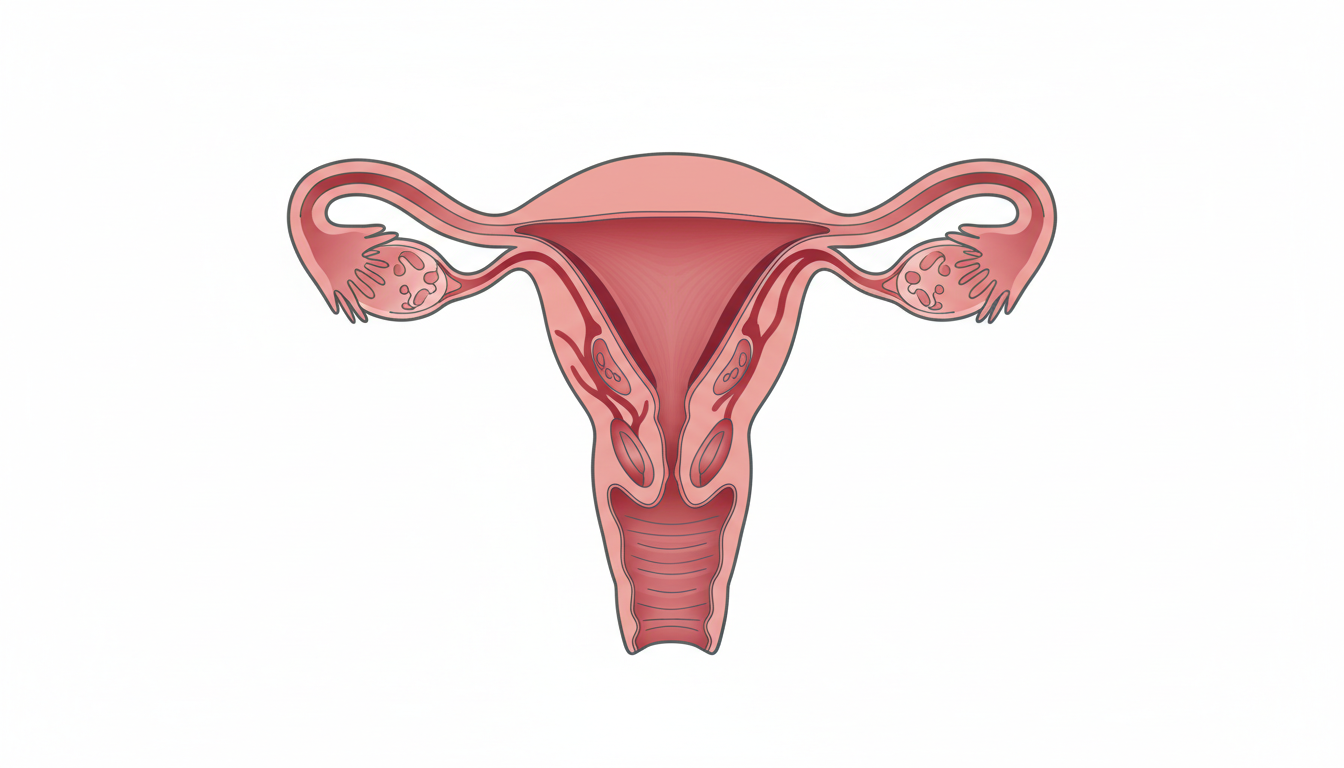
The most serious complication of untreated chlamydia in women is pelvic inflammatory disease, or PID. It happens when bacteria travel up from the cervix into the uterus, fallopian tubes, and ovaries. About 15 percent of untreated chlamydial infections progress to PID, and the rate may be higher for gonococcal infections (AAFP, Pelvic Inflammatory Disease: Diagnosis, Management, and Prevention).
PID can be loud (severe pelvic pain, fever, abnormal bleeding, foul discharge) or quiet. The quiet version is often the more dangerous one, because it scars the fallopian tubes without ever sending the person to a doctor. Scarred tubes cause two problems at once: they make it harder for sperm to reach an egg, which can cause infertility, and they raise the chance that a fertilized egg lodges in the tube itself, an ectopic pregnancy that can be life-threatening if it is not caught in time.
The CDC reports that about 1 in 8 women with a history of PID have difficulty getting pregnant later (CDC, About Pelvic Inflammatory Disease). Other long-term consequences include chronic pelvic or abdominal pain from adhesions and scarring, which can persist for months or years after the original infection clears. A single PID episode can leave permanent tubal damage, and repeated episodes compound the risk.
Signs of PID worth knowing:
- Lower abdominal or pelvic pain that lingers
- Pain during sex or urination
- Bleeding between periods or after sex
- Unusual vaginal discharge, sometimes with a strong odor
- Fever, chills, or generally feeling unwell
Sudden severe lower-abdominal pain, especially on one side and paired with a missed or late period, can signal an ectopic pregnancy and is a surgical emergency. Pelvic pain with fever, vomiting, or fainting also warrants same-day evaluation. Both PID and ectopic pregnancy are treatable when caught early and far more dangerous when delayed.
Epididymitis and male reproductive risks
Men are sometimes told chlamydia is mostly a women's-health problem. That is not accurate. In men, untreated chlamydia can cause epididymitis, inflammation of the coiled tube behind each testicle that stores and matures sperm. The NHS lists the typical signs as sudden or gradual pain in one or both testicles, scrotal tenderness, warmth, and swelling, sometimes with fluid build-up around the testicle and, depending on the cause, difficulty urinating or penile discharge (NHS overview of epididymitis).
Age changes the likely cause. In men under 35, the most common cause of epididymitis is a sexually transmitted infection, usually chlamydia or gonorrhea; in men over 35, a urinary tract infection is the more common culprit. That split matters: a sudden, severe, one-sided scrotal pain in a sexually active man under 35 is an STI question first and a urinary question second.
Before it reaches the epididymis, chlamydia in men more often shows up, when it shows up at all, as urethritis: a burning sensation during urination and a thin, clear or cloudy discharge. Less commonly the infection extends to the testicle itself (orchitis) or the prostate. Severe or recurrent epididymitis can scar the epididymal duct and interfere with sperm transport, which contributes to male infertility. Most cases respond well to antibiotics, but the longer the infection runs before treatment, the more scarring becomes possible. One frustrating pattern shows up again and again: a man carries chlamydia with no symptoms, passes it to a partner without knowing, then develops epididymitis weeks or months later without ever connecting the two.
A man with asymptomatic chlamydia can carry it for months and pass it on without ever feeling unwell. A self-collected swab at home, or a urethral swab or urine test at a clinic, catches those cases before they progress to epididymitis or spread further. The CDC recommends at least annual screening for sexually active gay and bisexual men, with site-specific testing based on exposure, and considers screening reasonable for younger heterosexual men in higher-prevalence settings.
Reactive arthritis: when an STI reaches your joints
Reactive arthritis is an inflammatory condition that can follow a chlamydia infection, sometimes appearing weeks after the infection itself has cleared. The classic pattern brings three things together: joint pain, eye inflammation, and urinary or genital symptoms. Skin rashes and mouth sores show up in some people too. Older texts still occasionally call the triad Reiter's syndrome, though clinicians now use the plainer term reactive arthritis.
It is more common in men than in women, and it tends to occur in people who carry a genetic marker called HLA-B27, though it can happen without it. Most cases settle over several months with anti-inflammatory medication and treatment of the triggering infection. A minority become chronic and need ongoing rheumatology care.
Reactive arthritis: the classic triad
- Joint pain and stiffness, most often in the knees, ankles, feet, and lower back.
- Eye inflammation, from conjunctivitis (red, irritated eyes) to uveitis, which needs ophthalmology care.
- Urinary or genital symptoms, often a return of the original chlamydial urethritis or cervicitis.
- In a minority, skin and mouth involvement: rashes on the palms or soles, painless mouth sores, or swollen fingers and toes.
Fitz-Hugh-Curtis syndrome and chronic pelvic pain
Fitz-Hugh-Curtis syndrome is a less common but striking complication of PID. The infection spreads upward through the abdominal cavity and inflames the capsule around the liver, producing right-upper-abdominal pain that can mimic gallbladder disease or appendicitis. The pain is often sharp and worsens with a deep breath.
Chronic pelvic pain is the other long-tail outcome of PID. Pain that lasts six months or longer, often without a clear finding on imaging, can persist long after the infection itself is gone, driven by adhesions and scarring in the pelvic tissues (NHS, Pelvic inflammatory disease).
Right-upper-abdominal pain plus fever points most people, and most clinicians, toward the gallbladder rather than the pelvis. Gallbladder imaging comes back normal, antibiotics aimed at the wrong target do not help, and weeks can pass before the pelvic cause is examined. Mentioning a recent or possible STI exposure to the evaluating clinician keeps Fitz-Hugh-Curtis syndrome on the differential and can shorten that delay.
Proctitis and rectal infection
Chlamydia can infect the rectum directly through receptive anal sex, and in some women indirectly through the spread of infected genital discharge. Rectal chlamydia is frequently silent, but when it causes symptoms it shows up as proctitis: rectal pain, discharge, urgency, and sometimes bleeding. A more aggressive form called lymphogranuloma venereum (LGV), caused by specific Chlamydia trachomatis strains, can produce severe rectal symptoms and swollen lymph nodes (CDC STI Treatment Guidelines: Lymphogranuloma Venereum).
One practical point matters here: a genital swab does not detect a rectal infection, and the same is true for the throat. Rectal or pharyngeal testing needs a separate site-specific swab, collected at a clinic and processed by a lab.
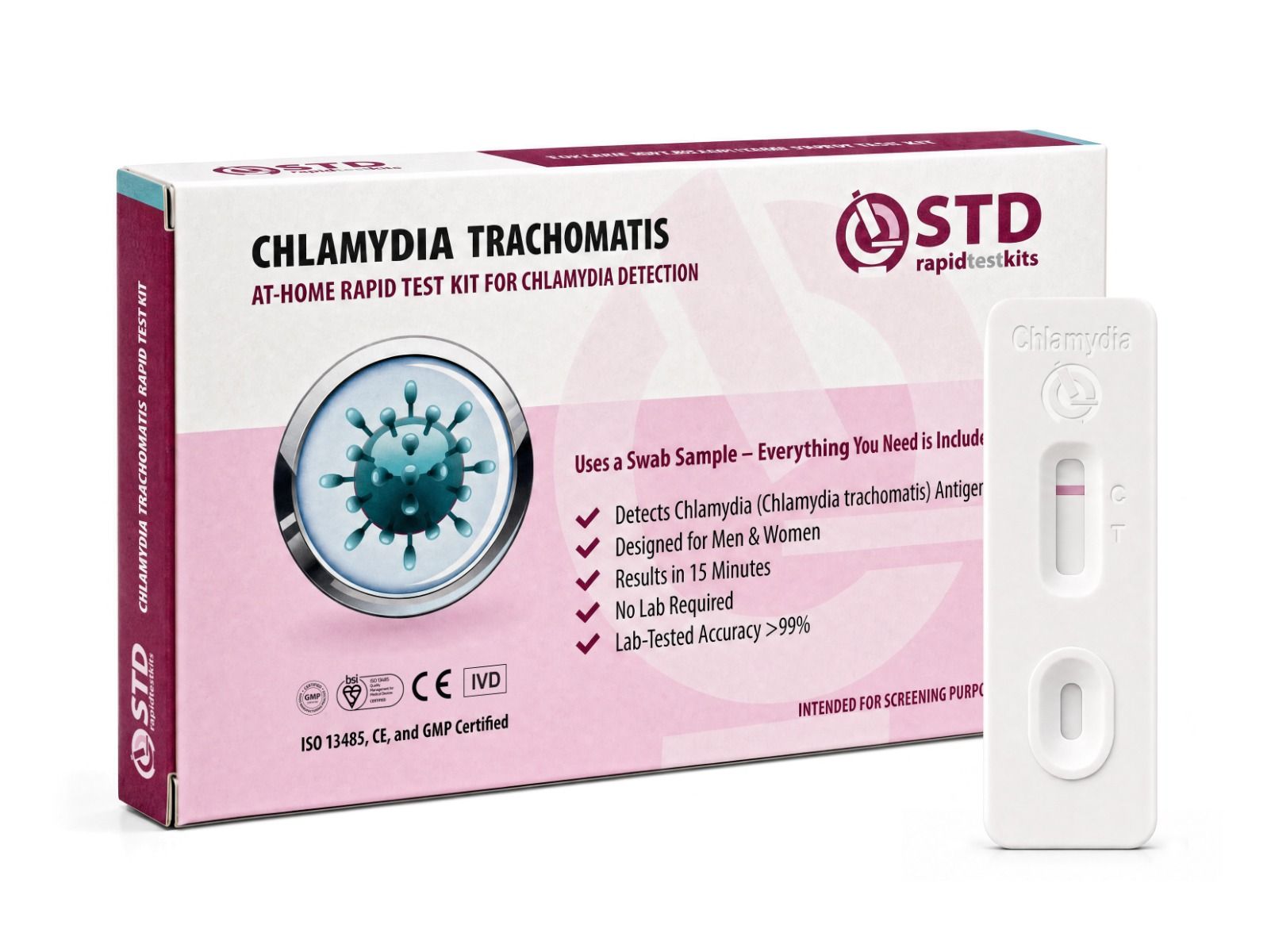
Our at-home rapid chlamydia kit uses a self-collected vaginal or penile swab, so it screens genital infection only. It cannot detect rectal or pharyngeal chlamydia. For an anal or oral exposure, a site-specific NAAT swab collected at a clinic is the right test.
Higher HIV transmission risk
An active, untreated STI raises the risk of acquiring HIV from an infected partner. The CDC notes that if you have another STI, you may be more likely to get or transmit HIV (CDC, How HIV spreads). Its HIV Risk Reduction Tool puts a number on it, estimating roughly a 2.6-fold increase in the per-act HIV acquisition risk for an HIV-negative partner who has an active STI (CDC HIV Risk Reduction Tool: about the data).
The mechanism is straightforward. STI inflammation recruits immune cells to the mucosal surfaces of the genital tract, and those are exactly the cells HIV prefers to infect. The disrupted surface also makes physical entry easier for the virus. In someone already living with HIV, the same inflammation is linked to higher genital viral shedding, which raises onward transmission risk to partners. That elevated risk applies during the window when the chlamydia is active and inflammatory; once antibiotics clear it, the immune-cell recruitment subsides over the following weeks.
The CDC HIV Risk Reduction Tool applies a roughly 2.6-fold multiplier to the per-act HIV acquisition risk for an HIV-negative partner who has an active STI. The figure covers chlamydia alongside other STIs that inflame mucosal tissue. Treating the infection removes the inflammation that concentrates HIV-susceptible immune cells at the exposure site, which is one reason bacterial-STI screening is part of effective HIV prevention.
Pregnancy and newborn complications
Chlamydia in pregnancy carries its own risks. Untreated infection has been linked to preterm labor, preterm rupture of membranes, low birth weight, and miscarriage. Beyond the pregnancy itself, the infection can pass to the baby during a vaginal delivery as the newborn travels through an infected birth canal.
Newborns infected at birth most often develop one of two conditions. Chlamydial conjunctivitis, an eye infection, typically appears 5 to 12 days after birth and can scar the cornea if untreated. Chlamydial pneumonia, a lung infection, typically appears at 1 to 3 months of age and can cause a persistent cough and breathing difficulty.
This is why CDC guidance recommends screening all pregnant women under 25, and pregnant women 25 and older with risk factors, at the first prenatal visit, with retesting in the third trimester for those at higher risk (CDC STI Treatment Guidelines). Treatment in pregnancy is safe and effective when it starts promptly, and azithromycin is the preferred regimen during pregnancy rather than doxycycline.
Chlamydial conjunctivitis shows up 5 to 12 days after birth: watery or pus-filled eye discharge, swollen eyelids, redness. It is treated with oral antibiotics and can scar the cornea if ignored.
Chlamydial pneumonia shows up 1 to 3 months after birth: a repetitive, staccato cough and rapid breathing, often without fever. It is also treated with oral antibiotics. A parent who notices either pattern in a baby born to a mother who was not screened or treated should seek pediatric care promptly.
Why so many infections go untreated
The medical reasons chlamydia gets missed (a silent course, mild symptoms when there are any) are only half the story. The other half is structural and social, and it is where most of the testing-window time gets lost.
Stigma is still a major barrier. Surveys consistently find that fear of judgment, especially in conservative cultural or family settings, ranks high among the reasons people skip routine screening. Clinic testing also means an in-person disclosure of sexual history that some people reasonably want to avoid.
Access varies sharply by geography. In rural counties without a public-health clinic and with thin primary-care capacity, getting screened can mean a half-day round trip. For someone without paid sick leave or childcare, that is not a small ask.
Cost changes the calculation. An uninsured screening visit can run into the hundreds of dollars in the United States, depending on what is included and whether laboratory NAAT testing is ordered. Public-health clinics often offer free or sliding-scale screening, but awareness of those programs is uneven.
The 'low-risk' misconception is widespread. Many people assume chlamydia happens to other people, the ones with more partners or fewer condoms. The data does not support that division. Chlamydia turns up across virtually every adult demographic, and a single exposure is enough.
Fear of a positive result is real and rarely discussed. Some people simply do not want to know. A test implicates a partner, a relationship, or a recent decision they would rather not revisit. Avoidance is human, and it is exactly how the longest-untreated cases happen.
Five barriers that keep chlamydia untreated
- Stigma and fear of judgment, especially in conservative family or cultural settings.
- Geographic access: rural and underserved areas lack convenient public-health clinics.
- Cost: an uninsured screening visit can run into the hundreds of dollars.
- The 'low-risk' misconception: chlamydia is common across nearly every adult demographic, not just stereotyped groups.
- Avoidance: a test forces a conversation about a partner or a decision some people would rather not have.
When should you get tested?
Because symptoms are unreliable, the answer is to test on a schedule rather than on suspicion. United States screening guidance, drawn from the CDC's STI Treatment Guidelines, lays out who and how often. Beyond those defaults, testing after any new partner, or whenever a regular partner asks, is sensible regardless of formal guidelines.
One timing detail trips people up: the window period. Chlamydia tests reliably detect the infection from about 14 days after exposure. Test earlier and a negative result does not rule anything out; a negative at day 3 says nothing about an exposure on day 1, so a repeat test at the two-week mark is the right move.
CDC chlamydia screening recommendations
- All sexually active women under 25, every year, regardless of perceived risk.
- Women 25 and older with risk factors (a new partner, multiple partners, or a partner with a known STI), every year.
- Sexually active gay and bisexual men at least annually, with site-specific rectal and pharyngeal testing where exposure warrants it.
- All pregnant women at the first prenatal visit, with third-trimester retesting for higher-risk pregnancies.
How at-home rapid testing fits in
At-home rapid chlamydia tests use a self-collected vaginal or penile swab applied to a lateral-flow cassette, the same swab sample type used by laboratory NAATs. The cassette detects chlamydial antigens and shows a visible result in about 15 minutes, working much like a home pregnancy test or a COVID-19 rapid antigen test. There is no lab, no waiting, and no clinic conversation. Self-collected vaginal swabs, worth noting, perform comparably to clinician-collected swabs in head-to-head studies, so collecting your own sample does not mean a worse sample.
The honest framing matters because we publish this article and sell at-home kits, so here is where each tool earns its place:
- Where the home test does well: fast, private screening for genital chlamydia in people who would otherwise not test at all. Same-day answer, no appointment.
- Where lab NAAT is stronger: nucleic acid amplification testing, the laboratory gold standard, has higher analytical sensitivity, especially for very low-level infections. A negative home result in someone with a known recent exposure or persistent symptoms should be followed by a lab test.
- What a home swab cannot do: it cannot test the throat or rectum. For an oral or anal exposure, see a clinic for a site-specific NAAT swab.
For most routine, asymptomatic screening, a home rapid test is a meaningful upgrade over no test at all. A positive result should always be confirmed clinically before treatment. We recommend the kit below on fit for the reader's concern, not on commercial benefit.
| Attribute | Lab NAAT (clinic or mail-in) | Our at-home rapid lateral-flow |
|---|---|---|
| Sample type | Urine, urethral swab, vaginal swab, rectal or pharyngeal swab | Self-collected vaginal or penile swab only |
| Result turnaround | 1 to 7 days depending on lab | About 15 minutes |
| Analytical sensitivity | Highest available; molecular detection | Lower than NAAT; lateral-flow chemistry |
| Privacy | Requires clinic visit or mail-in shipping | Fully at-home, no shipping required |
| Best use | Diagnostic confirmation; oral or rectal exposure; pregnancy screening | Fast genital screening after the 14-day window |
| Confirmation | Stand-alone diagnostic | Positive result worth confirming with lab NAAT |
Treatment, retesting, and telling your partners
For an uncomplicated infection, treatment is short and reliable. Per the CDC's STI Treatment Guidelines, the first-line regimen is doxycycline 100 mg orally twice a day for 7 days, with a single 1-gram oral dose of azithromycin as the alternative when doxycycline is unsuitable, including in pregnancy. Doxycycline outperforms azithromycin for rectal infections, which is why the guidelines made it first-line in 2021. For complicated infection (PID, epididymitis, or infection in pregnancy), the regimens are longer or combined and belong under clinical supervision.
Two practical steps decide whether treatment sticks. First, avoid sex for 7 days after a single azithromycin dose, or until the full doxycycline course is finished, and longer if symptoms have not cleared or a partner is still untreated. Second, notify partners. Anyone you have had sex with in the prior 60 days should be tested and treated, even with no symptoms. Many US states allow expedited partner therapy, where a clinician supplies a partner's treatment without requiring a separate visit.
Finally, retest at 3 months. The CDC recommends it regardless of whether you believe your partner was treated, because reinfection from an untreated partner is the single most common, and most preventable, reason a chlamydia diagnosis turns into a repeat positive.
Stop the antibiotics early and the infection can persist. Go back to sex before a partner has finished treatment and you can pick the same infection right back up. The two most common reasons a chlamydia diagnosis becomes a recurring problem are an incomplete course and an untreated partner. Both are entirely preventable.
Prevention without paranoia
Condoms, used correctly and consistently, sharply reduce chlamydia transmission during vaginal and anal sex. They do not eliminate it, since the bacteria can sit on skin a condom does not cover, but they bring the per-encounter risk down a long way. Internal condoms and dental dams cover oral routes an external condom misses.
The rest of prevention is about information rather than barriers. Knowing a partner's testing history, when you can, removes most of the guesswork; the conversation about when each of you last tested, and for what, takes a minute. Treating screening as routine healthcare rather than a reaction to suspicion catches infections during the window when antibiotics fully resolve them, with annual as the default and every 3 to 6 months reasonable for higher-risk situations. And when you do test positive, closing the loop (finishing the course, abstaining for the full window, getting partners treated, retesting at 3 months) is what keeps one infection from becoming several.
On vaccination: there is no licensed vaccine against Chlamydia trachomatis as of 2026. Several candidates are in clinical trials and the public-health case for one is strong, but none is close to approval, so plan around screening and barriers rather than an imminent shot.
Annual screening of all sexually active women aged less than 25 years is recommended, as is screening of older women at increased risk for infection.
If you are also worried about other infections
Chlamydia rarely travels alone. It commonly co-occurs with gonorrhea, which shares its routes and risk profile closely enough that many clinicians screen for the two as a pair, and with Mycoplasma genitalium. A positive chlamydia result is a reasonable trigger to broaden screening to gonorrhea, syphilis, and HIV, particularly if you have not tested in the past year. Many clinicians order a panel by default rather than a single-pathogen test for exactly this reason. If that is your situation, at-home multi-STI test kits bundle several of these into one sitting.
Just bear in mind that window periods differ: a chlamydia swab reads reliably from about 14 days, syphilis tests from roughly 3 to 6 weeks, and HIV antibody tests from about 4 to 12 weeks. That HIV window is the longest in a typical post-exposure panel, which is why a single same-day visit can rarely answer every question at once.
What to do next
Has it been at least 14 days since the exposure you are worried about?
Yes: Test now, with a home rapid swab or a clinic NAAT. If it has been less than 14 days, a negative result cannot be trusted yet, so plan to test at the two-week mark.
Did your test come back positive?
Yes: Confirm the result clinically before starting antibiotics, then take the full course and notify every partner from the prior 60 days so they can be tested and treated.
Have you finished the antibiotic course?
Yes: Retest about 3 months later, whether or not you believe your partner was treated, to rule out reinfection.
No: Finish the full course and avoid sex until 7 days after it ends and your partner has been treated.
Guidance only. A clinician can advise based on your specific situation.
Frequently asked questions
- How long can chlamydia stay in your body undetected?
- There is no firm upper limit. Chlamydia can persist for months or years without noticeable symptoms, and studies that followed asymptomatic women for over a year still found ongoing infection at retesting. The longer it persists, the more time it has to cause damage, which is why annual screening is the standard recommendation for sexually active people under 25.
- Can untreated chlamydia really cause infertility?
- Tubal scarring from pelvic inflammatory disease is the main pathway: the fallopian tubes narrow or block, so sperm struggles to reach an egg. Per CDC data, roughly 1 in 8 women with a PID history face difficulty conceiving. Severe or repeated epididymitis can scar the sperm-transport ducts in men, a less common route to infertility.
- Will chlamydia go away on its own?
- Sometimes the body clears it, but there is no way to predict who and no way to confirm it without retesting. Spontaneous clearance happens in a minority of cases; the rest persist and risk causing damage. The dependable path is to treat with antibiotics and retest at 3 months to confirm clearance.
- How accurate is at-home chlamydia testing?
- Home rapid tests use lateral-flow chemistry, which is less analytically sensitive than the laboratory NAAT that serves as the gold standard, especially for very low-level infections. Used correctly after the 14-day window, a home swab is a solid screening tool for genital chlamydia; check the specific kit's product page for its stated performance figures. Confirm any positive clinically before starting antibiotics, and follow up a negative with a lab NAAT if you had a known exposure or ongoing symptoms.
- Should my partner also be tested?
- Yes. Anyone you have had sex with in the prior 60 days should be tested and treated, even without symptoms. If partners are not treated together, reinfection is the most common reason for a positive retest at 3 months. Many US states allow expedited partner therapy, letting a clinician prescribe a partner's antibiotics without a separate visit.
- Can I get chlamydia again after treatment?
- Yes. Treatment gives no immunity, and reinfection from an untreated partner is the leading cause of repeat positives. Use protection through the treatment window (the full 7-day doxycycline course, or 7 days after a single azithromycin dose) and make sure partners are treated before sex resumes.
- When should I retest after treatment?
- The CDC recommends retesting about 3 months after treatment, whether or not you think your partner was treated. The 3-month mark catches reinfection, the most common pattern, and is more useful than testing immediately, which can show a residual positive even after a successful cure.
- Does antibiotic treatment really clear it?
- For uncomplicated genital infection, yes, reliably, with a full 7-day doxycycline course. Complicated cases (PID, epididymitis, infection in pregnancy) need different or longer regimens under clinical supervision. Either way, retesting at 3 months confirms the cure and rules out reinfection from an untreated partner.
- U.S. Centers for Disease Control and Prevention. STI Surveillance: annual statistics, including the 2023 reported chlamydia case total of 1,648,568. Source for the case figure in the opener.
- U.S. Centers for Disease Control and Prevention. STI Treatment Guidelines: chlamydial infections. Source for the asymptomatic-infection note, first-line doxycycline regimen, pregnancy-preferred azithromycin, and the screening recommendations.
- American Academy of Family Physicians (September 2019). Pelvic Inflammatory Disease: Diagnosis, Management, and Prevention. Source for the approximately 15 percent progression rate from untreated chlamydial infection to PID; the CDC PID page does not state this specific figure, so the dated AAFP review is retained for it.
- U.S. Centers for Disease Control and Prevention. About Pelvic Inflammatory Disease. Source for the 1-in-8 PID-related infertility figure and the complications of tubal scarring, ectopic pregnancy, and chronic pelvic pain.
- U.S. Centers for Disease Control and Prevention. STI Treatment Guidelines: Lymphogranuloma Venereum. Source for the LGV proctocolitis presentation, rectal symptoms, and inguinal lymphadenopathy described in the proctitis section.
- World Health Organization. Sexually transmitted infections (STIs) fact sheet. Source for the 129 million annual new chlamydia infections and the 374 million combined curable-STI estimate.
- U.S. Centers for Disease Control and Prevention. HIV Risk Reduction Tool: about the data. Source for the roughly 2.6-fold per-act HIV acquisition risk increase for an HIV-negative partner with an active STI.
- National Health Service (UK). Epididymitis overview. Source for the epididymitis symptom list and the under-35 age split where an STI is the most common cause.
