Chlamydia After Treatment: Why It Comes Back and When to Retest
Most repeat chlamydia infections are not treatment failures. They are fresh exposures, usually from a partner who was not treated on the same timeline. The CDC recommends a default follow-up test about three months after you finish antibiotics, whether or not you have symptoms. Here is why that retest matters, what current treatment guidance says, and how to break the back-and-forth cycle.



- Repeat chlamydia within months of treatment is common enough that the CDC recommends a default three-month follow-up test for every treated patient, with or without symptoms.
- A repeat positive almost always means a fresh exposure, most often an untreated partner, not a failure of your antibiotics and not a personal failing.
Published: November 2025 | Last updated: May 2026 | Editorial review and quality control: Martina N.
How long after chlamydia treatment should I get retested?
About three months after your last antibiotic dose. The CDC recommends a default three-month retest for everyone treated for chlamydia, regardless of symptoms. The aim is to catch reinfection early, since treatment failure is rare. Retest sooner if you have new symptoms, a new partner, or a partner who tests positive.
Finishing a course of antibiotics for chlamydia feels like the end of the story, and for most people it is. The infection clears, any symptoms fade, and life moves on. Then, for some people, a follow-up test comes back positive and the spiral starts: did the medication fail, did a partner cheat, did I do something wrong?
The honest answer is usually none of those. Chlamydia is one of the most reinfectable bacterial sexually transmitted infections, and a second positive almost never means your antibiotics failed. It usually means a partner was not treated on the same timeline, a new exposure happened, or the infection was passed back and forth before both people finished treatment. The CDC recommends a default follow-up test about three months after treatment for exactly this reason (CDC, Retesting After Treatment). This guide explains why retesting matters, what current treatment guidance actually says (it changed in 2021), how to tell reinfection from look-alike conditions, and how to keep a one-time diagnosis from becoming a repeat one.
This article is published by stdrapidtestkits.com, which sells at-home STI testing kits. We recommend tests based on what fits the reader's situation, not commercial benefit. The clinical guidance below is drawn from the CDC, WHO, NHS, and peer-reviewed sources, all linked inline.
Why chlamydia comes back after treatment
Chlamydia trachomatis is a bacterium, and bacterial infections do not relapse the way some viral ones do. Once doxycycline or azithromycin clears the bacteria from your tissues, the original infection is gone. So a positive test weeks or months later is almost always a brand-new infection from the same or a new source, not a flare-up of the old one. Reinfection is common and is usually tied to a partner who was never treated or a new exposure (StatPearls, NCBI).
Four paths lead back to a positive test:
- An untreated partner. This is the single biggest driver, and it is why public-health programs treat partner treatment as part of the cure rather than a courtesy. If a partner was not tested and treated alongside you, the bacteria are still circulating in the relationship. The pattern is sometimes called the ping-pong effect: you finish treatment, your partner does not, you resume sex, and the bacteria move back.
- A partner treated on the wrong timeline. Sometimes both partners get treated but on different schedules. If one finishes and resumes sex before the other has completed treatment plus the seven-day wait, the infection can still ping-pong across the relationship.
- A new partner with a silent infection. Chlamydia frequently causes no symptoms, so a new partner can pass it on in good faith with no idea they carry it. Treatment also produces no immunity; once your course ends, you are as susceptible as you were before.
- Incomplete treatment. Genuine failure with first-line antibiotics is uncommon, but skipping doxycycline doses, vomiting soon after an azithromycin dose, or stopping early can leave residual bacteria. This is the smallest category and the easiest to prevent.
For most readers the practical lesson is partner-shaped: the treatment timeline that mattered was not only yours.
Treatment failure means the antibiotic did not eradicate the original bacteria. Reinfection means the original infection cleared and a new exposure brought it back. The two look identical on a positive retest, but the response differs. True failure may call for a switch of antibiotic class; reinfection points to a partner who needs treating. Your provider sorts the two apart by looking at timing, partner status, and any new exposures.
Current CDC treatment and timing guidance
The CDC updated its sexually transmitted infection treatment guidelines in 2021, and the chlamydia recommendation changed in a way many older articles still get wrong. Doxycycline 100 mg orally, twice a day for seven days is now the preferred first-line treatment for uncomplicated chlamydia in non-pregnant adults (CDC, Chlamydial Infections Treatment Guidelines). Azithromycin 1 gram as a single dose is now the alternative, used when doxycycline is not appropriate or when sticking to a seven-day course is uncertain. Levofloxacin 500 mg daily for seven days is a second alternative. In the UK, the NHS describes a similar approach, with a short antibiotic course and a wait before resuming sex (NHS, Chlamydia).
The shift toward doxycycline reflects evidence that the seven-day course produces higher cure rates, particularly for rectal infection, where single-dose azithromycin underperformed. Single-dose azithromycin still clears many genital infections, but the seven-day regimen has a measurable edge in eradication.
Did you finish the full seven days? If you were on doxycycline, missing two or three doses mid-course is a real risk factor for residual infection, so mention it to your provider; a re-treatment may make sense before the standard three-month retest. Absorption also matters: doxycycline binds to calcium, iron, and antacids, so taking it with dairy or supplements can blunt its effect. Whichever regimen you took, wait at least seven days after finishing before resuming sex, and wait until any partner has finished too.
If you are pregnant, the regimen is azithromycin 1 gram as a single dose, with a test of cure about four weeks later and a further retest at three months. Pregnancy is the one situation where a confirmatory post-treatment test is built into routine care, because the stakes for the pregnancy are higher.
| Regimen | Dose | First-line for | Notes |
|---|---|---|---|
| Doxycycline | 100 mg twice daily for 7 days | Genital, rectal, and pharyngeal chlamydia in non-pregnant adults | Current CDC first-line. Higher cure rates than azithromycin across anatomical sites, especially rectal. |
| Azithromycin | 1 g single oral dose | Pregnancy, and cases where finishing a 7-day course is uncertain | Now an alternative rather than the default. Lower cure rate for rectal infection. |
| Levofloxacin | 500 mg once daily for 7 days | Alternative when doxycycline is contraindicated | Reserved for specific situations under clinician guidance. |
Is chlamydia becoming resistant to antibiotics?
The fear that chlamydia is outrunning its antibiotics is mostly unfounded, and it is worth addressing directly because it drives a lot of anxiety after a repeat positive. There is no widespread, high-level resistance in Chlamydia trachomatis comparable to what gonorrhea has developed against several drug classes. First-line antibiotic therapy is roughly 95 percent effective for a first course (StatPearls, NCBI). When chlamydia comes back, the cause is far more often a new exposure than a resistant strain.
What did change is the standing of azithromycin. The single 1 gram dose, once the default in many clinics because it was easy to take, is now an alternative because doxycycline cleared a higher share of infections in head-to-head studies. So if you were treated years ago with single-dose azithromycin and you are positive again, a clinician may switch you to the seven-day doxycycline course, a regimen upgrade driven by cure-rate evidence rather than drug failure.
The 2021 guideline shift was a cure-rate upgrade based on head-to-head clinical studies, not a sign that the bacterium is outrunning its antibiotics. Doxycycline cleared a meaningfully higher share of rectal infections; azithromycin still works for many genital infections and remains the preferred regimen in pregnancy and where a seven-day course is impractical.
How common is reinfection, really?
Common enough that the CDC built it into the screening calendar. The treatment guidelines state that anyone treated for chlamydia or gonorrhea, and women treated for trichomoniasis, should be retested about three months after treatment, regardless of whether they think their partners were treated (CDC, Retesting After Treatment).
Globally, chlamydia is one of the most common bacterial STIs. The World Health Organization estimated 128.5 million new chlamydia infections among adults aged 15 to 49 in 2020, with prevalence around 4.0 percent in women and 2.5 percent in men (WHO, Chlamydia fact sheet). At those base rates, a single round of treatment plus one careless next exposure is enough for a repeat positive.
The WHO's most recent estimate puts new chlamydia infections among adults aged 15 to 49 at 128.5 million per year, with prevalence near 4.0 percent in women and 2.5 percent in men. Repeat positives reflect how often the infection circulates in a sexual network, and rarely say anything about you personally.
When to retest, and why the timing matters
The CDC's guidance is unusually specific: retest about three months after treatment, regardless of whether you believe your partners were treated. Three months is not arbitrary. It is late enough that most reinfections from an untreated partner or a new exposure have happened and grown to a detectable level, and early enough to treat them before complications develop. When the time comes, you can retest at a clinic or with an at-home chlamydia test.
A few timing distinctions matter:
- The three-month retest screens for reinfection. The original bacteria are assumed cleared by your antibiotics; this test asks whether you have picked it up again.
- A test of cure is a different thing. It is reserved for specific situations (pregnancy, persistent symptoms, suspected missed doses) and is done about three to four weeks after treatment. Done sooner than four weeks, it can read falsely positive because residual bacterial DNA may still be present, which is why most non-pregnant adults do not need one.
- Sooner can mislead. Retesting at four or six weeks may miss a reinfection that has not happened yet or has not built to a detectable load.
- Annual screening still applies. The CDC recommends routine chlamydia screening for all sexually active women under 25, plus older women and some men with risk factors (CDC, STI Screening Recommendations). The three-month retest is in addition to that baseline, not a replacement.
If you take a new partner before the three-month mark, ideally you would both test before unprotected sex, and the three-month follow-up still applies on its original schedule.
Your post-treatment chlamydia timeline
- Week 0 Finish treatment
Complete the full antibiotic course and notify partners from the prior 60 days.
- Week 1 Resume sex safely
Wait at least seven days after the last dose, and until every partner has finished their own course.
- Week 4 Pregnancy test of cure
If pregnant only: a confirmatory test about four weeks after treatment to document clearance.
- Week 12 Routine reinfection retest
For everyone treated: a default retest about three months (12 weeks) later, with or without symptoms.
The retest at three months is the milestone most people skip, and it is the one that catches a silent reinfection.
How to prevent reinfection in the first place
The single most effective strategy, by a wide margin, is making sure every recent partner is tested and treated on a timeline that overlaps with yours. The CDC recommends notifying sex partners from the 60 days before your symptoms started (or before your positive test, if you had no symptoms) and offering them treatment; the most recent partner should be treated even if the last contact was longer ago (CDC, Chlamydial Infections Treatment Guidelines).
Several practical tools support that:
- Partner treatment, not just a heads-up. A partner who knows but stays untreated does not protect you. Expedited Partner Therapy, covered below, removes most of the friction.
- The seven-day wait. Wait at least seven days after your last antibiotic dose before any sexual contact, and ideally until your partner has finished their seven days too. The WHO advises waiting seven days after treatment before having sex, or using condoms correctly if waiting is not possible (WHO, Chlamydia fact sheet). Resuming early is the single most preventable cause of an immediate reinfection.
- Condoms with new and untreated partners. Condoms substantially reduce per-act transmission, and consistent use compounds that protection over time.
- Annual screening at minimum. Even after a negative three-month retest, returning to a yearly screen catches silent infections from later partners. Test more often with multiple partners or a new relationship.
One framing helps: chlamydia moves through sexual networks, with risk shaped by the testing and treatment status of everyone in that network. A single positive usually represents a small cluster of people who all need to be reached, which is why reducing your own risk only goes so far if the people you sleep with are not also being screened and treated.
In many U.S. states, the clinician treating you can prescribe antibiotics for your partner without that partner being seen first. You receive the medication, written instructions, and an information sheet to pass along. EPT prescriptions usually use single-dose azithromycin because the partner takes it on the spot, which removes the adherence problem that made doxycycline preferred for you. Studies show EPT meaningfully lowers reinfection rates compared with standard partner referral, especially when a partner faces barriers to clinical care. Outside the U.S., ask whether your local sexual-health service offers a similar partner-pack option.
Could a repeat positive be something else?
A meaningful share of people who feel symptomatic after treatment are not being reinfected with chlamydia at all. They are dealing with a different infection that shares symptoms, or with non-infectious irritation that mimics them. Sorting this out matters, because the wrong assumption leads to the wrong treatment.
- Mycoplasma genitalium. Increasingly recognized as a separate STI that causes chlamydia-like symptoms (inflammation of the urethra or cervix, plus pelvic discomfort) and is often missed on a standard chlamydia panel. It carries its own resistance profile, so an empiric repeat of doxycycline does not always clear it. Ask your provider about a dedicated Mycoplasma genitalium test, since it is not part of a routine chlamydia panel.
- Gonorrhea co-infection. The two occur together often enough that the CDC recommends testing for both at once. A treated chlamydia infection alongside an untreated gonorrhea infection can look like chlamydia treatment failure when it is something else.
- Bacterial vaginosis or yeast overgrowth. After antibiotics, the disruption to normal vaginal flora can cause burning, discharge, or itch that feels like a recurrence but is a side effect of clearing protective bacteria.
- Urinary tract infection. UTIs share burning urination with chlamydia and are common enough to warrant a urine dipstick before assuming reinfection.
- Residual inflammation. Tissue settles more slowly than bacteria die, so discomfort lingering a few weeks after a cleared infection is not the same as a fresh one.
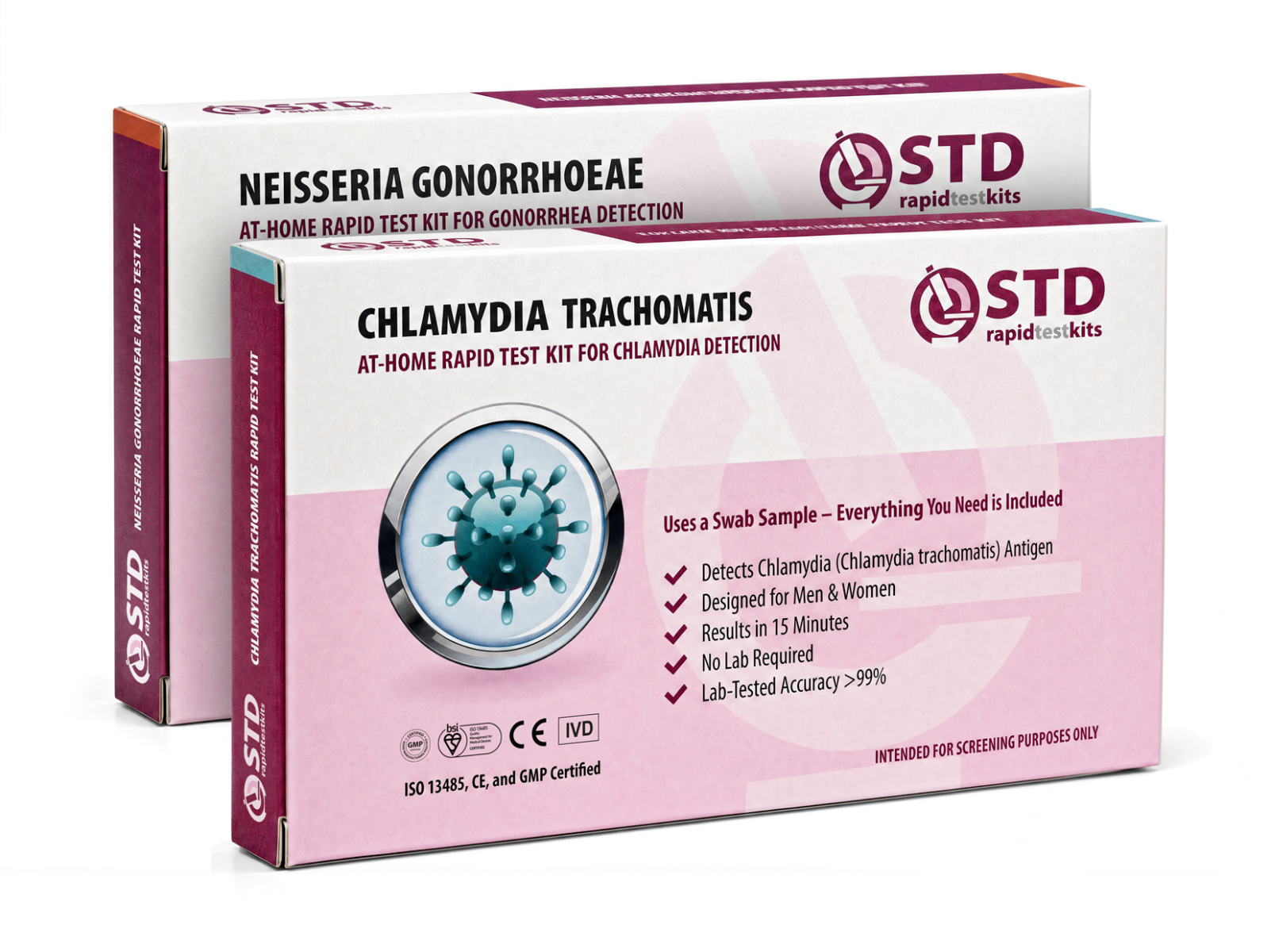
If symptoms persist more than a few weeks after treatment, see a clinician for a broader workup rather than re-treating on assumption. When repeat positives keep happening, it is also reasonable to look beyond a single infection with broader at-home STI test kits. Because chlamydia and gonorrhea travel together, a combined swab is a sensible starting point.
What you risk by skipping the retest
Most chlamydia infections, including reinfections, cause no symptoms. That is the strongest single reason retesting matters. Left undetected, an asymptomatic reinfection can sit untreated for months or years, and the long-term consequences fall into a few well-characterized categories.
For people with female reproductive anatomy, untreated chlamydia can ascend from the cervix into the upper reproductive tract and cause pelvic inflammatory disease, an infection and inflammation of the uterus, fallopian tubes, and ovaries. PID is the main route by which chlamydia causes infertility. The WHO notes that untreated chlamydia can lead to pelvic inflammatory disease and infertility in women (WHO, Chlamydia fact sheet), and the scarring of the fallopian tubes that drives tubal-factor infertility and ectopic pregnancy builds up across repeated infections (StatPearls, NCBI). The risk does not reset between treatment courses, which is what makes repeat infections more consequential than first ones.
For people with male reproductive anatomy, the most common complication is epididymitis, an inflammation of the coiled tube behind the testicle that the WHO lists among chlamydia's effects in men. It usually presents as one-sided testicular pain and swelling and resolves with antibiotics; chronic or repeated cases can affect fertility, though less often than the female-anatomy chain.
Two risks span both anatomies. Reactive arthritis, a post-infection inflammation of the joints, eyes, and urinary tract, follows chlamydia in a small subset of people. And because an active genital infection inflames the local tissue, it can facilitate the transmission and acquisition of HIV during unprotected sex, which is one more reason public-health bodies push for prompt treatment.
For pregnant individuals, untreated chlamydia can pass to the baby during birth and cause eye infection or pneumonia in the newborn, which is why a four-week test of cure is part of pregnancy care. Treated promptly, most chlamydia infections cause no lasting harm; the cases that end in infertility or chronic pain are the ones left undiagnosed for long stretches.
Complications of an untreated reinfection
- Female anatomy: pelvic inflammatory disease raises the lifetime risk of tubal-factor infertility, ectopic pregnancy, and chronic pelvic pain, and each episode adds to that cumulative risk.
- Male anatomy: epididymitis is the most common complication; repeated or chronic cases can affect fertility, though less often than the female-anatomy chain.
- Pregnancy: the infection can pass to the baby at birth and cause newborn eye infection or pneumonia, which is why a four-week test of cure is built into pregnancy care.
- Both anatomies: reactive arthritis in a small subset of people, and a higher risk of acquiring or transmitting HIV during unprotected sex while a genital infection is active.
Common myths about recurrent chlamydia
A few persistent misconceptions keep people stuck in shame and away from useful action. Each pairs the myth as it tends to show up in conversation with what the evidence says.
- Myth: a repeat positive means someone cheated. Reality: often not. The most common cause is an original partner who was never treated, frequently because they were never tested. An asymptomatic infection that predates the current relationship can also surface on a later retest.
- Myth: you can only catch chlamydia once. Reality: once treatment clears it, you are as susceptible on the next exposure as you were before. The same person can be infected, treated, and reinfected as many times as exposure occurs.
- Myth: a single-dose pill cures it every time. Reality: single-dose azithromycin is now an alternative, not the default. Doxycycline twice daily for seven days is more effective for genital, rectal, and pharyngeal chlamydia in non-pregnant adults.
- Myth: no symptoms means no infection. Reality: chlamydia is silent in a large share of cases, especially in women, yet left untreated it can still cause serious problems (WHO, Chlamydia fact sheet).
- Myth: you can catch chlamydia from a toilet seat or towel. Reality: it transmits through unprotected vaginal, anal, or oral sex, and from a pregnant person to their baby at birth. It does not survive on surfaces.
The assumption that a repeat positive proves cheating is the most destructive misconception in this space, because it blocks the conversation that actually fixes the problem: are we both being tested and treated on the same timeline, and have we both finished the seven-day wait before resuming sex? One way to lower the temperature is to bring the clinician in first. Coming to a partner with "the clinic says we both need another round" lands very differently from an accusation, and it keeps the focus on treatment rather than blame.
If your retest comes back positive
A positive three-month retest is the protocol working as designed: a reinfection caught early, before complications develop, with no moral weight attached. The response is the same workflow as the first time, re-treatment plus partner notification, with a few specifics worth keeping in mind. A clinician will usually work through a short, mechanical set of questions, not accusatory ones: what was the original treatment, was the course finished without missed doses, were all partners from the prior 60 days treated, and has there been a new partner since.
Next steps after a positive retest
- Re-treat with the standard regimen. Doxycycline 100 mg twice daily for seven days remains first-line for an uncomplicated reinfection, and a different drug class is rarely needed.
- Repeat partner notification. Anyone you have had sexual contact with since finishing the first course may be involved; the 60-day lookback still applies.
- Plan another retest in three months. The clock resets after the second course, with the same logic as the first.
- Talk patterns through with your provider. If reinfection keeps happening, ask about testing for Mycoplasma genitalium and other infections that share symptoms.
Testing at home after treatment
The standard route for a three-month retest is a return visit to a clinic or doctor's office, where a urine sample or self-collected swab is sent to a lab for nucleic acid amplification testing (NAAT). Lab NAAT is the most sensitive method available and the analytical reference standard for chlamydia.
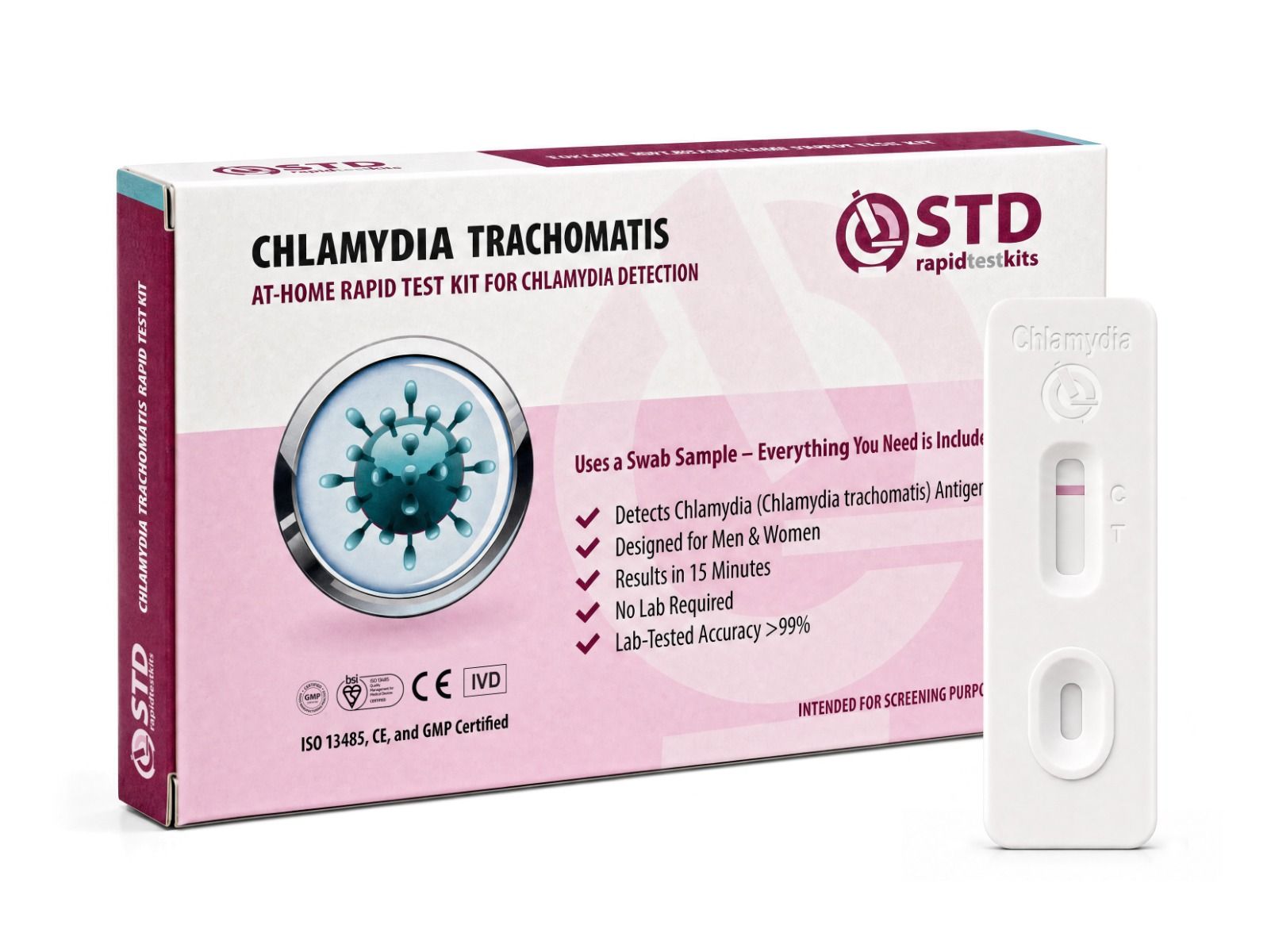
A practical alternative, for people who would otherwise skip the retest rather than book an appointment, is a home rapid swab test. These use lateral-flow chemistry on a self-collected vaginal or penile swab and give a visible result in roughly 15 minutes. They work as a private screening step, with one standing caveat: a positive home result should be confirmed by a lab NAAT before any treatment decision. The two methods are complementary rather than equivalent, since labs use NAAT for higher analytical sensitivity while a home kit trades some of that for speed and privacy.
A home test fits the three-month retest when:
- You are confident treatment was completed correctly and no test of cure is needed.
- The three-month mark has arrived and you want to screen quickly without scheduling a visit.
- You are willing to confirm a positive home result at a clinic before re-treating.
- Privacy or scheduling is a real barrier to retesting at all. Sending a partner a link to the same kit is often easier than asking them to book a clinic visit.
A home kit is not a substitute for a clinical workup if you have new symptoms such as pelvic pain, painful urination, unusual discharge, or testicular swelling. Those need a provider visit and a broader differential.
| Feature | Clinic NAAT (lab) | Home rapid swab |
|---|---|---|
| Sample type | Urine or self-collected swab | Self-collected vaginal or penile swab |
| Result time | Typically 1 to 3 days | About 15 minutes |
| Sensitivity | Reference-standard analytical sensitivity | Suitable for asymptomatic screening; confirm a positive with a lab NAAT before re-treating |
| Best fit | Symptomatic visits, pregnancy test of cure, confirming a positive screen | Asymptomatic three-month retest, private screening between clinic visits |
| Access | Often insurance-covered; needs an appointment | At home, no appointment needed |
The bottom line
Chlamydia does not switch itself back on after a successful course of antibiotics. When it reappears on a follow-up test, the cause is almost always a fresh exposure, most often a partner who was not treated on the same timeline. The fix is built into the standard guidance: a single follow-up test about three months after treatment ends, treatment for any partner who tests positive, and a return to annual screening once a retest is clear.
The reason the CDC made this so specific, three months, every time, regardless of what you assume about your partners, is that the costs are lopsided. An unnecessary follow-up test costs a little time and the price of a swab. A missed asymptomatic reinfection can mean the slow accumulation of pelvic inflammatory disease, infertility, ectopic pregnancy, and chronic pelvic pain in women, and epididymitis in men. A default retest exists because that math is lopsided, not because anything is wrong with you.
If you have already finished treatment, the next step is simple: mark your calendar three months from your last dose, decide between a clinic NAAT and a home rapid swab, and follow through. If you are reading this before treatment, the same plan applies; just add it to the list before you start.
Should you retest now, or wait?
Do you have new symptoms, such as pelvic pain, painful urination, unusual discharge, or testicular pain or swelling?
Yes: See a clinician now for a full workup rather than waiting for the three-month mark. New symptoms need a broader differential than a single home retest.
Has a recent partner tested positive, or have you had a new unprotected exposure since treatment?
Yes: Retest now rather than waiting, and make sure every recent partner is tested and treated on a timeline that overlaps with yours.
Has it been about three months since you finished treatment?
Yes: Retest now, at a clinic for a lab NAAT or at home with a rapid swab, and confirm any positive with a clinic before re-treating.
No: Mark your calendar for the three-month mark and retest then, with or without symptoms. In the meantime, finish any remaining doses, wait seven days after treatment before resuming sex, and notify partners from the 60 days before your diagnosis. Ask your provider about Expedited Partner Therapy if a partner faces barriers to a clinic visit.
Guidance only. A clinician can advise based on your specific situation.
Men and women who have been treated for chlamydia should be retested approximately 3 months after treatment, regardless of whether they believe their sex partners were treated.
Frequently asked questions
- How common is chlamydia reinfection after treatment?
- Common enough that the CDC built a default three-month retest into its standard guidance for everyone treated for chlamydia or gonorrhea, and for women treated for trichomoniasis. The WHO estimated 128.5 million new chlamydia infections worldwide among adults aged 15 to 49 in 2020. Most repeat positives trace back to a partner who was not treated alongside the original patient, or to a new exposure within those three months.
- When should I retest sooner than three months?
- Test earlier than the default if you develop new symptoms (pelvic pain, painful urination, unusual discharge, testicular pain or swelling), if a partner tests positive before your retest is due, if you take a new partner for unprotected sex, or after any new unprotected exposure within the three-month window. Otherwise the standard three-month timeline holds.
- Why retest if I feel fine?
- Because most chlamydia infections cause no symptoms at all. An undetected reinfection can quietly progress to pelvic inflammatory disease in women and raise the lifetime risk of infertility, ectopic pregnancy, and chronic pelvic pain, even without obvious signs. In men the silent complication is epididymitis. A retest is the only reliable way to catch a reinfection before that risk accumulates.
- I got reinfected. Did my partner cheat?
- A repeat positive tells you a bacterium was transmitted, not who transmitted it or when. The more useful frame is the clinical one: both partners need re-treatment and a new retest in three months. If a partner also tests positive, that is when a conversation about timing becomes productive rather than accusatory.
- Can I get chlamydia again from the same partner after treatment?
- Yes. If a partner was not treated, or was treated on a different timeline, the bacteria can pass back as soon as you resume unprotected sex. The fix is to make sure every partner from the 60 days before your diagnosis is tested and treated, and to wait at least seven days after both of you finish antibiotics before resuming sex.
- Should I get a test of cure after treatment?
- For most non-pregnant adults, no. A test of cure done sooner than four weeks can read falsely positive because residual bacterial DNA may still be present. For pregnant individuals, a test of cure about four weeks after finishing therapy is recommended, plus the standard three-month reinfection retest after that.
- Can I retest at home, or do I need a clinic visit?
- A home rapid swab is a reasonable option for the three-month asymptomatic retest. Lab NAAT through a clinic remains the analytical reference standard and is the right choice for symptomatic visits, a pregnancy test of cure, and confirming a positive screen. The standard advice is to confirm any positive home result with a lab NAAT before treatment.
- How long should I wait to have sex after finishing treatment?
- At least seven days after a single-dose azithromycin treatment, or until you complete a seven-day doxycycline course, and until your partner has finished their treatment too. Resuming earlier is one of the most common preventable causes of an immediate reinfection.
- U.S. Centers for Disease Control and Prevention. Sexually Transmitted Infections Treatment Guidelines, 2021: Chlamydial Infections. Source for first-line doxycycline 100 mg twice daily for 7 days, azithromycin and levofloxacin alternatives, the 60-day partner-notification window, and pregnancy guidance.
- U.S. Centers for Disease Control and Prevention. Retesting After Treatment to Detect Repeat Infections. Source for the default three-month retest recommendation after chlamydia or gonorrhea treatment, and for women after trichomoniasis treatment.
- U.S. Centers for Disease Control and Prevention. STI Screening Recommendations. Source for routine chlamydia screening of sexually active women under 25 and other risk-based populations.
- World Health Organization. Chlamydia fact sheet. Source for global incidence (128.5 million new infections among adults aged 15 to 49 in 2020), female (4.0 percent) and male (2.5 percent) prevalence, the seven-day post-treatment interval before sex, and complications including pelvic inflammatory disease, infertility, epididymitis, and facilitation of HIV.
- UK National Health Service. Chlamydia. Source for the antibiotic treatment course, waiting until both partners finish treatment before resuming sex, and the four-week retest in pregnancy.
- Mohseni M, Sung S, Takov V. Chlamydia. StatPearls, National Center for Biotechnology Information (NCBI) Bookshelf. Source for the roughly 95 percent effectiveness of first-line therapy, reinfection driven by untreated partners or new exposure, and fallopian-tube scarring leading to infertility.