

Published: November 2025 | Last updated: April 2026 | Editorial review and quality control: Martina N.
You treated chlamydia six months ago. You finished the antibiotic course, your partner did the same, and you have been careful about exposure since. Then a routine screen comes back positive again. Where did it come from?
Researchers asking exactly that question have spent the last decade studying whether Chlamydia trachomatis can colonize sites beyond the urogenital tract, and one possibility keeps surfacing: the gastrointestinal tract may act as a hidden reservoir for the bacteria. The hypothesis rests on a strong base of animal-model evidence with growing clinical support, and it has practical implications for anyone facing recurrent chlamydia infections.
This article walks through what is known, what is still under investigation, and what it means for how you test, treat, and prevent reinfection. If you arrived here looking for plain reassurance after a single positive test, scroll to the FAQ. If you are trying to understand why standard treatment may not always feel like a permanent fix, the middle sections are written for you.
Can chlamydia really live in my intestines and reinfect me later?
Growing evidence suggests Chlamydia trachomatis can persist in the gastrointestinal tract, where it may not be fully cleared by short-course antibiotics directed at urogenital infection. The strongest data come from animal models; in people, rectal chlamydia turns up in those without a history of receptive anal sex, which fits the same pattern. For most readers, a standard course of doxycycline (100 mg twice daily for 7 days) still cures the infection. The gut-reservoir picture mainly matters if you are dealing with repeat infections that have no obvious external source.
Key Takeaways
- Chlamydia trachomatis can persist in the gastrointestinal tract after genital infection clears, and this gut colonization may seed later reinfection of the genital tract.
- Standard 7-day doxycycline still cures the great majority of urogenital chlamydia infections; persistence concerns mainly apply to people with documented recurrent infections.
Three Ways Chlamydia Reaches the Gut
Chlamydia is most often described as a urogenital infection, transmitted by vaginal, anal, or oral sex and lodged in the cervix, urethra, or rectum at the point of contact, and that description is mostly accurate. The complication is that the bacterium also turns up in stool and on rectal swabs of people whose sexual history makes a direct rectal exposure unlikely. Three pathways have been proposed to explain how it arrives there.
- Direct rectal inoculation. The most obvious route is receptive anal sex with an infected partner. Rectal infections from this route are well documented and are the reason CDC guidelines recommend extragenital (rectal and pharyngeal) screening for some populations, particularly men who have sex with men.
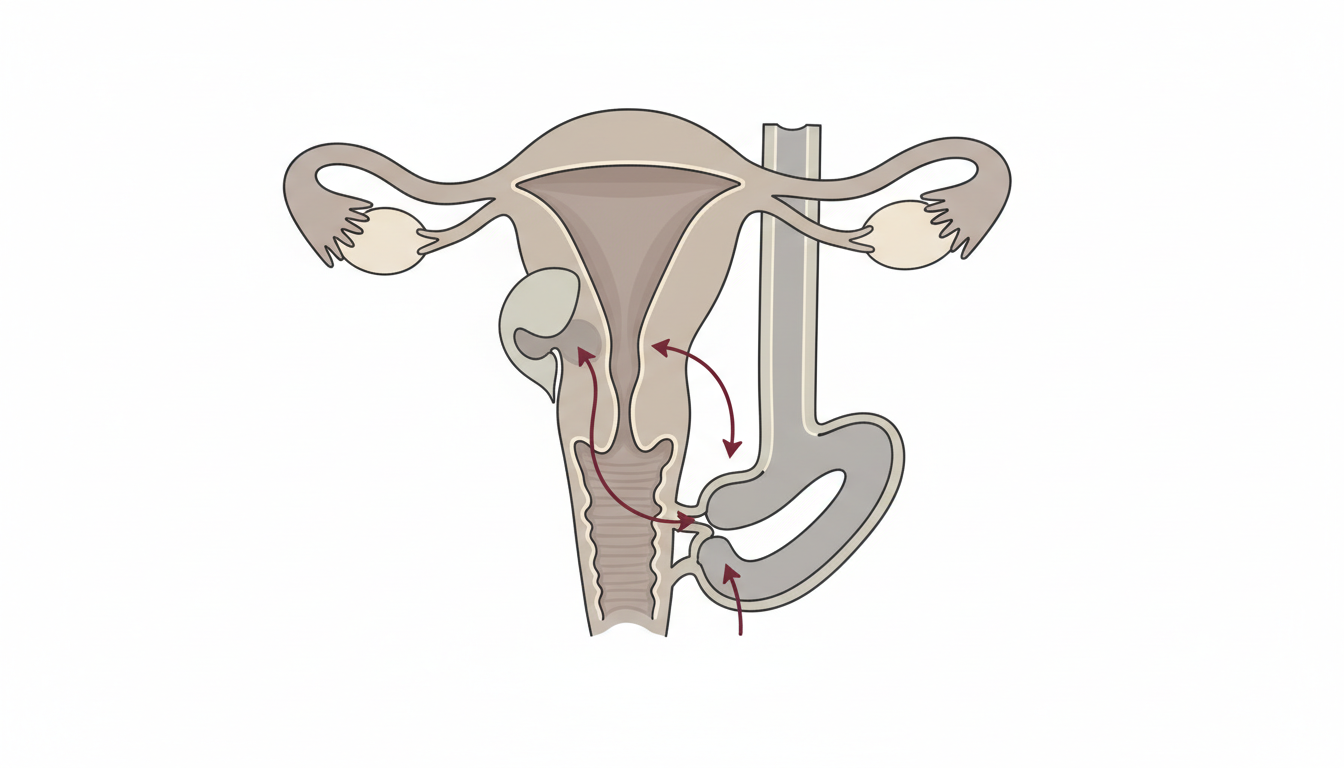
- Self-inoculation from the genital tract. In women especially, the anatomical proximity of the vaginal opening to the anus makes mechanical bacterial transfer possible during normal hygiene, sexual activity, or simple movement. Several rectal-positive cases in women without a history of anal sex have been attributed to this route.
- Oral-to-gastrointestinal seeding. Animal studies show that orally administered Chlamydia muridarum (the rodent species closest to the human pathogen) can colonize the mouse gut and persist there for months. The proposed human analogue is oral exposure followed by swallowing, which delivers viable bacteria to the gastrointestinal tract; the human version is plausible but harder to study directly.
The clinical observation that started this line of research was simple. Rectal chlamydia turns up in women who report no receptive anal sex, and prevalence rates of rectal infection in women being screened genitally are not negligible. The current consensus, expressed in several reviews of C. trachomatis niche biology, is that the gastrointestinal tract should be considered a potential reservoir in addition to the urogenital tract.
What Auto-Reinfection Means in Practice
The concept of auto-reinfection is straightforward. A person is treated for genital chlamydia. The genital infection clears as expected on the next clinical screen or test of cure. Months later, the same person tests positive again, despite no new external exposure. The proposed explanation is that bacteria which survived in the gastrointestinal tract during the original treatment course migrated back to the genital region.
Two things make this hypothesis attractive to researchers:
- Standard 7-day doxycycline and single-dose azithromycin are dosed to clear urogenital infection, where drug concentrations and durations have been characterized in detail. The pharmacokinetics in the gastrointestinal tract are different, and animal data suggest gut C. trachomatis can be relatively tolerant to short-course therapy.
- The pattern of recurrent chlamydia in people with no apparent external source is a real clinical phenomenon. Public-health workers regularly investigate these cases and find no obvious partner-related exposure.
Two things keep the hypothesis from being settled science in humans:
- The strongest evidence comes from mouse models using C. muridarum. Whether the human pathogen C. trachomatis behaves identically in the human gut is the open question.
- Designing a clinical study that proves a positive rectal swab is the source of a later genital reinfection (rather than a coincidental new exposure) is genuinely hard.
For now, the gut reservoir is best described as a leading hypothesis with strong supporting animal evidence and indirect clinical support in humans. Some popular reporting describes it as established fact; the actual research literature is more cautious.
Even on the most conservative reading of the evidence, the practical advice does not change much: complete the full antibiotic course as prescribed, retest if symptoms return or if your partner is later diagnosed, and consider rectal screening at a clinic if you have a history of receptive anal sex or unexplained recurrent infections. The gut-reservoir question changes how researchers think about treatment failure; it does not change the basic playbook for one-off infections.
Symptoms, and Why Most People Have None
Most chlamydia infections at any anatomical site are silent. The CDC estimates that the majority of women and roughly half of men with genital chlamydia have no recognizable symptoms, which is why the infection is often called the silent STI. Rectal and gastrointestinal infections are even more likely to be asymptomatic.
When symptoms do appear, they tend to be non-specific:
- Genital chlamydia in women: abnormal vaginal discharge, light spotting between periods, burning or pain on urination, lower abdominal tenderness, pain during sex.
- Genital chlamydia in men: clear or cloudy discharge from the penis, burning on urination, testicular tenderness or swelling.
- Rectal chlamydia: rectal pain, discharge, bleeding, or a feeling of incomplete bowel emptying. Most rectal infections produce nothing noticeable.
- Gastrointestinal colonization (the gut-reservoir scenario): typically nothing. Some researchers have asked whether persistent gut colonization correlates with vague abdominal discomfort, altered bowel habits, or microbiome disruption, but the evidence is preliminary and not strong enough to ascribe symptoms to gut chlamydia with confidence.
The takeaway is that you cannot rely on symptoms to decide whether to screen. The main signal that should drive screening decisions is your sexual activity pattern, not how you feel on a given day.
Asymptomatic chlamydia is the most common presentation, especially at rectal and gastrointestinal sites. Waiting until you feel unwell to screen is a reliable way to miss the infection until it has had time to cause downstream harm. If your sexual activity profile fits the screening recommendations, screen on schedule even when nothing feels wrong.
What Untreated Chlamydia Can Lead To
Most chlamydia infections that are caught and treated do not cause long-term problems. The complications below all stem from infection that goes untreated for months or years, often because it was never detected. The CDC's pelvic inflammatory disease (PID) fact sheet covers the female-anatomy complications in particular detail.
The serious downstream outcomes worth knowing about:
- Pelvic inflammatory disease (PID). When untreated genital chlamydia ascends from the cervix to the uterus and fallopian tubes, it can cause PID. Roughly 1 in 8 women with a history of PID has difficulty getting pregnant, according to CDC PID surveillance. PID is also associated with chronic pelvic pain and ectopic pregnancy.
- Tubal infertility. Repeated or prolonged chlamydia infection in the upper female reproductive tract can scar the fallopian tubes, blocking the passage that an egg needs to take after ovulation.
- Epididymitis. In men, untreated chlamydia can spread to the epididymis and cause scrotal pain and swelling. Long-term, it can in rare cases contribute to fertility problems.
- Reactive arthritis. A small fraction of people develop joint inflammation following chlamydia infection. The connection is well documented but uncommon.
- Increased HIV transmission risk. Untreated genital STIs, including chlamydia, are associated with an increased risk of acquiring or transmitting HIV during exposure events. Treatment lowers that risk.
The gut-reservoir question fits into this picture as a possible explanation for why some people end up with the longer cumulative duration of untreated infection that drives those complications. This is not treatment failure in the conventional sense. The genital tract was being re-seeded from a reservoir that standard testing never sampled.
Untreated chlamydia, by anatomical site
- Cervix and upper female tract: pelvic inflammatory disease, fallopian tube scarring, infertility, ectopic pregnancy.
- Male urogenital tract: epididymitis and, rarely, fertility complications.
- Joints: reactive arthritis in a small fraction of cases.
- Pregnancy: increased risk of preterm birth and conjunctivitis or pneumonia in the newborn.
- All sites: a higher risk of HIV acquisition during exposure events.
How Testing Works, and What This Site Does and Does Not Sell
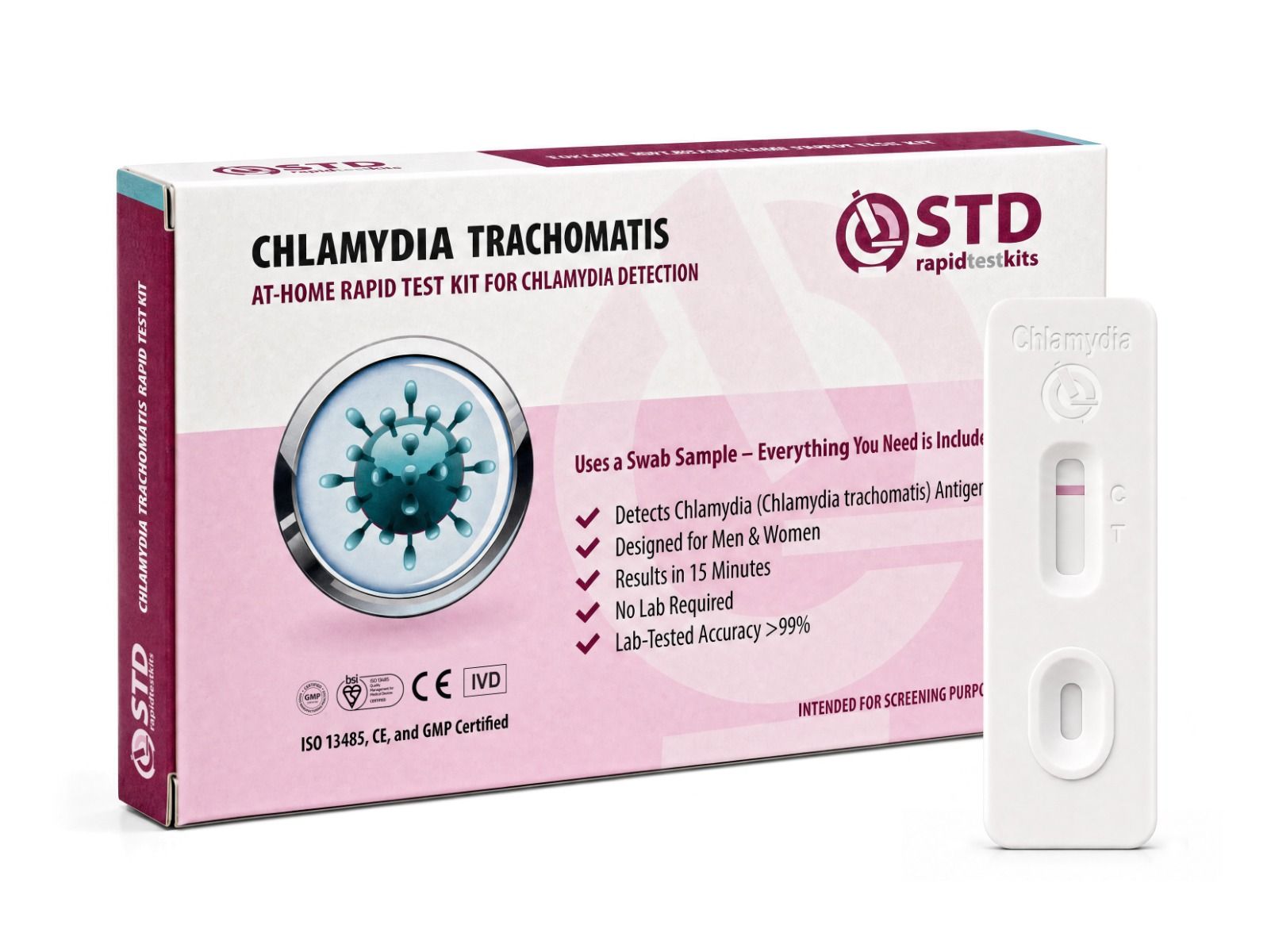
stdrapidtestkits.com sells a self-collected, lateral-flow rapid swab test for genital chlamydia (vaginal or penile self-swab, result in around 15 minutes). This kit is well suited to genital screening and to checking on a known or suspected genital exposure. It is not the right tool for rectal or pharyngeal infection, and we do not sell a urine-sample test or a mail-in laboratory NAAT panel. If a clinician has flagged a need for rectal swab testing because of recurrent infections or receptive anal sex, that is a clinic visit, not a home test.
The two relevant test technologies, and where each shines:
- Laboratory NAAT (nucleic acid amplification testing). The CDC's recommended diagnostic for chlamydia at any site. NAATs amplify and detect C. trachomatis DNA from urine, vaginal swab, rectal swab, or pharyngeal swab depending on what the clinician collects. NAAT is the only validated method for rectal and pharyngeal samples in routine practice. Sensitivity is high across sample types when the test is run on a properly collected specimen.
- Lateral-flow rapid antigen tests. The home-test category our products belong to. These detect bacterial antigens on a self-collected swab using the same chemistry family as a pregnancy test or a COVID rapid test. Speed and privacy are the trade for some sensitivity loss compared to lab NAAT, particularly in asymptomatic infections at low bacterial loads. A positive home result is meaningful and should prompt clinician follow-up; a negative home result in someone with ongoing risk should be confirmed with a lab NAAT, not treated as a final answer.
For the gut-reservoir scenario specifically: no home test on the market reliably detects gastrointestinal chlamydia colonization. Researchers studying it use stool samples and rectal swabs analyzed by NAAT in a laboratory. If your concern is recurrent infection that you cannot explain, the conversation belongs with a clinician who can order rectal NAAT testing.
Our chlamydia rapid kit uses a vaginal or penile self-swab and detects genital infection. It does not sample the rectum or the upper gastrointestinal tract. If your clinical question is rectal or pharyngeal infection, that is the right time to book a clinic visit; the rest of this page covers how our genital screening tool fits alongside that.
Treatment: Current CDC Guidelines
The CDC's current STI treatment guidelines (last major update 2021, with smaller revisions since) name doxycycline as the preferred regimen for uncomplicated urogenital and rectal chlamydia. The change from earlier guidance, which favored a single dose of azithromycin, was driven by accumulating evidence that doxycycline performs better at rectal sites and likely at the urogenital site as well.
The standard options for non-pregnant adults:
| Regimen | Dose and duration | Notes |
|---|---|---|
| Doxycycline (preferred for non-pregnant adults) | 100 mg orally, twice daily for 7 days | First-line per current CDC guidelines. Performs better than azithromycin at rectal sites. |
| Azithromycin (alternative) | 1 g orally, single dose | Easier to complete (one-and-done) but lower cure rates at rectal sites. Reasonable when doxycycline is contraindicated. |
| Azithromycin (preferred in pregnancy) | 1 g orally, single dose | Doxycycline is generally avoided in pregnancy. Test of cure is recommended 4 weeks after treatment. |
| Erythromycin or levofloxacin (alternatives) | Per CDC guideline-specified dosing | Used when first-line and second-line options are not appropriate. |
A Note on Extended Treatment Regimens
For the gut-reservoir question, no current guideline recommends a longer or repeated antibiotic course on the basis of suspected gastrointestinal colonization alone. Some research groups have explored whether 14-day doxycycline or rifamycin combinations might better address persistent infection, but these are research-stage approaches, not standard care. If you have had documented recurrent chlamydia infections despite standard treatment and partner notification, the right step is a clinician conversation about a workup that may include rectal NAAT testing, partner-management review, and a careful look at your treatment-adherence history.
Three practical points on treatment that are easy to miss:
- Finish the full course. Stopping doxycycline early because symptoms have resolved is a known failure mode. Symptoms often clear well before the bacteria are eliminated.
- Avoid sex for 7 days after starting treatment. Single-dose azithromycin requires 7 days of abstinence; for the 7-day doxycycline course, abstain until both you and any partners have completed treatment.
- Repeat testing at 3 months. The CDC recommends a follow-up test approximately 3 months after treatment for anyone who tested positive, because reinfection (whether from a partner or from a residual reservoir) is common in that window.
Preventing Reinfection
Reinfection prevention is mostly about partner notification, retesting, and consistent barrier use. The gut-reservoir hypothesis adds nuance to those conversations rather than rewriting them.
- Notify and treat all recent sexual partners. The single most reliable predictor of reinfection in clinical studies is an untreated partner. Partner-delivered or expedited partner therapy is available in many jurisdictions; ask your clinician what is offered locally.
- Use condoms consistently. Latex or polyurethane condoms substantially reduce transmission risk across all penetrative routes when used correctly from start to finish. Dental dams reduce risk during oral-genital contact.
- Get retested at 3 months after treatment. This timing reflects the period when reinfection is most likely. CDC guidance is the same regardless of whether the original infection was symptomatic.
- Screen routinely if you are at higher risk. CDC recommends annual chlamydia screening for sexually active women under 25, and for women 25 and older with risk factors (new or multiple partners, a partner with an STI). Men who have sex with men should be screened at all anatomical sites of exposure (urethra, rectum, pharynx) at least annually, and more often with risk factors.
- Bring up the recurrence pattern explicitly with your clinician. If you have had two or more chlamydia diagnoses in 12 months without an obvious external exposure, say so out loud. A rectal swab and a careful review of partner status are reasonable next steps and may save you a third round of the same infection.
Hygiene practices (front-to-back wiping, washing after sex) are sometimes cited as a way to reduce vaginal-to-rectal bacterial transfer. The evidence that this changes chlamydia outcomes specifically is thin; doing it as general hygiene is fine, framing it as a primary prevention tool for STI is not supported by data.
Where the Research Goes from Here
Several open questions are likely to shape the next few years of chlamydia research:
- Direct demonstration of viable C. trachomatis in the human gut. Animal-model evidence is strong; equivalent human evidence is harder to gather. Studies sampling stool and rectal tissue with sensitive molecular and culture methods are ongoing.
- Whether longer or different antibiotic regimens reduce recurrence. Trials comparing 7-day versus 14-day doxycycline, and exploring rifamycin combinations, are the kind of work that would actually change guidelines if the gut-reservoir hypothesis is confirmed.
- Whether the gut microbiome interacts with chlamydia persistence. Early work suggests microbiome composition may influence whether C. trachomatis establishes a long-term gut presence in animal models. The implications for probiotic or dietary co-intervention are speculative at this stage.
- Better extragenital screening tools. A home rectal NAAT with mailed-in lab processing exists in some markets and is one direction the field may move; a true at-home rapid test for rectal chlamydia is not currently available and is technically harder to validate.
Our practical recommendation does not depend on any of these resolving favorably. Test when you have risk factors, finish your treatment, retest at three months, and tell your clinician if the pattern keeps repeating despite all of that.
Open research questions at a glance
- Whether viable C. trachomatis can be directly demonstrated in the human gut at long-term scale, beyond rectal swabs.
- Whether 14-day doxycycline or rifamycin combinations reduce recurrence compared with the standard 7-day course.
- Whether gut microbiome composition influences chlamydia persistence and whether probiotic or dietary co-intervention has any role.
- Whether a validated at-home rectal screening tool can be developed to extend screening beyond the urogenital tract.
Most people who have chlamydia have no symptoms. If you have symptoms, you might not notice them until several weeks after having sex with a partner who has chlamydia.
Frequently asked questions
- Can chlamydia really live in my intestines?
- The evidence in animal models is strong: orally administered Chlamydia muridarum reliably colonizes the rodent gastrointestinal tract and can persist there for months. In humans the case is built on indirect signals: rectal chlamydia turns up in women with no history of receptive anal sex, and recurrent genital infections sometimes occur with no apparent external source. Direct demonstration of long-term viable C. trachomatis in the human gut is an active research area rather than a settled finding.
- How does chlamydia get into the gut if I have never had anal sex?
- Two routes are proposed beyond direct inoculation. Self-inoculation describes mechanical bacterial transfer from the vaginal opening to the nearby anus during normal hygiene or sexual activity, which is the most likely explanation for rectal chlamydia in women who report no anal sex. Oral-to-gastrointestinal seeding describes oral exposure followed by swallowing of viable bacteria, which is plausible based on animal data but harder to prove in humans.
- If antibiotics cleared my genital infection, why am I positive again?
- The most common reason is reinfection from an untreated partner. The second most common is a new partner with chlamydia. The gut-reservoir hypothesis is a third possibility for people who can rule out the first two. If you have had two or more positive tests in 12 months despite partner treatment and consistent precautions, raise the recurrence pattern with your clinician and ask whether rectal swab testing is appropriate.
- Should I ask my doctor for a rectal swab if I have had recurrent chlamydia?
- It is a reasonable conversation. Rectal NAAT testing is not part of routine screening for everyone, but it is appropriate when there is a history of receptive anal sex, when there are recurrent infections without an obvious source, or when symptoms point to rectal involvement. Clinicians familiar with the gut-reservoir literature are increasingly open to extragenital screening in puzzling cases.
- Does your home test detect rectal or intestinal chlamydia?
- No. Our chlamydia rapid kit is a self-collected vaginal or penile swab and is designed for genital infection. It does not sample the rectum or the upper gastrointestinal tract. If you need rectal screening, that is a clinic-administered swab analyzed by laboratory NAAT, not a home rapid test.
- What antibiotics treat chlamydia, and is one course usually enough?
- The CDC's preferred regimen for non-pregnant adults is doxycycline 100 mg orally twice daily for 7 days. Single-dose azithromycin (1 g) is the alternative and is preferred in pregnancy. One course cures the great majority of urogenital infections. Persistence concerns mainly apply to people with documented recurrent infections or to research-stage scenarios that no current guideline addresses with extended dosing.
- Can chlamydia in the gut affect my digestion or microbiome?
- Some early animal research suggests gut chlamydia colonization can interact with the gut microbiome and alter local immune signaling, but the evidence in humans is not strong enough to attribute specific digestive symptoms to gut chlamydia. If you have ongoing GI symptoms, those should be worked up on their own merits rather than ascribed to a possible chlamydia reservoir.
- How can I prevent chlamydia reinfection going forward?
- The single most useful step is the 3-month retest after treatment, which is when reinfection is most likely. Tell your clinician explicitly if you have had repeat infections without an obvious source so a rectal swab can be considered. Beyond that, the standard playbook applies: complete the full antibiotic course, ensure recent partners are notified and treated, and use condoms consistently with new or non-monogamous partners.
- U.S. Centers for Disease Control and Prevention. About Chlamydia: public information on transmission, symptoms, and screening recommendations.
- U.S. Centers for Disease Control and Prevention. Sexually Transmitted Infections Treatment Guidelines, chlamydia chapter, including the doxycycline-preferred regimen and follow-up testing recommendations.
- U.S. Centers for Disease Control and Prevention. Pelvic Inflammatory Disease (PID): about page covering the relationship to untreated chlamydia, the 1-in-8 fertility statistic, and downstream reproductive outcomes.
- World Health Organization. Sexually transmitted infections (STIs) fact sheet, used for global incidence figures and general transmission framing.
- U.K. National Health Service. Chlamydia overview, used for symptom descriptions and patient-facing testing guidance.
- U.S. National Library of Medicine, MedlinePlus. Chlamydia infections topic page, used for general background and prevention guidance.
