
Published: November 2025 | Last updated: May 2026 | Editorial review and quality control: Martina N.
Can chlamydia really cause damage with no symptoms?
Yes. The CDC describes chlamydia as an infection that often has no symptoms, yet it can still spread to partners and ascend the reproductive tract. Untreated, it can cause pelvic inflammatory disease, tubal scarring, infertility, ectopic pregnancy, and reduced sperm quality. Annual screening is the only reliable way to catch a silent case before it does lasting harm.
Most people who carry chlamydia never feel a thing. The U.S. Centers for Disease Control and Prevention's chlamydia overview describes the infection as one that often has no symptoms at all. The bacteria can settle in for weeks, months, sometimes more than a year, while everything looks fine on the outside. Internally, it is a different story. Chlamydia can quietly inflame the cervix, climb into the uterus and fallopian tubes, lay the groundwork for pelvic inflammatory disease (PID), and in people with a penis it can inflame the duct that carries sperm. None of that requires the burning, discharge, or pelvic pain people usually associate with an STI.
This article explains what silent chlamydia actually does inside the body of any-gender readers, how it spreads between people who both feel healthy, how fast the damage can accumulate, and what testing schedule public-health agencies recommend regardless of how you feel. If you are sexually active and have skipped a screening, an at-home chlamydia test is one straightforward way to find out where you stand before you decide what to do next.
Key Takeaways
- Chlamydia often produces no symptoms in either sex, so feeling fine tells you very little about whether you are carrying the infection.
- Untreated chlamydia can scar the fallopian tubes, inflame the epididymis, and quietly raise the risk of infertility and ectopic pregnancy, often without ever producing pain.
How a 'silent' infection actually works
Chlamydia is caused by a bacterium called Chlamydia trachomatis. It infects mucous-membrane surfaces (the cervix, urethra, rectum, and occasionally the throat or eyes) by entering host cells and replicating slowly inside them. The body's response varies. In some people, immune signaling produces inflammation strong enough to cause discharge, burning, or pelvic discomfort. In most, the response stays low-grade. The bacteria continue replicating, but the symptoms that would normally drive someone to a clinic never appear, or appear so mildly they get blamed on a yeast infection, a UTI, or a new soap.
That mismatch between how an infection feels and what it is actually doing is the central problem. According to the CDC's chlamydia overview, chlamydia often has no symptoms, and many cases are diagnosed only because a clinician orders routine screening. Asymptomatic does not mean dormant or harmless: the bacteria are still actively replicating and still transmissible to a partner during sex.
Most people who have chlamydia do not have any symptoms.
What chlamydia does inside your body while you feel fine
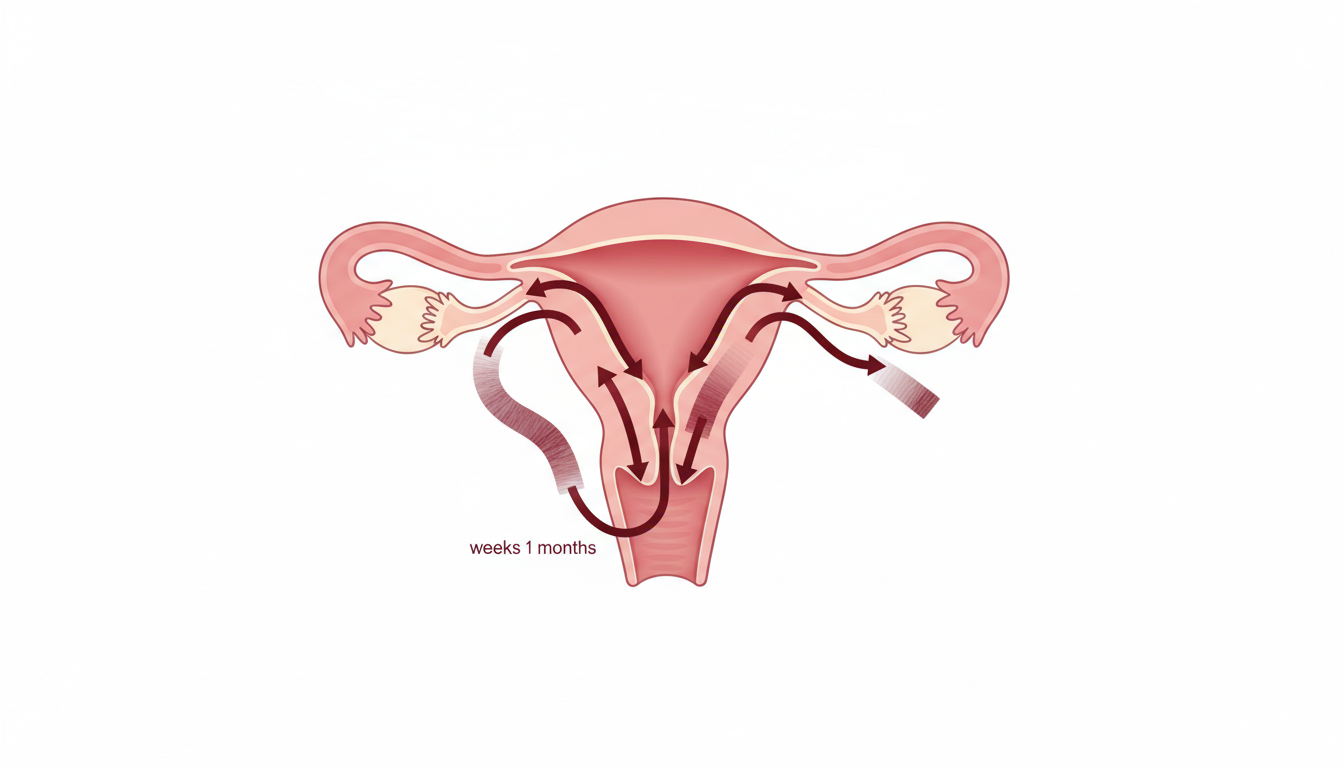
The damage from untreated chlamydia is mostly mechanical. As the bacteria replicate in the cervix and ascend through the upper genital tract, the body produces inflammation that, over weeks and months, leaves scar tissue. In people with a uterus, that scarring can fuse delicate folds inside the fallopian tubes, narrow the passage that an egg travels through, or seal it off entirely. The NHS chlamydia overview identifies pelvic inflammatory disease as a recognized serious complication of untreated chlamydia, and PID is one of the leading preventable causes of infertility worldwide.
Once tubal scarring is in place, the fallopian tube can no longer move an egg freely, which raises the chance of difficulty conceiving and increases the risk of ectopic pregnancy (a fertilized egg lodges in the tube and can rupture, a medical emergency). Chronic pelvic pain is a third consequence that can outlast the original infection by years. None of these complications require the infection to have caused symptoms; the inflammation does its work quietly, and the consequences often only become visible later, during a fertility workup. The CDC's PID fact sheet emphasizes that PID itself can also develop silently, with the first sign of trouble sometimes appearing years later when conception is unsuccessful. Repeated episodes of PID compound the risk further, which is one reason simultaneous partner treatment is part of every clinical chlamydia protocol.
For people with a penis, the picture is different but not negligible. Untreated chlamydia can cause epididymitis, an inflammation of the coiled duct behind the testicle that carries sperm. Acute epididymitis usually produces scrotal pain and swelling and rarely impairs fertility on its own, but chronic, low-grade epididymitis with no pain has been associated with reduced sperm count and motility. Rectal and pharyngeal infections often cause no local symptoms but can still be transmitted to partners, which is why screening at multiple anatomic sites matters for people with rectal or oral exposure.
Symptoms that do show up (and why people miss them)
A minority of infections produce symptoms, and even those tend to be mild and easy to misattribute. In women, possible signs include unusual vaginal discharge, light spotting between periods or after sex, a burning sensation during urination, and pelvic discomfort that comes and goes. Many of these overlap with yeast infections, urinary tract infections, ovulation pain, or hormonal changes around a period, which is why they are often dismissed as something else.
In men, symptoms can include a thin discharge from the penis, mild urethral burning during urination, or testicular tenderness. These tend to resolve on their own as the infection becomes less acute, which can falsely reassure people that whatever was bothering them is gone, even though the underlying infection persists. Rectal infections in any gender tend to cause discomfort, itching, or bleeding rather than the more familiar urinary symptoms, and they are commonly missed unless a clinician specifically swabs the site. Pharyngeal (throat) chlamydia is almost always asymptomatic.
Possible signs of chlamydia (often mistaken for something else)
Most chlamydia infections produce no symptoms at all. When signs do appear, these are the patterns most commonly reported, and most commonly misattributed to UTIs, yeast infections, or hormonal cycle changes.
- Unusual vaginal or penile discharge, often clear or cloudy and mild Common
- Burning sensation during urination Common
- Light spotting between periods or after sex Less common
- Pelvic discomfort that comes and goes Less common
- Testicular tenderness or scrotal swelling Less common
- Rectal discomfort, itching, or bleeding from a rectal infection Less common
- Sore throat without other illness, from a pharyngeal infection Rare
Why men should not skip chlamydia screening
Chlamydia is sometimes treated as a women's-health issue because the consequences for the female reproductive tract are easier to measure. That framing has caused real harm to men. The NHS describes infection in the testicles as a recognized complication of untreated chlamydia in men, with symptoms ranging from testicular pain and swelling to fever. The clinical name for that complication is epididymitis, and the bigger concern is what happens with no symptoms at all: low-grade inflammation in the epididymis that produces no pain but quietly affects sperm count and motility over time.
Chronic untreated infections have also been associated with prostate inflammation and, less commonly, with reactive arthritis (an immune response to chlamydia that causes joint pain, eye inflammation, and urethritis). Men in heterosexual relationships sometimes only learn they have chlamydia after a partner's positive test prompts them to screen. Men who have sex with men are screened routinely as part of standard sexual-health care in many systems, but men in any sexual configuration with new partners benefit from periodic testing.
Three complications of untreated chlamydia in men
- Epididymitis: inflammation of the sperm-carrying duct, sometimes painful, sometimes silent, and a recognized cause of reduced sperm count and motility.
- Prostatitis: inflammation of the prostate gland, which can cause pelvic discomfort and urinary symptoms when it presents at all.
- Reactive arthritis: a less common complication where the immune reaction to chlamydia causes joint pain, eye inflammation, and urethritis.
How fast can chlamydia damage fertility
There is no single timeline that fits every case. The pace of damage depends on how high the bacterial load is, how vigorously the immune system fights the infection, whether reinfection occurs through an untreated partner, and individual anatomy. Clinical guidance from the CDC and WHO, combined with observational research, supports the rough progression below as a useful frame for risk. Treat it as orientation, not as a fixed schedule for any one person.
| Stage | Approximate timeframe | What may be happening |
|---|---|---|
| Initial infection | 0 to 14 days | Bacteria establish in the genital tract; usually no symptoms |
| Silent ascent | 2 to 6 weeks | Bacteria can move from the cervix or urethra into the uterus, tubes, or epididymis |
| Complication window | 6 weeks to 6 months | Risk of PID, tubal scarring, or epididymitis rises if untreated |
| Long-term consequences | 6 months to 1+ year | Possible tubal infertility, ectopic risk, reduced sperm motility, chronic pelvic pain |
Who is most likely to carry asymptomatic chlamydia
Asymptomatic infection is more the rule than the exception, but a few groups are over-represented in the data. Women under 25 have the highest reported chlamydia rates of any demographic in the United States, partly because the cervix in younger women has more exposed columnar epithelium (the tissue type chlamydia prefers) and partly because younger people change partners more often. The U.S. Preventive Services Task Force recommends chlamydia screening for all sexually active women aged 24 or younger, and for older women with risk factors such as a new partner, multiple partners, or a partner with a known STI. The CDC builds on this by specifying at least annual screening for the under-25 group.
Men who have sex with men are screened at additional anatomic sites (rectum, throat) because chlamydia can colonize there without producing genital symptoms. People who have already had chlamydia once are more likely to have it again; reinfection within 12 months is common, particularly when a sexual partner was not also treated.
Lesbian, bisexual, queer, trans, and nonbinary readers are not exempt. Chlamydia spreads through mucous-membrane contact (vaginal, anal, oral, skin around the genitals) and does not care about a partner's gender or the type of sex two people are having. Shared sex toys without a fresh condom or a wash between partners, digital-genital contact, and oral-genital contact in either direction can all transmit the bacteria. Several studies have documented that queer women in particular are less likely to be offered routine screening than heterosexual cisgender patients, often because providers default-frame STI risk around penis-in-vagina sex. If you have ever been told you are not at risk because of your identity or sexual practices, treat that as a prompt to test on your own terms.
Per CDC and USPSTF guidance, the people who benefit most from at-least-annual chlamydia screening are: all sexually active women under 25; older women with a new partner, multiple partners, or a partner with a known STI; men who have sex with men, with site-specific testing at rectum and throat when relevant; pregnant people at the first prenatal visit; and anyone whose current partner tested positive. Outside these groups, screen at least when you start a new sexual relationship and before stopping condom use.
Chlamydia during pregnancy
Pregnancy is one of the few times when many people are screened for chlamydia automatically, often during the first prenatal visit. That screening exists because untreated chlamydia in pregnancy is associated with preterm labor, low birth weight, and transmission to the baby during vaginal delivery, which can cause neonatal eye infections (conjunctivitis) and pneumonia. The good news is that chlamydia is treatable in pregnancy with antibiotics considered safe for the fetus, typically a single-dose course of azithromycin.
For anyone planning a pregnancy, screening before conception is sensible. Catching and clearing a silent infection ahead of time avoids both the fertility risk discussed above and the obstetric risks at the other end of the timeline.
Untreated maternal chlamydia can pass to a newborn during vaginal delivery and cause two specific neonatal infections: conjunctivitis (an eye infection that appears in the first few weeks of life) and pneumonia (a lung infection that typically appears in the first few months). Both are treatable, but both are largely preventable with maternal screening and antibiotic treatment before delivery.
When should you actually get tested
Public-health guidance converges on a few simple recommendations. The CDC recommends annual chlamydia screening for all sexually active women under 25 and for older women with risk factors, and the USPSTF gives a similar screening recommendation for the under-25 group. Men who have sex with men are screened at least annually, more frequently if they have multiple partners. People starting a new sexual relationship are advised to test together before stopping condom use, and anyone whose partner tests positive should test as soon as practical.
After a specific exposure, timing matters. Around 7 days post-exposure is a reasonable starting point for testing, with day 14 and beyond offering the highest reliability for nucleic-acid amplification testing (NAAT), the laboratory gold standard. Testing earlier than 7 days carries a higher false-negative rate. The pragmatic approach is to test once around the two-week mark and, if there is ongoing concern or a new exposure, again at three weeks to confirm.
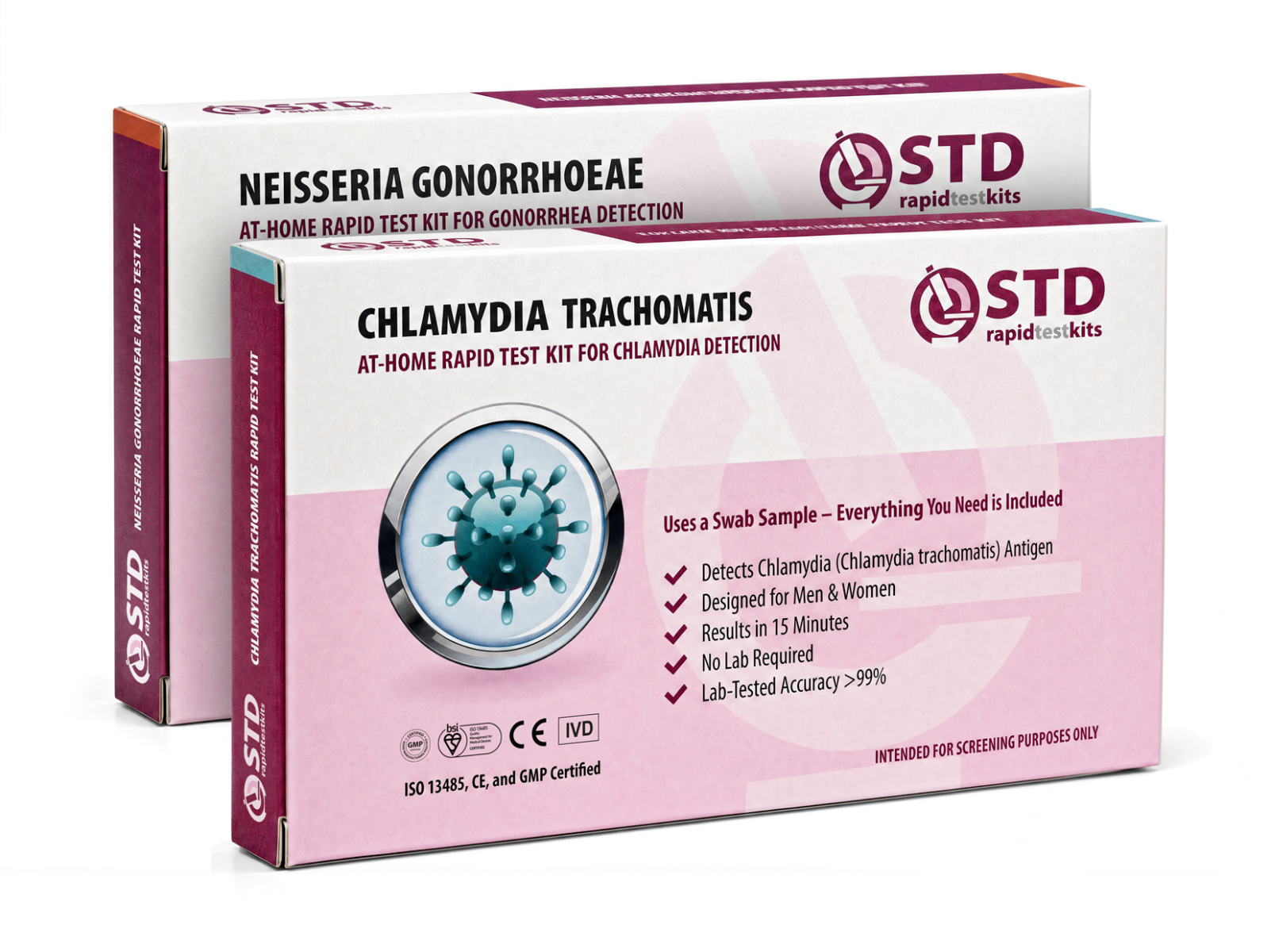
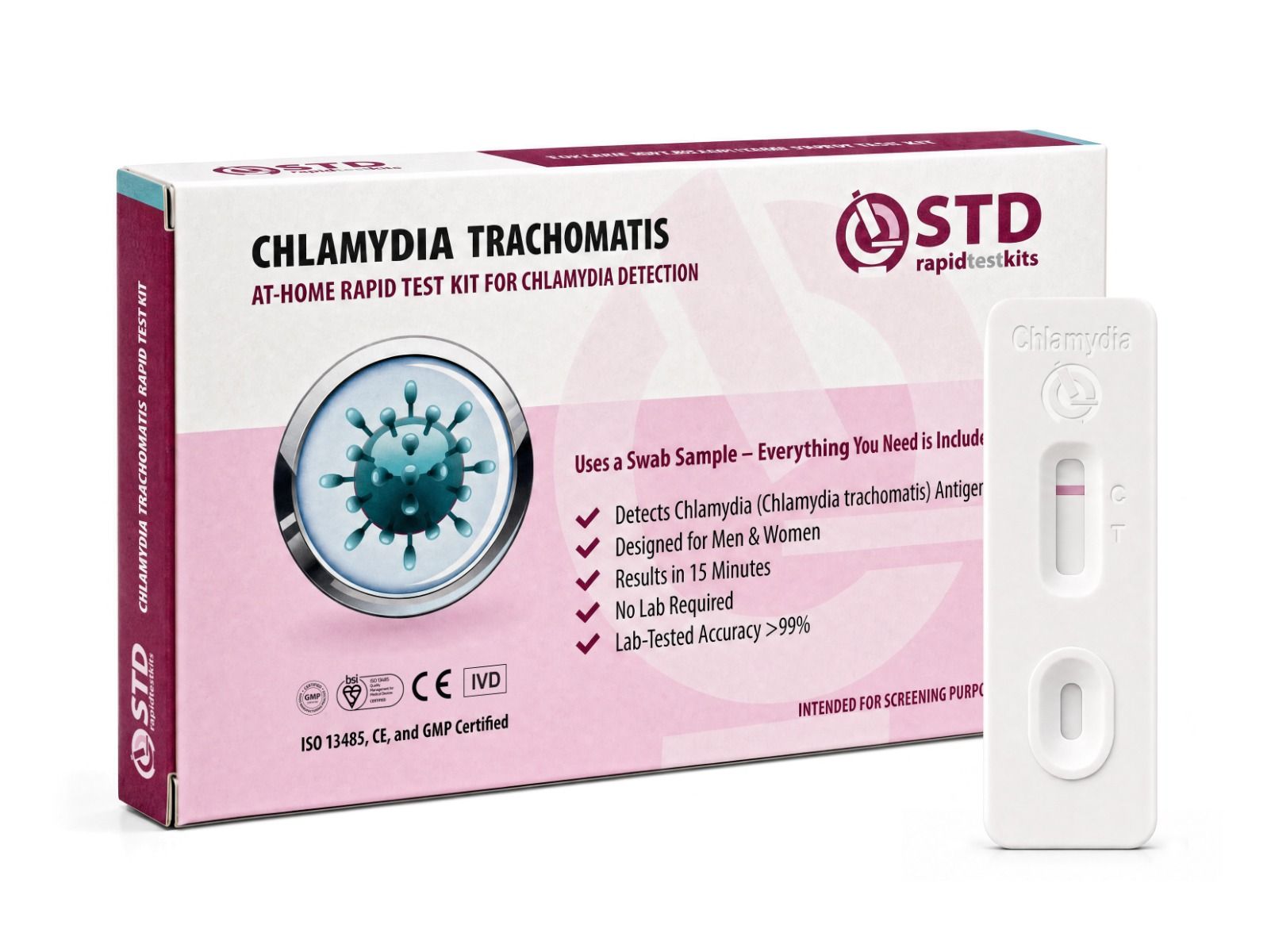
At-home rapid tests use lateral-flow chemistry rather than NAAT. Lab NAAT remains the most analytically sensitive option, and the two technologies are complementary. A rapid test is useful for fast, private screening; a positive result is reliable enough to act on, and a negative result late in the window is reasonably reliable for screening. If a home test is taken early in the window, or symptoms persist after a negative, follow up with a lab NAAT through a clinic. For readers who suspect more than one infection from a single encounter, at-home STI test kits bundle multiple infections into one self-collection session.
| Time since exposure | Should you test? | Result reliability |
|---|---|---|
| 0 to 6 days | Too early for most tests | Low (false negatives common) |
| 7 to 13 days | Reasonable starting point | Moderate; consider a confirming retest |
| 14 days or more | Best window for first test | High, especially for lab NAAT |
| 3 months after treatment | Yes, retest for reinfection | Standard CDC follow-up window |
What to do if your test is positive
Chlamydia is one of the most common bacterial infections in the world and one of the easiest to cure; a positive result calls for treatment, not alarm. The preferred first-line treatment, per the CDC's STI treatment guidelines, is a 7-day course of doxycycline 100 mg taken twice daily. Single-dose azithromycin 1 g is listed as an alternative regimen and is the preferred option during pregnancy. Both regimens have very high cure rates when taken as prescribed.
If the positive result came from an at-home test, the next step is to confirm with a clinician (in person or via telehealth) and obtain a prescription. Many U.S. states allow expedited partner therapy, where a healthcare provider can write a prescription for a sexual partner without a separate appointment. Sexual contact should be avoided for seven days after a single-dose treatment, or until the full multi-day course is complete. Partners from roughly the previous 60 days should be notified and treated even if they feel fine, because asymptomatic reinfection from an untreated partner is one of the main reasons chlamydia returns after a successful course of antibiotics.
The harder question is whether existing fertility damage can be reversed. The infection clears with antibiotics; scar tissue does not. Tubal scarring may be partly addressed surgically (laparoscopic adhesiolysis, a keyhole procedure that cuts and releases scar bands inside the abdomen), and assisted-reproductive options (in-vitro fertilization, intracytoplasmic sperm injection) exist when natural conception is not possible. Sperm-quality issues from epididymitis often improve once the infection clears, although severely damaged sperm DNA may not fully recover. If you had a known untreated chlamydia infection in the past and are trying to conceive, asking your provider early about a hysterosalpingogram (HSG) or a semen analysis can avoid months of guesswork.
Treatment at a glance
- First-line: doxycycline 100 mg twice daily for 7 days (CDC preferred regimen for non-pregnant adults).
- Pregnancy: single-dose azithromycin 1 g is the preferred alternative; doxycycline is avoided in pregnancy.
- Avoid sex for 7 days after a single-dose treatment, or until the full multi-day course is complete.
- Notify partners from roughly the previous 60 days; many U.S. states allow expedited partner therapy (EPT) so they can be treated without a separate appointment.
- Retest about 3 months after treatment to catch reinfection.
Why retesting after treatment matters
The CDC recommends a follow-up test about three months after treatment for people diagnosed with chlamydia. Antibiotic regimens have very high cure rates, so the three-month retest is primarily about catching reinfection from an untreated partner or a new exposure, not verifying that the original treatment worked. If a partner was not treated at the same time, or if a new partner was not tested before sexual contact resumed, the same bacteria can be reintroduced before scar tissue or PID has had a chance to develop, and the only way to catch that early reinfection is to test again.
For people who tested very soon after exposure, a second test two to three weeks later is also worth doing to rule out an early false negative. Anyone who has had chlamydia in the past should consider screening at a slightly higher cadence than the population baseline, because previous infection itself is a risk marker for future infection.
Retesting cheat sheet
- CDC standard: retest about three months after treatment, primarily to catch reinfection from an untreated partner or a new exposure.
- Tested early in the window? Add a confirming retest two to three weeks later, since early tests can miss low bacterial loads.
- Past chlamydia is itself a risk marker; consider screening slightly more often than the population baseline.
Prevention, the conversation, and the stigma problem
Condoms reduce chlamydia transmission substantially when used consistently and correctly, but no contraceptive method offers complete protection, and many people use condoms inconsistently in established relationships. Hormonal birth control does not prevent chlamydia. Even within a monogamous partnership, an undiagnosed infection from before the relationship can persist and pass back and forth between partners.
The pieces that genuinely lower risk are talking openly about testing before stopping condom use, screening on the schedule public-health agencies recommend regardless of how you feel, and treating both partners when one tests positive. After treatment, both partners should wait seven days before resuming sex (or until a multi-day course is finished) and both should retest at the three-month mark.
The remaining barrier is rarely biological. It is shame. STIs reach people who use protection, people in monogamous relationships where someone made a different choice, people who were experimenting, and people who had one cautious encounter and assumed nothing would come of it. A positive test result is a checkup of one specific body system, no different in principle from a blood-pressure reading or a cholesterol panel. A short course of doxycycline costs less than a single fertility evaluation, and far less than the surgical or assisted-reproduction interventions that may be needed when an infection has been left to scar reproductive tissue for months or years.
The <a href="https://www.who.int/news-room/fact-sheets/detail/sexually-transmitted-infections-(stis)" target="_blank" rel="noopener noreferrer">World Health Organization</a> recognizes stigmatization as one of the direct harms of sexually transmitted infections, alongside infertility, cancers, and pregnancy complications. Treating a positive test result as a routine medical finding rather than a moral failing is part of how that harm gets undone, both at the individual and the public-health level.
This article is published by stdrapidtestkits.com, which sells at-home STI testing kits. We recommend products based on fit-for-purpose for the reader's concern, not commercial benefit. For active symptoms, treatment, or anything outside what an at-home rapid test can answer, see a clinician.
Your next steps
- Test now if you are due for annual screening, since most cases produce no symptoms and the only reliable signal is a test result.
- Use a rapid lateral-flow test for a fast private result, and confirm any reactive result with a clinician and a lab NAAT.
- If positive, treat yourself and all partners from the previous 60 days simultaneously, and avoid sex for the full treatment window.
- Retest at the 3-month mark to catch reinfection from an untreated partner or a new exposure.
Frequently asked questions
- Can chlamydia really cause no symptoms at all?
- Yes. Chlamydia trachomatis enters host cells directly and replicates inside them, often without triggering enough cytokine signaling to produce visible inflammation. In most carriers, the immune response stays below the threshold that would cause discharge, burning, or pain. The bacteria are still active and still transmissible; they just do not announce themselves.
- Can chlamydia really cause infertility, even with no symptoms?
- Yes. In women, ascending infection can scar the fallopian tubes and trigger pelvic inflammatory disease; in men, it can inflame the epididymis and reduce sperm count and motility. Because most infections produce no symptoms, regular screening is the only reliable way to catch the bacteria before damage becomes harder to reverse.
- Does chlamydia affect male fertility too?
- Yes. Chlamydia can cause epididymitis, which inflames the duct that carries sperm and can lower sperm count and motility. Many men have no symptoms and only learn about the infection because a partner tested positive. Men in any sexual configuration with new partners benefit from periodic screening, not only men who have sex with men.
- Does chlamydia always lead to PID?
- No. Many chlamydia infections are cleared by the immune system or by treatment before they ascend into the upper reproductive tract. PID develops in a subset of untreated cases. The exact percentage varies between studies, and CDC guidance frames the risk as significant but not inevitable. The reason screening matters is that there is no reliable way to predict who will develop PID and who will not.
- Can I give chlamydia to a partner if I feel fine?
- Yes. Asymptomatic carriers transmit chlamydia at rates comparable to people with active symptoms, since the bacteria are present in genital secretions regardless of whether the immune system has produced visible signs. Transmission does not depend on the carrier feeling sick or having any noticeable discharge or pain.
- How soon after a possible exposure should I test?
- The most reliable window is around 7 to 14 days after exposure, with lab NAAT being the most sensitive option in that window. Testing earlier raises the chance of a false negative. If you test early, plan a follow-up test about two to three weeks later to confirm.
- Do condoms fully prevent chlamydia transmission?
- Condoms substantially reduce risk when used consistently and correctly, but they are not 100% protective. Chlamydia can still spread through skin-to-skin contact in areas the condom does not cover and through oral or shared-toy contact. The combination of consistent condom use and periodic screening is more reliable than either alone.
- Do I need to retest after I have been treated?
- Yes. The CDC recommends a follow-up test about three months after treatment, mainly to catch reinfection. Antibiotic regimens for chlamydia have very high cure rates, so the retest focuses on a partner or a new exposure rather than on whether the medicine worked.
- Can chlamydia clear up on its own?
- Some immune systems suppress the infection without antibiotics, but suppression is not the same as clearance, and inflammation may continue silently. Relying on the immune system alone is not the recommended approach by the CDC, NHS, or WHO. A short course of doxycycline or azithromycin is highly effective and avoids the cumulative damage of months of low-grade infection.
- U.S. Centers for Disease Control and Prevention. Basic information about chlamydia, including symptom prevalence and screening guidance for asymptomatic infection.
- U.S. Centers for Disease Control and Prevention. Pelvic inflammatory disease (PID) overview describing causes, silent presentation, tubal scarring, ectopic-pregnancy risk, and the link with chlamydia.
- U.S. Centers for Disease Control and Prevention, STI Treatment Guidelines. Chlamydia: doxycycline 100 mg orally twice a day for 7 days as preferred regimen; azithromycin as alternative; 60-day partner notification window.
- U.S. Preventive Services Task Force. Recommendation statement on chlamydia and gonorrhea screening in adolescents and adults, including the under-25 screening guidance.
- U.K. National Health Service. Chlamydia overview covering asymptomatic course, complications in men and women (including PID and epididymitis), testing, and treatment.
- World Health Organization. Sexually transmitted infections (STIs) fact sheet covering global burden, complications, pregnancy implications, and the framing of stigmatization as a direct harm of STIs.
