
Published: December 2025 | Last updated: April 2026 | Editorial review and quality control: Martina N.
If you are searching for ways to handle chlamydia without setting foot in a clinic, you are in the same boat as a lot of people. Embarrassment, busy schedules, and privacy concerns push readers toward a single question: can this be done discreetly? The answer has two parts. Yes, much of the process can happen at home today. No, the actual cure cannot.
This guide walks through what at-home testing covers, what telehealth providers can prescribe, what the internet's natural cures get wrong, and where the real limits of home care sit. The 2021 CDC STI Treatment Guidelines also changed which antibiotic is first-line, so even if you read up on this two years ago the standard advice has shifted.
Can you treat chlamydia at home?
You can run the test at home in about 15 minutes with a rapid lateral-flow swab kit, and you can complete the prescription side through a telehealth provider without visiting a clinic in person. The cure itself, however, requires antibiotics. The 2021 CDC guidelines name doxycycline 100 mg twice daily for 7 days as preferred first-line treatment, with single-dose azithromycin 1 g as the recommended alternative. No herbal remedy, supplement, or detox protocol clears Chlamydia trachomatis.
Key Takeaways
- Antibiotics are the only proven cure for chlamydia. Doxycycline 100 mg twice daily for 7 days is the current CDC first-line recommendation; azithromycin 1 g single dose is the alternative.
- You can test at home privately with a rapid swab kit. Antibiotic treatment still requires a prescription from a telehealth provider or clinic. Anyone selling antibiotics without a prescriber is one to avoid.
Why so many people search for private chlamydia treatment
Most readers landing on this page are not looking for shortcuts. They are looking for privacy. Chlamydia carries a heavy stigma even though it is one of the most common bacterial sexually transmitted infections in the United States. CDC surveillance data consistently documents over 1.5 million reported chlamydia cases annually (CDC STI surveillance), and the real number is meaningfully higher because so many infections produce no symptoms at all.
If you are worried right now, you are not unusual. The discomfort that drives the 1 a.m. Google search has nothing to do with how rare the infection is. It has everything to do with how rarely we talk about it. Sexually active adults under 25 carry the highest risk, but the infection is diagnosed across every adult age group.
That hesitation is exactly why discreet testing options have become mainstream. Self-collected swab kits, telehealth consultations, and online pharmacies have replaced the awkward waiting-room conversation for many people.
Chlamydia is the most frequently reported bacterial STI in the United States. CDC surveillance figures undercount the true burden because most infections never cause symptoms and never get tested. If you are checking on a possible exposure, you are part of a much larger group of people doing the same thing this week.
What actually cures chlamydia: antibiotics only
The bacterium Chlamydia trachomatis responds to a narrow set of antibiotics. Nothing else clears it: not garlic, not herbal supplements, not waiting it out, and not a stronger immune system. The 2021 CDC STI Treatment Guidelines name doxycycline as the preferred first-line therapy, 100 mg orally twice daily for 7 days for uncomplicated genital infection (CDC 2021 STI treatment guidelines for chlamydia). Azithromycin 1 g as a single oral dose is the recommended alternative when doxycycline is not appropriate, including in pregnancy.
Doxycycline replaced single-dose azithromycin as the preferred regimen because clinical evidence showed slightly higher microbiologic cure rates, particularly for rectal infections. For most non-pregnant adults who can take a 7-day course reliably, doxycycline is now the default. A few practical notes about the medication itself. Doxycycline can cause nausea if taken on an empty stomach, can make skin more sensitive to sunlight, and should not be taken by people who are pregnant. Azithromycin is taken once and done, which suits people who worry about adherence.
Cost is generally not a barrier. A 7-day course of generic doxycycline runs about 10 to 30 US dollars at most pharmacies with no insurance, and azithromycin is similar for the single dose. Both are well-tolerated overall, and most people start feeling symptom relief within a few days even though the bacteria takes the full week to clear.
If you read older articles online, you may see azithromycin and doxycycline treated as equivalent first-line options. They are not anymore. The CDC's 2021 update moved doxycycline to first-line and downgraded single-dose azithromycin to recommended alternative status. A clinician prescribing today should reflect the newer guidance.
The internet's natural cures do not work
Search far enough and you will find advice involving garlic capsules, apple cider vinegar baths, oregano oil, herbal teas, colloidal silver, turmeric, and a long list of detox protocols. None of them have ever been shown to eliminate Chlamydia trachomatis from the human body in clinical research. At best, some of these may slightly reduce inflammation in tissue that is already irritated. At worst, they delay real treatment while the infection keeps replicating internally.
The mismatch between what works in a lab and what sells on social media is partly why these myths persist. A garlic clove can kill bacteria in a petri dish at concentrations that would never be reachable inside a human body without poisoning the person. The leap from in-vitro effect to in-vivo cure is enormous, and the published evidence simply does not support it for chlamydia.
The cost of treating an STI with kitchen ingredients is not just a few wasted weeks. Untreated chlamydia can quietly damage tissue while you feel fine.
Garlic / allicin capsules: antibacterial in petri-dish concentrations only. No human trial shows clearance of C. trachomatis.
Apple cider vinegar: not antibacterial against chlamydia at any safe concentration; can irritate genital mucosa.
Oregano oil, colloidal silver, turmeric: no clinical evidence for chlamydia clearance; colloidal silver can cause permanent skin discoloration (argyria).
Detox teas / cleanses: no pathway by which they would reach intracellular Chlamydia. Marketing-only.
What happens if chlamydia goes untreated
The most misleading idea floating around is that chlamydia eventually goes away on its own. Symptoms can fade, which feels like resolution, but the bacteria can persist in reproductive tissue for months or longer. The infection becomes silent, not absent. The CDC and NHS both note that long-term untreated infection causes real damage in some people, and there is no reliable way to know in advance who will develop complications and who will not (NHS chlamydia overview).
Pelvic inflammatory disease is the most common serious complication in women, affecting a meaningful proportion of women with untreated chlamydia (CDC pelvic inflammatory disease overview). PID can scar fallopian tubes, leading to ectopic pregnancy or infertility. The damage does not always reverse with later treatment, which is why early detection matters so much.
In men, untreated chlamydia can cause epididymitis, an inflammation of the tube at the back of the testicle, with pain and swelling that occasionally requires hospital evaluation. Reactive arthritis, an autoimmune-like condition involving joint pain, eye inflammation, and urethritis, is a less common complication that can appear weeks after the original infection and is sometimes not connected to it by the patient.
Across all genders, untreated chlamydia significantly increases the risk of acquiring HIV if exposed, because inflammation in mucosal tissue creates an easier entry point (CDC chlamydia overview). The same data shows that promptly treated chlamydia almost never causes long-term problems.
| Population | Possible complications | Why it happens |
|---|---|---|
| Women | Pelvic inflammatory disease, ectopic pregnancy, tubal infertility | Bacteria ascend from the cervix into the uterus and fallopian tubes, causing scarring |
| Men | Epididymitis, less commonly infertility | Infection extends into the epididymis, the coiled tube behind the testicle |
| All genders | Reactive arthritis, increased HIV acquisition risk | Immune cross-reactivity in joints; mucosal inflammation creates easier entry for HIV |
| Pregnancy | Neonatal conjunctivitis, neonatal pneumonia | Bacteria transmitted to the infant during vaginal delivery |
Symptoms when they show up at all
Most people who have chlamydia have no symptoms at all (NHS chlamydia overview). That is the central reason chlamydia spreads so widely. Someone can carry the bacteria for weeks or months and have no idea, which is also why screening based on exposure history is more reliable than waiting for symptoms.
When symptoms do appear, they tend to be mild enough that people second-guess them. In men, the most common signs are burning during urination, a clear or cloudy discharge from the tip of the penis, and occasional testicular discomfort. In women, the picture is even more variable. Possible symptoms include unusual vaginal discharge, bleeding between periods, pain during sex, and a vague pelvic ache. Rectal infections can cause discomfort, discharge, or bleeding; pharyngeal infections rarely produce noticeable symptoms.
Because so many infections are silent and the visible symptoms overlap with urinary tract infections, yeast infections, and bacterial vaginosis, symptom-based self-diagnosis is unreliable.
Most people who have chlamydia have no symptoms. If you do have symptoms, they may not appear until several weeks after you have sex with an infected partner.
How private chlamydia care actually works today
Modern at-home care for chlamydia is not a single service. It is a stitching-together of three independent pieces: a test, a clinical decision, and a prescription. Each piece runs through a different provider. Understanding that helps explain what is genuinely possible from home and what is not.
This article is published by stdrapidtestkits.com, which sells at-home STI testing kits. We recommend products based on fit-for-purpose for the reader's concern, not commercial benefit. We do not sell, prescribe, or ship antibiotics. The treatment side of the picture below depends on services we do not run.
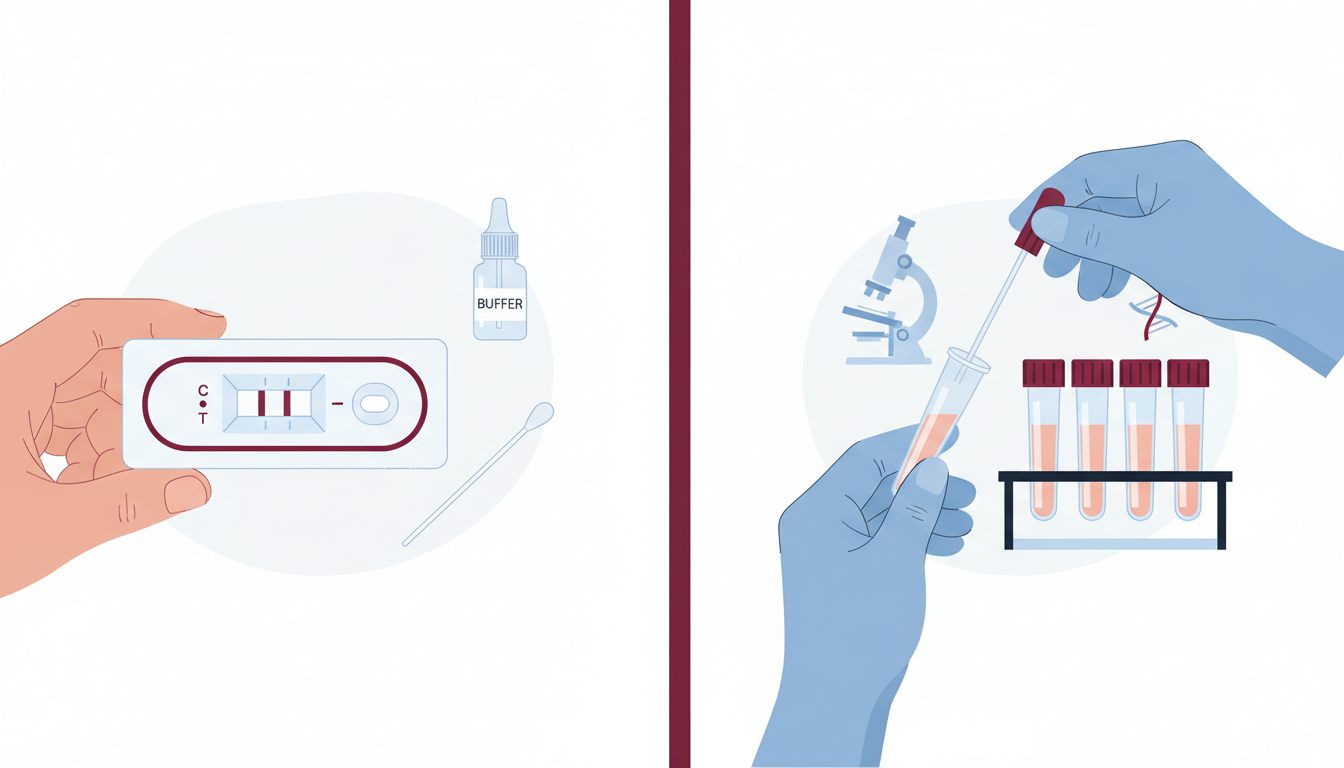
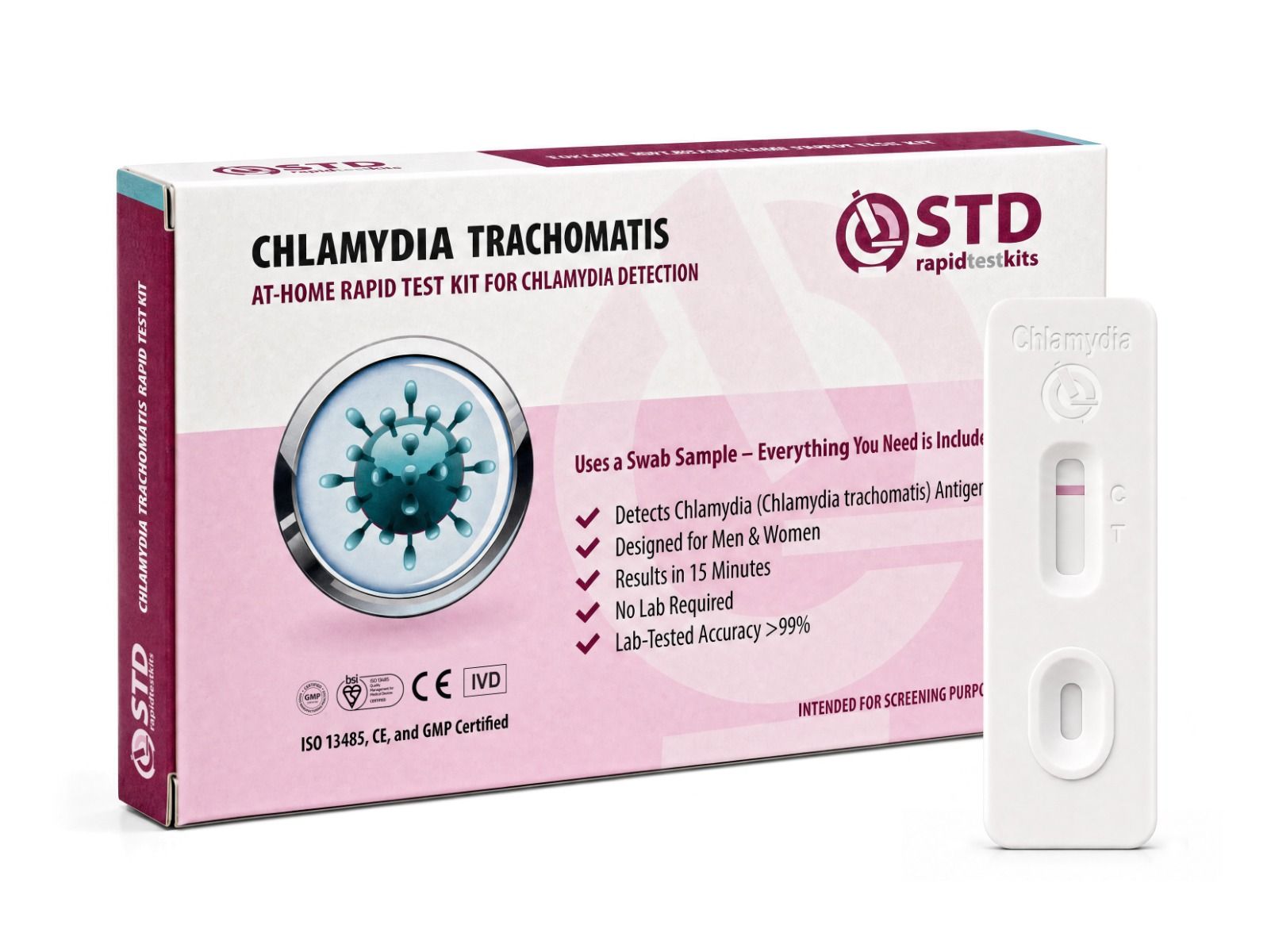
The testing piece is the part that is truly at-home. Rapid lateral-flow swab kits let you collect a vaginal or penile sample yourself, run it on a test cassette, and read the result in about 15 minutes. Mail-in NAAT panels send your sample to a certified lab and return results in a few business days with higher analytical sensitivity. Both are private, both arrive in plain packaging, and neither requires a clinic visit.
The clinical and prescription pieces require a licensed provider. Telehealth platforms run by national pharmacy chains and dedicated sexual-health services let you upload a positive result, complete a video or text consultation with a clinician, and receive an antibiotic prescription sent to a local pharmacy or by mail. The visit itself can take a few minutes from your phone. Costs vary widely; some insurance plans cover them, and some platforms charge a flat fee that is less than a typical urgent-care visit.
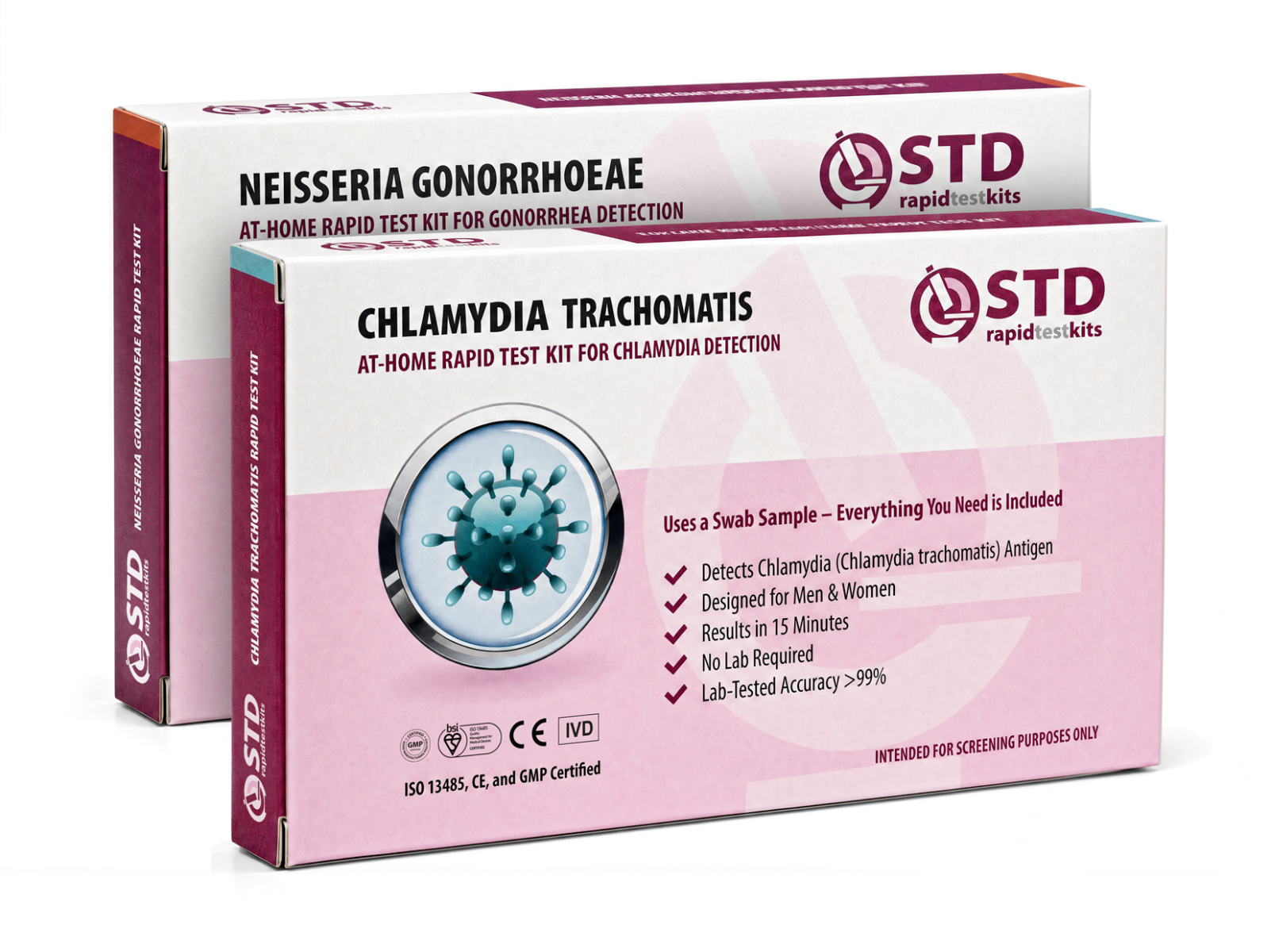
What this means in practice: the at-home rapid test we sell is the screening step, designed to give you an answer fast. If the result is positive, the next step is a telehealth or in-person consultation to confirm and get the antibiotic course. We do not pretend to do the second step, and any site that claims to ship antibiotics without a real prescriber is one to avoid; counterfeit medication is a real risk.
Test first, treat second
One of the more common mistakes people make is reaching for antibiotics on suspicion alone, sometimes by ordering them through unverified online sellers. The problem is that the symptoms most people associate with chlamydia overlap with urinary tract infections, yeast infections, bacterial vaginosis, and simple irritation from new soaps or condoms. Treating the wrong thing wastes money, can disrupt the body's normal flora, and contributes to antibiotic resistance.
Testing confirms what you actually have. Two technologies are in routine use, and they are meaningfully different. Laboratory NAAT (nucleic acid amplification testing) is the clinical gold standard. It detects the bacterium's genetic material from a urine sample or self-collected swab and is sensitive enough to find infections days before symptoms could appear. Lab turnaround is usually 1 to 5 business days.
Home-test lateral-flow chemistry, the technology our rapid kits use, screens the same swab sample type at the point of collection. A lateral-flow strip detects bacterial antigens, the surface proteins of Chlamydia trachomatis, in the swab sample. The result comes back in about 15 minutes. Sensitivity is meaningfully lower than lab NAAT, especially for asymptomatic infections, which is why a positive result on a rapid test is worth confirming with a lab NAAT when feasible, and why a negative result late in the testing window is more reassuring than one taken too early.
The two are complementary, not equivalent. Rapid tests are excellent for fast screening and privacy. Lab NAAT is the standard for definitive diagnosis.
Rapid lateral-flow swab (home kit): antigen detection, 15-minute read at home, lower sensitivity, best for fast screening when privacy matters.
Lab NAAT (clinic or mail-in): nucleic acid (DNA/RNA) detection, 1 to 5 business days, highest sensitivity, the clinical reference for diagnosis. A positive rapid result is worth confirming with NAAT; a negative rapid result inside the testing window is more reassuring than one taken too early.
The testing window: timing matters
You cannot reliably detect chlamydia immediately after exposure. The bacteria need time to multiply inside the body before any test can pick them up. Testing too early produces false negatives that feel like reassurance and are not.
Standard guidance from the CDC and major sexual health bodies is to wait at least 1 to 2 weeks after a potential exposure before testing. Some clinicians recommend retesting at 3 to 4 weeks if the first test was negative but exposure risk was high, especially if symptoms develop later. The same timing logic applies to a partner who may have been exposed.
The same window rule applies after treatment, but with a different purpose. Most people do not need a routine test-of-cure for genital chlamydia, but the CDC recommends a follow-up test about 3 months after treatment to check for reinfection, which is more common than treatment failure and is the strongest predictor of future complications.
| Stage | Typical timeframe | What is happening |
|---|---|---|
| Exposure | Day 0 | Bacteria enter the body through unprotected sexual contact |
| Incubation | 5 to 14 days | Bacteria multiply in mucosal tissue; some people develop symptoms, most do not |
| Reliable testing window | From day 7 to 14 after exposure onward | Tests have enough bacterial material to return accurate results |
| Treatment course | 7 days of doxycycline (or single-dose azithromycin) | Antibiotic clears the bacterial load |
| Retest for reinfection | About 3 months after treatment | CDC recommendation to confirm no reinfection from an untreated partner |
Common mistakes that delay recovery
Once someone tests positive and starts antibiotics, the worst part is usually behind them. A short list of avoidable mistakes can extend the timeline.
The most frequent error is stopping doxycycline early. Symptoms often improve within a few days, which makes the remaining doses feel optional. They are not. The bacterial load drops fast under antibiotic pressure, but full clearance takes the entire 7-day course. Stopping early gives surviving bacteria a chance to repopulate.
Resuming sex too soon is another common slip. CDC guidance is to abstain from sexual contact for 7 days after starting doxycycline, or for 7 days after a single dose of azithromycin. The medication needs that window to fully clear the infection, and earlier sexual contact risks transmitting to a partner who is not yet treated.
The partner-treatment gap is more underrated than people realize. Sexual-health clinicians sometimes call this the ping-pong effect: one partner gets treated, the other does not, and reinfection bounces between them. Most U.S. jurisdictions allow expedited partner therapy, which is a prescription written for an exposed partner without a separate clinic visit. Asking about expedited partner therapy during the original telehealth or clinic visit is worth the awkwardness.
Testing too early also leads people astray. A negative result drawn three days after exposure is not a real negative. Either wait the full window before testing, or plan to retest at 3 to 4 weeks if the early test was negative.
| Mistake | Why it happens | Better approach |
|---|---|---|
| Stopping antibiotics early | Symptoms improve in a few days | Finish the entire 7-day course even if you feel fine |
| Sex within 7 days of starting treatment | Symptoms gone, feeling better | Wait the full 7 days from the first dose |
| Partner not treated | Awkward to bring up | Ask the prescriber about expedited partner therapy |
| Testing too soon after exposure | Anxiety, impatience | Wait at least 1 to 2 weeks after exposure for a reliable result |
| Skipping the 3-month retest | Feeling fine after treatment | Retest at about 3 months to catch reinfection from an untreated source |
When in-person care is the right call
At-home testing and telehealth treatment work for most uncomplicated genital chlamydia. They are not the right answer for every case. The point is not to push readers toward a clinic by default; it is to match the path you choose to your actual situation. For a straightforward genital infection in a non-pregnant adult, home testing followed by telehealth treatment works. For anything outside that pattern, an in-person visit with someone who can examine you, run additional tests, and adjust treatment is worth the time. Pregnancy is the clearest case, because untreated chlamydia in pregnancy can cause neonatal conjunctivitis and pneumonia, and antibiotic choice changes (azithromycin or amoxicillin instead of doxycycline).
Pregnancy, or trying to conceive. Severe pelvic or testicular pain. Fever. Symptoms that persist after a full antibiotic course. Known recent exposure to a partner with treatment-resistant infection. Concern about rectal or pharyngeal infection that a home swab does not cover. Any of these moves you outside the routine at-home pathway and into a situation where in-person evaluation matters.
The bottom line
Chlamydia is treatable, common, and not a moral failing. The reason this article exists is that the search for at-home treatment is reasonable and the information online is mostly bad. Two facts cover most of what you need to know. Antibiotics are the only proven cure. The rest of the process, from collecting a sample to getting a prescription, can mostly happen from home today through legitimate, regulated services.
If you suspect an infection right now, the practical next step is testing. A rapid swab kit gives you an answer in 15 minutes and pairs naturally with a telehealth consultation if the result is positive. A positive result that leads to treatment is a better outcome than an infection that persists undetected. Most people who finish a 7-day course of doxycycline are done with this; the 3-month retest is the only remaining step.
Frequently asked questions
- Can you actually treat chlamydia at home, or is the cure still a clinic visit?
- Antibiotics are the only part that cannot happen at home. The test, the telehealth consultation, and the prescription delivery can all be remote, but a licensed prescriber still has to write the prescription. Counterfeit-medication risk is the practical reason: any site claiming to ship antibiotics without a clinician on the other end is one to avoid.
- Will chlamydia go away on its own if I just wait?
- The bacteria can persist quietly for months after symptoms fade. Long-term untreated chlamydia is one of the leading preventable causes of pelvic inflammatory disease and tubal infertility, and the damage does not always reverse with later treatment. Symptom resolution is not the same as bacterial clearance.
- Do natural remedies like garlic, oregano oil, or apple cider vinegar work?
- No. None of them have ever been shown to eliminate Chlamydia trachomatis from the human body in clinical research. Some have weak antibacterial effects in petri-dish concentrations, but the leap to in-vivo cure does not happen. They mostly delay real treatment while the bacteria keeps replicating.
- How does private chlamydia care actually work step by step?
- Three pieces. First, you take a discreet test, either a self-collected rapid swab at home for a 15-minute result or a mail-in lab NAAT for a higher-sensitivity result in a few business days. Second, if the test is positive, you complete a telehealth consultation with a licensed prescriber. Third, the prescriber sends an antibiotic prescription to a pharmacy of your choice or by mail.
- How long does treatment take?
- Doxycycline is a 7-day course taken twice daily. Single-dose azithromycin clears the dosing in a single sitting, although the bacteria still takes about a week to fully clear. Most people feel symptom relief within 2 to 4 days, but you should finish the full course and abstain from sex for 7 days from the first dose.
- When should I test after a possible exposure?
- Wait at least 1 to 2 weeks after the suspected exposure before testing. Earlier than that, the bacteria may not have multiplied enough to register on either a rapid test or a lab NAAT. If the first test is negative but the exposure was high-risk, retesting at 3 to 4 weeks catches infections that were below the detection threshold initially.
- Do I really need to tell my partner?
- Yes. If only one of you is treated, the infection often passes back during sex within weeks. Most U.S. jurisdictions allow expedited partner therapy, where the prescriber writes a prescription for a partner without a separate clinic visit. Anonymous partner-notification services through public health departments can also help if the conversation feels impossible.
- How common is chlamydia, really?
- Common enough that most clinicians treat it as routine. Reported case counts almost certainly understate the real burden, since the majority of infections cause no symptoms and never get tested. If you are checking on a possible exposure, you are part of a much larger group than the surveillance numbers suggest, and there is no reason to feel singled out by it.
- U.S. Centers for Disease Control and Prevention. Chlamydia overview: transmission, screening guidance, and association with HIV acquisition risk.
- U.S. Centers for Disease Control and Prevention. 2021 Sexually Transmitted Infections Treatment Guidelines: Chlamydial infections, including doxycycline as preferred first-line therapy.
- U.S. Centers for Disease Control and Prevention. STI Surveillance: annual reported case counts for chlamydia and other notifiable STIs.
- U.S. Centers for Disease Control and Prevention. Pelvic inflammatory disease (PID): causes, including untreated chlamydia, and complication overview.
- National Health Service (UK). Chlamydia: symptoms (most people are asymptomatic), diagnosis, treatment, and complications.
- World Health Organization. Sexually transmitted infections fact sheet: global burden and clinical features.
