







Last updated: March 2026
If you’re in a polyamorous relationship, or thinking about it, you’ve probably wondered whether having multiple partners automatically means higher STD risk. The short answer: not necessarily. What actually matters is how infections spread, how often you test, and how your network is structured.
Polyamory gets talked about like it’s inherently risky, but that conversation usually skips the science. This article breaks down what really drives STD risk, how transmission works across multiple partners, and what you can do to stay in control of your sexual health. If you’ve ever found yourself Googling symptoms after a new connection or wondering if your setup is “safe enough,” you’re in the right place.
Having more than one partner can make you more likely to get STDs, but it doesn't mean you're automatically at high risk. The actual things that affect your risk are how infections spread through a network, how often testing is done, and whether protection is always used. In a lot of cases, a person in a well-run polyamorous relationship can be less at risk than a person in a monogamous relationship who doesn't get tested.

People are also reading: How to Have Safe Sex Again After an STD
Does Polyamory Actually Increase STD Risk, or Is That a Myth?
Let’s start with the assumption most people make: more partners equals more risk. It sounds logical, but it’s incomplete. Risk isn’t just about the number of people you’re sleeping with, it’s about exposure pathways and whether infections have a chance to move through those pathways.
Picture this: you’ve just started seeing someone new, and a few days later you’re lying in bed scrolling through symptoms, wondering if you should get tested immediately. That moment of anxiety is incredibly common. But here’s the reality, your risk from that encounter depends on whether your partner has an infection, whether protection was used, and whether testing has already been part of the conversation.
From a biological standpoint, an STD transmission requires a chain of events: the infection must be present in one partner, transmitted through a specific type of contact, and successfully establish itself in the body. Without all three steps, nothing happens. So even if you have multiple partners, your risk stays low if those chains are consistently broken through testing and protection.
This is where polyamory often gets misunderstood. People assume it’s chaotic and unstructured, when in reality many polyamorous networks are highly intentional about testing and communication. That structure can actually reduce unknown exposure compared to relationships where testing isn’t discussed at all.
So yes, having more partners can increase the number of potential exposure points. But “potential” is the key word. Risk only becomes real when those exposures connect to an actual infection and there’s no barrier or testing system in place to catch it.
How STDs Actually Spread in Multi-Partner Networks
To understand risk in polyamory, you have to zoom out and look at the bigger picture: networks. STDs don’t just move between two people, they move through connected groups of people. This is what researchers call a transmission network, and it’s the single most important concept for understanding your real risk.
Let’s say you have two partners. Each of them may have other partners. Suddenly, your exposure isn’t just two people, it’s everyone connected within that network. But here’s the nuance: the structure of that network matters more than its size.
If everyone in that network tests regularly and shares the results, infections are found early and taken out of the chain. If no one gets tested, infections can spread without anyone knowing. This is especially true for STDs like chlamydia and gonorrhea, which don't always show symptoms right away.
This happens in the body because bacteria and viruses can make copies of themselves without causing noticeable immune responses right away. That means that a person can carry and spread an infection without even knowing it. This is why testing, not symptoms, is the most important part of preventing STDs.
| Relationship Type | Exposure Pattern | Risk Dynamics |
|---|---|---|
| Monogamous (no testing) | Single partner, unknown status | Risk depends entirely on partner’s hidden exposure |
| Monogamous (tested) | Single partner, confirmed status | Low risk when both partners test and remain exclusive |
| Polyamorous (unstructured) | Multiple partners, inconsistent testing | Higher risk due to unknown transmission pathways |
| Polyamorous (structured) | Multiple partners, regular testing & communication | Controlled risk with early detection and interruption of spread |
It's important to remember that STDs don't care what you call yourself, whether you say you're "monogamous" or "polyamorous." They follow chances. If there’s a path and no interruption, like testing or protection, they move. If those interruptions are in place, transmission gets blocked.
This is also why the idea of “number of partners” can be misleading. Someone with one partner who doesn’t test may be at higher risk than someone with three partners who all test regularly and use protection. The difference comes down to visibility and control, not just count.
Check Your STD Status in Minutes
Test at Home with Remedium8-in-1 STD Test Kit
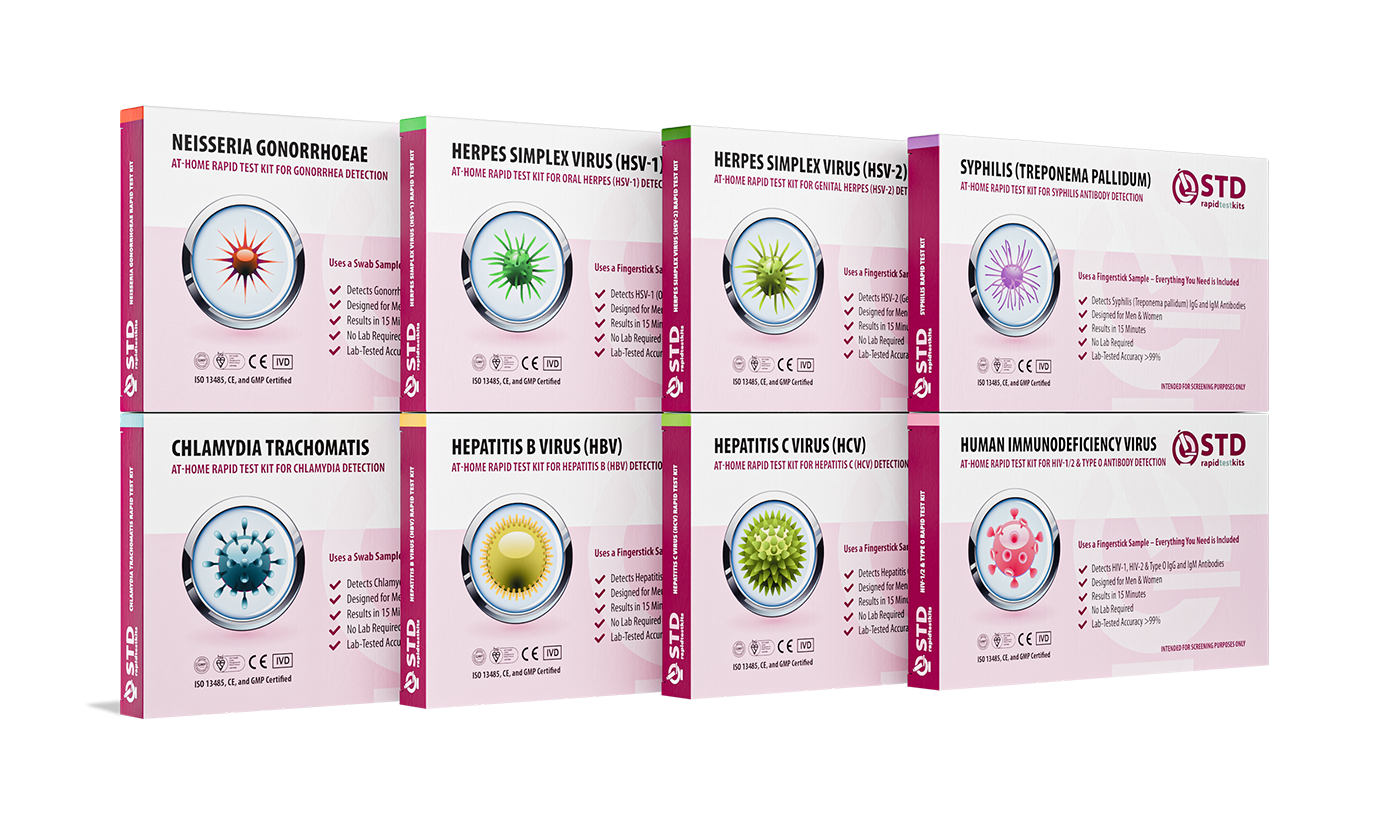
 For Men & Women
 Results in Minutes
 No Lab Needed
 Private & Discreet
Order Now $149.00 $392.00
For all 8 tests
What Really Increases (or Lowers) Your Risk
Now that you understand how transmission works, the next question is obvious: what actually makes a difference? What pushes your risk up, or keeps it low, when you have multiple partners?
The biggest factor is consistency. Not perfection, consistency. Using protection during sex reduces the chance that bacteria or viruses enter the body through mucous membranes, where infections typically establish themselves. When protection is used regularly, it acts as a physical barrier that interrupts transmission at the most critical moment.
Testing is the second major factor, and it’s often the one people underestimate. Most STDs don’t announce themselves right away. Chlamydia and gonorrhea, for example, can exist in the body without symptoms while still being transmissible. That’s because the bacteria infect specific cells in the reproductive tract and replicate quietly before causing noticeable inflammation.
This is where regular testing changes everything. It turns an invisible risk into something visible and actionable. If an infection is detected early, it can be addressed before it spreads further through a network. Without testing, the same infection can move from person to person without anyone realizing it.
Communication also plays a bigger role than most people expect. Knowing when your partners last tested, whether they’ve had new partners, and what protection is being used creates a shared understanding of risk. It’s not about interrogating each other, it’s about removing guesswork.
And then there’s the moment a lot of people recognize: you notice something slightly off, a sensation, a discharge, a sore, and your brain immediately jumps to worst-case scenarios. The internet will happily tell you it’s everything at once. In reality, many symptoms aren’t STDs at all. But the only way to know for sure isn’t guessing, it’s testing.
If you’re in a multi-partner setup, this is the shift that matters most: moving from assumption to verification. Instead of wondering whether you’re at risk, you’re actively checking. That’s what keeps risk controlled, even when your number of partners increases.
And this is exactly why at-home testing has become such a practical option. It removes the friction, no scheduling, no waiting rooms, no awkward conversations, and gives you clear answers on your timeline. For many people in polyamorous relationships, that convenience is what makes consistent testing actually happen.
STD Testing in Polyamory: What to Take, When to Take It, and What Results Mean
This is the part most people either rush, or get completely wrong. You have a new partner, or maybe multiple partners, and the instinct is to test immediately for peace of mind. The problem is your body doesn’t work on that timeline. Every STD has a biological “window period,” which is the time it takes for the infection to build up enough to be detected.
If you test too early, the infection can be present but invisible to the test. That’s what creates false negatives, and a false sense of security. So instead of guessing, you need to match the right test to the right timing.
Let’s break this down clearly so you know exactly what to do.
First, the type of test matters:
For bacterial infections like chlamydia and gonorrhea, the gold standard is a NAAT (nucleic acid amplification test). This test detects the genetic material of the bacteria, which allows it to identify infections even when symptoms haven’t started yet.
For viral infections like HIV, herpes, and hepatitis, as well as bacterial syphilis, blood tests are used. These tests detect either the virus itself or the antibodies your immune system produces in response to it. That immune response takes time to develop, which is exactly why timing matters.
Here are the exact testing windows you need to follow:
- Chlamydia: test from 14 days after exposure
- Gonorrhea: test from 3 weeks after exposure
- Syphilis: test from 6 weeks after exposure
- HIV: test at 6 weeks for first indicator, retest at 12 weeks for certainty
- Herpes HSV-1 and HSV-2: test from 6 weeks after exposure
- Hepatitis B: test from 6 weeks after exposure
- Hepatitis C: test from 8–11 weeks after exposure
| Infection | Test Type | Earliest Accurate Detection |
|---|---|---|
| Chlamydia | NAAT | 14 days after exposure |
| Gonorrhea | NAAT | 3 weeks after exposure |
| Syphilis | Blood test | 6 weeks after exposure |
| HIV | Blood test | 6 weeks (retest at 12 weeks) |
| Herpes (HSV-1 & HSV-2) | Blood test | 6 weeks after exposure |
| Hepatitis B | Blood test | 6 weeks after exposure |
| Hepatitis C | Blood test | 8–11 weeks after exposure |
So what does your result actually mean?
If you test negative after the correct window period, that result is highly reliable. It means the infection was not detected at a point when the test is designed to catch it. In other words, you can trust that result.
If you test negative too early, it doesn’t mean you’re in the clear. It means the infection may not have reached detectable levels yet. This is why timing is everything, testing early answers your anxiety, but testing at the right time answers reality.
If you test positive, that means the infection is confirmed. At that point, the next step is straightforward: seek treatment or medical guidance and pause sexual activity until it’s resolved. No guessing, no doubt, just a clear way ahead.
When should you retest?
Retesting is necessary when your first test falls inside the window period. For example, if you test for HIV at 6 weeks, that result is an early indicator, but you still need a follow-up test at 12 weeks to confirm with full certainty. This is because your immune system may not have produced detectable antibody levels yet.
In polyamorous setups, retesting also becomes part of routine maintenance. If new partners are added or exposure changes, testing isn’t a one-time event, it’s an ongoing system that keeps your network safe.
A full-panel STD combo test kit lets you check for multiple infections at home, so you don't have to guess at all. It's one of the easiest ways to stay on track, especially if you have to keep track of a lot of connections.
At the end of the day, testing isn’t about fear, it’s about clarity. It’s the difference between wondering and knowing. And in a multi-partner context, that clarity is what keeps risk controlled.
People are also reading: Not All Bumps Are Herpes, But Some Are
How Often Should You Test If You Have Multiple Partners?
This is where most people want a simple rule, something like “test every three months and you’re fine.” But real life is a little more nuanced than that. Testing frequency depends on how often new exposure happens, not just how many partners you have.
If you’re adding new partners regularly, your testing should follow that pattern. Each new connection introduces a new potential exposure point, which means your testing schedule should adjust accordingly. Think of testing as syncing with your sex life, not sitting on a fixed calendar.
For example, if you have a new partner and want clarity, you test based on the window periods, not immediately, but at the correct detection point. If you continue to have new partners over time, routine testing becomes your baseline, with additional tests triggered by specific exposures.
There’s also a psychological side to this. You might find yourself refreshing your messages, waiting for reassurance from a partner, or replaying a moment in your head wondering if everything was “safe.” That uncertainty is exactly what consistent testing eliminates. Instead of relying on memory or assumptions, you’re working with real data.
Biologically, this matters because many infections don’t cause symptoms right away, or at all. Without testing, they can persist and spread within a network unnoticed. With testing, they’re identified and removed early, which reduces overall transmission risk dramatically.
So the real answer isn’t “how often should you test?” It’s this: you should test often enough that no exposure goes unchecked beyond its detection window. That’s what keeps your risk low, regardless of how many partners you have.
Can You Actually Be “Low Risk” in Polyamory?
This is the question people don’t always ask out loud, but it’s sitting there in the background: is it actually possible to have multiple partners and still be low risk? The honest answer is yes, but only if you understand what “low risk” really means in a biological sense.
Low risk doesn’t mean zero exposure. It means lowering the chance that an infection can get into your body, multiply, and spread. That comes down to three things working together: protection, testing, and awareness of your network.
Think about a scenario where everyone in a connected group tests regularly, shares results, and uses protection consistently. In that situation, even if an infection appears, it gets identified early and removed before it moves further. That’s how risk stays controlled, even with multiple partners.
Compare that to someone in a monogamous relationship where no one has tested in a year. If one partner had a previous exposure, that infection can exist silently and go completely unnoticed. From a purely biological standpoint, that situation can carry more risk than a well-managed polyamorous network.
The difference is visibility. When you know your status, and your partners’ status, you’re not guessing. You’re making decisions based on real information. That’s what keeps risk low, regardless of how many people are involved.
This is also where the stigma around polyamory starts to fall apart. Risk isn’t about relationship labels. It’s about whether infections have a clear path to spread. If that path is consistently interrupted, risk drops, simple as that.
Check Your STD Status in Minutes
Test at Home with Remedium6-in-1 STD Test Kit
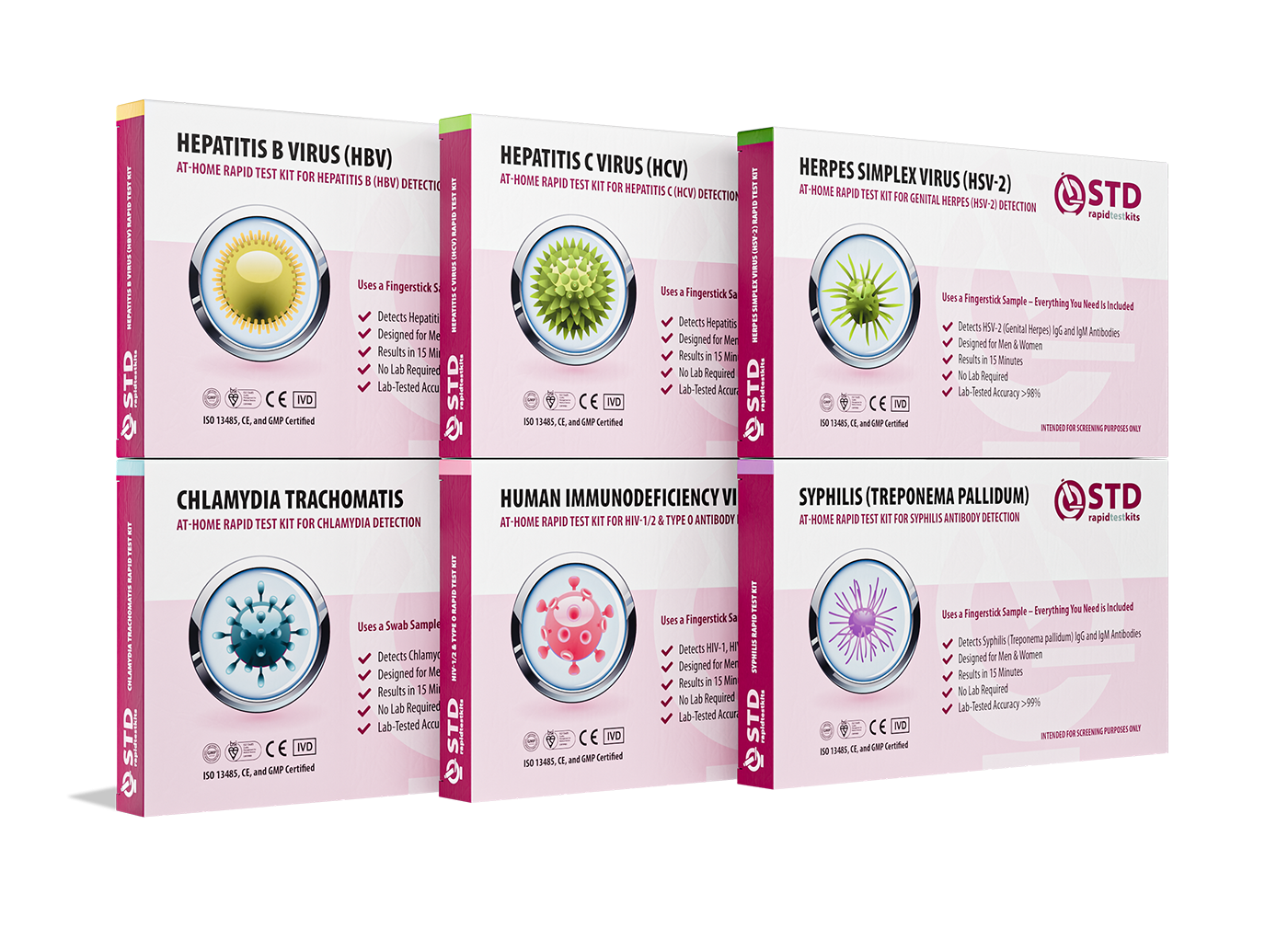 For Men & WomenResults in MinutesNo Lab NeededPrivate & Discreet
Order Now $119.00 $294.00
For all 6 tests
The Real Takeaway: It’s Not About the Number of Partners
By now, the pattern should be clear. The number of partners you have does influence exposure, but it doesn’t define your risk on its own. What matters is what happens around those connections.
STDs spread through opportunity, not assumptions. If there’s an active infection, no protection, and no testing, transmission becomes likely. If any one of those elements is interrupted, through barrier protection, regular testing, or early detection, the chain breaks.
This is why two people can have completely different risk levels with the same number of partners. One person might rely on assumptions and irregular testing. The other builds a system, testing at the right times, communicating openly, and using protection consistently. Biologically, those are two very different environments for infection to spread.
And here’s something most people don’t say enough: a huge percentage of STD anxiety comes from uncertainty, not actual infection. That spiral, checking symptoms, replaying encounters, wondering if something feels “off”, usually comes from not knowing your status with certainty.
Testing cuts through that instantly. It replaces speculation with a clear answer. That’s why it’s not just a safety measure, it’s a mental reset. Instead of guessing your risk, you’re defining it.
If you’re navigating polyamory, the most powerful shift you can make is this: stop thinking in terms of “how many partners is too many,” and start thinking in terms of “how controlled is my system?” That’s the real question that determines your risk.
And if there’s any uncertainty right now, whether it’s after a new partner or just time since your last test, this is where taking action matters. You can check your status discreetly with a multi-infection home test kit and get clear answers without disrupting your routine.
Because at the end of the day, polyamory doesn’t automatically increase your risk. Uncertainty does. And testing is how you eliminate it.
If you want to explore more options or find the right test for your situation, you can browse all available kits here: STD Rapid Test Kits homepage. It's not about being perfect; it's about being clear, consistent, and always staying one step ahead of the guessing.
FAQs
1. Does having multiple partners automatically mean higher STD risk?
Not automatically. It just means you have more potential exposure points. What actually matters is whether infections are present in your network and whether you’re catching them early through testing. Someone with one untested partner can be at higher risk than someone with multiple partners who all test regularly.
2. Can you actually be “safe” in a polyamorous relationship?
Yes, if “safe” means informed and in control. Polyamory doesn’t remove risk, but it gives you more opportunities to manage it intentionally. Regular testing, honest conversations, and protection go a long way. It’s less about perfection and more about staying aware of what’s actually happening.
3. How often should you get tested if you’re seeing multiple people?
Think of testing as something that follows your real life, not a random calendar date. If you’ve had a new partner, that’s your cue, just wait for the correct testing window. If your setup is more ongoing, then routine testing layered on top of that keeps things predictable instead of reactive.
4. What’s the biggest mistake people make with STD risk in polyamory?
Assuming that “feeling fine” means everything is fine. A lot of infections don’t cause noticeable symptoms early on, which means they can quietly move through a network. Testing is what turns that invisible risk into something you can actually deal with.
5. Can STDs really spread if no one has symptoms?
Yes, and this surprises a lot of people. Chlamydia and gonorrhea are two infections that can live in the body without causing obvious symptoms right away. That is because the bacteria are spreading before the immune system reacts strongly enough to show signs.
6. Is one untested partner riskier than multiple tested partners?
In many cases, yes. It sounds counterintuitive, but one unknown is often riskier than several knowns. If no one’s testing, you’re relying on assumptions. If everyone’s testing, you’re working with actual information.
7. When should I test after sleeping with a new partner?
Not the next morning, that’s the instinct, but it won’t give you accurate results. Each infection has a specific window where it becomes detectable, and testing before that can miss it. Waiting for the right timing gives you a result you can actually trust.
8. What does a negative STD test actually tell me?
A negative result means the test didn’t detect an infection at that moment. If you tested after the correct window period, that’s a solid answer. If you tested too early, it’s more like a “not yet detectable” result, which is why timing matters so much.
9. Do condoms completely eliminate STD risk?
They lower the risk a lot, but not all the way. They do a great job of keeping fluids from getting into places where infections spread, but herpes and other skin-to-skin infections can still spread outside the covered area. So they're a strong layer of protection, but not the only one.
10. What’s the most realistic way to keep risk low with multiple partners?
Build a system instead of relying on luck. That means testing at the right times, using protection consistently, and keeping communication open. When those pieces are in place, you’re not guessing, you’re managing your risk in a very real, practical way.
Take Control of Your Sexual Health
Polyamory doesn’t have to come with uncertainty. The real difference between high risk and low risk isn’t how many partners you have, it’s how consistently you test and how clearly you understand your status. When you remove the guesswork, everything becomes easier to manage.
If you want a simple, reliable way to stay on top of your health, a full-panel STD combo test kit allows you to check for multiple infections at once from home. If you’re looking for something more specific, you can also explore individual options through single STD test kits.
For a full range of options and ongoing support, visit the STD Rapid Test Kits homepage. Testing isn’t about fear, it’s about clarity, confidence, and staying in control of your decisions.
How We Sourced This: Our article was constructed based on current advice from the most prominent public health and medical organizations, and then molded into simple language based on the situations that people actually experience, such as treatment, reinfection by a partner, no-symptom exposure, and the uncomfortable question of whether it “came back.” In the background, our pool of research included more diverse public health advice, clinical advice, and medical references, but the following are the most pertinent and useful for readers who want to verify our claims for themselves.
Sources
2. WHO – Sexually Transmitted Infections
5. CDC – Getting Tested for STIs
6. CDC – STI Screening Recommendations
8. WHO – Sexually Transmitted Infections (STIs)
About the Author
Dr. F. David, MD is a board-certified infectious disease specialist focused on STI prevention, diagnosis, and treatment. He writes with a direct, sex-positive, stigma-free approach designed to help readers get clear answers without the panic spiral.
Reviewed by: Rapid STD Test Kits Medical Review Team | Last medically reviewed: March 2026
This article is for informational purposes and does not replace medical advice.


