
Published: November 2025 | Last updated: May 2026 | Editorial review and quality control: Martina N.
Finishing the antibiotics is the easy part. The harder questions come next. When can you have sex again? What if something still feels off down there? Should you ask your partner to test? And what counts as “safe” once you have already had one STI?
This guide walks through the timing rules clinicians actually follow, the partner-testing logic that prevents most reinfections, and the small details (sex toys, oral exposure, lingering irritation) that decide whether your next encounter feels safe or sets up a second round of treatment. The waiting periods are short. The conversations are awkward but doable. And the goal here is not to keep you cautious forever. It is to help you get back to a sex life that feels good, with the medical math working in your favor instead of against you.
Key takeaways
- For bacterial STIs (chlamydia, gonorrhea, trichomoniasis), wait seven days after your last dose of antibiotics before resuming sex. The countdown starts after the final pill or shot, not the first.
- Most reinfections happen because one partner was treated and the other was not. Partner testing matters more than condoms alone for preventing a second round.
When is it actually safe to have sex again?
The standard rule for the most common bacterial STIs (chlamydia, gonorrhea, trichomoniasis) is straightforward: wait seven full days after you finish treatment. The CDC 2021 STI Treatment Guidelines set this window because antibiotics need that time to fully clear the infection from the body. Sexual contact during that window risks both reinfecting yourself (if your partner is also infected and untreated) and transmitting any residual infection.
Two details matter and most articles skip them. First, the seven-day countdown starts after your LAST dose, not your first. A seven-day course of doxycycline followed by sex on day seven is not a wait, it is the start of the wait. Sex becomes safe on day fourteen at the earliest. Second, single-dose treatments (one ceftriaxone injection for gonorrhea, single-dose azithromycin or metronidazole) still need the same seven-day buffer. The injection clears the bacteria over days, not minutes.
For viral STIs, the rules look different. With herpes, avoid sexual contact during outbreaks and for several days after lesions have fully crusted over and healed. Asymptomatic viral shedding still happens between outbreaks, which is why daily suppressive antivirals matter for partners. With HIV, the guidance is tied to viral load suppression, not a calendar window. A person on consistent antiretroviral therapy whose viral load is undetectable cannot sexually transmit HIV (the U=U principle). Your provider will tell you when you have reached that point, typically after six months of consistent treatment with confirmed lab values.
For syphilis, treated with one to three penicillin injections depending on stage, the typical waiting window is seven to ten days after treatment, paired with follow-up blood tests at three and six months to confirm the treatment worked.
| STI | Typical treatment | When sex can resume |
|---|---|---|
| Chlamydia | One-week oral doxycycline OR single-dose azithromycin | 7 days after final dose |
| Gonorrhea | Single ceftriaxone injection | 7 days after injection |
| Trichomoniasis | Single-dose OR one-week metronidazole | 7 days after treatment ends |
| Herpes (HSV-1 or HSV-2) | Antivirals (episodic or daily suppressive) | After all sores have fully healed |
| Syphilis (primary or secondary) | Penicillin injection(s) | 7 to 10 days after final injection, plus retest |
| HIV | Long-term antiretroviral therapy | Once viral load is confirmed undetectable |
What if symptoms have not fully cleared?
For most people, symptoms vanish within days of starting treatment. For others, something lingers: mild discharge, low-grade itching, a general sense that things are not back to normal. That lingering feeling is the part most articles do not address, and it drives the two most common post-treatment mistakes. Some people resume sex too early, assuming they feel “mostly fine.” Others avoid intimacy for months, convinced the infection never cleared.
Residual symptoms after treatment are usually not the original infection. Antibiotics kill bacteria within days, but the inflammation they caused can take longer to resolve. Tissue irritation in the cervix, urethra, or anal canal can produce mild discharge or burning for one to three weeks even after the bacteria are gone. Side effects of the antibiotics themselves (yeast overgrowth, gut disruption, mild urinary symptoms) can mimic STI symptoms and resolve on their own.
When residual symptoms warrant a call to your provider: anything that gets worse instead of better, fever or pelvic pain, lesions that do not heal, or symptoms that stay completely unchanged after the full waiting window. The CDC recommends test-of-cure (a follow-up test to confirm clearance) for trichomoniasis in women, for gonorrhea found in non-genital sites (throat, rectum), and for any STI diagnosed during pregnancy. For uncomplicated chlamydia and gonorrhea in non-pregnant adults, routine test-of-cure is not recommended, but retesting at three months is, because the reinfection rate within that window is high.

Condoms help, but they are not a force field
Condoms (when used correctly and consistently) reduce the transmission of most STIs significantly. They block the fluid exchange that spreads gonorrhea, chlamydia, trichomoniasis, hepatitis B, and HIV. According to CDC guidance on condom use, consistent and correct use of male condoms is highly effective at reducing HIV transmission and provides substantial protection against other fluid-borne STIs.
Condoms do not cover everything. Skin-to-skin infections like herpes, HPV, and syphilis chancres can transmit from areas the condom does not cover. Studies on herpes suggest condoms reduce transmission by roughly 30 to 50 percent, depending on consistency and the location of viral shedding. That is a meaningful reduction, but it is not full protection. The HPV and herpes transmission picture in particular requires combining condoms with vaccination (for HPV), antiviral suppression (for herpes), and partner disclosure.
The practical takeaway: after a treated STI, condoms are part of the strategy, not the whole strategy. Pair them with partner testing, with your own three-month retest, and with conversations about each partner's recent test history. The reason condoms feel like a magic shield is partly that they are the most visible part of safer sex. The less visible parts (communication, testing, treatment confirmation) do more of the heavy lifting.
Condoms substantially reduce fluid-borne STI transmission (HIV, gonorrhea, chlamydia, trichomoniasis, hepatitis B) but offer only partial protection against skin-to-skin infections like herpes, HPV, and primary syphilis chancres, which can spread from areas the condom does not cover.
Should you ask your partner to test?
Yes. The CDC recommends that recent sexual partners of anyone treated for chlamydia, gonorrhea, trichomoniasis, or syphilis get tested and (in most cases) treated, regardless of whether they have symptoms. Most reinfections happen because one partner was treated and the other was not. The original infection gets passed back as soon as sexual contact resumes.
Many U.S. states allow Expedited Partner Therapy (EPT), where your provider can prescribe medication for your partner without your partner needing their own clinic visit. EPT is currently legal in most states for chlamydia and gonorrhea. If you are treated for one of those infections, ask your provider whether EPT is an option in your state. If it is, you can bring the prescription home and skip the “you need to go to a clinic” conversation entirely. For partners who would otherwise refuse to engage, EPT often makes the difference between treatment and silent reinfection.
What if a partner declines to test? That is a hard situation, and it is not just a dating problem; it is a health decision. The risk of resuming sex with an untreated partner is high enough that the CDC's surveillance data treats it as the single biggest driver of repeat infections. If a partner will not engage with their own status, the options are: delay sex until they do, use barrier protection consistently (knowing it is not 100 percent protective against everything), or step back from the relationship entirely. Each option reduces the reinfection cycle that untreated partners sustain.
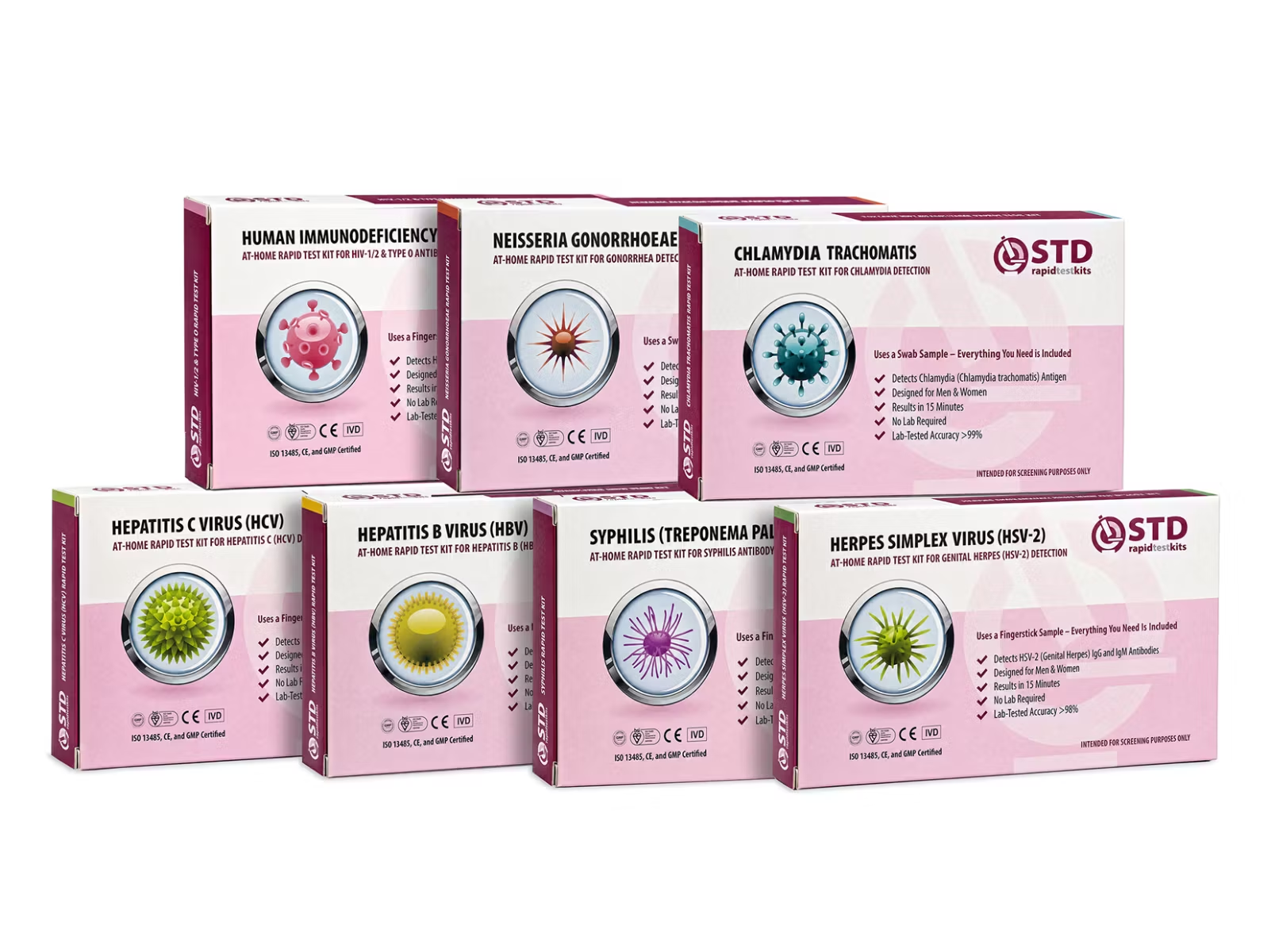
This site sells rapid at-home lateral-flow STI test kits; options for partner and self-testing are below.

Reinfection risk after treatment
One frustrating fact about bacterial STIs: getting treated does not grant immunity. You can catch the same infection again from a new exposure or, more commonly, from a partner who was infected at the same time you were but never got treated. Based on CDC STI surveillance data, documented reinfection rates for chlamydia and gonorrhea fall in the 10 to 25 percent range within 12 months of treatment, with rates climbing higher when partner notification does not happen.
Trichomoniasis has the highest documented reinfection rates of the curable bacterial STIs, partly because untreated male partners often have no symptoms and never seek care. The infection cycles back and forth between partners until both are treated at the same time. That is why same-cycle treatment of all recent partners matters more than waiting periods alone.
| STI | Reinfection rate within 12 months | Most common cause |
|---|---|---|
| Chlamydia | 10 to 20 percent | Partner not treated at the same time |
| Gonorrhea | 15 to 25 percent | Reexposure via same untreated partner |
| Trichomoniasis | 17 to 35 percent | Inconsistent protection or partner reinfection |
| Syphilis | 4 to 10 percent | New exposures or untreated contacts |
Oral sex, sex toys, and routes people forget
“Resuming sex” usually means resuming vaginal or anal penetration, but STIs travel through any route that involves shared fluids or skin contact. Three routes get overlooked most often.
Oral sex transmits gonorrhea, chlamydia, syphilis, and herpes more often than most people realize. Pharyngeal (throat) gonorrhea in particular is on the rise and usually has no symptoms. If your recent diagnosis involved oral exposure, your throat may also need testing. At-home rapid kits like the ones sold on this site do not screen for pharyngeal gonorrhea or chlamydia. Throat-swab testing requires a clinic visit, because the sample collection and lab method (typically NAAT) are different from what a home rapid panel performs.
Sex toys carry bacteria, viruses, and fluids between uses. A toy used while you had chlamydia, then used again after treatment without sanitizing, can reintroduce the infection. Wash silicone, glass, and metal toys with soap and warm water between uses; use barrier methods (a fresh condom over insertable toys) when sharing with a partner; and avoid sharing toys made of porous materials (jelly rubber, some TPE blends) that cannot be fully disinfected. You do not need to throw out your collection. You do need to treat shared toys the same way you would treat a shared towel: clean between uses, and never assume “it looked clean” is the same as disinfected.
Anal sex transmits STIs at higher rates than vaginal sex because the rectal tissue is thinner and more prone to micro-tears. Like throat exposure, rectal infections often have no symptoms but can carry the infection forward to future partners. Rectal swab testing also requires a clinic visit; home rapid kits do not cover this route.

Emotional readiness is not a calendar event
The seven-day waiting window is a clinical floor, not a personal timeline. Many people finish their treatment, test negative, and still do not feel ready to resume sex for weeks or months. That is not a medical problem. It is the predictable response to a diagnosis that often involves disclosure conversations, partner conflict, anxiety, or shame, even when the medical part went smoothly.
If you notice that you want to resume sex mostly to prove you are past the diagnosis (to yourself, or to a partner who is pressuring you), that is worth pausing on. Sex driven by “I should be ready by now” tends to feel worse than waiting another week or month and going in clear. The most consistent signal that someone is emotionally ready: they can talk about what happened without spiraling, they can state their boundaries plainly, and they want sex for its own sake rather than as a status update.
If post-diagnosis anxiety is interfering after treatment, intrusive thoughts about being infectious, avoidance of intimacy that is lasting longer than you want, or shame that is not fading, a sexual-health-aware therapist can help. The American Association of Sexuality Educators, Counselors and Therapists (AASECT) maintains a public directory of certified clinicians, searchable by location and specialty.
Telling a new partner
If your last STI was something fully treated and gone (chlamydia, gonorrhea, syphilis, trichomoniasis), legal disclosure requirements vary by state, but no U.S. state currently requires you to disclose a fully resolved bacterial infection. Most ethical frameworks treat disclosure of a past, cured infection as optional.
For ongoing infections like herpes, HIV, or active HPV, disclosure is both ethically expected and, in many states, legally required before sexual contact. The phrasing that works best is short and factual: “I have herpes. I am on suppressive antivirals. My last test for other STIs was [date and result]. I would like to talk through what protection looks like for us.” One sentence. Then the conversation, not a monologue.
Before sex with anyone new, regardless of your own history, the two most useful questions are: “When were you last tested, and for what?” and “What does protection usually look like for you?” Those questions surface more useful information than a recitation of medical history, and they signal that you take both of your health seriously without making it heavy.
Untreated sex partners are the most common source of reinfection. Partner services and Expedited Partner Therapy are central to preventing repeat infections.
Where this leaves you
Safe sex after a treated STI is a few small habits done together. Wait the full window. Confirm your partner has been tested and treated. Clean shared objects between uses. Get retested at three months if you had a curable bacterial infection. Ask plain questions of new partners about their own testing history. None of those steps is dramatic on its own. Together, they cut the reinfection risk roughly in half compared to “just use condoms and hope.”
The diagnosis you got is treatable. The infection itself is over within days of finishing your medication. The piece that takes longer (figuring out how to feel like yourself, sexually, after a hard week) does not have a clinical timeline. Take it on yours.
Your post-treatment action list
- Wait seven full days after your last dose of antibiotics before resuming sex.
- Confirm your recent partner(s) have been tested and treated; ask your provider about Expedited Partner Therapy if direct conversation will not happen.
- Clean shared sex toys with soap and warm water between uses, and use barriers on shared insertable toys.
- Retest at three months for chlamydia, gonorrhea, and trichomoniasis per CDC guidance, even without new partners.
- Ask new partners when they were last tested and for what before any sexual contact.
Frequently asked questions
- Can I have sex right after finishing treatment?
- Seven days minimum, counting from your final dose, not your first. For bacterial STIs (chlamydia, gonorrhea, trichomoniasis), the medication needs that buffer to fully clear the infection. Resuming sex earlier risks transmitting residual infection or being reinfected by a partner who has not finished their own treatment. Single-dose treatments use the same seven-day window, starting from the day of the injection or pill.
- I still feel a little off down there even after treatment. Should I worry?
- Probably not, but watch the trajectory. Mild residual irritation, discharge, or burning can persist for one to three weeks after bacteria are cleared, often from tissue inflammation or antibiotic side effects (including yeast overgrowth). If symptoms get worse, do not change after the full waiting window, or come with fever or pelvic pain, contact your provider for retesting.
- What if my partner refuses to get tested?
- This is one of the most common reinfection scenarios. If a partner declines testing, the options are: wait to resume sex until they engage, use barrier protection consistently (knowing it is not 100 percent), or step back from the relationship. Many states allow Expedited Partner Therapy (EPT), where your provider can prescribe medication for your partner without a separate appointment. Ask whether EPT is an option in your state.
- Are condoms enough protection after a treated STI?
- Condoms help significantly but are not complete protection. They block fluid-based transmission well (HIV, gonorrhea, chlamydia, trichomoniasis, hepatitis B) according to CDC guidance. Skin-to-skin infections like herpes and HPV can still transmit from areas the condom does not cover. Combine condoms with partner testing, your own three-month retest, and clear conversations about each partner's status.
- Do I have to tell new partners about a past STI?
- For fully cured infections like chlamydia or gonorrhea, no U.S. state currently requires disclosure of a resolved bacterial infection. For ongoing infections like herpes or HIV, disclosure is ethically expected and often legally required. Either way, asking new partners about their own recent testing history is the more practical move; it surfaces information about both your risks rather than focusing only on your past.
- When do I need to get retested after treatment?
- Three months for chlamydia, gonorrhea, and trichomoniasis per CDC guidance, regardless of whether you have new partners. Reinfection often has no symptoms but can damage reproductive health if undetected. For syphilis, follow-up blood tests at three and six months confirm treatment worked. For HIV, your provider will set the schedule based on your viral load.
- Can I get STIs from oral sex or sex toys?
- Yes to both. Gonorrhea, chlamydia, syphilis, and herpes can transmit during oral sex, and pharyngeal (throat) gonorrhea is increasingly common with no symptoms. Sex toys carry bacteria and fluids between uses; wash them with soap and warm water, use condoms when sharing, and avoid porous materials that cannot be fully disinfected. Throat and rectal testing both require a clinic visit, as home rapid panels do not cover those sites.
- I am worried I will not enjoy sex after my diagnosis. Is that normal?
- Very. Fear of reinfection, body-image changes, disclosure anxiety, and general “what if” thinking all show up after a diagnosis, even when the medical part went smoothly. Take your time, talk with your partner, and consider seeing a sexual-health-aware therapist if anxiety lasts longer than you want. The AASECT directory lists certified clinicians who specialize in this area.
How we sourced this article: This guide summarizes current guidance from the U.S. Centers for Disease Control and Prevention (2021 STI Treatment Guidelines and updates), the World Health Organization, and patient-facing resources from Planned Parenthood and the American Sexual Health Association. Reinfection rate ranges come from CDC STI surveillance data. The framing is editorial; specific clinical decisions should be made with your own provider.
- U.S. Centers for Disease Control and Prevention. 2021 STI Treatment Guidelines. Source for the seven-day waiting window after treatment of bacterial STIs and for Expedited Partner Therapy recommendations.
- U.S. Centers for Disease Control and Prevention. STI screening recommendations. Source for the three-month retesting cadence after treatment of chlamydia, gonorrhea, and trichomoniasis.
- U.S. Centers for Disease Control and Prevention. Condom use overview. Source for general statement that consistent and correct condom use is highly effective at reducing HIV and fluid-borne STI transmission.
- U.S. Centers for Disease Control and Prevention. STI prevention guidance. Source for general prevention framework, including partner notification and combination prevention.
- World Health Organization. Fact sheet on sexually transmitted infections. Source for global incidence figures and the WHO prevention framework.
- U.S. Centers for Disease Control and Prevention. STI surveillance data and statistics. Source for the chlamydia, gonorrhea, trichomoniasis, and syphilis reinfection rate ranges cited in the body and table.
- Planned Parenthood. Safer sex (“safe sex”) overview. Patient-facing reference for what safer sex looks like in practice, including barrier methods and communication.
- American Sexual Health Association. STI and STD resource index. General STI resource hub with patient-facing links to individual infection pages and prevention information.
